 flip
flipHoney-roasted goose with figs and coriander (the falcon's banquet)
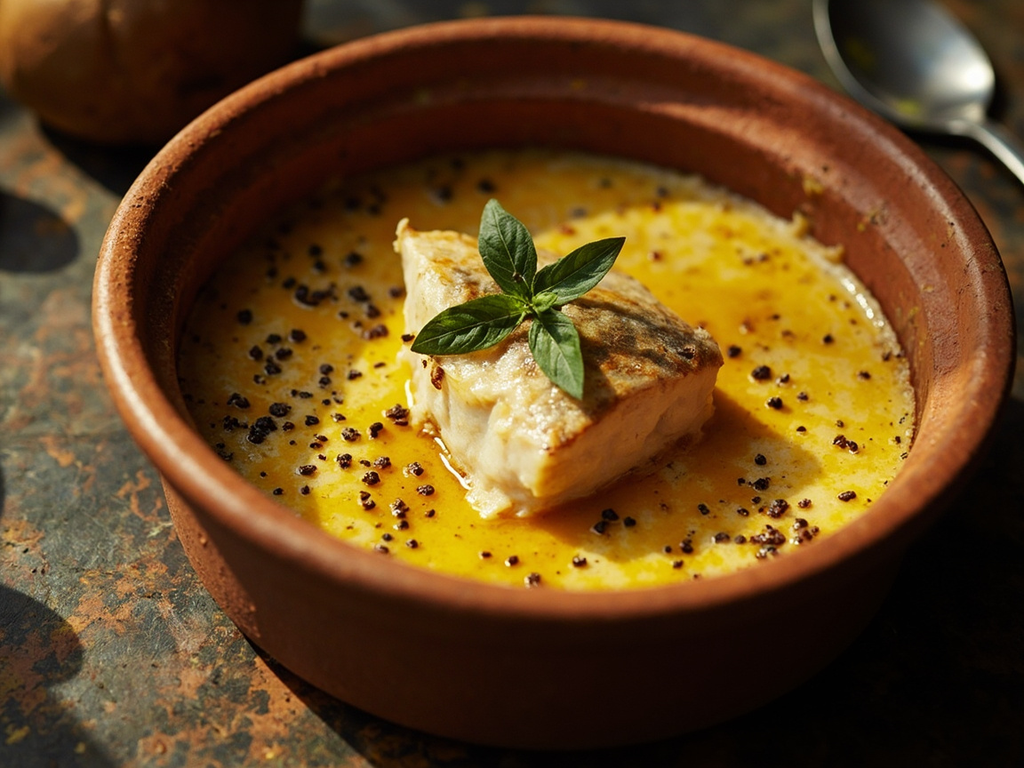
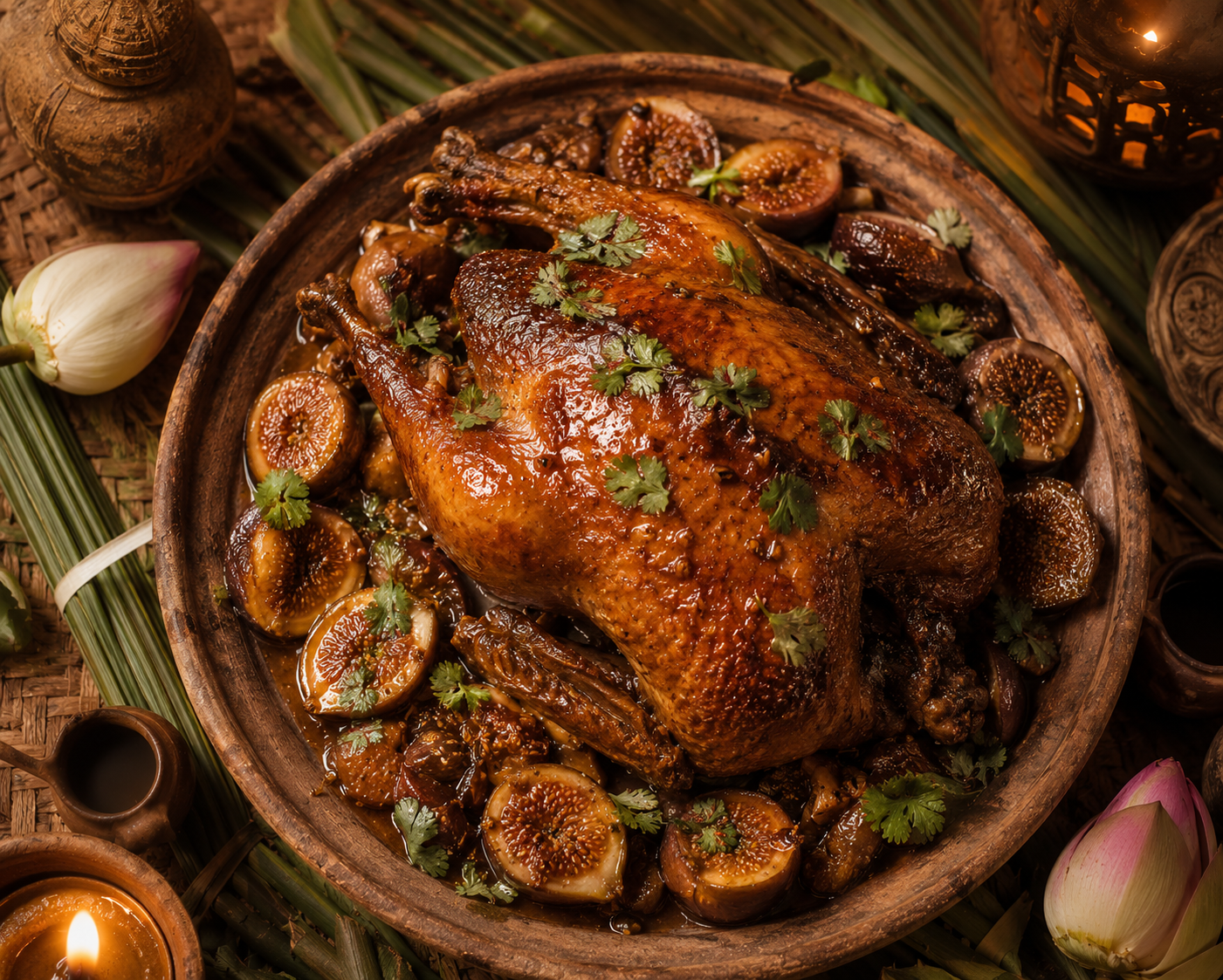
Honey-roasted goose with figs and coriander (the falcon's banquet)
Why this dish? At the great festivals of Edfu, where Horus and his union with Hathor were celebrated, the altars groaned under the fat flesh of the goose, a sacred bird and banquet dish par excellence. Glazed with honey and perfumed with coriander, goose was the dish of gods and nobles during temple feasts.
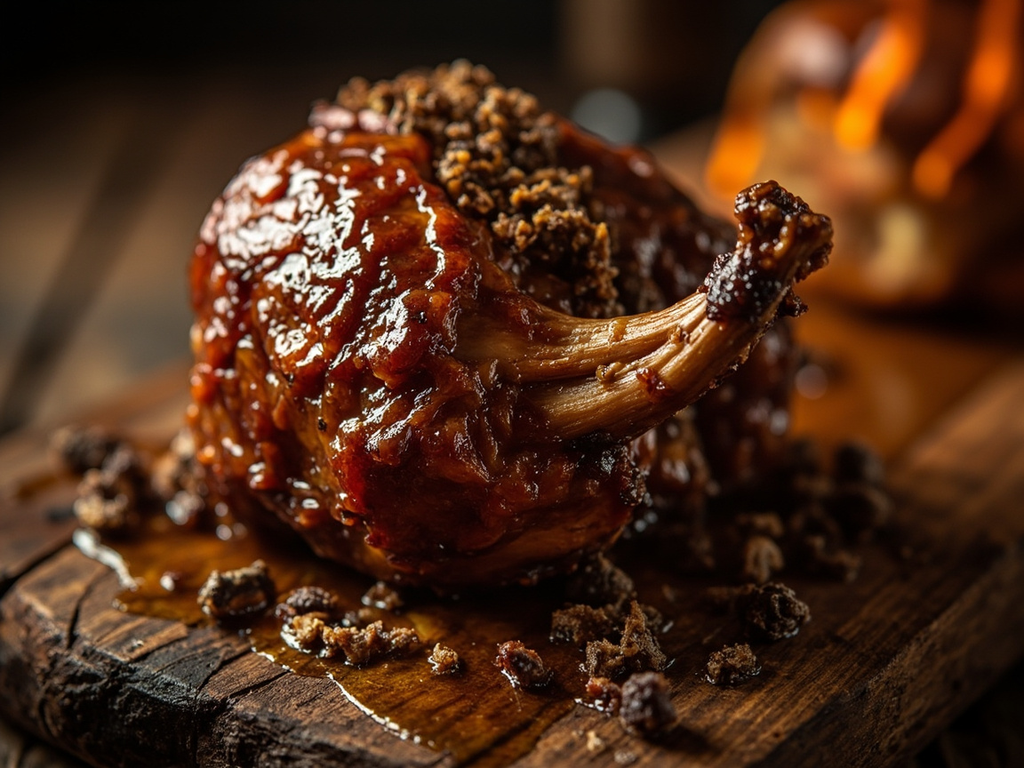
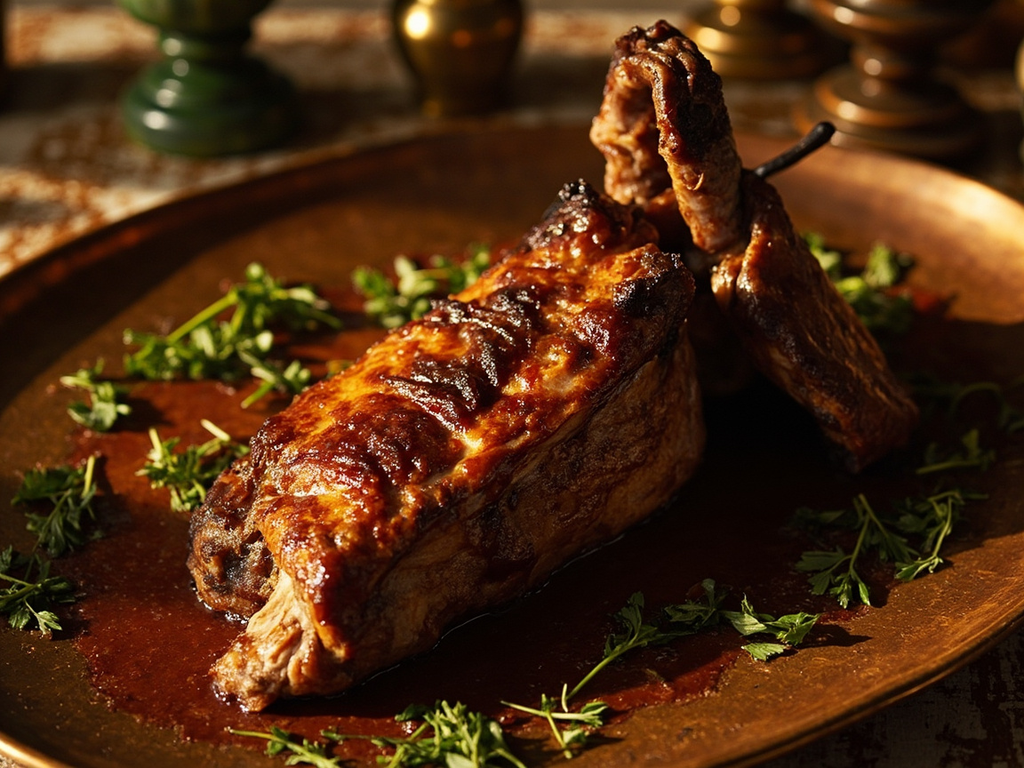
A goose (or duck) slowly roasted, lacquered with honey and grape must, garnished with melting figs and scented with coriander. The great festive dish, fatty, golden, sweet and savory.
Lift your eyes to my temple of Edfu when the feast comes! The fat goose is brought, laid upon the brazier, basted with the honey of the reeds until its skin shines like the gold of my pschent crown. The figs burst in their juice, the coriander perfumes the court of the sanctuary. Thus am I honored, I the falcon of the two horizons: by the fattest and sweetest flesh. Feast, and may your joy rise to the sky like the smoke of the altar.
- •Goose (or duck) — one bird (centerpiece)
- •Honey — generously (sweet glaze)
- •Fresh or dried figs — a good handful (fruity garnish)
- •Coriander (seeds and leaves) — as desired (perfume)
- •Grape must — a little (lacquer and mild acidity)
- •Salt — to taste (seasoning)
Honey-roasted goose with figs and coriander (the falcon's banquet)
A goose (or duck) slowly roasted, lacquered with honey and grape must, garnished with melting figs and scented with coriander. The great festive dish, fatty, golden, sweet and savory.
Why this dish? At the great festivals of Edfu, where Horus and his union with Hathor were celebrated, the altars groaned under the fat flesh of the goose, a sacred bird and banquet dish par excellence. Glazed with honey and perfumed with coriander, goose was the dish of gods and nobles during temple feasts.
Lift your eyes to my temple of Edfu when the feast comes! The fat goose is brought, laid upon the brazier, basted with the honey of the reeds until its skin shines like the gold of my pschent crown. The figs burst in their juice, the coriander perfumes the court of the sanctuary. Thus am I honored, I the falcon of the two horizons: by the fattest and sweetest flesh. Feast, and may your joy rise to the sky like the smoke of the altar.
Ingredients (period version)
- Goose (or duck) — one bird (centerpiece)
- Honey — generously (sweet glaze)
- Fresh or dried figs — a good handful (fruity garnish)
- Coriander (seeds and leaves) — as desired (perfume)
- Grape must — a little (lacquer and mild acidity)
- Salt — to taste (seasoning)
Ingredients
- Duck legs and breasts (or a whole goose) — 4 legs or 1 goose (festive piece)
- Honey — 4 tbsp (glaze)
- Dried or fresh figs — 10 (garnish)
- Ground coriander seeds — 1 tsp (spice)
- Fresh coriander — 1 small bunch (fresh finish)
- Grape juice or must (or a little white wine) — 100 ml (tangy lacquer)
- Salt — to taste (seasoning)
Method
- Season the poultry, rub with ground coriander; let rest 30 minutes.
- Sear the skin side in a hot pan until golden.
- Place in a dish with the figs; pour over the grape juice.
- Roast at 180 °C: about 1.5 hours for a goose, 45 min for legs, basting regularly.
- Halfway through, brush with honey several times to obtain a golden lacquer.
- Sprinkle with fresh coriander and serve with emmer bread.
How it was made : Egyptians raised and force-fed geese and ducks, abundantly depicted in banquet and offering scenes. Meat was reserved for feasts and wealthy tables, roasted on a spit or boiled. Honey — the only true sweetener — was used to glaze meats, and figs and grapes often accompanied fatty poultry.
The contemporary twist : Shredded cold, this honey and fig duck makes a sumptuous topping on warm flatbread, a 'temple street food' style to serve as bites.
Sources : Pierre Tallet, La cuisine des pharaons (Actes Sud) · Joyce Tyldesley, Daily Life in Ancient Egypt
Horus · Charactorium