 Flip the card
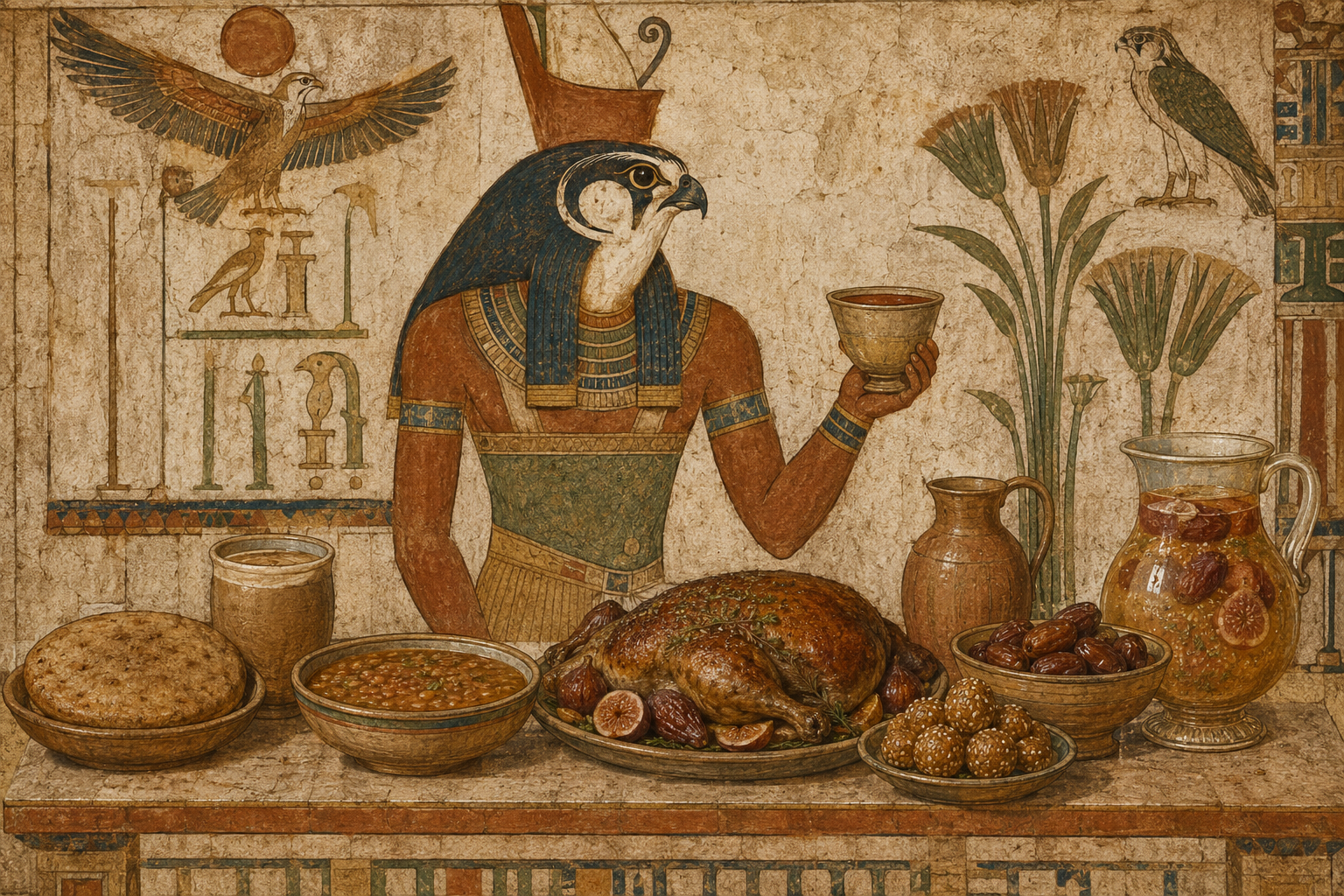
Horus at the table
On the menu
Hotep — the offering table (hetep di nesut)
In ancient Egypt, a meal is not served as starter-main-dessert, but an offering table, the hotep, is set. For a god like Horus, the priests daily place on the temple altar a ritual sequence: bread and beer first (the sacred formula pereT-kherou), then fowl or beef, sweet fruits (figs, dates, pomegranates), milk and honey. The same logic feeds the living: a base of bread and beer, vegetables from the silt (onion, garlic, lettuce), some fish or fowl on feast days, and the sweetness of the date palm to finish. Everything comes from the Nile and its black silt, the kemet.
Signature : Emmer (farro wheat) and Nile honey
Farro wheat (emmer, beded) is the queen cereal of Egypt: it provides bread and beer, the foundation of all cuisine. Wild honey and that from reed hives bring the only real sweetness of the time (sugar does not exist). Together, emmer bread and honey sign the Egyptian table, from peasant to falcon-god.
click to flip back
Horus at the table
5 period recipes
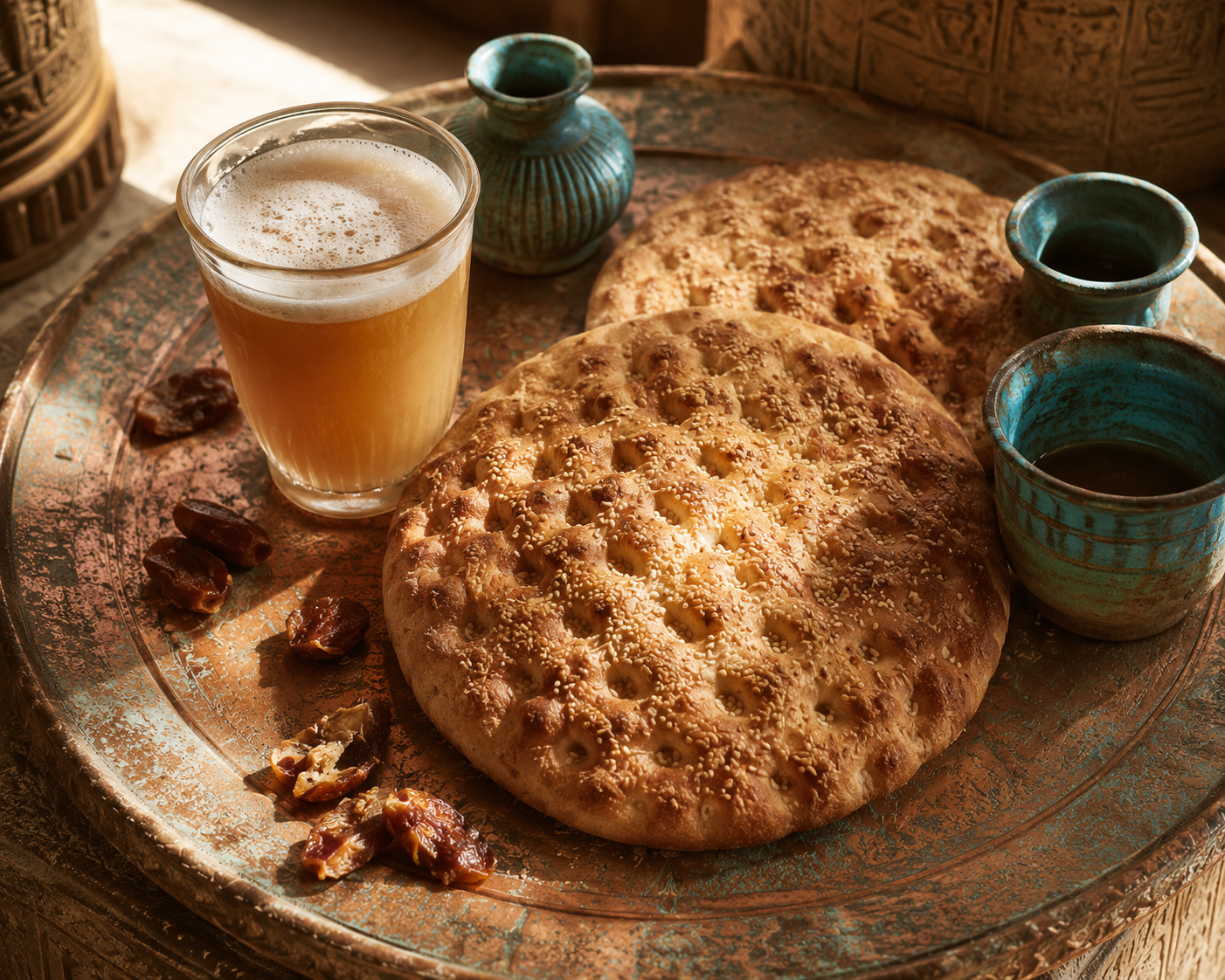 Offering
Offering bread with emmer and sweet beer (the table of Horus)
Hotep — foundation offering (pereT-kherou: 'the bread and the beer')
🫙 🍯· 2 h 30 (including rising)
View the recipe
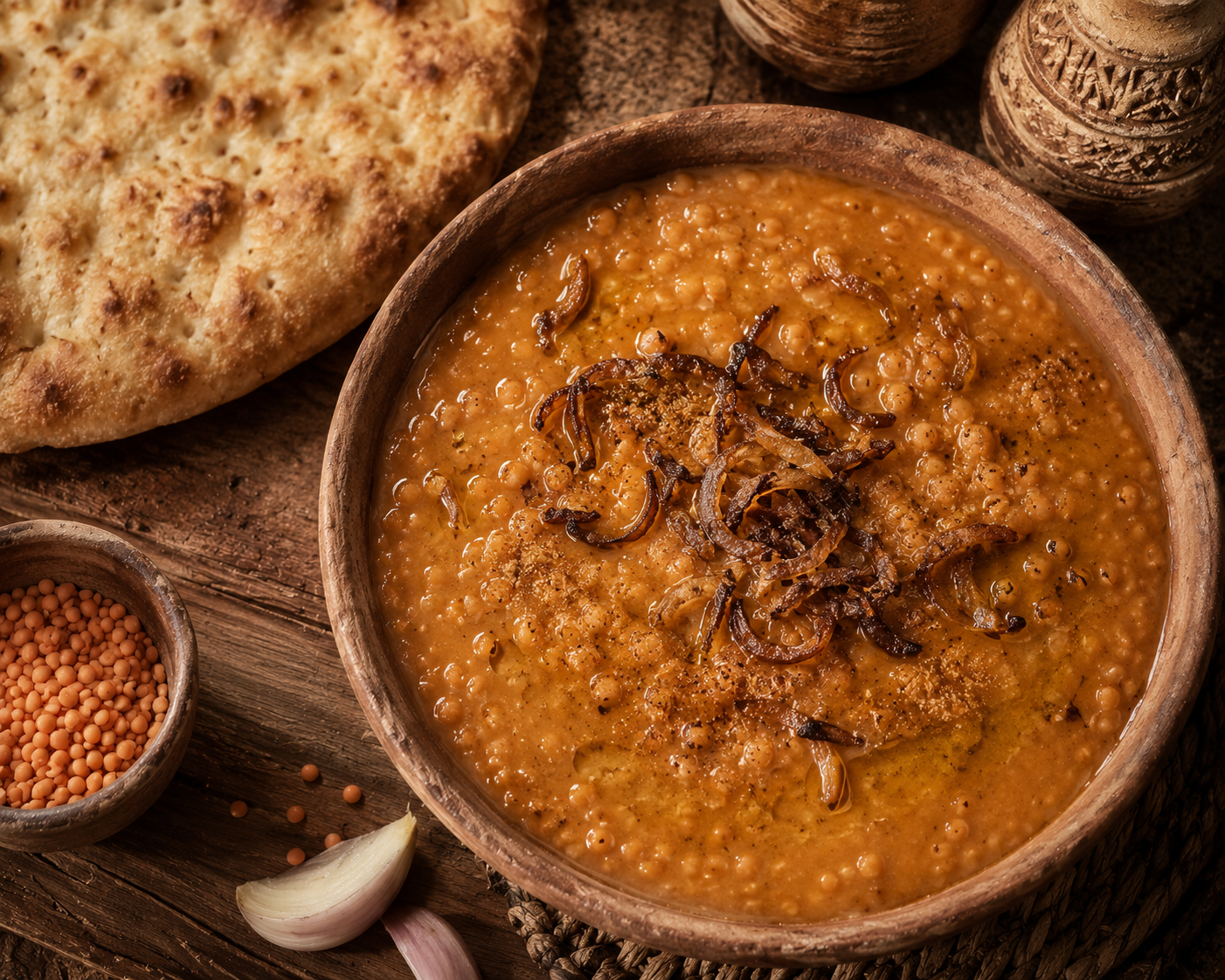 Everyday
Red lentil soup with onion and cumin from the silt
Daily staple — the peasant's pot (peret, what comes out of the Nile garden)
🧂 🌶️· 40 min
View the recipe
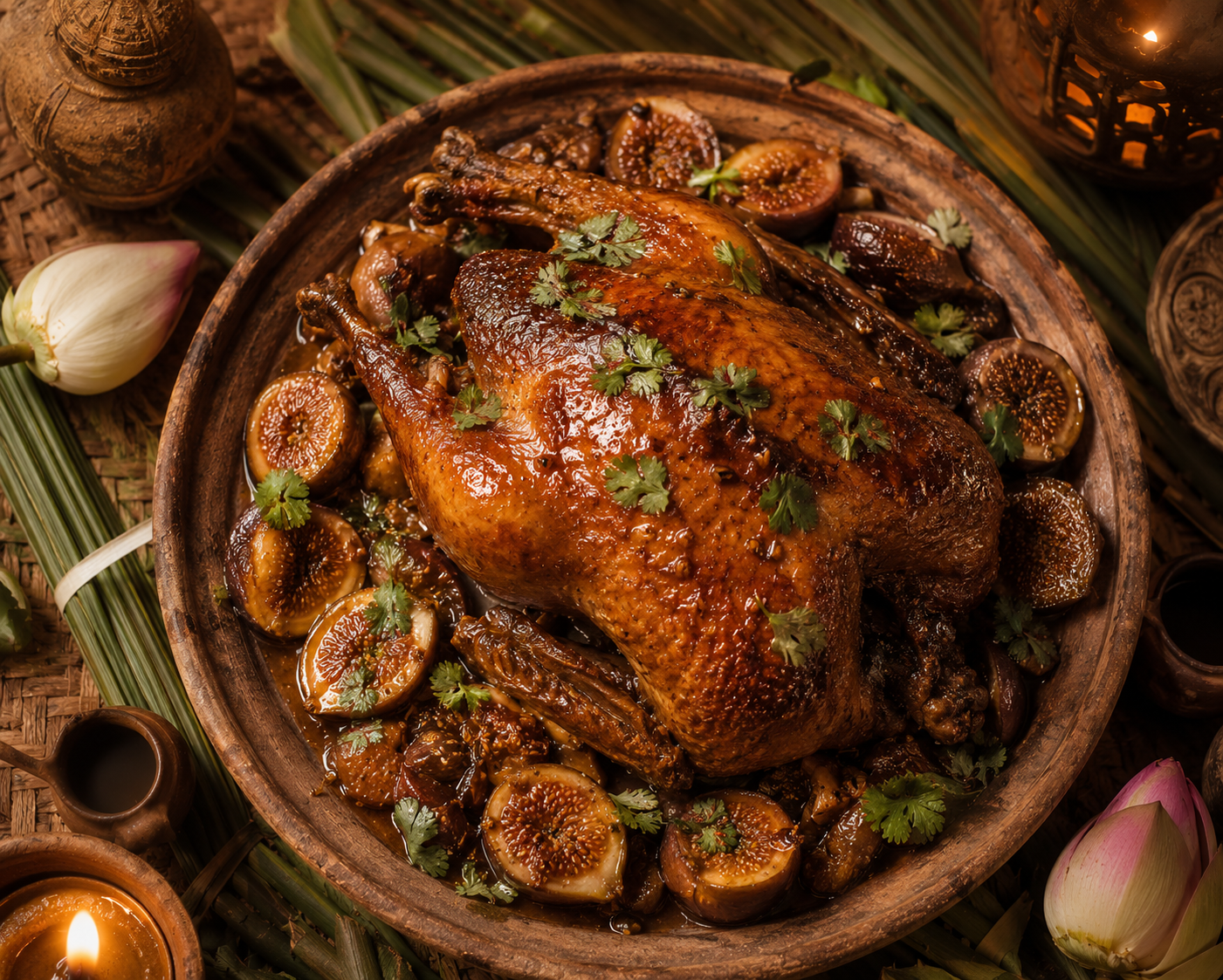 Festive
Honey-roasted goose with figs and coriander (the falcon's banquet)
Hotep of feast days — fowl flesh of the great banquet (the meat dish of the offering table)
🍯 🧂 🍄· 2 h
View the recipe
 Travel
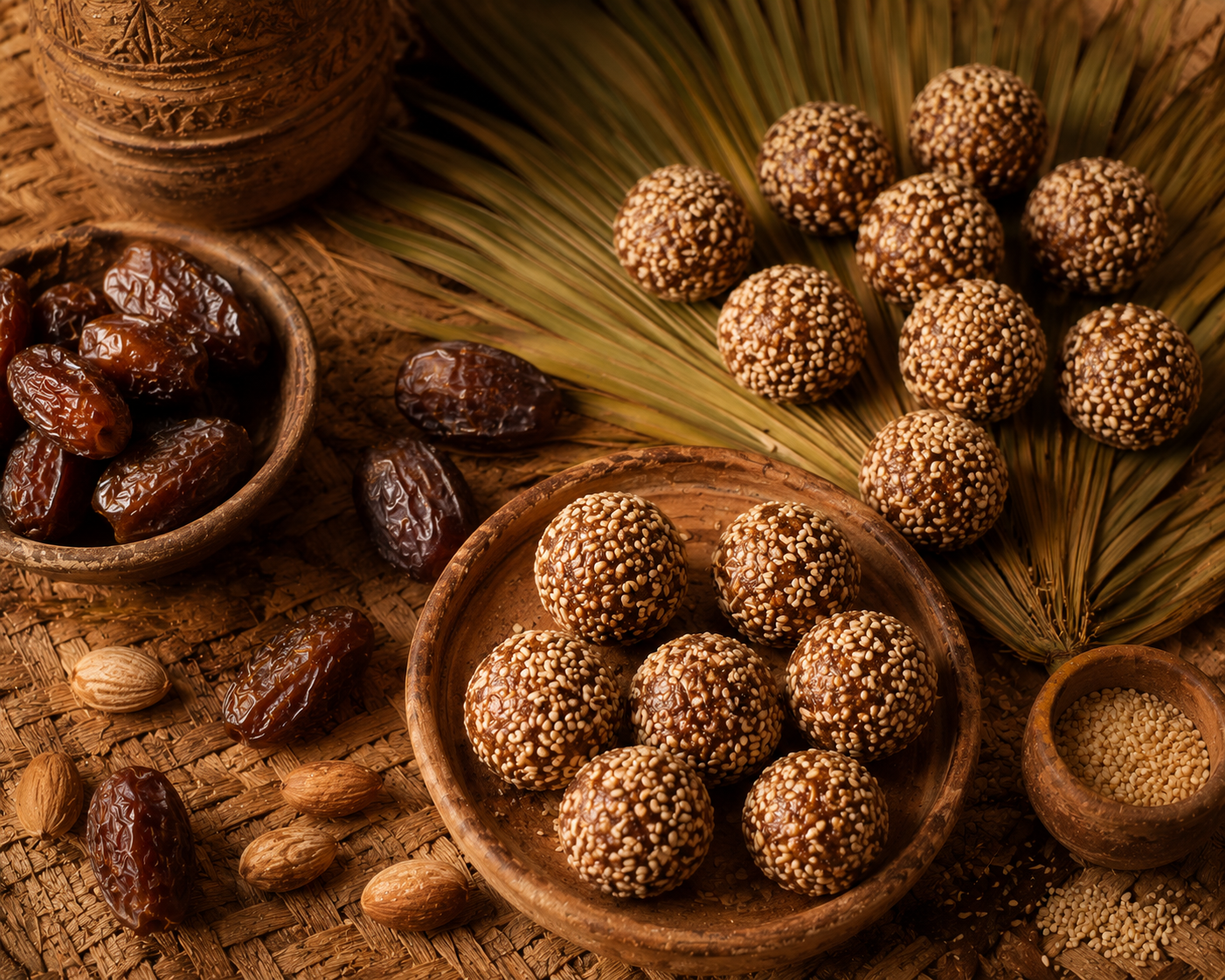
Date, honey and sesame balls (the traveler's sweet)
Marching rations — sweet provisions for the Nile journey (boat and caravan snacks)
🍯· 20 min
View the recipe
 Drink
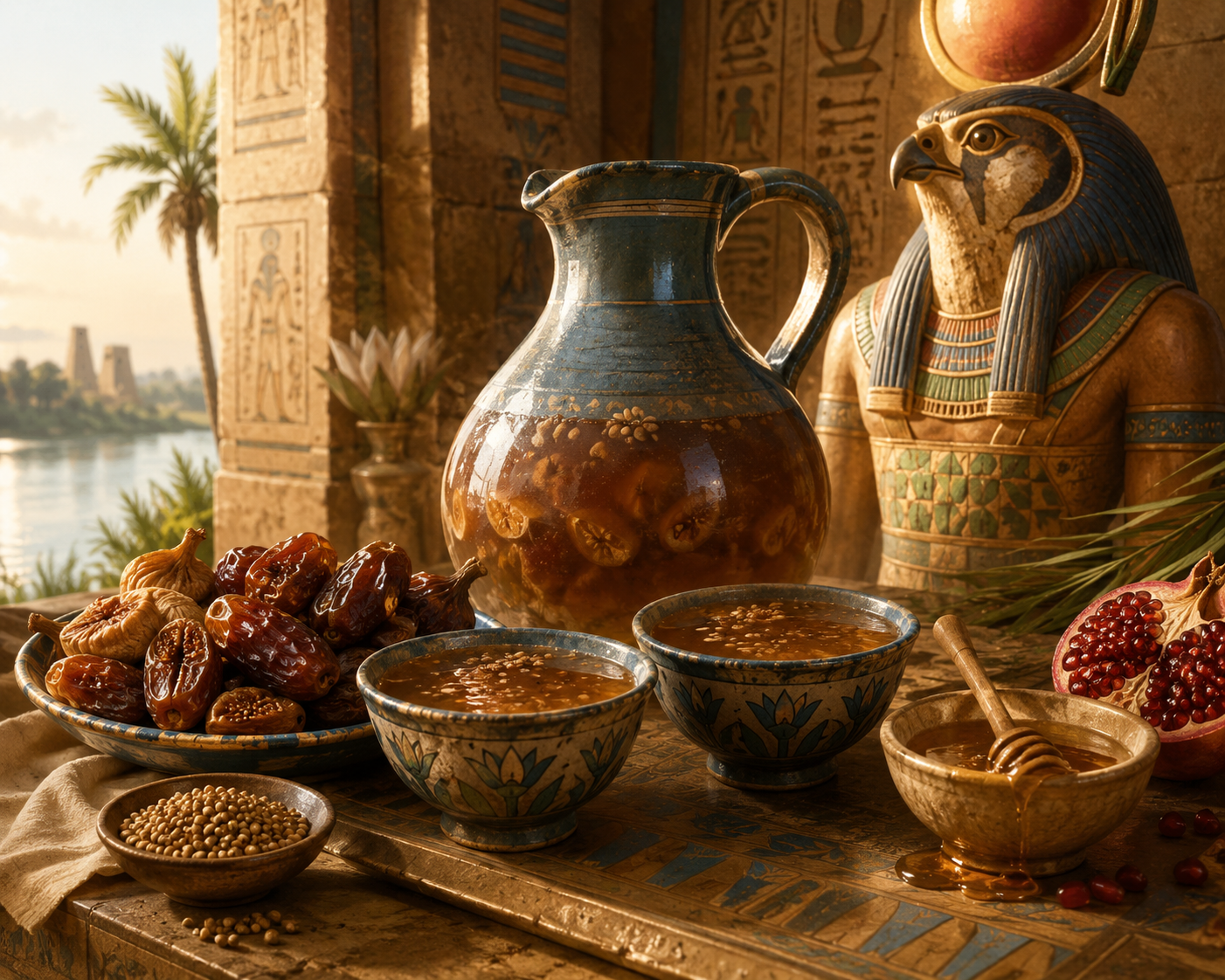
DrinkFig, date and coriander infusion (altar drink)
Sweet libation — non-fermented offering drink (chedeh / altar juice)
🍯 🍋· 15 min (+ 4 h infusion)
View the recipe