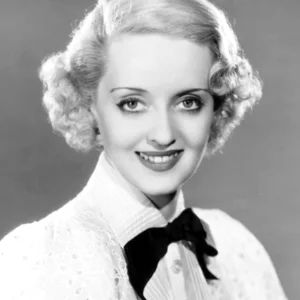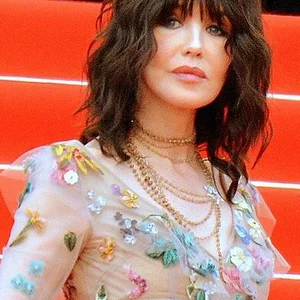

French actress born in 1955, daughter of an Algerian father and a German mother. Launched to stardom by François Truffaut in *The Story of Adele H.* (1975), she portrays passionate and tormented women in *Possession*, *Camille Claudel*, and *Queen Margot*. Holder of a record five César Awards for Best Actress.
Isabelle Adjani(1955 — ?)
Isabelle Adjani
France
10 min read
Frequently asked questions
Key Facts
- Born on June 27, 1955 in Paris, to an Algerian Kabyle father and a German mother
- Nominated for the Academy Award for Best Actress at age 19 for *The Story of Adele H.* (1975, Truffaut)
- Won the Best Actress Prize at Cannes for *Possession* in 1981
- Portrayed Camille Claudel in Bruno Nuytten's film (1988), winning a César and receiving an Oscar nomination
- Five César Awards for Best Actress (1982, 1984, 1989, 1995, 2010) — an all-time record across all categories
Works & Achievements
A film by François Truffaut inspired by the private diaries of Adèle Hugo, Victor Hugo's daughter, tracing an obsessive love that descends into madness. At 19, Adjani earned an Oscar nomination for the role and established herself as one of the leading actresses in French cinema.
A film by Andrzej Żuławski shot in Berlin, in which Adjani plays a woman in the grip of psychological and marital breakdown. Her performance earned her the Best Actress award at Cannes and her first César, and the subway scene remains one of the most striking in European cinema.
A film by Jean Becker adapted from Sébastien Japrisot's novel, in which Adjani plays a seductive and mysterious young woman in Haute-Provence carrying a destructive secret. The role earned her her second César for Best Actress.
A biopic by Bruno Nuytten on which Adjani also served as co-producer, tracing the life of sculptor Camille Claudel, Auguste Rodin's collaborator and later companion. The film restored visibility to a long-overlooked artist and earned Adjani her third César.
A historical film by Patrice Chéreau adapted from Alexandre Dumas, set during the Wars of Religion and the St. Bartholomew's Day Massacre (1572). Adjani portrays Marguerite de Valois with an intensity that earned her her fourth César.
A TV film by Jean-Paul Lilienfeld broadcast on Arte, in which Adjani plays a French teacher overwhelmed by the violence of her students in a suburban secondary school. The work, rewarded with a record fifth César, reignited the debate on education and secularism.
Anecdotes
At just 17, Isabelle Adjani became the youngest junior member of the Comédie-Française, the prestigious national theatre founded under Louis XIV. This exceptional admission revealed an extraordinary talent, but she quickly left the institution to pursue cinema, refusing to be confined to a single artistic register.
In 1975, François Truffaut chose her to play Adèle Hugo, daughter of Victor Hugo, in The Story of Adele H. At barely 19, Adjani received an Academy Award nomination — one of the youngest actresses ever to earn that distinction — and immediately established herself on the international stage.
For the filming of Possession (1981) by German director Andrzej Żuławski, a breakdown scene shot in the Berlin metro became one of the most intense in the history of European cinema. Adjani's physical and emotional commitment was such that several crew members were lastingly affected by it. This performance earned her both the Best Actress award at Cannes and her first César.
For Camille Claudel (1988), Adjani took sculpture lessons for several months in order to credibly portray the sculptor and companion of Rodin. She was also co-producer of the film, which she championed for nearly ten years before seeing it come to fruition, refusing to let the story of this long-overlooked artist be reduced to mere tabloid fodder.
In March 1993, during the Victoires de la Musique ceremony broadcast live on television, Adjani publicly spoke out against the rise of intolerance in France. Her impassioned speech sparked a national debate on the responsibility of artists in public life, and illustrated the way French cinema has always engaged with pressing social issues.
Primary Sources
Truffaut declared in 1975: 'Isabelle Adjani has that blend of apparent fragility and inner strength that is absolutely essential to embody Adèle Hugo. There was no other possible actress for this role.'
The journal noted that Adjani's performance in the Berlin subway 'goes beyond mere acting to reach something organic and almost unbearable — a woman literally falling apart before our eyes.'
Adjani stated: 'Camille Claudel is a woman who sacrificed everything to her art and to an impossible love. It took me ten years to make this film because I refused to let her story be reduced to a tale of madness.'
Adjani spoke live: 'We must fight against all forms of intolerance. France cannot be France if it accepts hatred of the other as something ordinary.'
Upon receiving her fifth César for La Journée de la jupe, Adjani declared: 'This film is about school — about what it is supposed to promise every child in this country, and about everything that threatens that promise today.'
Key Places
Birthplace of Isabelle Adjani, in June 1955. This working-class district in northern Paris, known for its rich cultural and social diversity, provided the backdrop for the future actress's earliest years.
France's national theatre, founded in 1680 under Louis XIV and nicknamed "la Maison de Molière." Adjani was admitted at 17 as the youngest full member in the institution's history, before leaving to pursue a film career.
The breakdown scene filmed in the Berlin underground for *Possession* (1981) is one of the most celebrated sequences in European cinema of the 1980s. The city divided by the Wall served as an oppressive backdrop for the film's atmosphere of rupture and madness.
The iconic venue of the Cannes Film Festival, established in 1946 and now the world's foremost showcase for arthouse cinema. Adjani presented several films there and received the Best Actress award for *Possession* in 1981.
A suburb of Paris where Adjani grew up, in a working-class town typical of the 1960s. This peri-urban environment, far removed from the glamour of the film world, shaped a childhood spent well outside artistic circles.
Typical Objects

A fundamental working document for an actress: the script is covered in notes, questions, and character traits explored before and during filming. Adjani is renowned for her meticulous preparation and intellectual investment in every role.

A hinged board clapped at the start of each take to synchronize image and sound during editing. An iconic object on any film set, it displays the film title, scene number, and take number.

A bronze trophy created by sculptor César Baldaccini, awarded since 1976 to the finest professionals in French cinema. Adjani has won five — an all-time record — for *Possession*, *L'Été meurtrier*, *Camille Claudel*, *La Reine Margot*, and *La Journée de la jupe*.

In her major historical roles — *La Reine Margot* and *Camille Claudel* — Adjani wears high-end costumes specially recreated by specialist costume designers in silk, velvet, or wool cloth, faithfully reproducing the fashions of the 16th or 19th century.

A wooden or metal shaping tool used to work clay. To prepare for the role of Camille Claudel, Adjani took sculpture classes and familiarized herself with these instruments in order to understand from the inside the daily life of the sculptor she was portraying.

The physical medium of analog cinema used throughout the major decades of Adjani's career. This photosensitive film, developed through a chemical process, was the very substance of the movie — digital filmmaking would not take over until the turn of the 2000s.
School Curriculum
Vocabulary & Tags
Key Vocabulary
Daily Life
Morning
During filming periods, a lead actress rises very early — often at five or six in the morning. The first hours are devoted to makeup and hair styling, sometimes taking several hours for a historical role, physically transforming the actress before the very first take.
Afternoon
Afternoon filming sessions chain together takes, each repeated many times to achieve the precision the director demands. Between scenes, the actress reviews her lines, works with her scene partner, or confers with the director to refine the performance.
Evening
Outside of filming, the Parisian evenings of a major French actress of the 1980s–1990s are divided between film premieres, working dinners with directors and producers, and reading new scripts. Adjani, renowned for her exacting standards and selectivity, devotes a great deal of time to choosing her future roles.
Food
Parisian cuisine of the 1970s–1990s — bistros, markets, neighborhood restaurants — shapes the daily diet of an actress established in the capital. Certain roles impose specific physical constraints: strict diets, bodily transformations, or conversely, learning artisanal skills such as sculpting for Camille Claudel.
Clothing
For her public appearances (premieres, ceremonies such as the Césars or Cannes), Adjani wears creations by leading Parisian couturiers — Chanel, Yves Saint Laurent, Dior — which are part of the image of the French 'star'. In her historical roles, she wears carefully reconstructed costumes in period silks and velvets.
Housing
Adjani lives in Paris, in an apartment in one of the capital's more affluent arrondissements. These Haussmann-era apartments, with their high ceilings, aged parquet floors, and wide windows overlooking inner courtyards, are typical of the living environment of established Parisian artists and intellectuals since the 1960s–1970s.