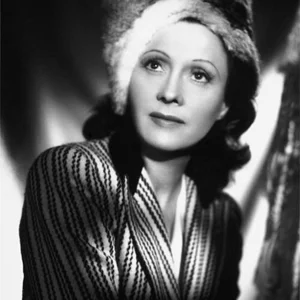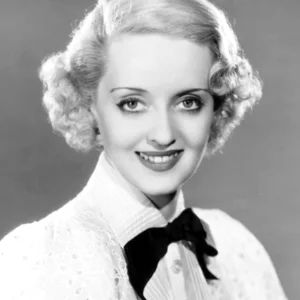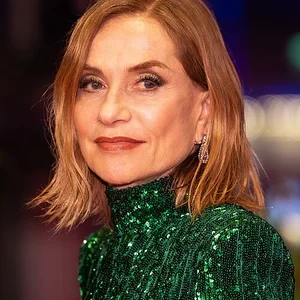

French actress born in 1953, considered one of the greatest performers in world cinema. A muse to directors such as Claude Chabrol and Michael Haneke, she brings an icy, deeply interior presence that redefines the art of acting.
Isabelle Huppert(1953 — ?)
Isabelle Huppert
France
8 min read
Frequently asked questions
Famous Quotes
« I've never been afraid of difficult roles. Difficulty is what attracts me.»
« Cinema is the art of looking people in the eyes.»
Key Facts
- Born on March 16, 1953, in Paris
- More than 130 films made over a career spanning fifty years
- Two Best Actress awards at the Cannes Film Festival (1978 for Violette Nozière, 2001 for The Piano Teacher)
- Golden Globe for Best Actress in 2017 for Paul Verhoeven's Elle
- Winner of eight César Awards throughout her career
Works & Achievements
Claude Chabrol film in which Huppert plays a young parricide from the 1930s. The role earned her her first Best Actress Prize at Cannes at age 25 and revealed to the world her ability to portray morally ambiguous characters.
Chabrol directs Huppert in the role of Marie-Louise Giraud, the last woman guillotined in France for performing clandestine abortions during the Nazi Occupation. The performance earned her the César Award for Best Actress and established the film as a classic of French political cinema.
A dark film by Claude Chabrol exploring class tensions in contemporary France. Huppert forms an unsettling duo with Sandrine Bonnaire in a film considered one of the high-water marks of French cinema in the 1990s.
Michael Haneke's adaptation of Elfriede Jelinek's novel, in which Huppert plays Erika Kohut, a professor at the Vienna Conservatory tormented by a morbid relationship. She won the Best Actress Prize at Cannes and a second César.
A darkly comic musical by François Ozon bringing together eight iconic French actresses. Huppert reveals a light, comedic side, confirming the exceptional breadth of her acting range.
Paul Verhoeven film in which Huppert plays a businesswoman whose reaction to an assault is deeply unsettling. The role earned her the Golden Globe for Best Actress in 2017 and an Oscar nomination — her definitive international breakthrough.
Anecdotes
At just 25 years old, Isabelle Huppert won the Best Actress Award at the Cannes Film Festival in 1978 for her role in Claude Chabrol's Violette Nozière. She plays a young woman who poisoned her parents in the 1930s — a deeply unsettling role that revealed to the world her ability to inhabit morally complex characters without ever judging them.
To prepare for her role in Michael Haneke's The Piano Teacher (2001), Isabelle Huppert spent several months learning to play the piano and read Elfriede Jelinek's novel in the original German. Her performance earned her the Best Actress Prize at Cannes, and the film also won the Grand Prix du jury — a rare double distinction for a single film.
Isabelle Huppert holds the record for the most films selected in official competition at the Cannes Film Festival, with over twenty entries throughout her career. This exceptional track record reflects the trust placed in her by some of the world's greatest filmmakers, from France and Austria to the Netherlands.
In 2017, Isabelle Huppert became one of the very few French actresses to receive an Oscar nomination, for her role in Paul Verhoeven's Elle. That same year, she won the Golden Globe for Best Actress — a remarkable achievement for an actress whose films are almost entirely in French.
Huppert made no fewer than eight films with Claude Chabrol, forming one of the most prolific actress-director partnerships in French cinema. Chabrol said she was capable of “doing anything without ever appearing to force it,” highlighting the cool, inward presence that sets her apart from every other actress of her generation.
Primary Sources
I am not looking to be liked through the characters I play. What interests me is inner truth, even when it is disturbing. The viewer may dislike the character and yet be fascinated.
Making Elle was one of the most intense experiences of my career. Thank you for embracing this very French film in such a distinctly American way.
Michael Haneke does not ask his actors to simulate: he asks them to be. The Piano Teacher demanded a total commitment from me — physical and psychological — unlike anything I had experienced before.
I have never chosen my roles based on what the audience expected of me. That freedom is the very condition of my work.
Key Places
Isabelle Huppert's birthplace, where she grew up and trained at the Conservatoire National Supérieur d'Art Dramatique. Paris has remained her artistic and personal anchor throughout her career.
The international stage where Isabelle Huppert has been celebrated most often, having received two Best Actress prizes (1978 and 2001) and presented more than twenty films in official competition over the course of her career.
The city where Michael Haneke's The Piano Teacher (2001) was filmed. As the capital of classical music, Vienna provides an essential backdrop to the tortured psychology of the film and of the character Erika Kohut.
Isabelle Huppert has performed several stage productions here, including Phaedra(s) and The Mother, cementing her international standing on major American stages beyond the world of cinema.
The institution where Huppert received her acting training in the 1970s. This prestigious conservatory has shaped some of the most accomplished performers in French theatre and cinema since the eighteenth century.
Typical Objects

Before each shoot, Isabelle Huppert receives a script that she annotates meticulously, noting her intentions, her questions, and the silences she wishes to preserve. This rigorous intellectual preparation is at the heart of her working method.

To prepare for *The Piano Teacher* (2001), Huppert practiced piano every day for several months. The instrument embodies her absolute technical demands and her ability to learn anything in service of a role.

Huppert has walked the steps of the Palais des Festivals more than twenty times as an actress in official competition. This badge has become an almost familiar fixture in her extraordinary career.

The majority of art-house films in which Huppert has appeared were shot on 35mm film up through the 2000s. This demanding format imposes strict discipline on set, which the actress often cites as a structuring force.

Presented each year by the Academy of Cinema Arts and Techniques, the César recognizes excellence in French cinema. Huppert has won two for Best Actress, in 1989 and 2002 — a personal record that has become emblematic of her career.

Huppert is a voracious reader who draws psychological inspiration for her characters from literature — Jelinek, Duras, Woolf. Several of her roles are adaptations of major literary works, which she reads in the original language whenever possible.
School Curriculum
Vocabulary & Tags
Key Vocabulary
Daily Life
Morning
During filming periods, Isabelle Huppert rises early to review her annotations on the script and mentally focus before arriving on set. She places great importance on this silent, solitary preparation, which she considers inseparable from her working method.
Afternoon
Filming afternoons are often devoted to the most intense scenes. Huppert is renowned for her ability to reach the required emotional state quickly, with no visible preparation — something that fascinates her co-stars and directors alike. Between takes, she remains focused and says little.
Evening
Outside of filming, Isabelle Huppert's evenings are often spent on cultural pursuits: exhibitions, performances, reading. An avid cinephile and voracious reader, she regularly cites literature — Jelinek, Duras, Woolf — as her primary source of inspiration for building her characters.
Food
Huppert leads a sober lifestyle and does not make her eating habits a public matter. The physical and mental discipline demanded by a career spanning more than fifty years has led her to maintain a regular routine, far removed from the excesses sometimes associated with the world of entertainment.
Clothing
On screen, Huppert often effaces herself behind understated outfits that emphasize a character's psychology rather than their appearance. In public life, she is associated with French haute couture — particularly Balenciaga and Chanel — projecting a cool, minimalist elegance that has become her aesthetic signature.
Housing
Isabelle Huppert lives primarily in Paris, in an apartment whose privacy she guards fiercely. Unlike many stars of her stature, she has always insisted on maintaining a highly protected private life, far from media exposure and celebrity magazines.
Historical Timeline
Period Vocabulary
Liens externes & ressources
Références
Œuvres
La Pianiste
2001
8 femmes
2002