 flip
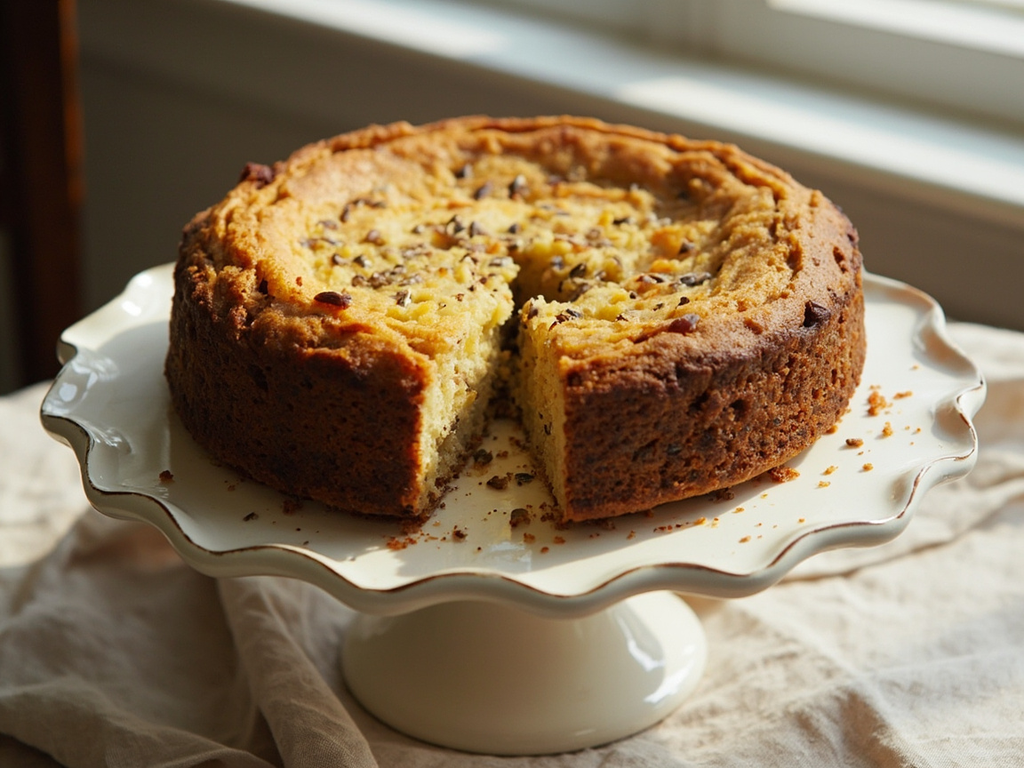
flipCaraway Seed Cake (keeping cake)
Caraway Seed Cake (keeping cake)
Why this dish? Jane Austen, a great lover of sugar and cakes, mentions household cakes in her letters. The seed cake, rich in butter and perfumed with caraway, kept for several days in a tin: a slice was cut for dessert, and it willingly accompanied long carriage journeys between Steventon, Bath and Chawton.
A dense, buttery cake, fragrant with caraway seeds which give it a warm, slightly aniseed note. Its high butter content allows it to keep, making it an ideal companion for dessert and travel.
I confess without shame a guilty weakness for sugar and cakes. This one is beaten long — the butter and sugar first, until they whiten and foam, for that is the whole secret of a light crumb — then the eggs one by one, and finally a good pinch of caraway. It keeps for several days in its tin, which is no small advantage when one must endure three hours of jolting in a carriage to Chawton.
- •Wheat flour — one pound (structure)
- •Fresh butter — half a pound (richness and preservation)
- •Sugar — half a pound (sweetness)
- •Eggs — five or six (binding and rise)
- •Caraway seeds — a good spoonful (signature fragrance)
- •Brandy or rose water — a splash (fragrance)
Caraway Seed Cake (keeping cake)
A dense, buttery cake, fragrant with caraway seeds which give it a warm, slightly aniseed note. Its high butter content allows it to keep, making it an ideal companion for dessert and travel.
Why this dish? Jane Austen, a great lover of sugar and cakes, mentions household cakes in her letters. The seed cake, rich in butter and perfumed with caraway, kept for several days in a tin: a slice was cut for dessert, and it willingly accompanied long carriage journeys between Steventon, Bath and Chawton.
I confess without shame a guilty weakness for sugar and cakes. This one is beaten long — the butter and sugar first, until they whiten and foam, for that is the whole secret of a light crumb — then the eggs one by one, and finally a good pinch of caraway. It keeps for several days in its tin, which is no small advantage when one must endure three hours of jolting in a carriage to Chawton.
Ingredients (period version)
- Wheat flour — one pound (structure)
- Fresh butter — half a pound (richness and preservation)
- Sugar — half a pound (sweetness)
- Eggs — five or six (binding and rise)
- Caraway seeds — a good spoonful (signature fragrance)
- Brandy or rose water — a splash (fragrance)
Ingredients
- All-purpose flour — 250 g (structure)
- Soft unsalted butter — 180 g (richness and preservation)
- Sugar — 180 g (sweetness)
- Eggs — 4 (binding and rise)
- Baking powder — 1 teaspoon (leavening (adaptation))
- Caraway seeds — 2 teaspoons (signature fragrance)
- Rose water (or cognac) — 1 tablespoon (fragrance)
Method
- Beat the soft butter and sugar together until pale and fluffy.
- Incorporate the eggs one by one, beating well after each addition.
- Add the sifted flour with baking powder, caraway seeds and rose water; mix gently.
- Pour into a buttered and lined loaf tin.
- Bake at 170°C for 50 to 60 minutes, until a skewer comes out clean. Let cool slightly, then store in an airtight tin.
How it was made : Seed cake is an English classic since the 17th century. Before baking powder (popularized around the mid-19th century), lightness came from long beating of butter and eggs, sometimes helped by a little brewer's yeast. Its high butter and sugar content ensured good keeping.
The contemporary twist : A light lemon glaze and a shower of toasted caraway seeds on top, sliced into thin fingers for afternoon tea.
Sources : Maggie Lane, Jane Austen and Food (1995) · Hannah Glasse, The Art of Cookery Made Plain and Easy (18th century editions)
Jane Austen · Charactorium