 flip
flipPuls — The Roman Porridge of Far
Puls — The Roman Porridge of Far
Why this dish? Before becoming the food of the poor, puls was the foundation of Roman diet, from the huts on the Palatine to the tents of the legions. Caesar, who willingly shared his soldiers' rations to win their loyalty, knew this porridge as the marching food that sustained them during the conquest of Gaul.
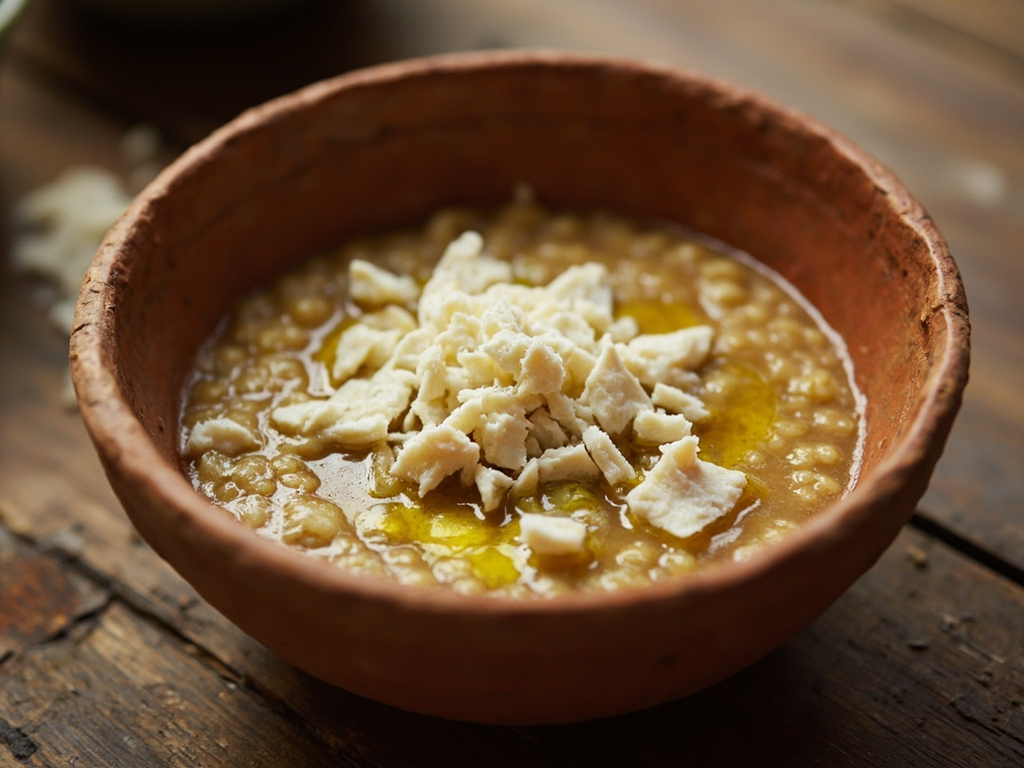
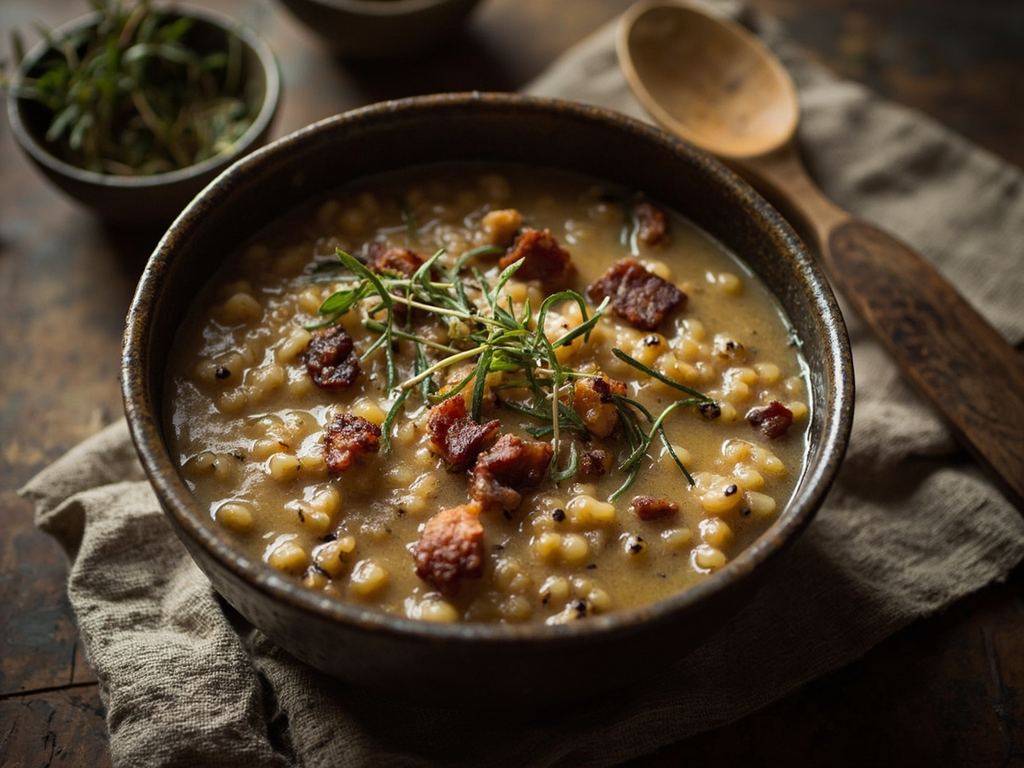
A thick porridge of far (emmer wheat) cooked in salted water, enriched with a drizzle of garum, olive oil, and cheese. Comforting and nourishing, it was the liquid bread of the Romans — they were even called a 'porridge-eating people.'
Citizen, do not mock this humble porridge: my legions conquered Gaul with bellies full of far, not banquet fare. In camp, I had the grain poured into boiling water, a pinch of salt, a dash of garum, and every man ate from the same pot, the general and the lowest velite alike. Eat it hot, thick enough to hold the spoon upright — that's how you survive a winter among the Belgae. Rome was built on this, trust one who crossed the Rubicon.
- •Far (crushed emmer wheat) — two handfuls per guest (base grain)
- •Spring water — enough to cover generously (cooking liquid)
- •Salt — a pinch (seasoning)
- •Garum — a drizzle (umami signature)
- •Olive oil — a splash (binding)
- •Fresh sheep cheese — to taste (richness)
Puls — The Roman Porridge of Far
A thick porridge of far (emmer wheat) cooked in salted water, enriched with a drizzle of garum, olive oil, and cheese. Comforting and nourishing, it was the liquid bread of the Romans — they were even called a 'porridge-eating people.'
Why this dish? Before becoming the food of the poor, puls was the foundation of Roman diet, from the huts on the Palatine to the tents of the legions. Caesar, who willingly shared his soldiers' rations to win their loyalty, knew this porridge as the marching food that sustained them during the conquest of Gaul.
Citizen, do not mock this humble porridge: my legions conquered Gaul with bellies full of far, not banquet fare. In camp, I had the grain poured into boiling water, a pinch of salt, a dash of garum, and every man ate from the same pot, the general and the lowest velite alike. Eat it hot, thick enough to hold the spoon upright — that's how you survive a winter among the Belgae. Rome was built on this, trust one who crossed the Rubicon.
Ingredients (period version)
- Far (crushed emmer wheat) — two handfuls per guest (base grain)
- Spring water — enough to cover generously (cooking liquid)
- Salt — a pinch (seasoning)
- Garum — a drizzle (umami signature)
- Olive oil — a splash (binding)
- Fresh sheep cheese — to taste (richness)
Ingredients
- Crushed emmer (or small spelt) — 150 g (base grain)
- Water — 750 ml (cooking liquid)
- Salt — 1 tsp (seasoning)
- Fish sauce (reconstituted garum or colatura di alici) — 1 tsp (umami signature)
- Olive oil — 2 tbsp (binding)
- Fresh sheep cheese (like brousse) — 80 g (richness)
Method
- Rinse the crushed emmer in cold water.
- Bring salted water to a boil, then pour in the emmer in a stream while stirring.
- Simmer over low heat for 30–40 minutes, stirring often, until thick and creamy.
- Remove from heat; stir in olive oil and fish sauce.
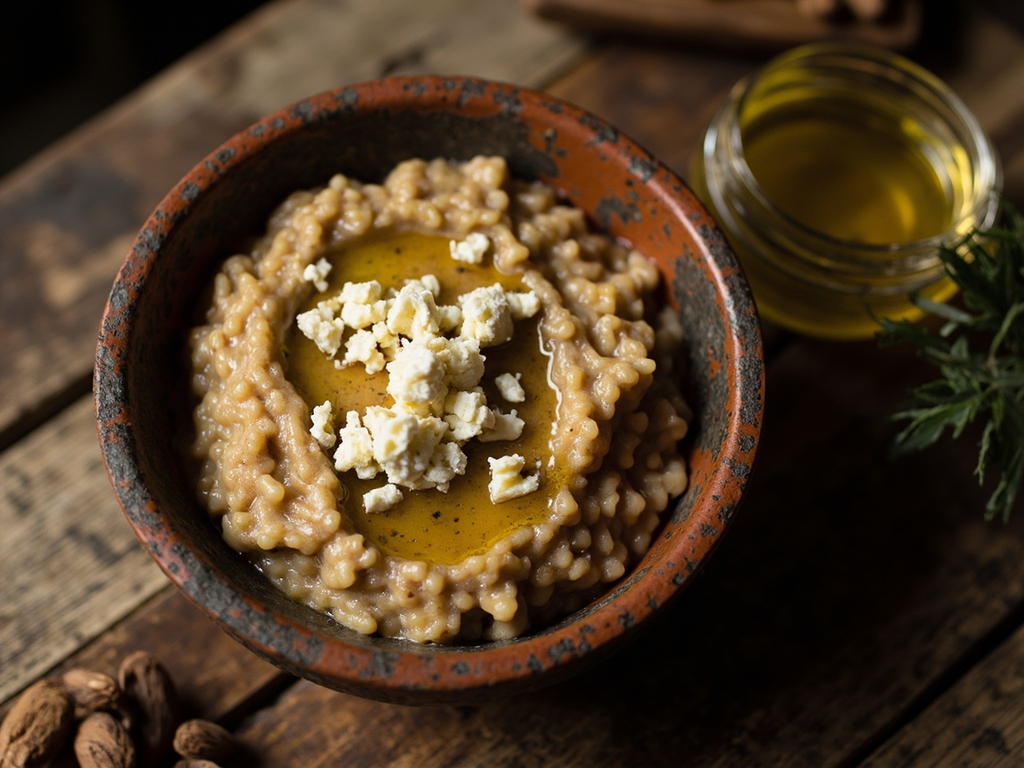
- Serve very hot, topped with crumbled fresh cheese.
How it was made : Far was the ancestral grain of Rome, so important that the most solemn marriage, confarreatio, was celebrated around a cake of far. It was cooked in water in an earthenware pot (olla), sometimes enriched with legumes: that is puls.
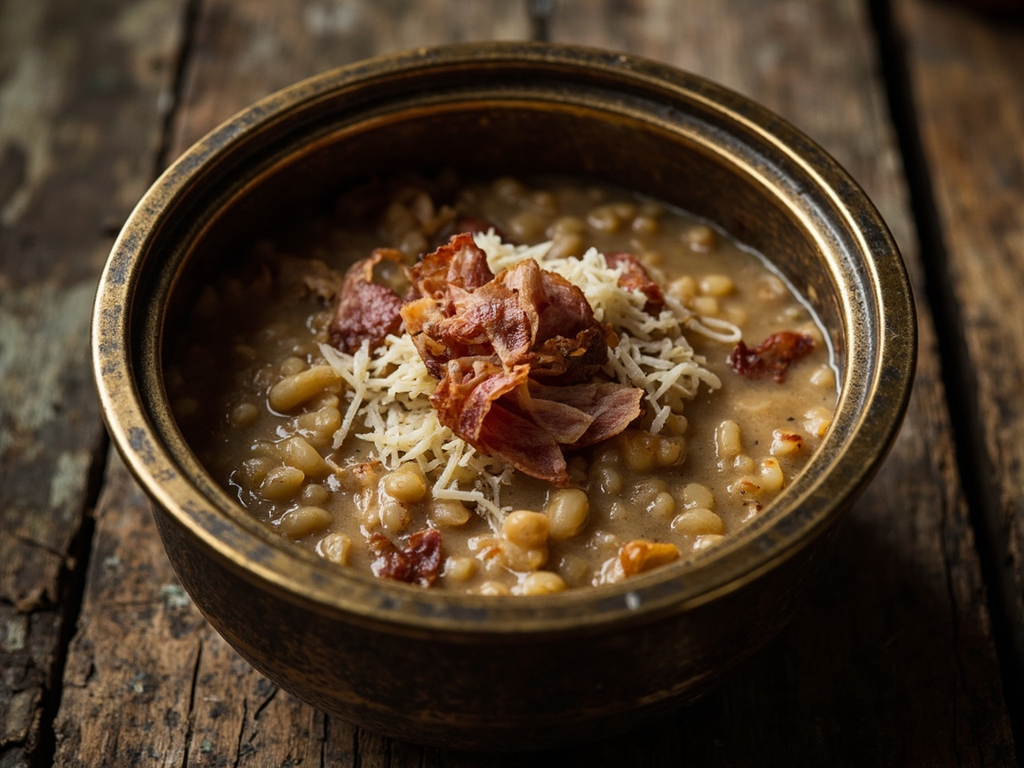
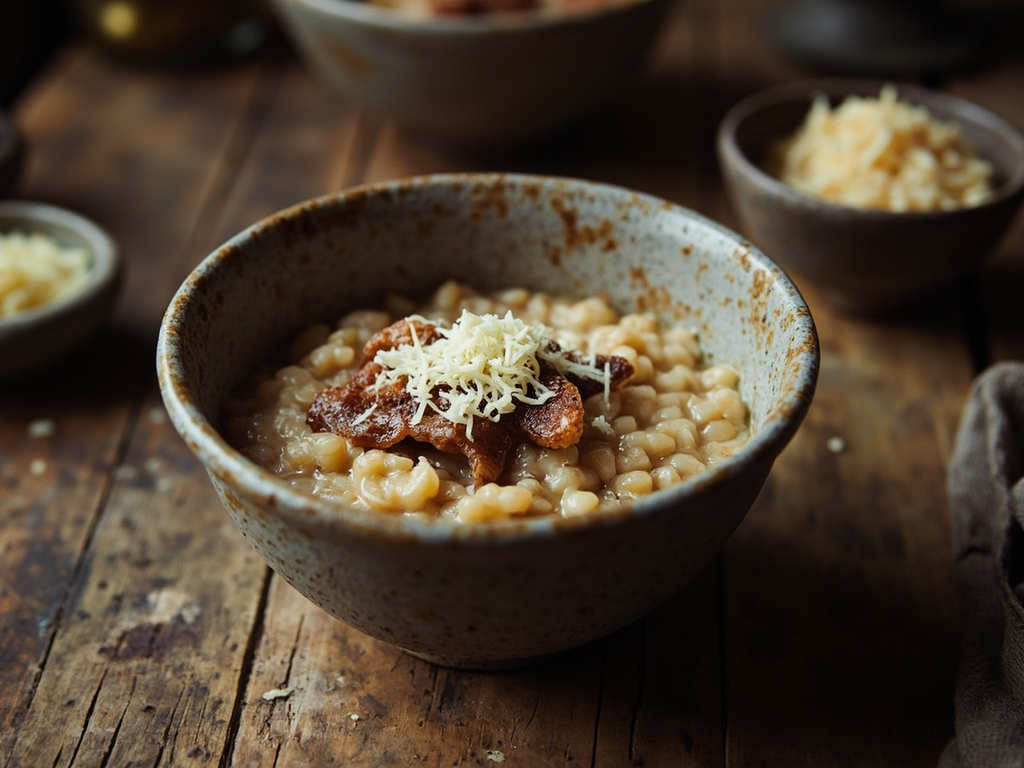
The contemporary twist : Served risotto-style, sprinkled with grated pecorino and a twist of long pepper — a nod to Roman spice trade.
Sources : Apicius, De re coquinaria · Cato the Elder, De agricultura
Julius Caesar · Charactorium