 flip
flipQuince Paste (Dulce de Membrillo)
Quince Paste (Dulce de Membrillo)
Why this dish? Dulce de membrillo, eaten with fresh cheese (the famous 'vigilante'), is a classic end to criollo meals. For a writer attached to the flavors of his country, this amber-colored paste preserved all year condensed the memory of a domestic Argentine cuisine inherited from Spanish immigrants.
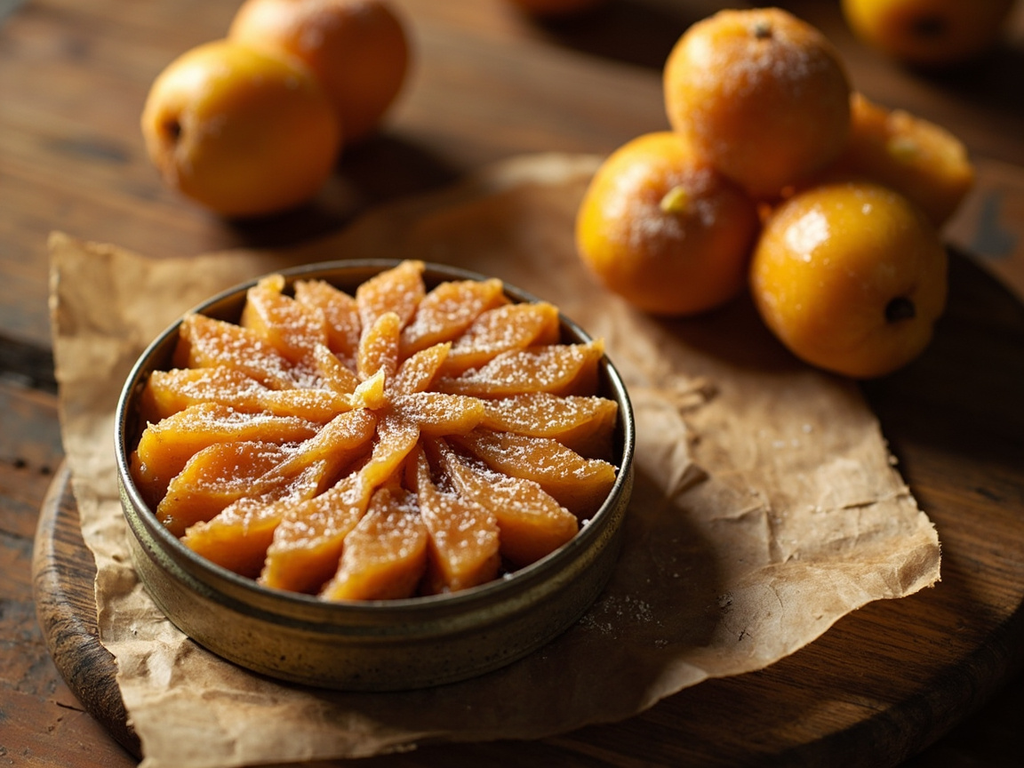
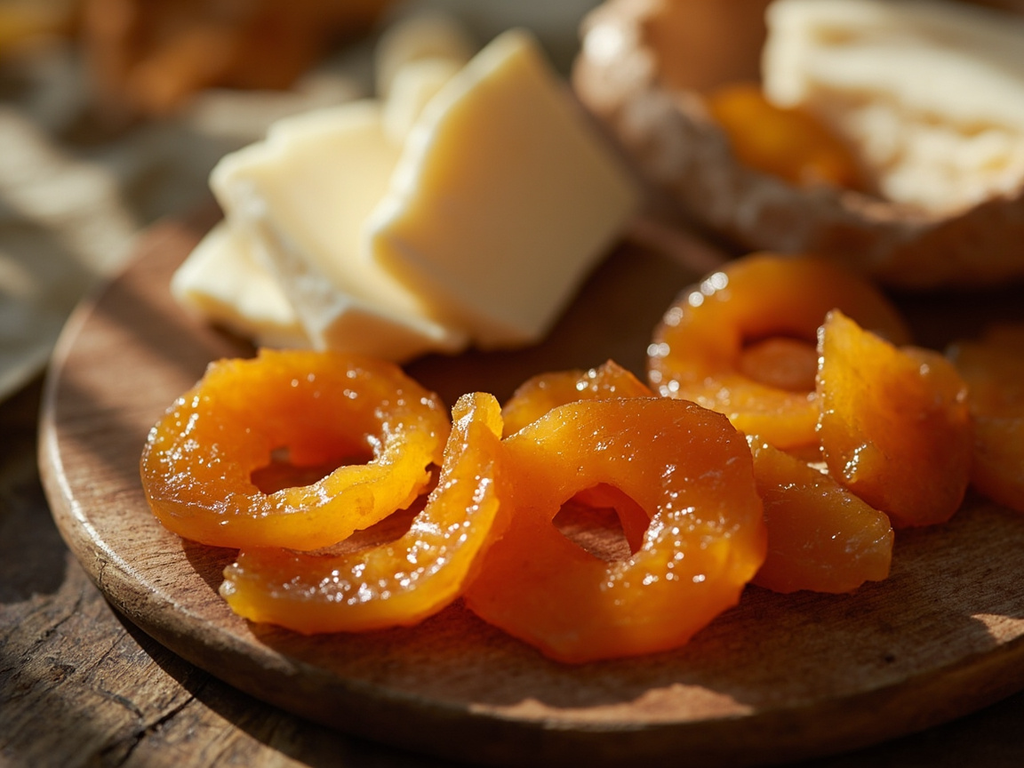
A dense, amber-red paste made from quinces slowly cooked with sugar until set. You pour it into a block, let it dry and harden, then slice it for months — alone, on bread, or with cheese.
Quince paste is pure patience, no two ways about it. You peel it, cook it until it surrenders, pass it through a sieve, and then the serious part begins: stir and stir with a wooden spoon while the thing turns red like a southern sunset and pulls away from the bottom. You cut it into a bar, let it dry, and then, a slice of membrillo with a good piece of fresh cheese: that, che, we call vigilante, and it's the best way to end a meal.
- •Ripe quinces — as desired (fruit)
- •Sugar — equal weight to pulp (preservation and setting)
- •Lemon juice — a splash (acidity and color)
Quince Paste (Dulce de Membrillo)
A dense, amber-red paste made from quinces slowly cooked with sugar until set. You pour it into a block, let it dry and harden, then slice it for months — alone, on bread, or with cheese.
Why this dish? Dulce de membrillo, eaten with fresh cheese (the famous 'vigilante'), is a classic end to criollo meals. For a writer attached to the flavors of his country, this amber-colored paste preserved all year condensed the memory of a domestic Argentine cuisine inherited from Spanish immigrants.
Quince paste is pure patience, no two ways about it. You peel it, cook it until it surrenders, pass it through a sieve, and then the serious part begins: stir and stir with a wooden spoon while the thing turns red like a southern sunset and pulls away from the bottom. You cut it into a bar, let it dry, and then, a slice of membrillo with a good piece of fresh cheese: that, che, we call vigilante, and it's the best way to end a meal.
Ingredients (period version)
- Ripe quinces — as desired (fruit)
- Sugar — equal weight to pulp (preservation and setting)
- Lemon juice — a splash (acidity and color)
Ingredients
- Quinces — 1 kg (fruit)
- Sugar — ≈ 700–800 g (equal weight to obtained pulp) (preservation and setting)
- Lemon juice — 1 lemon (acidity and color)
Method
- Wash the quinces, cut into quarters (do not peel, for pectin), and cook covered with water until tender.
- Drain, peel, core, and pass the flesh through a sieve or food mill to a smooth purée.
- Weigh the purée and add an equal weight of sugar, plus the lemon juice.
- Cook over medium heat, stirring constantly with a wooden spoon, until the paste turns red and pulls away from the bottom (30–45 min).
- Pour into a lined mold, smooth the top, and let air-dry for one to two days before unmolding and slicing.
How it was made : Quince paste is a preservation technique inherited from the Mediterranean world and brought to Argentina by Spanish and Italian immigrants. Before refrigeration, turning autumn fruits into dense sweet pastes allowed them to be kept for months in the family pantry.
The contemporary twist : Serve the 'vigilante' revisited: a cube of membrillo placed on a slice of queso cremoso and a walnut piece, as a mignardise to end the sobremesa.
Julio Cortázar · Charactorium