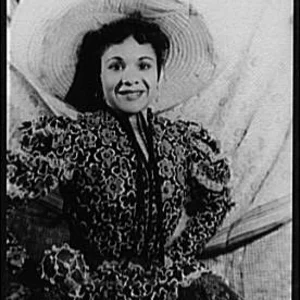

Katharine Carl was an American portrait painter. She is known for having created in 1903 the first official portrait of the Empress Dowager Cixi of China, which was exhibited at the 1904 World's Fair in St. Louis.
Katherine Carl
Katharine Augusta Carl
5 min read
Frequently asked questions
Key Facts
- Created the first official portrait of the Empress Dowager Cixi in 1903, staying several months at the Forbidden City
- The portrait of Cixi was presented at the 1904 World's Fair in St. Louis
- Published in 1906 the memoir “With the Empress Dowager of China” recounting her stay at the Chinese court
Works & Achievements
The first official portrait of Cixi painted by a Western woman, conceived as a prestige image meant to improve China's reputation abroad.
The version displayed at the St. Louis World's Fair and then presented to the American government, today held by the Smithsonian Institution.
A memoir detailing her stay at the court; a valuable source on daily life and etiquette at the Qing imperial palace.
Several versions and studies of the empress's face were produced during the artist's long stay at the palace.
Anecdotes
To paint the portrait of the Dowager Empress Cixi, Katharine Carl was allowed in 1903 to live for nearly nine months inside the Summer Palace, an exceptional privilege for a foreigner at a time when the court in Beijing remained closed to the West.
Cixi imposed strict rules on the painting: the artist had to begin the work on a day and at an hour deemed auspicious by the court astrologers, and the empress refused to be depicted with the slightest wrinkle, wanting an idealized and eternally youthful image.
The portrait was sent to the 1904 World's Fair in St. Louis, then offered to the United States government: transported with ceremony worthy of a living person, it was never to be set directly on the ground, out of respect owed to the image of the sovereign.
In 1905, Katharine Carl published a memoir, “With the Empress Dowager of China,” which gave the Western public a rare, first-hand account of daily life inside the Chinese imperial court.
It was thanks to the friendship of Sarah Pike Conger, wife of the American minister in Beijing, that Katharine Carl gained access to the empress: Cixi was then seeking to improve her image in the West after the Boxer Rebellion.
Primary Sources
The author describes her stay at court: “The Empress Dowager was seated on her throne, dressed in her finest attire, surrounded by her ladies-in-waiting, when I began the portrait.”
The official portrait of Her Majesty the Empress Dowager of China, painted by Miss Katharine A. Carl, is presented as a gift from the sovereign to the American people.
Mrs. Conger recounts the efforts made with the court to have an American artist received in order to paint the Empress and make her likeness known abroad.
Key Places
Birthplace of Katharine Augusta Carl, in the southern United States.
Where she received her artistic training in Europe's academic studios.
Imperial residence where the artist lived for several months to paint the Empress Dowager Cixi in 1903.
Heart of Chinese imperial power under the Qing dynasty, center of the court the artist frequented.
Where Cixi's official portrait was exhibited before the international public in 1904.
City where Katharine Carl spent the end of her life and where she died in 1938.
Typical Objects

Tools of the late-nineteenth-century academic artist, carried all the way into the grounds of the Chinese imperial palace. They were used to execute the large oil portrait of Cixi.

A silk garment richly embroidered with dragons and symbols of longevity that Cixi wore for the sitting. Reproducing it faithfully was a major concern of the official portrait.

A large oil painting meant to depict the sovereign in an idealized and eternally youthful manner. It was treated as an almost sacred image of the imperial person.

Long fingernail guards of precious metal worn by Cixi, a sign that she performed no manual labor. They appear in the portrait and struck the American artist.

An official stamp used to validate the sovereign's decrees. A symbol of the supreme authority wielded by Cixi during her regency.

The ceremonial seat on which Cixi posed for the portrait. Its position and decoration conveyed the rigid hierarchy of the Qing court.
School Curriculum
Vocabulary & Tags
Key Vocabulary
Daily Life
Morning
During her stay at the palace, Katharine Carl rose early to take advantage of the natural light for painting. She had to observe strict court etiquette before each session, waiting for the Empress to be ready and settled on her throne.
Afternoon
The sitting sessions continued in the afternoon, but were subject to Cixi's moods and schedule, often interrupted by the sovereign's protocol obligations. The artist used these moments to observe palace life and take notes.
Evening
In the evening, lodged within the imperial compound, she recorded her impressions, which would later feed into her book of memoirs. The evenings were punctuated by banquets and opera performances offered by the court.
Food
At court, meals were based on refined Chinese cuisine: rice, tea, vegetables, meats, and countless small dishes served during lavish banquets. The American artist discovered flavors and a dining ceremony very different from those of the West.
Clothing
A Western woman of the Belle Époque, she wore long dresses in the European fashion of the early 20th century. At court, she moved among the embroidered silks and elaborate headdresses of the Manchu aristocracy.
Housing
During the commission, she was lodged inside the Summer Palace, in reserved pavilions—an exceedingly rare privilege for a foreigner. The rest of her life unfolded between the United States and her artistic travels.
Historical Timeline
Period Vocabulary
Liens externes & ressources
Références
Œuvres
Portrait officiel de l'impératrice douairière Cixi
1903-1904
Portrait de Cixi présenté à Saint-Louis
1904
With the Empress Dowager of China
1905
Études et portraits supplémentaires de Cixi
1903-1904