 flip
flipRoast Beef and Yorkshire Pudding from the High Table
Roast Beef and Yorkshire Pudding from the High Table
Why this dish? Elected a Fellow of Trinity College and then Director of the Cavendish, Bragg dined on gala evenings at the 'high table', that raised table where professors in gowns shared Sunday roast beef, the emblematic dish of Cambridge colleges.
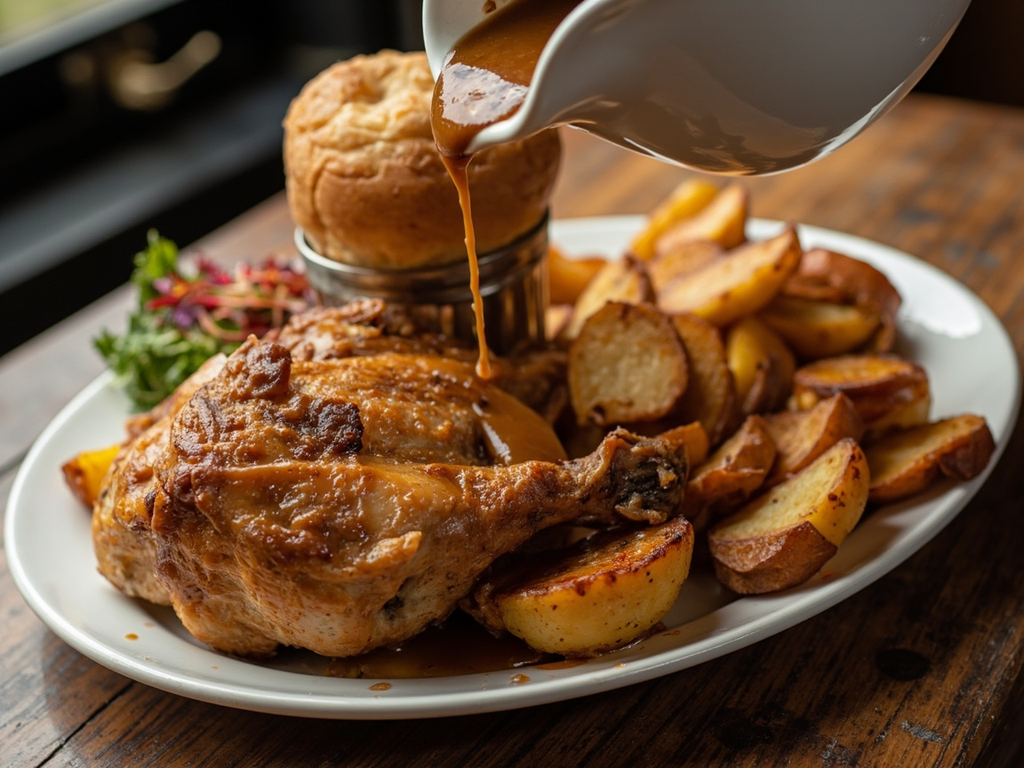
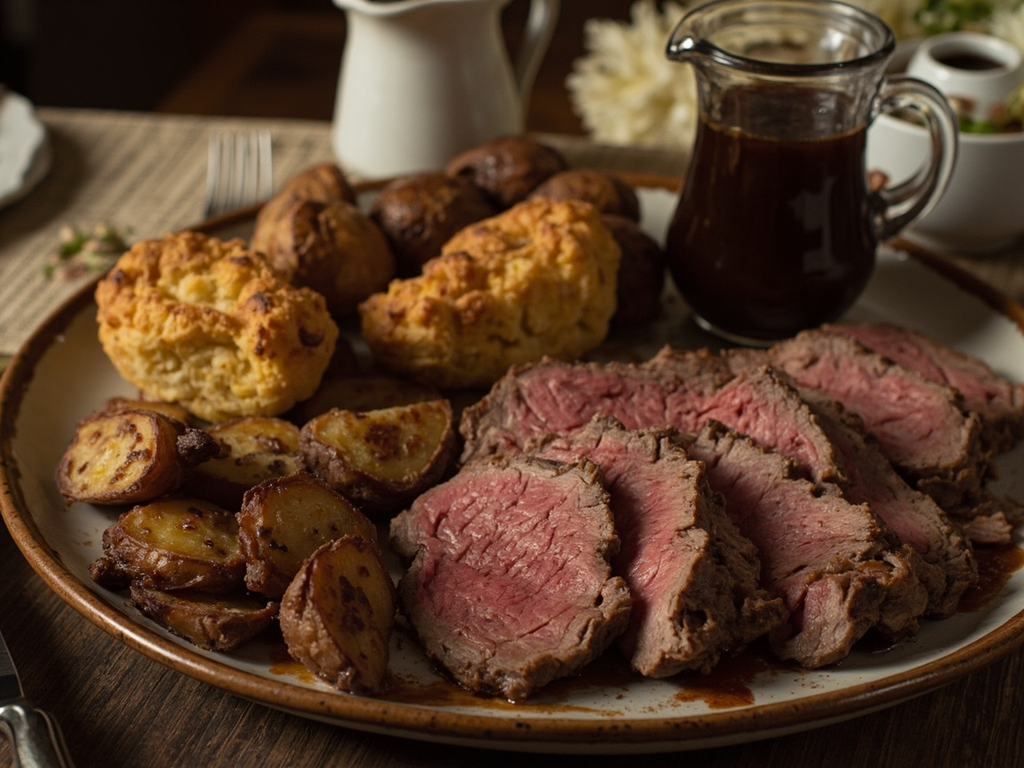
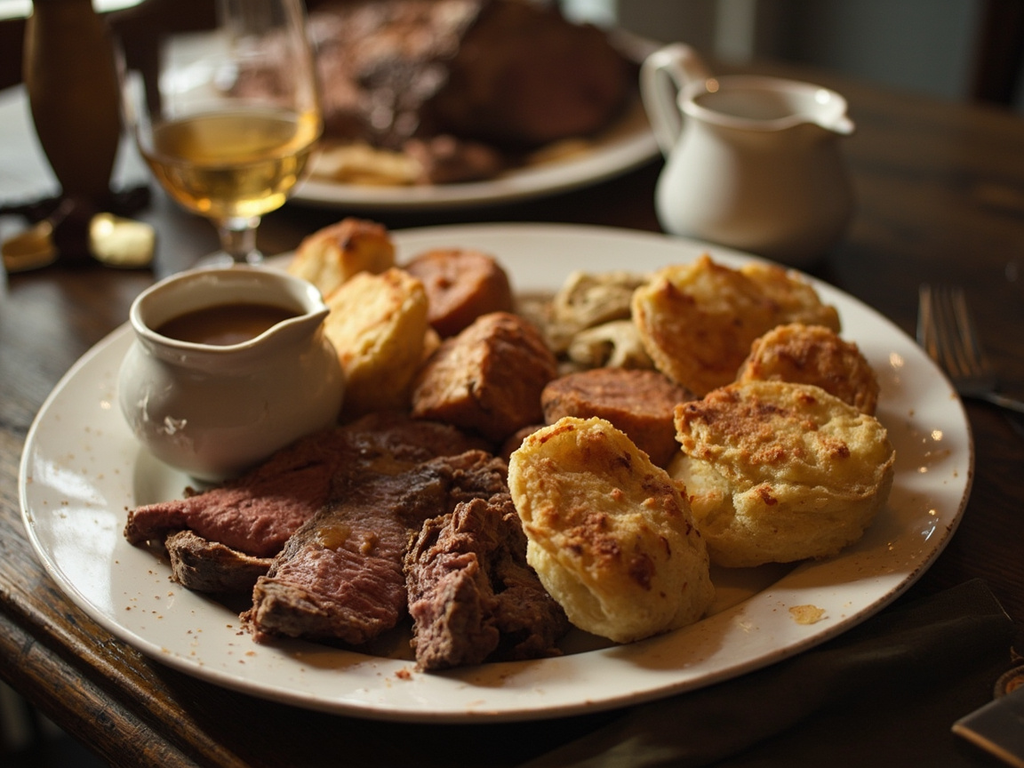
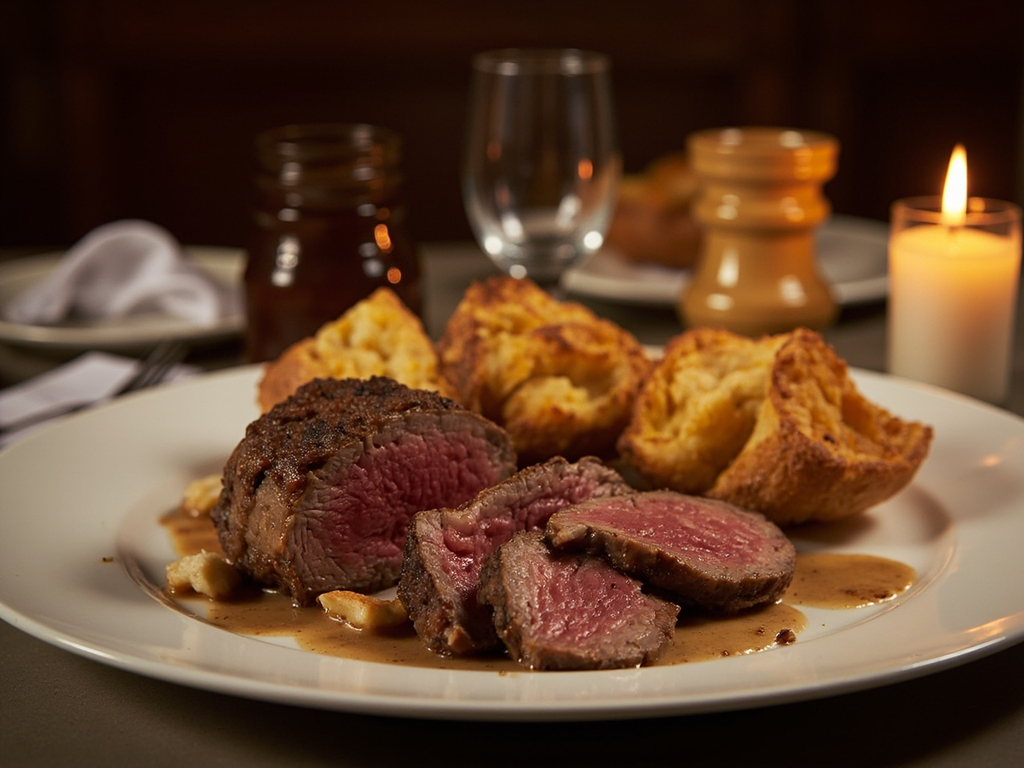
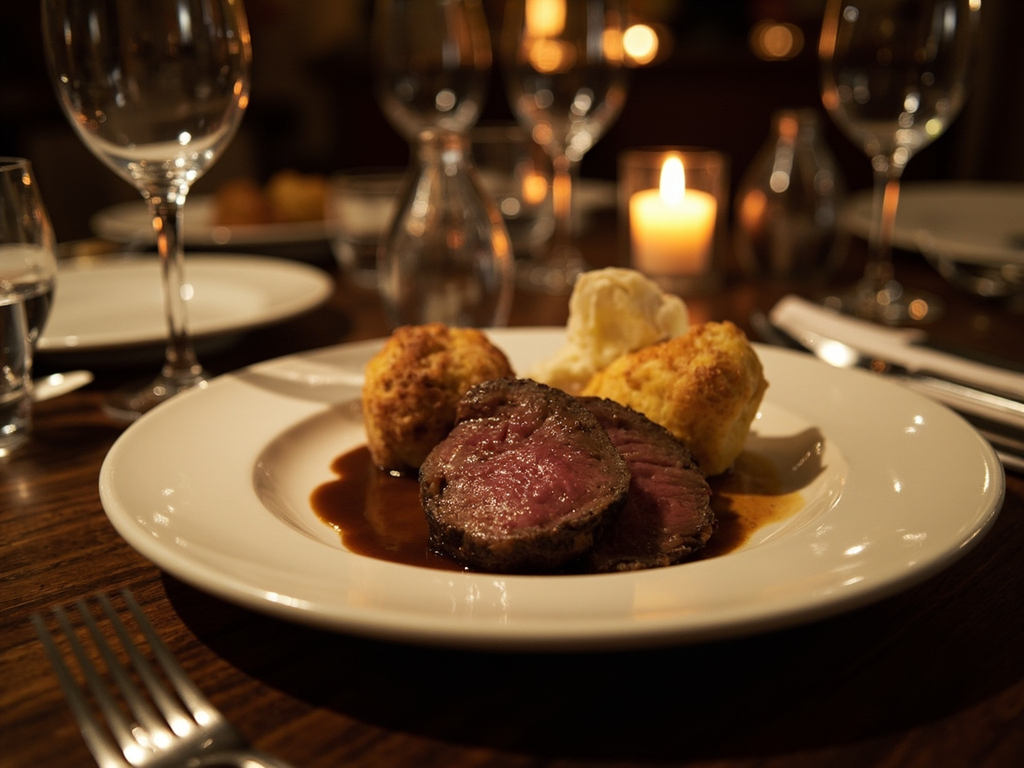
A cut of beef roasted rare at the heart, pan-juice gravy, and the famous puffed and crispy Yorkshire pudding that catches the sauce. The great festive classic of the English table.
On hall evenings, one dons the gown and ascends to the high table — a custom that amuses foreigners and reassures us. There they serve roast beef rare, and its inseparable Yorkshire pudding, which must be made to rise in the oven in smoking fat. The secret, I was taught, lies in the fierce heat and the patience not to open the door too soon — rather like a good experiment: you prepare everything with care, then let nature take its course.
- •Piece of beef (sirloin or rib) — a fine cut (centerpiece)
- •Beef dripping — a few spoonfuls (cooking fat)
- •Flour, eggs, milk — in measured parts (pudding batter)
- •Salt and pepper — to taste (seasoning)
Roast Beef and Yorkshire Pudding from the High Table
A cut of beef roasted rare at the heart, pan-juice gravy, and the famous puffed and crispy Yorkshire pudding that catches the sauce. The great festive classic of the English table.
Why this dish? Elected a Fellow of Trinity College and then Director of the Cavendish, Bragg dined on gala evenings at the 'high table', that raised table where professors in gowns shared Sunday roast beef, the emblematic dish of Cambridge colleges.
On hall evenings, one dons the gown and ascends to the high table — a custom that amuses foreigners and reassures us. There they serve roast beef rare, and its inseparable Yorkshire pudding, which must be made to rise in the oven in smoking fat. The secret, I was taught, lies in the fierce heat and the patience not to open the door too soon — rather like a good experiment: you prepare everything with care, then let nature take its course.
Ingredients (period version)
- Piece of beef (sirloin or rib) — a fine cut (centerpiece)
- Beef dripping — a few spoonfuls (cooking fat)
- Flour, eggs, milk — in measured parts (pudding batter)
- Salt and pepper — to taste (seasoning)
Ingredients
- Roast beef (sirloin) — 1.2 kg (centerpiece)
- Beef fat or oil — 4 tbsp (cooking fat)
- Flour — 140 g (pudding batter)
- Eggs — 4 (pudding batter)
- Milk — 200 ml (pudding batter)
- Salt, pepper — to taste (seasoning)
Method
- Bring beef to room temperature, season with salt and pepper. Sear in a very hot oven (240°C) for 20 min, then reduce to 180°C and cook to desired doneness (approx. 15 min per 500 g for rare). Rest under foil for 20 min.
- Prepare batter: whisk flour, eggs, milk, and salt until smooth, rest for 30 min.
- Heat fat in muffin tins until smoking, pour in batter all at once.
- Bake at 220°C for 20-25 min without opening the door: puddings should puff and turn golden.
- Deglaze the roasting pan for a simple gravy. Serve sliced beef, puddings, and gravy.
How it was made : Sunday roast beef has been a pillar of English cuisine since the 18th century; Yorkshire pudding was once cooked under the spit to catch the meat juices. In colleges, these formal dinners were (and remain) codified ceremonial rituals.
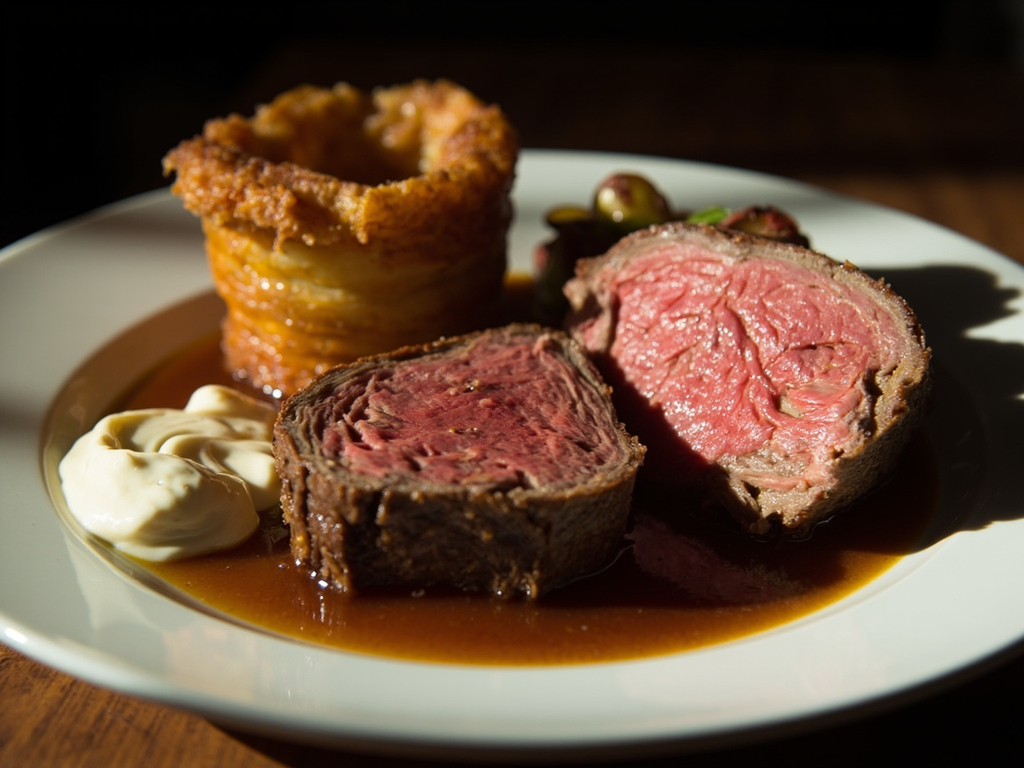
The contemporary twist : Serve the beef in thin slices with a creamy homemade horseradish sauce and individual golden puddings arranged in a staggered pattern.
Lawrence Bragg · Charactorium