 flip
flipHarðfiskr — dried fish of the traveler
Harðfiskr — dried fish of the traveler
Why this dish? Without dried fish, there would be no Vinland. To cross the North Atlantic in a knörr from Greenland, Leif and his crew had neither fire nor fresh provisions: harðfiskr, hard as wood and light, was the survival food of Scandinavian sailors, chewed as is during weeks at sea.
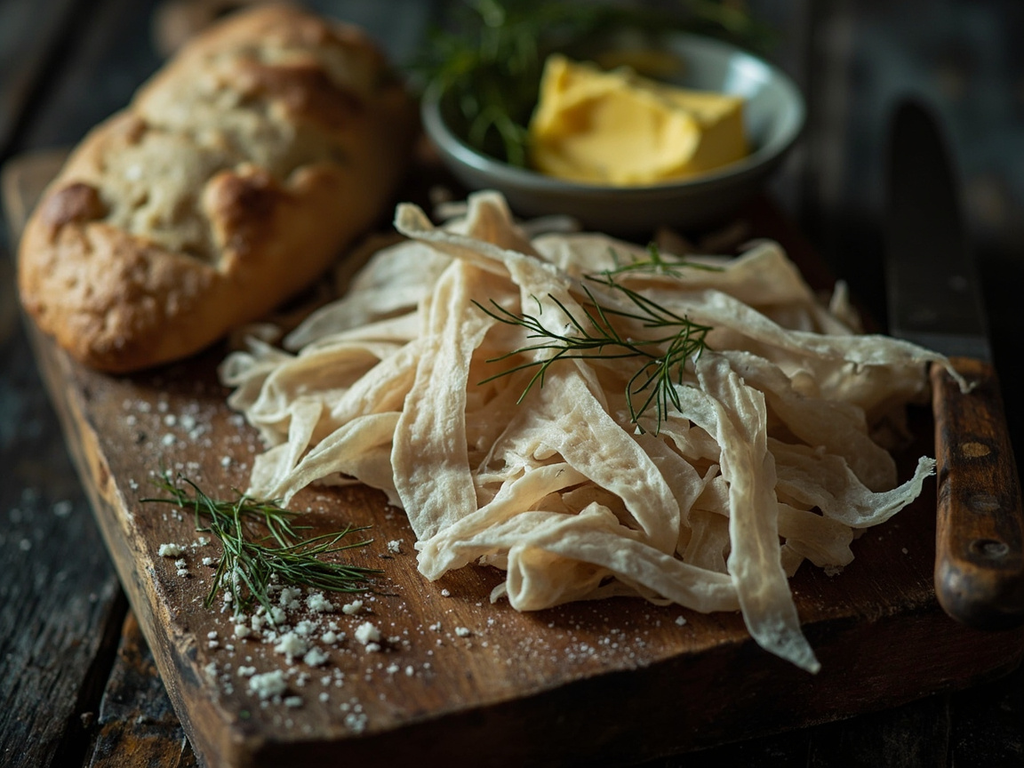
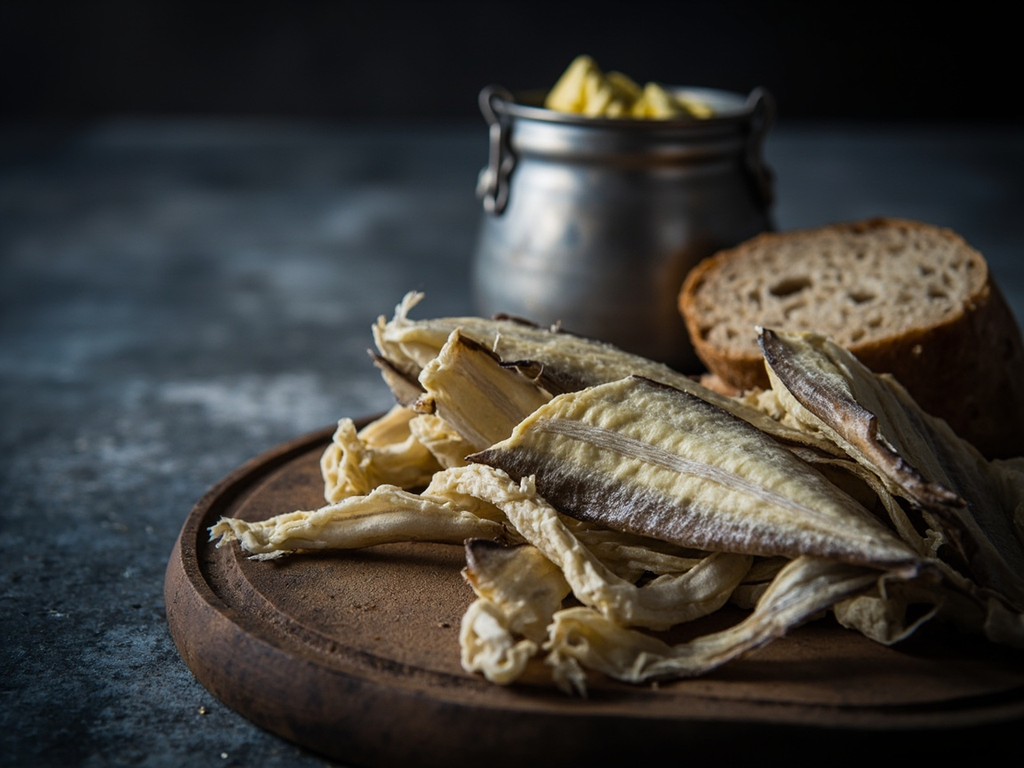
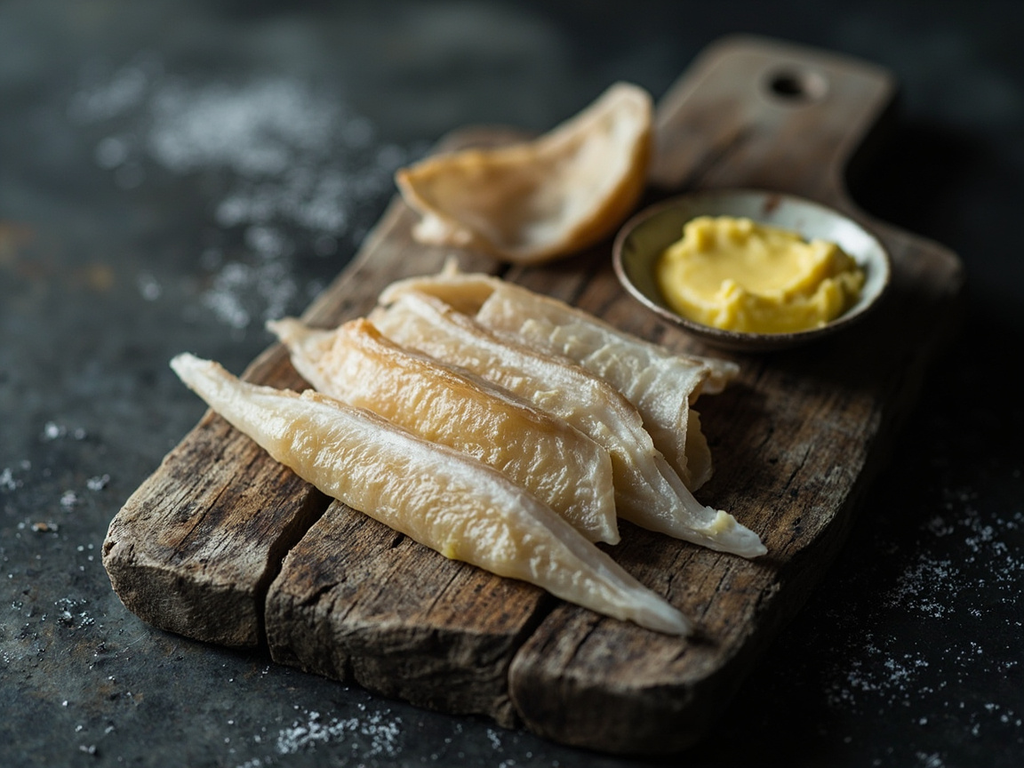
Strips of cod (or haddock) dried in cold air and wind until brittle. Rich in protein, nearly imperishable, it is the basic ration of any Viking expedition. Break into pieces and chew thoroughly, sometimes with a little butter.
Listen well, you who have never seen the grey sea of the North. When you sail westward, far from Brattahlíð, fire has no place aboard the knörr — water and wood do not agree. So we carry the fish that the wind has hardened on the racks, hard as horn, and we break it between our teeth day after day. Spread a little butter on it if the barrel still holds some, and you will hold out until the new land.
- •Whole cod or haddock — several fish (base, gutted and split in two)
- •Cold dry wind from the North — several weeks (drying agent)
- •Butter (optional) — a knob (accompaniment when eating)
Harðfiskr — dried fish of the traveler
Strips of cod (or haddock) dried in cold air and wind until brittle. Rich in protein, nearly imperishable, it is the basic ration of any Viking expedition. Break into pieces and chew thoroughly, sometimes with a little butter.
Why this dish? Without dried fish, there would be no Vinland. To cross the North Atlantic in a knörr from Greenland, Leif and his crew had neither fire nor fresh provisions: harðfiskr, hard as wood and light, was the survival food of Scandinavian sailors, chewed as is during weeks at sea.
Listen well, you who have never seen the grey sea of the North. When you sail westward, far from Brattahlíð, fire has no place aboard the knörr — water and wood do not agree. So we carry the fish that the wind has hardened on the racks, hard as horn, and we break it between our teeth day after day. Spread a little butter on it if the barrel still holds some, and you will hold out until the new land.
Ingredients (period version)
- Whole cod or haddock — several fish (base, gutted and split in two)
- Cold dry wind from the North — several weeks (drying agent)
- Butter (optional) — a knob (accompaniment when eating)
Ingredients
- Very fresh cod fillets — 500 g (base)
- Quality demi-salt butter — 50 g (to spread at serving time)
Method
- Cut the fillets into regular strips 2 cm wide, without salting (authentic drying is done without salt).
- Hang the strips on a rack in a very dry, cool, and well-ventilated place (a dehydrator at 40 °C max mimics the cold Nordic wind).
- Let dry for 3 to 5 days until the fish is firm, brittle, and almost moisture-free.
- Break into pieces and eat as is, or spread with a little demi-salt butter as the sailors did.
How it was made : Harðfiskr was air-dried on wooden racks (hjallur) beaten by the wind, without salt — a rare and expensive commodity in the North. Once hardened, it could be kept for months or even years and served as currency, tax, and travel ration. The technique has remained alive in Iceland to this day.
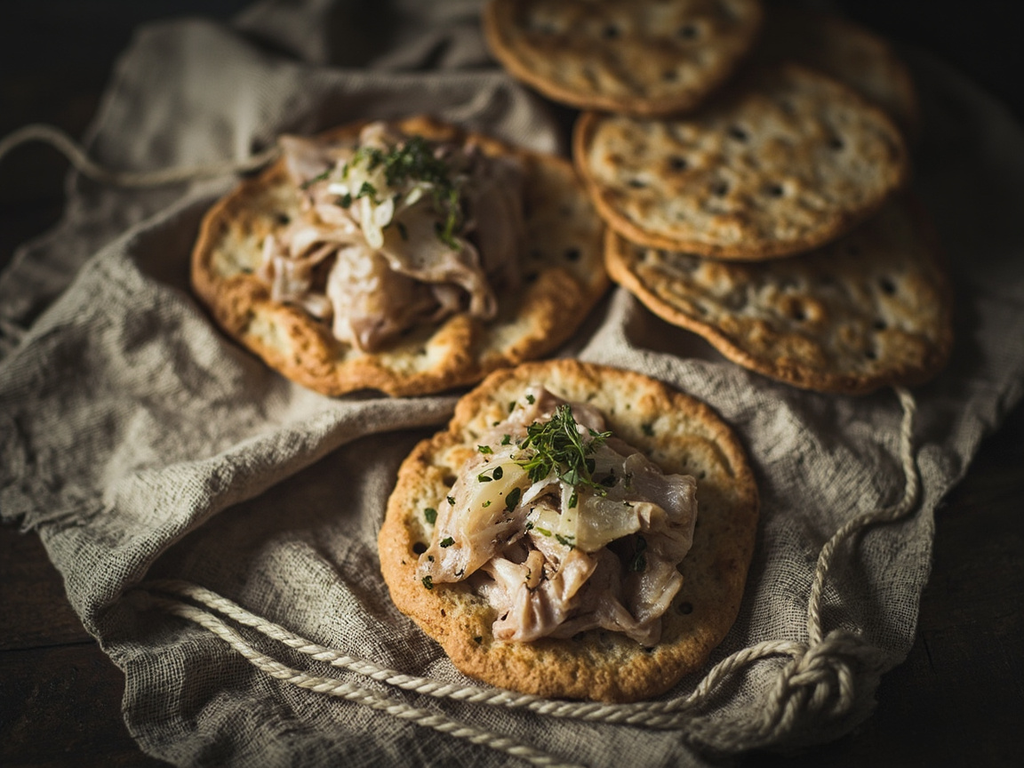
The contemporary twist : Served in thin strips with a knob of smoked butter, Nordic 'sea jerky' style, as an appetizer on a driftwood board.
Leif Erikson · Charactorium