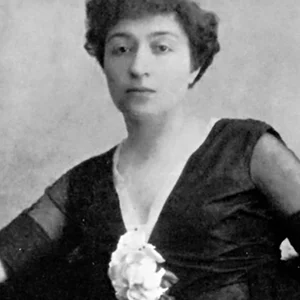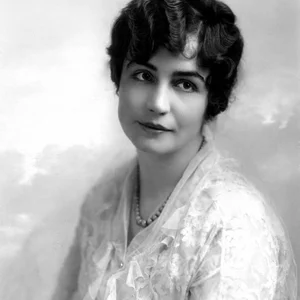

Lois Weber (1879-1939) was one of the first great female directors in the history of American cinema. A Hollywood pioneer, she was one of the most influential and highest-paid filmmakers of the silent film era, tackling controversial social issues.
Lois Weber(1879 — 1939)
Lois Weber
États-Unis
8 min read
Frequently asked questions
Key Facts
- Born in 1879 in Pennsylvania, she began as an actress before moving into directing
- In 1916, she was one of the highest-paid filmmakers in Hollywood, earning an exceptional salary
- She founded her own production company, Lois Weber Productions, in 1917
- She directed more than 200 films, including *Hypocrites* (1915) and *Where Are My Children?* (1916)
- The first woman to direct a major Hollywood feature film, paving the way for women in the film industry
Works & Achievements
An innovative short film in which Weber uses split-screen to simultaneously show three different locations in dramatic tension. This narrative technique anticipates the conventions of suspense cinema and showcases Weber's formal genius.
A morally and religiously charged film featuring an allegory of the Naked Truth that unsettles the self-righteous. Its public and critical success confirmed Weber as one of the major voices of American social cinema.
A spare and poignant social drama about a working-class woman forced into moral compromise to survive. Considered one of the earliest feminist films in cinema history, it condemns gender inequality with rare acuity.
A bold film addressing birth control and abortion — then taboo subjects and partly illegal in the United States. One of the most-watched silent films of its year, it is now preserved in the National Film Registry.
A historical epic starring prima ballerina Anna Pavlova in her only screen role. Weber directed this ambitious film with visual mastery and narrative sweep that impressed critics internationally.
A film depicting the hidden poverty of teachers and middle-class American families, unable to preserve their dignity despite their hard work. One of Weber's last major successes before the advent of sound cinema broke her career.
Anecdotes
Lois Weber was one of the first filmmakers to use the split-screen technique: in 'Suspense' (1913), she simultaneously showed three actions taking place in different locations, creating unprecedented dramatic tension. This technical innovation earned her recognition as a true master of mise-en-scène, long before her male colleagues had mastered the technique.
In 1916, Weber boldly directed 'Where Are My Children?', a film that directly addressed birth control and abortion — taboo subjects at the time, even banned in several American states. Despite the controversy, the film was a massive commercial success and was later inducted into the National Film Registry by the Library of Congress.
At her peak at Universal Pictures, Lois Weber earned a salary of $5,000 per week, making her one of the highest-paid filmmakers in Hollywood — men included. She was also one of the first women admitted to the Motion Picture Directors Association, the professional organization for American directors.
Weber did not simply direct her films: she wrote the screenplays, supervised the editing, and sometimes appeared on screen herself. This total mastery of the production process was rare for the time, even among the most established male directors, and anticipates what French cinema would later call the auteur theory.
With the advent of sound cinema in the late 1920s, Weber's career collapsed abruptly. The woman who had once stood at the top of Hollywood died in 1939, forgotten and in poverty. It took decades before film historians rediscovered her pioneering work and restored her rightful place in the history of cinema.
Primary Sources
“It has always seemed to me that a photodrama could be made as important as a novel or a play. That’s the goal I keep in mind — to tell a story that will have the same dignity and power as the best literature.”
“I like playing to the working man and his wife. They are the real audience. They are looking for real stories about real people. I want to give them that.”
“The director must be the author of the picture, just as the playwright is the author of the play. I write the story, direct it, and supervise every stage of production.”
The studio presents Weber as 'the most important woman in motion pictures today' and notes that the film addresses subjects that 'other directors would never dare tackle'.
“Miss Weber was one of the screen’s first important directors and ranked for many years among the highest paid in the industry. Her films were notable for their serious treatment of social problems.”
Key Places
Lois Weber's hometown, where she grew up in a modest family in an industrial region marked by deep social inequalities. This childhood nurtured the sensitivity to labor and women's issues that runs throughout her entire body of cinematic work.
Universal Studios, founded in 1915, was Weber's primary workplace during her creative peak. There she directed her most ambitious films and enjoyed an exceptional degree of artistic and financial autonomy for the era.
The city where Weber lived and worked for most of her adult life, founding her own production company, and where she died in 1939. Los Angeles was at the time emerging as the world capital of cinema.
The original center of the American film industry, where Weber began her career as an actress and filmmaker before studios migrated en masse to California to take advantage of the climate and natural light.
Typical Objects

The core tool of Weber's craft: the 35 mm hand-cranked camera that the operator turned manually to expose the film. Weber was personally involved in framing and lighting decisions, working closely with her director of photography.

The medium on which silent cinema images were recorded. Extremely flammable, this material explains why a large portion of films from Weber's era were lost in archive fires over the decades.

A machine used to view and cut film stock in order to assemble sequences in the desired order. Weber personally supervised the editing of her films and regarded this tool as inseparable from her role as an auteur filmmaker.

Illustrated or typeset cards inserted between filmed sequences to provide dialogue and narrative commentary. Weber paid particular attention to their wording and layout, using them to reinforce the social message of her films.

Weber wrote most of her screenplays herself on a typewriter, then annotated them by hand on set. These working documents served as the roadmap for the entire production, from shooting through to the final edit.

A metal or cardboard cone used to project the director's voice across a noisy set where orchestra musicians, stagehands, and actors were all working simultaneously. Weber used it to give her actors precise direction during takes.
School Curriculum
Vocabulary & Tags
Key Vocabulary
Tags
Daily Life
Morning
Weber arrived early on set, often before the actors and crew. She spent the first part of the morning reviewing the day's shot list and discussing with her director of photography which natural lighting effects to use. At her own production company, she also attended budget meetings and held discussions with distributors.
Afternoon
Afternoons were devoted entirely to filming, which Weber directed from the set, megaphone in hand. She sometimes played a supporting role herself while simultaneously orchestrating the performances of the entire cast. After shooting, she supervised the development of rushes in the lab to make sure the footage matched her vision.
Evening
Evenings were often spent writing — screenplays, directorial notes, correspondence with distributors and censors. Weber and her husband Phillips Smalley entertained prominent figures from early Hollywood at their home. Reading novels and newspapers served as her reservoir of stories to adapt for the screen.
Food
Like upper-middle-class American households of the 1910s and 1920s, Weber enjoyed a varied diet: meats, fresh vegetables, and seasonal fruits delivered from Los Angeles markets. The long shooting days often meant quick meals grabbed between takes, served by the mobile canteens that were already supplying Hollywood sets.
Clothing
On set, Weber wore practical, understated clothes — a blouse with a long skirt or a straight dress — in keeping with women's fashion of the 1910s. At premieres or Hollywood social events, she dressed in more elaborate outfits featuring embroidery and veiling characteristic of the emerging Art Deco style. Her professional attire was a deliberate departure from the glamour expected of actresses.
Housing
At the height of her career, Weber lived in a comfortable Los Angeles home in a neighborhood favored by artists and producers. The house included a study where she wrote her screenplays and gave her quick access to Universal City studios, located just a few miles away. After her career decline, her living conditions gradually deteriorated.