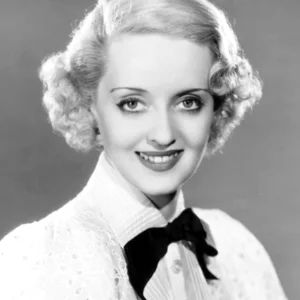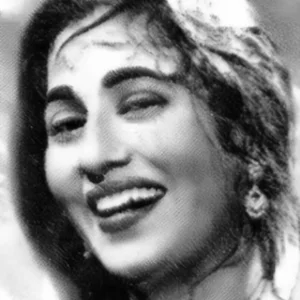

Madhubala (1933-1969) is considered one of the greatest actresses of classic Hindi cinema. Nicknamed the "Venus of Bollywood," she embodied beauty and talent in films that became classics of the golden age of Indian cinema.
Madhubala(1933 — 1969)
Madhubala
Inde, Raj britannique
8 min read
Frequently asked questions
Key Facts
- Born on February 14, 1933, in Delhi under the name Mumtaz Jehan Begum Dehlavi
- Began her acting career at the age of 9 in the 1940s
- Appeared in more than 70 films between 1942 and 1960
- Iconic role in Mughal-E-Azam (1960), one of the greatest films in the history of Indian cinema
- Died on February 23, 1969, in Mumbai from a congenital heart defect
Works & Achievements
A fantasy film by Kamal Amrohi in which Madhubala plays a mysterious ghost. Its phenomenal success catapulted her to the status of a major national star at just sixteen years old.
A satirical comedy by Guru Dutt that reveals Madhubala's comic talent. The film humorously skewers gender inequality in marriage in post-independence India.
A noir thriller in which Madhubala plays a cabaret singer entangled in a murder. Her performance showcases her ability to portray ambiguous, modern characters far removed from the classic heroine.
A lighthearted musical comedy alongside Kishore Kumar that has become a classic of the genre. The on-screen chemistry between Madhubala and Kishore Kumar foreshadowed their marriage two years later.
A historical epic by K. Asif tracing the impossible love between Prince Salim and the dancer Anarkali at the court of Emperor Akbar. Considered the most ambitious film in the history of Hindi cinema, it remains Madhubala's defining work.
A romantic musical film centred on Urdu poetry and *ghazal* music. Madhubala delivers one of her last great performances here, before illness kept her away from the screen for good.
Anecdotes
Madhubala, whose real name was Mumtaz Jehan Begum Dehlavi, was spotted at the age of nine by Bombay Talkies studios. Her father, Ataullah Khan, left his job at a tobacco company to manage her career entirely. This decision committed a large family of nine children, whose income would rest almost exclusively on the young actress's shoulders.
In 1954, doctors diagnosed Madhubala with a congenital heart defect — a ventricular septal defect — and gave her at most two years to live. Yet she continued filming for another eight years, concealing her illness from the public and her co-stars, never letting her suffering show on screen.
The filming of Mughal-E-Azam, an epic recounting the forbidden love of Prince Salim for the dancer Anarkali at the court of Emperor Akbar, stretched over nearly nine years (1951–1960). Madhubala portrayed Anarkali with shattering intensity: the final scene, in which the character is walled up alive in a stone wall by the Emperor's order, remains one of the most memorable in classic Hindi cinema.
Her romantic relationship with actor Dilip Kumar lasted nearly nine years and captivated all of Bollywood, but marriage proved impossible: Madhubala's father categorically refused the union. In 1957, during a lawsuit pitting her father against producer B. R. Chopra, Dilip Kumar testified against the family — an unforgivable affront that permanently ended their story.
Madhubala married comic actor and singer Kishore Kumar in 1960, hoping in particular to fund a heart operation in London. Doctors ultimately judged the surgical risk too high. She passed away on 23 February 1969, nine days after her thirty-sixth birthday, after several years spent bedridden in her villa in Bandra, Bombay.
Primary Sources
“I know I am ill. But as long as I can act, as long as the cameras are rolling, I am alive. The set is the only place where I forget the pain.”
“My daughter will not leave Bombay to shoot on location without my permission. Her health and reputation come before any contract.”
The court found that the actress, under paternal guardianship, could not fulfil the on-location shooting clauses of the film Naya Daur without the consent of her father, Ataullah Khan.
“Madhubala, dubbed the Venus of Bollywood, passed away after a long cardiac illness. She leaves behind a body of work of more than seventy films that defined the golden age of Hindi cinema.”
Key Places
Madhubala's birthplace in 1933, in a working-class neighborhood. Her family, originally from the Peshawar region, had settled there before migrating to Bombay to launch the young actress's career.
The capital of Hindi cinema, where Madhubala spent most of her professional and personal life. She shot virtually all of her films there at the major studios of the era (Filmistan, Mehboob Studios).
One of India's leading film studios during the 1940s–1960s, where Madhubala shot several of her major films. The studios featured permanent sets, sound stages, and editing suites.
A historic Mughal court site used for some of the outdoor scenes in Mughal-E-Azam. Director K. Asif wanted to ground his epic in the authentic settings of 16th-century Mughal power.
The residence where Madhubala spent her final years bedridden, cared for by her husband Kishore Kumar. She died there on 23 February 1969 after a long decline in her cardiac condition.
Typical Objects

Traditional garment worn by Madhubala in her roles as aristocratic women or court dancers. The gold-embroidered saris designed for Mughal-E-Azam became defining references of classic Hindi cinema fashion.

The medium on which all films from Bollywood's golden age were recorded. Negatives were stored in metal canisters at the studios, many of which were tragically lost to fire or neglect.

Used to record playback songs in Bombay's studios. On set, Madhubala would lip-sync to the voices of professional playback singers such as Lata Mangeshkar or Shamshad Begum.

Necklaces, bracelets, and ornaments worn by Madhubala to portray Anarkali in Mughal-E-Azam. They were so realistic that some audience members believed they were genuine period pieces.

In the 1950s and 1960s, Indian films were advertised with large hand-painted or lithograph-printed posters. Madhubala's face adorned walls in cities across the country.

Madhubala took daily treatments to manage the symptoms of her heart condition. She concealed these from the film crew to avoid jeopardising her contracts.
School Curriculum
Vocabulary & Tags
Key Vocabulary
Daily Life
Morning
Madhubala rose early for long makeup and hairdressing sessions. The cinematic makeup of the era, based on greasepaint (a heavy, oil-based foundation), sometimes took over an hour; specialist hairdressers fixed stage ornaments in place before the first studio lights were switched on.
Afternoon
Afternoons were devoted to filming in studios overheated by incandescent spotlights. Between takes, Madhubala rested in her dressing room and took her medication in secret, so as not to worry the crew and risk having her contracts terminated.
Evening
In the evenings, the family would often gather at the family home, where her father received producers and negotiated contracts. In her later years, evenings were gradually replaced by enforced rest, and eventually by complete bed rest at her villa in Bandra.
Food
Madhubala followed a North Indian diet: chapatis, dal (lentils), vegetables cooked in ghee (clarified butter), rice, and on festive occasions, a few non-vegetarian dishes. Her heart condition gradually forced her to cut back on foods high in salt and saturated fats.
Clothing
On screen, Madhubala wore costumes created by studio wardrobe departments: brightly coloured silk saris, gold-embroidered Mughal robes, and sometimes more Western-style outfits for modern roles. In her private life, she favoured simple cotton or muslin saris, in keeping with the customs of Bombay's upper middle class.
Housing
The family of Ataullah Khan first lived in a modest apartment in Bombay before moving to a more spacious house thanks to Madhubala's earnings. In her later years, she resided in a villa in the Bandra neighbourhood, a coastal residential area of Bombay popular with artists.
Historical Timeline
Period Vocabulary
Liens externes & ressources
Références
Œuvres
Howrah Bridge
1958
Chalti Ka Naam Gaadi
1958