 flip
flipLegionary's Puls with Garum
Legionary's Puls with Garum
Why this dish? Before being triumvir, Antony was first a man of war, sharing the life of his legions at Philippi and in the East. Puls, a porridge of farro (spelt), was the staple food of the Roman soldier: he ate it like his men, which forged his reputation as a leader close to the troops.
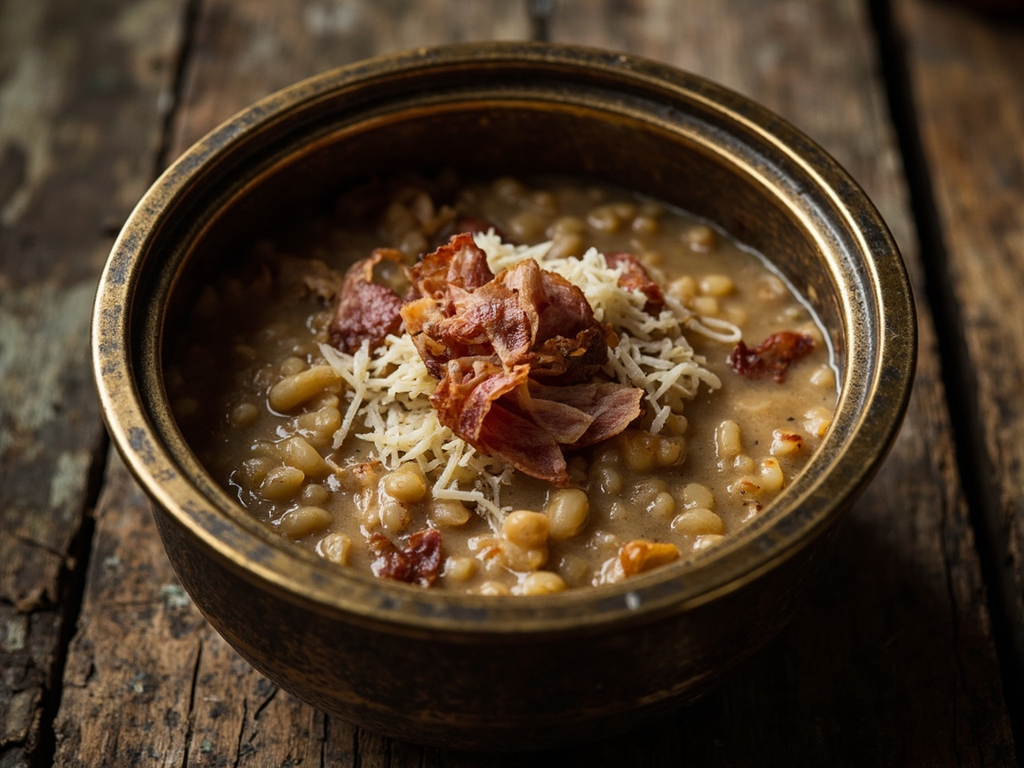
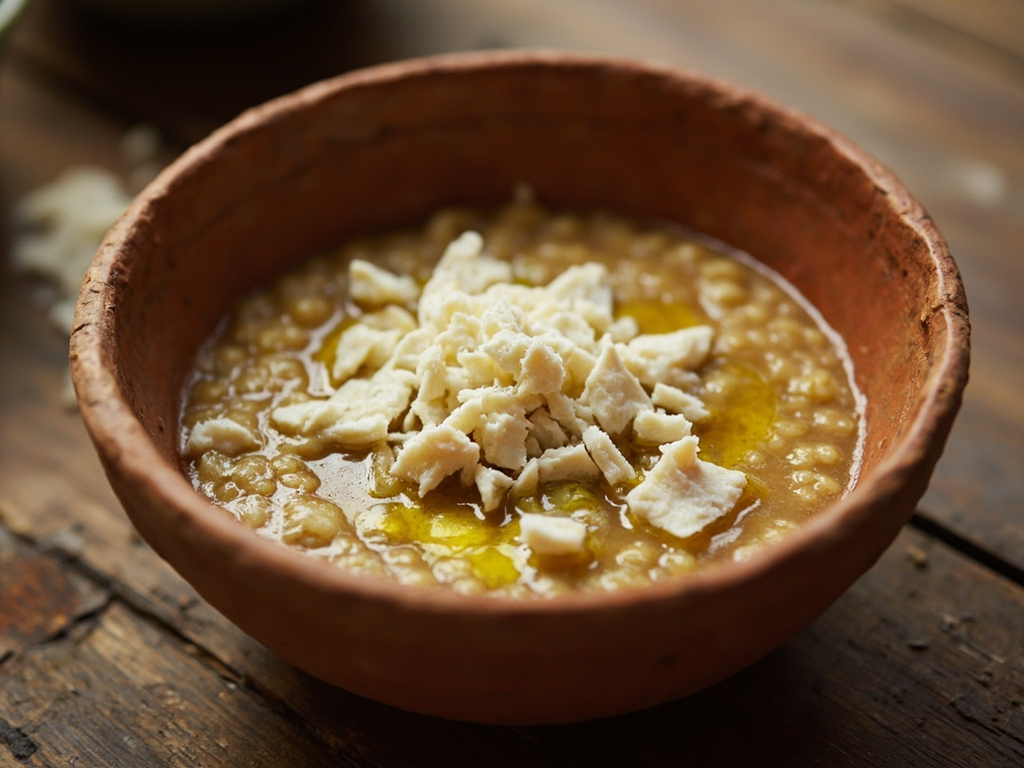
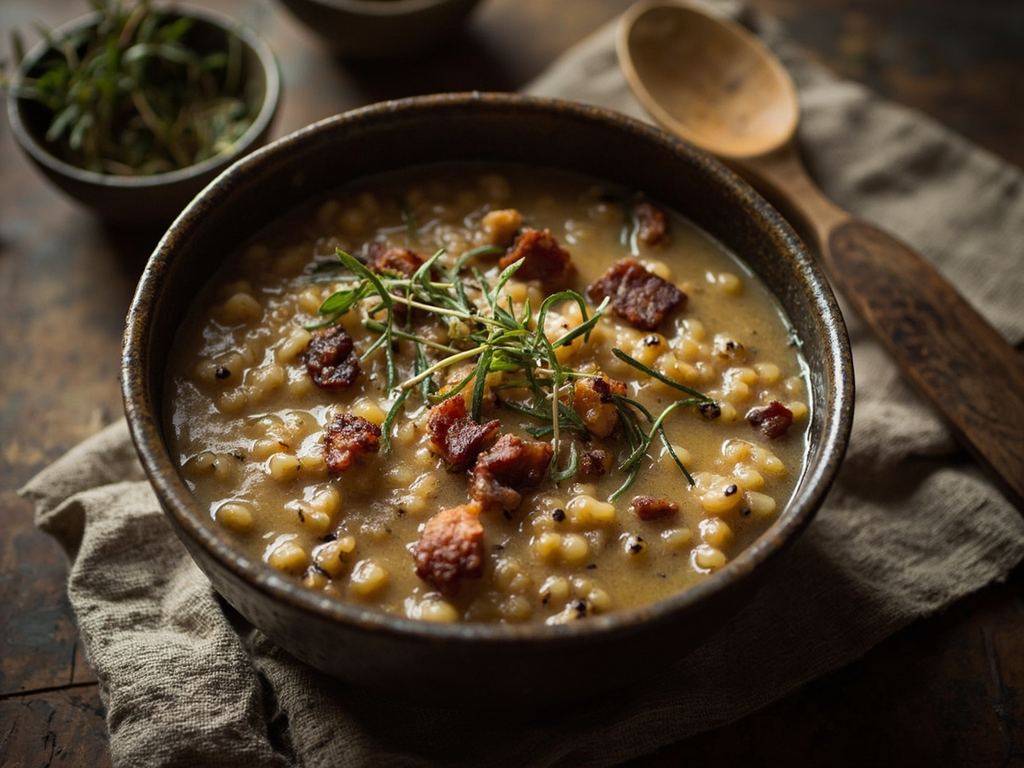
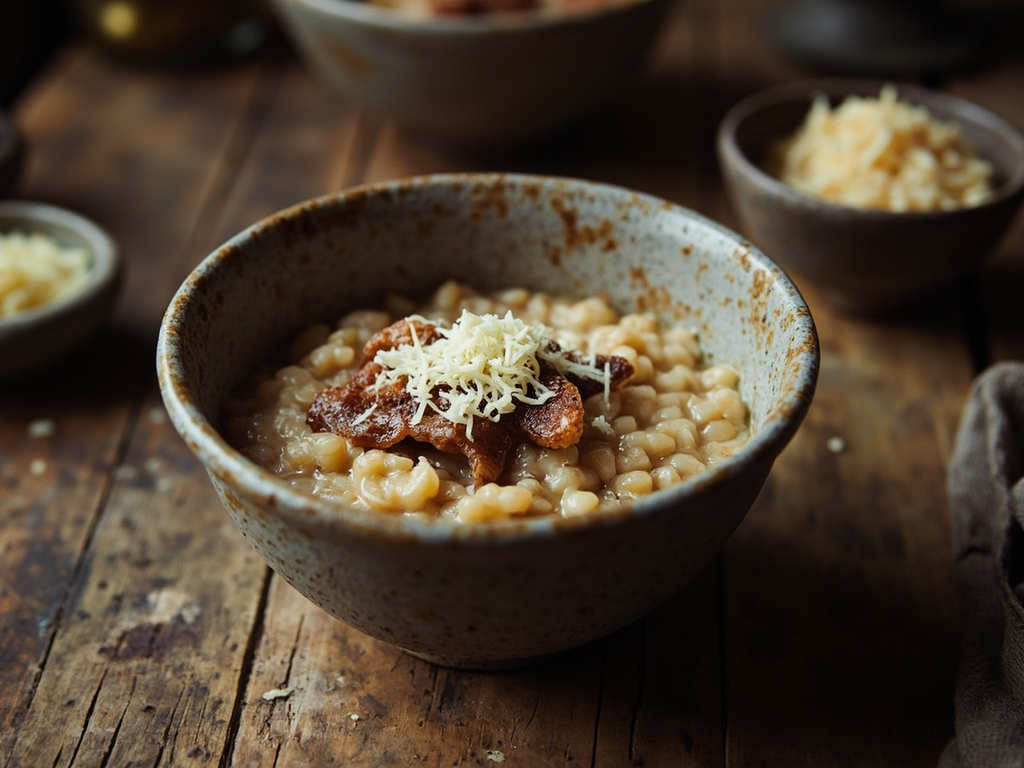
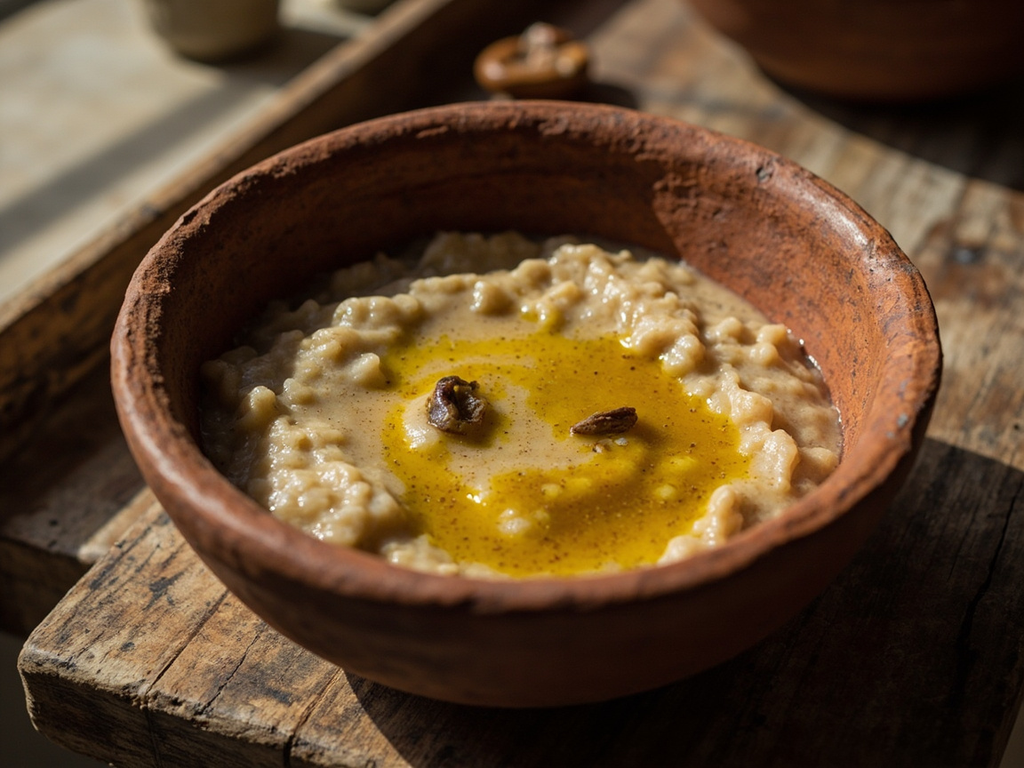
A thick porridge of farro simmered in water, seasoned with a spoonful of garum and a drizzle of olive oil. The humblest dish of Rome, the one that fed the armies that conquered the world.
Taste what my legions eat, and you'll understand why they follow me to the ends of the earth! Farro, water, a dash of garum, and a trickle of oil — that's what keeps a man standing under the spears. I've sat in the mud with my veterans sharing this porridge; a leader who scorns the soldier's bowl doesn't deserve to have men die for him. Eat it hot, and may Mars be with you.
- •Farro (hulled spelt) — a full bowl (base)
- •Spring water — enough to cover generously (cooking)
- •Garum — a good splash (seasoning)
- •Olive oil — a drizzle (binding and flavor)
- •Salt — according to garum (seasoning)
Legionary's Puls with Garum
A thick porridge of farro simmered in water, seasoned with a spoonful of garum and a drizzle of olive oil. The humblest dish of Rome, the one that fed the armies that conquered the world.
Why this dish? Before being triumvir, Antony was first a man of war, sharing the life of his legions at Philippi and in the East. Puls, a porridge of farro (spelt), was the staple food of the Roman soldier: he ate it like his men, which forged his reputation as a leader close to the troops.
Taste what my legions eat, and you'll understand why they follow me to the ends of the earth! Farro, water, a dash of garum, and a trickle of oil — that's what keeps a man standing under the spears. I've sat in the mud with my veterans sharing this porridge; a leader who scorns the soldier's bowl doesn't deserve to have men die for him. Eat it hot, and may Mars be with you.
Ingredients (period version)
- Farro (hulled spelt) — a full bowl (base)
- Spring water — enough to cover generously (cooking)
- Garum — a good splash (seasoning)
- Olive oil — a drizzle (binding and flavor)
- Salt — according to garum (seasoning)
Ingredients
- Spelt (or pearl barley) — 200 g (base)
- Water or vegetable broth — 800 ml (cooking)
- Fish sauce (colatura di alici / nuoc-mâm) as garum substitute — 1 to 2 tbsp (seasoning)
- Extra virgin olive oil — 2 tbsp (binding and flavor)
- Salt and pepper — to adjust (seasoning)
Method
- Rinse the spelt in clear water.
- Pour it into a pot with the water or broth, bring to a simmer.
- Let it cook over low heat for 35-45 minutes, stirring occasionally, until thick and creamy; add water if needed.
- Off the heat, stir in the fish sauce and olive oil.
- Taste, adjust salt, and serve hot in a bowl.
How it was made : Puls was to Rome what bread later became: the daily staple, so much so that Romans were nicknamed *pultiphagi*, 'porridge-eaters'. Legionaries received their grain ration (*frumentum*), which they ground and cooked themselves. Garum, mass-produced, accompanied every table, from camp to palace.
The contemporary twist : Serve as an 'ancient risotto' with a splash of colatura di alici and some fresh herbs — a direct nod to garum, whose Italian descendant colatura is the living heir.
Sources : Apicius, De re coquinaria · Pliny the Elder, Natural History, XVIII
Mark Antony · Charactorium