 flip
flipHausbier — Katharina's beer
Hausbier — Katharina's beer
Why this dish? "Luther appreciated the beer brewed by his wife Katharina": domestic brewing was one of the household duties at the Black Cloister, and Luther, in his letters, asks for his Käthe's brew when traveling. Beer here is not a luxury but the daily drink, safer than water.
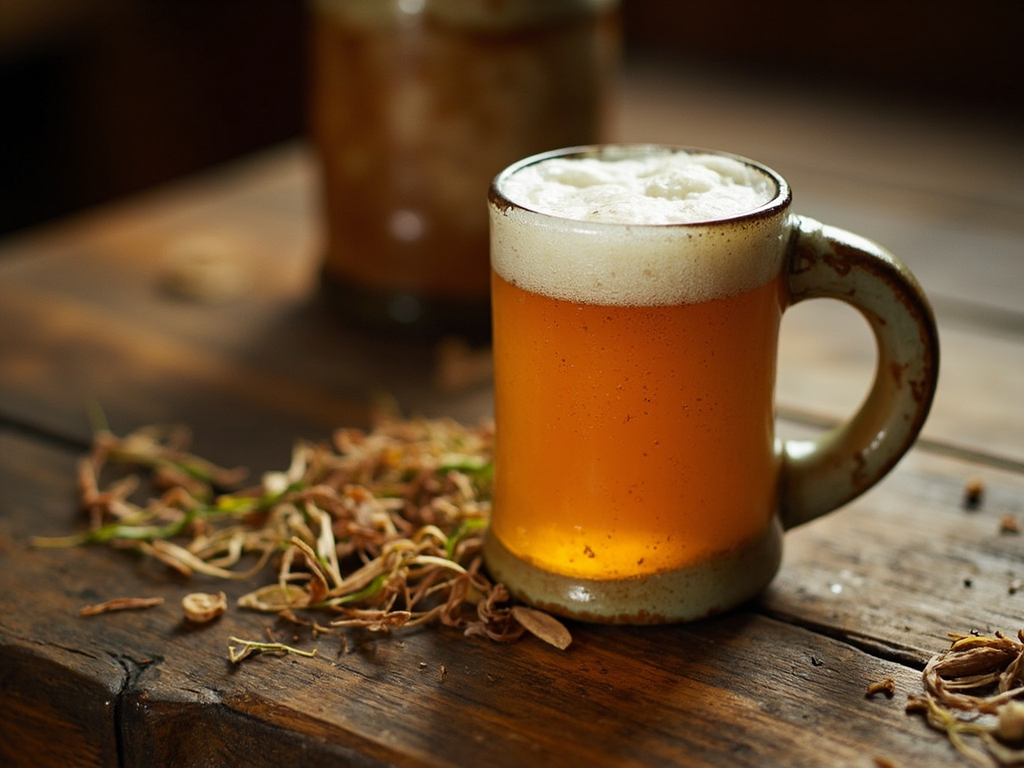
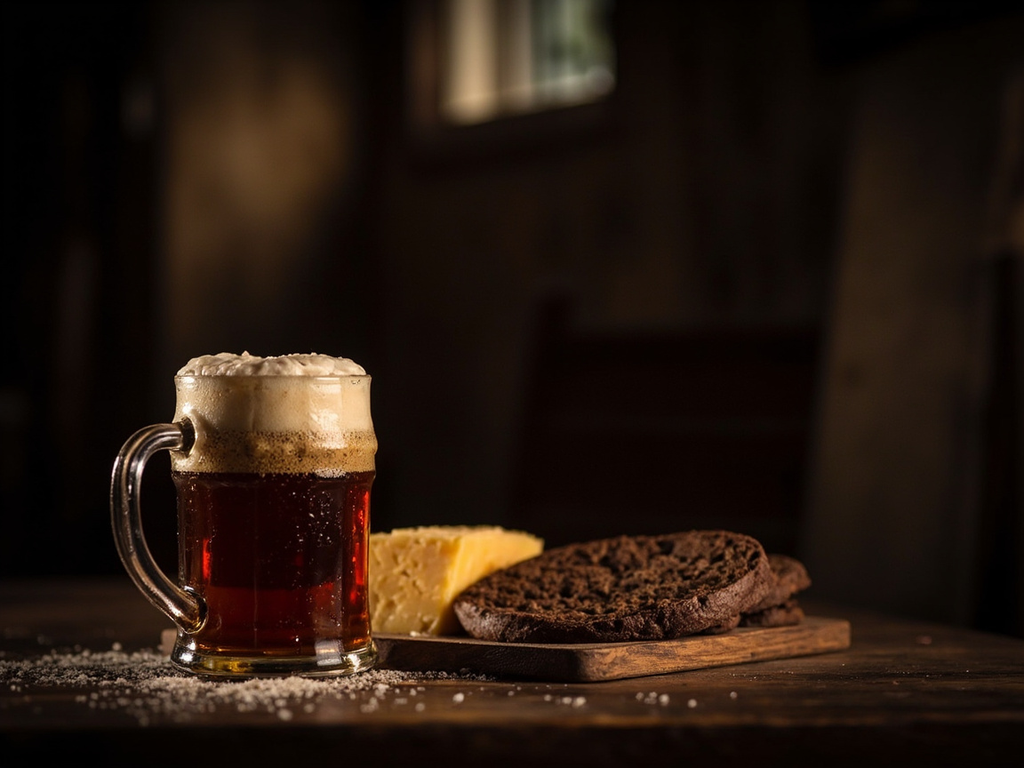
A dark, malty home-brewed beer, bitter with hops, as brewed in Saxon homes: water, malted barley, and hops, according to the recent Reinheitsgebot of 1516. Robust, refreshing, made to accompany bread and conversation.
My Käthe brews a beer worth all the wines of the Rhine, and I say that without husbandly flattery! When the Devil presses me at night and anxiety grips me, a good tankard of her ale and a sleep are worth more than a thousand shivering prayers. Barley, clear water, and hops — that is what God gives us to gladden man's heart, as the Psalm says. Drink it with measure, give thanks, and let the Evil One go to bed hungry.
- •Malted barley — a good measure (fermentable sugars, body)
- •Hops — a handful (bitterness and preservation)
- •Spring water — as needed (base)
- •Wild yeasts — spontaneous (fermentation (not identified at the time))
Hausbier — Katharina's beer
A dark, malty home-brewed beer, bitter with hops, as brewed in Saxon homes: water, malted barley, and hops, according to the recent Reinheitsgebot of 1516. Robust, refreshing, made to accompany bread and conversation.
Why this dish? "Luther appreciated the beer brewed by his wife Katharina": domestic brewing was one of the household duties at the Black Cloister, and Luther, in his letters, asks for his Käthe's brew when traveling. Beer here is not a luxury but the daily drink, safer than water.
My Käthe brews a beer worth all the wines of the Rhine, and I say that without husbandly flattery! When the Devil presses me at night and anxiety grips me, a good tankard of her ale and a sleep are worth more than a thousand shivering prayers. Barley, clear water, and hops — that is what God gives us to gladden man's heart, as the Psalm says. Drink it with measure, give thanks, and let the Evil One go to bed hungry.
Ingredients (period version)
- Malted barley — a good measure (fermentable sugars, body)
- Hops — a handful (bitterness and preservation)
- Spring water — as needed (base)
- Wild yeasts — spontaneous (fermentation (not identified at the time))
Ingredients
- Crushed barley malt (Munich/Vienna type) — 4 kg (sugars and amber color)
- Bittering hops (e.g., Hallertau) — 40 g (bitterness)
- Water — 20 L (base)
- Dry beer yeast (top-fermenting) — 1 packet (11 g) (fermentation)
Method
- Mashing: heat water to ~67°C, add crushed malt, hold for 60 min to convert starches to sugars.
- Filter (sparge grains at ~75°C) to collect sweet wort.
- Boil the wort for 60 min; add hops at the start of the boil for bitterness.
- Quickly cool the wort to ~20°C (critical step to avoid contamination).
- Transfer to a clean fermenter, pitch the yeast, seal with an airlock.
- Let ferment for 1-2 weeks at 18-20°C, then bottle with a little sugar for carbonation; wait 2 weeks.
- Note: alcohol production — for adults only.
How it was made : The Bavarian Reinheitsgebot of 1516 fixed beer to three ingredients: water, barley, and hops (yeast was unknown; fermentation was a mystery). In the cities of the Holy Roman Empire, brewing was a female household task; since water was often unsafe, the low-alcohol "small beer" was drunk at all meals, including by children. Katharina von Bora's beer is attested in Luther's correspondence.
The contemporary twist : Serve in a lidded stoneware tankard with dense foam, alongside a board of rye bread and cheese — and start your own "Tischreden" around the table.
Martin Luther · Charactorium