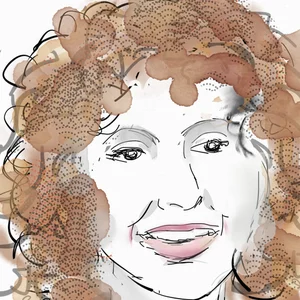

A Chilean singer and companion, then wife, of the poet Pablo Neruda, she was his muse and the inspiration behind several of his major collections. After the poet's death in 1973, she dedicated her life to preserving and promoting his work.
Matilde Urrutia(1912 — 1985)
Matilde Urrutia
Chili
7 min read
Frequently asked questions
Key Facts
- 1912: Birth of Matilde Urrutia in Chillán, Chile
- 1946: Meets Pablo Neruda in Mexico City, beginning of their secret relationship
- 1959: Neruda publicly dedicates the One Hundred Love Sonnets to her
- 1966: Official marriage to Pablo Neruda
- 1973: Neruda dies twelve days after Pinochet's coup; Matilde devotes herself to preserving and transmitting his work until her own death in 1985
Works & Achievements
Matilde Urrutia studied singing in Santiago and later in Europe. Her musical training gave her a profound artistic sensibility that shaped her relationship with poetry and her bond with Neruda.
The explicit dedicatee of the collection, Matilde inspired each of the one hundred sonnets, organized into four sections (morning, noon, evening, night). Her name appears in the dedication as the foundation of the entire work.
An institution created by Matilde to manage the poet's literary and cultural legacy. The foundation administers his three house-museums and oversees the worldwide dissemination of Neruda's works.
After the house was ransacked by the military junta, Matilde patiently oversaw its restoration, transforming this site of destruction into a symbol of cultural resistance under the dictatorship.
A posthumously published autobiographical account in which Matilde traces their life together, their love, the years of dictatorship, and her work preserving Neruda's literary legacy.
Anecdotes
When Pablo Neruda wrote The Captain's Verses in 1952, he published it anonymously in Naples to protect Matilde, while still married to Delia del Carril. The collection, blazing with passion, circulated under the radar before being attributed to Neruda years later. This forced secrecy illustrates the complexity of their relationship, lived for a long time in the shadows.
Neruda composed One Hundred Love Sonnets (1959) as a tribute to Matilde, offering her each morning a freshly written sonnet. The collection's dedication names her explicitly: “To you, Matilde Urrutia, I give these sonnets.” He uses wood, metal, and stone as his raw materials — elements of Chile that the two of them shared.
On September 11, 1973, General Pinochet overthrew President Salvador Allende in a military coup. Neruda, gravely ill with cancer, died twelve days later in a clinic in Santiago. Matilde was at his bedside. In the hours that followed, soldiers invaded and ransacked their home, La Chascona, in Santiago.
Under Pinochet's dictatorship, Matilde refused exile and remained in Chile to protect Neruda's houses and manuscripts. She secretly smuggled documents out of the country and negotiated with the authorities to prevent the destruction of his poetic legacy. Her quiet resistance preserved a cultural memory that the regime sought to erase.
Matilde Urrutia founded the Fundación Pablo Neruda in 1975 to manage the poet's legacy. She transformed Neruda's three homes — La Chascona, La Sebastiana, and Isla Negra — into museums open to the public, despite pressure from the military junta. Upon her death in 1985, she bequeathed these sites to the foundation, ensuring their lasting preservation.
Primary Sources
A ti, Matilde Urrutia, estos sonetos, madera viva, nacidos en el gran bosque libre, con manos y hacha y cuchillo y navaja... construidos para tus manos.
Neruda writes: “I published them without my name because they contained a pain and passion that owed much to other lives than mine alone.”
“When Pablo died, I felt that my life had lost all meaning. But his poems were there, alive, and I knew my task was to preserve them for the world.”
“You are my home, my country, the center of my life. Without you, these islands are nothing but stone and wind.”
Neruda subtly weaves in the importance of feminine presence in the poetic act, offering an implicit tribute to Matilde, who accompanies him at the ceremony.
Key Places
Neruda and Matilde's main residence on the Pacific coast, where they spent their happiest years together. The house is now a museum managed by the Fundación Pablo Neruda.
The house Neruda built for Matilde in Santiago, ransacked by Pinochet's soldiers in 1973. Matilde had it restored and turned it into a museum and symbol of cultural resistance.
Matilde Urrutia's hometown, in the Biobío region, devastated by an earthquake in 1939. These modest provincial roots left a lasting mark on her sensibility and her deep connection to Chile.
It was in Italy that Neruda and Matilde lived in hiding in 1952, during which he wrote *The Captain's Verses*. This Mediterranean stay was a defining period in their love story.
Neruda's third house, in Valparaíso, whose preservation Matilde also oversaw after the poet's death. It is now one of the most visited Neruda museums in Chile.
Typical Objects

A classically trained singer, Matilde regularly practiced her scores. Music was the first bond between her and Neruda, who admired her soprano voice.

After the poet's death, Matilde spent years sorting, cataloguing, and arranging the publication of his unpublished manuscripts. To her, these documents represented the living continuation of their love.

Music was ever-present in Neruda's homes. Matilde and Pablo would listen together to recordings of Chilean and classical music on their gramophone.

Neruda was a compulsive collector; Matilde managed and safeguarded his eclectic collections — seashells, ship figureheads, masks — displayed throughout their house-museums.

Like many Chileans from the central-south of the country, Matilde had kept the habits of her childhood in Chillán, including sharing mate during intimate gatherings.

Numerous photographs bear witness to daily life at Isla Negra. Matilde carefully preserved this visual archive of their life together, which was later exhibited in museums.
School Curriculum
Vocabulary & Tags
Key Vocabulary
Daily Life
Morning
Matilde rose early at Isla Negra and prepared coffee before Neruda began to write. She managed the household with care, handled correspondence, and organized visits from the friends, artists, and intellectuals who regularly passed through.
Afternoon
Afternoons were devoted to reading, sometimes to musical rehearsals, and to long walks along the rocky beach. Matilde also oversaw the renovation work on the houses that Neruda was constantly expanding and transforming.
Evening
Evenings often brought together artists, poets, and political activists around a generous table with Chilean wines. After Neruda's death, Matilde's evenings were spent in quiet simplicity, re-reading his manuscripts.
Food
Traditional Chilean cuisine — empanadas, cazuela de vacuno, fish and seafood from the Pacific. Meals at Neruda's home were renowned for their abundance and the quality of the Chilean wines served to the many guests.
Clothing
Matilde wore simple, understated clothing suited to coastal life: linen or cotton dresses, a wool jacket for cool Pacific evenings. She avoided ostentation despite the growing fame of her companion.
Housing
The house at Isla Negra, built of wood and stone facing the ocean, was at once a home and a private museum. The rooms overflowed with eclectic collections — shells, masks, ship figureheads — gathered together over the course of their travels.
Historical Timeline
Period Vocabulary
Visual Style
Ambiance visuelle de la côte chilienne des années 1950–1970 : intérieurs chaleureux et éclectiques mêlant bois brut, céramiques colorées et bleu profond de l'océan Pacifique.
Sound Ambience
L'univers sonore de Matilde Urrutia mêle le fracas du Pacifique à Isla Negra, la musique classique et folklorique chilienne, et le silence studieux des maisons remplies de manuscrits.
Liens externes & ressources
Références
Œuvres
Carrière de chanteuse soprano
1930–1950
Muse des Cent sonnets d'amour
1959
Fondation de la Fundación Pablo Neruda
1975
Restauration de La Chascona
1973–1980
Mi vida junto a Pablo Neruda (mémoires)
1986