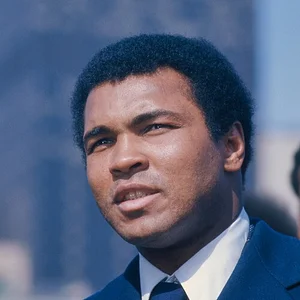

American boxer, three-time world heavyweight champion, considered one of the greatest athletes of the 20th century. A leading figure in the struggle for civil rights, he refused to be drafted for the Vietnam War on the grounds of his convictions.
Muhammad Ali(1942 — 2016)
Muhammad Ali
États-Unis
6 min read
Frequently asked questions
Famous Quotes
« Float like a butterfly, sting like a bee.»
« I ain't got no quarrel with them Viet Cong.»
Key Facts
- Born Cassius Clay in 1942 in Louisville, Kentucky.
- Olympic boxing champion at the 1960 Rome Games.
- Became world heavyweight champion in 1964 against Sonny Liston, then took the name Muhammad Ali upon joining the Nation of Islam.
- In 1967, refused to be drafted into the army for Vietnam: stripped of his title and convicted, he was vindicated by the Supreme Court in 1971.
- Lit the Olympic cauldron at the 1996 Atlanta Games; died in 2016.
Works & Achievements
Cassius Clay's first major title, revealing his talent to the entire world.
At 22, he became heavyweight champion of the world and turned boxing upside down.
An act of conscience that made him a global figure of protest, at the cost of his career.
Legendary fight in Kinshasa where he reclaimed the title thanks to the rope-a-dope tactic.
A bout of extreme intensity, regarded as one of the greatest fights in history.
He became the first boxer to win the world heavyweight championship three times.
An account of his life written with Richard Durham, a testimony to his journey and his convictions.
A moving appearance, ill, before the whole world: a symbol of courage and reconciliation.
Anecdotes
At age 12, young Cassius Clay had his brand-new bicycle stolen in Louisville. Furious, he told police officer Joe Martin that he wanted to “whup” the thief. Martin, who trained boxers at a gym, replied that he had better learn how to fight first — and that is how Ali discovered boxing.
After winning the gold medal at the 1960 Rome Olympics, Ali later recounted that he had thrown his medal into the Ohio River, disgusted at having been refused service at a segregated restaurant despite his title. This episode, which he related in his autobiography, illustrates the humiliation of segregation in the United States.
In 1964, after his surprise victory over Sonny Liston, Cassius Clay announced his conversion to Islam and the abandonment of his “slave name” to become Muhammad Ali. Many journalists and opponents long refused to use this new name.
In 1967, Ali refused to be drafted into the army to fight in Vietnam, declaring that no Viet Cong had ever insulted him. Convicted and stripped of his title, he was banned from boxing for more than three years, at the peak of his career.
In 1974, in Kinshasa, Zaire, Ali faced George Foreman in the “Fight of the Century” (Rumble in the Jungle). Considered the underdog, he employed his famous “rope-a-dope” tactic, leaning on the ropes to wear Foreman out before knocking him out in the 8th round and reclaiming the world championship.
Primary Sources
“I ain't got no quarrel with them Viet Cong. No Viet Cong ever called me a nigger.”
The Supreme Court unanimously (8-0) overturns Ali's conviction for refusing induction, recognizing the sincerity of his religious objections.
“Cassius Clay is a slave name. I didn't choose it and I don't want it. I am Muhammad Ali, a free name.”
“Float like a butterfly, sting like a bee.”
Key Places
Ali's hometown in the segregated American South. It was here that he discovered boxing as a child, and it is here that he now rests.
Setting of the 1960 Olympic Games, where Cassius Clay won the light heavyweight gold medal, launching his career.
Site of the 1974 “Rumble in the Jungle,” where Ali beat George Foreman to reclaim the world title.
Setting of the 1975 “Thrilla in Manila,” the third and most grueling bout against Joe Frazier.
Legendary arena that hosted the 1971 “Fight of the Century” between Ali and Frazier, Ali's first defeat.
City where Muhammad Ali passed away in 2016 after a long struggle with Parkinson's disease.
Typical Objects
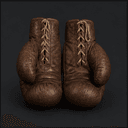
An emblematic tool of the boxer, they protect the fists while cushioning blows. Ali's gloves have become sought-after relics for museums and collectors.
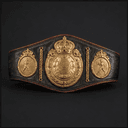
A trophy awarded to the winner of a world heavyweight championship. Ali won it three times, an unprecedented feat at the time.

A square platform surrounded by ropes where bouts take place. Ali deployed his dancing footwork and his “rope-a-dope” tactic against the ropes there.

Training equipment used to work on the power and endurance of one's punches. A daily tool in a professional boxer's preparation.
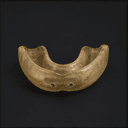
A piece of molded plastic protecting the teeth and jaw during a fight. A small object essential to a boxer's safety.
An official document summoning young Americans to military service. Ali's refusal to comply made him a symbol of conscientious objection.
School Curriculum
Vocabulary & Tags
Key Vocabulary
Tags
Daily Life
Morning
During training camp, Ali would rise before dawn for “roadwork”: long-distance runs designed to build his endurance. He used to say that fights were won far from the spotlight, out on the road, in training.
Afternoon
Afternoons were devoted to the gym: sparring against partners, heavy-bag work, speed on the punching bag, and slipping drills. Ali refined his unique footwork, gliding around the ring like a dancer.
Evening
In the evening, Ali loved to address the press and the public, throwing out rhymes, taunts, and predictions that became legendary. As much a showman as an athlete, he turned every press conference into a performance.
Food
Like any elite boxer, he watched his weight to stay in the heavyweight division, alternating protein-rich meals with periods of slimming down before fights. As a Muslim, he consumed neither alcohol nor pork.
Clothing
In the ring, he wore boxing shorts and boots, often white. Around town, he took care with his appearance, sporting elegant suits, and after his conversion adopted outfits reflecting his Muslim faith.
Housing
At the height of his fame, Ali split his time between residences in the United States and a secluded training camp at Deer Lake, Pennsylvania, made up of log cabins where he prepared in peace and quiet.
Historical Timeline
Period Vocabulary
Liens externes & ressources
Références
Œuvres
Médaille d'or olympique (Rome)
1960
Victoire contre Sonny Liston, premier titre mondial
1964
Refus de l'incorporation au Vietnam
1967
« Rumble in the Jungle » contre George Foreman
1974
« Thrilla in Manila » contre Joe Frazier
1975
Troisième conquête du titre mondial (vs Leon Spinks)
1978
The Greatest: My Own Story (autobiographie)
1975