 flip
flipQuince Paste with Honey
Quince Paste with Honey
Why this dish? The quince, a tart fruit not eaten raw, was cooked with honey to keep for months — valuable for a king's campaign stores or for the long winters of Château-Gaillard and Normandy, lands reconquered by Philip Augustus. This dense fruit paste traveled and lasted.
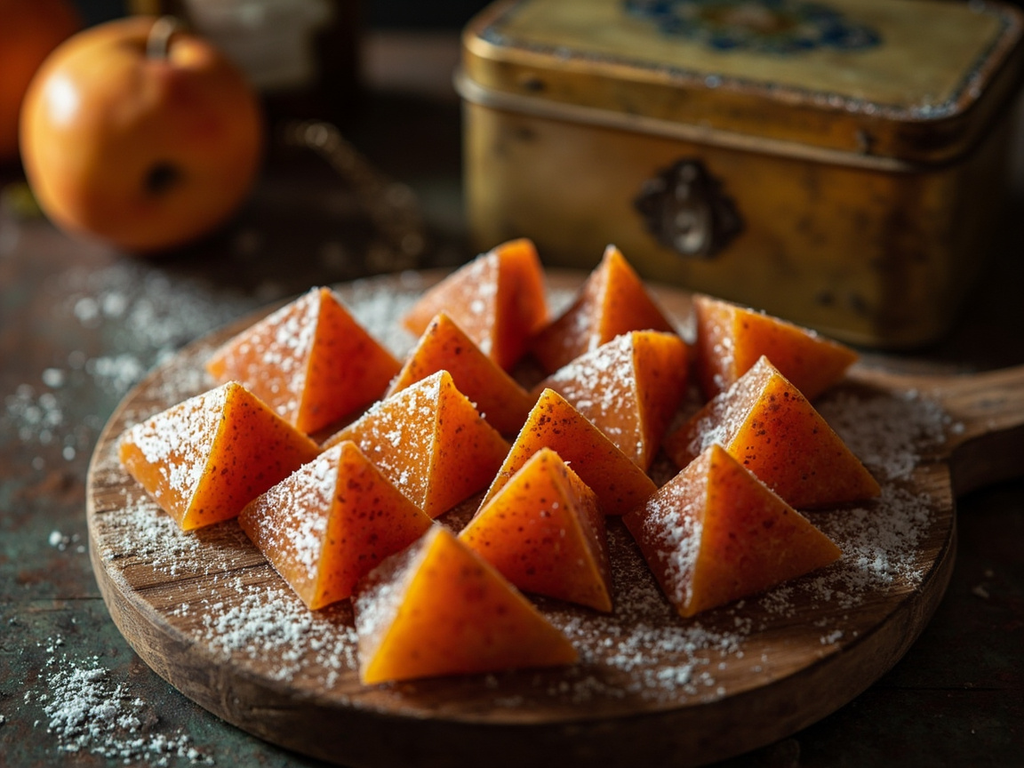
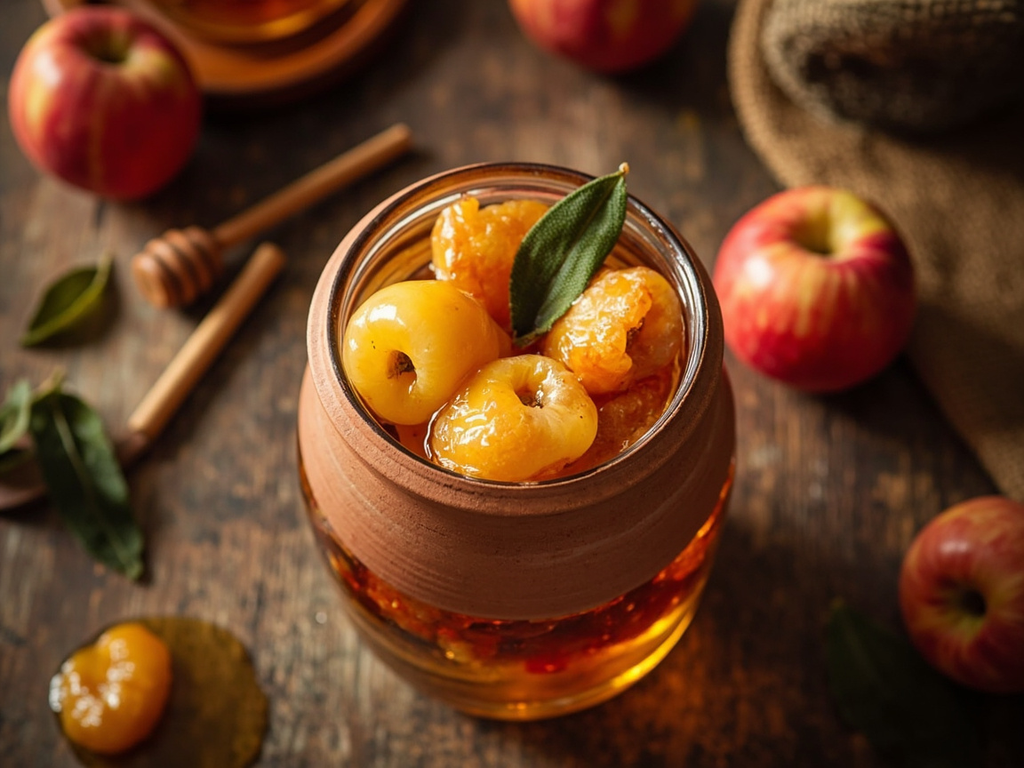
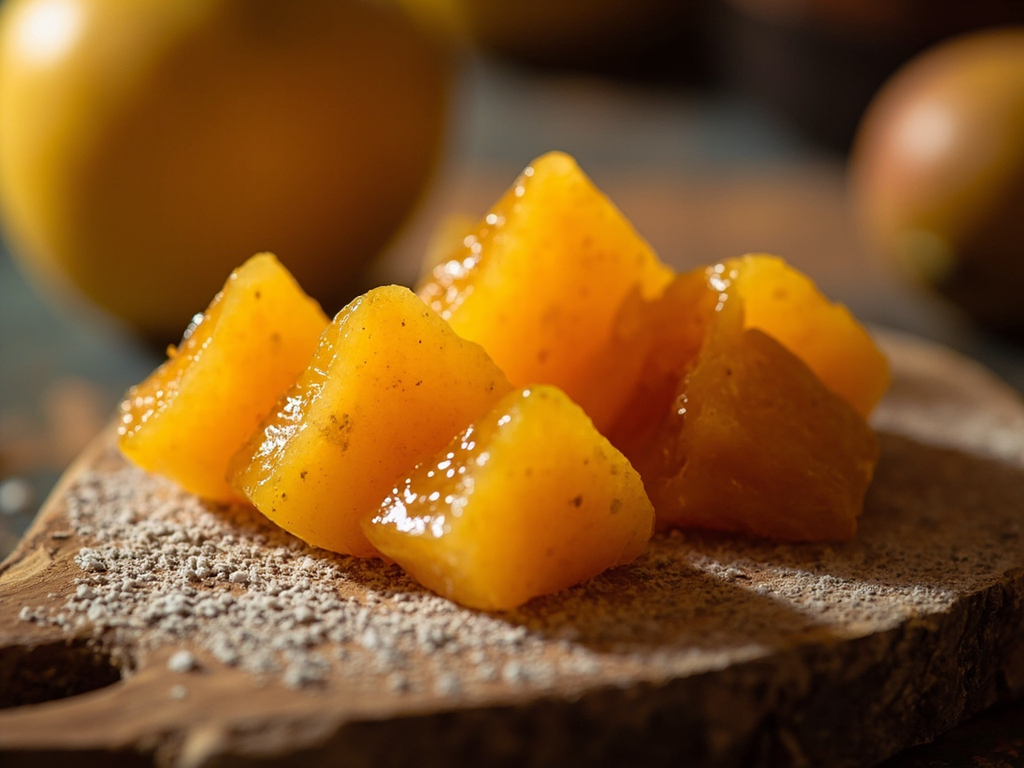
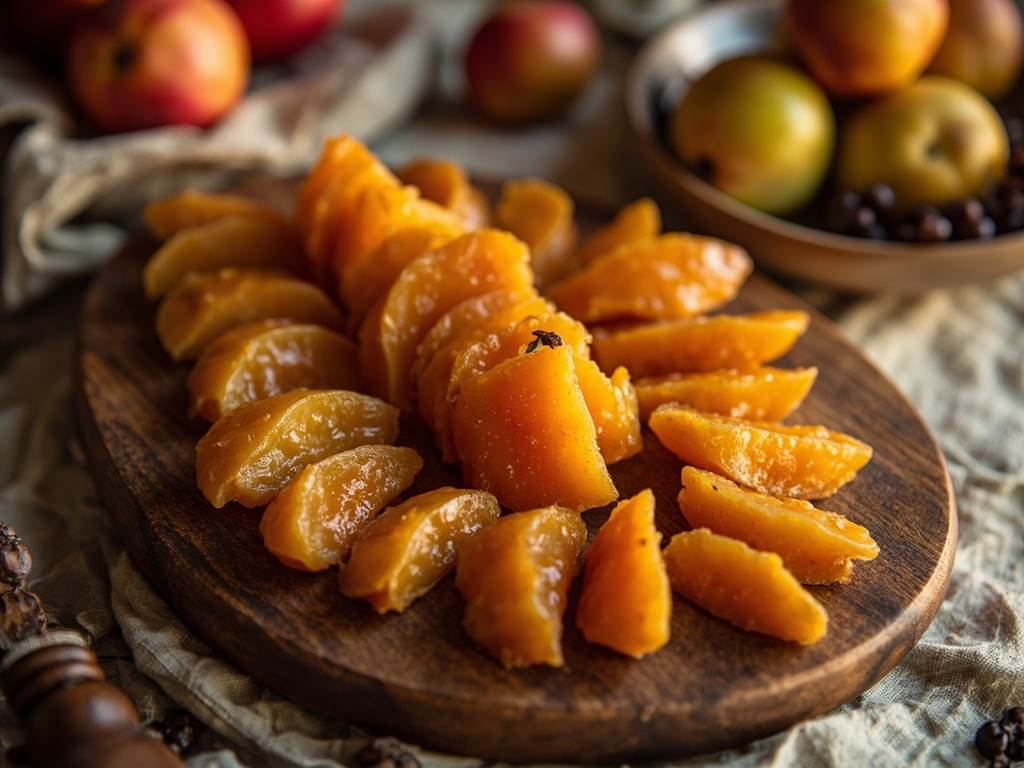
A paste of quinces cooked long with honey until dense and translucent, then dried. Sweet and tangy, it keeps for weeks and is eaten in small diamond shapes, like a medieval confectionery.
The raw quince is so tart it sets the teeth on edge, but subjected to fire and honey it becomes a golden preserve that defies the months. My men made loaves of it, cut into diamonds, good to keep in my cellars, good to carry on the roads of Normandy. A bite after the meal, and the stomach is soothed. Keep some for winter: it is a sweetness that does not spoil.
- •Ripe quinces — full basket (fruit)
- •Honey — equal parts to fruit (sugar and preservative)
- •Spices (ginger, cinnamon) — to taste (aroma, optional)
Quince Paste with Honey
A paste of quinces cooked long with honey until dense and translucent, then dried. Sweet and tangy, it keeps for weeks and is eaten in small diamond shapes, like a medieval confectionery.
Why this dish? The quince, a tart fruit not eaten raw, was cooked with honey to keep for months — valuable for a king's campaign stores or for the long winters of Château-Gaillard and Normandy, lands reconquered by Philip Augustus. This dense fruit paste traveled and lasted.
The raw quince is so tart it sets the teeth on edge, but subjected to fire and honey it becomes a golden preserve that defies the months. My men made loaves of it, cut into diamonds, good to keep in my cellars, good to carry on the roads of Normandy. A bite after the meal, and the stomach is soothed. Keep some for winter: it is a sweetness that does not spoil.
Ingredients (period version)
- Ripe quinces — full basket (fruit)
- Honey — equal parts to fruit (sugar and preservative)
- Spices (ginger, cinnamon) — to taste (aroma, optional)
Ingredients
- Quinces — 1 kg (fruit)
- Honey — 500 g (sugar and preservative)
- Water — for cooking (initial poaching)
- Ginger or cinnamon — 1 pinch (optional) (aroma)
Method
- Wash, peel and core the quinces, cut into pieces.
- Poach in simmering water for 25-30 min until tender, then drain and puree finely.
- Mix the puree with honey (and spices) in a heavy-bottomed saucepan.
- Cook over low heat, stirring constantly, for 30-45 min: the paste thickens, darkens and pulls away from the pan bottom.
- Spread in a 1 cm thick layer on a parchment-lined sheet, smooth, and let dry for 24-48 hours.
- Cut into diamonds and store in a box, separated by paper.
How it was made : Quince pastes with honey are a very ancient preservation technique (known in Roman antiquity as melomeli). 'Cotignac' as a named specialty (Orléans) is attested later, hence the 'evocation' level: the preparation is plausible for Philip Augustus's time, but the name and codified form are later. Honey was used, as sugar remained rare and expensive.
The contemporary twist : Cut the quince paste into small cubes rolled in a little sugar and serve with aged cheese, as a medieval-modern mignardise.
Sources : Bruno Laurioux, Manger au Moyen Âge (2002) · Maguelonne Toussaint-Samat, Histoire naturelle et morale de la nourriture (1987)
Philippe Auguste · Charactorium