 flip
flipHare Civet from the Forest of Gastine with Verjuice and Spices
Hare Civet from the Forest of Gastine with Verjuice and Spices
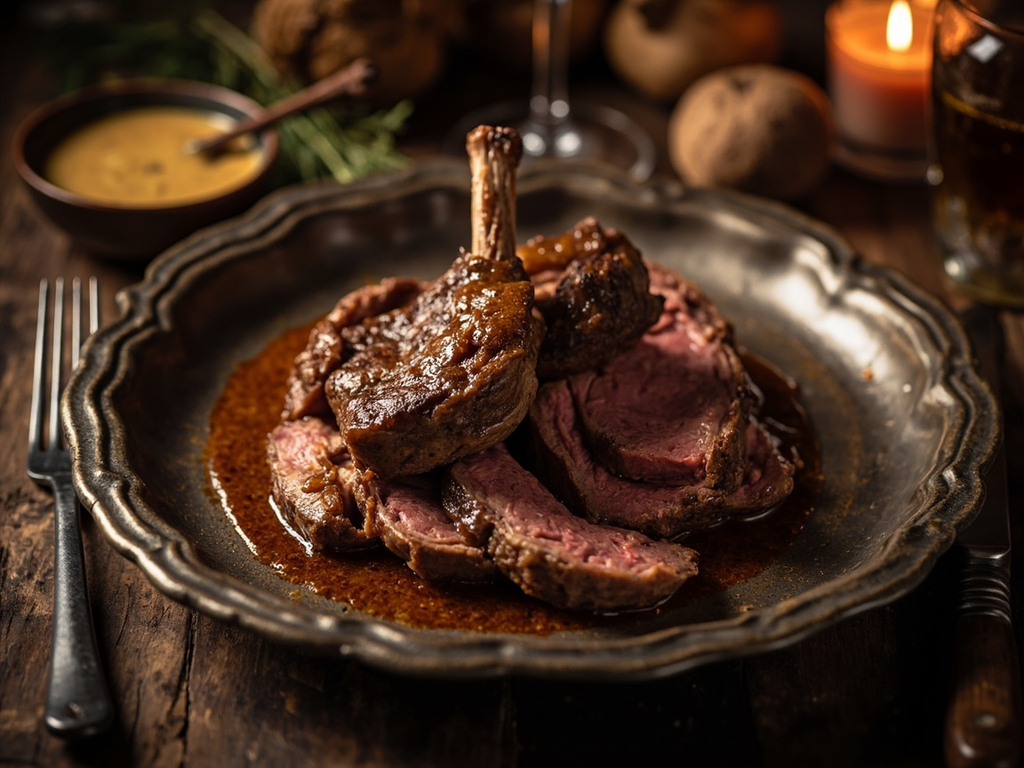
Why this dish? Ronsard sang of the Forest of Gastine, setting for lordly hunts. The hare, noble game of the Vendômois, appeared on festive tables as a civet, long simmered in wine and bound with its blood according to custom.
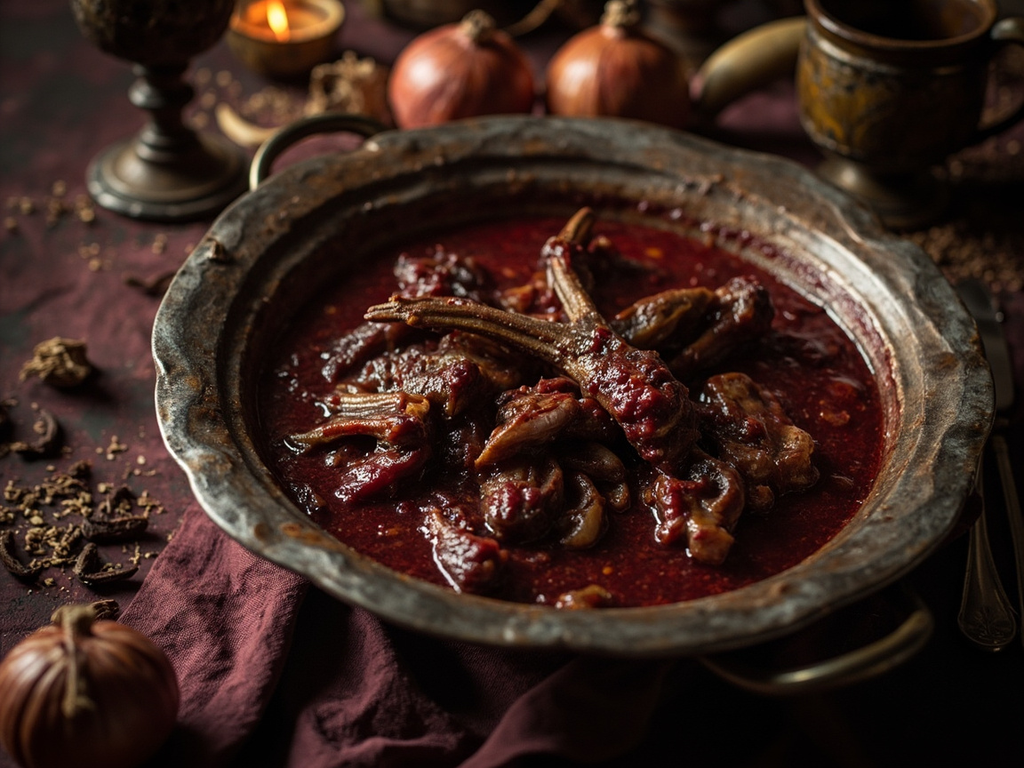
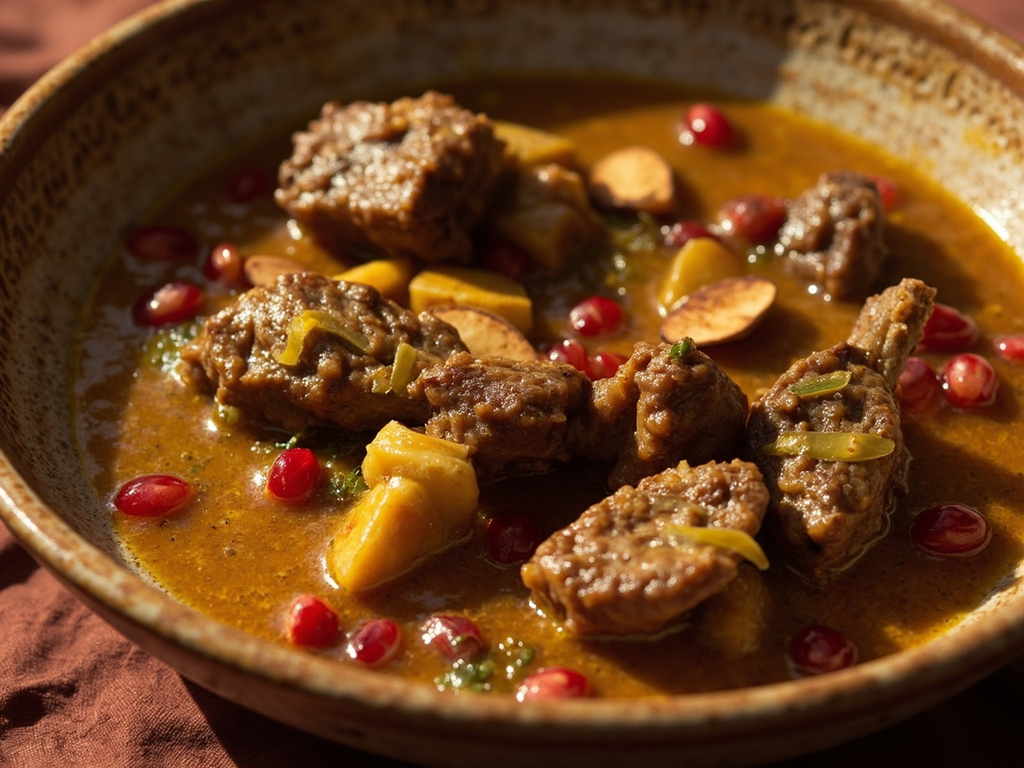
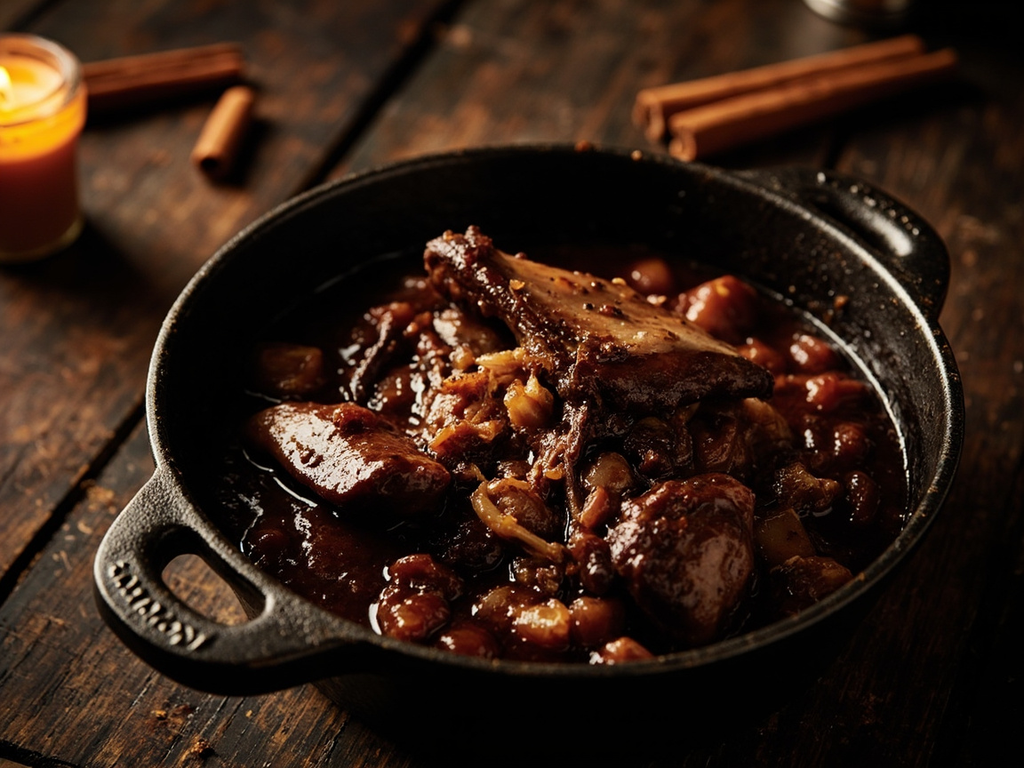
A dark, fragrant stew of hare marinated in red wine, melted with onions and lardons, spiked with cinnamon, ginger, and grains of paradise, then brightened with a dash of verjuice. The celebration dish par excellence.
Under the great oaks of my beloved Gastine, whose felling I once mourned, ran the hare that our huntsmen chased in autumn. At my table it was served as a civet: long mortified in the wine of our hillsides, melted with onions and bacon, then spiced with cinnamon and that grain of paradise which gently pricks the palate. I liked it brightened with a stream of verjuice at the last moment — the sourness, believe me, wakes the venison as rhyme wakes the verse.
- •Dressed hare and its blood — one, with its offal (meat and binder)
- •Red wine from Vendômois — enough to cover (marinade and liquid)
- •Bacon — a good slice (fat)
- •Onions — several (aromatic)
- •Cinnamon, ginger, grains of paradise, cloves — to measure (spices)
- •Verjuice — a dash (acidity)
- •Toasted bread — a few crusts (thickener)
Hare Civet from the Forest of Gastine with Verjuice and Spices
A dark, fragrant stew of hare marinated in red wine, melted with onions and lardons, spiked with cinnamon, ginger, and grains of paradise, then brightened with a dash of verjuice. The celebration dish par excellence.
Why this dish? Ronsard sang of the Forest of Gastine, setting for lordly hunts. The hare, noble game of the Vendômois, appeared on festive tables as a civet, long simmered in wine and bound with its blood according to custom.
Under the great oaks of my beloved Gastine, whose felling I once mourned, ran the hare that our huntsmen chased in autumn. At my table it was served as a civet: long mortified in the wine of our hillsides, melted with onions and bacon, then spiced with cinnamon and that grain of paradise which gently pricks the palate. I liked it brightened with a stream of verjuice at the last moment — the sourness, believe me, wakes the venison as rhyme wakes the verse.
Ingredients (period version)
- Dressed hare and its blood — one, with its offal (meat and binder)
- Red wine from Vendômois — enough to cover (marinade and liquid)
- Bacon — a good slice (fat)
- Onions — several (aromatic)
- Cinnamon, ginger, grains of paradise, cloves — to measure (spices)
- Verjuice — a dash (acidity)
- Toasted bread — a few crusts (thickener)
Ingredients
- Hare in pieces (or saddle + legs of wild rabbit) — 1.5 kg (meat)
- Full-bodied red wine (Chinon, Bourgueil) — 75 cl (marinade and cooking)
- Smoked lardons — 150 g (fat and flavor)
- Onions — 3 (aromatic)
- Cinnamon — 1 stick (spice)
- Ground ginger — 1 tsp (spice)
- Grains of paradise (or pepper) — ½ tsp ground (spice)
- Cloves — 3 (spice)
- Verjuice (or green grape juice / sweet wine vinegar) — 3 tbsp (final acidity)
- Crumbled toasted bread — 2 slices (thickener)
Method
- Marinate the hare pieces overnight in the red wine with the spices and one sliced onion.
- Drain the meat (reserve the marinade), brown it in a casserole with the lardons.
- Add the remaining sliced onions, let them turn golden, then pour in the strained marinade.
- Cover and simmer over low heat for 2.5 to 3 hours, until the meat falls from the bone.
- Thicken the sauce with the crumbled toasted bread (if lacking blood), adjust spices.
- Off the heat, brighten with a dash of verjuice and serve very hot.
How it was made : The civet (from 'cive', onion) was traditionally thickened with the animal's blood. Expensive spices — cinnamon, ginger, grains of paradise — displayed the host's wealth, and sweet-and-sour (wine + verjuice) remained the dominant taste of noble Renaissance sauces.
The contemporary twist : Serve the civet on a puree of roasted parsnips and finish with a veil of bitter orange zest, a nod to the citrus that the Renaissance was just beginning to appreciate.
Sources : Le Viandier (tradition Taillevent) · Lancelot de Casteau, Ouverture de cuisine (1604)
Pierre de Ronsard · Charactorium