 flip
flipHerb-Roasted Lamb of the Royal Mishteh
Herb-Roasted Lamb of the Royal Mishteh
Why this dish? The Scriptures describe the daily opulence of Solomon's table (oxen, sheep, game in abundance for his banquets). Roasted meat was a luxury reserved for feasts and the king; lamb, the animal of Levantine flocks, was the centerpiece during great mishteh.
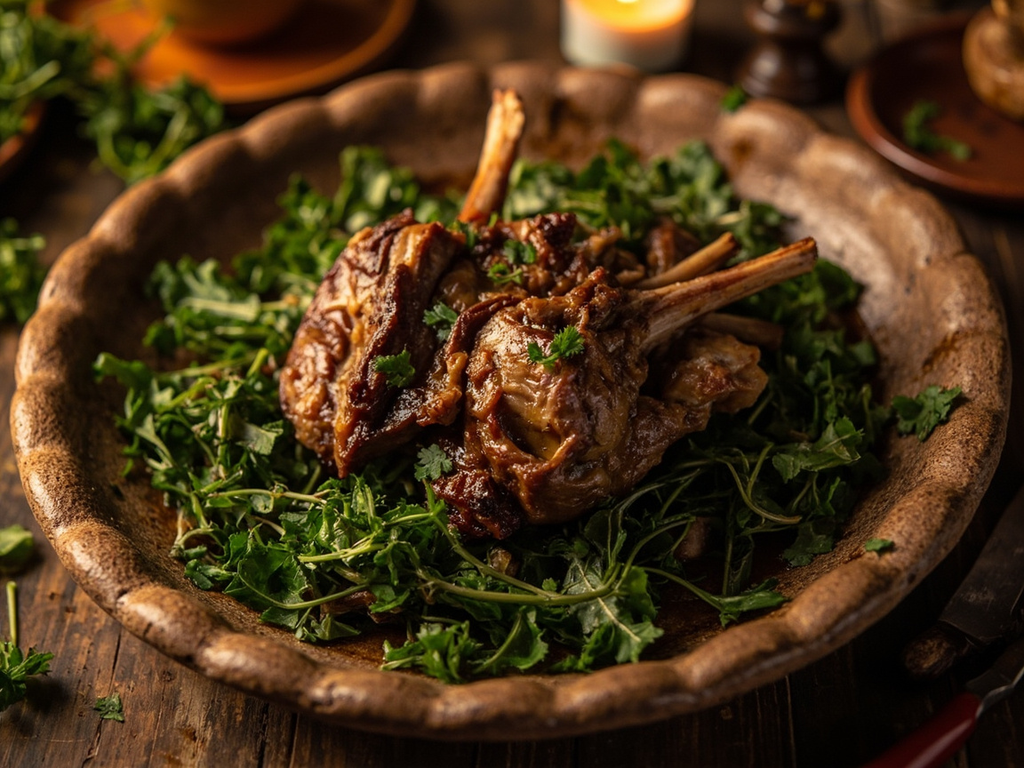
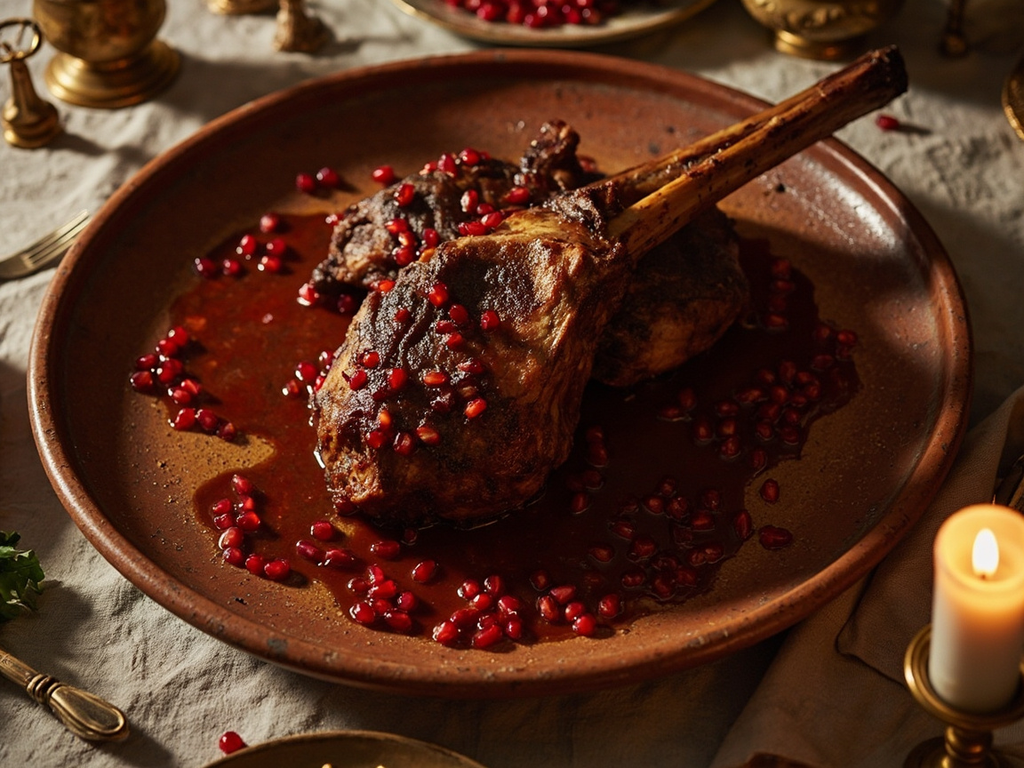
A lamb shoulder rubbed with olive oil, cumin, and coriander, slow-roasted until the meat falls apart, lifted by a sweetness of pomegranate. The meat of glorious days.
Enter, guest, and may your place be the best, for the feast is laid. They say my table saw whole herds pass each day — vanity, perhaps, but a king honors his guests with abundance. Take this lamb: rub it with oil and spices brought by sea from distant lands, then let the fire do its work patiently, without haste. Baste it with pomegranate juice to awaken the fat. Drink, eat, and rejoice: all the rest, I assure you, is but a chasing after wind.
- •Lamb shoulder — one piece (feast meat)
- •Olive oil — generously (anointing and cooking)
- •Cumin and coriander — equal parts (spices of the caravan route)
- •Garlic — a few cloves (fragrance)
- •Pomegranate juice — a bowl (acidity and shine)
- •Salt — by hand (seasoning)
Herb-Roasted Lamb of the Royal Mishteh
A lamb shoulder rubbed with olive oil, cumin, and coriander, slow-roasted until the meat falls apart, lifted by a sweetness of pomegranate. The meat of glorious days.
Why this dish? The Scriptures describe the daily opulence of Solomon's table (oxen, sheep, game in abundance for his banquets). Roasted meat was a luxury reserved for feasts and the king; lamb, the animal of Levantine flocks, was the centerpiece during great mishteh.
Enter, guest, and may your place be the best, for the feast is laid. They say my table saw whole herds pass each day — vanity, perhaps, but a king honors his guests with abundance. Take this lamb: rub it with oil and spices brought by sea from distant lands, then let the fire do its work patiently, without haste. Baste it with pomegranate juice to awaken the fat. Drink, eat, and rejoice: all the rest, I assure you, is but a chasing after wind.
Ingredients (period version)
- Lamb shoulder — one piece (feast meat)
- Olive oil — generously (anointing and cooking)
- Cumin and coriander — equal parts (spices of the caravan route)
- Garlic — a few cloves (fragrance)
- Pomegranate juice — a bowl (acidity and shine)
- Salt — by hand (seasoning)
Ingredients
- Lamb shoulder — 1.5 kg (feast meat)
- Olive oil — 5 tbsp (anointing and cooking)
- Ground cumin — 2 tsp (spice)
- Ground coriander — 2 tsp (spice)
- Garlic — 5 crushed cloves (fragrance)
- Pomegranate molasses / juice — 100 ml (acidity and glaze)
- Salt — 2 tsp (seasoning)
- Broth or water — 200 ml (slow cooking liquid)
Method
- Mix oil, garlic, cumin, coriander, and salt; rub all over the shoulder, ideally the day before.
- Place in a dish, pour broth at the bottom, cover with foil.
- Roast in the oven at 150°C for 3 hours 30 minutes, basting regularly with cooking juices.
- Uncover, brush with pomegranate juice/molasses, increase to 200°C for 20 minutes to glaze.
- Let rest 15 minutes; the meat should fall apart with a fork.
- Serve at the center of the table, to be shared by hand with bread.
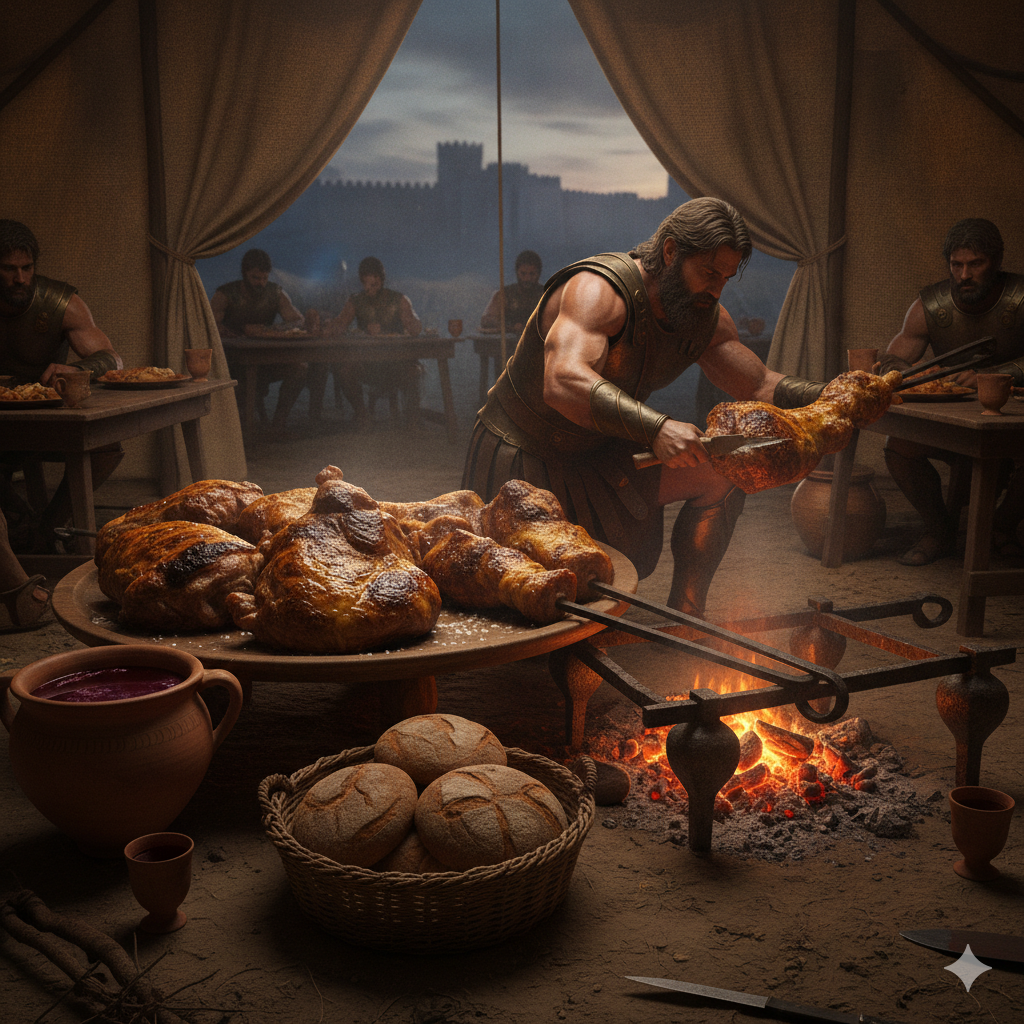
How it was made : Lamb was roasted whole or in quarters over embers or in an earthen oven (tabun). As meat was rare and costly, its presence signaled a feast, an honored visit, or a shared sacrifice. Imported spices displayed the host's rank.
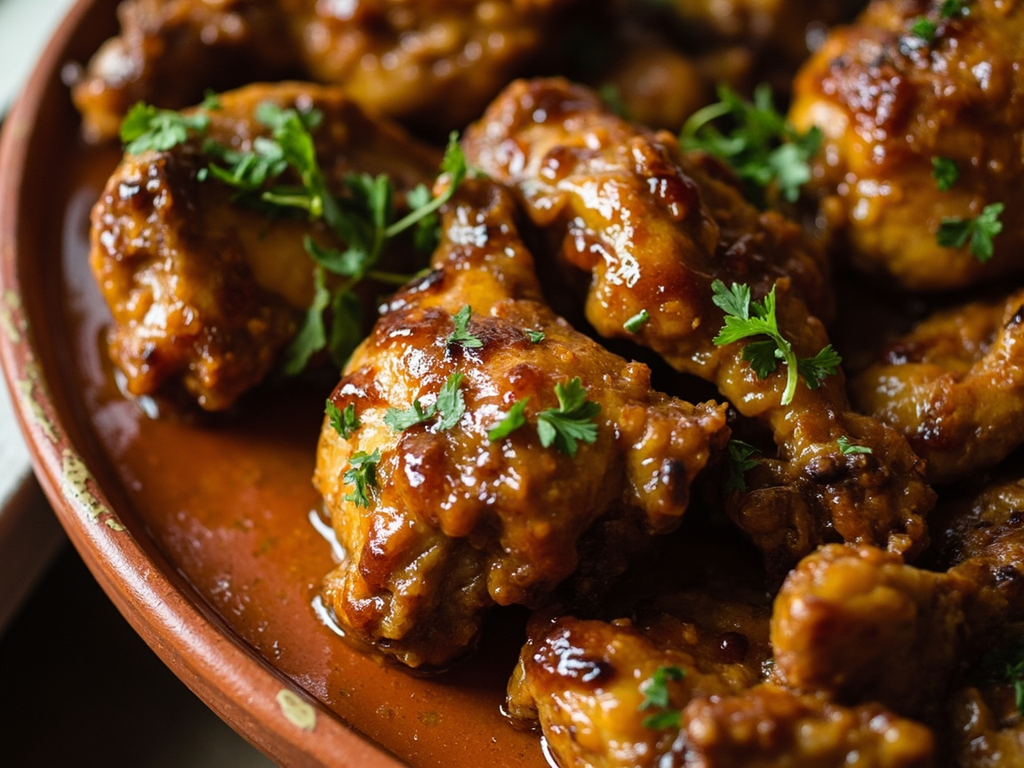
The contemporary twist : Shredded and tucked into warm flatbread with fresh pomegranate seeds: a banquet "mezzé" revisited in a convivial version.
Solomon · Charactorium