 flip
flipPuls — The Spelt Porridge of the Frugal Roman
Puls — The Spelt Porridge of the Frugal Roman
Why this dish? Puls was the national dish of the Romans before bread, and it is exactly the simple table that Seneca advocates in his Letters to Lucilius: grain, a little garum, and peace of mind. It was the everyday fare that a wise man embraced without shame, even if wealthy.
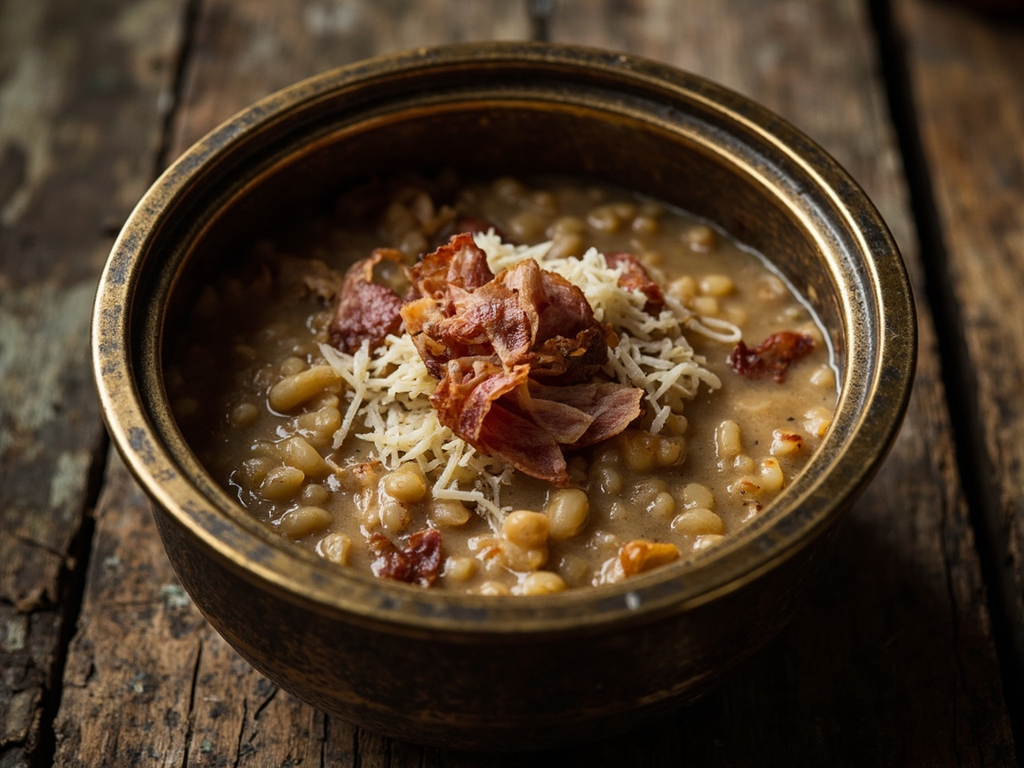
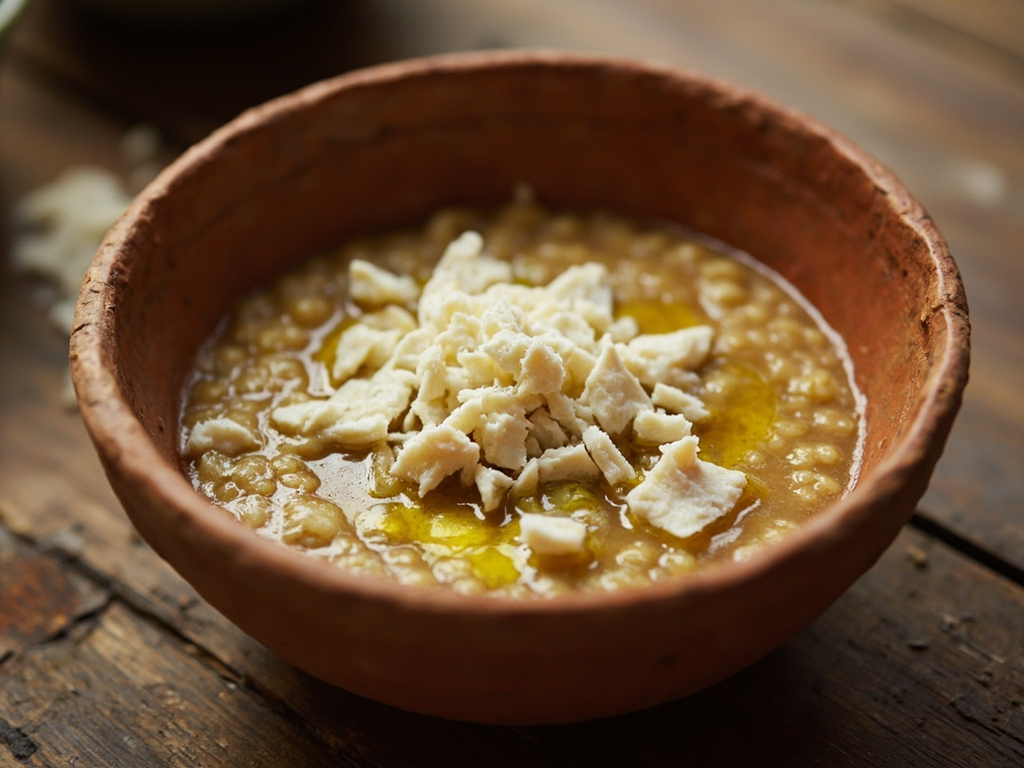
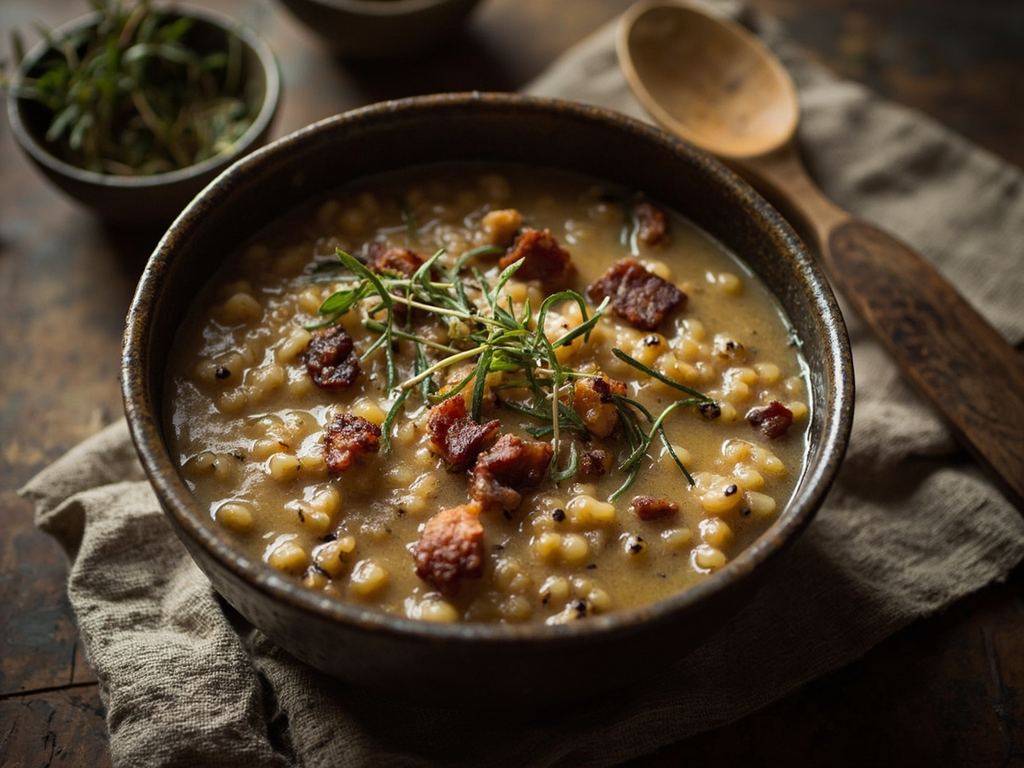
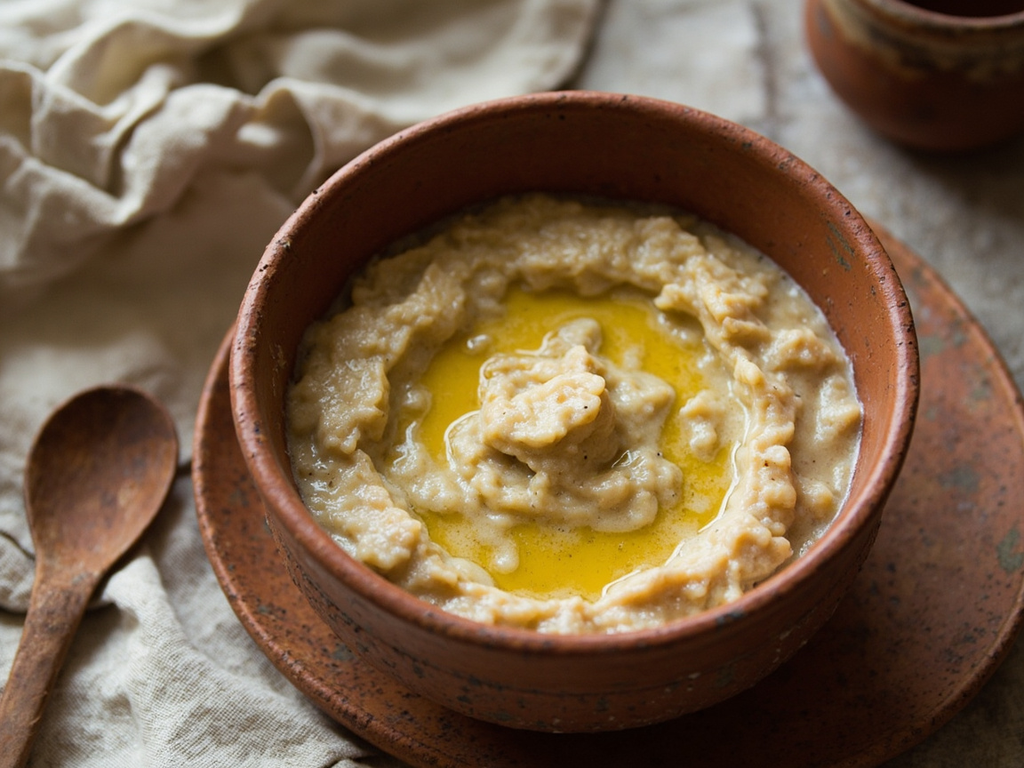
A thick spelt porridge cooked in water, bound until creamy, seasoned with a dash of garum and olive oil. The belly of the Roman people and the voluntary choice of the philosopher who eats to live, not to enjoy.
You think I am poor because I eat a spelt porridge? Learn rather that I am free. I have tasted Nero's tables, where they serve birds' tongues and fish from the other side of the world; I found there only the anxiety of one who fears to run short. Pour water over the far, stir without tiring until it thickens, add a drop of garum and a drizzle of oil: that is a meal no tyrant can take from you. Eat little, and you will never fear to lose everything.
- •Far (crushed spelt) — two handfuls per guest (cereal base)
- •Spring water — three times the volume of grain (cooking liquid)
- •Garum — a dash (salt and umami)
- •Olive oil — a drizzle (binding and fat)
- •Salt — a pinch (seasoning)
Puls — The Spelt Porridge of the Frugal Roman
A thick spelt porridge cooked in water, bound until creamy, seasoned with a dash of garum and olive oil. The belly of the Roman people and the voluntary choice of the philosopher who eats to live, not to enjoy.
Why this dish? Puls was the national dish of the Romans before bread, and it is exactly the simple table that Seneca advocates in his Letters to Lucilius: grain, a little garum, and peace of mind. It was the everyday fare that a wise man embraced without shame, even if wealthy.
You think I am poor because I eat a spelt porridge? Learn rather that I am free. I have tasted Nero's tables, where they serve birds' tongues and fish from the other side of the world; I found there only the anxiety of one who fears to run short. Pour water over the far, stir without tiring until it thickens, add a drop of garum and a drizzle of oil: that is a meal no tyrant can take from you. Eat little, and you will never fear to lose everything.
Ingredients (period version)
- Far (crushed spelt) — two handfuls per guest (cereal base)
- Spring water — three times the volume of grain (cooking liquid)
- Garum — a dash (salt and umami)
- Olive oil — a drizzle (binding and fat)
- Salt — a pinch (seasoning)
Ingredients
- Crushed spelt (or spelt semolina) — 160 g (cereal base)
- Water or vegetable broth — 650 ml (cooking liquid)
- Fish sauce (nuoc-mam, as a substitute for garum) — 1 tsp (salty umami)
- Extra virgin olive oil — 2 tbsp (creaminess)
- Salt — to adjust (seasoning)
Method
- Bring salted water to a simmer in a heavy-bottomed pot.
- Pour in the spelt in a steady stream while stirring to avoid lumps.
- Cook over low heat for 25–30 minutes, stirring often, until creamy.
- Remove from heat and stir in the fish sauce and olive oil.
- Serve hot in a deep bowl, with a final drizzle of oil.
How it was made : Before bread became widespread, puls was the fundamental dish of Rome, so much so that Greeks called Romans pultiphagi, 'porridge-eaters.' It was cooked in an earthenware pot and seasoned according to one's means: oil and garum for the modest, cheese and eggs for the wealthier.
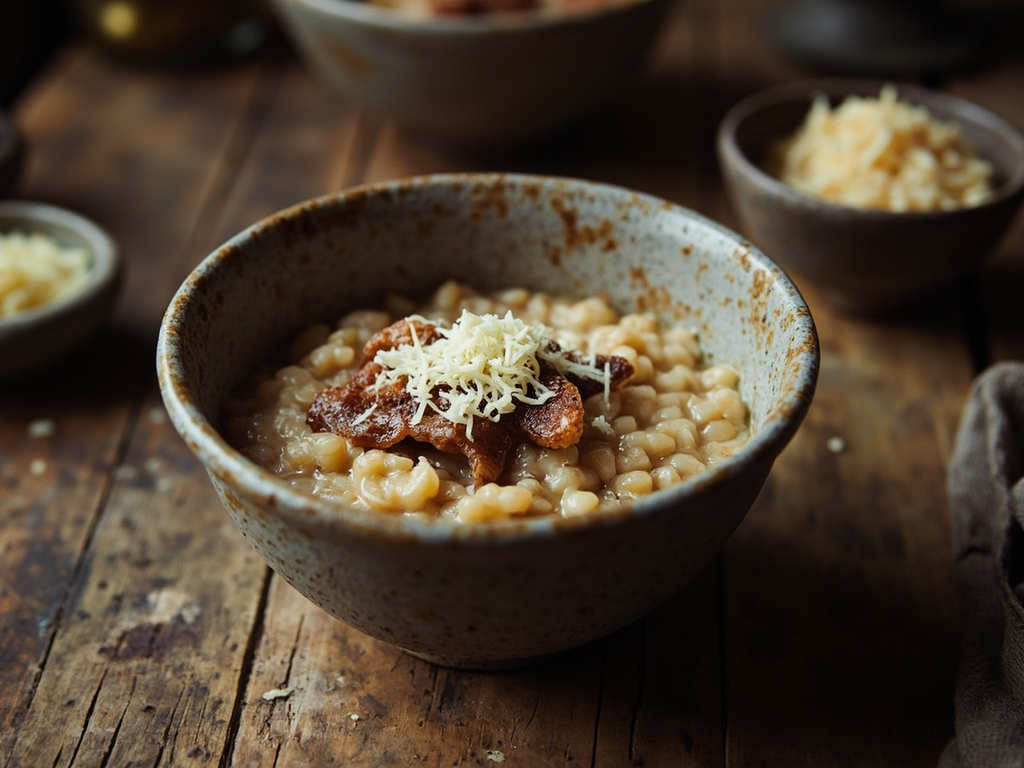
The contemporary twist : Plated like a contemporary risotto, sprinkled with lemon zest and fresh herbs, puls becomes a surprisingly modern grain bowl.
Sources : Pliny the Elder, Natural History, XVIII · Seneca, Letters to Lucilius
Seneca · Charactorium