The Table of the Immortals and the Mortals' Share
In the archaic Greek imagination, gods do not eat like humans: they feed on ambrosia and nectar, while the smoke of offerings and poured libations rise to them. The structure of the human meal that honors them revolves around the *spondê* (libation poured before every meal), the *sîtos* (the staple food — barley *maza*, bread), the *opson* (what one eats with: olives, cheese, figs), and the *tragêmata* (sweets and fruits at the end of the banquet, during the symposion). For an Oceanid linked to waters, to Atlas and the rainy Hyades, everything begins and ends with water, milk, and honey poured.
Signature : Flowing Honey and Spring Water Libation
Greek honey (thyme from Hymettus, heather from the islands) is the closest mortal taste to divine nectar: it binds, it preserves, it is offered. Associated with pure spring water — the domain of the Oceanids — it marks this entire table, from the poured cup to the drizzled cake.
Aethra at the table
5 period recipes
 Offering
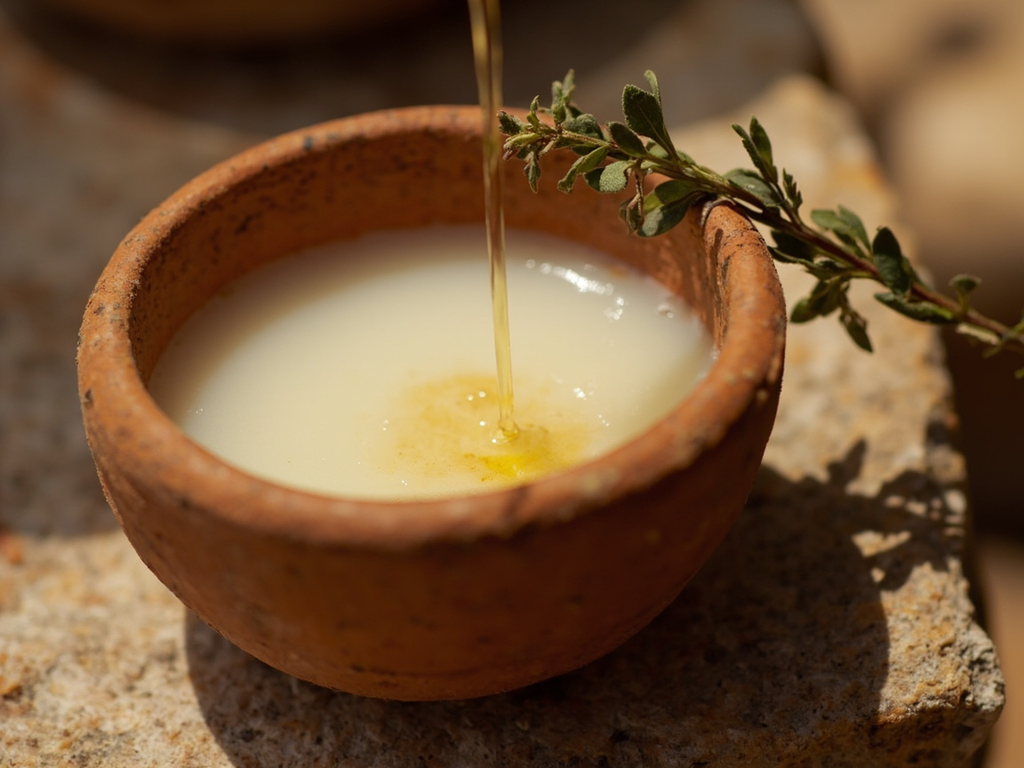
Spondê of Milk, Honey, and Spring Water
Spondê (libation poured before the meal, offering to water divinities)
🍯· 10 min
View the recipe
 Everyday
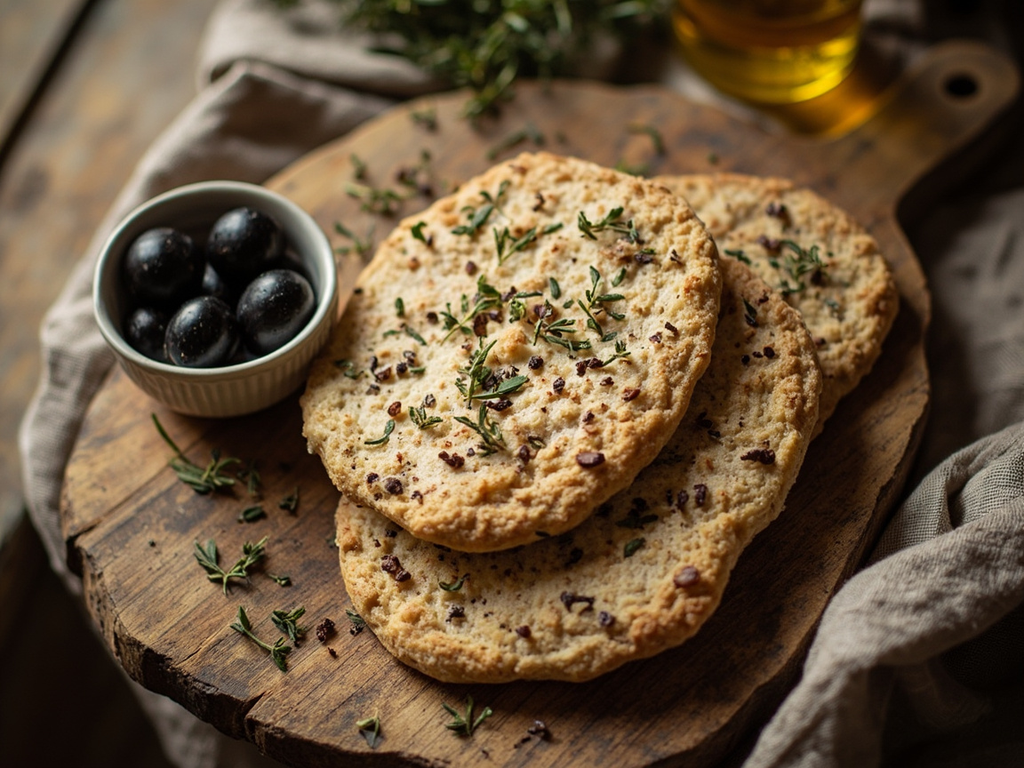
Barley Maza with Thyme and Oil
Sîtos (the staple food of the Greek meal, base of every modest table)
🧂 ☕· 30 min
View the recipe
 Drink
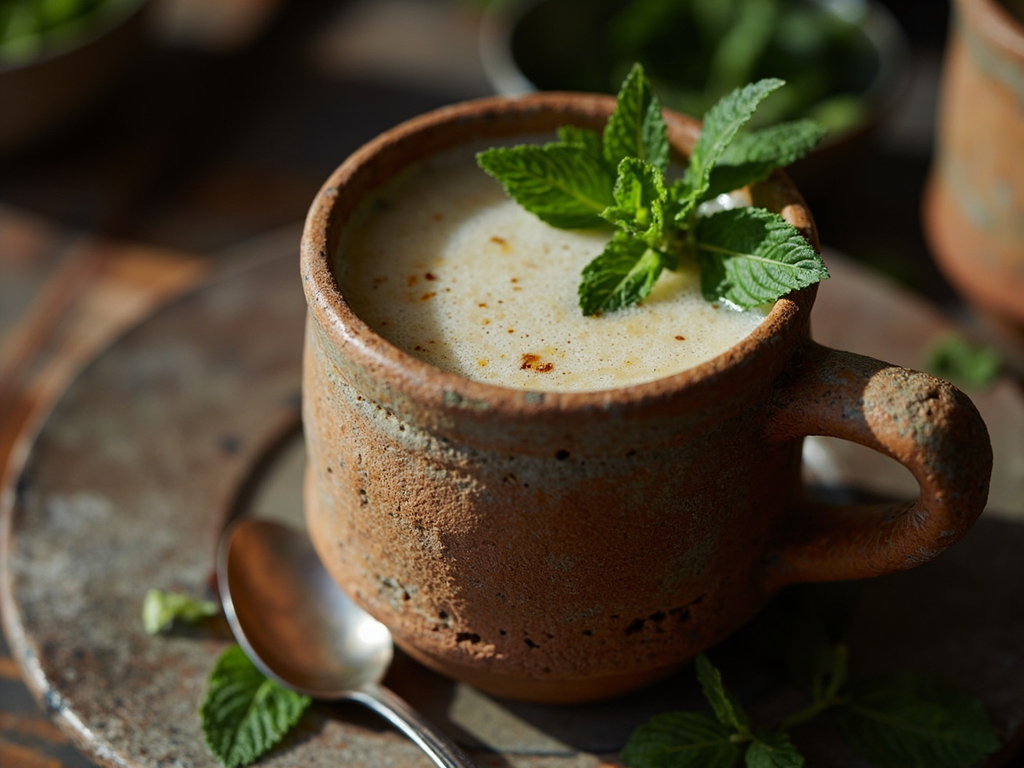
DrinkBarley Kykeon with Mint
Staple potion (thick meal-drink, between drinking and eating, taken on the road or at dawn)
🍋 ☕· 15 min
View the recipe
 Preserving
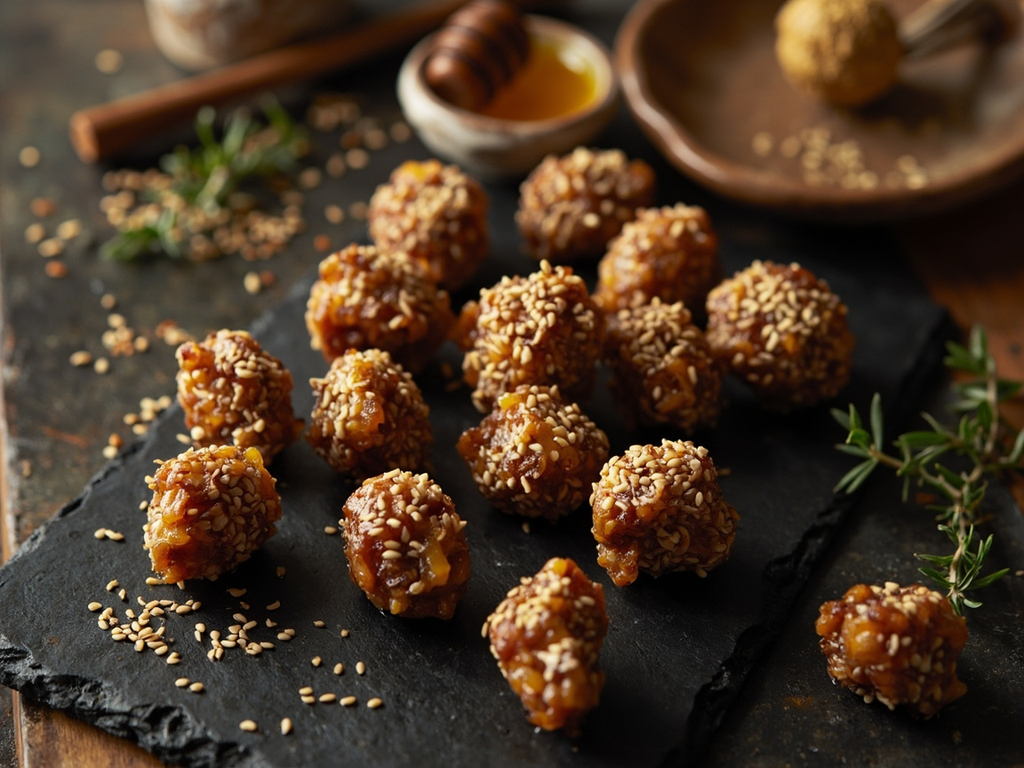
Dried Figs with Honey, Thyme, and Sesame
Travel provisions (travel *tragêma* that keeps, slipped into the walker's pouch)
🍯· 25 min
View the recipe
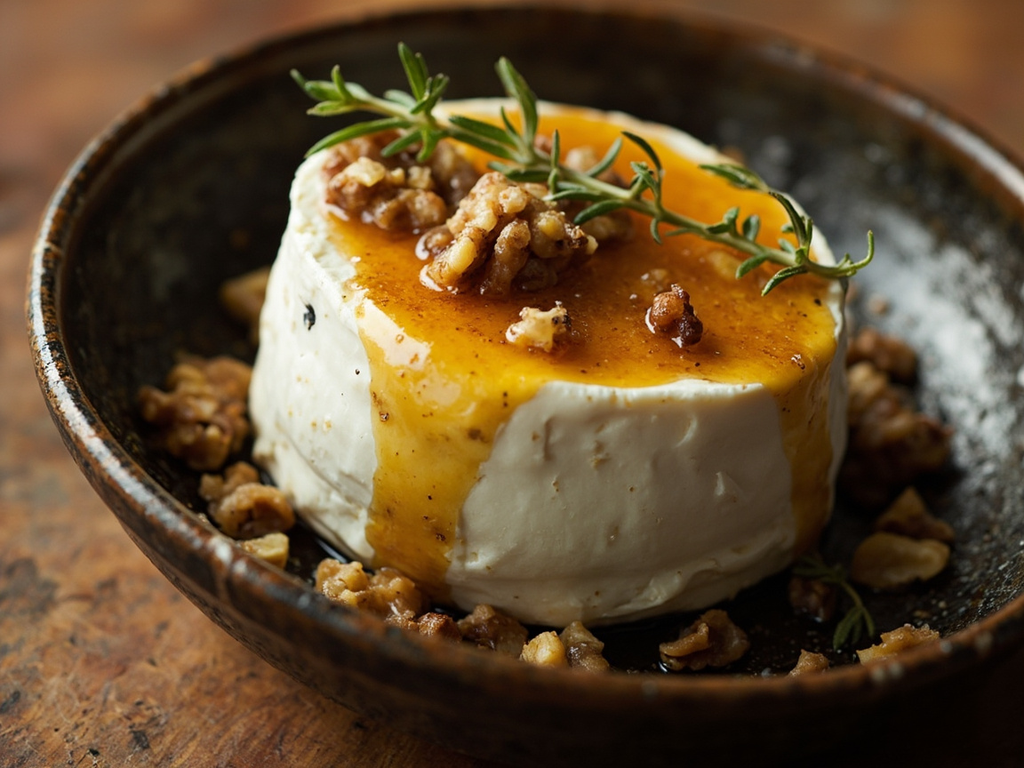 Festive
Hyades Tragêmata: Fresh Cheese, Honey, and Walnuts
Tragêmata (the "second tables" of the symposion: fruits, cheeses, and sweets served after the meal, during the wine)
🍯 🍄· 15 min
View the recipe