 flip
flipBarley Maza with Thyme and Oil
Barley Maza with Thyme and Oil
Why this dish? At the foot of Mount Atlas where Aethra accompanies her heaven-bearing husband, the food of mortals imagined at his feet was simple and earthy: *maza*, an unleavened barley cake, was the daily bread of the archaic Greek world, far more common than wheat bread. It is the food of the soil, beneath the celestial vault that Atlas supports.
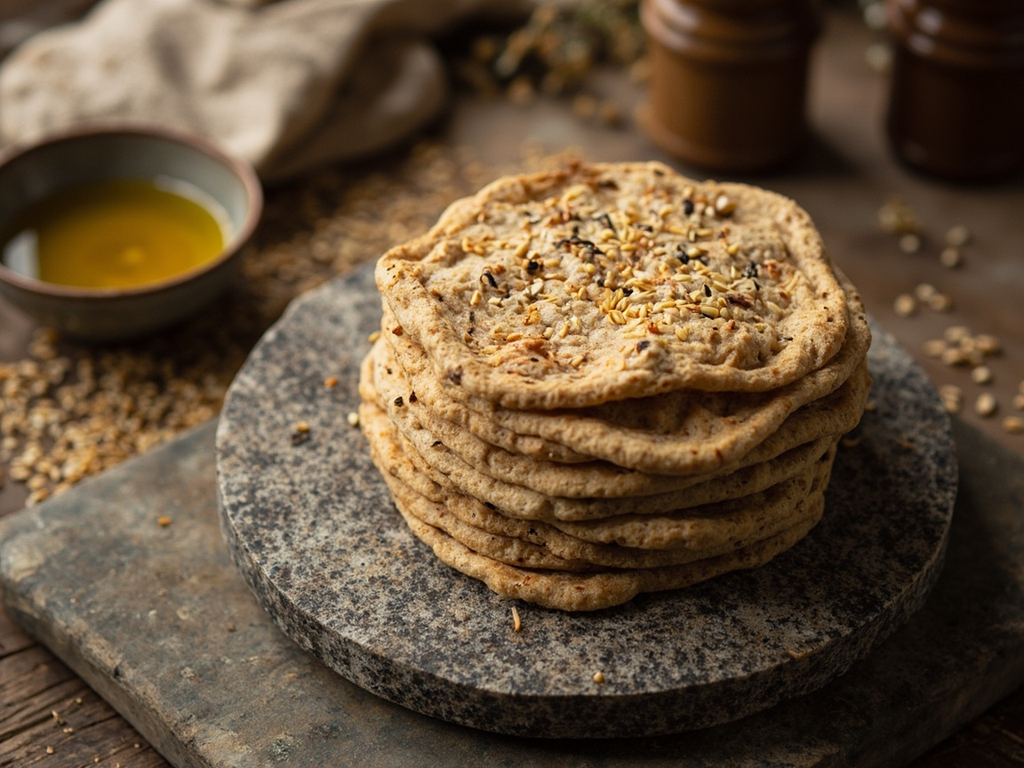
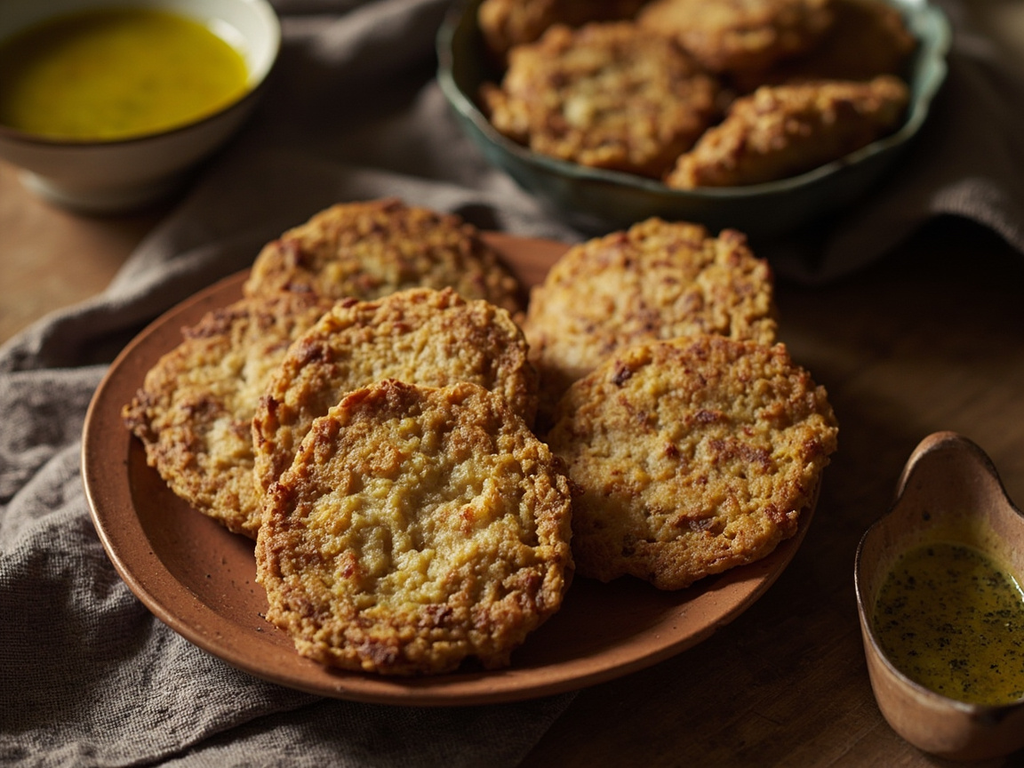
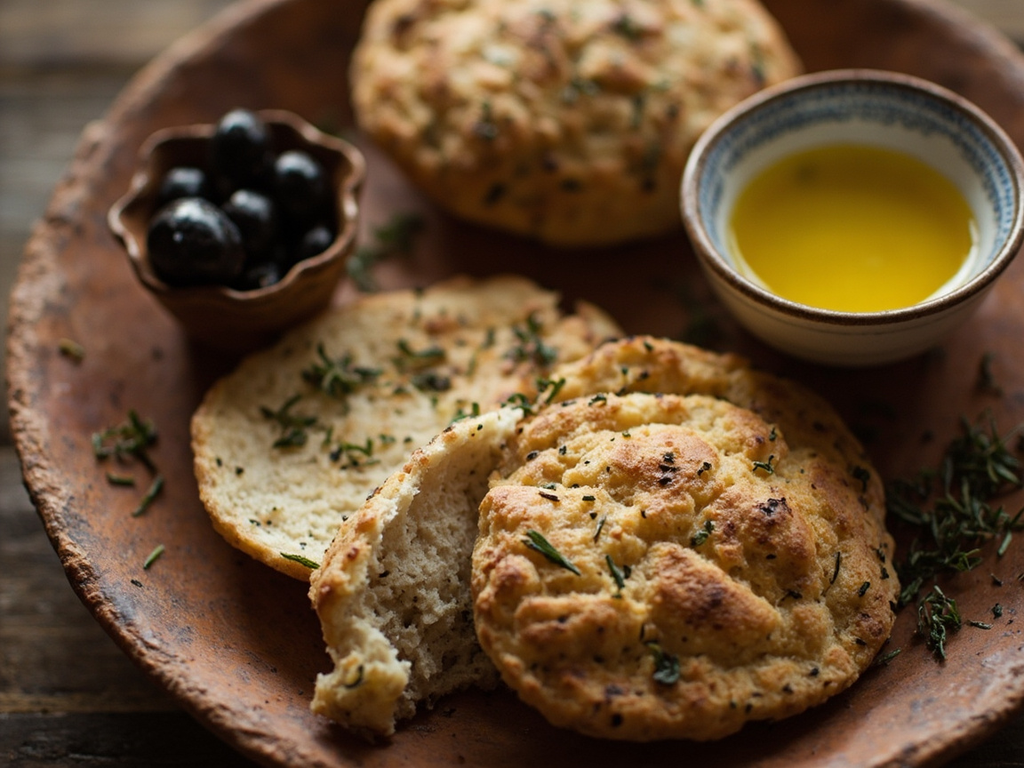
A dense, rustic cake of toasted barley flour, kneaded with water and olive oil, perfumed with thyme. Neither leavened nor truly baked like bread: you crush it, shape it, eat it firm, sometimes dipped. The real everyday bread of the ancient Greeks.
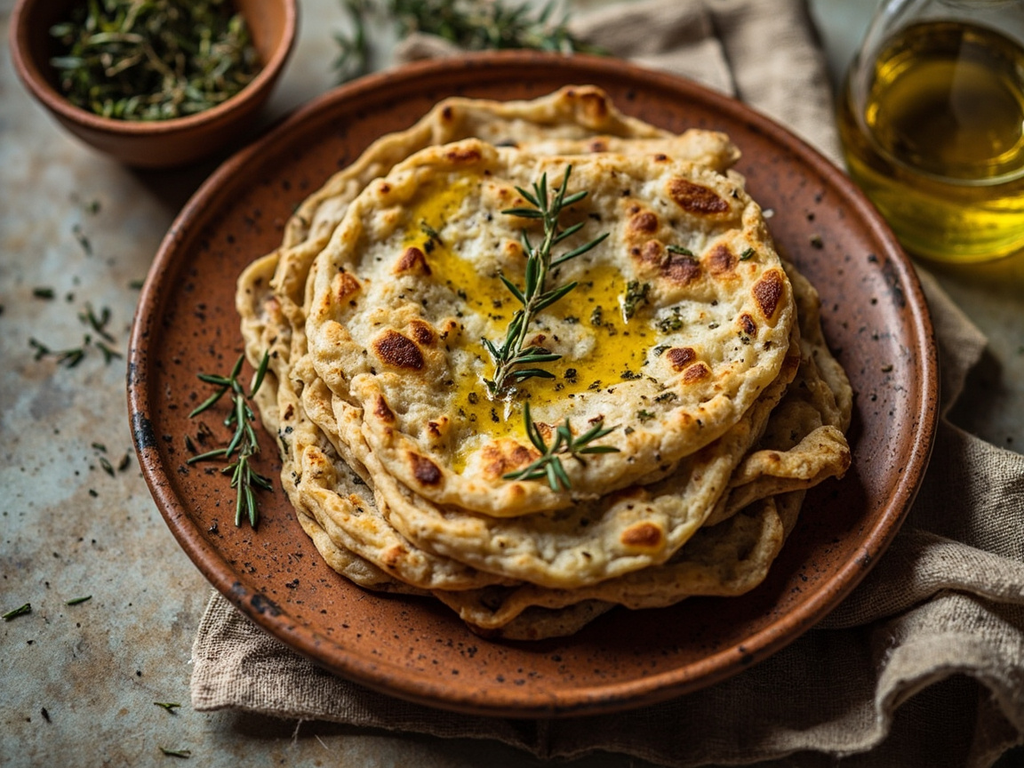
Do not seek here the wheat of wealthy cities: beneath the mountain that holds up the sky, we eat barley, as men have always done. Toast the flour so it smells fragrant, moisten it with water and a splash of oil, knead with a firm hand, and press a thick cake. Rub it with thyme picked from the dry slope. It sticks to the shepherd's belly as the rock keeps my Atlas standing.
- •Toasted barley flour (alphita) — two handfuls (grain base)
- •Olive oil — a splash (binder, fat)
- •Water — as needed (hydration)
- •Wild thyme — a pinch (flavor)
- •Salt — a pinch (seasoning)
Barley Maza with Thyme and Oil
A dense, rustic cake of toasted barley flour, kneaded with water and olive oil, perfumed with thyme. Neither leavened nor truly baked like bread: you crush it, shape it, eat it firm, sometimes dipped. The real everyday bread of the ancient Greeks.
Why this dish? At the foot of Mount Atlas where Aethra accompanies her heaven-bearing husband, the food of mortals imagined at his feet was simple and earthy: *maza*, an unleavened barley cake, was the daily bread of the archaic Greek world, far more common than wheat bread. It is the food of the soil, beneath the celestial vault that Atlas supports.
Do not seek here the wheat of wealthy cities: beneath the mountain that holds up the sky, we eat barley, as men have always done. Toast the flour so it smells fragrant, moisten it with water and a splash of oil, knead with a firm hand, and press a thick cake. Rub it with thyme picked from the dry slope. It sticks to the shepherd's belly as the rock keeps my Atlas standing.
Ingredients (period version)
- Toasted barley flour (alphita) — two handfuls (grain base)
- Olive oil — a splash (binder, fat)
- Water — as needed (hydration)
- Wild thyme — a pinch (flavor)
- Salt — a pinch (seasoning)
Ingredients
- Barley flour — 200 g (base)
- Extra virgin olive oil — 3 tbsp (binder)
- Warm water — 100–120 ml (hydration)
- Dried thyme — 1 tsp (flavor)
- Salt — 1/2 tsp (seasoning)
Method
- Dry-toast the barley flour in a pan for a few minutes, stirring, until nutty and fragrant; let cool.
- Mix toasted flour, salt, and thyme, then gradually incorporate oil and warm water until a firm, pliable dough forms.
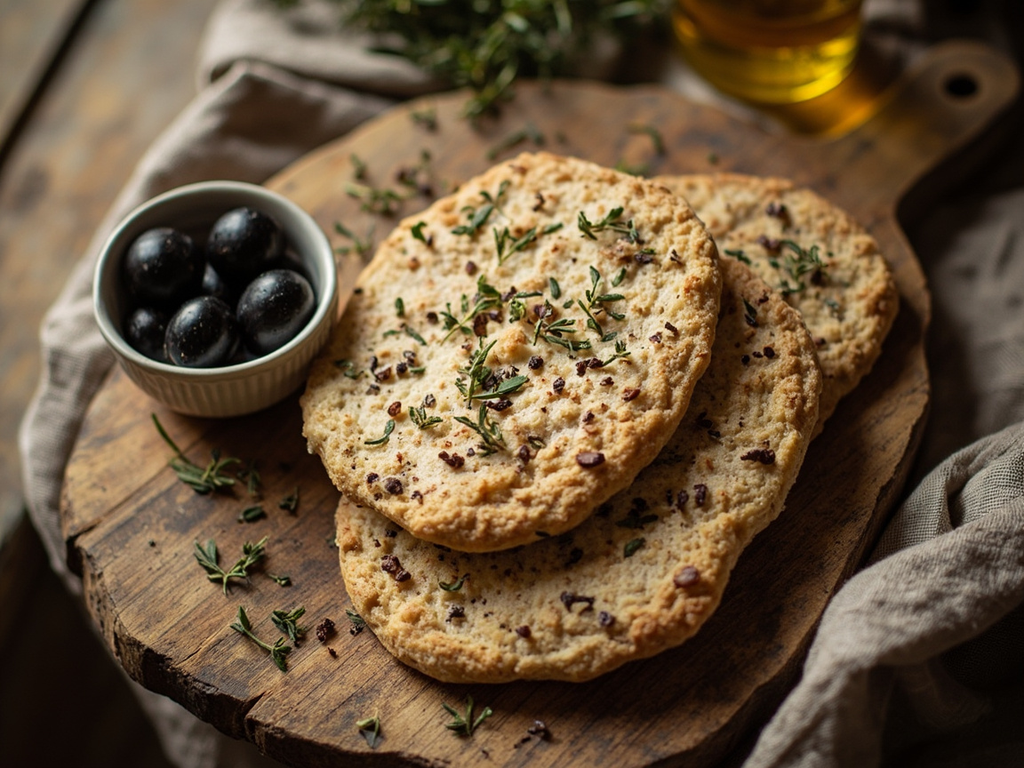
- Shape into thick cakes about ten centimeters across, pressed firmly by hand.
- Cook each side for 3–4 minutes on a hot stone or dry pan, just to set and brown.
- Serve warm, optionally dipped in olive oil or a little wine cut with water.
How it was made : *Maza* was the staple food of ancient Greece, made from barley flour (*alphita*) often simply moistened and kneaded, sometimes barely cooked. Barley grew better than wheat in poor soils; leavened wheat bread remained an urban luxury. It was eaten with *opson*: olives, cheese, onion, salted fish.
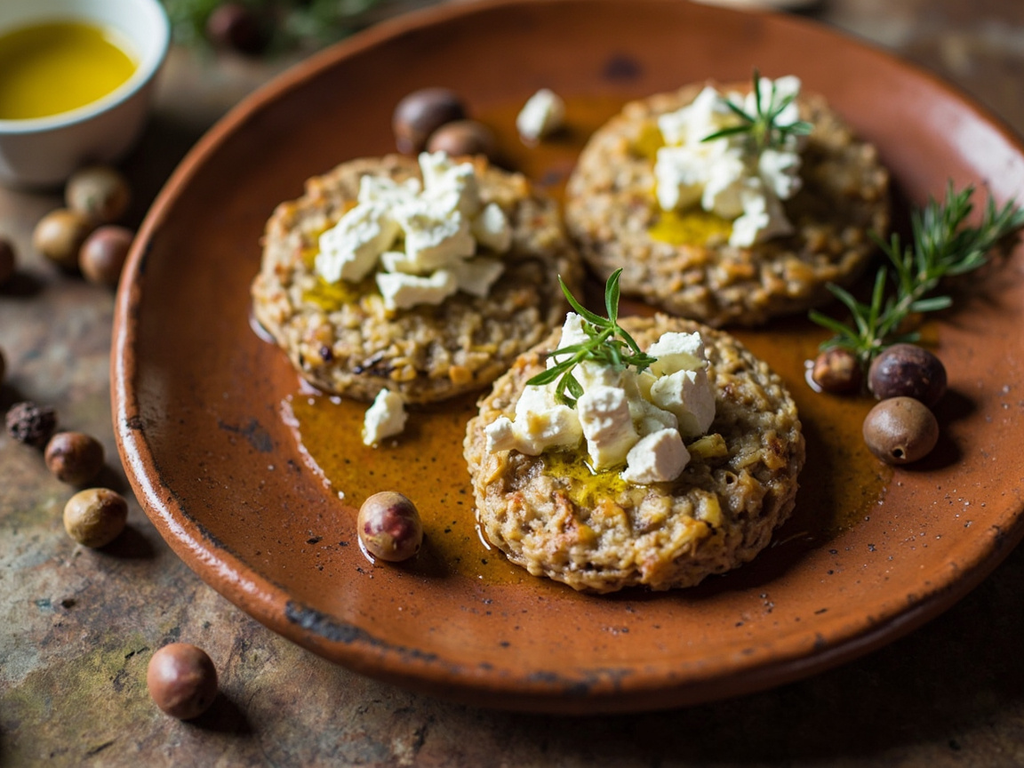
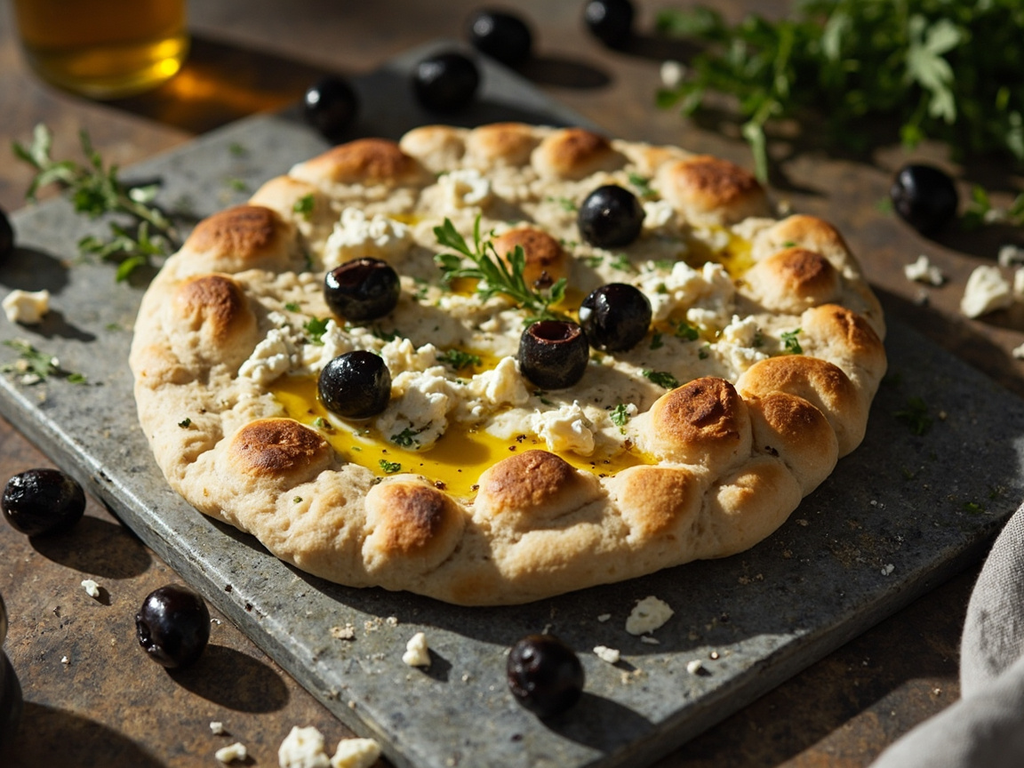
The contemporary twist : Served as mini appetizer flatbreads, topped with a shaving of sheep's cheese and an olive — an "archaic tartine" to share.
Aethra · Charactorium