 flip
flipPopana with honey, cakes for the altar
Popana with honey, cakes for the altar
Why this dish? The Alcmaeonids were tied to the sacred: they financed the reconstruction of the temple of Apollo at Delphi. In such a house, shaping small offering cakes to place on the hearth gods' altar was a familiar gesture, blending piety and domestic cookery.
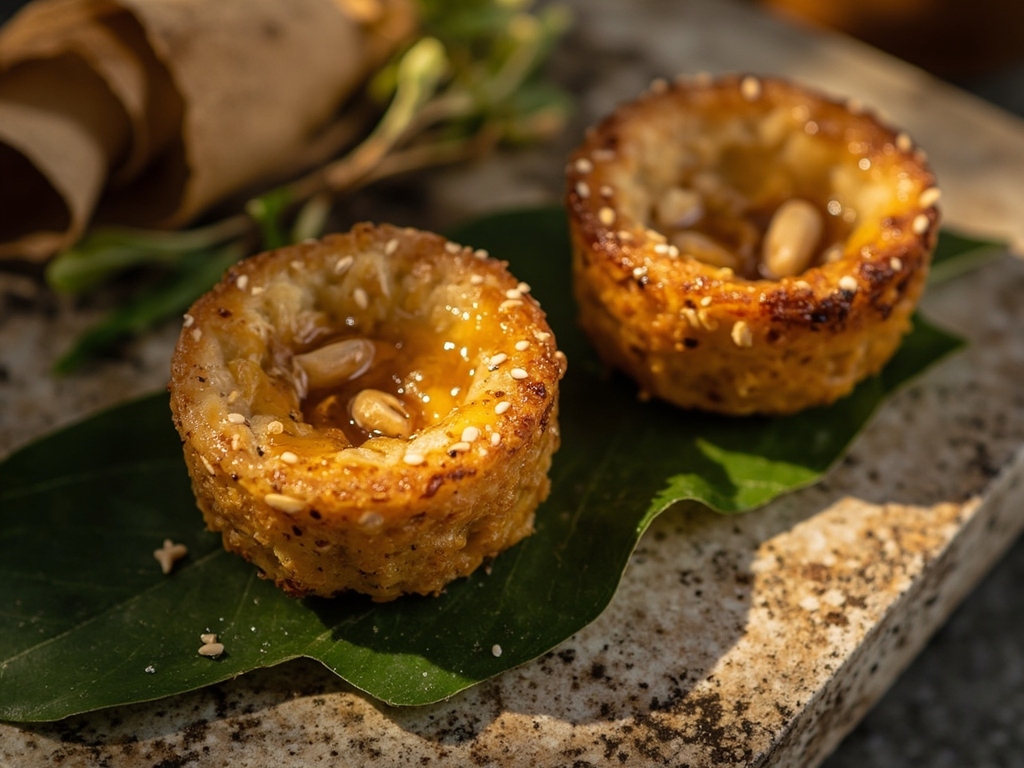
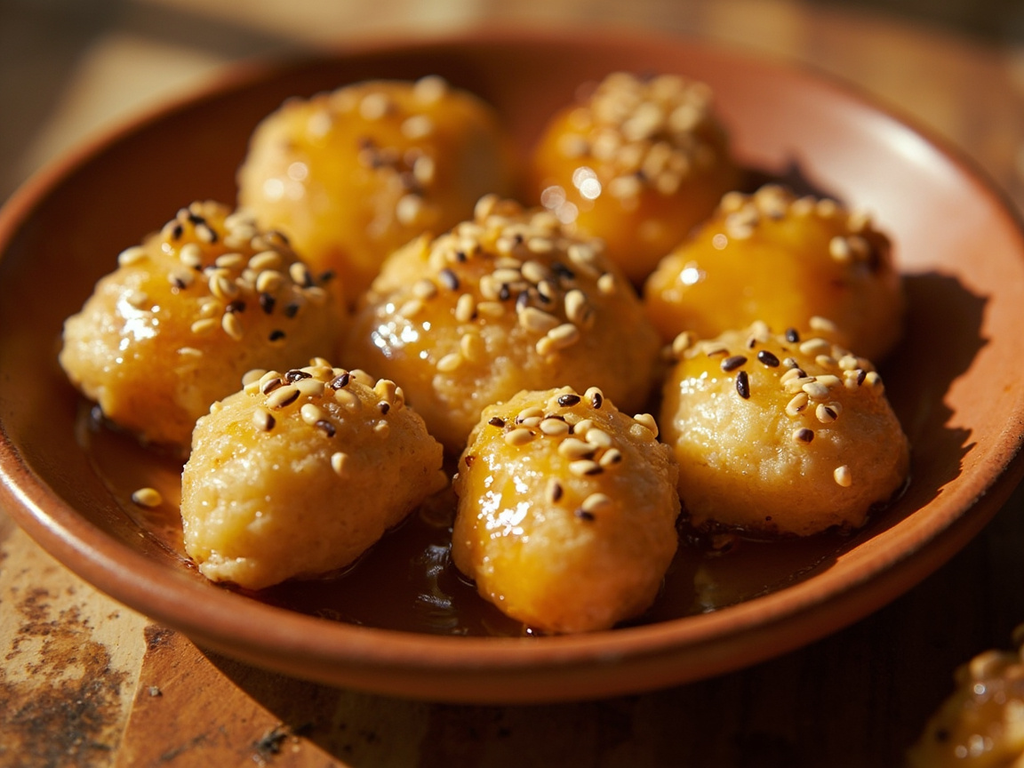
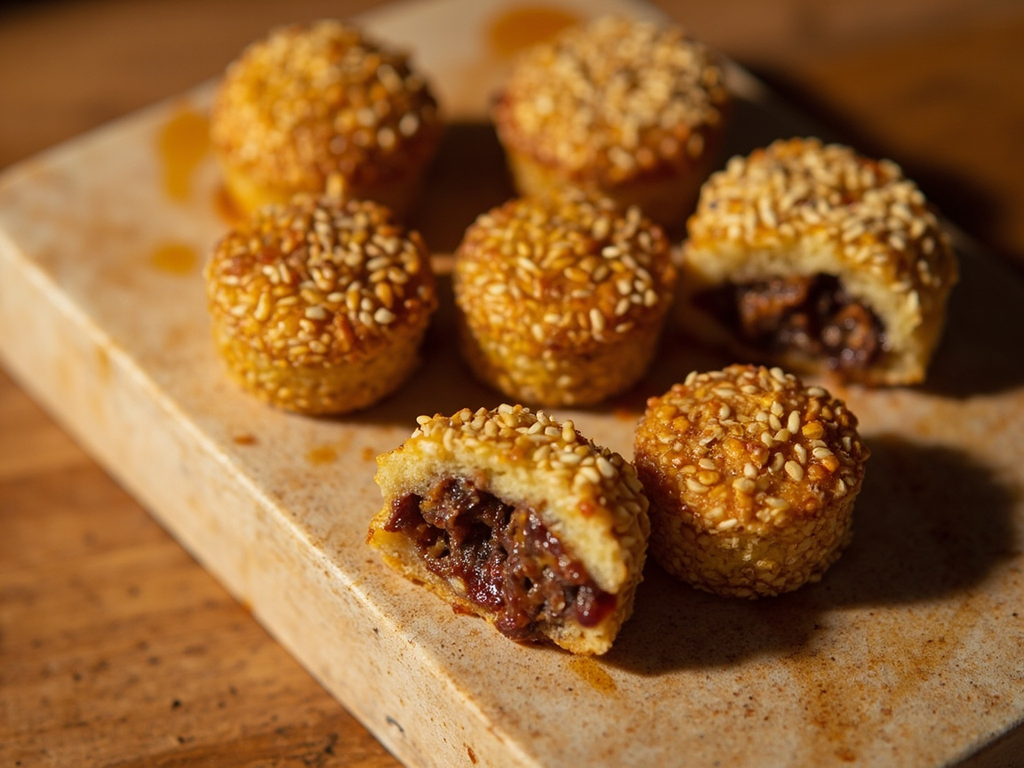
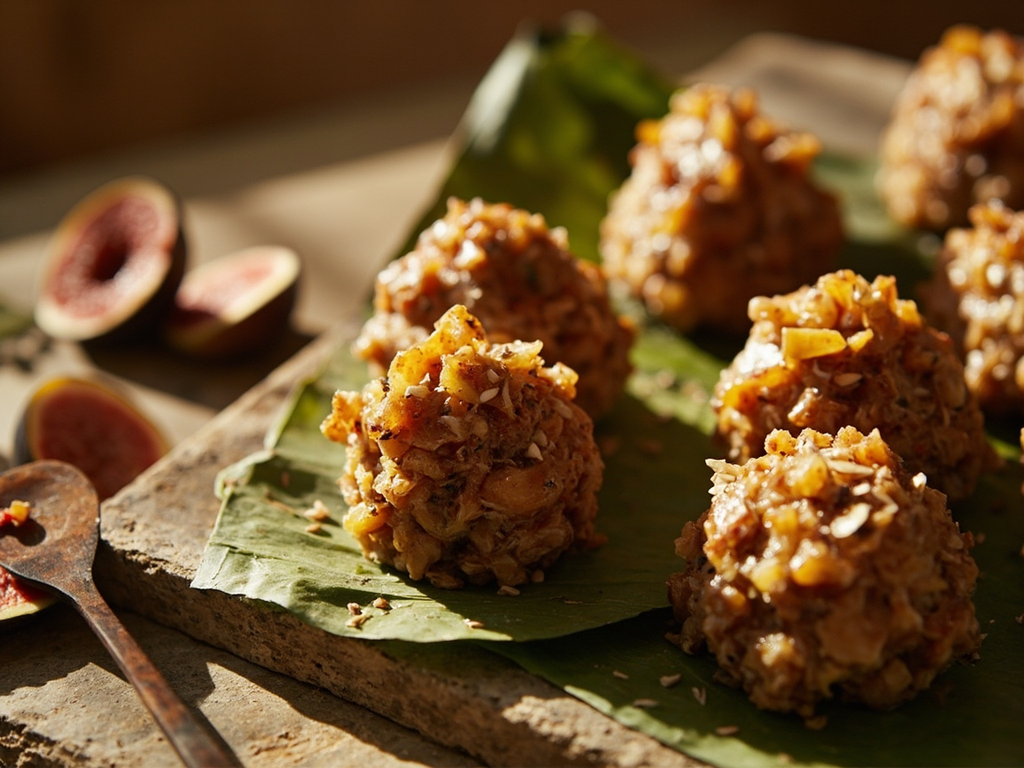
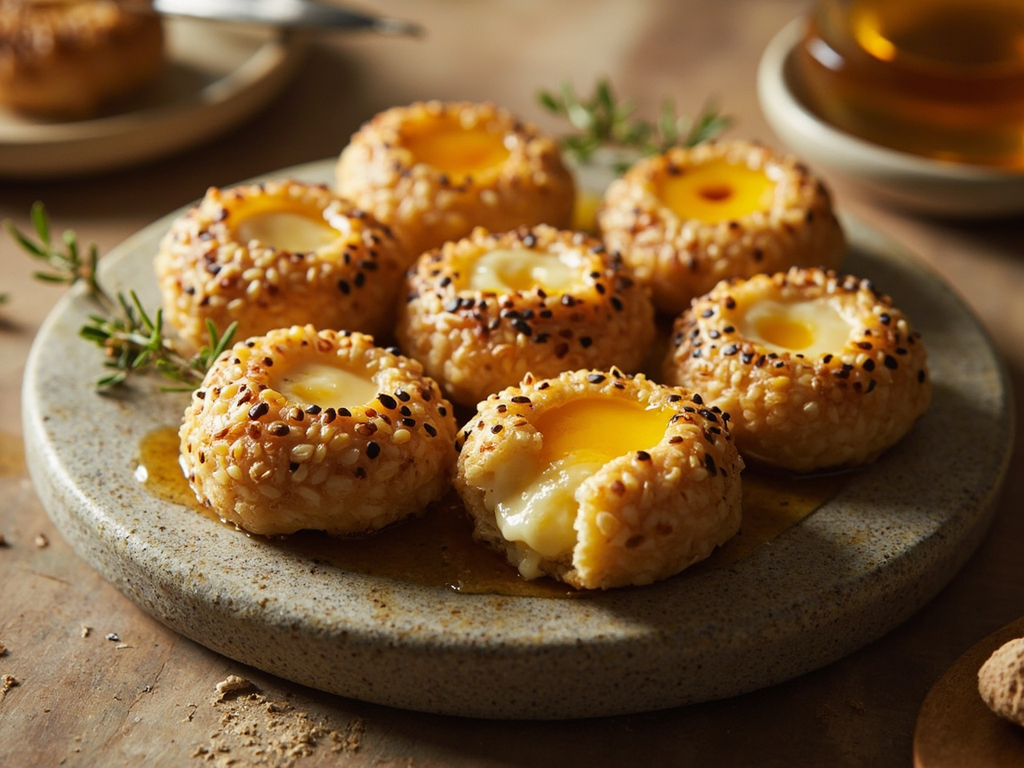
Small round tender cakes made from flour, fresh cheese, and honey, perfumed with sesame. Entirely sweet, they were set out as offerings — here presented in the spirit of the ancient gesture, not as a reproduction of a sacred rite.
Before the household sits down to eat, I shape with my own hands the little cakes for the altar. A little flour, the morning's fresh cheese, Hymettus honey, and these sesame seeds that crackle under the gods' teeth. One does not offer to the Immortals what one would not eat oneself: that is what my Alcmaeonid grandmothers taught me. Keep one for yourself, after the altar — the gods' share does not forbid that of the living.
- •Wheat flour — one measure (structure)
- •Fresh cheese — equal parts (softness)
- •Hymettus honey — generously (sweet binder, signature)
- •Sesame seeds — a handful (flavor and crunch)
Popana with honey, cakes for the altar
Small round tender cakes made from flour, fresh cheese, and honey, perfumed with sesame. Entirely sweet, they were set out as offerings — here presented in the spirit of the ancient gesture, not as a reproduction of a sacred rite.
Why this dish? The Alcmaeonids were tied to the sacred: they financed the reconstruction of the temple of Apollo at Delphi. In such a house, shaping small offering cakes to place on the hearth gods' altar was a familiar gesture, blending piety and domestic cookery.
Before the household sits down to eat, I shape with my own hands the little cakes for the altar. A little flour, the morning's fresh cheese, Hymettus honey, and these sesame seeds that crackle under the gods' teeth. One does not offer to the Immortals what one would not eat oneself: that is what my Alcmaeonid grandmothers taught me. Keep one for yourself, after the altar — the gods' share does not forbid that of the living.
Ingredients (period version)
- Wheat flour — one measure (structure)
- Fresh cheese — equal parts (softness)
- Hymettus honey — generously (sweet binder, signature)
- Sesame seeds — a handful (flavor and crunch)
Ingredients
- Wheat flour — 150 g (structure)
- Ricotta or fresh cheese — 150 g (softness)
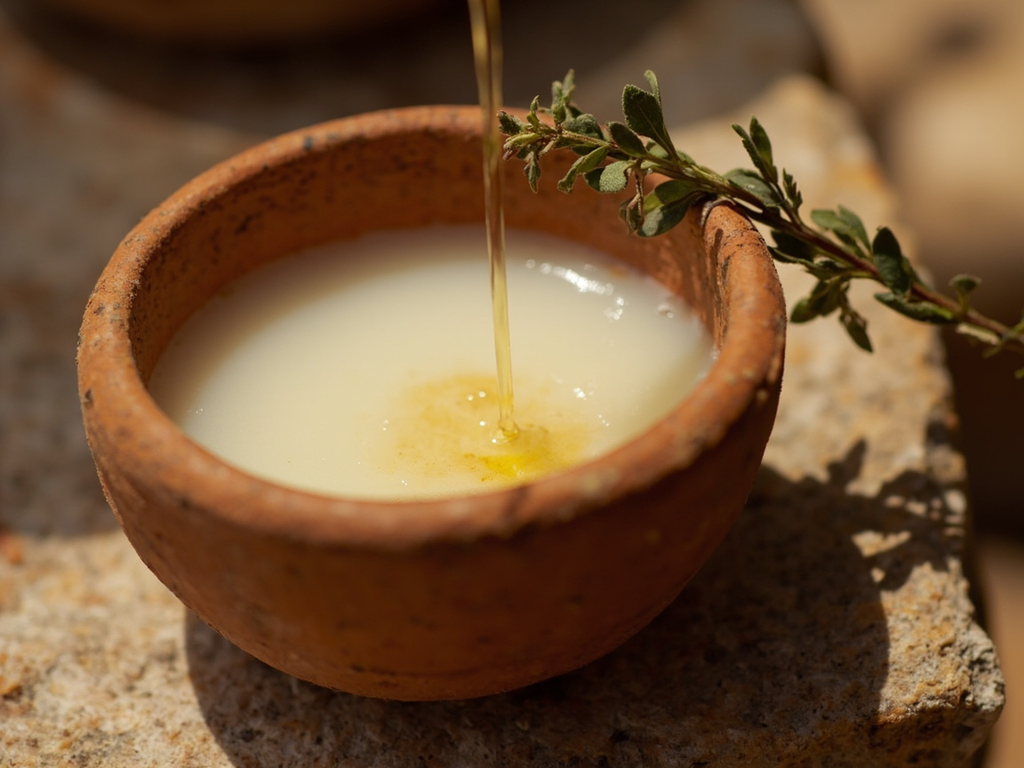
- Thyme honey — 4 tbsp (plus more for drizzling) (sweet binder)
- Sesame seeds — 2 tbsp (flavor and crunch)
- Egg (optional) — 1 (binder)
Method
- Mix flour, fresh cheese, 2 tbsp honey, and optional egg into a soft dough.
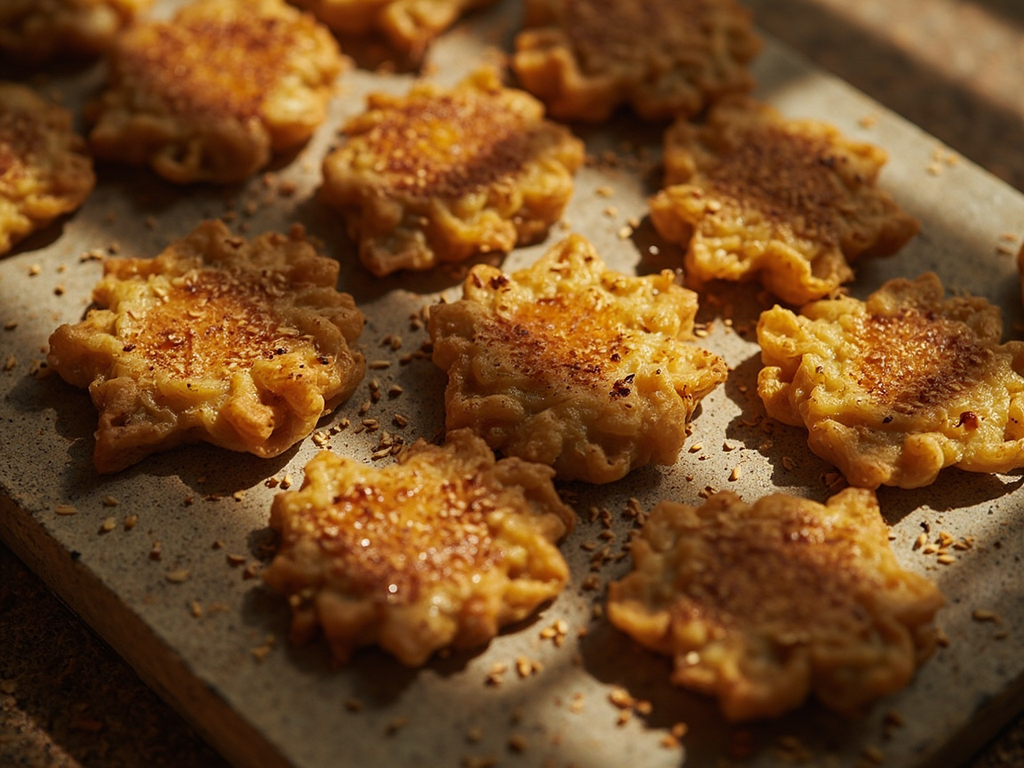
- Shape into small flattened balls and roll in sesame seeds.
- Place on a baking sheet and bake 15–18 minutes at 180°C (350°F) until golden.
- Drizzle with remaining honey when out of the oven.
- Let cool slightly before enjoying.
How it was made : The Greeks offered the gods cakes named according to shape and use: popana, pelanos, pemmata. Made from flour, cheese, honey, and sesame, they were placed on domestic altars. The line between festive pastry and offering was thin, the same skill serving both men and gods.
The contemporary twist : Rolled into small bites and stuck with a sprig of thyme, they become a Mediterranean mignardise with a taste of sunshine.
Sources : Athenaeus of Naucratis, The Deipnosophists (on cakes, plakountes and popana) · Andrew Dalby, Siren Feasts (1996)
Agariste · Charactorium