 flip
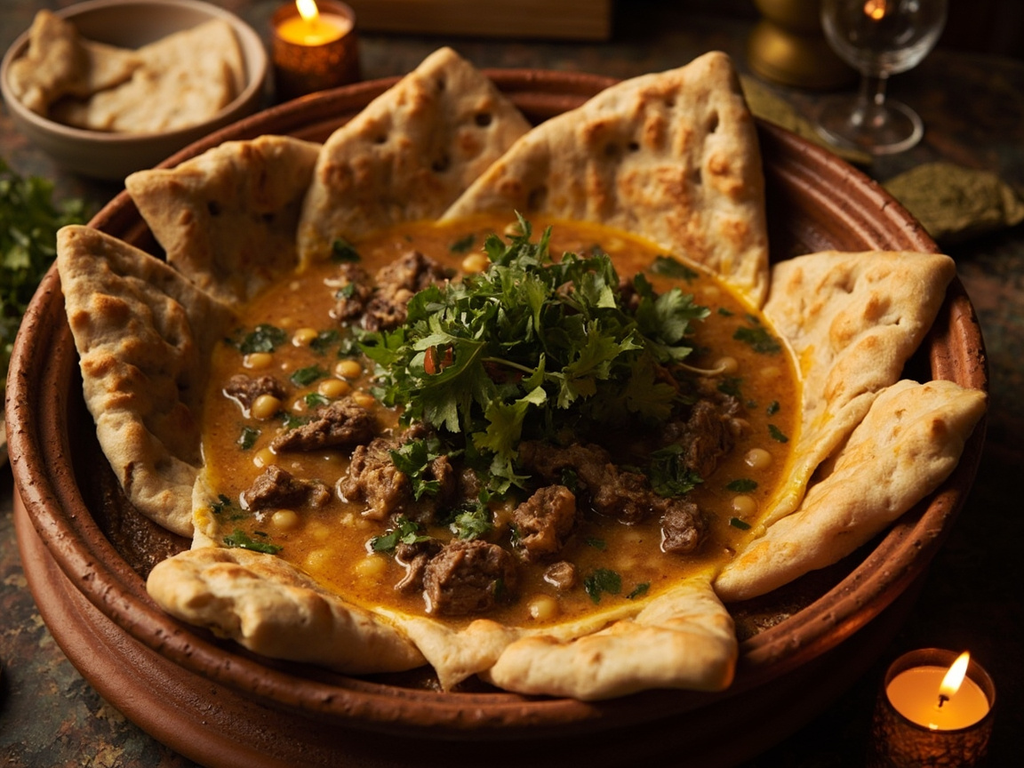
flipTharīd with lamb and barley bread
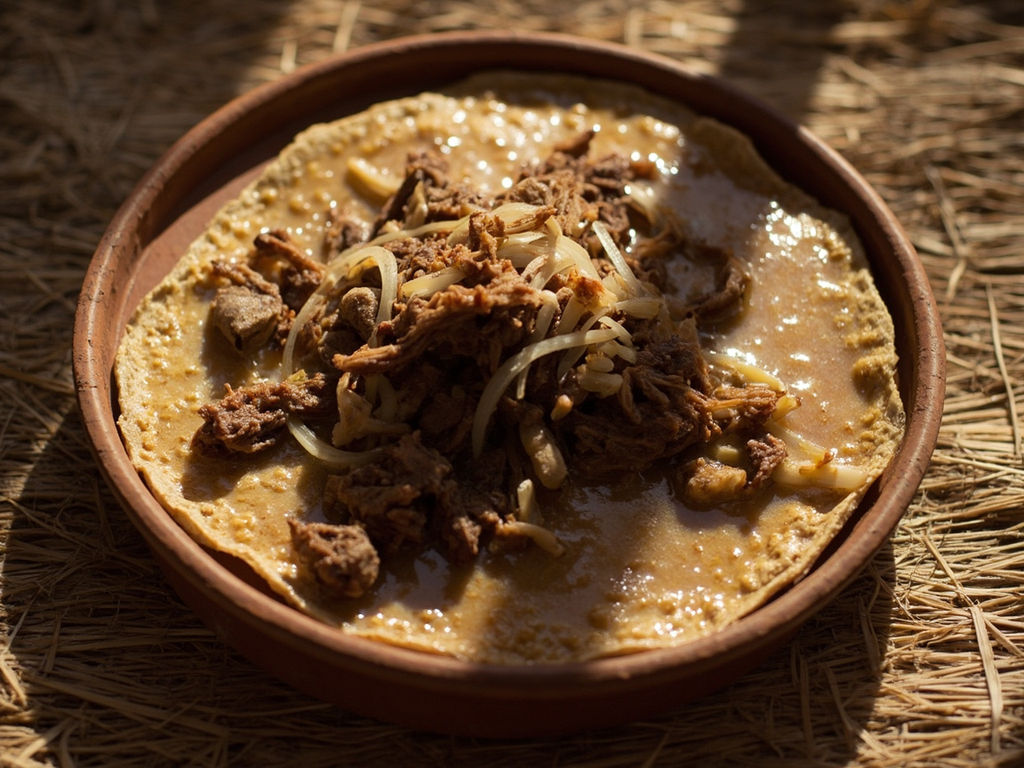
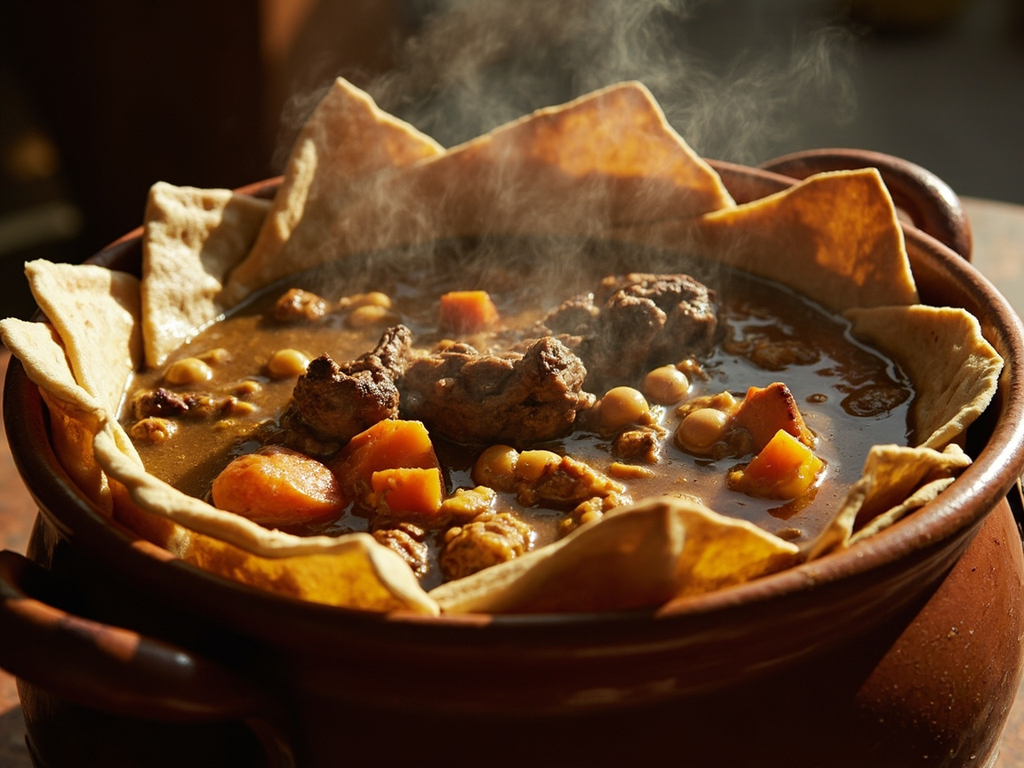
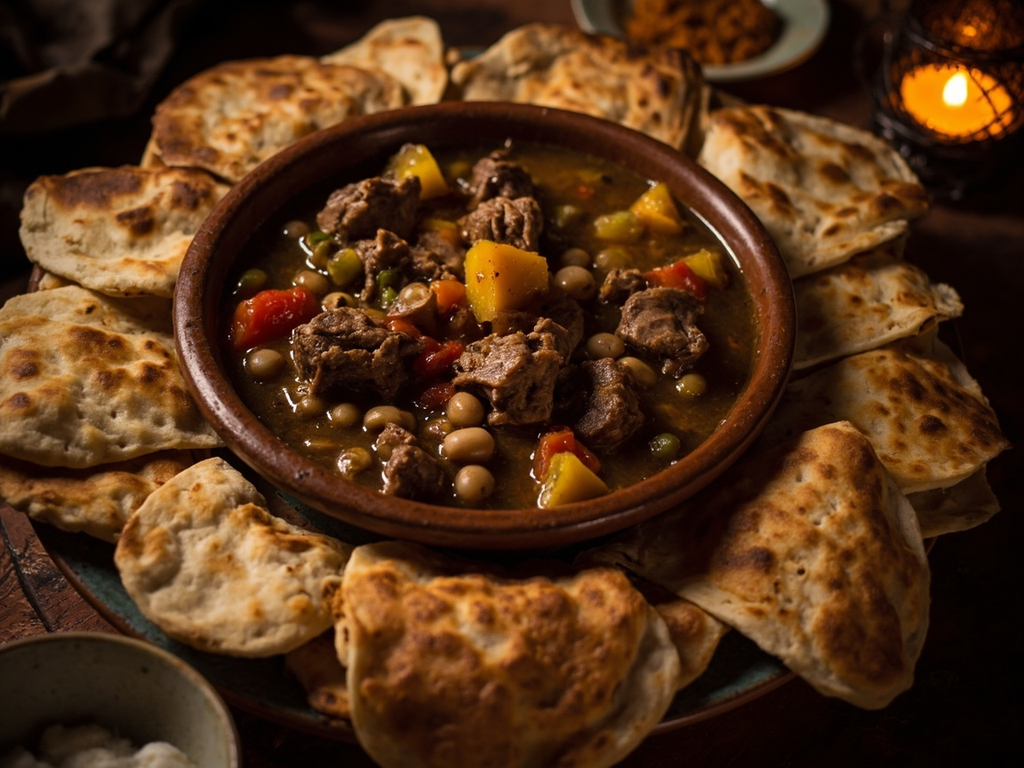
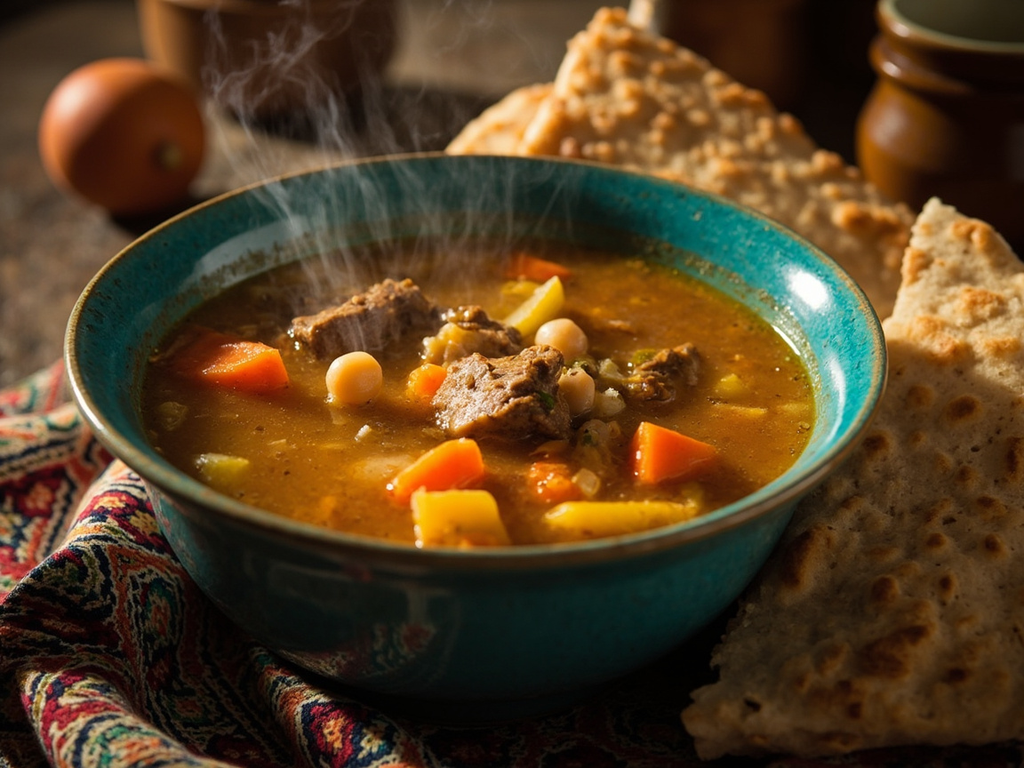
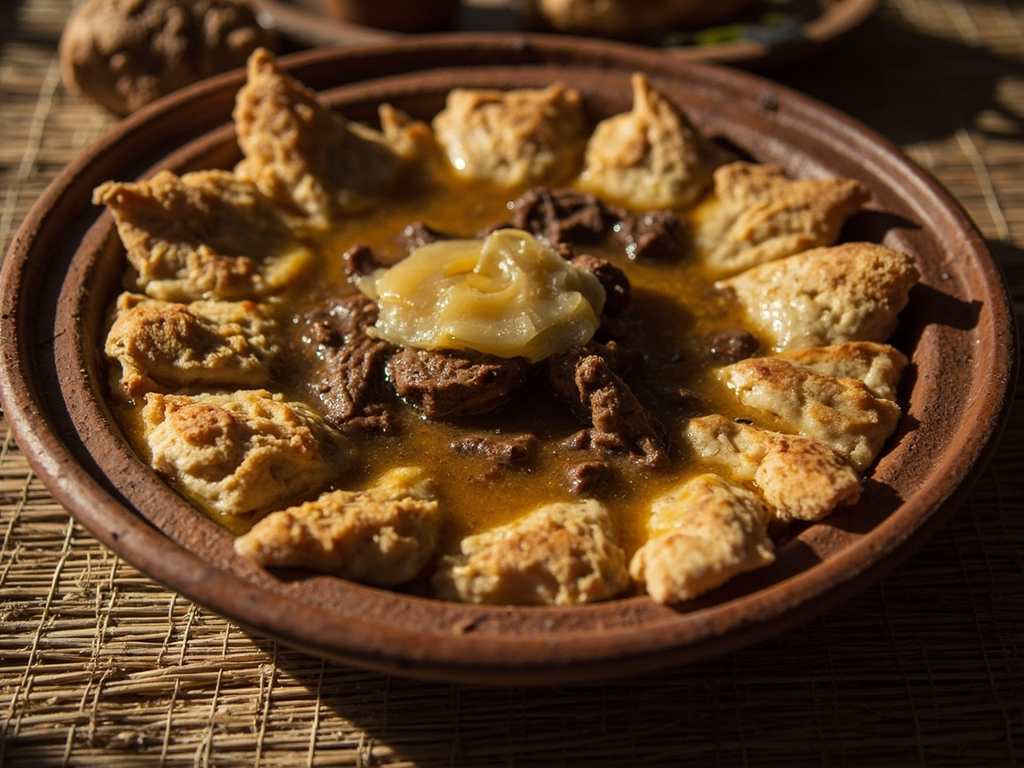
Tharīd with lamb and barley bread
Why this dish? Tharīd is THE dish associated with Aisha: a famous hadith compares its rank among foods to hers among women. Crumbling bread into broth was the Medinan way to honor a guest and feed many with little meat — a scene from her own home.
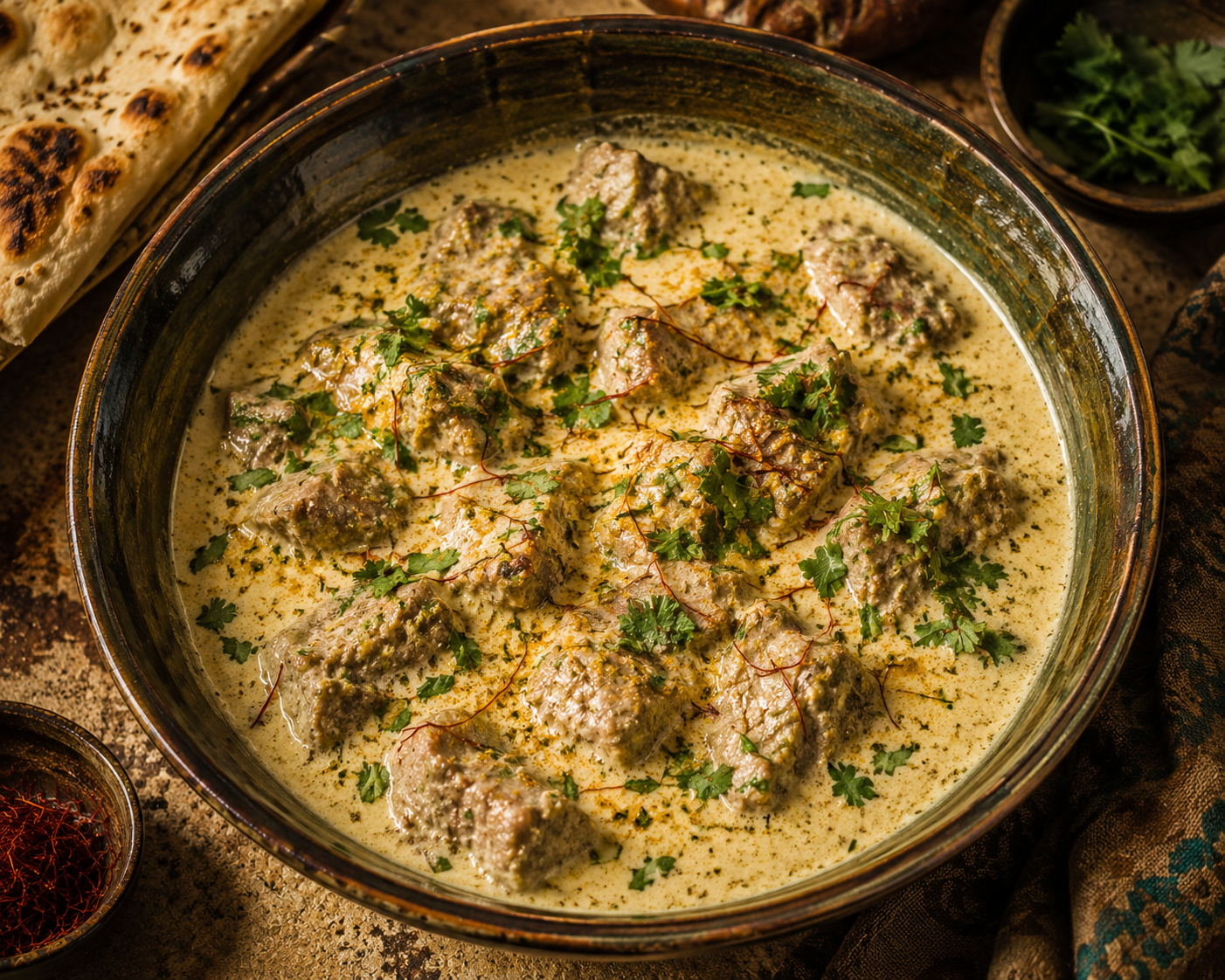
Barley bread broken into pieces, soaked in a broth of meat and melting bottle gourd, then topped with lamb pieces. A single, generous dish, eaten by several hands from the same platter — the pinnacle of the Prophet's hospitality.
Come near the sufra, and eat of what is before you. In our home, when a guest arrived, we did not serve meat alone, for meat was scarce; we broke the barley bread at the bottom of the dish and poured the hot broth over it, so that everyone was satisfied. I saw my husband prefer that piece of gourd swimming in the juice — so I would push it to him with my fingertips. Know that the hand that shares the tharīd is higher than the one that eats it alone.
- •Stale barley bread (khubz sha'īr) — several flatbreads (base that soaks up broth)
- •Lamb or goat meat on the bone — a fine piece (wealth of feast day)
- •Bottle gourd (qar', dubbā') — as much as desired (melting vegetable loved by the Prophet)
- •Onion and garlic — according to household (aromatic base)
- •Salt, cumin, a little black pepper from India — a pinch (seasoning for the wealthier)
Tharīd with lamb and barley bread
Barley bread broken into pieces, soaked in a broth of meat and melting bottle gourd, then topped with lamb pieces. A single, generous dish, eaten by several hands from the same platter — the pinnacle of the Prophet's hospitality.
Why this dish? Tharīd is THE dish associated with Aisha: a famous hadith compares its rank among foods to hers among women. Crumbling bread into broth was the Medinan way to honor a guest and feed many with little meat — a scene from her own home.
Come near the sufra, and eat of what is before you. In our home, when a guest arrived, we did not serve meat alone, for meat was scarce; we broke the barley bread at the bottom of the dish and poured the hot broth over it, so that everyone was satisfied. I saw my husband prefer that piece of gourd swimming in the juice — so I would push it to him with my fingertips. Know that the hand that shares the tharīd is higher than the one that eats it alone.
Ingredients (period version)
- Stale barley bread (khubz sha'īr) — several flatbreads (base that soaks up broth)
- Lamb or goat meat on the bone — a fine piece (wealth of feast day)
- Bottle gourd (qar', dubbā') — as much as desired (melting vegetable loved by the Prophet)
- Onion and garlic — according to household (aromatic base)
- Salt, cumin, a little black pepper from India — a pinch (seasoning for the wealthier)
Ingredients
- Stale barley bread or country bread — 4 thick slices (base)
- Lamb shoulder — 600 g, cut into pieces (meat)
- Long zucchini + a piece of pumpkin (or calabash if available) — 400 g (melting vegetable)
- Onion — 2 (base)
- Garlic — 3 cloves (base)
- Ground cumin — 1 tsp (spice)
- Salt, black pepper — to taste (seasoning)
Method
- Brown the lamb with onion and garlic in a little fat until colored.
- Cover generously with water, add salt, cumin, and pepper; simmer covered for 1 hour 30 minutes.
- Add the gourd in large dice and cook for another 30 minutes, until it melts.
- Break the stale bread into pieces at the bottom of a large shallow dish.
- Pour the hot broth over the bread to soften it, then arrange the meat and gourd on top.
- Serve immediately, at the center of the table, and eat from the part closest to you.
How it was made : In those days, tharīd was often made without vegetables — just bread soaked in broth — because both meat and gourd were festive items. Pepper came from India by caravan and signaled a well-off household; most settled for salt and cumin.
The contemporary twist : Serve in individual bowls, crusty bread at the bottom, broth poured at the table in front of the guest: the theater of tharīd, bistro style.
Sources : Sahīh al-Bukhārī, hadiths on tharīd and gourd (qar') · M. Rodinson, "Recherches sur les documents arabes relatifs à la cuisine"
Aisha · Charactorium