The shared sufra (al-sufra)
In 7th-century Medina, meals were not served in courses: a leather or palm mat (the sufra) was spread on the ground, and everyone ate from a large communal dish with the right hand. There was no starter or dessert, but a rhythm: bread and dates were always present, the meat or broth dish arrived when available (rarely), and milk or date water was passed around. One began in the name of God, ate from what was in front of one, and shared with the neighbor and the orphan. Frugality was a virtue, abundance a feast day.
Signature : The date (tamr) and clarified butter (samn)
The date was the pillar of the Medinan table: survival food, sweetness, alms currency, and symbol of blessing. Combined with samn (melted camel or goat butter) and aqit (dried curdled milk), it formed the fat-sweet-sour trio that structured all Hejazi cuisine before the arrival of Eastern spices.
Aisha at the table
614 — 678
5 period recipes
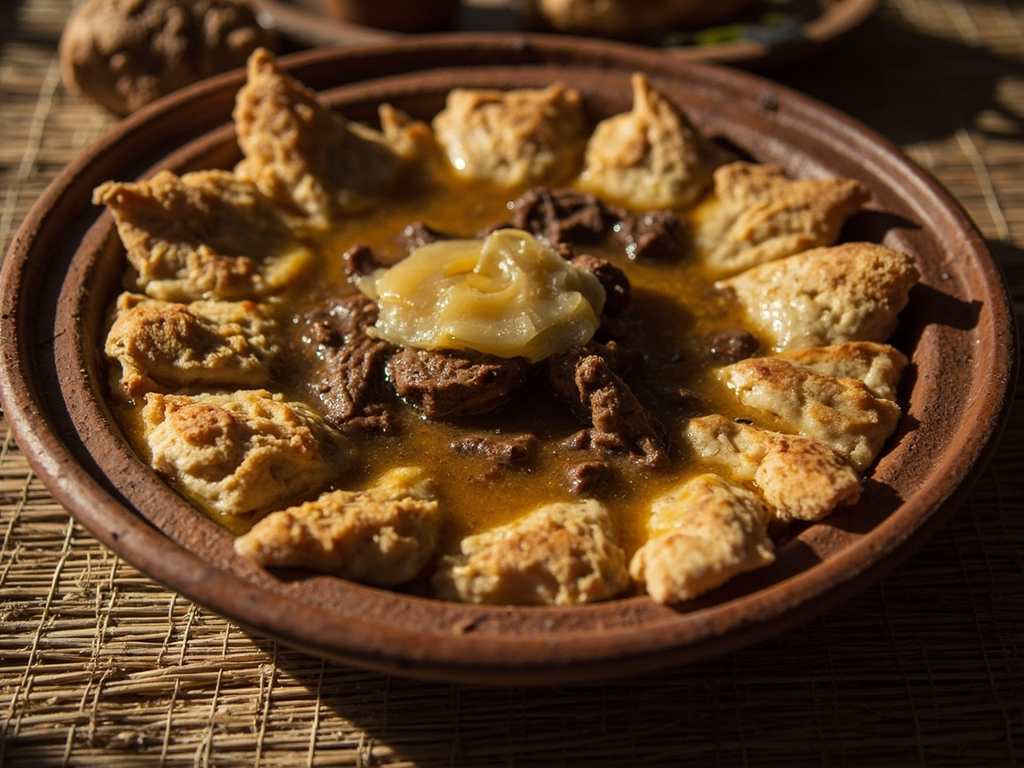 Festive
Tharīd with lamb and barley bread
Dish of the great communal platter (sayyid al-ta'ām, "the master of foods")
🧂 🍄· 2 h 15
View the recipe
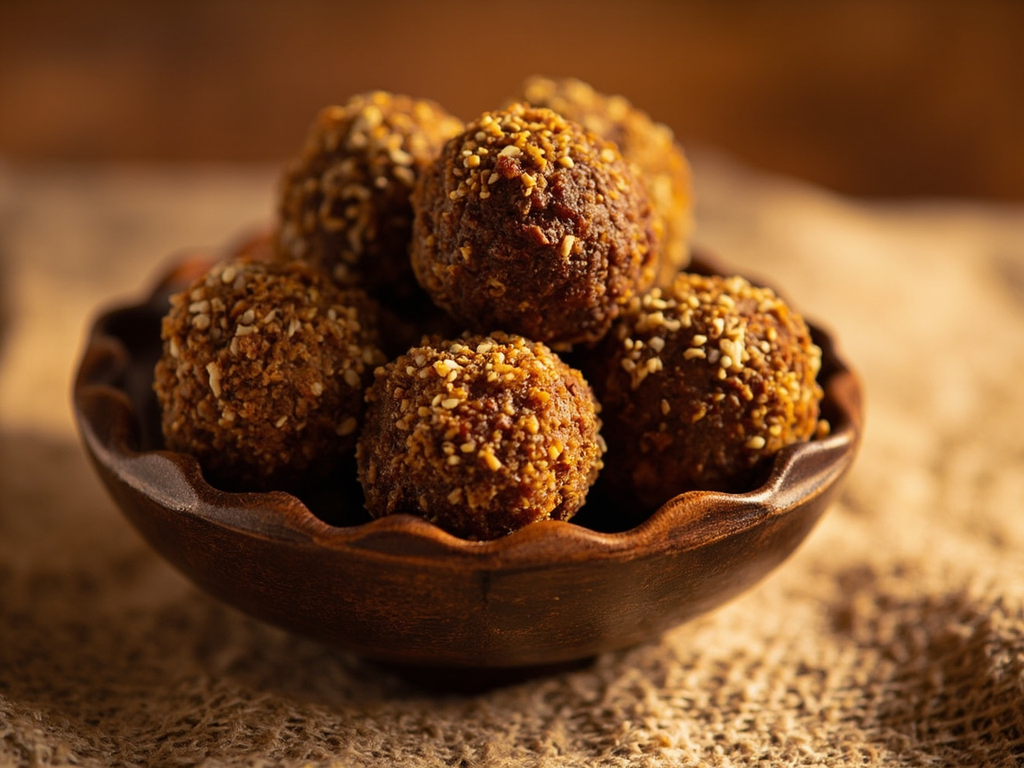 Preserving
Hays — date, butter and dried curd paste
Sweet of the sufra and energy provision (zād)
🍯 🫙· 20 min
View the recipe
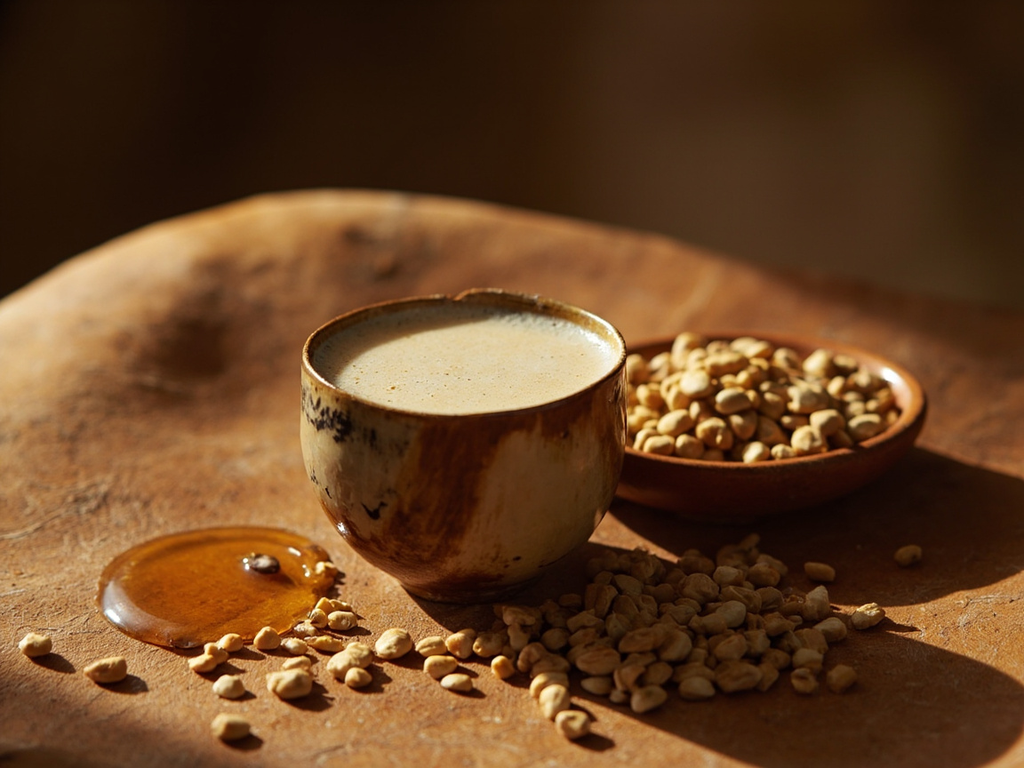 Travel
Sawīq — toasted barley flour drink
Travel and camp provision (zād al-rākib, "the rider's provision")
🧂 🍯· 10 min
View the recipe
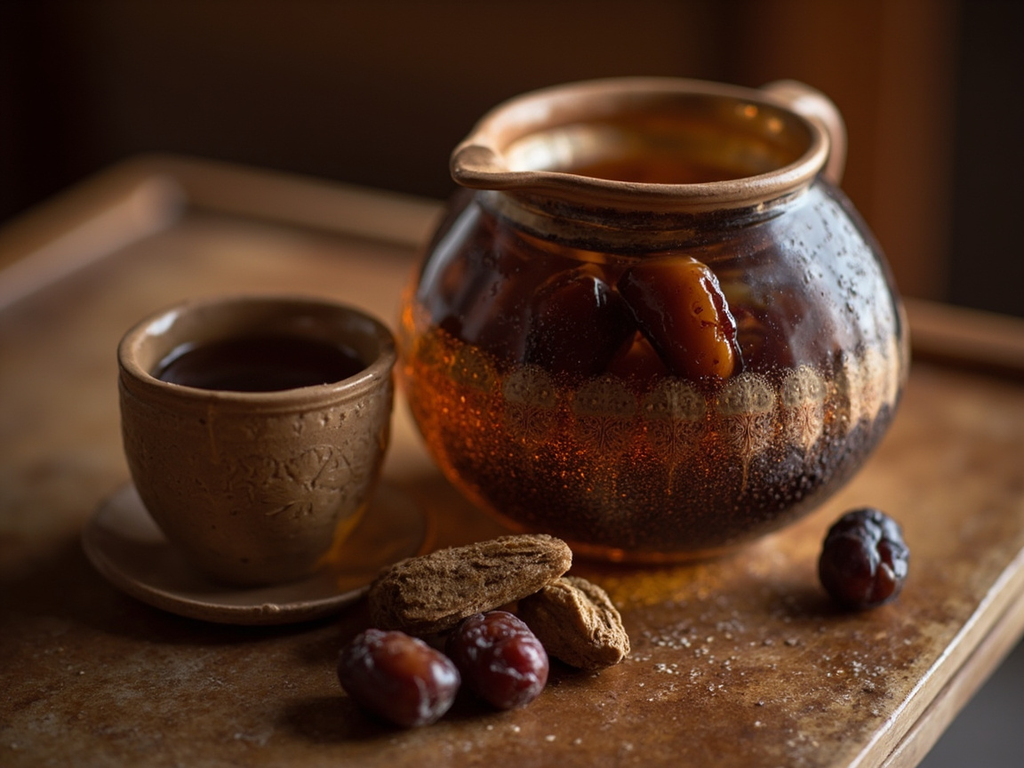 Drink
DrinkNabīdh of dates — date-scented water
Drink of the sufra (sharāb)
🍯 🍋· 5 min + overnight rest
View the recipe
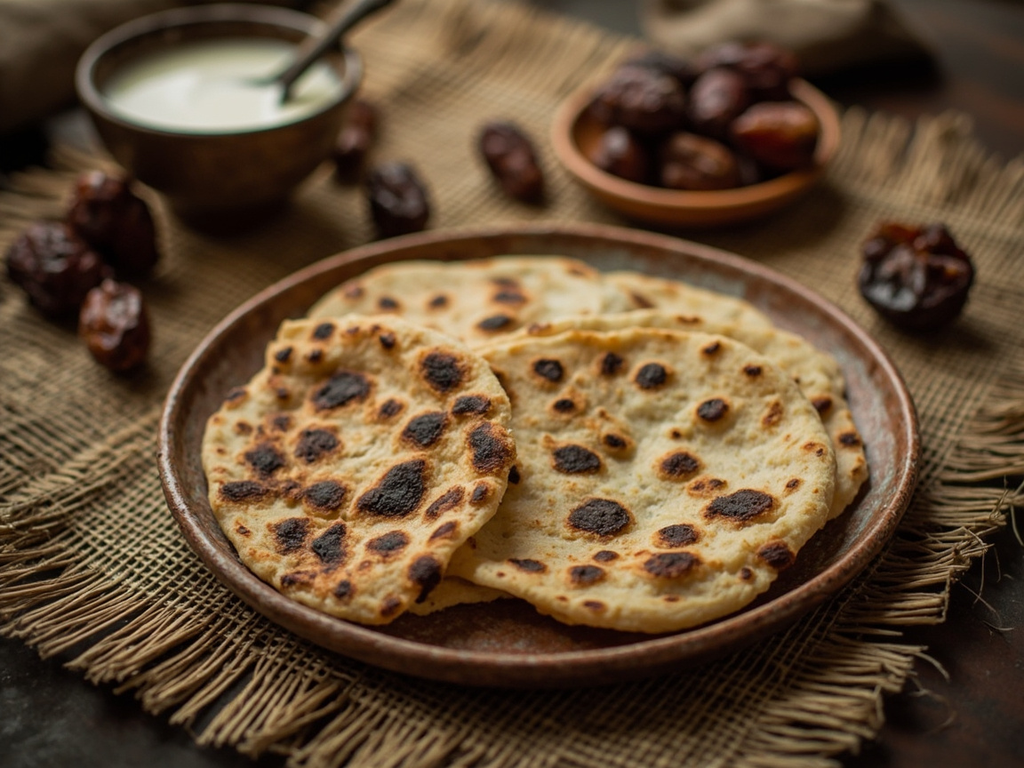 Everyday
Khubz sha'īr — barley flatbread on the stone
Staple bread, present at every sufra
☕ 🧂· 45 min
View the recipe