 flip
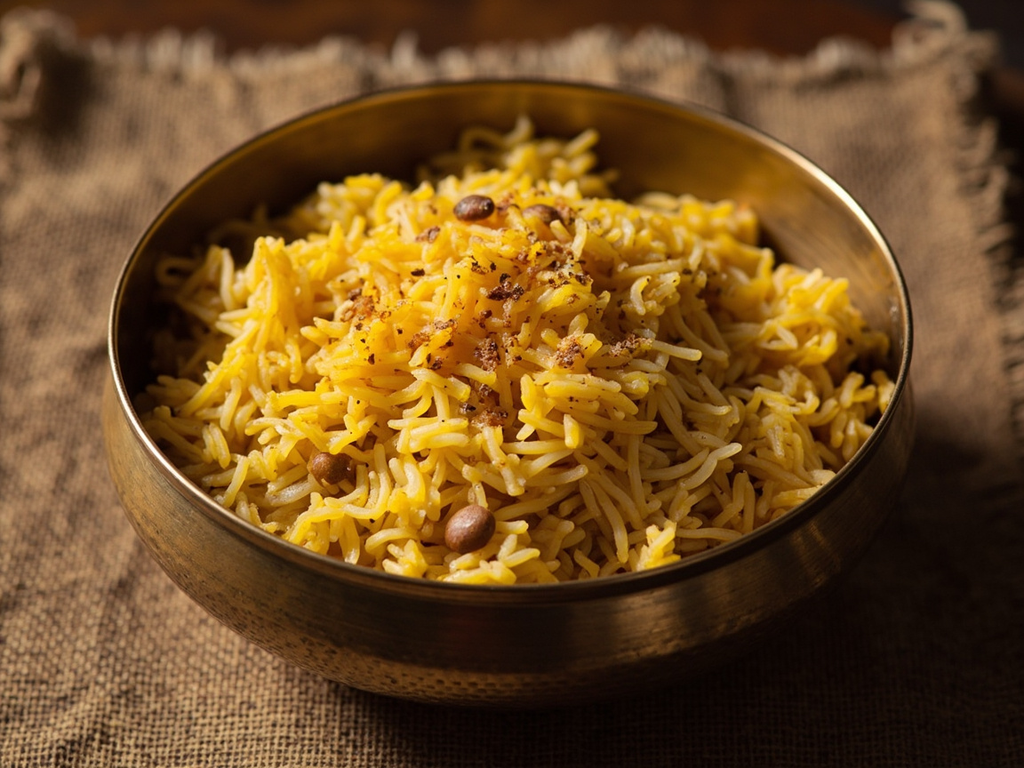
flipEmperor's Khichri (Rice and Mung Lentils with Ghee)
Emperor's Khichri (Rice and Mung Lentils with Ghee)
Why this dish? As he aged, Akbar moved away from meat, touched by the non-violence of Jains and Hindus, and instituted days of abstinence at his court. Khichri, rice and lentils cooked together until soft, was the humble and nourishing dish of those days—a meal even an emperor shared with ascetics.
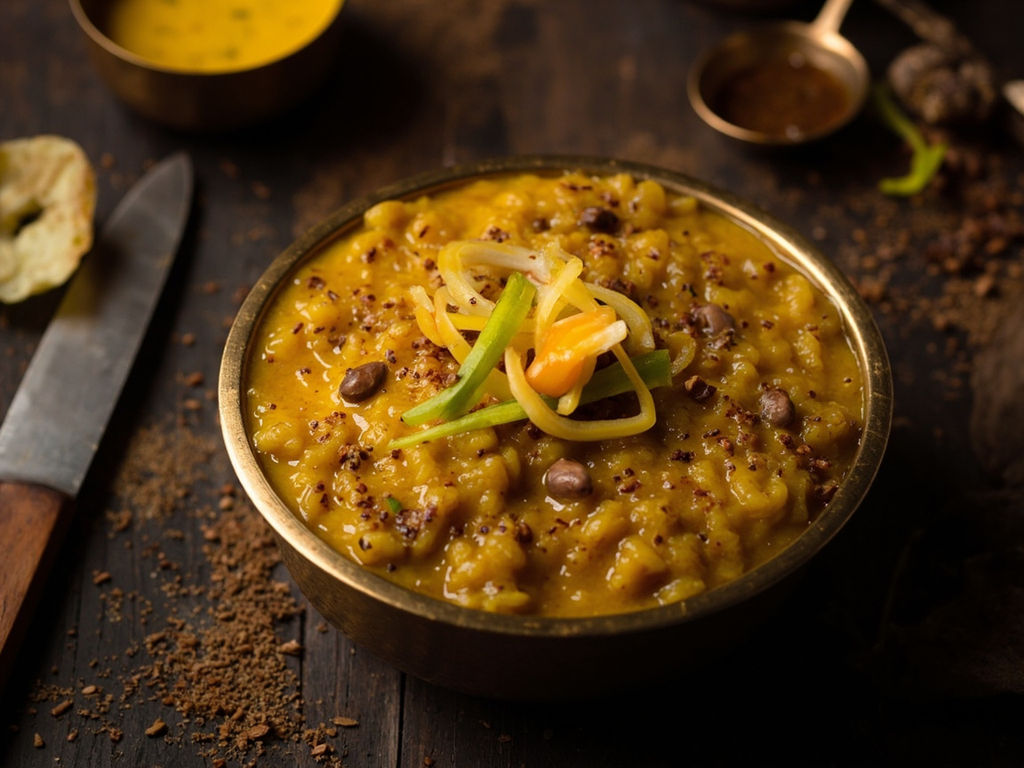
A single pot where rice and skinned mung lentils cook until tender, fragrant with ghee, cumin, and asafoetida. Comforting, digestible, it is the everyday dish of both palace and cottage.
Listen, traveler: they think I am insatiable for feasts, but on the days I abstain from flesh, I desire nothing more than this humble khichri. My cook washes the rice and mung lentils, throws them into a single cauldron with hot ghee, a pinch of hing and cumin, and lets it simmer until everything blends like my peoples under one roof. Eat it burning hot, with your fingertips; no throne is worth a calm belly.
- •Rice — one measure (grain base)
- •Skinned mung lentils (moong dal) — half a measure (legume, binder)
- •Ghee (clarified butter) — a good ladleful (fat, flavor)
- •Cumin — a pinch (spice)
- •Asafoetida (hing) — a hint (aroma, digestion)
- •Turmeric — a pinch (color)
- •Fresh ginger — a piece (fresh spice)
- •Salt — to taste (seasoning)
Emperor's Khichri (Rice and Mung Lentils with Ghee)
A single pot where rice and skinned mung lentils cook until tender, fragrant with ghee, cumin, and asafoetida. Comforting, digestible, it is the everyday dish of both palace and cottage.
Why this dish? As he aged, Akbar moved away from meat, touched by the non-violence of Jains and Hindus, and instituted days of abstinence at his court. Khichri, rice and lentils cooked together until soft, was the humble and nourishing dish of those days—a meal even an emperor shared with ascetics.
Listen, traveler: they think I am insatiable for feasts, but on the days I abstain from flesh, I desire nothing more than this humble khichri. My cook washes the rice and mung lentils, throws them into a single cauldron with hot ghee, a pinch of hing and cumin, and lets it simmer until everything blends like my peoples under one roof. Eat it burning hot, with your fingertips; no throne is worth a calm belly.
Ingredients (period version)
- Rice — one measure (grain base)
- Skinned mung lentils (moong dal) — half a measure (legume, binder)
- Ghee (clarified butter) — a good ladleful (fat, flavor)
- Cumin — a pinch (spice)
- Asafoetida (hing) — a hint (aroma, digestion)
- Turmeric — a pinch (color)
- Fresh ginger — a piece (fresh spice)
- Salt — to taste (seasoning)
Ingredients
- Basmati rice — 200 g (grain base)
- Skinned mung lentils (yellow moong dal) — 100 g (legume, binder)
- Ghee — 3 tbsp (fat)
- Cumin seeds — 1 tsp (spice)
- Asafoetida (hing) — 1 pinch (aroma)
- Turmeric powder — 1/2 tsp (color)
- Fresh grated ginger — 1 tsp (fresh spice)
- Water — about 1 liter (cooking liquid)
- Salt — 1 tsp (seasoning)
Method
- Rinse the rice and mung lentils in clear water until the water runs clear.
- Heat the ghee in a pot, add the cumin and asafoetida; when they sizzle, add the ginger.
- Add the rice and lentils, turmeric, and salt; stir for 1 minute to coat.
- Cover with water (about 4 times their volume), bring to a boil, then lower the heat.
- Simmer covered for 25–30 minutes, until the mixture is soft and porridge-like; add water if needed.
- Serve piping hot, drizzled with extra ghee.
How it was made : Abu'l-Fazl's Ain-i-Akbari describes khichri among the meatless dishes of the imperial kitchen and gives proportions of rice, lentils, and ghee. It was cooked over wood fires in large cauldrons and nourished both soldiers and emperors.
The contemporary twist : Top with golden fried onions and a spoonful of fresh yogurt: khichri becomes a thoroughly contemporary comfort bowl.
Sources : Abu'l-Fazl, Ain-i-Akbari (trans. H. Blochmann) · K. T. Achaya, Indian Food: A Historical Companion · Salma Husain, The Emperor's Table: The Art of Mughal Cuisine
Akbar · Charactorium