The Imperial Mughal Dastarkhān (according to the Ain-i-Akbari)
At Akbar's court, there was no starter-main-dessert distinction; instead, a dastarkhān was laid—a long cloth spread directly on the carpet, covered with Chinese porcelain and gold and silver vessels. The chronicler Abu'l-Fazl classifies dishes into three categories: meatless dishes (sufiyāna), which the emperor preferred on abstinence days; mixed rice and meat dishes; and pure meat dishes. Fragrant rice, stews, breads, sweets, and iced drinks arrived together, and each person served themselves according to appetite and rank.
Signature : Saffron (zaʿfarān)
Kashmiri saffron, conquered by Akbar, tints festive rice, sweets, and even preserves with gold. Along with cardamom and long pepper, it is the hallmark of Persian refinement grafted onto India. The great technique of Mughal cuisine is dum: sealing the pot and letting the aromas infuse slowly over gentle coals.
Akbar at the table
1542 — 1605
5 period recipes
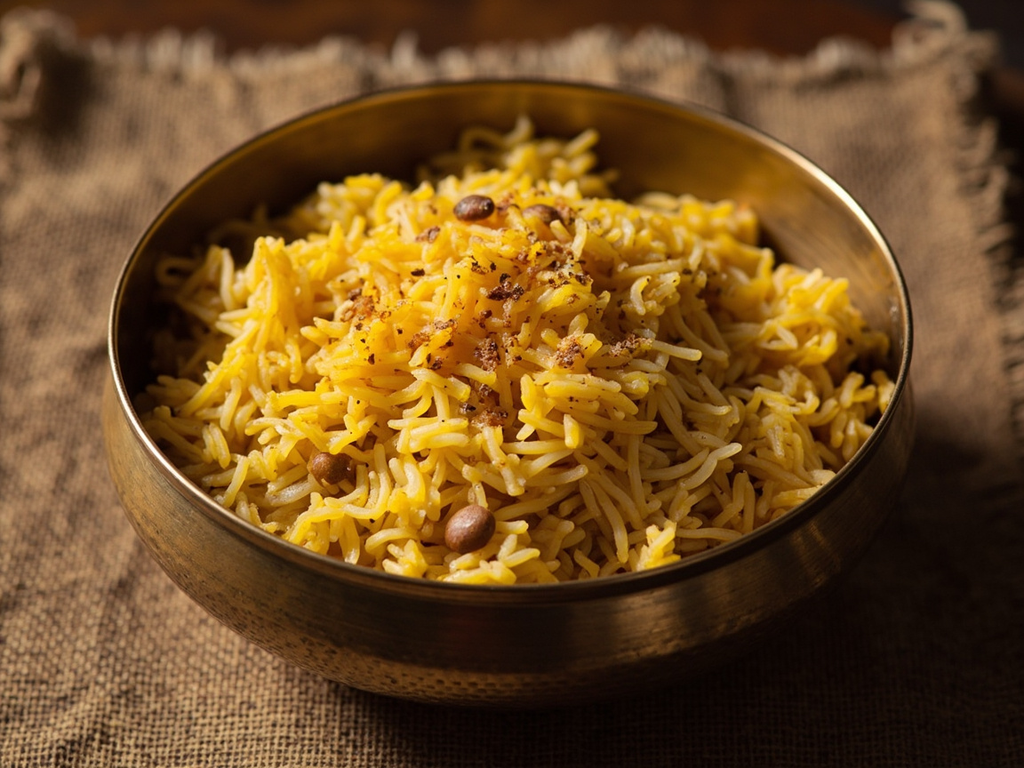 Everyday
Emperor's Khichri (Rice and Mung Lentils with Ghee)
Sufiyāna dish (meatless)
🧂 🍄· 40 min
View the recipe
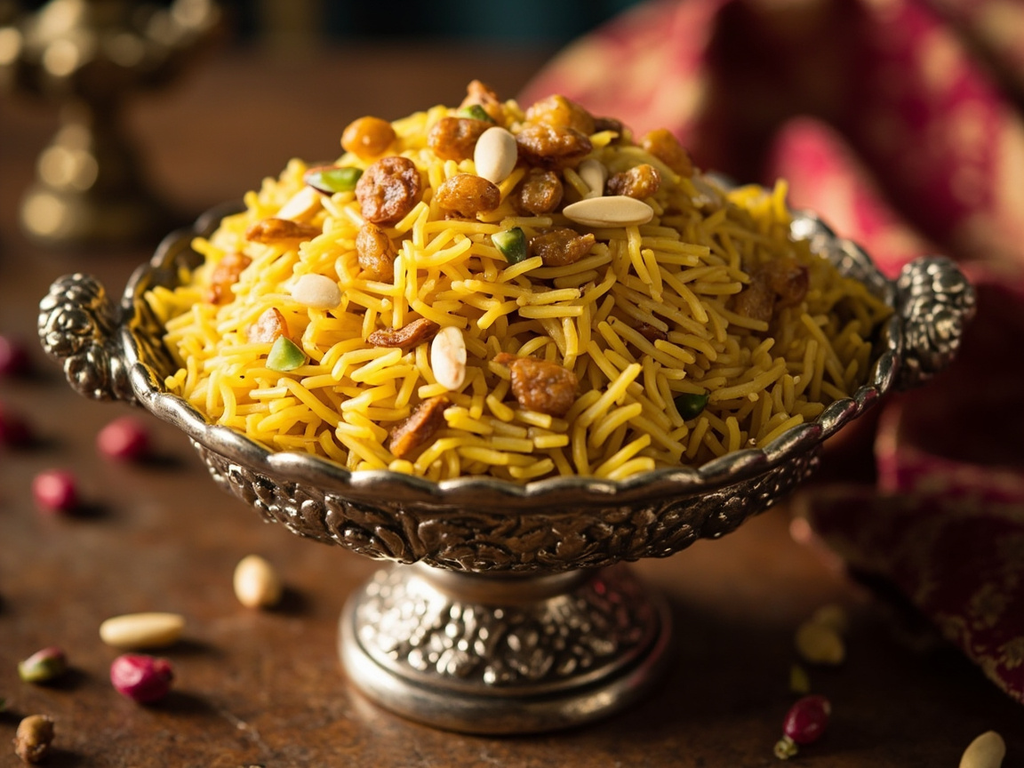 Festive
Zard Birinj — Golden Rice with Saffron and Dried Fruits
Festive sweet rice (zarda)
🍯 🌶️· 45 min
View the recipe
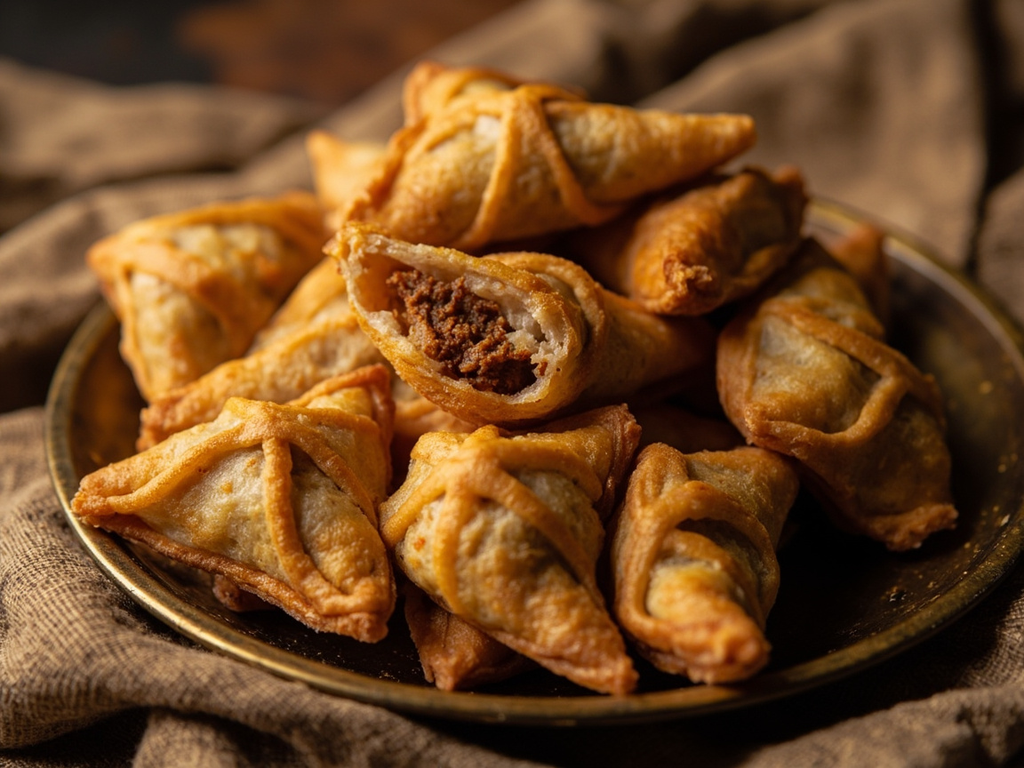 Street food
Sanbusa — Fried Pastries with Spiced Meat
Market and camp snack (sanbusah/qutāb)
🧂 🌶️· 1 h
View the recipe
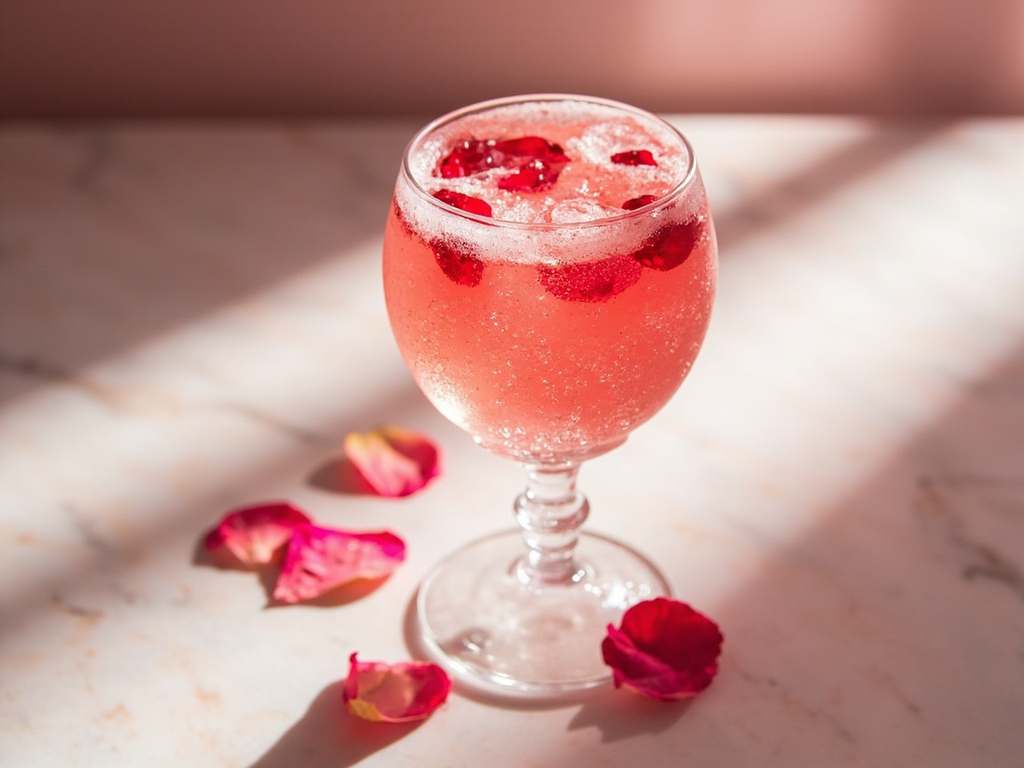 Drink
DrinkIced Rose Sharbat with Sandalwood
Palace refreshing drink (sharbat)
🍯 🍋· 20 min
View the recipe
 Preserving
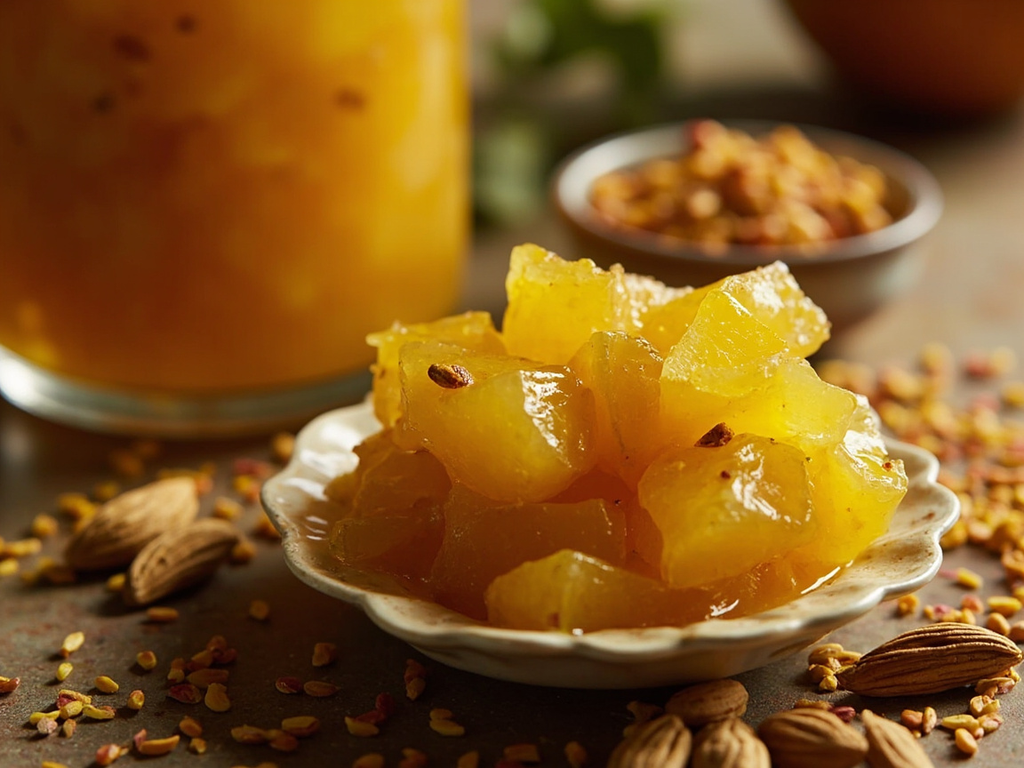
Aam ka Murabba — Green Mango Preserve with Saffron
Sweet preserve from the imperial pantry (murabbā)
🍯 🍋· 1 h
View the recipe