 flip
flipMisoshiru with Tofu and Wakame
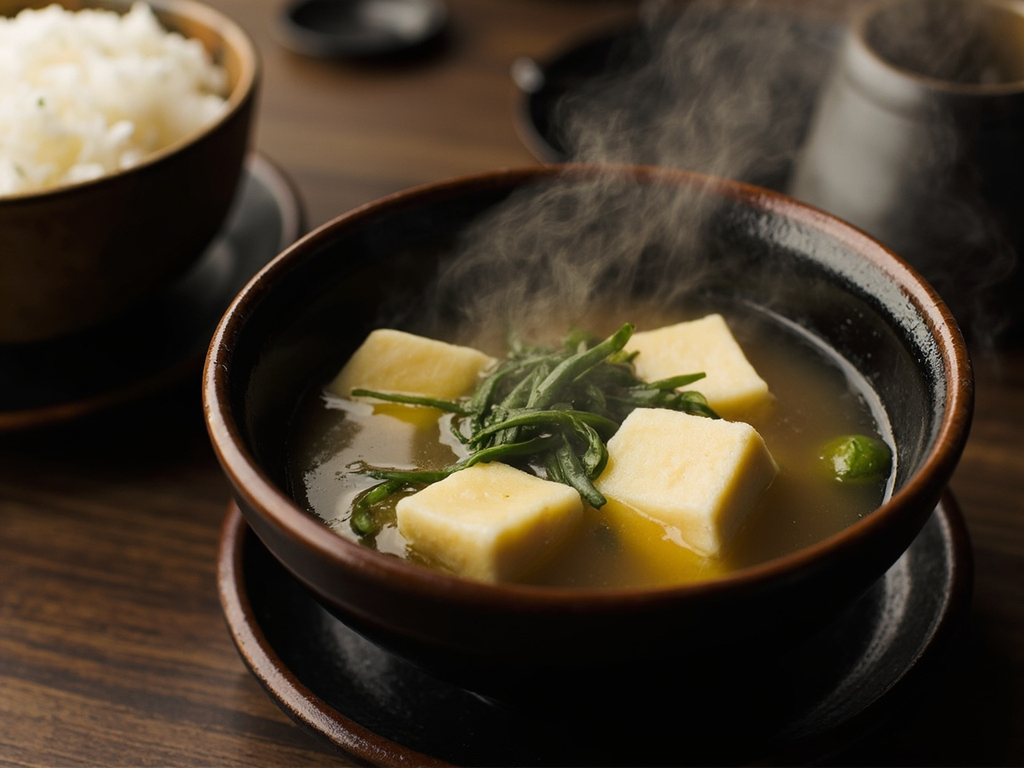
Misoshiru with Tofu and Wakame
Why this dish? This is the bowl that opened each morning for Akiko in the bourgeois household of Sakai and later Tokyo: miso soup is the quintessential everyday food of Meiji Japan, before the ink and brush of the first poem.
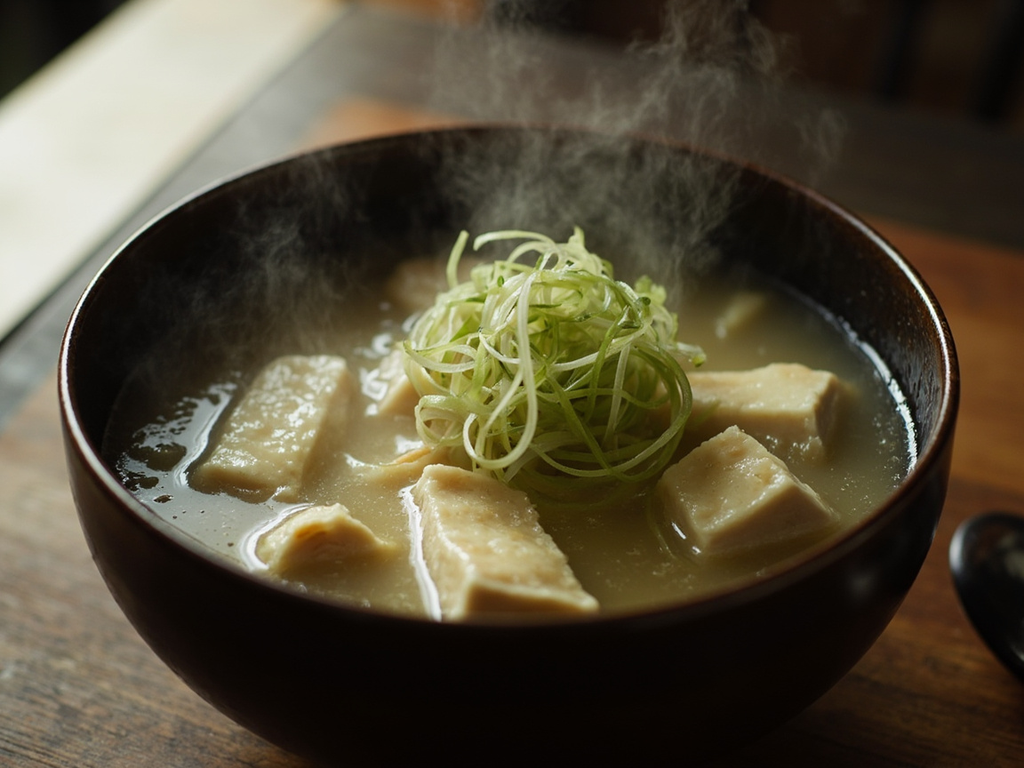
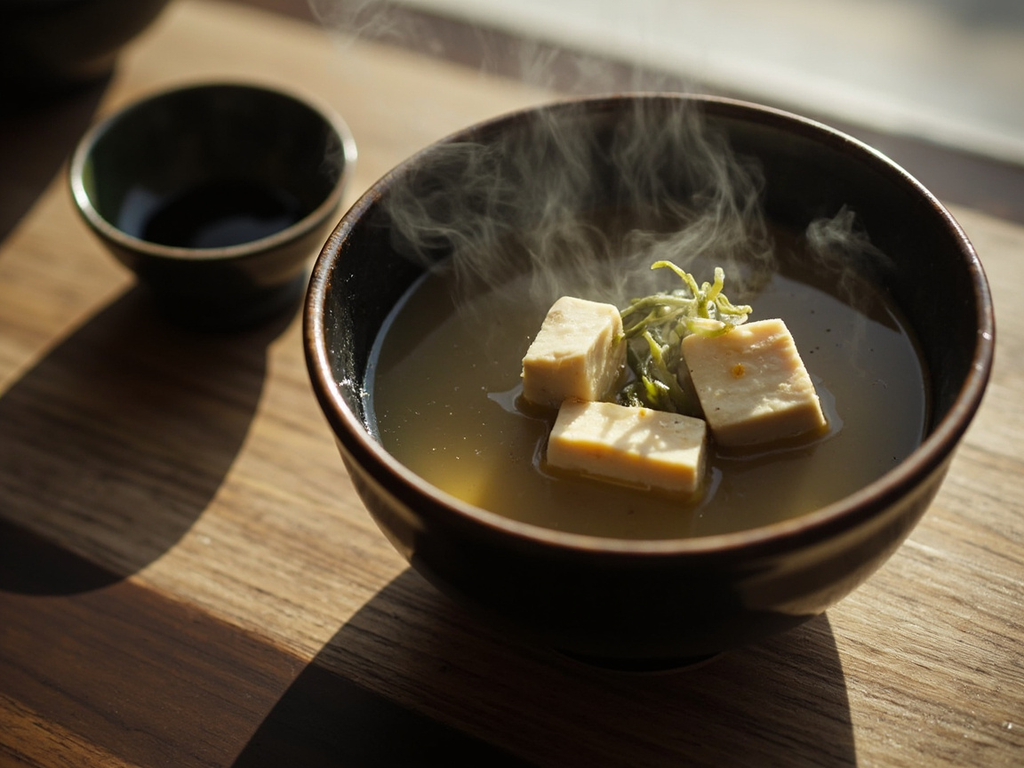
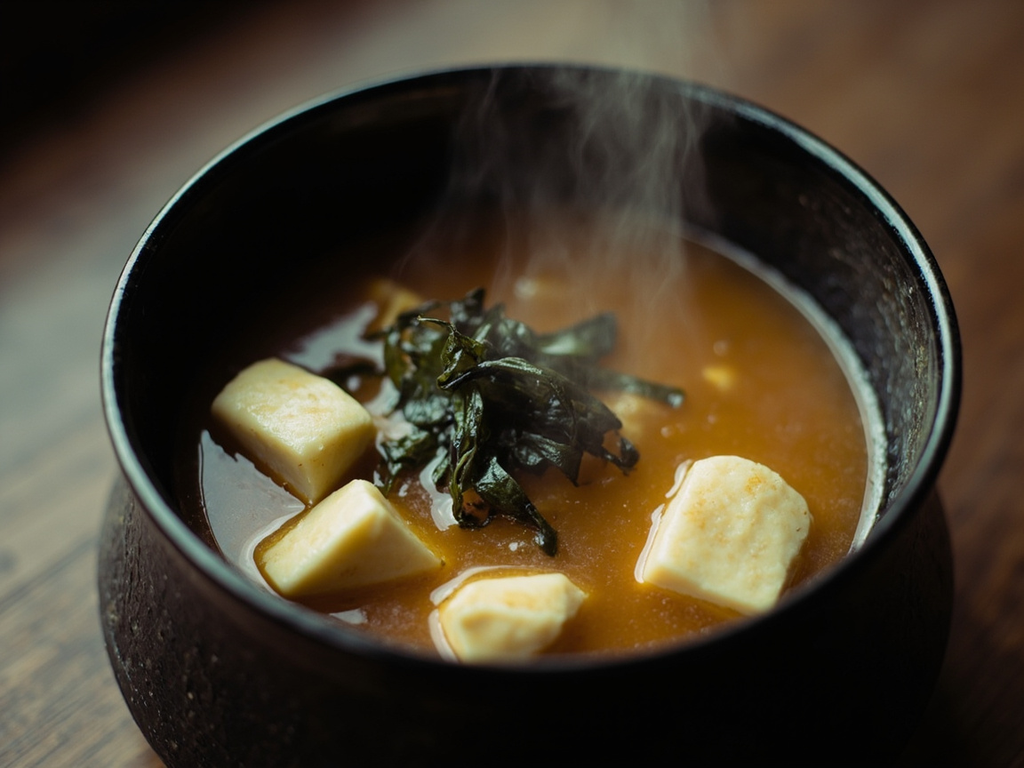
A clear and comforting soup: a dashi of kombu and dried bonito, bound with miso, in which float cubes of silken tofu and strips of wakame seaweed. The foundational gesture of everyday Japanese cooking.
In the morning, before my brush even touches paper, I raise this bowl to my lips and the steam rises like mist over Sakai Bay. My secret lies in one rule my mother repeated to me: never boil the miso, for you would kill its soul — you dissolve it with the fire off, with the tips of your chopsticks. The tofu trembles like a heart, the wakame unfurls like unbound hair in water. Drink slowly: a poem is no more to be hurried than a soup.
- •Kombu (dried kelp) — a piece the size of a hand (base of the dashi)
- •Katsuobushi (dried bonito flakes) — a generous handful (umami of the broth)
- •Miso — two to three spoonfuls (fermented seasoning)
- •Fresh tofu — half a block (garnish)
- •Dried wakame — a small pinch (sea garnish)
Misoshiru with Tofu and Wakame
A clear and comforting soup: a dashi of kombu and dried bonito, bound with miso, in which float cubes of silken tofu and strips of wakame seaweed. The foundational gesture of everyday Japanese cooking.
Why this dish? This is the bowl that opened each morning for Akiko in the bourgeois household of Sakai and later Tokyo: miso soup is the quintessential everyday food of Meiji Japan, before the ink and brush of the first poem.
In the morning, before my brush even touches paper, I raise this bowl to my lips and the steam rises like mist over Sakai Bay. My secret lies in one rule my mother repeated to me: never boil the miso, for you would kill its soul — you dissolve it with the fire off, with the tips of your chopsticks. The tofu trembles like a heart, the wakame unfurls like unbound hair in water. Drink slowly: a poem is no more to be hurried than a soup.
Ingredients (period version)
- Kombu (dried kelp) — a piece the size of a hand (base of the dashi)
- Katsuobushi (dried bonito flakes) — a generous handful (umami of the broth)
- Miso — two to three spoonfuls (fermented seasoning)
- Fresh tofu — half a block (garnish)
- Dried wakame — a small pinch (sea garnish)
Ingredients
- Water — 1 L (base)
- Kombu — 10 g (a ~10 cm square) (base of the dashi)
- Katsuobushi — 20 g (umami of the broth)
- Miso (white or red) — 3 tablespoons (seasoning)
- Silken or firm tofu — 200 g (garnish)
- Dried wakame — 1 tablespoon (garnish)
- Green onion (scallion) — 1 stalk, thinly sliced (finishing touch)
Method
- Soak the kombu in cold water for 30 minutes, then heat gently without boiling; remove the kombu just before it comes to a boil.
- Add the katsuobushi, turn off the heat, let steep for 5 minutes, then strain: this is the dashi.
- Rehydrate the wakame in a little water; cut the tofu into small cubes.
- Reheat the dashi, add the tofu and wakame, and cook for 2 minutes.
- Off the heat, dissolve the miso in a ladleful of broth, then pour it back into the pot — do not let it boil again.
- Serve immediately, garnished with sliced scallion.
How it was made : In the Meiji era, almost every household prepared its morning dashi from kombu and katsuobushi, and each region had its own miso (lighter in the west, darker in Tokyo). Miso, fermented for months, was often bought from the neighborhood merchant but still homemade in the countryside.
The contemporary twist : Serve the soup in a black lacquered bowl and place a single edible flower on top: a nod to the unbound hair of her collection "Midaregami" (Tangled Hair).
Sources : Naomichi Ishige, The History and Culture of Japanese Food, 2001
Akiko Yosano · Charactorium