 flip
flipQâvurma, Traveler's Confit Meat
Qâvurma, Traveler's Confit Meat
Why this dish? Al-Biruni spent his life on the road: from Kath in Khwarezm to Ghazni, and beyond to the Indus Valley and the fort of Nandana, where he measured the Earth's radius. Meat preserved in its own fat, which keeps for months, was the provision of caravans and scholarly expeditions.
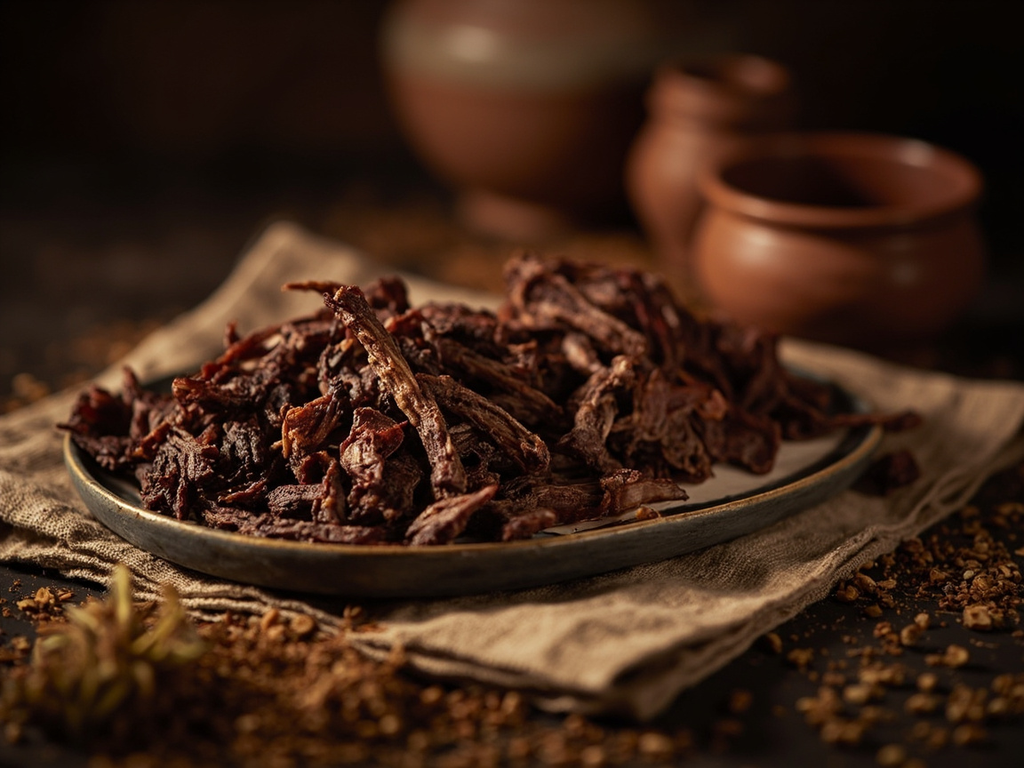
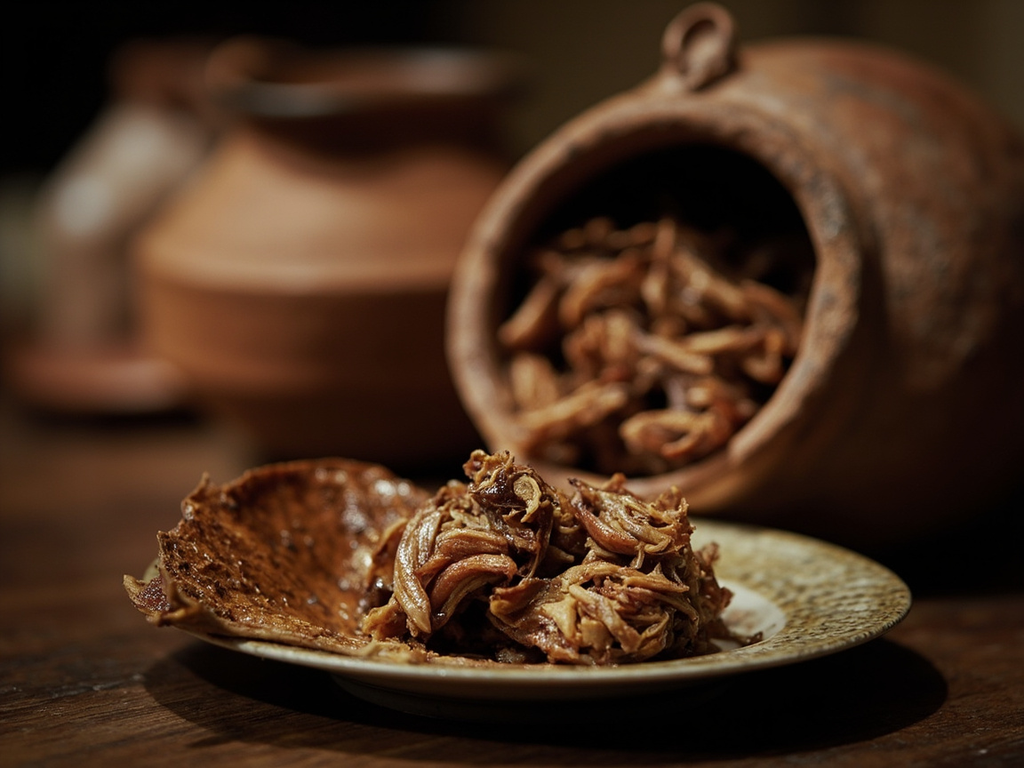
Lamb pieces slowly cooked and then sealed under a layer of solidified fat. Salty and concentrated, this preserve is reheated on the road and instantly flavors a broth or rice.
He who would measure the Earth must first traverse it, and he who traverses the desert must carry his table with him. I cooked the mutton in its own fat, very slowly, with salt and a little cumin, until it fell apart. Then we pressed it into an earthen pot, and the cooled fat sealed it like wax seals a letter. At the foot of the fort of Nandana, where I watched the angle of the horizon, a piece thrown into boiling water gave me, in the open wind, the taste of the kitchens of Ghazni.
- •Mutton — a large amount (base)
- •Sheep's tail fat — in abundance (cooking and sealing)
- •Salt — generous (preservation)
- •Cumin and coriander — to taste (aroma)
Qâvurma, Traveler's Confit Meat
Lamb pieces slowly cooked and then sealed under a layer of solidified fat. Salty and concentrated, this preserve is reheated on the road and instantly flavors a broth or rice.
Why this dish? Al-Biruni spent his life on the road: from Kath in Khwarezm to Ghazni, and beyond to the Indus Valley and the fort of Nandana, where he measured the Earth's radius. Meat preserved in its own fat, which keeps for months, was the provision of caravans and scholarly expeditions.
He who would measure the Earth must first traverse it, and he who traverses the desert must carry his table with him. I cooked the mutton in its own fat, very slowly, with salt and a little cumin, until it fell apart. Then we pressed it into an earthen pot, and the cooled fat sealed it like wax seals a letter. At the foot of the fort of Nandana, where I watched the angle of the horizon, a piece thrown into boiling water gave me, in the open wind, the taste of the kitchens of Ghazni.
Ingredients (period version)
- Mutton — a large amount (base)
- Sheep's tail fat — in abundance (cooking and sealing)
- Salt — generous (preservation)
- Cumin and coriander — to taste (aroma)
Ingredients
- Lamb shoulder or neck — 1 kg (base)
- Lamb fat (or lard as substitute) — 400 g (cooking and sealing)
- Salt — 2 tsp (preservation and flavor)
- Ground cumin — 1 tsp (aroma)
- Ground coriander — 1 tsp (aroma)
Method
- Cut the meat into small pieces. Melt the fat in a heavy pot.
- Add the meat, salt, and spices; cook uncovered over very low heat for 2 hours, until the meat is confit and falls apart.
- Ensure the meat is submerged in fat; if not, add more.
- Pack the meat into clean jars and cover completely with melted fat.
- Let it solidify, then store in a cool place. Scoop out portions to reheat in broth or with rice.
- When serving, fry a portion in a pan to make it crispy.
How it was made : *Qâvurma* (*qawurma*) is a very old Turco-Persian preservation technique: meat cooked in its fat, protected from air, kept for weeks without ice. It was the food of armies, caravans, and long journeys, still alive today from Anatolia to Central Asia.
The contemporary twist : Served shredded on warm flatbread with fresh herbs, it makes a perfect 'steppe rillettes' for an explorer's picnic.
Sources : Lilia Zaouali, *L'Islam à table. Du Moyen Âge à nos jours*
Al-Biruni · Charactorium