 flip
flipMurrî, fermented condiment from the pantry
Murrî, fermented condiment from the pantry
Why this dish? Murrî, a long-fermented brown sauce, was the secret flavor of all medieval Islamic cuisines, from the caliphal palace to the street stall — the Arab equivalent of Roman garum. In a Fatimid Egypt where Al-Hakim multiplied decrees and restrictions, this condiment that transformed simple foods into tasty dishes and kept for months was a pantry treasure, the opposite of courtly waste.
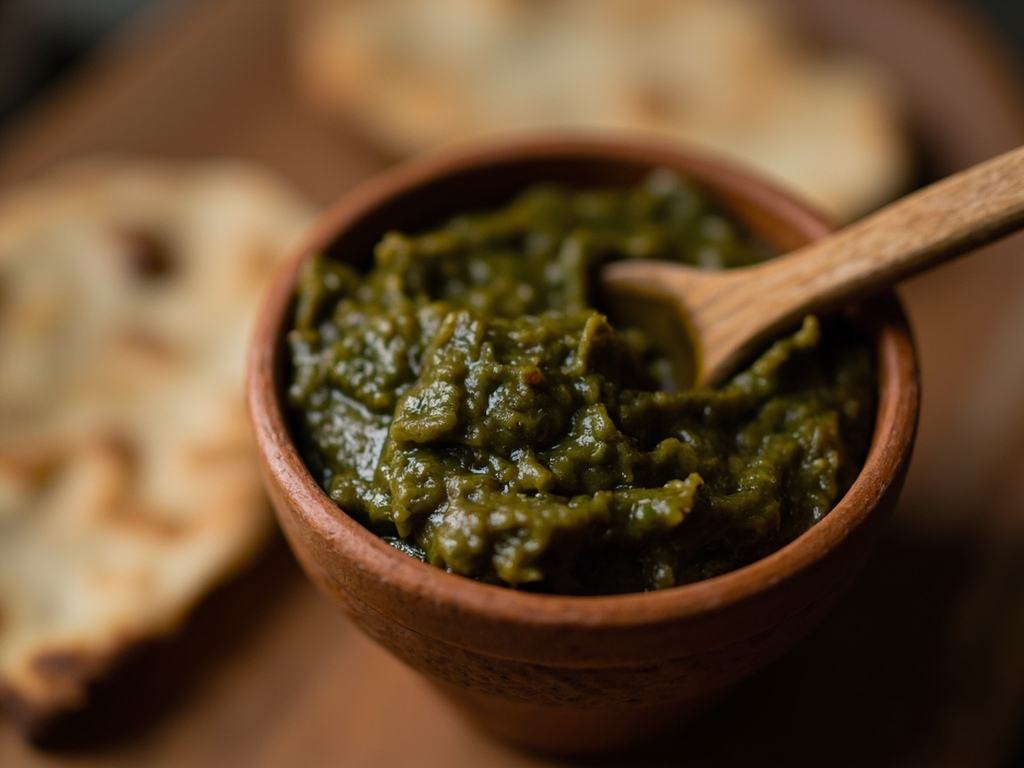
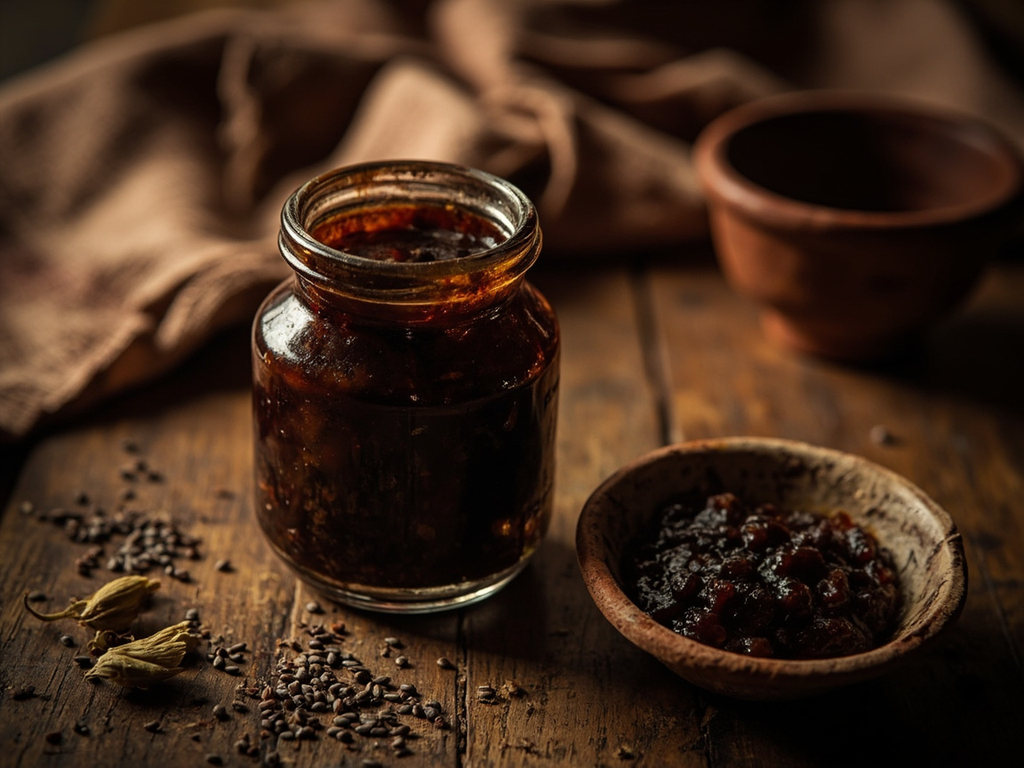
A dark, salty, deeply umami sauce born from the slow fermentation of a barley paste; a few drops are added to give depth to a broth, stew, or vegetables.
A sober caliph does not like waste: what keeps is better than what rots. Thus here is murrî, which my cooks keep in sealed jars: the barley is left to transform slowly, until it yields a brown, savory water. A few drops suffice to give body to the humblest broth. Patience is all the art here: fermentation cannot be commanded by decree, it takes the time it wishes.
- •Barley (or barley bread) — a good amount (fermentable base)
- •Flour — a little (form the paste)
- •Salt — generously (preservation and flavor)
- •Water — as needed (fermentation medium)
- •Aromatics (fennel, nigella, citrus peel) — to taste (flavor)
Murrî, fermented condiment from the pantry
A dark, salty, deeply umami sauce born from the slow fermentation of a barley paste; a few drops are added to give depth to a broth, stew, or vegetables.
Why this dish? Murrî, a long-fermented brown sauce, was the secret flavor of all medieval Islamic cuisines, from the caliphal palace to the street stall — the Arab equivalent of Roman garum. In a Fatimid Egypt where Al-Hakim multiplied decrees and restrictions, this condiment that transformed simple foods into tasty dishes and kept for months was a pantry treasure, the opposite of courtly waste.
A sober caliph does not like waste: what keeps is better than what rots. Thus here is murrî, which my cooks keep in sealed jars: the barley is left to transform slowly, until it yields a brown, savory water. A few drops suffice to give body to the humblest broth. Patience is all the art here: fermentation cannot be commanded by decree, it takes the time it wishes.
Ingredients (period version)
- Barley (or barley bread) — a good amount (fermentable base)
- Flour — a little (form the paste)
- Salt — generously (preservation and flavor)
- Water — as needed (fermentation medium)
- Aromatics (fennel, nigella, citrus peel) — to taste (flavor)
Ingredients
- Barley miso (mugi miso) — 200 g (safe modern shortcut, already fermented)
- Water — 400 ml (dilute)
- Salt — 1 tsp (seasoning)
- Fennel seeds and nigella seeds — 1 tsp each (flavor)
- Dried lemon zest — 1 piece (citrus flavor)
- Honey — 1 tsp (roundness)
Method
- Safety note: the traditional fermentation of murrî is long and delicate; this modern version starts with already fermented barley miso, eliminating risk.
- Whisk the barley miso into warm water until smooth.
- Add salt, fennel, nigella, dried lemon zest, and honey.
- Gently bring to a simmer for 10 minutes to infuse the aromatics, without boiling hard.
- Strain, let cool, and bottle: keeps for several weeks in the refrigerator.
- Use a few spoonfuls to enhance a broth, lentils, vegetable stew, or mulukhiyya.
How it was made : Authentic murrî was made by fermenting barley (sometimes in the form of moldy bread called budhaj) with salt and water for weeks or even months in jars in the sun. The result, rich in glutamates, was the main source of umami in medieval Arab cuisine, ubiquitous in the recipes of al-Warrâq and al-Baghdâdî. Unable to safely replicate this home fermentation, today we approximate it with barley miso.
The contemporary twist : Present it in a small vial labeled with a fake caliphal seal: "to be used like a decree — a few drops are enough to change everything."
Sources : Ibn Sayyâr al-Warrâq, Kitâb al-Tabîkh (murrî recipes, 10th c.) · Charles Perry, "Medieval Arab Fish and Fermented Condiments" (Petits Propos Culinaires) · al-Baghdâdî, Kitâb al-Tabîkh (1226)
Al-Hakim bi-Amr Allah · Charactorium