 Flip the card
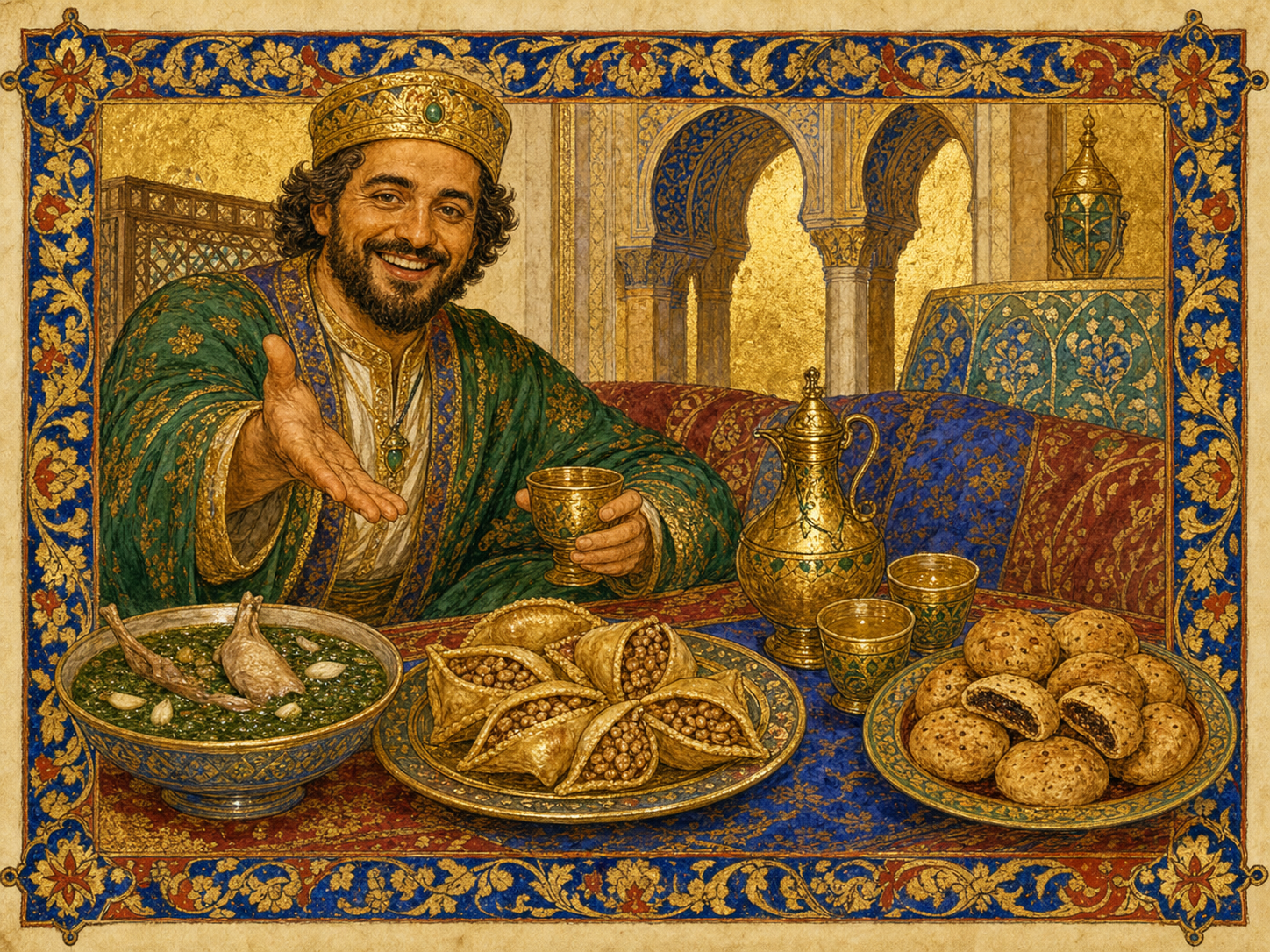
Al-Hakim bi-Amr Allah at the table
985 — 1021
On the menu
The Fatimid simât
In Cairo of the Isma'ili caliphs, meals were not structured as "appetizer-main-dessert" but around the simât: a large leather or linen cloth spread on the ground, on which breads, green stews, fermented condiments, sweets, and cool drinks are laid out together. One eats with three fingers and a piece of bread, sharing the dishes. In contrast to the lavish court of his predecessors, Al-Hakim's stripped-down simât made renunciation and dietary decree an instrument of power.
Signature : Taqliya (pounded garlic and coriander melted in fat)
The soul of medieval Egyptian cuisine: a handful of garlic crushed with salt and coriander, green or in seeds, sizzled in oil or clarified butter, then poured like a fragrant rain over soups and stews. It is what marks the famous mulukhiyya — that green dish which Al-Hakim, precisely, wished to make disappear.
click to flip back
Al-Hakim bi-Amr Allah at the table
985 — 1021
5 period recipes
 Everyday
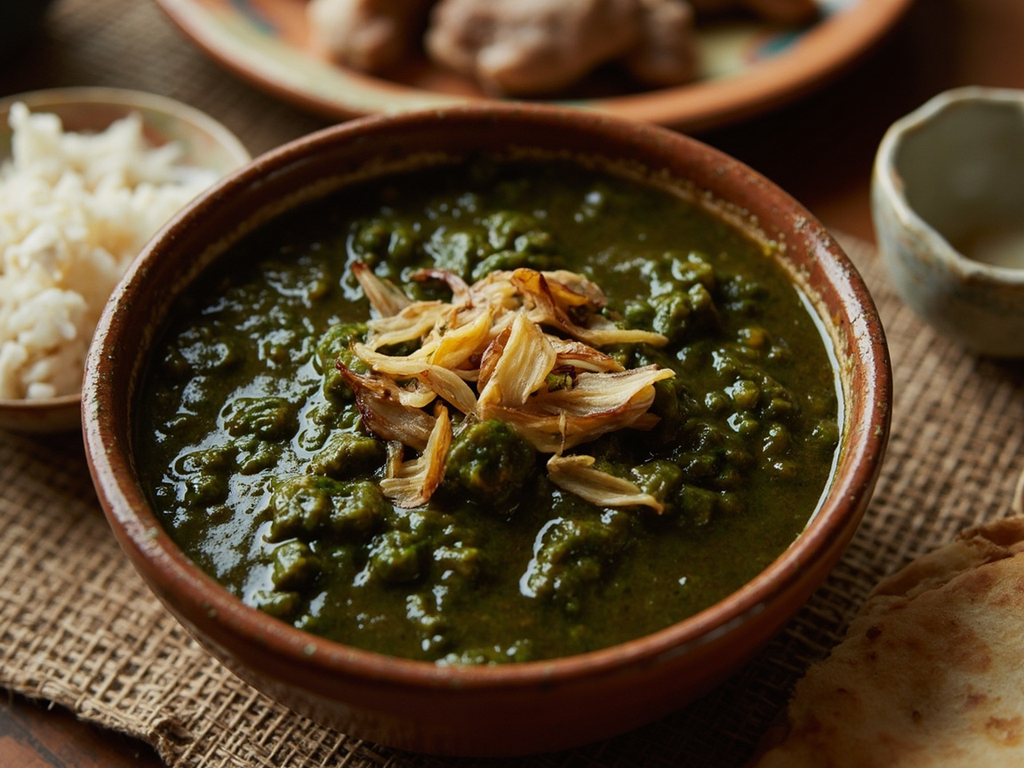
Mulukhiyya with garlic and rabbit
Base stew of the simât (shared everyday green dish)
🍄 🧂· 1 h 15
View the recipe
 Festive
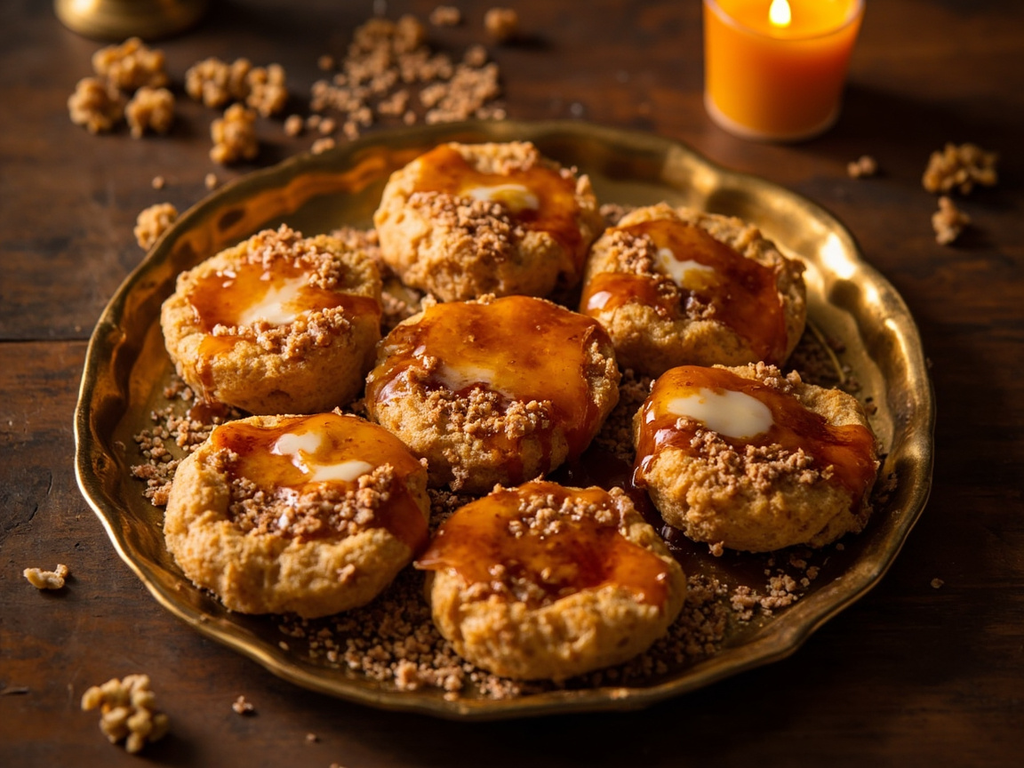
Qatâyef stuffed with walnuts and honey
Halawiyât of the festive simât (evening sweets)
🍯· 1 h 30 (incl. resting)
View the recipe
 Drink
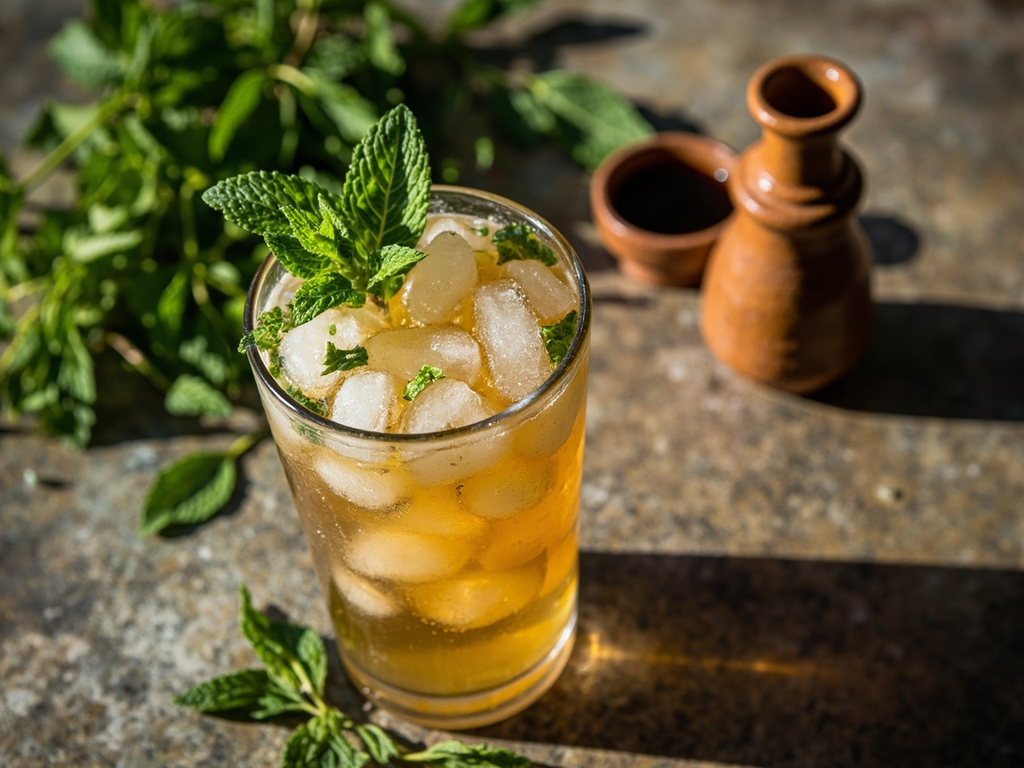
DrinkSikanjabîn, honey and vinegar syrup with mint
Sharâb of the simât (non-alcoholic cold drink)
🍋 🍯· 30 min
View the recipe
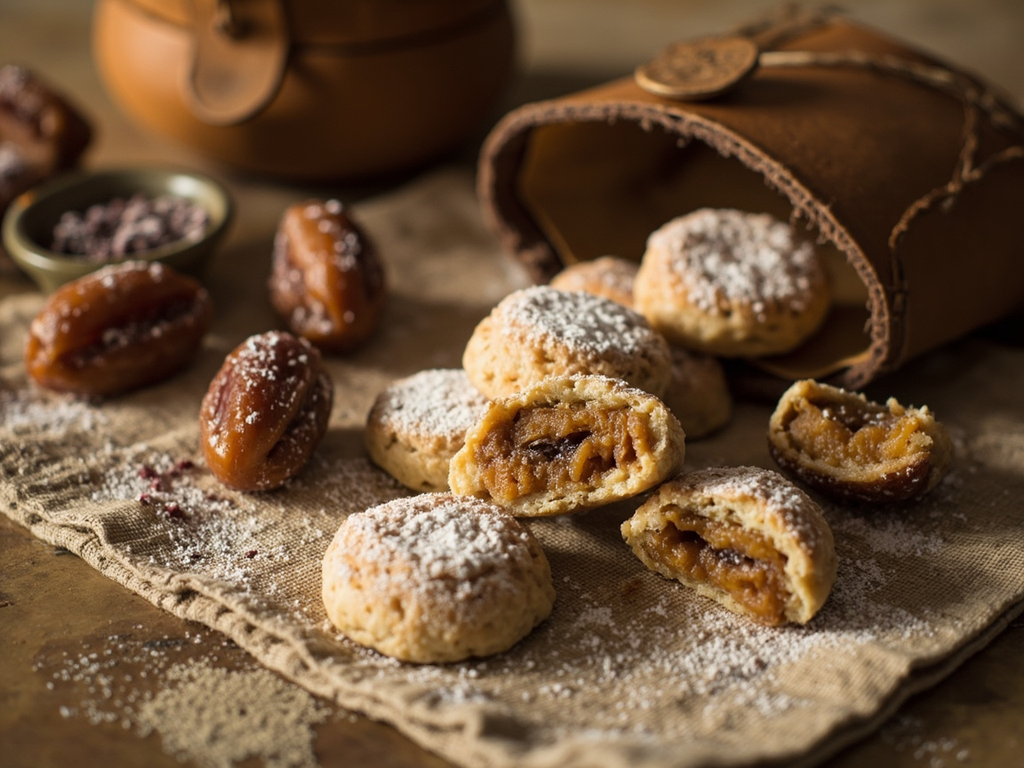 Travel
Kahk stuffed with dates for the night ride
Zuwwâda of the traveler (dry saddle provisions)
🍯· 1 h
View the recipe
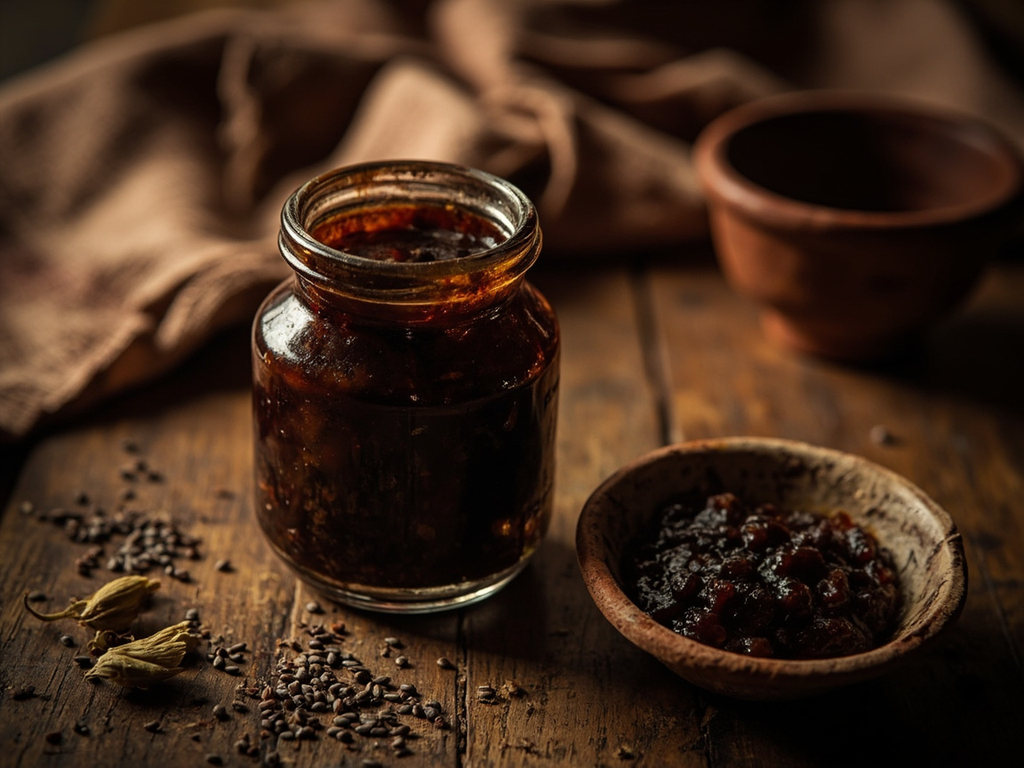 Preserving
Murrî, fermented condiment from the pantry
Tawâbil of the simât (preserved condiment to be used sparingly)
🫙 🍄 🧂· 25 min (modern version)
View the recipe