 flip
flipHirsemus — millet porridge with butter and honey
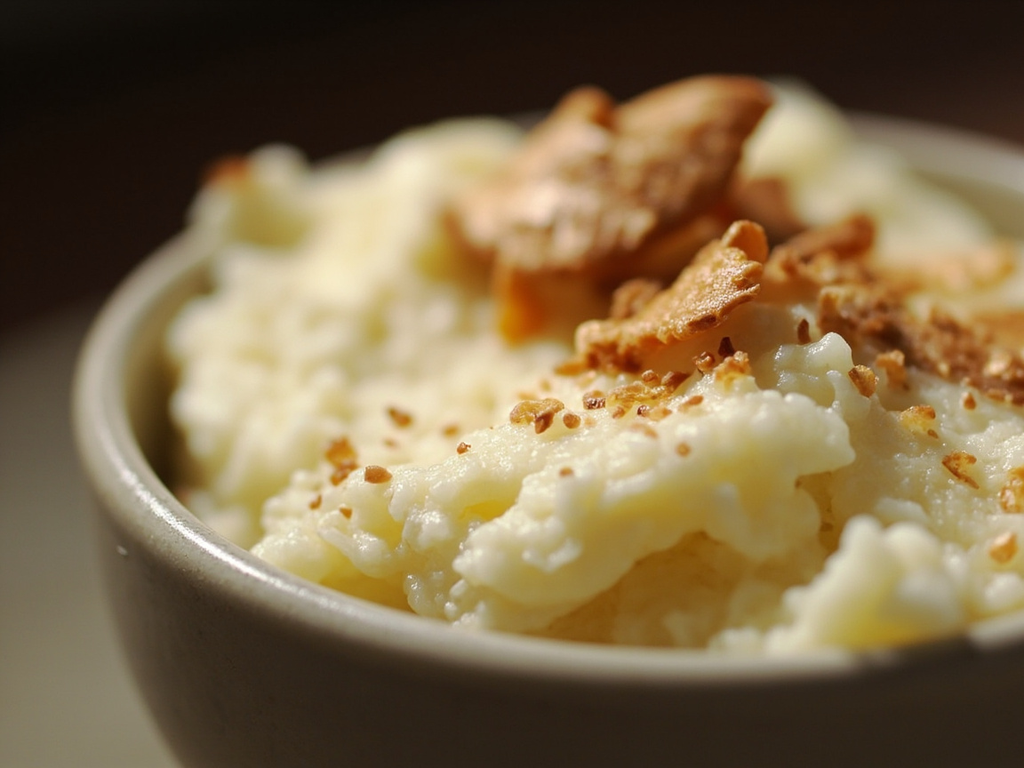
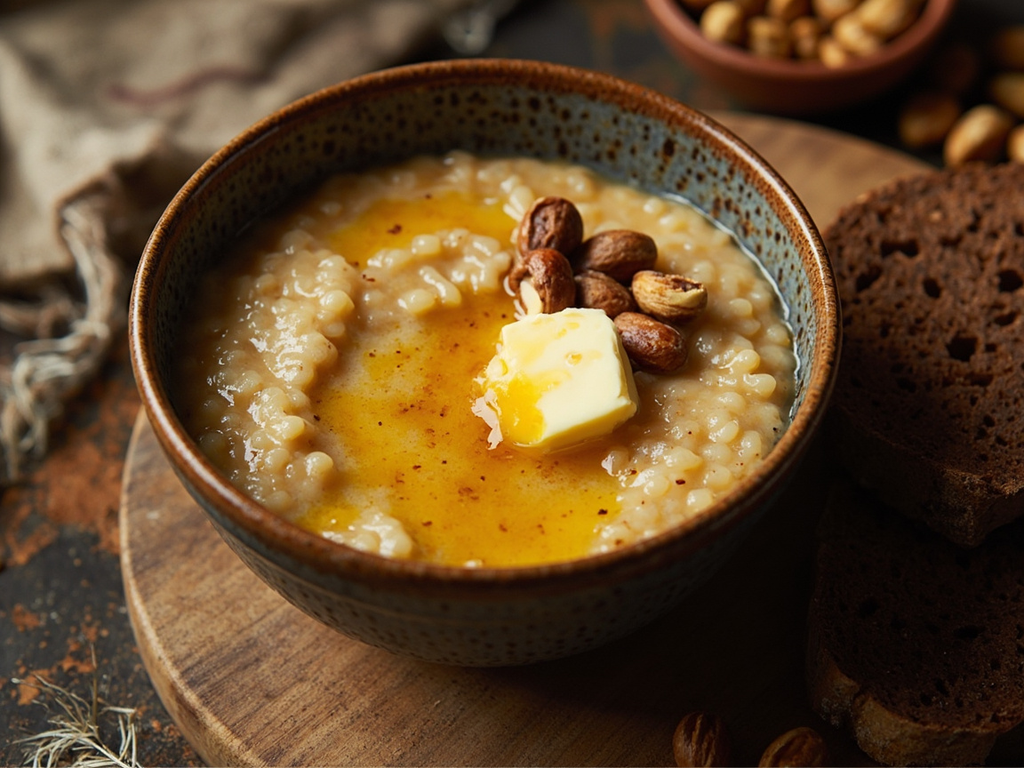
Hirsemus — millet porridge with butter and honey
Why this dish? Dürer kept his accounts with famous meticulousness, noting every food expense in his diary. A millet porridge, cheap and fortifying, was the everyday dish of Nuremberg households, even wealthy ones: enough to feed the workshop before a long day of engraving.
A millet porridge cooked long in milk, smoothed with butter and sweetened with a drizzle of honey. Simple, warm, and comforting, it is the quintessential workshop lunch: eaten with a spoon from an earthenware bowl.
You see, I note everything that enters my purse and my stomach, for a prudent man knows the value of a penny. In the morning, before taking up the burin, my wife Agnes cooks the millet in milk until it becomes tender as velvet; we throw in a good piece of butter and a dash of honey, and it keeps us warm for the whole morning. It is food for poor and rich alike, and no one in Nuremberg is ashamed of it.
- •Millet — a good handful per person (base cereal)
- •Milk — enough to cover generously (cooking liquid)
- •Butter — a fine piece (binding and richness)
- •Honey — to taste (sweetness)
- •Salt — a pinch (seasoning)
Hirsemus — millet porridge with butter and honey
A millet porridge cooked long in milk, smoothed with butter and sweetened with a drizzle of honey. Simple, warm, and comforting, it is the quintessential workshop lunch: eaten with a spoon from an earthenware bowl.
Why this dish? Dürer kept his accounts with famous meticulousness, noting every food expense in his diary. A millet porridge, cheap and fortifying, was the everyday dish of Nuremberg households, even wealthy ones: enough to feed the workshop before a long day of engraving.
You see, I note everything that enters my purse and my stomach, for a prudent man knows the value of a penny. In the morning, before taking up the burin, my wife Agnes cooks the millet in milk until it becomes tender as velvet; we throw in a good piece of butter and a dash of honey, and it keeps us warm for the whole morning. It is food for poor and rich alike, and no one in Nuremberg is ashamed of it.
Ingredients (period version)
- Millet — a good handful per person (base cereal)
- Milk — enough to cover generously (cooking liquid)
- Butter — a fine piece (binding and richness)
- Honey — to taste (sweetness)
- Salt — a pinch (seasoning)
Ingredients
- Hulled millet — 150 g (base cereal)
- Whole milk — 750 ml (cooking liquid)
- Butter — 30 g (binding and richness)
- Honey — 2 tablespoons (sweetness)
- Salt — 1 pinch (seasoning)
- Ground cinnamon — 1 pinch (optional) (flavor)
Method
- Rinse the millet in cold water and drain.
- Bring the milk to a simmer with the pinch of salt, add the millet.
- Cook over low heat for 25–30 minutes, stirring often, until the porridge is tender and creamy; add a little hot milk if it thickens too much.
- Off the heat, stir in the butter and then the honey.
- Serve very hot in bowls, with a pinch of cinnamon for those who like it.
How it was made : Millet was a key cereal in Northern Europe before maize (forbidden here, coming from the Americas) took over much later. It was cooked slowly in milk or broth, and the pot of porridge often simmered at the hearth all morning.
The contemporary twist : Serve it as a breakfast bowl: creamy millet, chestnut honey, a few toasted hazelnuts, and a grating of pear — a nod to the pearwood block Dürer engraved.
Albrecht Dürer · Charactorium