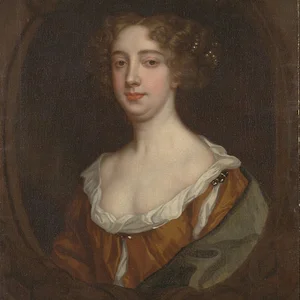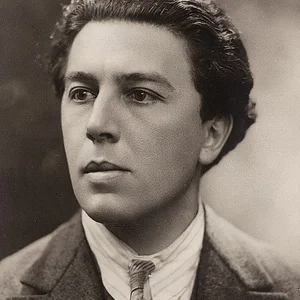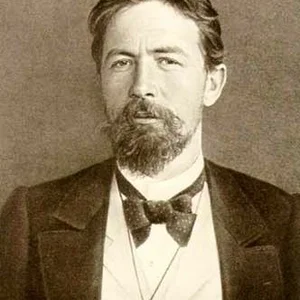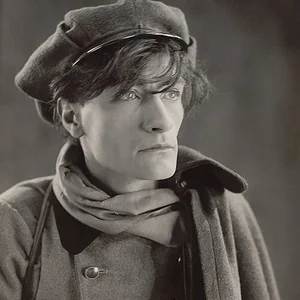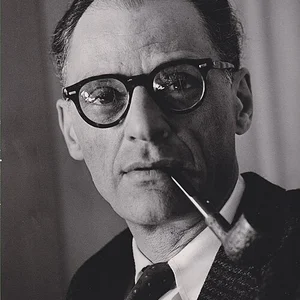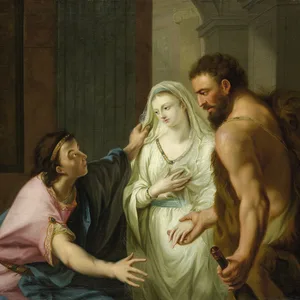

Alceste is the central character of Molière's *The Misanthrope* (1666). An uncompromising idealist, he refuses the hypocrisy and flattery of court society, while being deeply in love with Célimène, a worldly coquette. He embodies the tension between absolute moral integrity and the compromises of social life.
Alceste
(124) Alceste
9 min read
Frequently asked questions
Famous Quotes
« I want to be sincere, and, as a man of honor, / Never to utter words that don't come from the heart.»
Key Facts
- The Misanthrope premiered at the Palais-Royal on June 4, 1666
- Alceste is contrasted with Philinte, who embodies pragmatic accommodation to social conventions
- His love for Célimène, a coquettish character, drives both the comic and tragic tension of the play
- The play is often read as a satire of Versailles court society under Louis XIV
- Alceste is considered one of the most ambiguous characters in Molière's theatre: comic or tragic?
Works & Achievements
A comedy in five acts and in verse, first performed on June 4, 1666. It is the founding work that brings Alceste to life and explores the tension between absolute moral integrity and the necessity of social compromise, today considered Molière's masterpiece.
A major comedy about religious and social hypocrisy that illuminates the context in which Alceste emerges: an era where falseness is everywhere and the uncompromising sincerity of an Alceste appears as a dangerous anomaly.
A play in which Molière explores another form of rejection of social conventions. Don Juan, a cynical libertine, is the negative image of Alceste: where Alceste craves more truth, Don Juan uses systematic deception to escape all moral constraint.
A collection of portraits and moral reflections on court society under Louis XIV. La Bruyère depicts human types close to those of Molière, and the gallery of portraits recalls the satirical “little portraits” exchanged in Célimène's salon.
A philosophical text in which Rousseau defends Alceste against Molière, arguing that the misanthrope is a virtuous man in a corrupt world. This text transforms the fictional character into an emblem of the debate on virtue and society.
Anecdotes
At the premiere of Le Misanthrope at the Palais-Royal on 4 June 1666, Molière himself played the role of Alceste. Unlike his popular comedies, the play was met with a degree of reserve by the audience, who were unsure whether to laugh or admire a character who was at once ridiculous and admirable. Today, however, Le Misanthrope is regarded as Molière's absolute masterpiece.
From its very first performances, some audience members tried to identify Alceste with real figures from high society. The Duke of Montausier, governor of the Dauphin and known for his blunt frankness and rigid integrity, was frequently cited. This controversy showed that Molière had struck a nerve: the tension between sincerity and social hypocrisy was very real at the court of Louis XIV.
The sonnet scene is one of the most famous in the play: when Oronte submits his poem to Alceste hoping for the usual compliments, Alceste flatly refuses to flatter him and bluntly declares the sonnet worthless, preferring instead a simple old folk song. This single scene perfectly captures the entire conflict between Alceste's moral demands and the conventions of polite society.
In the eighteenth century, Jean-Jacques Rousseau publicly came to Alceste's defence in his Letter to d'Alembert on the Theatre (1758). Against Molière, who mocks the misanthrope, Rousseau argued that Alceste was right: it is corrupt society that deserves condemnation, not the man who refuses to submit to it. This debate illustrates how a fictional character can spark genuine philosophical controversy about morality and society.
The ending of Le Misanthrope is deliberately open and ambiguous: Alceste, convinced of Célimène's hypocrisy and despairing of the world, declares that he wants to flee society and retreat into the wilderness. His friend Philinte and Éliante resolve to follow him and try to bring him back to his senses. This ending, without reconciliation or clear victory, is unusual for a classical comedy, and contributes to the play's particular depth.
Primary Sources
ALCESTE: I want men to be sincere, and, as men of honor, / never to utter a word that does not come from the heart. / PHILINTE: When a man comes to greet you with delight, / you must pay him back in the very same coin.
ALCESTE: Frankly, it deserves to be locked away in a drawer. / You have modeled yourself on wretched examples, / and your expressions are not natural in the least.
ALCESTE: No, do what you will, nothing can hold me back. / Betrayed on all sides, overwhelmed by injustice, / I shall flee this abyss where vice holds sway.
Alceste is an upright, sincere, and estimable man, a truly virtuous man; and if this champion of virtue strikes us as odd, it is because in the corrupt society in which he lives, his integrity stands in sharp contrast to the manners of those around him.
Key Places
The entire action of *The Misanthrope* takes place in Célimène's home in Paris. This fashionable salon — a hub of brilliant but superficial exchanges — is the microcosm of court society that Alceste condemns through his refusal to engage in empty talk.
The theatre where Molière and his company premiered *The Misanthrope* on 4 June 1666. The Palais-Royal was the heart of Parisian cultural life under Louis XIV, just steps from the Louvre.
Louis XIV's main residence from 1682, Versailles embodies the court society that *The Misanthrope* indirectly criticizes: rigid etiquette, relentless flattery, and constant scheming — precisely the world Alceste refuses to be part of.
At the end of the play, Alceste announces his intention to flee to a desert — meaning a place far removed from the world. This imaginary retreat symbolizes the quest for an impossible authenticity and the radical rejection of all social life.
Typical Objects

In the play, Oronte submits his poem to Alceste expecting the usual compliments. Alceste refuses to flatter the author, triggering a conflict that illustrates his absolute rejection of social dishonesty — even the most harmless and expected kind.

A note written by Célimène to one of her suitors, revealing her fickleness, becomes the decisive element that convinces Alceste of the hypocrisy of the woman he loves. The letter is the symbol of worldly betrayal and the coquette's duplicity.

Worn at the hip, the sword was the obligatory mark of a gentleman in the 17th century. For Alceste, it symbolizes his membership in a nobility whose ideal of honor he respects, but whose compromises and flatteries he refuses to accept.

A men's court garment adorned with embroidery, braid, and lace, it was a sign of rank and wealth. Alceste wears it against his will, a prisoner of the dress codes of a society he condemns, unable to escape even through his appearance.

Having become virtually obligatory at the court of Louis XIV, the powdered wig symbolizes worldly conformism. For Alceste, this artificial ornament embodies the hypocrisy of appearances, set against the authenticity of one's true self.

In the play, Alceste is involved in a lawsuit that he refuses to argue by the usual means — flattering the judges and pulling strings. This lawsuit symbolizes his refusal to accept institutional corruption, even at the cost of his own defeat.
School Curriculum
Vocabulary & Tags
Key Vocabulary
Daily Life
Morning
A Parisian gentleman of Alceste's day begins his morning with the toilette, an often semi-public affair to which servants and visitors of rank are admitted. Setting the great curled wig in place, tending to the face, and choosing one's clothes takes a good hour. One then receives courtesy calls that must be answered with the expected politeness — a ritual Alceste endures with visible impatience.
Afternoon
The afternoon is devoted to social calls, literary salons, and discussions in cafés or private homes. These are the spaces where social affairs are settled, reputations made and unmade, and wits compete in displays of cleverness. Alceste attends under duress, regularly provoking minor scandals by refusing the stock phrases and hollow compliments that oil the machinery of polite society.
Evening
Evenings bring polite society together in salons, at the theater, or at supper parties. The Palais-Royal theater or the Hôtel de Bourgogne hosts new plays; supper follows at private homes. These gatherings, governed by strict codes of gallantry and courtesy, are a constant ordeal for Alceste — every required compliment wrung from him at an almost superhuman cost.
Food
The table of a seventeenth-century Parisian nobleman is lavish: roasted meats, ragouts, soups, richly seasoned sauces, and pastries in abundance, washed down with wine diluted with water. Meals are important social occasions where the art of conversation matters as much as the quality of the dishes. Alceste, little concerned with ostentatious refinement, most likely eats simply, seeing excess at table as yet another form of worldly affectation.
Clothing
A court gentleman wears the justaucorps, full breeches, silk stockings, buckled shoes, and the great curled wig. Garments are trimmed with braid, lace, and costly embroidery. Fashion is dictated by the court of Versailles, and changing one's outfit to suit each occasion is a social obligation. Alceste wears these trappings out of compulsion, with the stiffness of one obeying a necessity rather than yielding to vanity.
Housing
Alceste lives in a Parisian hôtel particulier, as befits his standing as a prosperous gentleman. These townhouses include an interior courtyard, reception apartments, and servants' quarters. The bulk of social life takes place in salons furnished with armchairs and card tables and adorned with tapestries — it is in this very setting that the entire action of Le Misanthrope unfolds.
Historical Timeline
Period Vocabulary
Liens externes & ressources
Références
Œuvres
Le Misanthrope, ou l'Atrabilaire amoureux — Molière
1666
Tartuffe, ou l'Imposteur — Molière
1664-1669
Dom Juan, ou le Festin de pierre — Molière
1665
Les Caractères — Jean de La Bruyère
1688
Lettre à M. d'Alembert sur les spectacles — Jean-Jacques Rousseau
1758