Early Modern
Kings, philosophers, revolutionaries and explorers — from the discovery of the New World to the Enlightenment.
653 characters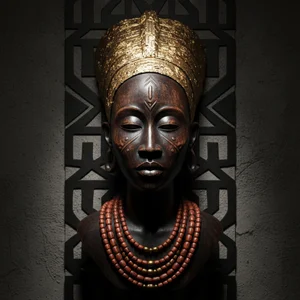

653 characters
Politics(115)
Abla Pokou II
Legendary queen of the Baoulé people in the 18th century, she led her people from the Ashanti kingdom to present-day Ivory Coast. Oral tradition holds that she sacrificed her only son to allow her people to cross the Comoé River, a founding act of Baoulé identity.
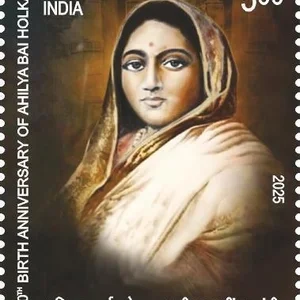
Ahilyabai Holkar
1725 — 1795
Queen of the Malwa kingdom (Indore) from 1767 to 1795, she ruled with wisdom and justice. Widowed at 29, she refused sati and took charge of the state, personally leading her armies. She had hundreds of temples, wells, and roads built across India.
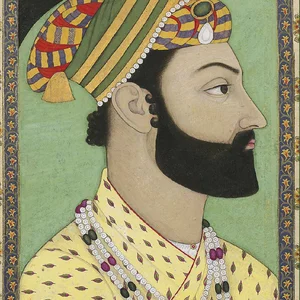
Ahmad Shah Durrani
1722 — 1772
Ahmad Shah Durrani (1722-1772) was the founder of the Durrani Empire and is regarded as the father of the Afghan nation. A former general under Nader Shah of Persia, he unified the Pashtun tribes after Nader Shah's assassination and built an empire stretching from Persia to Northern India.
Akwa Boni
1708 — ?
Ivorian political figure and prominent voice in Côte d'Ivoire's public life. Embodying the meeting point between African cultural traditions and modern political engagement, she represents women's participation in the institutions of postcolonial West Africa.
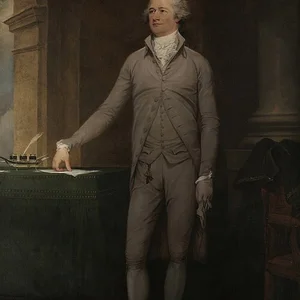
Alexander Hamilton
1757 — 1804
A Founding Father of the United States, Alexander Hamilton was the first Secretary of the Treasury (1789-1795). The architect of the American financial system, he created the first national bank and laid the foundations of the young United States' economy. He died in 1804 in a duel with Aaron Burr.
Andrew Jackson
1767 — 1845
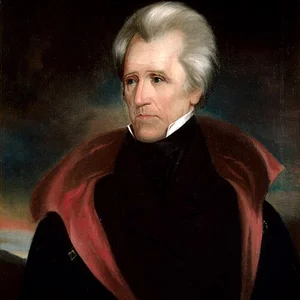
An American general and hero of the War of 1812, Andrew Jackson became the 7th President of the United States (1829–1837). A populist figure, he embodied Jacksonian democracy while also being a slaveholder and the architect of the policy to forcibly remove Native Americans from their lands.
Anne Thérèse de Marguenat de Courcelles, marquise de Lambert
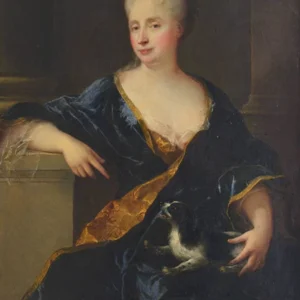
A Parisian writer and salon hostess (1647–1733), she presided over one of the most influential literary salons of the Regency period, frequented by Fontenelle, Montesquieu, and Marivaux. A pioneer in thinking about women's education, she championed their access to intellectual life.
Antoine François de Fourcroy
1755 — 1809
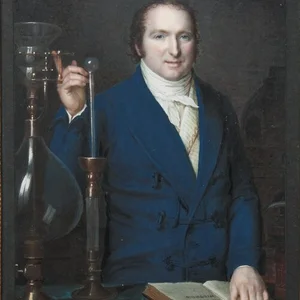
French chemist and statesman, a collaborator of Lavoisier in the reform of chemical nomenclature. A member of the National Convention, he played a major role in reorganizing scientific education during the Revolution.
Armand de Bourbon-Conti
1629 — 1666
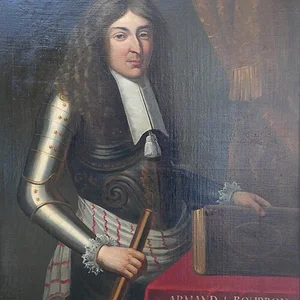
A prince of the blood and the youngest child of Henri II de Bourbon-Condé, Armand de Bourbon-Conti (1629-1666) was one of the leaders of the Fronde of the Princes before rallying to Louis XIV. Having become governor of Languedoc and Count of Pézenas, he was Molière's first patron.
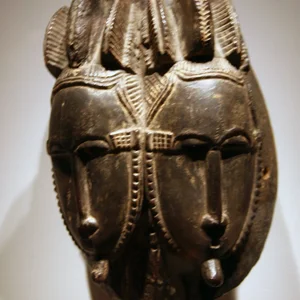
Aura Pokou
Founding queen of the Baoulé people (Côte d'Ivoire) in the 18th century, according to Akan oral tradition. To allow her people to cross the Comoé River during a forced exile, she is said to have sacrificed her only son. Her name means "the child who does not return."
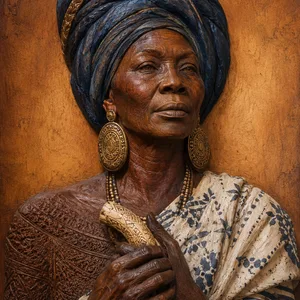
Bakwa Turunku
1468 — 1566
Queen of the kingdom of Zazzau (present-day Zaria, Nigeria) in the 16th century, Bakwa Turunku founded the city of Zaria around 1536. She is the mother of the famous warrior queen Amina of Zaria, a symbol of female power in West Africa.
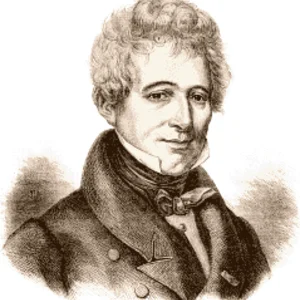
Barthélemy de Lesseps
1766 — 1834
French diplomat and explorer (1766–1834), he participated in the La Pérouse expedition as an interpreter and was the only member to return to Europe before the shipwreck. He crossed Siberia to bring the expedition's logbooks back to Paris.
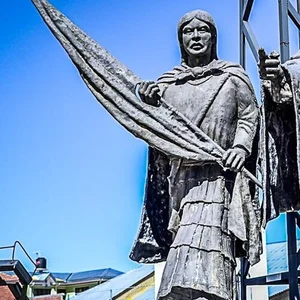
Bartolina Sisa
1750 — 1782
Bartolina Sisa is a heroic figure of the Aymara people and wife of Túpac Katari. Around 1781–1782, she co-led the siege of La Paz against Spanish colonial forces. Captured, she was executed by the Spanish in 1782 and is today revered as a symbol of indigenous resistance in Bolivia.
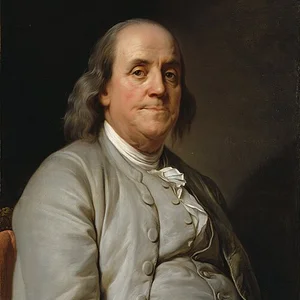
Benjamin Franklin
1706 — 1790
An 18th-century American statesman, scientist, and writer, Benjamin Franklin is one of the Founding Fathers of the United States. The inventor of the lightning rod, he contributed to drafting the Declaration of Independence and negotiated the Franco-American alliance.
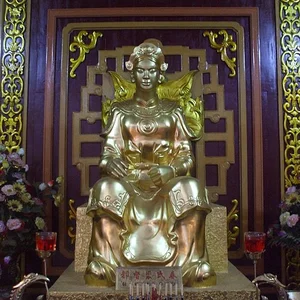
Bùi Thị Xuân
1752 — 1802
Vietnamese general (1752–1802), one of the five great heroines of the Tây Sơn dynasty. Wife of General Trần Quang Diệu, she commanded the war elephant corps and distinguished herself against Siamese and Manchu armies. Captured after the fall of the Tây Sơn, she was executed by elephant in 1802.
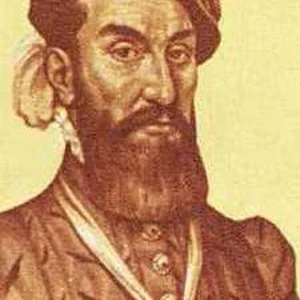
Cabeza de Vaca
A 16th-century Spanish conquistador and explorer, he survived the shipwreck of the Narváez expedition in Florida (1528) and crossed North America for eight years with three companions before reaching Mexico. His account, the *Naufragios*, is one of the first European eyewitness records of the interior of the American continent.
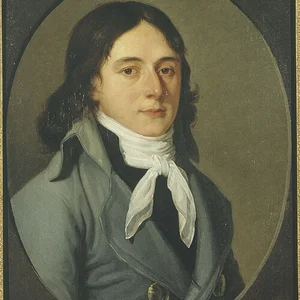
Camille Desmoulins
1760 — 1794
French lawyer, journalist and politician, a figure of the Revolution. An orator at the Palais-Royal in July 1789, he was one of the most influential pamphleteers of his time before being guillotined alongside the Indulgents in 1794.
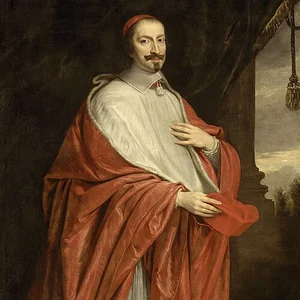
Cardinal Mazarin
1602 — 1661
Cardinal and chief minister of state of France, he governed the kingdom during Louis XIV's minority under the regency of Anne of Austria. Richelieu's successor, he signed the Treaties of Westphalia and overcame the Fronde to consolidate the monarchy.
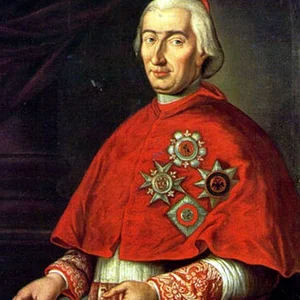
Cardinal Ruffo
1744 — 1827
Neapolitan cardinal (1744–1827), known for reconquering the Kingdom of Naples in 1799 at the head of an army of Calabrian peasants, the Sanfedists. A symbol of counter-revolutionary reaction and the Bourbon restoration.
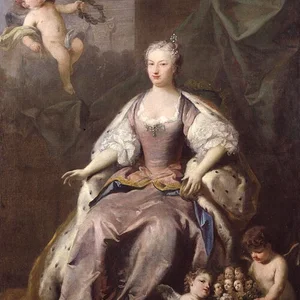
Caroline of Ansbach
1683 — 1737
Queen consort of Great Britain and Ireland (1727–1737), wife of George II. An Enlightenment intellectual, she corresponded with Leibniz and actively supported Newton in the philosophical and scientific dispute between the two men. Regent on several occasions, she wielded major political influence over the British monarchy.
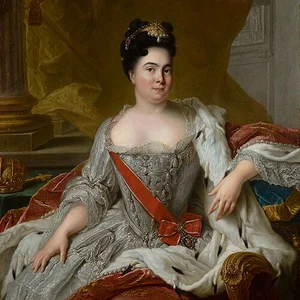
Catherine I
Empress of Russia from 1725 to 1727, second wife of Peter the Great. Born to a humble Baltic peasant family, she was the first woman to rule the Russian Empire, ushering in the century of the empresses.
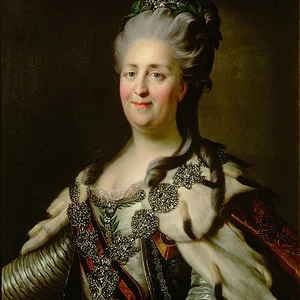
Catherine II of Russia
1729 — 1796
Catherine II, known as Catherine the Great, was Empress of Russia from 1762 to 1796. Of German origin, she overthrew her husband Peter III and modernized the Russian Empire by drawing on the ideas of Enlightenment philosophers, while strengthening autocratic power.
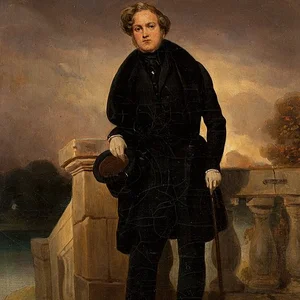
Charles de Mornay
1514 — 1574
Charles de Mornay was a French-born Swedish court officer active in the 17th and 18th centuries. Of French noble origin, he established himself at the Swedish court during the era of great power (Stormaktstiden). He exemplifies the mobility of European noble elites across the great courts of the continent.
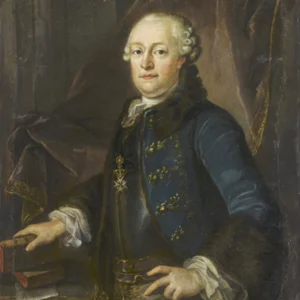
Charles Pierre Claret de Fleurieu
1738 — 1810
French navigator, hydrographer, and statesman (1738–1810), Fleurieu contributed to maritime cartography and oversaw several scientific expeditions. Minister of the Navy under Louis XVI, he played a key role in organizing France's major voyages of exploration.
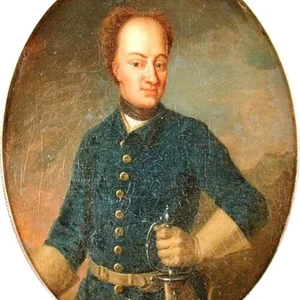
Charles XII of Sweden
King of Sweden from 1697 to 1718, Charles XII was one of the greatest military commanders of his era. He led the Great Northern War against a European coalition, winning the Battle of Narva (1700) before suffering a crushing defeat at Poltava (1709). He died during the siege of Fredriksten, marking the end of Swedish dominance in Europe.
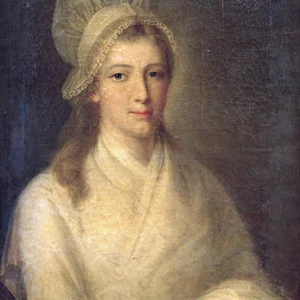
Charlotte Corday
1768 — 1793
A Norman Girondin activist, Charlotte Corday assassinated Jean-Paul Marat in his bathtub on July 13, 1793. Convinced she was putting an end to the Terror, she was guillotined four days later at the age of 24.
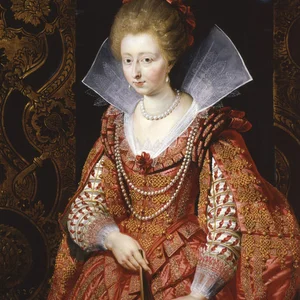
Charlotte-Marguerite de Montmorency
1594 — 1650
Charlotte-Marguerite de Montmorency (1594-1650), Princess of Condé, was one of the most celebrated beauties of the French court. Coveted by the aging King Henry IV, her marriage to Henry II of Bourbon-Condé sparked a diplomatic crisis when the couple fled to the Spanish Netherlands.

Christian Ludwig of Brandenburg
Margrave of Brandenburg-Schwedt and member of the House of Hohenzollern, he is best known as the dedicatee of Johann Sebastian Bach's six Brandenburg Concertos (1721). A music lover and patron of the arts, he embodies the aristocratic German culture of the early 18th century.
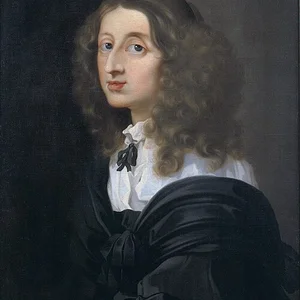
Christina of Sweden
1626 — 1689
Queen of Sweden from 1632 to 1654, Christina voluntarily abdicated her throne to convert to Catholicism and settle in Rome. An exceptional woman, she invited Descartes to her court and ruled with authority in the Europe of the Thirty Years' War.
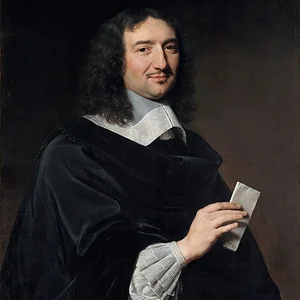
Colbert
1619 — 1683
Jean-Baptiste Colbert (1619-1683) was the principal minister of Louis XIV, serving as Controller-General of Finances from 1665. The architect of an interventionist economic policy, he reorganized the royal finances and developed French industry and trade.
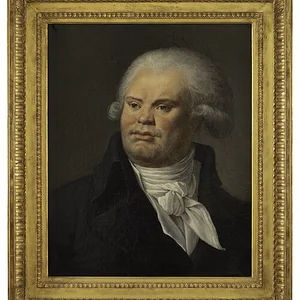
Danton
1759 — 1794
French lawyer and politician (1759–1794), Danton is a major figure of the French Revolution. Known for his eloquence and charisma, he played a key role in revolutionary events before being executed during the Terror.
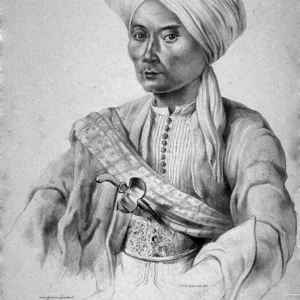
Diponegoro
1785 — 1855
A Javanese prince, Diponegoro led the Java War (1825-1830) against Dutch colonial rule, mobilizing hundreds of thousands of men in the name of Islam and Javanese sovereignty. Betrayed during peace talks, he was captured and exiled to Makassar, where he died in 1855, becoming one of Indonesia's first national heroes.
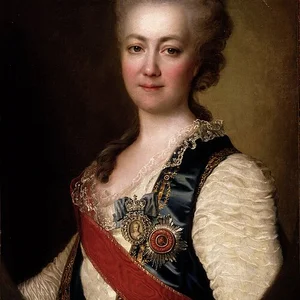
Ekaterina Vorontsova-Dashkova
1743 — 1810
A learned Russian aristocrat and close associate of Catherine II, she played a part in the coup d'état of 1762. The first woman to head the Russian Academy of Sciences, she founded the Russian Academy devoted to the language.
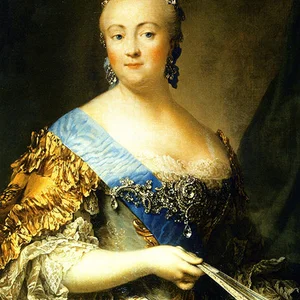
Elizabeth I of Russia
1709 — 1762
Daughter of Peter the Great, Elizabeth I ruled Russia from 1741 to 1762. Her reign was marked by a flourishing of culture, the founding of Moscow University, and Russia's victorious participation in the Seven Years' War.
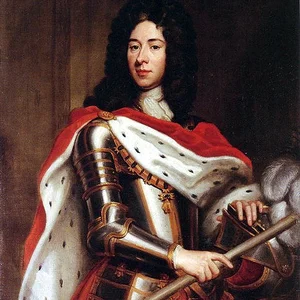
Eugene of Savoy
1663 — 1736
A prince of the House of Savoy who entered the service of the Habsburgs, Eugene of Savoy became one of the greatest military commanders of his time. As generalissimo of the imperial armies, he distinguished himself against the Ottomans and during the War of the Spanish Succession.
Florin Périer
1605 — 1672
Florin Périer (c. 1605-1672) was a magistrate and jurist from the Auvergne region, a councillor at the cour des aides (tax court) of Clermont. The brother-in-law of Blaise Pascal, in 1648 he carried out the Puy de Dôme experiment, which demonstrated the weight of air.
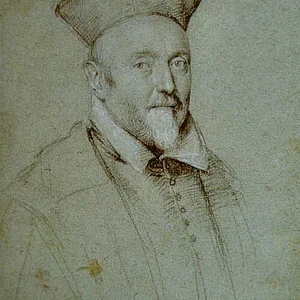
Francesco Maria Del Monte
Italian cardinal (1549–1626), diplomat and influential patron of Baroque Rome. He was Caravaggio's first major patron, housing him in his palace and commissioning several of his key works. Close to Galileo, he also had a keen interest in science and music.
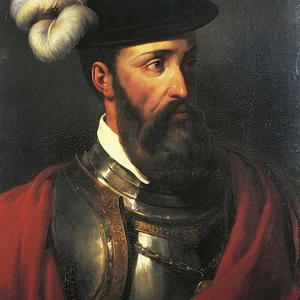
Francisco Pizarro
1478 — 1541
Spanish conquistador (c. 1478–1541), he led the conquest of the Inca Empire in Peru between 1532 and 1533, captured the emperor Atahualpa, and founded Lima in 1535. His expedition transformed the New World and opened South America to Spanish colonization.
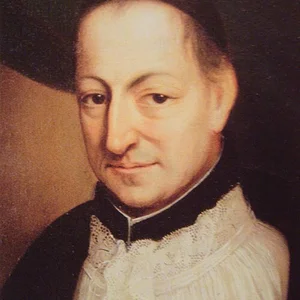
François d'Aix de La Chaise
1624 — 1709
French Jesuit (1624–1709), confessor to Louis XIV for 34 years. His influence at court was considerable, particularly during the revocation of the Edict of Nantes (1685). The Père-Lachaise cemetery, opened in 1804 on land that had once belonged to the Jesuits, bears his name.
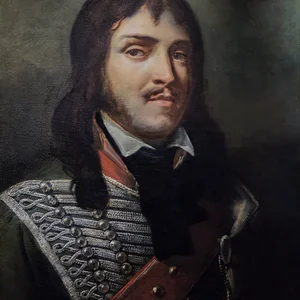
François Séverin Marceau
1769 — 1796
A general of the French Revolution, Marceau enlisted at 16 and became one of the youngest generals of the Republic. A hero of the pacification of the Vendée and the Rhine campaigns, he died in battle at 27 in 1796, embodying the ideal of the republican soldier.

Frederick II of Denmark
King of Denmark and Norway from 1559 to 1588, Frederick II waged the Northern Seven Years' War against Sweden and was an enlightened patron of the arts, most notably supporting the astronomer Tycho Brahe. He commissioned the construction of Kronborg Castle in Elsinore.
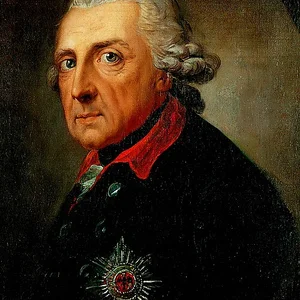
Frederick II the Great
1712 — 1786
Frederick II, known as Frederick the Great, was King of Prussia from 1740 to 1786. An enlightened ruler and a leading military strategist, he turned Prussia into a major European power while corresponding with Enlightenment philosophers, including Voltaire.
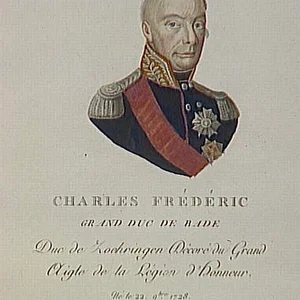
Frederick the Great
King of Prussia from 1740 to 1786, Frederick II was both a formidable war leader and a reforming sovereign. A figure of enlightened despotism, he corresponded with Voltaire and made Prussia a major European power.
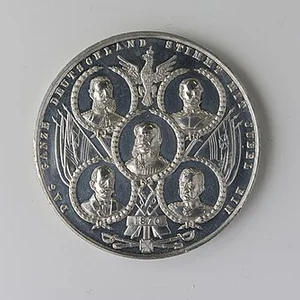
Frederick William I of Prussia
King of Prussia from 1713 to 1740, nicknamed the “Soldier King.” A rigorous and thrifty administrator, he reorganized the Prussian state and built a powerful army that turned Prussia into a major European military power.
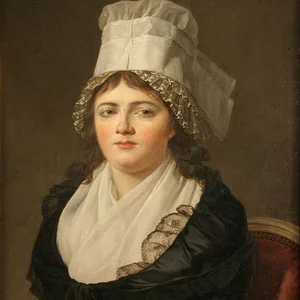
Gabrielle Danton
Gabrielle Charpentier (c. 1764–1793) was the wife of Georges-Jacques Danton, a leading orator of the French Revolution. The daughter of a Parisian café owner, she died at 28 in February 1793 while her husband was on a mission in Belgium, just months before the Reign of Terror.
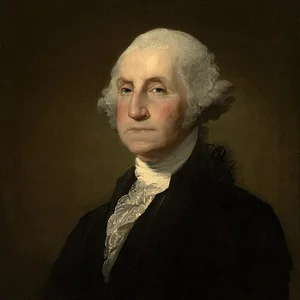
George Washington
1732 — 1799
Commander-in-Chief of the Continental Army during the American War of Independence, George Washington became the first President of the United States (1789–1797). A Virginia planter and slaveholder, he embodies the contradictions of the young Republic — torn between ideals of liberty and the reality of slavery.
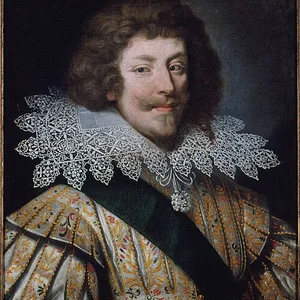
Henri II de Montmorency
1595 — 1632
Henri II de Montmorency (1595-1632) was the last Duke of Montmorency, Governor of Languedoc, and Marshal of France. Drawn into Gaston of Orléans's revolt against Richelieu, he was captured at Castelnaudary and then beheaded in Toulouse in 1632.
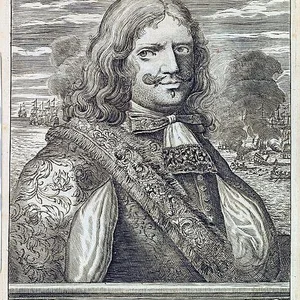
Henry Morgan
1631 — 1688
Henry Morgan (c. 1635–1688) was a Welsh privateer in the service of England who led devastating raids against Spanish possessions in the Caribbean. Knighted by the Crown, he ended his career as Lieutenant Governor of Jamaica.
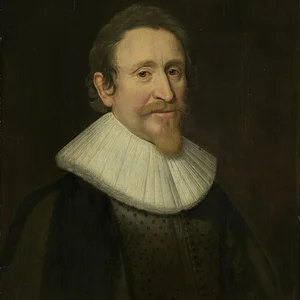
Hugo Grotius
1583 — 1645
Hugo Grotius (Huig de Groot), a Dutch jurist, philosopher, and diplomat, is regarded as one of the founders of modern international law and natural law. His major work, “De jure belli ac pacis” (1625), lays the foundations of a body of law governing relations between nations.
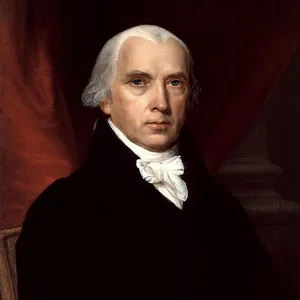
James Madison
1751 — 1836
American statesman (1751–1836), regarded as the "Father of the Constitution" of the United States. Architect of the Bill of Rights and fourth President of the United States, he was one of the foremost theorists of American republicanism.
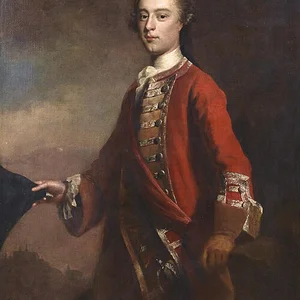
James Wolfe
1727 — 1759
British general (1727–1759), James Wolfe is renowned for his decisive victory over the French at the Battle of the Plains of Abraham in Quebec in 1759. He died in combat on the very day of his victory, becoming a British national hero.
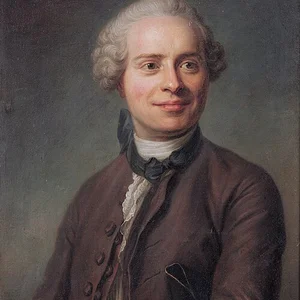
Jean le Rond d'Alembert
1717 — 1783
A mathematician and philosopher of the Enlightenment, he co-edited the great Encyclopédie with Diderot and wrote its famous Preliminary Discourse. He formulated the mechanical principle that bears his name and embodied the encyclopédiste ideal of bringing together all human knowledge.
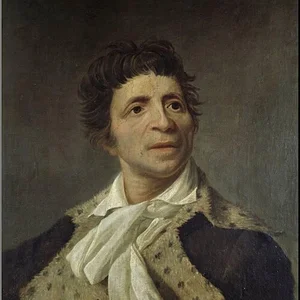
Jean-Paul Marat
1743 — 1793
A physician, physicist, and journalist who became one of the most radical figures of the French Revolution. Founder of the newspaper L'Ami du peuple, he served as a Montagnard deputy in the National Convention before being assassinated in his bath by Charlotte Corday in 1793.

Jodhaa
16th-century Rajput princess and wife of the Mughal emperor Akbar the Great. Her marriage symbolizes Akbar's policy of religious tolerance between Hinduism and Islam. A controversial figure whose very existence is debated by historians.
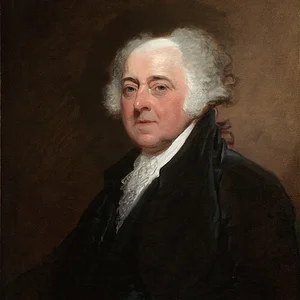
John Adams
1735 — 1826
John Adams (1735-1826) was an American lawyer, diplomat, and statesman, one of the Founding Fathers of the United States. Vice President under George Washington, he became the second President of the United States (1797-1801). A key figure of the American Revolution, he contributed to the drafting of the Constitution.
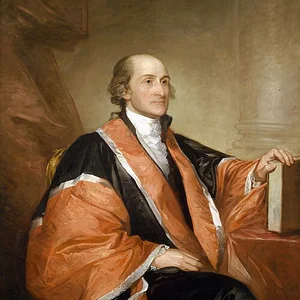
John Jay
1745 — 1829
John Jay (1745-1829) was an American statesman, diplomat, and jurist, one of the Founding Fathers of the United States. A co-author of the Federalist Papers, he was the first Chief Justice of the United States Supreme Court.
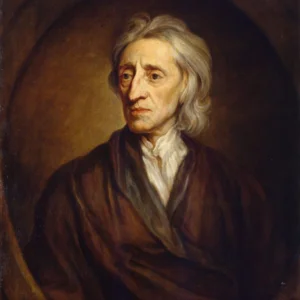
John Locke
1632 — 1704
A 17th-century English philosopher, John Locke is the founder of modern empiricism and a major thinker of political liberalism. He developed the theory of natural rights (life, liberty, property) and justified the right to revolt against tyrannical power, profoundly influencing democratic revolutions.
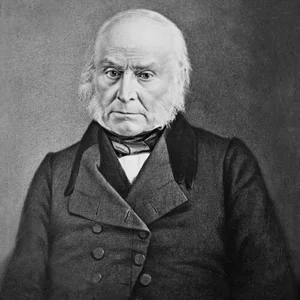
John Quincy Adams
1767 — 1848
Son of President John Adams, John Quincy Adams was the sixth President of the United States (1825–1829). A seasoned diplomat, he negotiated the Treaty of Ghent (1814) ending the Anglo-American War and helped formulate the Monroe Doctrine. He later championed the rights of enslaved people as a congressman.
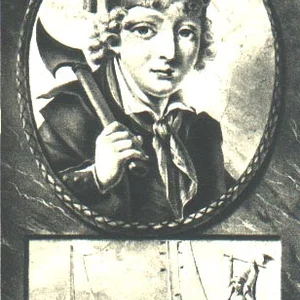
Joseph Agricol Viala
1778 — 1793
Revolutionary child-soldier born in Avignon in 1780, killed at age 13 on July 23, 1793, while attempting to cut the moorings of Federalist boats on the Durance river. Proclaimed a martyr of the Republic by the National Convention, his name was included among the heroes decreed for pantheonization, though the transfer never took place.
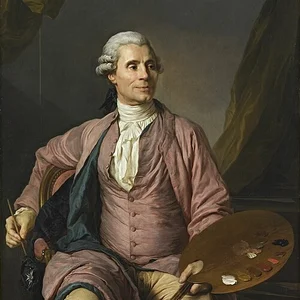
Joseph-Marie Vien
1716 — 1809
French painter (1716–1809), forerunner of Neoclassicism and master of Jacques-Louis David. Director of the French Academy in Rome, then First Painter to the King and senator under Napoleon.
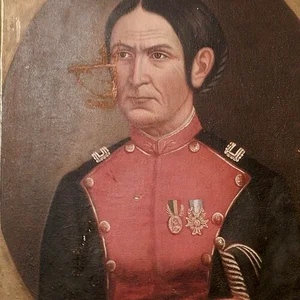
Juana Azurduy
A mestiza guerrilla fighter born in 1780 in Upper Peru (present-day Bolivia), she commanded indigenous troops against the Spanish during the independence wars. Known as "the Pachamama of freedom," she was appointed lieutenant colonel by Simón Bolívar.
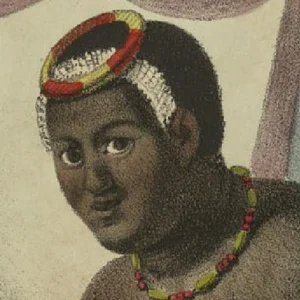
Ka'ahumanu
1768 — 1832
Queen consort and later regent of the Kingdom of Hawaii, Kaʻahumanu was the favorite wife of King Kamehameha I. In 1819, she abolished the system of religious taboos (kapu) and played a key role in introducing Christianity to Hawaii.
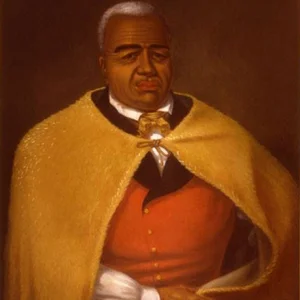
Kamehameha I
1758 — 1819
Kamehameha I unified the Hawaiian Islands under his rule between 1795 and 1810, founding the Kingdom of Hawaii. A formidable strategist, he skillfully integrated European firearms into his military conquests. He established the Law of the Splintered Paddle, protecting civilians in times of war.
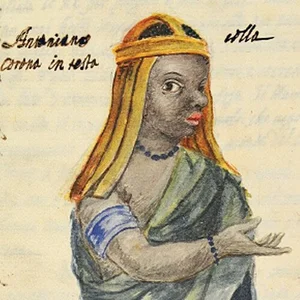
Kimpa Vita
1684 — 1706
A Kongolese prophetess of the Bakongo people, Kimpa Vita founded around 1704 the Antonian movement, preaching an African interpretation of Christianity. Arrested by Capuchin missionaries, she was burned at the stake in 1706 for heresy and witchcraft.
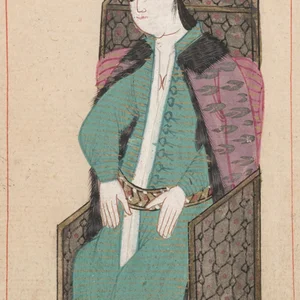
Kösem Sultan
1589 — 1651
Valide sultan and regent of the Ottoman Empire in the 17th century, Kösem Sultan wielded considerable political influence for over thirty years. She governed as regent for her sons Murad IV and Ibrahim I, and later for her grandson Mehmed IV.
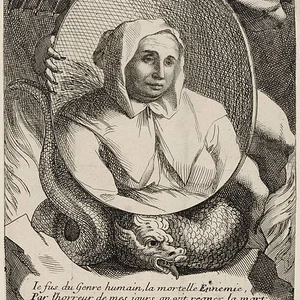
La Voisin
1640 — 1680
Poisoner, fortune-teller, and abortionist in 17th-century Paris, Catherine Deshayes was the central figure of the Affair of the Poisons (1679–1682). Supplying poisons, love potions, and black masses to an aristocratic clientele, she was burned alive at the Place de Grève in 1680.
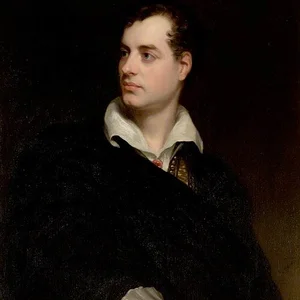
Lord Byron
1788 — 1824
Lord Byron (1788-1824) was the most celebrated British poet of the Romantic era. A scandalous and politically engaged figure, he embodied the "Byronic hero": brooding, rebellious, and passionate. He died in Greece while fighting for Greek independence.
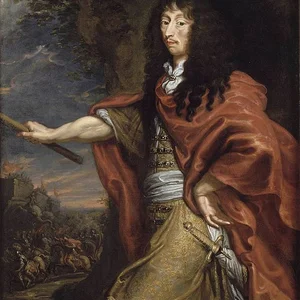
Louis II de Bourbon, prince de Condé
Nicknamed “the Great Condé,” this prince of the blood distinguished himself at the Battle of Rocroi (1643) by crushing the Spanish infantry. A key figure in the Fronde, he eventually reconciled with Louis XIV and remained one of the greatest military commanders of the Grand Siècle.
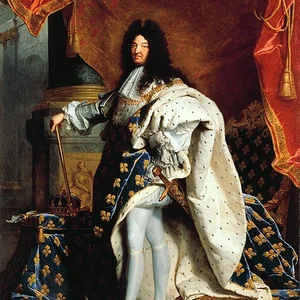
Louis XIV
1638 — 1715
King of France and Navarre from 1643 to 1715, Louis XIV is the symbol of French royal absolutism. He concentrated power in his own hands and transformed the monarchy into a centralized political system, embodied by the Palace of Versailles, which he had built.
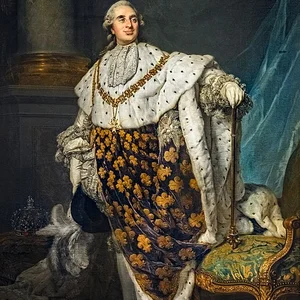
Louis XVI
1754 — 1793
King of France and Navarre from 1774 to 1791, then King of the French from 1791 to 1792. His reign was marked by the French Revolution, attempted reforms, and the abolition of the Ancien Régime. Arrested during the Flight to Varennes in 1791, he was tried and executed by guillotine on January 21, 1793.
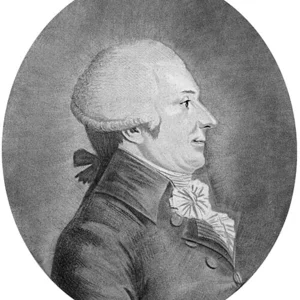
Louis-Bernard Guyton de Morveau
1737 — 1816
A French chemist, jurist and statesman, Guyton de Morveau was one of the architects of the reform of chemical nomenclature alongside Lavoisier in 1787. As a member of the National Convention, he also took part in the Revolution and contributed to the founding of the École Polytechnique.
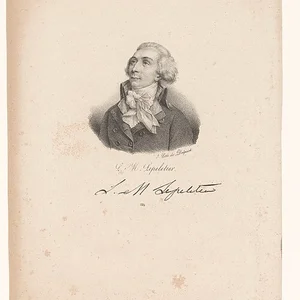
Louis-Michel Lepeletier de Saint-Fargeau
An aristocrat who embraced the Revolution, he was elected to the Estates-General and later served as a deputy in the National Convention, where he voted for the execution of King Louis XVI in January 1793. Assassinated on the eve of the king's execution by a royal guard, he became the first martyr of the French Revolution and was temporarily interred in the Panthéon.
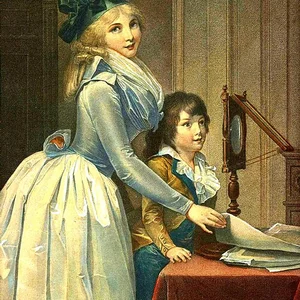
Louise Gély
1776 — 1856
Second wife of Georges Danton, whom she married in 1793 at the age of sixteen after caring for his children. A figure in the intimate circle of a major actor of the French Revolution, she lived through the Terror and then remarried after Danton's execution.
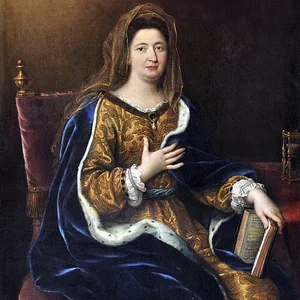
Madame de Maintenon
1635 — 1719
Born in 1635, Françoise d'Aubigné endured a wretched childhood before becoming governess to the legitimized children of Louis XIV, then his secret wife around 1683. In 1686, she founded the Maison royale de Saint-Louis at Saint-Cyr, a pioneering educational institution for young women from impoverished noble families.
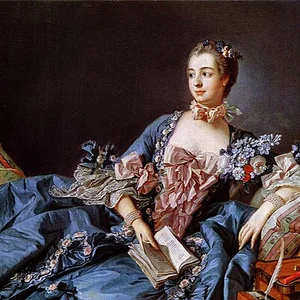
Madame de Pompadour
1721 — 1764
Official mistress of King Louis XV from 1745 until her death in 1764, she wielded considerable influence over French politics and culture. A great patron of the arts and protector of the Enlightenment philosophers, she helped shape the Rococo style and supported the Encyclopédie of Diderot and d'Alembert.
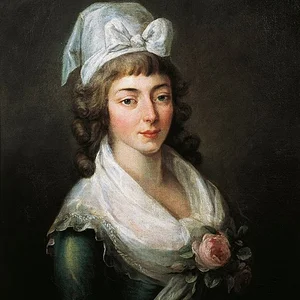
Madame Roland
1754 — 1793
Salon hostess and Girondin political figure, Manon Roland (1754–1793) exerted considerable influence over the Girondin party during the French Revolution. Arrested during the Terror, she was guillotined in 1793, uttering her famous words about liberty.
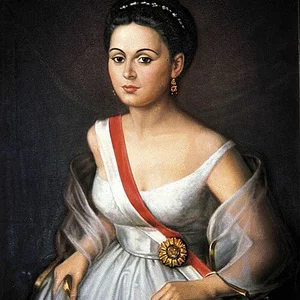
Manuela Sáenz
1797 — 1856
Ecuadorian revolutionary born in Quito around 1797, of mixed heritage (Creole mother, Spanish father), Manuela Sáenz was a central figure in the Spanish American wars of independence and the companion of Simón Bolívar. She saved the Liberator's life in 1828 and was nicknamed the "Libertadora del Libertador."
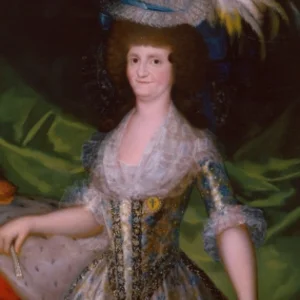
Maria Luisa of Parma
Princess of Parma who became Queen of Spain through her marriage to Charles IV. A woman of strong character, she wielded considerable political influence and promoted the rise of her favorite, Manuel Godoy, within the government.
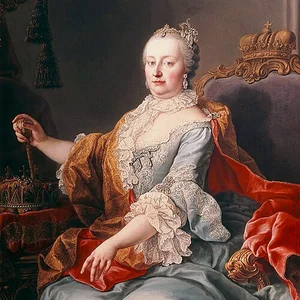
Maria Theresa of Austria
1717 — 1780
Archduchess of Austria and Queen of Hungary and Bohemia (1717–1780), she defended her inheritance against the major European powers and profoundly modernized the Habsburg state. The only woman to have ruled over Habsburg territories, she stands as one of the great reforming monarchs of the 18th century.
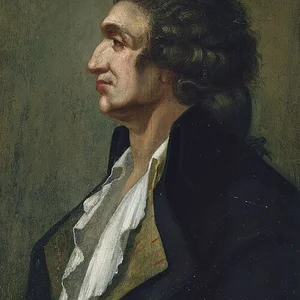
Marie Jean Antoine Nicolas de Condorcet
Mathematician and Enlightenment philosopher (1743–1794), Condorcet served as Permanent Secretary of the Academy of Sciences, championed equal rights for women and enslaved people, and played an active role in the French Revolution. He died during the Reign of Terror, having written his intellectual testament on human progress.
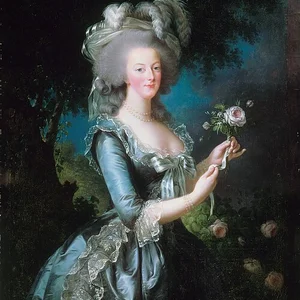
Marie-Antoinette
1755 — 1793
Queen consort of France from 1774 to 1792, wife of Louis XVI. A symbol of the Ancien Régime and its excesses, she became deeply unpopular with the French people and came to embody the frivolity of the Versailles court. Accused of treason during the French Revolution, she was executed by guillotine in 1793.
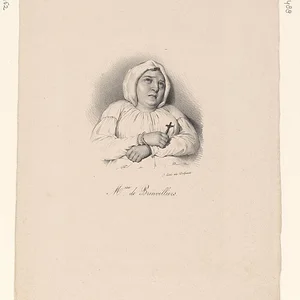
Marie-Madeleine de Dreux
French noblewoman from the House of Dreux, a family of high Capetian lineage. A figure of the French aristocracy in the early modern period, her name combines Catholic devotion with membership in one of France's great seigneurial dynasties.
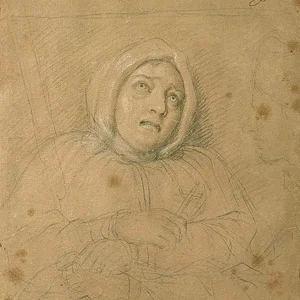
Marquise de Brinvilliers
1630 — 1676
A French aristocrat of the 17th century, notorious for poisoning her father and brothers in order to inherit their fortune. Her trial and execution in 1676 triggered the Affair of the Poisons, exposing the widespread use of poison in high society.
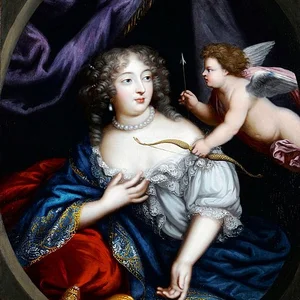
Marquise de Montespan
1640 — 1707
Official favorite of Louis XIV from 1667 to 1681, she reigned over the court of Versailles and had seven legitimized children with the Sun King. Implicated in the Affair of the Poisons, she subsequently fell from grace.
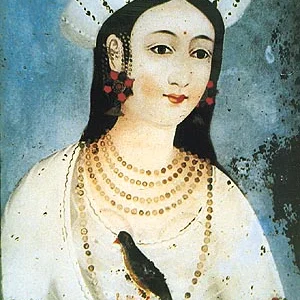
Mastani
1699 — 1740
Mastani (c. 1699–1740) was the second wife of Bajirao I, the Maratha Peshwa. Daughter of a Rajput raja and a Muslim concubine, she was an accomplished dancer and warrior. Their interfaith love caused a scandal at the Maratha court and gave rise to legend.
Maximilien de Béthune duc de Sully
A loyal companion of Henry IV, Sully served as superintendent of finances from 1598 to 1610. He restored royal finances, reduced the debt, and promoted agriculture and infrastructure. A committed Huguenot, he embodied the kingdom's reconstruction following the Wars of Religion.
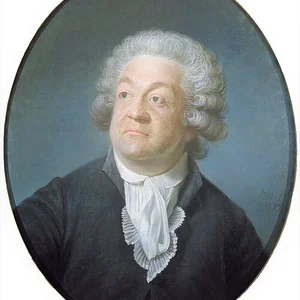
Mirabeau
1749 — 1791
Orator and French statesman, Mirabeau is one of the towering figures of the early French Revolution. Elected to the Estates-General in 1789 by the Third Estate, he embodied the bridge between the nobility and the people, championing a constitutional monarchy. His death in 1791 earned him a state funeral and a place in the Panthéon.
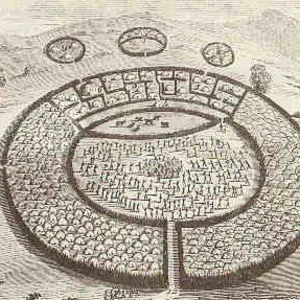
Mkabayi kaJama
1750 — 1843
Zulu princess (c. 1750–1843), influential aunt and advisor to King Shaka, and a major figure in Zulu oral tradition. Born among the Zulu people of southern Africa, she wielded considerable political power within the royal household, particularly during royal successions.
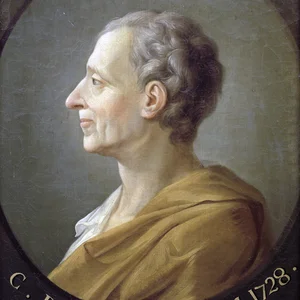
Montesquieu
1689 — 1755
An 18th-century French philosopher and writer, Montesquieu is the author of the landmark work 'The Spirit of the Laws' (1748). He theorized the separation of powers, a foundational concept of modern political thought, and contributed to the emergence of Enlightenment philosophy.
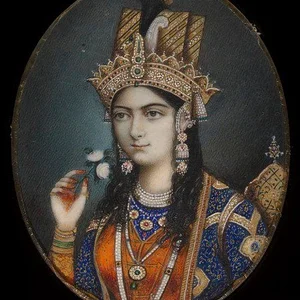
Mumtaz Mahal
1593 — 1631
Mughal empress and favorite wife of Emperor Shah Jahan. Her death in childbirth in 1631 inspired the construction of the Taj Mahal, a marble mausoleum raised to her memory that became one of the most famous monuments in the world.
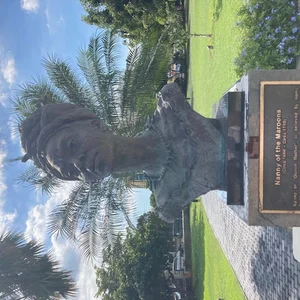
Nanny of the Maroons
A central figure of Maroon resistance in Jamaica during the 18th century, Nanny led the Windward Maroons from their stronghold in the Blue Mountains. A warrior and spiritual leader of Akan origin (present-day Ghana), she led the struggle against British colonial slavery for decades. A Jamaican national heroine, her life is transmitted primarily through Maroon oral tradition.
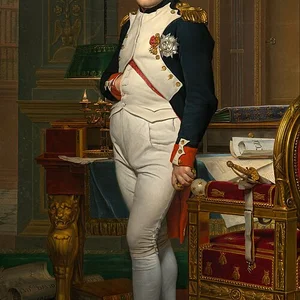
Napoleon Bonaparte
1769 — 1821
Napoleon Bonaparte (1769-1821) was a French military leader and statesman who seized power in 1799 and proclaimed himself Emperor in 1804. He transformed France and Europe through his reforms and military campaigns, most notably by establishing the Civil Code, which modernized the French legal system.
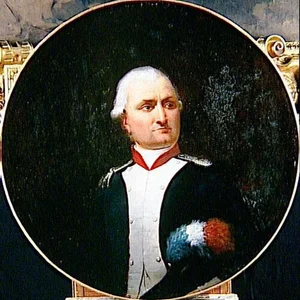
Nicolas-Joseph Beaurepaire
1740 — 1792
French general (1740–1792), commander of Verdun during the Prussian invasion of 1792. Refusing to surrender, he died on September 2, 1792, rather than sign the capitulation of the fortress. His sacrifice became a symbol of revolutionary patriotism.
Njinga of Matamba
Warrior queen of Angola (c. 1583–1663), Njinga of Matamba fiercely resisted Portuguese colonization in Central Africa. A skilled diplomat, she negotiated directly with the Portuguese while forging alliances with the Dutch. She ruled the kingdom of Matamba for more than thirty years.
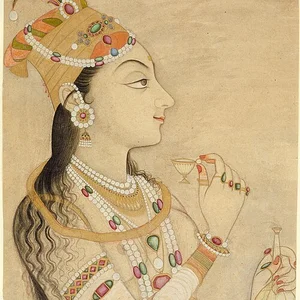
Nur Jahan
1577 — 1645
Mughal empress (1577–1645), wife of Emperor Jahangir, she was the only woman to wield real political power under the Mughal dynasty. An administrator, poet, and patron of the arts, she had coins struck in her own name and effectively governed the empire for several years.
Nzinga
Queen of Ndongo and Matamba (Angola) in the 17th century, Nzinga led a fierce resistance against Portuguese colonization and the slave trade. A skilled diplomat and formidable warrior, she negotiated with the Portuguese before waging decades of guerrilla warfare against them.
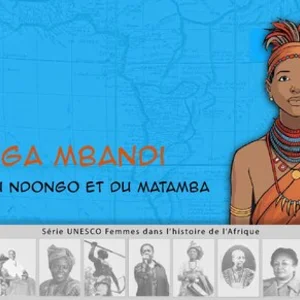
Nzinga Mbandi
Queen of Ndongo and later Matamba (Mbundu people, present-day Angola), Nzinga Mbandi was a formidable political and military strategist who resisted Portuguese expansionism and the Atlantic slave trade throughout the 17th century. An iconic figure of pre-colonial African resistance, she negotiated, waged war, and allied with the Dutch to defend her people's sovereignty.
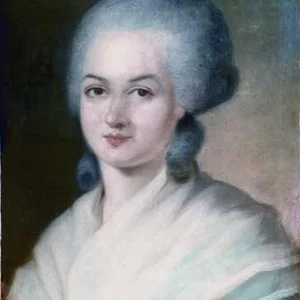
Olympe de Gouges
1748 — 1793
French author, politician and pamphleteer (1748–1793), Olympe de Gouges campaigned for women's rights and the abolition of slavery during the French Revolution. She wrote the Declaration of the Rights of Woman and of the Female Citizen in 1791, a founding document of feminism.
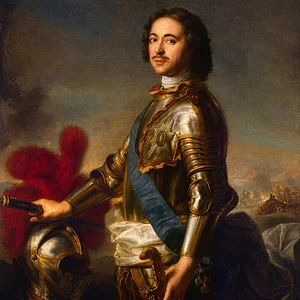
Peter I of Russia
1672 — 1725
Tsar and first Emperor of Russia (1682–1725), Peter I undertook a radical modernization of his empire inspired by Western European models. He founded Saint Petersburg, reformed the army and administration, and transformed Russia into a major European power.
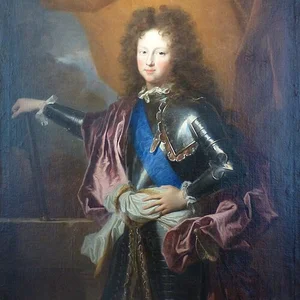
Philippe II d'Orléans
Regent of France from 1715 to 1723 during the minority of Louis XV, Philippe II d'Orléans governed the kingdom following the death of Louis XIV. A curious and libertine spirit, he was also a musician, painter, and patron of the arts, embodying the transition between the Grand Siècle and the Enlightenment.
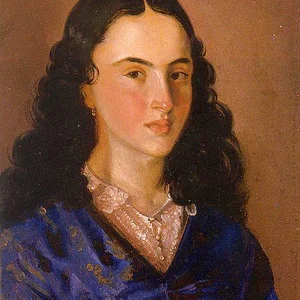
Policarpa Salavarrieta
1795 — 1817
Heroine of Colombian independence (c. 1795–1817), nicknamed "La Pola". A seamstress and patriot spy, she recruited soldiers for the independence cause. Captured by the Spanish, she was executed by firing squad in Bogotá on November 14, 1817.
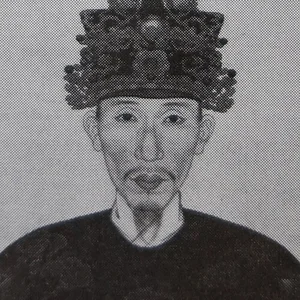
Quang Trung
1752 — 1792
Nguyễn Huệ (1753-1792), known by his reign name Quang Trung, was the second emperor of the Tây Sơn dynasty in Vietnam. An undefeated military commander across twenty years of campaigns, he ended two centuries of north-south division and repelled both Siamese and Qing invasions. A visionary reformer, he promoted Vietnamese script (chữ Nôm) and modernized the economy, education, and army in just three years of reign. [1]
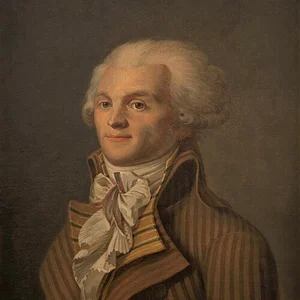
Robespierre
1758 — 1794
French lawyer and politician (1758–1794), Robespierre was a central figure of the French Revolution. Leader of the Montagnards, he dominated the Committee of Public Safety and became the embodiment of the Reign of Terror before being executed in 1794.
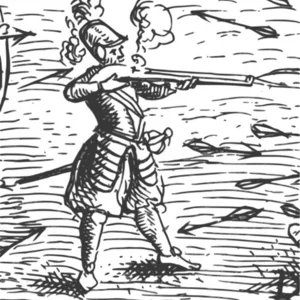
Samuel de Champlain
1567 — 1635
A French navigator and explorer, Samuel de Champlain founded the city of Quebec in 1608 and is known as the Father of New France. He mapped much of Canada and established lasting alliances with Indigenous peoples.
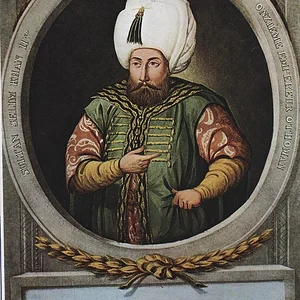
Selim II
1524 — 1574
Selim II (1524–1574) was Ottoman sultan and caliph from 1566 to 1574. His reign is marked by the conquest of Cyprus and the naval defeat at Lepanto against the Christian coalition in 1571.
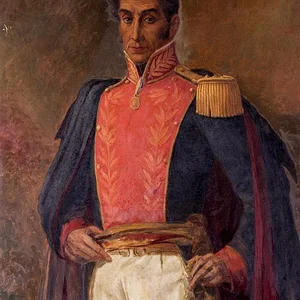
Simón Bolívar
1783 — 1830
Born in Caracas in 1783, Simón Bolívar was the leading architect of South American independence from the Spanish Empire. Known as 'El Libertador,' he liberated several nations and dreamed of a great Latin American federation.
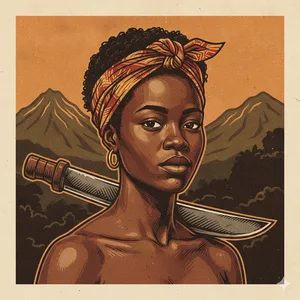
Solitude
1772 — 1802
Born around 1772 in Guadeloupe to an enslaved African mother, Solitude joined the mixed-race insurgents during the armed resistance against the restoration of slavery decreed by Bonaparte in 1802. Pregnant, she fought until her capture and was hanged the day after giving birth, on November 29, 1802. Her story, passed down through Creole and Caribbean oral tradition, has made her an emblematic figure of resistance against colonial oppression.
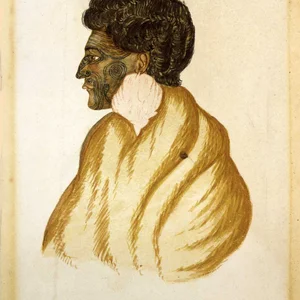
Te Rauparaha
1768 — 1849
Te Rauparaha (c. 1768-1849) was the great warrior chief of the Ngāti Toa, one of the most formidable Māori strategists of his time. He extended his influence over the North Island and Cook Strait, and composed the famous haka Ka Mate. His reign coincided with the arrival of Europeans and British colonization.
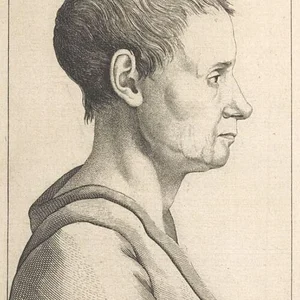
Théroigne de Méricourt
A Belgian revolutionary activist (1762–1817), Théroigne de Méricourt played an active role in the French Revolution, most notably during the Women's March on Versailles (1789). A fierce champion of women's political rights, she was one of the first revolutionary feminists before being committed to the Salpêtrière asylum, where she remained until her death.
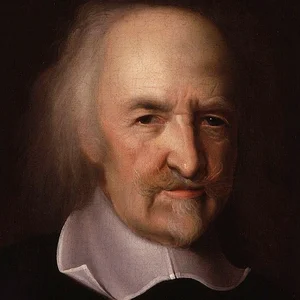
Thomas Hobbes
1588 — 1679
A 17th-century English philosopher, Thomas Hobbes is the author of Leviathan (1651), a founding work of modern political philosophy. He develops a social contract theory justifying the absolute authority of the state to guarantee peace and security.
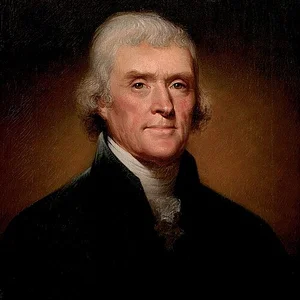
Thomas Jefferson
1743 — 1826
An American statesman, Thomas Jefferson was one of the Founding Fathers of the United States and the principal author of the Declaration of Independence (1776). A philosopher of the Enlightenment, he also served as the third President of the United States (1801–1809).
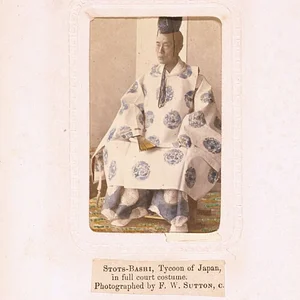
Tokugawa (shogun)
Tokugawa Ieyasu (1543-1616) unified Japan after decades of civil wars and founded the Tokugawa shogunate in 1603, establishing a peace lasting more than two centuries. His regime, the Edo period, kept Japan in near-total isolation until 1868.
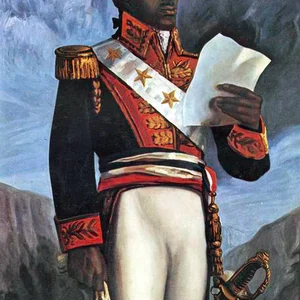
Toussaint Louverture
1743 — 1803
A freed slave and Haitian military leader (1743–1803), Toussaint Louverture led the Haitian Revolution and abolished slavery in Saint-Domingue. An iconic figure in the fight for freedom, he transformed a slave colony into the first independent Black republic.
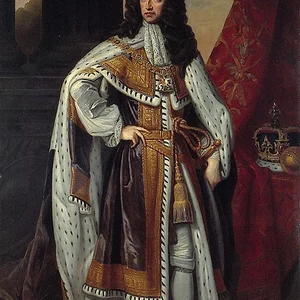
William III of Orange
1650 — 1702
Stadtholder of the United Provinces from 1672, William III of Orange became King of England, Scotland, and Ireland in 1689 following the Glorious Revolution that overthrew James II. A Protestant champion, he devoted his reign to containing the power of Louis XIV.
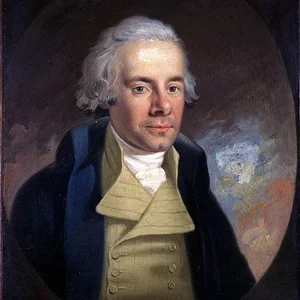
William Wilberforce
1759 — 1833
British politician and philanthropist, a leading figure in the parliamentary fight against the slave trade. An evangelical Member of Parliament, he devoted his life to the abolition of slavery throughout the British Empire.
Literature(89)
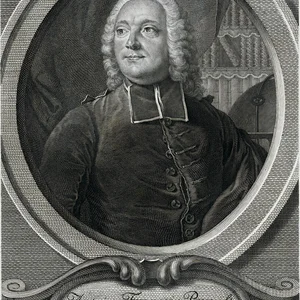
Abbé Prévost
1697 — 1763
An 18th-century French novelist, historian, and clergyman, Abbé Prévost is best known for his novel "Manon Lescaut" (1731), which is part of the French baccalauréat curriculum. His work embodies the tensions between religious morality and human passion that defined the era.
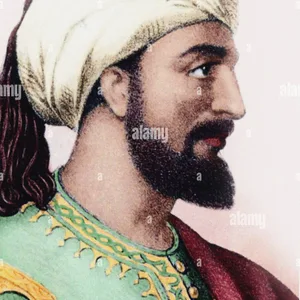
Abd al-Rahman al-Saadi
Chronicler, scholar, and secretary from Timbuktu, author of the Tarikh es-Sudan, one of the principal written sources on the Songhai Empire and the scholarly cities of the Western Sudan. His work recounts the succession of the Askias and the intellectual life of Timbuktu.
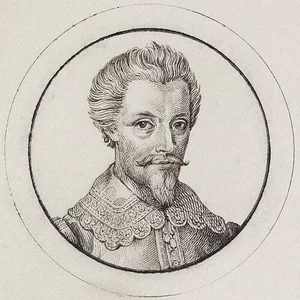
Abel Tasman
1603 — 1659
Abel Tasman was a Dutch navigator and explorer in the service of the Dutch East India Company (VOC). In 1642, he became the first European to reach Tasmania and New Zealand, pushing the boundaries of geographical knowledge of his time.
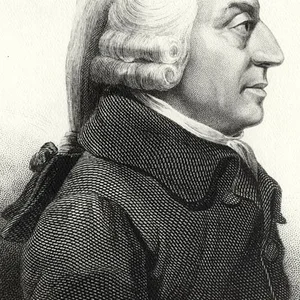
Adam Smith
1723 — 1790
An 18th-century Scottish philosopher and economist, Adam Smith is considered the father of modern political economy. His landmark work, The Wealth of Nations (1776), laid the foundations of economic liberalism and capitalism.
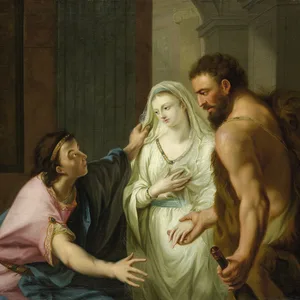
Alceste
Alceste is the central character of Molière's *The Misanthrope* (1666). An uncompromising idealist, he refuses the hypocrisy and flattery of court society, while being deeply in love with Célimène, a worldly coquette. He embodies the tension between absolute moral integrity and the compromises of social life.
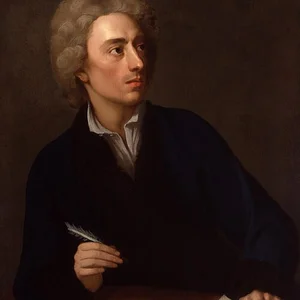
Alexander Pope
1688 — 1744
Alexander Pope was a British poet and essayist of the 18th century, a major figure of English Neoclassicism. A master of the rhymed heroic couplet, he is celebrated for his satirical and philosophical poems as well as for his translations of Homer's *Iliad* and *Odyssey*.
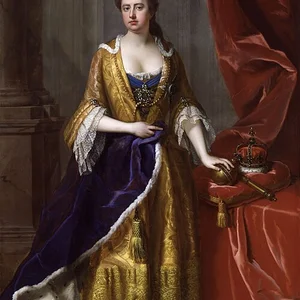
Anne of Great Britain
1665 — 1714
Queen of England, Scotland, and Ireland from 1702 to 1707, then first Queen of Great Britain following the Acts of Union of 1707. Her reign saw the rise of parliamentary government and the War of the Spanish Succession.
Anne Thérèse de Marguenat de Courcelles, marquise de Lambert
A Parisian writer and salon hostess (1647–1733), she presided over one of the most influential literary salons of the Regency period, frequented by Fontenelle, Montesquieu, and Marivaux. A pioneer in thinking about women's education, she championed their access to intellectual life.
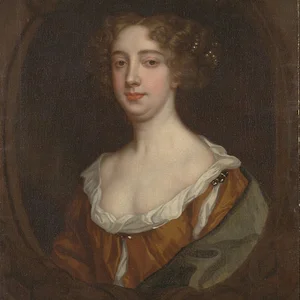
Aphra Behn
1640 — 1689
Aphra Behn (1640-1689) was the first English woman to earn her living by the pen. A prolific playwright, novelist, and spy in the service of Charles II, she defied the conventions of her time by making her mark in the male-dominated literary world.
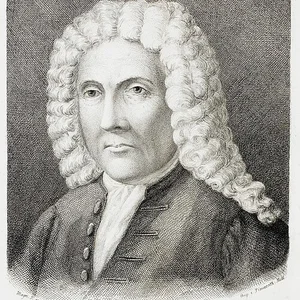
Árni Magnússon
1663 — 1730
Árni Magnússon was an Icelandic scholar and philologist who devoted his life to gathering and saving Iceland's medieval manuscripts. His collection, bequeathed to the University of Copenhagen, is the principal source of knowledge about the sagas and Old Norse literature.
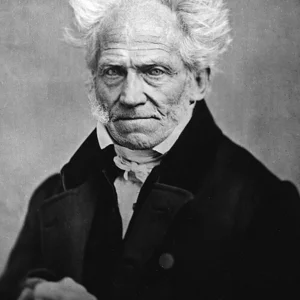
Arthur Schopenhauer
1788 — 1860
A 19th-century German philosopher, Schopenhauer is the great thinker of pessimism and the will. His masterwork, The World as Will and Representation (1818), profoundly influenced Nietzsche, Freud, and Wagner.
Barthélemy de Lesseps
1766 — 1834
French diplomat and explorer (1766–1834), he participated in the La Pérouse expedition as an interpreter and was the only member to return to Europe before the shipwreck. He crossed Siberia to bring the expedition's logbooks back to Paris.
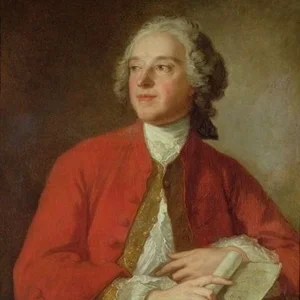
Beaumarchais
1732 — 1799
French writer, musician, and businessman (1732-1799), Beaumarchais is the author of The Barber of Seville and The Marriage of Figaro, two plays that revolutionized 18th-century comedy through their social criticism and complex plotting.
Benjamin Franklin
1706 — 1790
An 18th-century American statesman, scientist, and writer, Benjamin Franklin is one of the Founding Fathers of the United States. The inventor of the lightning rod, he contributed to drafting the Declaration of Independence and negotiated the Franco-American alliance.
Camille Desmoulins
1760 — 1794
French lawyer, journalist and politician, a figure of the Revolution. An orator at the Palais-Royal in July 1789, he was one of the most influential pamphleteers of his time before being guillotined alongside the Indulgents in 1794.
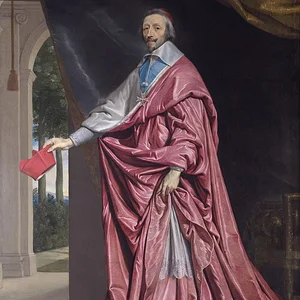
Cardinal de Richelieu
1585 — 1642
Cardinal and chief minister to Louis XIII, Richelieu strengthened royal authority and centralized power in France. He fought against the rebellious nobility and the Protestants, while drawing France into the Thirty Years' War.
Cardinal Mazarin
1602 — 1661
Cardinal and chief minister of state of France, he governed the kingdom during Louis XIV's minority under the regency of Anne of Austria. Richelieu's successor, he signed the Treaties of Westphalia and overcame the Fronde to consolidate the monarchy.
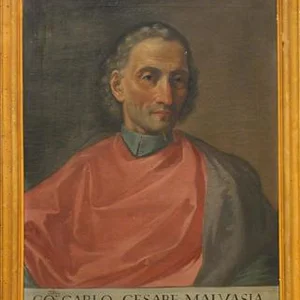
Carlo Cesare Malvasia
1616 — 1693
Carlo Cesare Malvasia (1616-1693) was a Bolognese Italian art historian and writer. He is the author of the *Felsina pittrice*, a major work devoted to the painters of the Bolognese school, which stands as a fundamental historiographical source for Italian Baroque art.
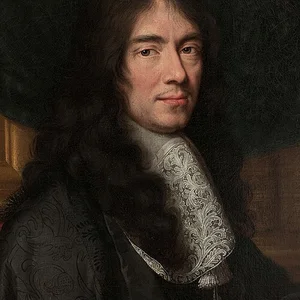
Charles Perrault
1628 — 1703
A French writer of the 17th century, Charles Perrault is famous for having collected and transcribed folk tales. He gave literary form to traditional stories such as Little Red Riding Hood and Cinderella, thus laying the foundations of modern children's literature.
Charles XII of Sweden
King of Sweden from 1697 to 1718, Charles XII was one of the greatest military commanders of his era. He led the Great Northern War against a European coalition, winning the Battle of Narva (1700) before suffering a crushing defeat at Poltava (1709). He died during the siege of Fredriksten, marking the end of Swedish dominance in Europe.
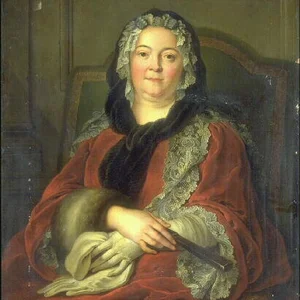
Claudine Guérin de Tencin
1682 — 1749
French novelist and salonnière (1682–1749), she hosted one of the most influential literary salons of the eighteenth century in Paris. The mother who abandoned d'Alembert at birth, she is the author of sentimental and historical novels such as the Mémoires du comte de Comminge.
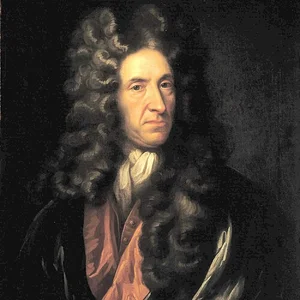
Daniel Defoe
1660 — 1731
Daniel Defoe was an English writer and journalist, considered one of the founders of the modern novel in the English language. He is famous for *Robinson Crusoe* (1719), a tale of adventure and survival on a desert island.
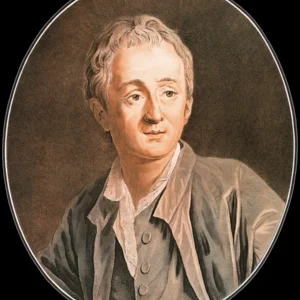
Denis Diderot
1713 — 1784
French philosopher, writer, and encyclopedist (1713–1784), a leading figure of the Enlightenment. Co-editor of the Encyclopédie with d'Alembert, he embodies the critical spirit and pursuit of rational knowledge that defined the 18th century. Author of philosophical novels such as Jacques the Fatalist, he helped transform European intellectual thought.
Ekaterina Vorontsova-Dashkova
1743 — 1810
A learned Russian aristocrat and close associate of Catherine II, she played a part in the coup d'état of 1762. The first woman to head the Russian Academy of Sciences, she founded the Russian Academy devoted to the language.
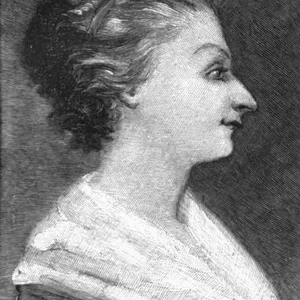
Esther Johnson
1681 — 1728
Esther Johnson (1681–1728), known by the nickname "Stella", was the close friend and confidante of the writer Jonathan Swift. Their intellectual and epistolary relationship, chronicled in the Journal to Stella, makes her a notable figure in English literary life of the 18th century.
Fanny Blood
1758 — 1785
British illustrator and teacher, an intimate friend of the feminist philosopher Mary Wollstonecraft. Together they co-founded a school for girls at Newington Green, near London, an experience that shaped Wollstonecraft's thinking on the education of women.
Fontenelle
1657 — 1757
A French writer and scholar of the 17th–18th century, Fontenelle popularized science for the general public. Known for his Conversations on the Plurality of Worlds and his role as perpetual secretary of the Académie des sciences, he embodies the spirit of the Enlightenment.
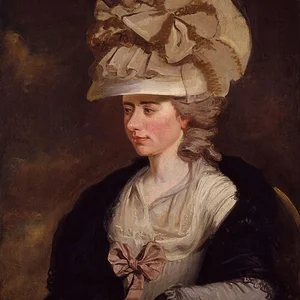
Frances Burney
1752 — 1840
English novelist, playwright, and diarist (1752-1840), Frances Burney published Evelina anonymously in 1778, an epistolary novel that was an immediate success. A forerunner of Jane Austen, she documented eighteenth-century English society with great perceptiveness in her journals and correspondence.
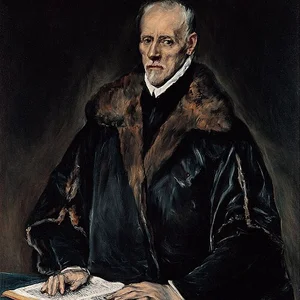
Francisco de Pisa
1534 — 1616
Francisco de Pisa (1534-1616) was a Spanish historian and writer, canon of Toledo Cathedral. He is the author of the “Descripción de la Imperial Ciudad de Toledo” (1605), a major reference work on the history of Toledo and the Spanish Church.
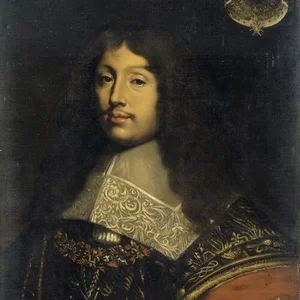
François de La Rochefoucauld
1613 — 1680
François de La Rochefoucauld (1613-1680) was a French writer and moralist of the Grand Siècle. An aristocratic rebel turned author, he is famous for his Maxims, a collection of brief, disenchanted sayings about human nature, in which self-love governs all our conduct.
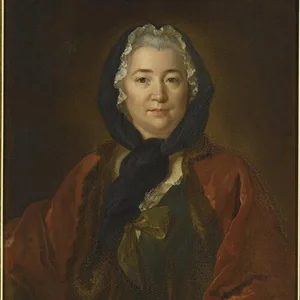
Françoise de Graffigny
1695 — 1758
French writer (1695-1758), pioneer of the epistolary novel in the 18th century. She is best known for her Letters from a Peruvian Woman, a major work of Enlightenment literature that critiques French society through the discerning gaze of an exotic heroine.
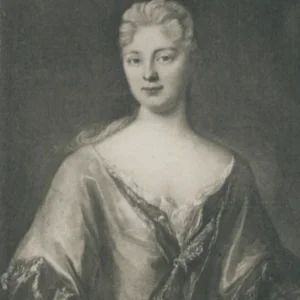
Françoise-Louise de Warens
1699 — 1762
A Savoyard baroness, Françoise-Louise de Warens (1699-1762) is famous for taking in and protecting the young Jean-Jacques Rousseau. She gave him a home at Les Charmettes, near Chambéry, and played a decisive role in his intellectual and emotional education.
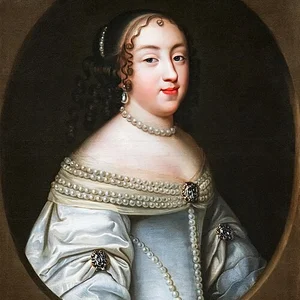
Françoise-Marguerite de Grignan
The daughter of the Marquise de Sévigné, she was the main recipient of her mother's famous correspondence. Her departure for Provence after her marriage in 1669 prompted the bulk of these letters, which became a monument of classical French literature.
Frederick II of Denmark
King of Denmark and Norway from 1559 to 1588, Frederick II waged the Northern Seven Years' War against Sweden and was an enlightened patron of the arts, most notably supporting the astronomer Tycho Brahe. He commissioned the construction of Kronborg Castle in Elsinore.
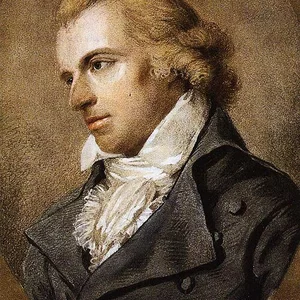
Friedrich Schiller
1759 — 1805
German poet, playwright, and philosopher of the Enlightenment and Sturm und Drang, Schiller is one of the major figures of Weimar Classical literature. A close friend of Goethe, he championed the ideals of freedom, human dignity, and moral elevation through art.
George Washington
1732 — 1799
Commander-in-Chief of the Continental Army during the American War of Independence, George Washington became the first President of the United States (1789–1797). A Virginia planter and slaveholder, he embodies the contradictions of the young Republic — torn between ideals of liberty and the reality of slavery.
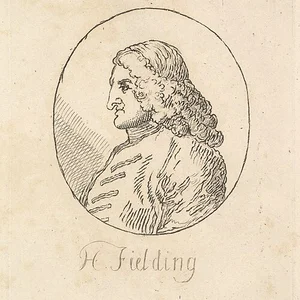
Henry Fielding
1707 — 1754
Henry Fielding (1707-1754) was an English novelist, playwright and magistrate, regarded as one of the fathers of the modern novel. His masterpiece, *Tom Jones* (1749), is a comic and moral panorama of eighteenth-century English society.
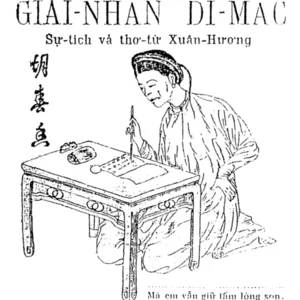
Hồ Xuân Hương
1772 — 1822
Vietnamese poetess of the late 18th and early 19th century, nicknamed the "Queen of Nôm Poetry." Her works in chữ Nôm, described as "elegantly licentious" in style, earned her recognition by UNESCO in 2021 as a world cultural personality.
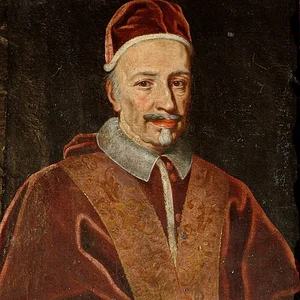
Innocent XII
1615 — 1700
Pope from 1691 to 1700, Innocent XII reformed the Church by combating nepotism through the bull Romanum decet Pontificem (1692). He played a role in the Quietist controversy and contributed to European diplomacy.
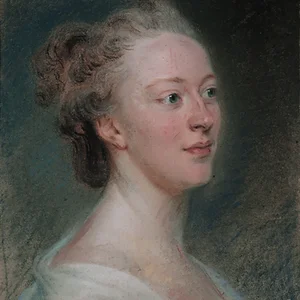
Isabelle de Charrière
1740 — 1805
Born Belle van Zuylen in the Netherlands in 1740, Isabelle de Charrière settled in Switzerland after her marriage and became one of the most remarkable women writers of the 18th century. A novelist, letter-writer, and composer, she advocated with great clarity for women's freedom and critiqued the social conventions of her time.
James Madison
1751 — 1836
American statesman (1751–1836), regarded as the "Father of the Constitution" of the United States. Architect of the Bill of Rights and fourth President of the United States, he was one of the foremost theorists of American republicanism.
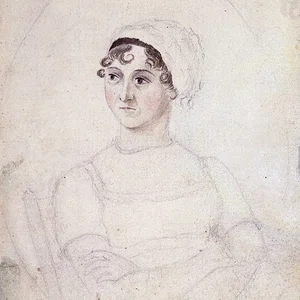
Jane Austen
1775 — 1817
Jane Austen (1775-1817) was a major English novelist of the 19th century, author of romantic and social novels that subtly critique the social conventions of her time. Her work, most notably Pride and Prejudice, explores human relationships and the stakes of marriage with irony and psychological insight.
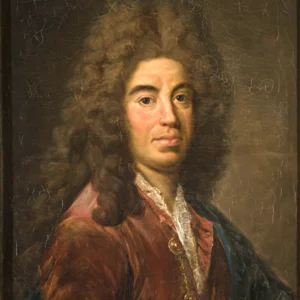
Jean de La Bruyère
1645 — 1696
A French writer and moralist of the 17th century (1645–1696), Jean de La Bruyère is the author of The Characters, a major work of classical literature. His collection of satirical portraits and moral reflections offers a sharp critique of the society of his time.
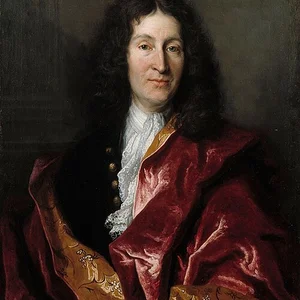
Jean de La Fontaine
1621 — 1695
A French poet and fabulist of the 17th century, Jean de La Fontaine is celebrated for his Fables, collections of short verse tales featuring animals to illustrate moral lessons. His works, imbued with humor and wisdom, remain major classics of French literature.
Jean le Rond d'Alembert
1717 — 1783
A mathematician and philosopher of the Enlightenment, he co-edited the great Encyclopédie with Diderot and wrote its famous Preliminary Discourse. He formulated the mechanical principle that bears his name and embodied the encyclopédiste ideal of bringing together all human knowledge.
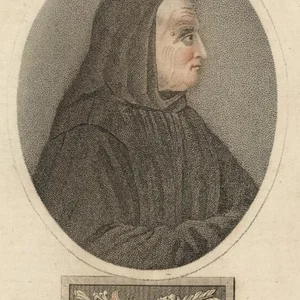
Jean Mabillon
1632 — 1707
A Benedictine monk of the Congregation of Saint-Maur, Jean Mabillon is the founder of diplomatics, the critical science of authenticating charters and ancient documents. His major work, De re diplomatica (1681), laid the foundations of modern historical method.
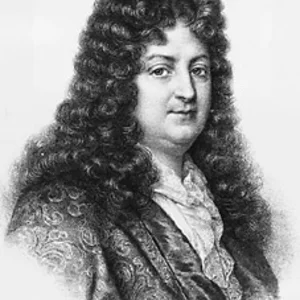
Jean Racine
1639 — 1699
A French playwright of the 17th century, Racine is one of the masters of classical tragedy. Author of masterpieces such as Phaedra and Andromache, he embodies the balance between formal rigour and emotional intensity that defines French classical theatre.
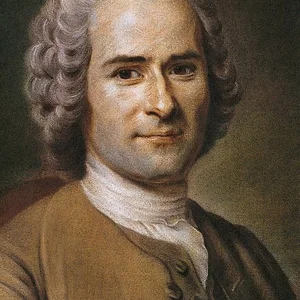
Jean-Jacques Rousseau
1712 — 1778
Genevan philosopher, writer, and musician (1712–1778), a central figure of the Enlightenment. Author of The Social Contract and Confessions, he profoundly influenced political and educational thought by championing popular sovereignty and natural education.
Jean-Paul Marat
1743 — 1793
A physician, physicist, and journalist who became one of the most radical figures of the French Revolution. Founder of the newspaper L'Ami du peuple, he served as a Montagnard deputy in the National Convention before being assassinated in his bath by Charlotte Corday in 1793.
John Adams
1735 — 1826
John Adams (1735-1826) was an American lawyer, diplomat, and statesman, one of the Founding Fathers of the United States. Vice President under George Washington, he became the second President of the United States (1797-1801). A key figure of the American Revolution, he contributed to the drafting of the Constitution.
John Quincy Adams
1767 — 1848
Son of President John Adams, John Quincy Adams was the sixth President of the United States (1825–1829). A seasoned diplomat, he negotiated the Treaty of Ghent (1814) ending the Anglo-American War and helped formulate the Monroe Doctrine. He later championed the rights of enslaved people as a congressman.
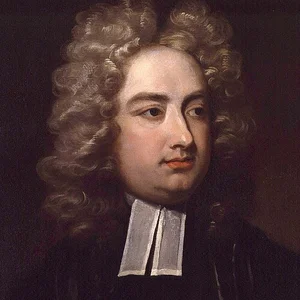
Jonathan Swift
1667 — 1745
Anglo-Irish writer and satirist (1667–1745), Jonathan Swift is the author of Gulliver's Travels. Dean of St Patrick's Cathedral in Dublin, he used literature as a political and social weapon against the injustices of his time.
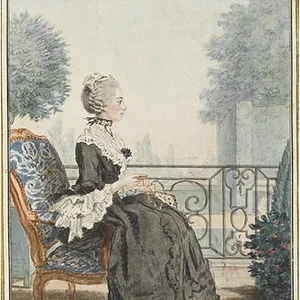
Julie de Lespinasse
1732 — 1776
An 18th-century French salonnière, Julie de Lespinasse ran one of the most influential salons in Paris, frequented by the Encyclopédistes. A passionate letter-writer, her correspondence offers a vivid window into the intellectual life of the Enlightenment.
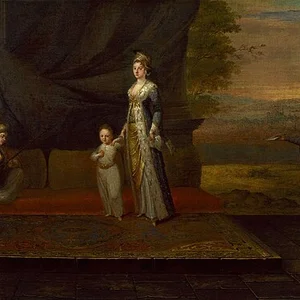
Lady Montagu
An English aristocrat and woman of letters of the 18th century, Mary Wortley Montagu accompanied her husband, an ambassador, to Constantinople. There she discovered variolation and introduced it to Western Europe, saving countless lives before Jenner's development of the vaccine.
Lord Byron
1788 — 1824
Lord Byron (1788-1824) was the most celebrated British poet of the Romantic era. A scandalous and politically engaged figure, he embodied the "Byronic hero": brooding, rebellious, and passionate. He died in Greece while fighting for Greek independence.
Louis II de Bourbon, prince de Condé
Nicknamed “the Great Condé,” this prince of the blood distinguished himself at the Battle of Rocroi (1643) by crushing the Spanish infantry. A key figure in the Fronde, he eventually reconciled with Louis XIV and remained one of the greatest military commanders of the Grand Siècle.
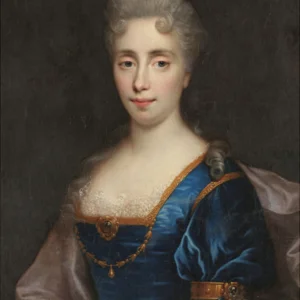
Madame de La Fayette
1634 — 1693
17th-century French writer and pioneer of the psychological novel. Author of The Princess of Clèves, a landmark work exploring the inner feelings and intimate conflicts of its characters. A prominent figure in the literary and cultural life of Louis XIV's court.
Madame de Maintenon
1635 — 1719
Born in 1635, Françoise d'Aubigné endured a wretched childhood before becoming governess to the legitimized children of Louis XIV, then his secret wife around 1683. In 1686, she founded the Maison royale de Saint-Louis at Saint-Cyr, a pioneering educational institution for young women from impoverished noble families.
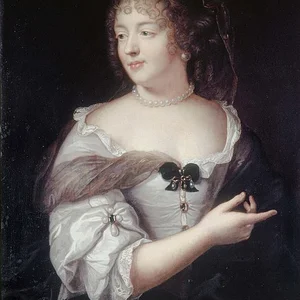
Madame de Sévigné
1626 — 1696
French epistolary writer of the 17th century, celebrated for her exceptional literary correspondence, particularly her letters to her daughter. Her work offers an invaluable portrait of court life and French society under Louis XIV.
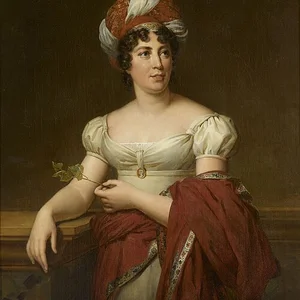
Madame de Staël
1766 — 1817
Germaine de Staël, daughter of minister Necker, was one of the great intellectual voices of her era. A novelist, essayist, and salon hostess, she stood up to Napoleon, who exiled her, and helped introduce German Romanticism to France with her work *De l'Allemagne*.
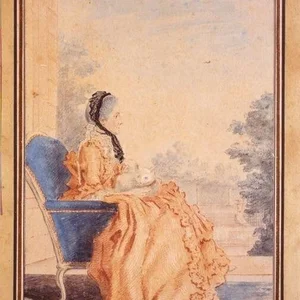
Madame du Deffand
An eighteenth-century French salonnière, the Marquise du Deffand hosted one of the most influential salons of the Enlightenment in Paris. A correspondent of Voltaire and d'Alembert, she embodied the critical spirit and intellectual sociability of her age.
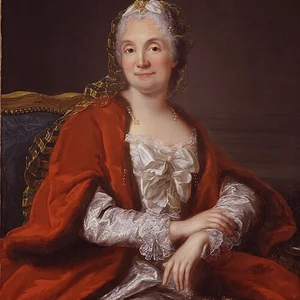
Madame Geoffrin
1699 — 1777
A Parisian salon hostess of the 18th century, she presided over one of the most influential salons of the Enlightenment, welcoming d'Alembert, Diderot, Fontenelle, and Montesquieu. A generous patron of the arts and a remarkable letter-writer, she played a central role in spreading Enlightenment ideas across Europe.
Madame Roland
1754 — 1793
Salon hostess and Girondin political figure, Manon Roland (1754–1793) exerted considerable influence over the Girondin party during the French Revolution. Arrested during the Terror, she was guillotined in 1793, uttering her famous words about liberty.
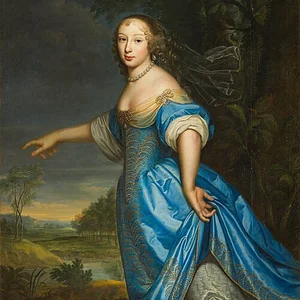
Marguerite de La Sablière
A salonnière and woman of letters of the seventeenth century, she presided over one of the most celebrated salons in Paris, bringing together poets, philosophers, and scholars. A patron of La Fontaine, she welcomed him into her home for nearly twenty years. Passionate about science, she studied astronomy and natural philosophy under scholars such as Bernier.

María de Zayas
1590 — ?
A Spanish writer of the Golden Age (1590–1661), María de Zayas is one of the few women of letters of her era to have published under her own name. Her story collections, Novelas amorosas y exemplares (1637) and Desengaños amorosos (1647), boldly denounce male domination and champion women's education.
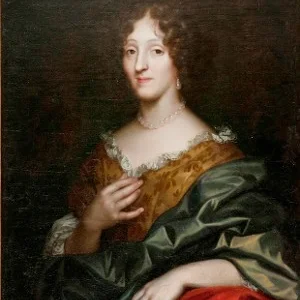
Marie Héricart
1633 — 1709
Marie Héricart was the wife of Jean de La Fontaine, whom she married in 1647. Their union, an unhappy one, led to a legal separation of their property. She was the mother of their only son, Charles.
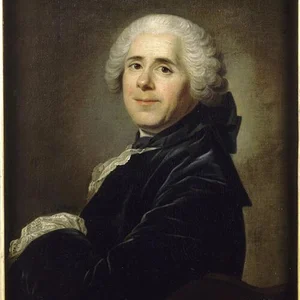
Marivaux
1688 — 1763
An 18th-century French writer, playwright, and journalist, Marivaux is the author of brilliant comedies that explore the games of love and chance. He is known for his elegant style and psychological subtlety in the portrayal of feelings.
Marquise de Brinvilliers
1630 — 1676
A French aristocrat of the 17th century, notorious for poisoning her father and brothers in order to inherit their fortune. Her trial and execution in 1676 triggered the Affair of the Poisons, exposing the widespread use of poison in high society.
Marquise de Montespan
1640 — 1707
Official favorite of Louis XIV from 1667 to 1681, she reigned over the court of Versailles and had seven legitimized children with the Sun King. Implicated in the Affair of the Poisons, she subsequently fell from grace.
Matsuo Bashō
1644 — 1694
Matsuo Bashō (1644–1694) is the greatest master of haiku, the Japanese poetic form composed of three lines. After serving as a samurai, he devoted himself to poetry and travel across Japan. His masterwork, "The Narrow Road to the Deep North," blends prose and poetry.
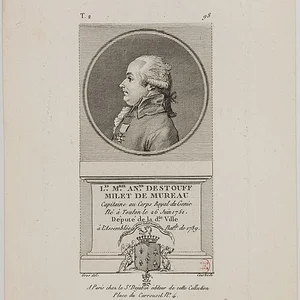
Milet-Mureau
Milet-Mureau (1750-1825) was a French general and writer, best known for editing and publishing the account of Lapérouse's voyage after the explorer's disappearance. His editorial work preserved the geographical legacy of the expedition for posterity.
Mirabeau
1749 — 1791
Orator and French statesman, Mirabeau is one of the towering figures of the early French Revolution. Elected to the Estates-General in 1789 by the Third Estate, he embodied the bridge between the nobility and the people, championing a constitutional monarchy. His death in 1791 earned him a state funeral and a place in the Panthéon.
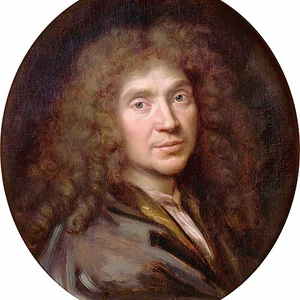
Molière
1622 — 1673
Molière (1622-1673) is the greatest French playwright of the 17th century. Founder of his own theatrical company, he created works of comic genius that critique the flaws and vices of the society of his time.
Montesquieu
1689 — 1755
An 18th-century French philosopher and writer, Montesquieu is the author of the landmark work 'The Spirit of the Laws' (1748). He theorized the separation of powers, a foundational concept of modern political thought, and contributed to the emergence of Enlightenment philosophy.
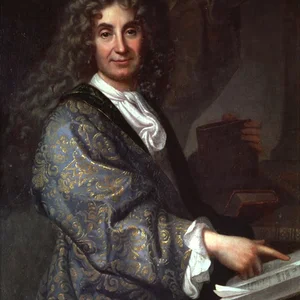
Nicolas Boileau
1636 — 1711
French poet and literary critic of the 17th century, nicknamed the “legislator of Parnassus”. His Art poétique (1674) established the rules of French classicism. A friend of Molière, Racine, and La Fontaine, he served as royal historiographer to King Louis XIV.
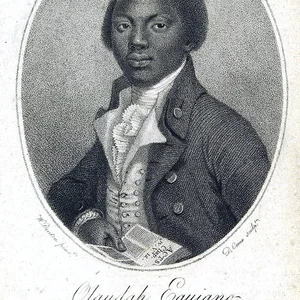
Olaudah Equiano
1745 — 1797
Olaudah Equiano (c. 1745-1797), also known as Gustavus Vassa, was a deported African slave who bought his own freedom before becoming one of the leading figures of the British abolitionist movement. His autobiography, published in 1789, brought the horror of the slave trade to a wide audience.
Olympe de Gouges
1748 — 1793
French author, politician and pamphleteer (1748–1793), Olympe de Gouges campaigned for women's rights and the abolition of slavery during the French Revolution. She wrote the Declaration of the Rights of Woman and of the Female Citizen in 1791, a founding document of feminism.
Paquette Le Clerc
A character in Voltaire's Candide (1759), Paquette is a young servant who, victimized by men and by society, ends up as a prostitute in Venice. Her fate embodies Voltaire's critique of the exploitation of women and the disillusionment with Pangloss's naive optimism.
Philippe II d'Orléans
Regent of France from 1715 to 1723 during the minority of Louis XV, Philippe II d'Orléans governed the kingdom following the death of Louis XIV. A curious and libertine spirit, he was also a musician, painter, and patron of the arts, embodying the transition between the Grand Siècle and the Enlightenment.
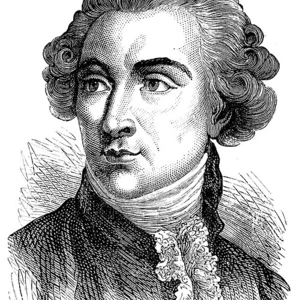
Pierre Choderlos de Laclos
1741 — 1803
Pierre Choderlos de Laclos was an eighteenth-century French writer and artillery officer. He is the author of the famous epistolary novel *Les Liaisons dangereuses* (1782), a cruel portrayal of the libertine intrigues of the aristocracy.
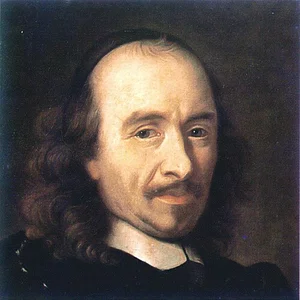
Pierre Corneille
1606 — 1684
French playwright and poet (1606–1684), founder of French classical tragedy. Author of Le Cid, a landmark work of French theater that left a lasting mark on literary history. He dominated the Parisian stage in the 17th century with his tragedies and comedies.
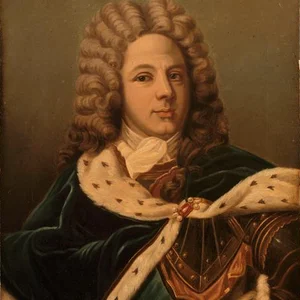
Saint-Simon
1675 — 1755
French memoirist and duke at the court of Louis XIV. His Memoirs, written in secret, offer a striking and incisive portrait of life at Versailles and the intrigues of the nobility under Louis XIV and the Regency.
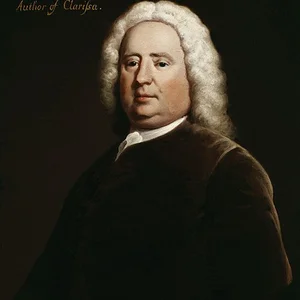
Samuel Richardson
1687 — 1761
Samuel Richardson was an English writer and printer of the 18th century. A pioneer of the epistolary novel, he is regarded as one of the founders of the modern novel through his works centered on psychology and morality.
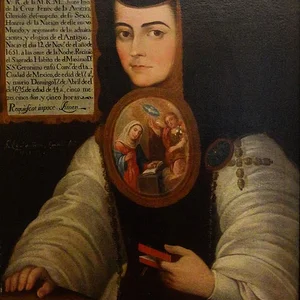
Sor Juana Inés de la Cruz
1651 — 1695
Juana Inés de la Cruz was a Mexican poet and playwright of the 17th century, a towering figure of Hispanic Baroque literature. A self-taught nun in New Spain, she championed women's right to knowledge in a colonial society dominated by men.
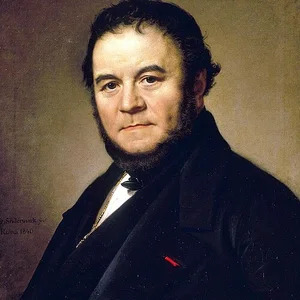
Stendhal
1783 — 1842
A French writer of the 19th century, Stendhal is the author of the psychological novel The Red and the Black (1830). Known for his sharp analysis of human passions and his direct style, he left a lasting mark on French literature by exploring themes of ambition, passion, and social criticism.
Thomas Jefferson
1743 — 1826
An American statesman, Thomas Jefferson was one of the Founding Fathers of the United States and the principal author of the Declaration of Independence (1776). A philosopher of the Enlightenment, he also served as the third President of the United States (1801–1809).
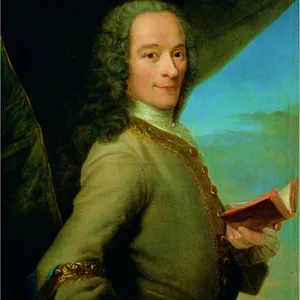
Voltaire
1694 — 1778
An 18th-century French writer and philosopher, Voltaire is a major figure of the Enlightenment. Through his works, most notably Candide, he championed tolerance, freedom of expression, and criticism of religious intolerance.

Wang Zhenyi
1768 — 1797
Wang Zhenyi was a Chinese astronomer, mathematician, and poet of the Qing dynasty. Despite the conventions of her time that kept women away from learning, she popularized astronomy and championed intellectual equality between men and women.
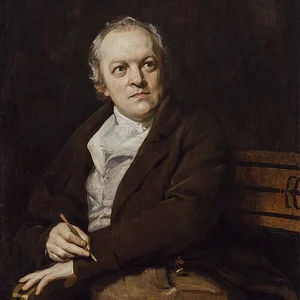
William Blake
1757 — 1827
British poet, painter, and engraver (1757-1827), William Blake is one of the towering figures of English Romanticism. A visionary and mystic, he created a strikingly original body of poetic and artistic work, combining text and image in hand-engraved illuminated books.
Sciences(83)
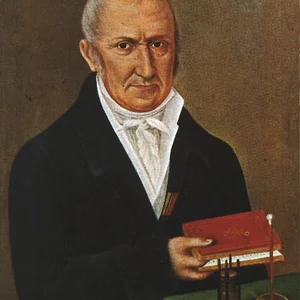
Alessandro Volta
1745 — 1827
Italian physicist (1745–1827), Alessandro Volta invented the electric battery in 1800, the first source of direct current in history. His work on electricity revolutionized experimental physics and paved the way for electrochemistry.
Anne of Great Britain
1665 — 1714
Queen of England, Scotland, and Ireland from 1702 to 1707, then first Queen of Great Britain following the Acts of Union of 1707. Her reign saw the rise of parliamentary government and the War of the Spanish Succession.
Anne Ponsarde
Anne Ponsarde is a female figure of the early modern period, associated with the world of natural sciences and practical knowledge in France. Her story reflects the role of women in the transmission of knowledge during the early modern era.
Anne Thérèse de Marguenat de Courcelles, marquise de Lambert
A Parisian writer and salon hostess (1647–1733), she presided over one of the most influential literary salons of the Regency period, frequented by Fontenelle, Montesquieu, and Marivaux. A pioneer in thinking about women's education, she championed their access to intellectual life.
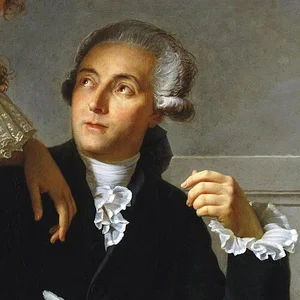
Antoine de Lavoisier
1743 — 1794
An 18th-century French chemist, Lavoisier is the founder of modern chemistry. He established the law of conservation of mass and identified oxygen, revolutionizing the understanding of chemical phenomena.
Antoine François de Fourcroy
1755 — 1809
French chemist and statesman, a collaborator of Lavoisier in the reform of chemical nomenclature. A member of the National Convention, he played a major role in reorganizing scientific education during the Revolution.
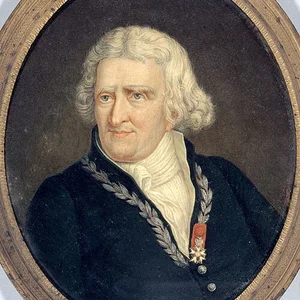
Antoine Parmentier
1737 — 1813
French military pharmacist and agronomist (1737-1813), famous for popularizing the potato as a food staple in France. A prisoner of war in Prussia, he discovered the nutritional value of the tuber and convinced Louis XVI to lift the ban on its cultivation.
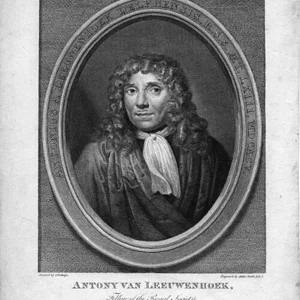
Antoni van Leeuwenhoek
A self-taught Dutch draper and scholar, Antoni van Leeuwenhoek (1632-1723) perfected the microscope and was the first to observe micro-organisms. His observations laid the foundations of microbiology.
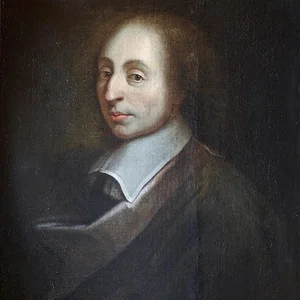
Blaise Pascal
1623 — 1662
French mathematician, physicist, philosopher and writer (1623–1662), Blaise Pascal revolutionized mathematics by founding probability theory and left a lasting mark on Christian philosophy through his exploration of doubt and faith. A major figure of the 17th century, he combined scientific rigor with metaphysical inquiry.
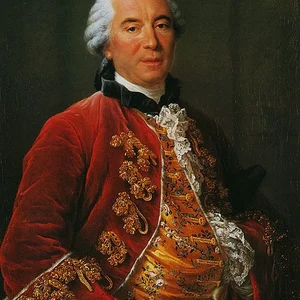
Buffon
1707 — 1788
French naturalist and mathematician of the 18th century, Buffon is one of the founders of modern natural history. As director of the Jardin du Roi in Paris, he proposed a groundbreaking theory on the age of the Earth and the evolution of species.
Cardinal de Richelieu
1585 — 1642
Cardinal and chief minister to Louis XIII, Richelieu strengthened royal authority and centralized power in France. He fought against the rebellious nobility and the Protestants, while drawing France into the Thirty Years' War.
Cardinal Mazarin
1602 — 1661
Cardinal and chief minister of state of France, he governed the kingdom during Louis XIV's minority under the regency of Anne of Austria. Richelieu's successor, he signed the Treaties of Westphalia and overcame the Fronde to consolidate the monarchy.
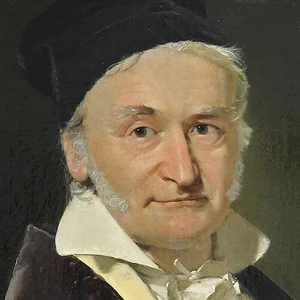
Carl Friedrich Gauss
1777 — 1855
Carl Friedrich Gauss (1777–1855) was a German mathematician, astronomer, and physicist regarded as one of the greatest mathematicians in history. He made groundbreaking contributions to algebra, geometry, number theory, and physics.
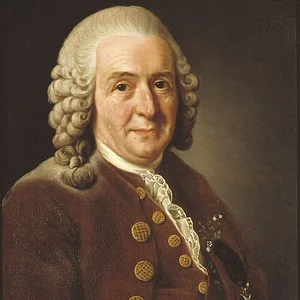
Carl von Linnaeus
1707 — 1778
An 18th-century Swedish naturalist, Carl von Linnaeus revolutionized the classification of living organisms. He created a binomial nomenclature system that made it possible to name and organize all known species in a rational and universal way.
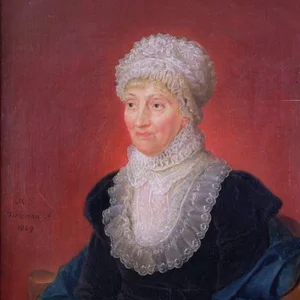
Caroline Herschel
1750 — 1848
A pioneering astronomer from Hanover, Caroline Herschel discovered eight comets and helped map the sky alongside her brother William. She was the first woman to receive the Gold Medal of the Royal Astronomical Society, in 1828.
Caroline of Ansbach
1683 — 1737
Queen consort of Great Britain and Ireland (1727–1737), wife of George II. An Enlightenment intellectual, she corresponded with Leibniz and actively supported Newton in the philosophical and scientific dispute between the two men. Regent on several occasions, she wielded major political influence over the British monarchy.
Charles Maitland
1620 — 1691
Scottish surgeon (1668-1748), a pioneer of inoculation against smallpox in Great Britain. In 1721 he performed the first variolation in London on the family of Lady Mary Wortley Montagu, then the “Royal Experiment” on prisoners, paving the way for Jenner's vaccination.
Charles Pierre Claret de Fleurieu
1738 — 1810
French navigator, hydrographer, and statesman (1738–1810), Fleurieu contributed to maritime cartography and oversaw several scientific expeditions. Minister of the Navy under Louis XVI, he played a key role in organizing France's major voyages of exploration.
Charles XII of Sweden
King of Sweden from 1697 to 1718, Charles XII was one of the greatest military commanders of his era. He led the Great Northern War against a European coalition, winning the Battle of Narva (1700) before suffering a crushing defeat at Poltava (1709). He died during the siege of Fredriksten, marking the end of Swedish dominance in Europe.
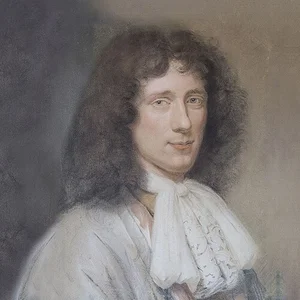
Christiaan Huygens
1629 — 1695
Dutch mathematician, physicist, and astronomer (1629–1695), Huygens invented the pendulum clock and developed the wave theory of light. He discovered Titan, Saturn's largest moon, and formulated the laws of elastic collision.
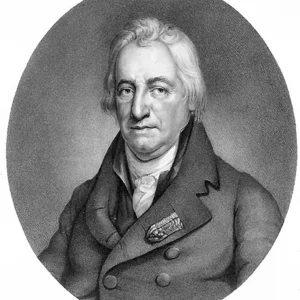
Claude Louis Berthollet
1748 — 1822
French chemist (1748–1822), collaborator of Lavoisier and founder of modern chemistry. He discovered the bleaching properties of chlorine and formulated the laws of chemical affinity, challenging the notion of complete chemical reactions.
Claudine Guérin de Tencin
1682 — 1749
French novelist and salonnière (1682–1749), she hosted one of the most influential literary salons of the eighteenth century in Paris. The mother who abandoned d'Alembert at birth, she is the author of sentimental and historical novels such as the Mémoires du comte de Comminge.
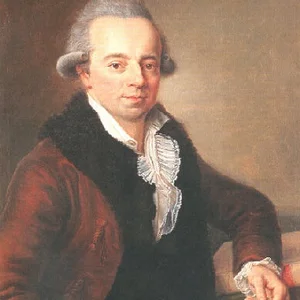
Daniel Bernoulli
1700 — 1782
Swiss mathematician and physicist (1700–1782), son of Johann Bernoulli. He is famous for his principle of hydrodynamics, which establishes the relationship between the velocity and pressure of fluids — the foundation of modern aerodynamics.
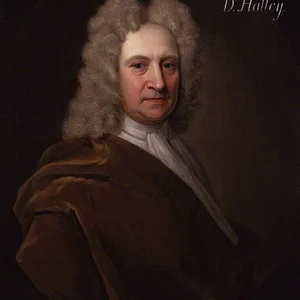
Edmond Halley
1656 — 1742
An English astronomer and scientist of the 17th–18th century, he is famous for calculating the orbit of the comet that bears his name and predicting its return. A friend and patron of Newton, he played an essential role in the publication of the Principia Mathematica.
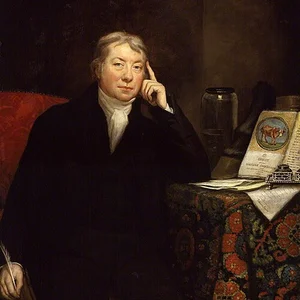
Edward Jenner
1749 — 1823
English physician and scientist (1749-1823), pioneer of vaccination. In 1796, he developed the first vaccine in history by inoculating cowpox to protect against human smallpox.
Ekaterina Vorontsova-Dashkova
1743 — 1810
A learned Russian aristocrat and close associate of Catherine II, she played a part in the coup d'état of 1762. The first woman to head the Russian Academy of Sciences, she founded the Russian Academy devoted to the language.
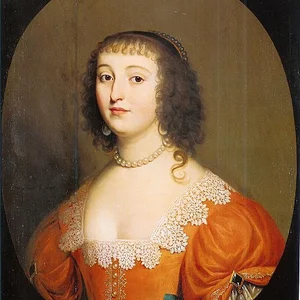
Elisabeth of Bohemia
1618 — 1680
Princess Palatine (1618–1680), daughter of King Frederick V of Bohemia. A self-taught philosopher, she engaged in a celebrated correspondence with Descartes, challenging his mind-body dualism. She ended her life as abbess of the Lutheran convent of Herford.
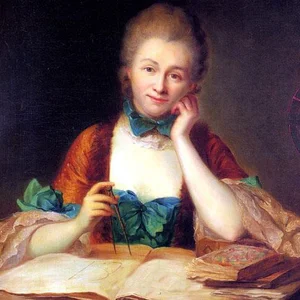
Émilie du Châtelet
1706 — 1749
Émilie du Châtelet (1706-1749) was a French physicist and mathematician of the Enlightenment. She translated and annotated Newton's Principia Mathematica, a work that remained the standard French reference until the 19th century. Voltaire's companion, she demonstrated that kinetic energy is proportional to the square of velocity.
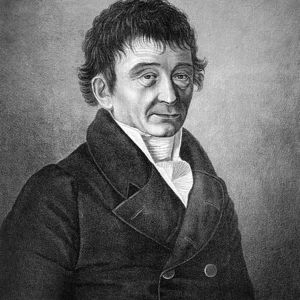
Ernst Chladni
1756 — 1827
German physicist and musician, considered the father of modern acoustics. He revealed the vibration modes of plates through the figures that bear his name.
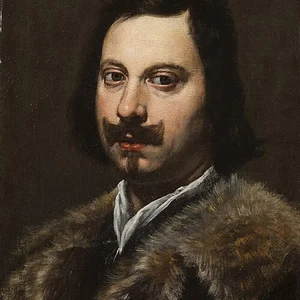
Evangelista Torricelli
1608 — 1647
Italian physicist and mathematician of the 17th century, student of Galileo. He invented the mercury barometer in 1643 and demonstrated the existence of atmospheric pressure, paving the way for modern experimental physics.
Florin Périer
1605 — 1672
Florin Périer (c. 1605-1672) was a magistrate and jurist from the Auvergne region, a councillor at the cour des aides (tax court) of Clermont. The brother-in-law of Blaise Pascal, in 1648 he carried out the Puy de Dôme experiment, which demonstrated the weight of air.
Fontenelle
1657 — 1757
A French writer and scholar of the 17th–18th century, Fontenelle popularized science for the general public. Known for his Conversations on the Plurality of Worlds and his role as perpetual secretary of the Académie des sciences, he embodies the spirit of the Enlightenment.
Frederick II of Denmark
King of Denmark and Norway from 1559 to 1588, Frederick II waged the Northern Seven Years' War against Sweden and was an enlightened patron of the arts, most notably supporting the astronomer Tycho Brahe. He commissioned the construction of Kronborg Castle in Elsinore.
Friedrich Schiller
1759 — 1805
German poet, playwright, and philosopher of the Enlightenment and Sturm und Drang, Schiller is one of the major figures of Weimar Classical literature. A close friend of Goethe, he championed the ideals of freedom, human dignity, and moral elevation through art.
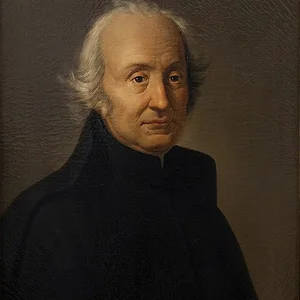
Giuseppe Piazzi
1746 — 1826
Giuseppe Piazzi was an Italian astronomer and mathematician, a priest of the Theatine order. He is famous for discovering Ceres in 1801, the first asteroid (now classified as a dwarf planet) in the belt located between Mars and Jupiter.
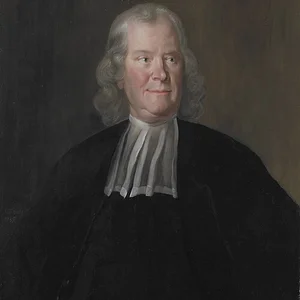
Herman Boerhaave
1668 — 1738
Dutch physician, botanist and chemist, professor at the University of Leiden. Considered the founder of modern clinical teaching and one of the greatest physicians of his era, he trained students who came from all over Europe.
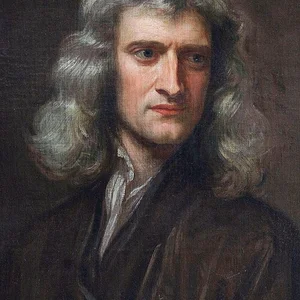
Isaac Newton
1643 — 1727
English mathematician, physicist and astronomer (1643–1727), Isaac Newton is one of the greatest scientists in history. He revolutionized science by formulating the laws of motion and universal gravitation, and by developing calculus.
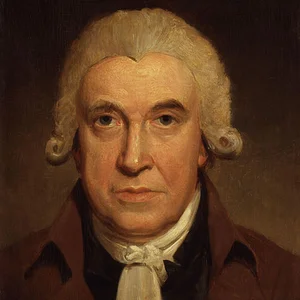
James Watt
1736 — 1819
Scottish engineer and inventor (1736–1819), James Watt greatly improved Newcomen's steam engine in 1769, making it efficient and economical. His invention revolutionized industry and transportation, earning him a place as one of the fathers of the Industrial Revolution.
Jean le Rond d'Alembert
1717 — 1783
A mathematician and philosopher of the Enlightenment, he co-edited the great Encyclopédie with Diderot and wrote its famous Preliminary Discourse. He formulated the mechanical principle that bears his name and embodied the encyclopédiste ideal of bringing together all human knowledge.
Jean Mabillon
1632 — 1707
A Benedictine monk of the Congregation of Saint-Maur, Jean Mabillon is the founder of diplomatics, the critical science of authenticating charters and ancient documents. His major work, De re diplomatica (1681), laid the foundations of modern historical method.
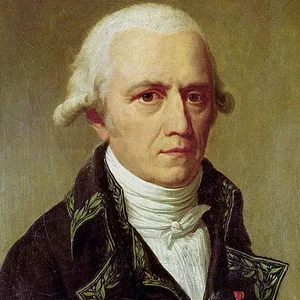
Jean-Baptiste Lamarck
1744 — 1829
French naturalist and zoologist (1744–1829), Lamarck developed a theory of evolution based on the adaptation of organisms to their environment and the inheritance of acquired characteristics. A professor at the Paris Museum of Natural History, he laid the foundations of transformism, a precursory vision of evolution predating Darwin.
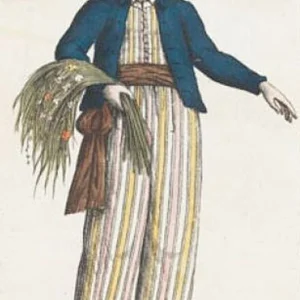
Jeanne Barret
1740 — 1807
explorer and botanist (1740-1807)

Johann Siegesbeck
Eighteenth-century German physician and botanist, director of the Saint Petersburg botanical garden. He is best known for his fierce opposition to Carl von Linné's sexual system of plant classification.
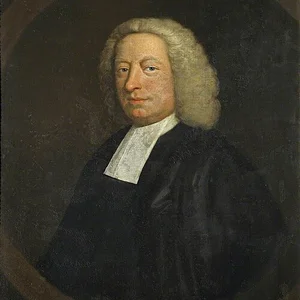
John Colson
1680 — 1760
John Colson was an eighteenth-century British mathematician, Lucasian Professor of Mathematics at the University of Cambridge. He is best known for translating Newton's treatise on fluxions into English.
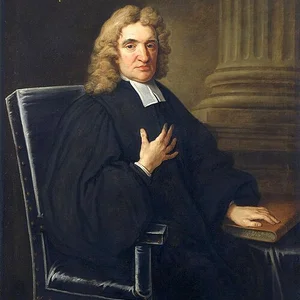
John Flamsteed
1646 — 1720
John Flamsteed was an English astronomer, the first Astronomer Royal of England, appointed by Charles II in 1675. He led the founding of the Greenwich Observatory and compiled a star catalogue of unprecedented precision, recording nearly 3,000 stars.
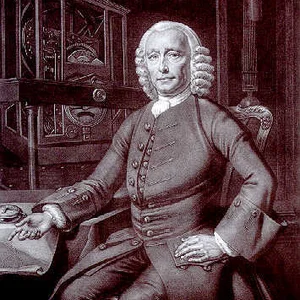
John Harrison
1693 — 1776
A self-taught British clockmaker (1693–1776), John Harrison solved one of the greatest scientific challenges of his era: the precise determination of longitude at sea. His marine chronometer H4 (1759) revolutionized navigation and saved countless lives.
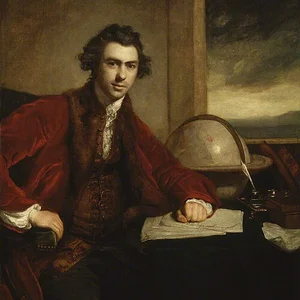
Joseph Banks
1743 — 1820
British naturalist and botanist (1743–1820), Joseph Banks took part in James Cook's first voyage around the world (1768–1771) aboard the Endeavour. He brought back thousands of previously unknown plant specimens and served as President of the Royal Society for 41 years.
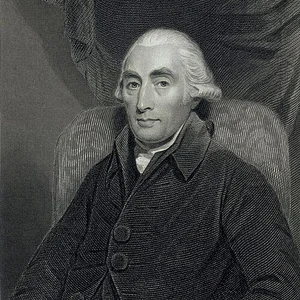
Joseph Black
1728 — 1799
Joseph Black (1728-1799) was a Scottish chemist and physicist, a major figure of the Enlightenment. He discovered “fixed air” (carbon dioxide) and formulated the concepts of latent heat and specific heat, laying the foundations of thermodynamics.
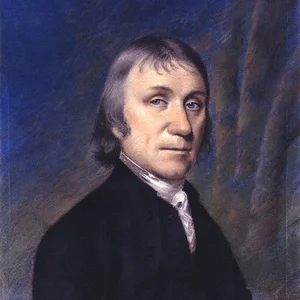
Joseph Priestley
1733 — 1804
Eighteenth-century English chemist, theologian and philosopher, famous for isolating oxygen in 1774. A dissenting minister, he was also a liberal thinker forced into exile in the United States.
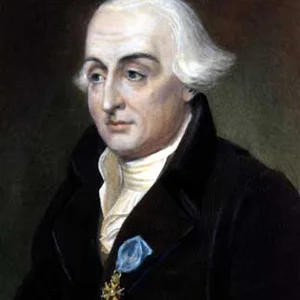
Joseph-Louis Lagrange
1736 — 1813
Franco-Sardinian mathematician and astronomer (1736–1813), considered one of the greatest mathematicians of the 18th century. He revolutionized mechanics with his analytical formulation and founded the calculus of variations.

Katharina Gsell
1707 — 1773
Katharina Gsell (c. 1707–1773) was the daughter of Swiss painter Georg Gsell, who was employed at the imperial court of Saint Petersburg. In 1734 she married the mathematician Leonhard Euler, one of the greatest scholars of the 18th century, and was the companion of his entire scientific life.
Lady Montagu
An English aristocrat and woman of letters of the 18th century, Mary Wortley Montagu accompanied her husband, an ambassador, to Constantinople. There she discovered variolation and introduced it to Western Europe, saving countless lives before Jenner's development of the vaccine.
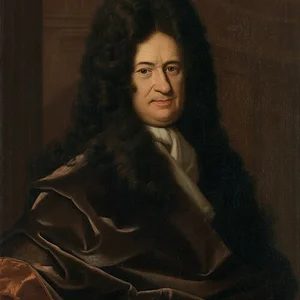
Leibniz
1646 — 1716
A German philosopher and mathematician of the 17th century, Leibniz contributed to the scientific revolution by developing infinitesimal calculus and proposing an original philosophy grounded in monadology. He shaped modern thought through his theory of pre-established harmony and his metaphysical optimism.
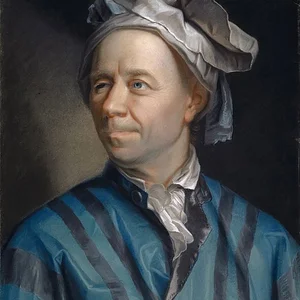
Leonhard Euler
1707 — 1783
Swiss mathematician, physicist, and engineer (1707–1783), Euler is one of the greatest scientists of the 18th century. Prolific and innovative, he contributed to nearly every field of mathematics and physics, despite the blindness that affected him from 1738 onward.
Louis-Bernard Guyton de Morveau
1737 — 1816
A French chemist, jurist and statesman, Guyton de Morveau was one of the architects of the reform of chemical nomenclature alongside Lavoisier in 1787. As a member of the National Convention, he also took part in the Revolution and contributed to the founding of the École Polytechnique.
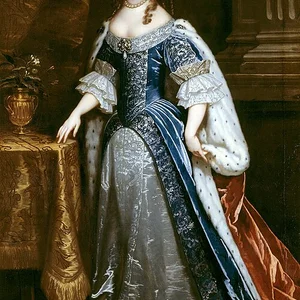
Margaret Cavendish
1617 — 1673
Seventeenth-century English natural philosopher and woman of letters (1623–1673), she developed her own theories on the nature of matter, drawing on atomism while proposing an original vitalist materialism. The first woman to attend a meeting of the Royal Society, in 1667.
Marguerite de La Sablière
A salonnière and woman of letters of the seventeenth century, she presided over one of the most celebrated salons in Paris, bringing together poets, philosophers, and scholars. A patron of La Fontaine, she welcomed him into her home for nearly twenty years. Passionate about science, she studied astronomy and natural philosophy under scholars such as Bernier.
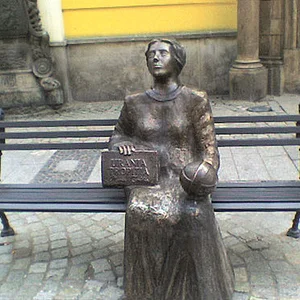
Maria Cunitz
1607 — 1664
A Silesian astronomer of the 17th century, Maria Cunitz published Urania Propitia in 1650, a simplification of Kepler's tables written in both Latin and German. Considered the most remarkable female scholar of her time, she made Keplerian astronomy accessible to a wider audience.
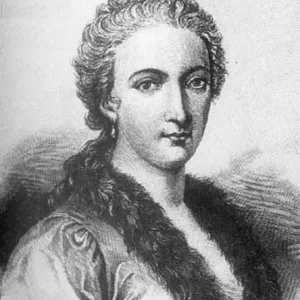
Maria Gaetana Agnesi
1718 — 1799
An Italian mathematician and philosopher of the 18th century, Maria Gaetana Agnesi is celebrated for her treatise Instituzioni analitiche (1748), a pioneering pedagogical synthesis of differential and integral calculus. The first woman appointed as a professor of mathematics at the University of Bologna, she later devoted her life to charity and spirituality.
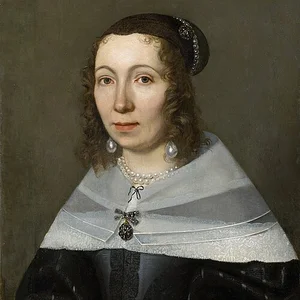
Maria Sibylla Merian
1647 — 1717
A German naturalist and artist of the 17th century, Maria Sibylla Merian was a pioneer in the study of insects and their metamorphosis. She led an expedition to Suriname (1699–1701) to observe and illustrate tropical flora and fauna, at a time when women rarely had access to the sciences.
Marie Jean Antoine Nicolas de Condorcet
Mathematician and Enlightenment philosopher (1743–1794), Condorcet served as Permanent Secretary of the Academy of Sciences, championed equal rights for women and enslaved people, and played an active role in the French Revolution. He died during the Reign of Terror, having written his intellectual testament on human progress.
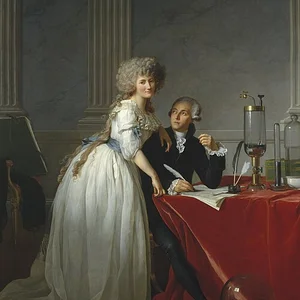
Marie-Anne Paulze
French chemist and illustrator (1758–1836), essential collaborator of Antoine Lavoisier. She translated English scientific treatises and created the engravings for the landmark "Elementary Treatise on Chemistry" (1789), contributing to the chemical revolution.
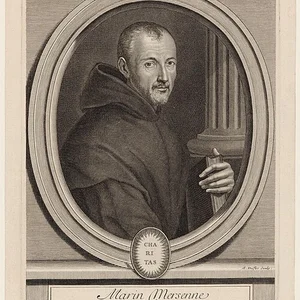
Marin Mersenne
1588 — 1648
Marin Mersenne was a French Minim friar, mathematician, and physicist of the 17th century. The driving force behind a vast scholarly network across Europe, he was a forerunner of the scientific academy and a pioneer of acoustics.
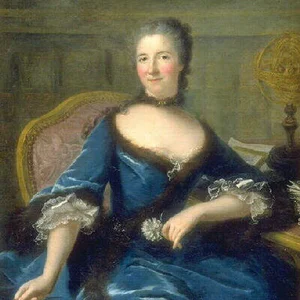
Marquise du Châtelet
An 18th-century French physicist and mathematician, she translated and annotated Newton's Principia Mathematica, introducing Newtonian mechanics to France. Voltaire's companion and a central figure of the Enlightenment, she developed the concept of vis viva (kinetic energy).
Mary Pitt
1676 — ?
Mary Pitt (1676-) was an English courtesan moving in circles close to British royal power at the end of the 17th century. Her role at court places her within a context of spreading scientific and cultural ideas characteristic of the era.
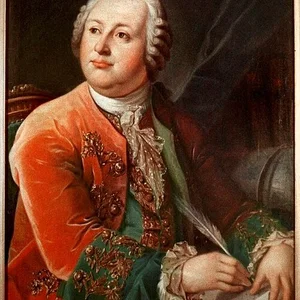
Mikhail Lomonosov
1711 — 1765
An 18th-century Russian scholar — chemist, physicist, and astronomer. A pioneer of Russian science, he formulated a principle of conservation of matter and helped found Moscow University.
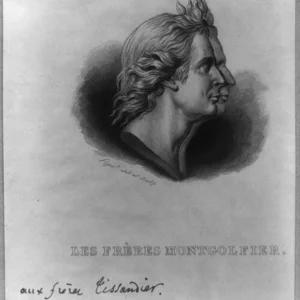
Montgolfier (brothers)
French inventor brothers who achieved the first manned hot-air balloon flight in 1783. Their invention revolutionized the concept of aerial travel and paved the way for aeronautics.
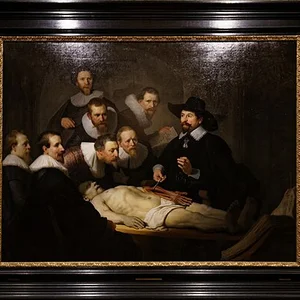
Nicolas Tulp
A Dutch physician and anatomist of the 17th century, Nicolas Tulp is famous for his public anatomy lessons in Amsterdam. He was immortalized by Rembrandt's painting *The Anatomy Lesson of Dr. Nicolaes Tulp* (1632).
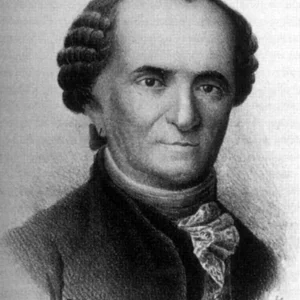
Philibert Commerson
1727 — 1773
French physician, naturalist, and explorer (1727–1773), Commerson took part in Bougainville's circumnavigation (1766–1769) as the official botanist. He described thousands of plant and animal species unknown to Europe, including the bougainvillea, which he named in honour of his expedition commander.
Philippe II d'Orléans
Regent of France from 1715 to 1723 during the minority of Louis XV, Philippe II d'Orléans governed the kingdom following the death of Louis XIV. A curious and libertine spirit, he was also a musician, painter, and patron of the arts, embodying the transition between the Grand Siècle and the Enlightenment.
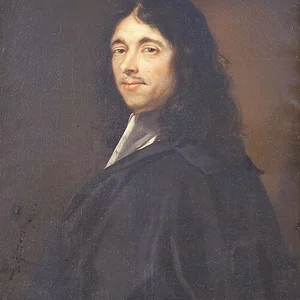
Pierre de Fermat
1607 — 1665
A French mathematician and magistrate of the 17th century, Pierre de Fermat left a lasting mark on the history of mathematics through his fundamental contributions to number theory, analytic geometry, and probability theory. Although he worked primarily as a counselor in the Parliament of Toulouse, his mathematical work inspired generations of mathematicians to come.
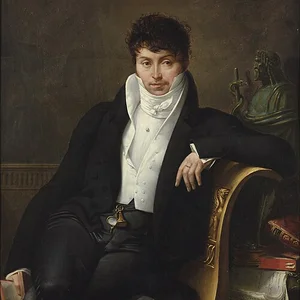
Pierre Jean Georges Cabanis
1757 — 1808
French physician, physiologist, and philosopher (1757–1808), a leading figure among the Idéologues. He sought to establish a science of man by linking the physical functions of the body to moral phenomena.
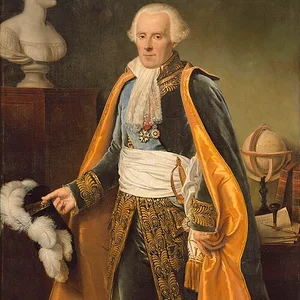
Pierre-Simon Laplace
1749 — 1827
French mathematician and astronomer (1749–1827), Laplace authored the Traité de mécanique céleste and developed the theory of probability. He formulated the nebular hypothesis on the formation of the Solar System.
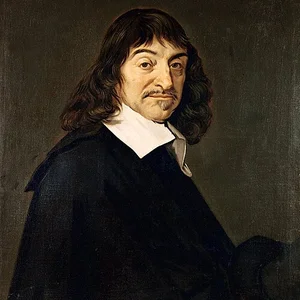
René Descartes
1596 — 1650
French philosopher and mathematician of the 17th century, founder of modern philosophy and rationalism. Known for his method of systematic doubt and his famous principle "I think, therefore I am." He revolutionized mathematics by creating analytic geometry.
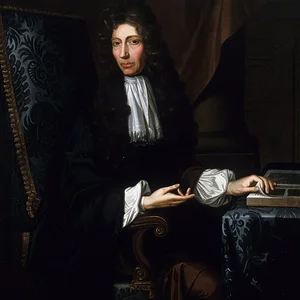
Robert Boyle
1627 — 1691
Irish physicist and chemist of the 17th century, regarded as one of the founders of modern chemistry and of the experimental method. He is famous for the law that bears his name on the compressibility of gases and for his work 'The Sceptical Chymist'.
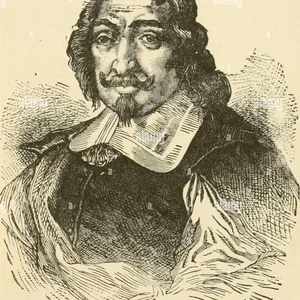
Roberval
1602 — 1675
French mathematician and physicist (1602–1675), professor at the Collège Royal de France. He is renowned for inventing the balance scale that bears his name, and for his pioneering work in geometry and mechanics.

Sarah Chiswell
Young Englishwoman who died of smallpox around 1714, and a friend of Lady Mary Wortley Montagu. Her tragic death prompted Lady Mary to champion variolation in England after observing the practice in the Ottoman Empire, indirectly contributing to the history of vaccination.
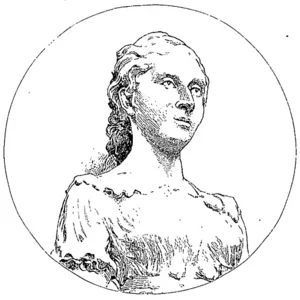
Sophie Germain
1776 — 1831
French mathematician and philosopher (1776–1831), a pioneer in science at a time when women were excluded from it. She made contributions to number theory and elasticity, and corresponded with Gauss under a male pseudonym.
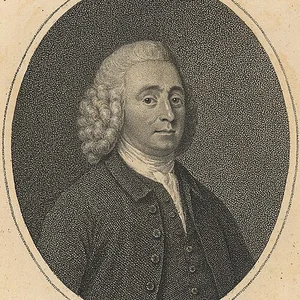
Thomas Dimsdale
1712 — 1800
Eighteenth-century British physician, a pioneer of variolation (inoculation against smallpox). He gained European fame by inoculating Empress Catherine II of Russia and her son in 1768.
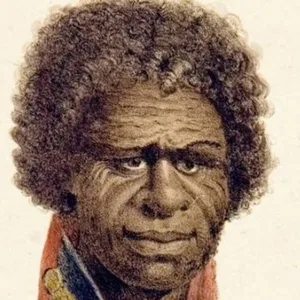
Tupaia
1725 — 1770
Tupaia was a Polynesian navigator, priest, and artist from Ra'iatea. A master of traditional navigation, he joined James Cook's expedition in 1769 and drew up a remarkable chart of more than 130 Pacific islands, a unique testament to Polynesian geographic knowledge.
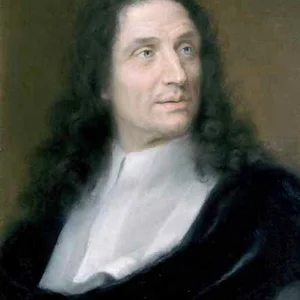
Vincenzo Viviani
1622 — 1703
Vincenzo Viviani was an Italian mathematician and physicist, the last disciple and assistant of Galileo. He worked to preserve and publish his master's scientific legacy and contributed to geometry and the study of motion.
Wang Zhenyi
1768 — 1797
Wang Zhenyi was a Chinese astronomer, mathematician, and poet of the Qing dynasty. Despite the conventions of her time that kept women away from learning, she popularized astronomy and championed intellectual equality between men and women.
William Griggs
1650 — ?
William Griggs was a physician in the Massachusetts colony, remembered for diagnosing a supernatural cause for the convulsions of young girls in Salem in 1692, triggering one of the most famous witch hunts in American colonial history.
Military(66)
Ahmad Shah Durrani
1722 — 1772
Ahmad Shah Durrani (1722-1772) was the founder of the Durrani Empire and is regarded as the father of the Afghan nation. A former general under Nader Shah of Persia, he unified the Pashtun tribes after Nader Shah's assassination and built an empire stretching from Persia to Northern India.
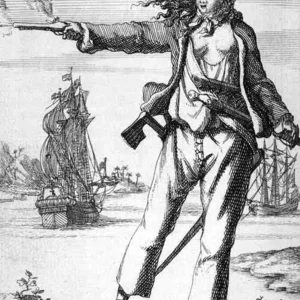
Anne Bonny
1697 — ?
Anne Bonny was a pirate of Irish origin active in the Caribbean in the early 18th century. The companion of the pirate Calico Jack Rackham, she fought at his side and became one of the few known women of the “Golden Age of Piracy.” Captured in 1720, she escaped hanging by declaring herself pregnant.
Antoine Parmentier
1737 — 1813
French military pharmacist and agronomist (1737-1813), famous for popularizing the potato as a food staple in France. A prisoner of war in Prussia, he discovered the nutritional value of the tuber and convinced Louis XVI to lift the ban on its cultivation.
Armand de Bourbon-Conti
1629 — 1666
A prince of the blood and the youngest child of Henri II de Bourbon-Condé, Armand de Bourbon-Conti (1629-1666) was one of the leaders of the Fronde of the Princes before rallying to Louis XIV. Having become governor of Languedoc and Count of Pézenas, he was Molière's first patron.
Bakwa Turunku
1468 — 1566
Queen of the kingdom of Zazzau (present-day Zaria, Nigeria) in the 16th century, Bakwa Turunku founded the city of Zaria around 1536. She is the mother of the famous warrior queen Amina of Zaria, a symbol of female power in West Africa.
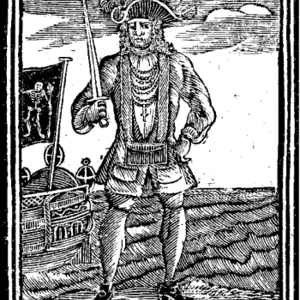
Bartholomew Roberts
1682 — 1722
Bartholomew Roberts, known as “Black Bart,” was a Welsh pirate considered the most prolific of the Golden Age of Piracy. In barely three years (1719–1722), he captured more than 400 ships across the Atlantic and the Caribbean before being killed in battle by the Royal Navy.
Bartolina Sisa
1750 — 1782
Bartolina Sisa is a heroic figure of the Aymara people and wife of Túpac Katari. Around 1781–1782, she co-led the siege of La Paz against Spanish colonial forces. Captured, she was executed by the Spanish in 1782 and is today revered as a symbol of indigenous resistance in Bolivia.
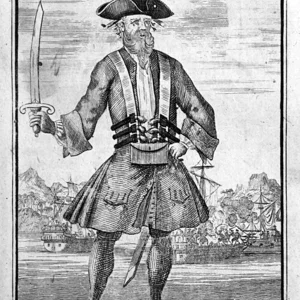
Blackbeard
1680 — 1718
Edward Teach, known as Blackbeard, was one of the most famous pirates of the early 18th century. He roamed the Caribbean and the Atlantic coast of North America aboard the Queen Anne's Revenge, spreading terror through his carefully cultivated reputation, before being killed in battle in 1718.
Bùi Thị Xuân
1752 — 1802
Vietnamese general (1752–1802), one of the five great heroines of the Tây Sơn dynasty. Wife of General Trần Quang Diệu, she commanded the war elephant corps and distinguished herself against Siamese and Manchu armies. Captured after the fall of the Tây Sơn, she was executed by elephant in 1802.
Cabeza de Vaca
A 16th-century Spanish conquistador and explorer, he survived the shipwreck of the Narváez expedition in Florida (1528) and crossed North America for eight years with three companions before reaching Mexico. His account, the *Naufragios*, is one of the first European eyewitness records of the interior of the American continent.
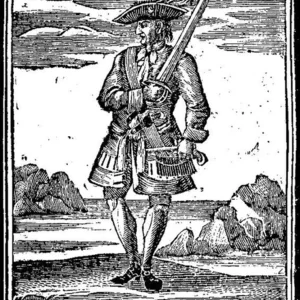
Calico Jack
1682 — 1720
English pirate of the early 18th century, active in the Caribbean during the “Golden Age of Piracy.” He owes his fame to his flag — a skull above two crossed cutlasses — and to the presence in his crew of the female pirates Anne Bonny and Mary Read.
Cardinal Ruffo
1744 — 1827
Neapolitan cardinal (1744–1827), known for reconquering the Kingdom of Naples in 1799 at the head of an army of Calabrian peasants, the Sanfedists. A symbol of counter-revolutionary reaction and the Bourbon restoration.
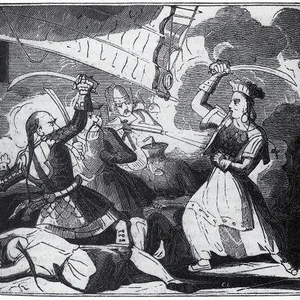
Ching Shih
1775 — 1844
Ching Shih (c. 1775–1844) was a Chinese pirate who became one of the most formidable military commanders in history. She led the Red Flag Fleet, a confederation of over 1,800 ships and 80,000 men, imposing her rule across the South China Sea.
d'Entrecasteaux
French navigator and admiral (1737–1793), d'Entrecasteaux was sent in 1791 to search for the lost expedition of La Pérouse. He explored the coasts of Australia, New Caledonia, and Tasmania before dying at sea without having found La Pérouse.
Daniel Boone
1734 — 1820
Daniel Boone (1734-1820) was an American pioneer, trapper, and explorer, an iconic figure of the conquest of the West. In 1775 he blazed the Wilderness Road through the Appalachians and founded Boonesborough, in present-day Kentucky.
Diponegoro
1785 — 1855
A Javanese prince, Diponegoro led the Java War (1825-1830) against Dutch colonial rule, mobilizing hundreds of thousands of men in the name of Islam and Javanese sovereignty. Betrayed during peace talks, he was captured and exiled to Makassar, where he died in 1855, becoming one of Indonesia's first national heroes.
Elizabeth I of Russia
1709 — 1762
Daughter of Peter the Great, Elizabeth I ruled Russia from 1741 to 1762. Her reign was marked by a flourishing of culture, the founding of Moscow University, and Russia's victorious participation in the Seven Years' War.
Eugene of Savoy
1663 — 1736
A prince of the House of Savoy who entered the service of the Habsburgs, Eugene of Savoy became one of the greatest military commanders of his time. As generalissimo of the imperial armies, he distinguished himself against the Ottomans and during the War of the Spanish Succession.
François l'Olonnais
1630 — 1667
French buccaneer of the 17th century, born in Les Sables-d'Olonne, who terrorized Spain's possessions in the Caribbean. A leader of the Brethren of the Coast, he remained infamous for the extreme cruelty he inflicted on his prisoners during his raids.
François Séverin Marceau
1769 — 1796
A general of the French Revolution, Marceau enlisted at 16 and became one of the youngest generals of the Republic. A hero of the pacification of the Vendée and the Rhine campaigns, he died in battle at 27 in 1796, embodying the ideal of the republican soldier.
Frederick II of Denmark
King of Denmark and Norway from 1559 to 1588, Frederick II waged the Northern Seven Years' War against Sweden and was an enlightened patron of the arts, most notably supporting the astronomer Tycho Brahe. He commissioned the construction of Kronborg Castle in Elsinore.
Frederick II the Great
1712 — 1786
Frederick II, known as Frederick the Great, was King of Prussia from 1740 to 1786. An enlightened ruler and a leading military strategist, he turned Prussia into a major European power while corresponding with Enlightenment philosophers, including Voltaire.
Frederick the Great
King of Prussia from 1740 to 1786, Frederick II was both a formidable war leader and a reforming sovereign. A figure of enlightened despotism, he corresponded with Voltaire and made Prussia a major European power.
Frederick William I of Prussia
King of Prussia from 1713 to 1740, nicknamed the “Soldier King.” A rigorous and thrifty administrator, he reorganized the Prussian state and built a powerful army that turned Prussia into a major European military power.
Gabrielle Danton
Gabrielle Charpentier (c. 1764–1793) was the wife of Georges-Jacques Danton, a leading orator of the French Revolution. The daughter of a Parisian café owner, she died at 28 in February 1793 while her husband was on a mission in Belgium, just months before the Reign of Terror.
Henri II de Montmorency
1595 — 1632
Henri II de Montmorency (1595-1632) was the last Duke of Montmorency, Governor of Languedoc, and Marshal of France. Drawn into Gaston of Orléans's revolt against Richelieu, he was captured at Castelnaudary and then beheaded in Toulouse in 1632.
Henry Every
1659 — 1699
Henry Every, nicknamed “Long Ben,” was an English pirate of the late 17th century. In 1695, he seized the Ganj-i-Sawai, a ship of the Grand Mughal, pulling off one of the largest hauls in the history of piracy. Actively hunted, he vanished without ever being captured.
Henry Morgan
1631 — 1688
Henry Morgan (c. 1635–1688) was a Welsh privateer in the service of England who led devastating raids against Spanish possessions in the Caribbean. Knighted by the Crown, he ended his career as Lieutenant Governor of Jamaica.
James Wolfe
1727 — 1759
British general (1727–1759), James Wolfe is renowned for his decisive victory over the French at the Battle of the Plains of Abraham in Quebec in 1759. He died in combat on the very day of his victory, becoming a British national hero.
Jean Bart
1650 — 1702
Jean Bart (1650-1702) was a privateer and naval officer from Dunkirk in the service of Louis XIV. Born into a family of sailors, he distinguished himself through his victories against the English and Dutch fleets and was raised to the nobility by the king.
Jean-Paul Marat
1743 — 1793
A physician, physicist, and journalist who became one of the most radical figures of the French Revolution. Founder of the newspaper L'Ami du peuple, he served as a Montagnard deputy in the National Convention before being assassinated in his bath by Charlotte Corday in 1793.
Joseph Agricol Viala
1778 — 1793
Revolutionary child-soldier born in Avignon in 1780, killed at age 13 on July 23, 1793, while attempting to cut the moorings of Federalist boats on the Durance river. Proclaimed a martyr of the Republic by the National Convention, his name was included among the heroes decreed for pantheonization, though the transfer never took place.
Joseph Bara
1779 — 1793
A drummer boy for the Republic at age 13, Joseph Bara was killed by Vendée rebels in 1793. Robespierre held him up as an exemplary martyr of revolutionary youth, and the Convention voted to transfer his remains to the Panthéon — a decree that was never carried out.
Juana Azurduy
A mestiza guerrilla fighter born in 1780 in Upper Peru (present-day Bolivia), she commanded indigenous troops against the Spanish during the independence wars. Known as "the Pachamama of freedom," she was appointed lieutenant colonel by Simón Bolívar.
Kamehameha I
1758 — 1819
Kamehameha I unified the Hawaiian Islands under his rule between 1795 and 1810, founding the Kingdom of Hawaii. A formidable strategist, he skillfully integrated European firearms into his military conquests. He established the Law of the Splintered Paddle, protecting civilians in times of war.
Laskarina Bouboulina
1771 — 1825
Laskarína Bouboulína was a Greek heroine of the War of Independence against the Ottoman Empire. Arming and financing her own war fleet, she took an active part in naval combat from 1821, most notably during the blockade of Nafplio. She is the only woman to have received the honorary title of admiral in the Russian Imperial Navy.
Lord Byron
1788 — 1824
Lord Byron (1788-1824) was the most celebrated British poet of the Romantic era. A scandalous and politically engaged figure, he embodied the "Byronic hero": brooding, rebellious, and passionate. He died in Greece while fighting for Greek independence.
Louis-Antoine de Bougainville
1729 — 1811
French navigator and naval officer (1729–1811), he completed the first French circumnavigation of the globe (1766–1769), bringing back accounts of Tahiti that fuelled the myth of the noble savage. He was also a mathematician and played a role in the Seven Years' War.
Manuela Sáenz
1797 — 1856
Ecuadorian revolutionary born in Quito around 1797, of mixed heritage (Creole mother, Spanish father), Manuela Sáenz was a central figure in the Spanish American wars of independence and the companion of Simón Bolívar. She saved the Liberator's life in 1828 and was nicknamed the "Libertadora del Libertador."
Maria Theresa of Austria
1717 — 1780
Archduchess of Austria and Queen of Hungary and Bohemia (1717–1780), she defended her inheritance against the major European powers and profoundly modernized the Habsburg state. The only woman to have ruled over Habsburg territories, she stands as one of the great reforming monarchs of the 18th century.
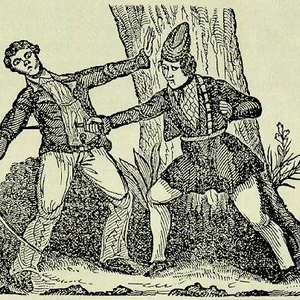
Mary Read
1685 — 1721
Mary Read (1685-1721) was an English pirate who long concealed her sex beneath men's clothing. She served in the army and then aboard ships before joining the crew of the pirate Calico Jack Rackham, alongside Anne Bonny, in the Caribbean.
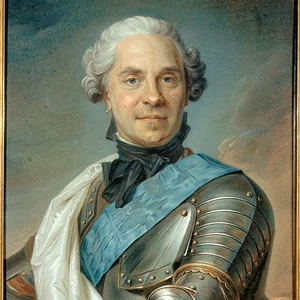
Maurice de Saxe
1696 — 1750
Marshal General of France and illegitimate son of Augustus II of Saxony-Poland. Regarded as one of the greatest military commanders of the 18th century, he distinguished himself with his decisive victory at Fontenoy in 1745 during the War of the Austrian Succession.
Maximilien de Béthune duc de Sully
A loyal companion of Henry IV, Sully served as superintendent of finances from 1598 to 1610. He restored royal finances, reduced the debt, and promoted agriculture and infrastructure. A committed Huguenot, he embodied the kingdom's reconstruction following the Wars of Religion.
Nanny of the Maroons
A central figure of Maroon resistance in Jamaica during the 18th century, Nanny led the Windward Maroons from their stronghold in the Blue Mountains. A warrior and spiritual leader of Akan origin (present-day Ghana), she led the struggle against British colonial slavery for decades. A Jamaican national heroine, her life is transmitted primarily through Maroon oral tradition.
Nicolas-Joseph Beaurepaire
1740 — 1792
French general (1740–1792), commander of Verdun during the Prussian invasion of 1792. Refusing to surrender, he died on September 2, 1792, rather than sign the capitulation of the fortress. His sacrifice became a symbol of revolutionary patriotism.
Nzinga
Queen of Ndongo and Matamba (Angola) in the 17th century, Nzinga led a fierce resistance against Portuguese colonization and the slave trade. A skilled diplomat and formidable warrior, she negotiated with the Portuguese before waging decades of guerrilla warfare against them.
Nzinga Mbandi
Queen of Ndongo and later Matamba (Mbundu people, present-day Angola), Nzinga Mbandi was a formidable political and military strategist who resisted Portuguese expansionism and the Atlantic slave trade throughout the 17th century. An iconic figure of pre-colonial African resistance, she negotiated, waged war, and allied with the Dutch to defend her people's sovereignty.
Philippe II d'Orléans
Regent of France from 1715 to 1723 during the minority of Louis XV, Philippe II d'Orléans governed the kingdom following the death of Louis XIV. A curious and libertine spirit, he was also a musician, painter, and patron of the arts, embodying the transition between the Grand Siècle and the Enlightenment.
Pierre Choderlos de Laclos
1741 — 1803
Pierre Choderlos de Laclos was an eighteenth-century French writer and artillery officer. He is the author of the famous epistolary novel *Les Liaisons dangereuses* (1782), a cruel portrayal of the libertine intrigues of the aristocracy.
Policarpa Salavarrieta
1795 — 1817
Heroine of Colombian independence (c. 1795–1817), nicknamed "La Pola". A seamstress and patriot spy, she recruited soldiers for the independence cause. Captured by the Spanish, she was executed by firing squad in Bogotá on November 14, 1817.
Quang Trung
1752 — 1792
Nguyễn Huệ (1753-1792), known by his reign name Quang Trung, was the second emperor of the Tây Sơn dynasty in Vietnam. An undefeated military commander across twenty years of campaigns, he ended two centuries of north-south division and repelled both Siamese and Qing invasions. A visionary reformer, he promoted Vietnamese script (chữ Nôm) and modernized the economy, education, and army in just three years of reign. [1]
Rachel Wall
1760 — 1789
Rachel Wall (c. 1760-1789) is considered the first female pirate born in America. Together with her husband, she plundered the coasts of New England from Essex Island, luring ships with fake distress signals. Hanged in Boston in 1789, she was one of the last women to be executed in Massachusetts.
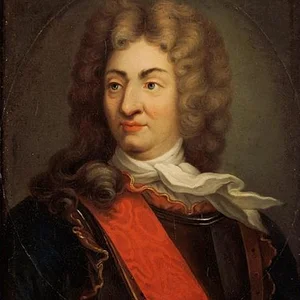
René Duguay-Trouin
1673 — 1736
A privateer from Saint-Malo in the service of the King of France, René Duguay-Trouin distinguished himself through daring captures of enemy ships during the wars of Louis XIV. Ennobled for his exploits, he ended his career as lieutenant general of the naval forces after the capture of Rio de Janeiro in 1711.
Samuel Bellamy
1689 — 1717
Samuel “Black Sam” Bellamy (c. 1689-1717) was an English pirate of the golden age of piracy. Captain of the Whydah, a captured former slave ship, he is considered one of the wealthiest pirates in history before perishing in a shipwreck in 1717.
Samuel de Champlain
1567 — 1635
A French navigator and explorer, Samuel de Champlain founded the city of Quebec in 1608 and is known as the Father of New France. He mapped much of Canada and established lasting alliances with Indigenous peoples.
Selim II
1524 — 1574
Selim II (1524–1574) was Ottoman sultan and caliph from 1566 to 1574. His reign is marked by the conquest of Cyprus and the naval defeat at Lepanto against the Christian coalition in 1571.
Simón Bolívar
1783 — 1830
Born in Caracas in 1783, Simón Bolívar was the leading architect of South American independence from the Spanish Empire. Known as 'El Libertador,' he liberated several nations and dreamed of a great Latin American federation.
Solitude
1772 — 1802
Born around 1772 in Guadeloupe to an enslaved African mother, Solitude joined the mixed-race insurgents during the armed resistance against the restoration of slavery decreed by Bonaparte in 1802. Pregnant, she fought until her capture and was hanged the day after giving birth, on November 29, 1802. Her story, passed down through Creole and Caribbean oral tradition, has made her an emblematic figure of resistance against colonial oppression.
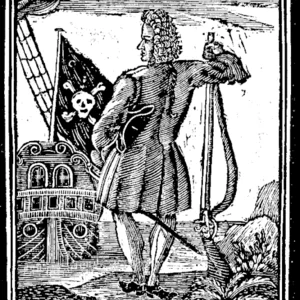
Stede Bonnet
1688 — 1718
Stede Bonnet (c. 1688–1718), nicknamed “the gentleman pirate,” was a wealthy Barbadian planter who abandoned his plantation to become a pirate in the Caribbean. Allied for a time with Blackbeard, he was captured and hanged in Charleston in 1718.
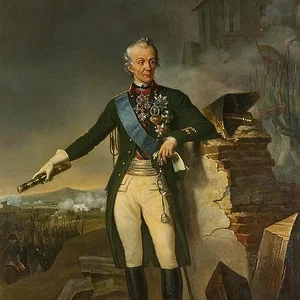
Suvorov
1730 — 1800
18th-century Russian generalissimo, considered one of the greatest military commanders in Russian history. Reputedly undefeated in more than sixty battles, he distinguished himself under the reigns of Catherine II and then Paul I, notably during the wars against the Ottoman Empire and Revolutionary France.
Te Rauparaha
1768 — 1849
Te Rauparaha (c. 1768-1849) was the great warrior chief of the Ngāti Toa, one of the most formidable Māori strategists of his time. He extended his influence over the North Island and Cook Strait, and composed the famous haka Ka Mate. His reign coincided with the arrival of Europeans and British colonization.
Tokugawa (shogun)
Tokugawa Ieyasu (1543-1616) unified Japan after decades of civil wars and founded the Tokugawa shogunate in 1603, establishing a peace lasting more than two centuries. His regime, the Edo period, kept Japan in near-total isolation until 1868.
Turenne
1611 — 1675
Turenne was one of the greatest French military commanders of the 17th century. Marshal General under Louis XIV, he distinguished himself during the Thirty Years' War and the campaigns in Holland, where he was killed by a cannonball at Sasbach in 1675.
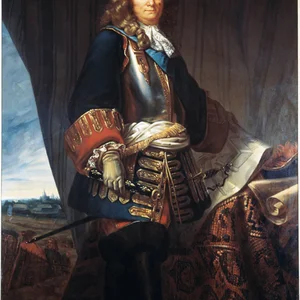
Vauban
1633 — 1707
French military engineer and architect during the reign of Louis XIV, regarded as the greatest fortification specialist of his time. A Marshal of France, he designed a defensive system protecting the kingdom's borders and revolutionized the art of the siege.
William III of Orange
1650 — 1702
Stadtholder of the United Provinces from 1672, William III of Orange became King of England, Scotland, and Ireland in 1689 following the Glorious Revolution that overthrew James II. A Protestant champion, he devoted his reign to containing the power of Louis XIV.
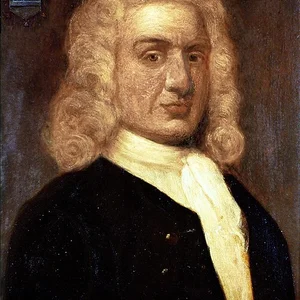
William Kidd
1645 — 1701
A Scottish sailor first commissioned as a privateer in the service of the English Crown to hunt down pirates in the Indian Ocean. Accused of piracy himself, he was tried and hanged in London in 1701, becoming a legendary figure of the Golden Age of Piracy.
Society(61)
Abel Tasman
1603 — 1659
Abel Tasman was a Dutch navigator and explorer in the service of the Dutch East India Company (VOC). In 1642, he became the first European to reach Tasmania and New Zealand, pushing the boundaries of geographical knowledge of his time.
Ann Putnam
1679 — 1716
Ann Putnam Jr. was one of the principal accusers during the Salem witch trials of 1692, when she was only twelve years old. Her testimony contributed to the conviction of several people. In 1706, she made a public apology, acknowledging that she had been deceived by the devil.
Anne Bonny
1697 — ?
Anne Bonny was a pirate of Irish origin active in the Caribbean in the early 18th century. The companion of the pirate Calico Jack Rackham, she fought at his side and became one of the few known women of the “Golden Age of Piracy.” Captured in 1720, she escaped hanging by declaring herself pregnant.
Anne of Great Britain
1665 — 1714
Queen of England, Scotland, and Ireland from 1702 to 1707, then first Queen of Great Britain following the Acts of Union of 1707. Her reign saw the rise of parliamentary government and the War of the Spanish Succession.
Antoine Parmentier
1737 — 1813
French military pharmacist and agronomist (1737-1813), famous for popularizing the potato as a food staple in France. A prisoner of war in Prussia, he discovered the nutritional value of the tuber and convinced Louis XVI to lift the ban on its cultivation.
Bartholomew Roberts
1682 — 1722
Bartholomew Roberts, known as “Black Bart,” was a Welsh pirate considered the most prolific of the Golden Age of Piracy. In barely three years (1719–1722), he captured more than 400 ships across the Atlantic and the Caribbean before being killed in battle by the Royal Navy.
Blackbeard
1680 — 1718
Edward Teach, known as Blackbeard, was one of the most famous pirates of the early 18th century. He roamed the Caribbean and the Atlantic coast of North America aboard the Queen Anne's Revenge, spreading terror through his carefully cultivated reputation, before being killed in battle in 1718.
Calico Jack
1682 — 1720
English pirate of the early 18th century, active in the Caribbean during the “Golden Age of Piracy.” He owes his fame to his flag — a skull above two crossed cutlasses — and to the presence in his crew of the female pirates Anne Bonny and Mary Read.
Cardinal Mazarin
1602 — 1661
Cardinal and chief minister of state of France, he governed the kingdom during Louis XIV's minority under the regency of Anne of Austria. Richelieu's successor, he signed the Treaties of Westphalia and overcame the Fronde to consolidate the monarchy.
Catherine I
Empress of Russia from 1725 to 1727, second wife of Peter the Great. Born to a humble Baltic peasant family, she was the first woman to rule the Russian Empire, ushering in the century of the empresses.
Charles de Mornay
1514 — 1574
Charles de Mornay was a French-born Swedish court officer active in the 17th and 18th centuries. Of French noble origin, he established himself at the Swedish court during the era of great power (Stormaktstiden). He exemplifies the mobility of European noble elites across the great courts of the continent.
Charlotte Corday
1768 — 1793
A Norman Girondin activist, Charlotte Corday assassinated Jean-Paul Marat in his bathtub on July 13, 1793. Convinced she was putting an end to the Terror, she was guillotined four days later at the age of 24.
Charlotte-Marguerite de Montmorency
1594 — 1650
Charlotte-Marguerite de Montmorency (1594-1650), Princess of Condé, was one of the most celebrated beauties of the French court. Coveted by the aging King Henry IV, her marriage to Henry II of Bourbon-Condé sparked a diplomatic crisis when the couple fled to the Spanish Netherlands.

Countess d'Albon
An eighteenth-century French aristocrat, the biological mother of Julie. For years she concealed the secret of her motherhood, in a society where an unconventional birth and family honor weighed heavily on women's destinies.
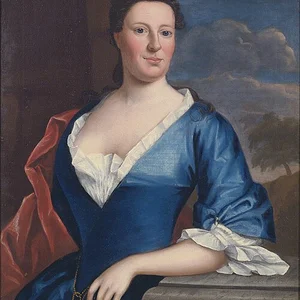
Elizabeth Francis
1708 — 1800
Elizabeth Francis (1708-1800) was a figure of 18th-century British society who lived through most of the Age of Enlightenment. Her exceptional longevity (92 years) made her a witness to major transformations: the American Revolution, the French Revolution, and the early stirrings of the Industrial Revolution.
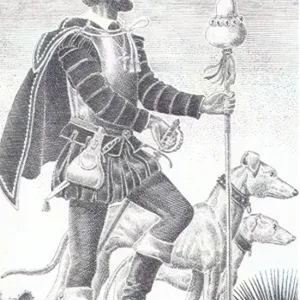
Estevanico
1500 — 1540
A Berber slave from Morocco, Estevanico was one of the first Africans to explore North America. A survivor of the wreck of the Narváez expedition (1528), he crossed the present-day American Southwest on foot and opened the route to the legendary Seven Cities of Cíbola.
Esther Johnson
1681 — 1728
Esther Johnson (1681–1728), known by the nickname "Stella", was the close friend and confidante of the writer Jonathan Swift. Their intellectual and epistolary relationship, chronicled in the Journal to Stella, makes her a notable figure in English literary life of the 18th century.

Eulalia Bermúdez
Woman known solely through a mention in a baptismal record in Toroca, where she appears as the mother of a child named Juana. No other biographical information about her is documented.
Fanny Blood
1758 — 1785
British illustrator and teacher, an intimate friend of the feminist philosopher Mary Wollstonecraft. Together they co-founded a school for girls at Newington Green, near London, an experience that shaped Wollstonecraft's thinking on the education of women.
Frances Burney
1752 — 1840
English novelist, playwright, and diarist (1752-1840), Frances Burney published Evelina anonymously in 1778, an epistolary novel that was an immediate success. A forerunner of Jane Austen, she documented eighteenth-century English society with great perceptiveness in her journals and correspondence.
François l'Olonnais
1630 — 1667
French buccaneer of the 17th century, born in Les Sables-d'Olonne, who terrorized Spain's possessions in the Caribbean. A leader of the Brethren of the Coast, he remained infamous for the extreme cruelty he inflicted on his prisoners during his raids.
Françoise-Louise de Warens
1699 — 1762
A Savoyard baroness, Françoise-Louise de Warens (1699-1762) is famous for taking in and protecting the young Jean-Jacques Rousseau. She gave him a home at Les Charmettes, near Chambéry, and played a decisive role in his intellectual and emotional education.
Françoise-Marguerite de Grignan
The daughter of the Marquise de Sévigné, she was the main recipient of her mother's famous correspondence. Her departure for Provence after her marriage in 1669 prompted the bulk of these letters, which became a monument of classical French literature.
Hugo Grotius
1583 — 1645
Hugo Grotius (Huig de Groot), a Dutch jurist, philosopher, and diplomat, is regarded as one of the founders of modern international law and natural law. His major work, “De jure belli ac pacis” (1625), lays the foundations of a body of law governing relations between nations.
Jodhaa
16th-century Rajput princess and wife of the Mughal emperor Akbar the Great. Her marriage symbolizes Akbar's policy of religious tolerance between Hinduism and Islam. A controversial figure whose very existence is debated by historians.
Jonathan Swift
1667 — 1745
Anglo-Irish writer and satirist (1667–1745), Jonathan Swift is the author of Gulliver's Travels. Dean of St Patrick's Cathedral in Dublin, he used literature as a political and social weapon against the injustices of his time.
Joseph Agricol Viala
1778 — 1793
Revolutionary child-soldier born in Avignon in 1780, killed at age 13 on July 23, 1793, while attempting to cut the moorings of Federalist boats on the Durance river. Proclaimed a martyr of the Republic by the National Convention, his name was included among the heroes decreed for pantheonization, though the transfer never took place.
Joseph Bara
1779 — 1793
A drummer boy for the Republic at age 13, Joseph Bara was killed by Vendée rebels in 1793. Robespierre held him up as an exemplary martyr of revolutionary youth, and the Convention voted to transfer his remains to the Panthéon — a decree that was never carried out.
Kösem Sultan
1589 — 1651
Valide sultan and regent of the Ottoman Empire in the 17th century, Kösem Sultan wielded considerable political influence for over thirty years. She governed as regent for her sons Murad IV and Ibrahim I, and later for her grandson Mehmed IV.
La Voisin
1640 — 1680
Poisoner, fortune-teller, and abortionist in 17th-century Paris, Catherine Deshayes was the central figure of the Affair of the Poisons (1679–1682). Supplying poisons, love potions, and black masses to an aristocratic clientele, she was burned alive at the Place de Grève in 1680.
Louis II de Bourbon, prince de Condé
Nicknamed “the Great Condé,” this prince of the blood distinguished himself at the Battle of Rocroi (1643) by crushing the Spanish infantry. A key figure in the Fronde, he eventually reconciled with Louis XIV and remained one of the greatest military commanders of the Grand Siècle.
Louis-Michel Lepeletier de Saint-Fargeau
An aristocrat who embraced the Revolution, he was elected to the Estates-General and later served as a deputy in the National Convention, where he voted for the execution of King Louis XVI in January 1793. Assassinated on the eve of the king's execution by a royal guard, he became the first martyr of the French Revolution and was temporarily interred in the Panthéon.
Louise Gély
1776 — 1856
Second wife of Georges Danton, whom she married in 1793 at the age of sixteen after caring for his children. A figure in the intimate circle of a major actor of the French Revolution, she lived through the Terror and then remarried after Danton's execution.
Madame de Maintenon
1635 — 1719
Born in 1635, Françoise d'Aubigné endured a wretched childhood before becoming governess to the legitimized children of Louis XIV, then his secret wife around 1683. In 1686, she founded the Maison royale de Saint-Louis at Saint-Cyr, a pioneering educational institution for young women from impoverished noble families.
Madame du Deffand
An eighteenth-century French salonnière, the Marquise du Deffand hosted one of the most influential salons of the Enlightenment in Paris. A correspondent of Voltaire and d'Alembert, she embodied the critical spirit and intellectual sociability of her age.
Madame Geoffrin
1699 — 1777
A Parisian salon hostess of the 18th century, she presided over one of the most influential salons of the Enlightenment, welcoming d'Alembert, Diderot, Fontenelle, and Montesquieu. A generous patron of the arts and a remarkable letter-writer, she played a central role in spreading Enlightenment ideas across Europe.
Madame Roland
1754 — 1793
Salon hostess and Girondin political figure, Manon Roland (1754–1793) exerted considerable influence over the Girondin party during the French Revolution. Arrested during the Terror, she was guillotined in 1793, uttering her famous words about liberty.

Madeleine Bavent
A Carmelite nun at the convent of Louviers, Madeleine Bavent was at the center of a demonic possession affair and witchcraft accusations in 1647. Her trial, emblematic of the excesses of the witch hunts, led to the execution of Father Thomas Boulle and the condemnation of several members of the religious community.
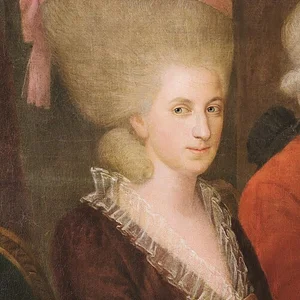
Maria Anna Mozart (Nannerl)
Austrian prodigy pianist and composer of the 18th century, elder sister of Wolfgang Amadeus Mozart. Considered as talented as her brother in childhood, she toured the European courts before her career was cut short in adulthood due to her status as a woman.
Marie Héricart
1633 — 1709
Marie Héricart was the wife of Jean de La Fontaine, whom she married in 1647. Their union, an unhappy one, led to a legal separation of their property. She was the mother of their only son, Charles.
Marie-Madeleine de Dreux
French noblewoman from the House of Dreux, a family of high Capetian lineage. A figure of the French aristocracy in the early modern period, her name combines Catholic devotion with membership in one of France's great seigneurial dynasties.

Marie-Marguerite Deshayes
Daughter of Catherine Deshayes, known as “La Voisin,” a poisoner and fortune-teller at the heart of the Affair of the Poisons under Louis XIV. Arrested after her mother's execution, she continued the revelations before the Chambre Ardente, implicating figures of the court.
Marquise de Brinvilliers
1630 — 1676
A French aristocrat of the 17th century, notorious for poisoning her father and brothers in order to inherit their fortune. Her trial and execution in 1676 triggered the Affair of the Poisons, exposing the widespread use of poison in high society.
Marquise de Montespan
1640 — 1707
Official favorite of Louis XIV from 1667 to 1681, she reigned over the court of Versailles and had seven legitimized children with the Sun King. Implicated in the Affair of the Poisons, she subsequently fell from grace.
Mary Read
1685 — 1721
Mary Read (1685-1721) was an English pirate who long concealed her sex beneath men's clothing. She served in the army and then aboard ships before joining the crew of the pirate Calico Jack Rackham, alongside Anne Bonny, in the Caribbean.
Olaudah Equiano
1745 — 1797
Olaudah Equiano (c. 1745-1797), also known as Gustavus Vassa, was a deported African slave who bought his own freedom before becoming one of the leading figures of the British abolitionist movement. His autobiography, published in 1789, brought the horror of the slave trade to a wide audience.
Paquette Le Clerc
A character in Voltaire's Candide (1759), Paquette is a young servant who, victimized by men and by society, ends up as a prostitute in Venice. Her fate embodies Voltaire's critique of the exploitation of women and the disillusionment with Pangloss's naive optimism.
Rachel Wall
1760 — 1789
Rachel Wall (c. 1760-1789) is considered the first female pirate born in America. Together with her husband, she plundered the coasts of New England from Essex Island, luring ships with fake distress signals. Hanged in Boston in 1789, she was one of the last women to be executed in Massachusetts.

Ranuccio Tomassoni
Ranuccio Tomassoni was a young Roman nobleman killed in a brawl with the painter Caravaggio on 28 May 1606 in Rome. His death forced Caravaggio to flee the city and live in exile, dramatically altering the course of one of the greatest artistic careers of the Baroque era.
Saint-Simon
1675 — 1755
French memoirist and duke at the court of Louis XIV. His Memoirs, written in secret, offer a striking and incisive portrait of life at Versailles and the intrigues of the nobility under Louis XIV and the Regency.
Samuel Bellamy
1689 — 1717
Samuel “Black Sam” Bellamy (c. 1689-1717) was an English pirate of the golden age of piracy. Captain of the Whydah, a captured former slave ship, he is considered one of the wealthiest pirates in history before perishing in a shipwreck in 1717.
Sarah Chiswell
Young Englishwoman who died of smallpox around 1714, and a friend of Lady Mary Wortley Montagu. Her tragic death prompted Lady Mary to champion variolation in England after observing the practice in the Ottoman Empire, indirectly contributing to the history of vaccination.
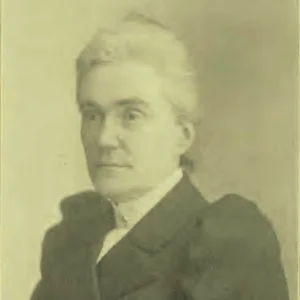
Sarah Good
1653 — 1692
Sarah Good was one of the first women accused of witchcraft during the Salem trials of 1692. A beggar marginalized by the Puritan community of Massachusetts, she proclaimed her innocence and denied any practice of witchcraft right up to her hanging.
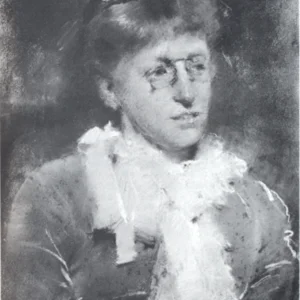
Sarah Osborne
1640 — 1692
An English colonist of New England, Sarah Osborne was one of the first three women accused of witchcraft during the Salem trials of 1692. Marginalized for having lived with a servant before marriage and for neglecting church, she always denied the accusations and died in prison.
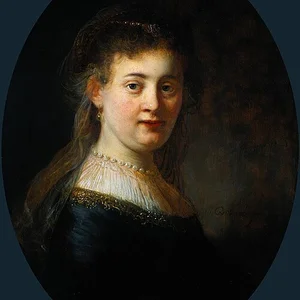
Saskia van Uylenburgh
1612 — 1642
Saskia van Uylenburgh (1612-1642) was the wife and favorite model of the painter Rembrandt. Born into a Frisian patrician family, she inspired numerous portraits, drawings, and etchings by the Dutch master during the years of his success.
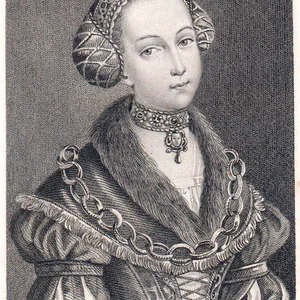
Sidonie von Borcke
A Pomeranian noblewoman born around 1590, Sidonie von Borcke was accused of witchcraft and sentenced to death. Beheaded in 1620 in Stettin, her trial illustrates the violence of persecutions against women in the early modern period.
Stede Bonnet
1688 — 1718
Stede Bonnet (c. 1688–1718), nicknamed “the gentleman pirate,” was a wealthy Barbadian planter who abandoned his plantation to become a pirate in the Caribbean. Allied for a time with Blackbeard, he was captured and hanged in Charleston in 1718.
Théroigne de Méricourt
A Belgian revolutionary activist (1762–1817), Théroigne de Méricourt played an active role in the French Revolution, most notably during the Women's March on Versailles (1789). A fierce champion of women's political rights, she was one of the first revolutionary feminists before being committed to the Salpêtrière asylum, where she remained until her death.
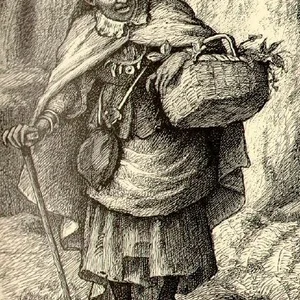
Tituba
1659 — ?
An enslaved woman of Native American or Caribbean origin (probably Arawak), owned by Reverend Samuel Parris in Salem. In 1692, she was the first accused to confess to witchcraft, triggering the spiral of the Salem witch trials.
William Kidd
1645 — 1701
A Scottish sailor first commissioned as a privateer in the service of the English Crown to hunt down pirates in the Indian Ocean. Accused of piracy himself, he was tried and hanged in London in 1701, becoming a legendary figure of the Golden Age of Piracy.
William Wilberforce
1759 — 1833
British politician and philanthropist, a leading figure in the parliamentary fight against the slave trade. An evangelical Member of Parliament, he devoted his life to the abolition of slavery throughout the British Empire.
Spirituality(41)
Abd al-Rahman al-Saadi
Chronicler, scholar, and secretary from Timbuktu, author of the Tarikh es-Sudan, one of the principal written sources on the Songhai Empire and the scholarly cities of the Western Sudan. His work recounts the succession of the Askias and the intellectual life of Timbuktu.
Abel Tasman
1603 — 1659
Abel Tasman was a Dutch navigator and explorer in the service of the Dutch East India Company (VOC). In 1642, he became the first European to reach Tasmania and New Zealand, pushing the boundaries of geographical knowledge of his time.
Ahilyabai Holkar
1725 — 1795
Queen of the Malwa kingdom (Indore) from 1767 to 1795, she ruled with wisdom and justice. Widowed at 29, she refused sati and took charge of the state, personally leading her armies. She had hundreds of temples, wells, and roads built across India.
Ann Putnam
1679 — 1716
Ann Putnam Jr. was one of the principal accusers during the Salem witch trials of 1692, when she was only twelve years old. Her testimony contributed to the conviction of several people. In 1706, she made a public apology, acknowledging that she had been deceived by the devil.
Anne of Great Britain
1665 — 1714
Queen of England, Scotland, and Ireland from 1702 to 1707, then first Queen of Great Britain following the Acts of Union of 1707. Her reign saw the rise of parliamentary government and the War of the Spanish Succession.
Baron Samedi
Baron Samedi is the loa of death in Haitian Vodou. Depicted in undertaker's attire — top hat and dark glasses — he is the guardian of the passage between the living and the dead. An ambivalent figure, at once protector and obscene trickster, he embodies the boundary between life and death.
Cardinal Ruffo
1744 — 1827
Neapolitan cardinal (1744–1827), known for reconquering the Kingdom of Naples in 1799 at the head of an army of Calabrian peasants, the Sanfedists. A symbol of counter-revolutionary reaction and the Bourbon restoration.
Elisabeth of Bohemia
1618 — 1680
Princess Palatine (1618–1680), daughter of King Frederick V of Bohemia. A self-taught philosopher, she engaged in a celebrated correspondence with Descartes, challenging his mind-body dualism. She ended her life as abbess of the Lutheran convent of Herford.
Francesco Maria Del Monte
Italian cardinal (1549–1626), diplomat and influential patron of Baroque Rome. He was Caravaggio's first major patron, housing him in his palace and commissioning several of his key works. Close to Galileo, he also had a keen interest in science and music.
Francisco de Pisa
1534 — 1616
Francisco de Pisa (1534-1616) was a Spanish historian and writer, canon of Toledo Cathedral. He is the author of the “Descripción de la Imperial Ciudad de Toledo” (1605), a major reference work on the history of Toledo and the Spanish Church.
Francisco Pizarro
1478 — 1541
Spanish conquistador (c. 1478–1541), he led the conquest of the Inca Empire in Peru between 1532 and 1533, captured the emperor Atahualpa, and founded Lima in 1535. His expedition transformed the New World and opened South America to Spanish colonization.
François d'Aix de La Chaise
1624 — 1709
French Jesuit (1624–1709), confessor to Louis XIV for 34 years. His influence at court was considerable, particularly during the revocation of the Edict of Nantes (1685). The Père-Lachaise cemetery, opened in 1804 on land that had once belonged to the Jesuits, bears his name.
Frederick II of Denmark
King of Denmark and Norway from 1559 to 1588, Frederick II waged the Northern Seven Years' War against Sweden and was an enlightened patron of the arts, most notably supporting the astronomer Tycho Brahe. He commissioned the construction of Kronborg Castle in Elsinore.
Gabrielle Danton
Gabrielle Charpentier (c. 1764–1793) was the wife of Georges-Jacques Danton, a leading orator of the French Revolution. The daughter of a Parisian café owner, she died at 28 in February 1793 while her husband was on a mission in Belgium, just months before the Reign of Terror.
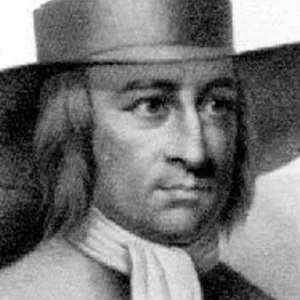
George Fox
1624 — 1691
Seventeenth-century English preacher, founder of the Religious Society of Friends, commonly known as the Quakers. He advocated a direct and inward experience of God, without clergy or rituals, grounded in the “inner light” present in every human being.
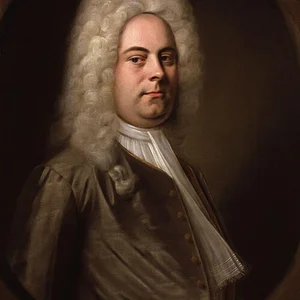
George Frideric Handel
1685 — 1759
German-born Baroque composer who became a British subject (1685–1759), Handel is one of the towering figures of 18th-century music. He is celebrated for his Italian operas, oratorios, and concerti grossi. His work *Messiah* (1741) remains one of the masterpieces of Western sacred music.
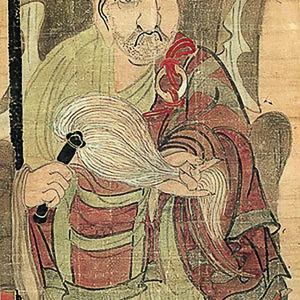
Hakuin
1685 — 1768
Hakuin Ekaku was a Japanese Buddhist master of the Rinzai school of Zen. Regarded as the reviver of Rinzai in the eighteenth century, he systematized kōan practice and spread Zen beyond the elites. He was also a prolific calligrapher and painter.
Innocent XII
1615 — 1700
Pope from 1691 to 1700, Innocent XII reformed the Church by combating nepotism through the bull Romanum decet Pontificem (1692). He played a role in the Quietist controversy and contributed to European diplomacy.
Jean Mabillon
1632 — 1707
A Benedictine monk of the Congregation of Saint-Maur, Jean Mabillon is the founder of diplomatics, the critical science of authenticating charters and ancient documents. His major work, De re diplomatica (1681), laid the foundations of modern historical method.
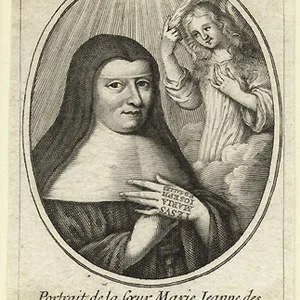
Jeanne des Anges
1602 — 1665
French Ursuline nun, mother superior of the convent of Loudun. She was the central figure in the affair of the possessed nuns of Loudun (1632-1634), claiming to be possessed by demons and accusing the priest Urbain Grandier of witchcraft, which led to his trial and execution at the stake.
Jonathan Swift
1667 — 1745
Anglo-Irish writer and satirist (1667–1745), Jonathan Swift is the author of Gulliver's Travels. Dean of St Patrick's Cathedral in Dublin, he used literature as a political and social weapon against the injustices of his time.
Joseph Priestley
1733 — 1804
Eighteenth-century English chemist, theologian and philosopher, famous for isolating oxygen in 1774. A dissenting minister, he was also a liberal thinker forced into exile in the United States.
Kimpa Vita
1684 — 1706
A Kongolese prophetess of the Bakongo people, Kimpa Vita founded around 1704 the Antonian movement, preaching an African interpretation of Christianity. Arrested by Capuchin missionaries, she was burned at the stake in 1706 for heresy and witchcraft.
Lasiren
Lasirèn is a major lwa (spirit) of Haitian Vodou, depicted as a mermaid with long flowing hair holding a mirror. A spirit of the waters, wealth, and beauty, she is associated with Erzulie and rules over the ocean depths where the dead reside.
Louis II de Bourbon, prince de Condé
Nicknamed “the Great Condé,” this prince of the blood distinguished himself at the Battle of Rocroi (1643) by crushing the Spanish infantry. A key figure in the Fronde, he eventually reconciled with Louis XIV and remained one of the greatest military commanders of the Grand Siècle.
Madeleine Bavent
A Carmelite nun at the convent of Louviers, Madeleine Bavent was at the center of a demonic possession affair and witchcraft accusations in 1647. Her trial, emblematic of the excesses of the witch hunts, led to the execution of Father Thomas Boulle and the condemnation of several members of the religious community.
Maria Gaetana Agnesi
1718 — 1799
An Italian mathematician and philosopher of the 18th century, Maria Gaetana Agnesi is celebrated for her treatise Instituzioni analitiche (1748), a pioneering pedagogical synthesis of differential and integral calculus. The first woman appointed as a professor of mathematics at the University of Bologna, she later devoted her life to charity and spirituality.
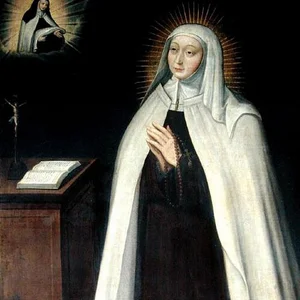
Marie de l'Incarnation
1566 — 1618
A French Ursuline nun and mystic, Marie Guyart set out in 1639 to found the first women's monastery in North America, in Quebec. A major figure of seventeenth-century spirituality, she evangelized and educated the young French and Native American girls of New France.
Marie-Madeleine de Dreux
French noblewoman from the House of Dreux, a family of high Capetian lineage. A figure of the French aristocracy in the early modern period, her name combines Catholic devotion with membership in one of France's great seigneurial dynasties.
Marin Mersenne
1588 — 1648
Marin Mersenne was a French Minim friar, mathematician, and physicist of the 17th century. The driving force behind a vast scholarly network across Europe, he was a forerunner of the scientific academy and a pioneer of acoustics.
Papa Legba
Papa Legba is the loa guardian of crossroads in Haitian Vodou religion. Depicted as an old man with a cane, he is the essential intermediary between humans and the other spirits. No ceremony can begin without first invoking his permission.
Saint Margaret Mary Alacoque
French nun of the Order of the Visitation, at the monastery of Paray-le-Monial. Her visions of Christ gave rise to the devotion to the Sacred Heart of Jesus. She was canonized in 1920.
Sarah Good
1653 — 1692
Sarah Good was one of the first women accused of witchcraft during the Salem trials of 1692. A beggar marginalized by the Puritan community of Massachusetts, she proclaimed her innocence and denied any practice of witchcraft right up to her hanging.
Sarah Osborne
1640 — 1692
An English colonist of New England, Sarah Osborne was one of the first three women accused of witchcraft during the Salem trials of 1692. Marginalized for having lived with a servant before marriage and for neglecting church, she always denied the accusations and died in prison.
Selim II
1524 — 1574
Selim II (1524–1574) was Ottoman sultan and caliph from 1566 to 1574. His reign is marked by the conquest of Cyprus and the naval defeat at Lepanto against the Christian coalition in 1571.
Tituba
1659 — ?
An enslaved woman of Native American or Caribbean origin (probably Arawak), owned by Reverend Samuel Parris in Salem. In 1692, she was the first accused to confess to witchcraft, triggering the spiral of the Salem witch trials.
Viracocha
Viracocha is the supreme creator deity of the Andean civilizations of Tiwanaku, Huari, and the Incas. According to Inca cosmogony, he created the world, the sun, the moon, the stars, and humanity from Lake Titicaca. He is depicted as a wandering god who taught civilization to mankind before disappearing toward the ocean.

Wakan Tanka
Wakan Tanka, the “Great Spirit” or “Great Mystery,” is the supreme divine principle of Lakota spirituality. This central concept of the Lakota Sioux refers to a sacred, all-pervading force that animates all things. It structures the cosmology, rituals, and ethics of an entire people.
William Blake
1757 — 1827
British poet, painter, and engraver (1757-1827), William Blake is one of the towering figures of English Romanticism. A visionary and mystic, he created a strikingly original body of poetic and artistic work, combining text and image in hand-engraved illuminated books.
William Griggs
1650 — ?
William Griggs was a physician in the Massachusetts colony, remembered for diagnosing a supernatural cause for the convulsions of young girls in Salem in 1692, triggering one of the most famous witch hunts in American colonial history.
William Wilberforce
1759 — 1833
British politician and philanthropist, a leading figure in the parliamentary fight against the slave trade. An evangelical Member of Parliament, he devoted his life to the abolition of slavery throughout the British Empire.
Philosophy(41)
Adam Smith
1723 — 1790
An 18th-century Scottish philosopher and economist, Adam Smith is considered the father of modern political economy. His landmark work, The Wealth of Nations (1776), laid the foundations of economic liberalism and capitalism.
Anne Conway
1631 — 1679
Anne Conway was an English philosopher of the 17th century. Self-taught, she developed a vitalist metaphysics set out in her posthumous work “The Principles of the Most Ancient and Modern Philosophy.” Her thought notably influenced Leibniz and his concept of the monad.
Anne Thérèse de Marguenat de Courcelles, marquise de Lambert
A Parisian writer and salon hostess (1647–1733), she presided over one of the most influential literary salons of the Regency period, frequented by Fontenelle, Montesquieu, and Marivaux. A pioneer in thinking about women's education, she championed their access to intellectual life.
Arthur Schopenhauer
1788 — 1860
A 19th-century German philosopher, Schopenhauer is the great thinker of pessimism and the will. His masterwork, The World as Will and Representation (1818), profoundly influenced Nietzsche, Freud, and Wagner.
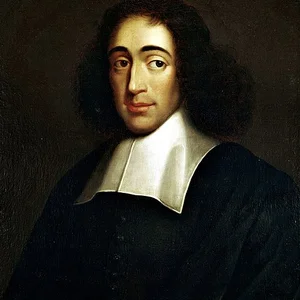
Baruch Spinoza
1632 — 1677
A 17th-century Dutch philosopher, Spinoza developed an original metaphysical system built on the concept of a single substance (God or Nature). His major work, the Ethics, offers a new conception of freedom and the relationship between mind and body.
Blaise Pascal
1623 — 1662
French mathematician, physicist, philosopher and writer (1623–1662), Blaise Pascal revolutionized mathematics by founding probability theory and left a lasting mark on Christian philosophy through his exploration of doubt and faith. A major figure of the 17th century, he combined scientific rigor with metaphysical inquiry.
Cardinal de Richelieu
1585 — 1642
Cardinal and chief minister to Louis XIII, Richelieu strengthened royal authority and centralized power in France. He fought against the rebellious nobility and the Protestants, while drawing France into the Thirty Years' War.
Cardinal Mazarin
1602 — 1661
Cardinal and chief minister of state of France, he governed the kingdom during Louis XIV's minority under the regency of Anne of Austria. Richelieu's successor, he signed the Treaties of Westphalia and overcame the Fronde to consolidate the monarchy.
Caroline of Ansbach
1683 — 1737
Queen consort of Great Britain and Ireland (1727–1737), wife of George II. An Enlightenment intellectual, she corresponded with Leibniz and actively supported Newton in the philosophical and scientific dispute between the two men. Regent on several occasions, she wielded major political influence over the British monarchy.
Charles XII of Sweden
King of Sweden from 1697 to 1718, Charles XII was one of the greatest military commanders of his era. He led the Great Northern War against a European coalition, winning the Battle of Narva (1700) before suffering a crushing defeat at Poltava (1709). He died during the siege of Fredriksten, marking the end of Swedish dominance in Europe.
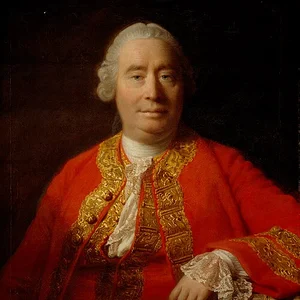
David Hume
1711 — 1776
Scottish Enlightenment philosopher (1711-1776), David Hume is one of the foremost thinkers of modern empiricism. He grounded his philosophy in observation and sensory experience, challenging rational certainties and developing a sceptical approach to knowledge.
Denis Diderot
1713 — 1784
French philosopher, writer, and encyclopedist (1713–1784), a leading figure of the Enlightenment. Co-editor of the Encyclopédie with d'Alembert, he embodies the critical spirit and pursuit of rational knowledge that defined the 18th century. Author of philosophical novels such as Jacques the Fatalist, he helped transform European intellectual thought.
Elisabeth of Bohemia
1618 — 1680
Princess Palatine (1618–1680), daughter of King Frederick V of Bohemia. A self-taught philosopher, she engaged in a celebrated correspondence with Descartes, challenging his mind-body dualism. She ended her life as abbess of the Lutheran convent of Herford.
Émilie du Châtelet
1706 — 1749
Émilie du Châtelet (1706-1749) was a French physicist and mathematician of the Enlightenment. She translated and annotated Newton's Principia Mathematica, a work that remained the standard French reference until the 19th century. Voltaire's companion, she demonstrated that kinetic energy is proportional to the square of velocity.
François de La Rochefoucauld
1613 — 1680
François de La Rochefoucauld (1613-1680) was a French writer and moralist of the Grand Siècle. An aristocratic rebel turned author, he is famous for his Maxims, a collection of brief, disenchanted sayings about human nature, in which self-love governs all our conduct.
Frederick II of Denmark
King of Denmark and Norway from 1559 to 1588, Frederick II waged the Northern Seven Years' War against Sweden and was an enlightened patron of the arts, most notably supporting the astronomer Tycho Brahe. He commissioned the construction of Kronborg Castle in Elsinore.
Friedrich Schiller
1759 — 1805
German poet, playwright, and philosopher of the Enlightenment and Sturm und Drang, Schiller is one of the major figures of Weimar Classical literature. A close friend of Goethe, he championed the ideals of freedom, human dignity, and moral elevation through art.
George Berkeley
1685 — 1753
Irish Anglican philosopher and bishop, a major figure of British empiricism. He defended immaterialism, the doctrine that sensible things exist only insofar as they are perceived.

Hegel
1770 — 1831
German philosopher (1770–1831), Hegel is one of the greatest thinkers of German Idealism. He developed a dialectical method and an influential philosophy of history, most notably set out in the Phenomenology of Spirit.
Hugo Grotius
1583 — 1645
Hugo Grotius (Huig de Groot), a Dutch jurist, philosopher, and diplomat, is regarded as one of the founders of modern international law and natural law. His major work, “De jure belli ac pacis” (1625), lays the foundations of a body of law governing relations between nations.
Immanuel Kant
1724 — 1804
German Enlightenment philosopher (1724–1804), Kant revolutionized metaphysics by proposing a radical critique of human reason. Author of the Critique of Pure Reason, he founded transcendental idealism and developed a universal moral theory based on the categorical imperative.
Innocent XII
1615 — 1700
Pope from 1691 to 1700, Innocent XII reformed the Church by combating nepotism through the bull Romanum decet Pontificem (1692). He played a role in the Quietist controversy and contributed to European diplomacy.
Isabelle de Charrière
1740 — 1805
Born Belle van Zuylen in the Netherlands in 1740, Isabelle de Charrière settled in Switzerland after her marriage and became one of the most remarkable women writers of the 18th century. A novelist, letter-writer, and composer, she advocated with great clarity for women's freedom and critiqued the social conventions of her time.
James Madison
1751 — 1836
American statesman (1751–1836), regarded as the "Father of the Constitution" of the United States. Architect of the Bill of Rights and fourth President of the United States, he was one of the foremost theorists of American republicanism.
Jean le Rond d'Alembert
1717 — 1783
A mathematician and philosopher of the Enlightenment, he co-edited the great Encyclopédie with Diderot and wrote its famous Preliminary Discourse. He formulated the mechanical principle that bears his name and embodied the encyclopédiste ideal of bringing together all human knowledge.
Jean-Jacques Rousseau
1712 — 1778
Genevan philosopher, writer, and musician (1712–1778), a central figure of the Enlightenment. Author of The Social Contract and Confessions, he profoundly influenced political and educational thought by championing popular sovereignty and natural education.
John Locke
1632 — 1704
A 17th-century English philosopher, John Locke is the founder of modern empiricism and a major thinker of political liberalism. He developed the theory of natural rights (life, liberty, property) and justified the right to revolt against tyrannical power, profoundly influencing democratic revolutions.
Leibniz
1646 — 1716
A German philosopher and mathematician of the 17th century, Leibniz contributed to the scientific revolution by developing infinitesimal calculus and proposing an original philosophy grounded in monadology. He shaped modern thought through his theory of pre-established harmony and his metaphysical optimism.
Madame de Staël
1766 — 1817
Germaine de Staël, daughter of minister Necker, was one of the great intellectual voices of her era. A novelist, essayist, and salon hostess, she stood up to Napoleon, who exiled her, and helped introduce German Romanticism to France with her work *De l'Allemagne*.
Madame Geoffrin
1699 — 1777
A Parisian salon hostess of the 18th century, she presided over one of the most influential salons of the Enlightenment, welcoming d'Alembert, Diderot, Fontenelle, and Montesquieu. A generous patron of the arts and a remarkable letter-writer, she played a central role in spreading Enlightenment ideas across Europe.
Maria Gaetana Agnesi
1718 — 1799
An Italian mathematician and philosopher of the 18th century, Maria Gaetana Agnesi is celebrated for her treatise Instituzioni analitiche (1748), a pioneering pedagogical synthesis of differential and integral calculus. The first woman appointed as a professor of mathematics at the University of Bologna, she later devoted her life to charity and spirituality.
Marie Jean Antoine Nicolas de Condorcet
Mathematician and Enlightenment philosopher (1743–1794), Condorcet served as Permanent Secretary of the Academy of Sciences, championed equal rights for women and enslaved people, and played an active role in the French Revolution. He died during the Reign of Terror, having written his intellectual testament on human progress.
Marquise du Châtelet
An 18th-century French physicist and mathematician, she translated and annotated Newton's Principia Mathematica, introducing Newtonian mechanics to France. Voltaire's companion and a central figure of the Enlightenment, she developed the concept of vis viva (kinetic energy).
Mary Wollstonecraft
1759 — 1797
Mary Wollstonecraft was an 18th-century British philosopher and writer, a pioneer of feminism. Her landmark work, *A Vindication of the Rights of Woman* (1792), demands equal education and civil rights for women. She embodies Enlightenment thinking applied to the condition of women.
Montesquieu
1689 — 1755
An 18th-century French philosopher and writer, Montesquieu is the author of the landmark work 'The Spirit of the Laws' (1748). He theorized the separation of powers, a foundational concept of modern political thought, and contributed to the emergence of Enlightenment philosophy.
Philippe II d'Orléans
Regent of France from 1715 to 1723 during the minority of Louis XV, Philippe II d'Orléans governed the kingdom following the death of Louis XIV. A curious and libertine spirit, he was also a musician, painter, and patron of the arts, embodying the transition between the Grand Siècle and the Enlightenment.
Pierre Jean Georges Cabanis
1757 — 1808
French physician, physiologist, and philosopher (1757–1808), a leading figure among the Idéologues. He sought to establish a science of man by linking the physical functions of the body to moral phenomena.
René Descartes
1596 — 1650
French philosopher and mathematician of the 17th century, founder of modern philosophy and rationalism. Known for his method of systematic doubt and his famous principle "I think, therefore I am." He revolutionized mathematics by creating analytic geometry.
Sophie Germain
1776 — 1831
French mathematician and philosopher (1776–1831), a pioneer in science at a time when women were excluded from it. She made contributions to number theory and elasticity, and corresponded with Gauss under a male pseudonym.
Thomas Hobbes
1588 — 1679
A 17th-century English philosopher, Thomas Hobbes is the author of Leviathan (1651), a founding work of modern political philosophy. He develops a social contract theory justifying the absolute authority of the state to guarantee peace and security.
Voltaire
1694 — 1778
An 18th-century French writer and philosopher, Voltaire is a major figure of the Enlightenment. Through his works, most notably Candide, he championed tolerance, freedom of expression, and criticism of religious intolerance.
Visual Arts(35)
Adélaïde Labille-Guiard
1749 — 1803
French painter and miniaturist of the 18th century, she was one of only two women admitted to the Académie royale de peinture in 1783. Official portraitist to the Mesdames de France, she rivaled Élisabeth Vigée Le Brun and campaigned for women's access to artistic institutions.

Agostino Tassi
1580 — 1644
Italian painter (c. 1578–1644), specialist in landscape and seascape painting. He was the master of Claude Lorrain and contributed to the development of atmospheric perspective in Roman Baroque painting.
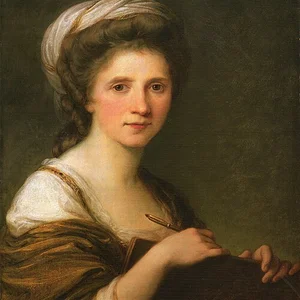
Angelica Kauffmann
1741 — 1807
Swiss painter, a major figure of European Neoclassicism. A celebrated portraitist and history painter, she was one of only two women among the founding members of the Royal Academy of Arts in London in 1768.
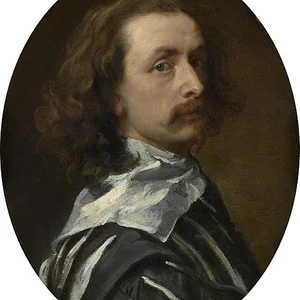
Anthony van Dyck
1599 — 1641
Anthony van Dyck (1599–1641) was a Flemish painter and engraver, a pupil of Rubens, who became one of the most celebrated portrait painters in seventeenth-century Europe. Appointed official painter to King Charles I of England, he left a lasting mark on the art of aristocratic portraiture.
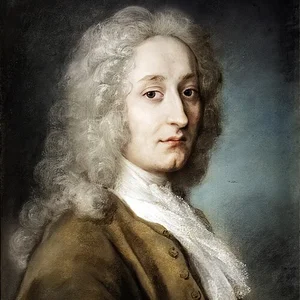
Antoine Watteau
1684 — 1721
Antoine Watteau was a French painter and draughtsman of the early 18th century. The inventor of the genre of the “fêtes galantes” (courtship parties), he is one of the major figures of Rococo art, famous for his refined and melancholy scenes.
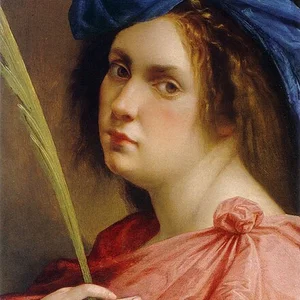
Artemisia Gentileschi
1593 — 1653
Italian painter
Carlo Cesare Malvasia
1616 — 1693
Carlo Cesare Malvasia (1616-1693) was a Bolognese Italian art historian and writer. He is the author of the *Felsina pittrice*, a major work devoted to the painters of the Bolognese school, which stands as a fundamental historiographical source for Italian Baroque art.
Charles XII of Sweden
King of Sweden from 1697 to 1718, Charles XII was one of the greatest military commanders of his era. He led the Great Northern War against a European coalition, winning the Battle of Narva (1700) before suffering a crushing defeat at Poltava (1709). He died during the siege of Fredriksten, marking the end of Swedish dominance in Europe.
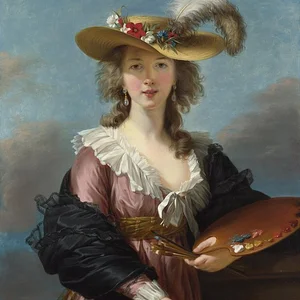
Élisabeth Vigée Le Brun
1755 — 1842
Élisabeth Vigée Le Brun (1755–1842) was one of the greatest portrait painters of the 18th century. Official painter to Marie Antoinette, she completed more than 660 portraits before fleeing the French Revolution. The first woman admitted to the Royal Academy of Painting, she embodied female excellence in an artistic world dominated by men.
Francesco Maria Del Monte
Italian cardinal (1549–1626), diplomat and influential patron of Baroque Rome. He was Caravaggio's first major patron, housing him in his palace and commissioning several of his key works. Close to Galileo, he also had a keen interest in science and music.
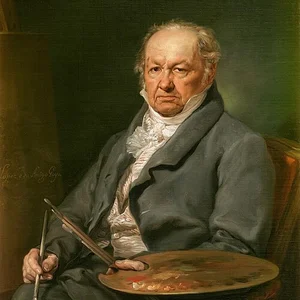
Francisco de Goya
1746 — 1828
Spanish painter and printmaker (1746–1828), considered a forerunner of modern art. He served as official painter to the Spanish royal court while developing a dark and visionary personal body of work, particularly after losing his hearing in 1792.
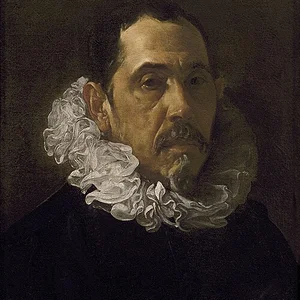
Francisco Pacheco
1564 — 1644
Spanish painter (1564–1644), master of Seville and father-in-law of Velázquez. A theorist of painting, he authored *El arte de la pintura*, a landmark treatise on 17th-century Spanish painting.
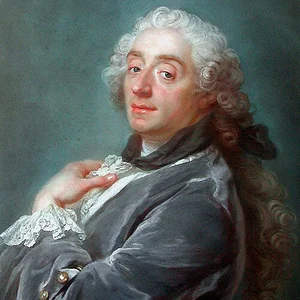
François Boucher
1703 — 1770
François Boucher was a French painter, draughtsman, and engraver, a leading figure of the Rococo style. First Painter to King Louis XV and protégé of the Marquise de Pompadour, he embodied the refined, gallant art of the 18th century.
Gabrielle Danton
Gabrielle Charpentier (c. 1764–1793) was the wife of Georges-Jacques Danton, a leading orator of the French Revolution. The daughter of a Parisian café owner, she died at 28 in February 1793 while her husband was on a mission in Belgium, just months before the Reign of Terror.
Gian Lorenzo Bernini
1598 — 1680
Italian sculptor, architect and painter, a leading figure of the Roman Baroque in the 17th century. A genius of dramatic staging, he turned marble into flesh and orchestrated the décor of papal Rome, most notably in the service of Saint Peter's Basilica.
Innocent XII
1615 — 1700
Pope from 1691 to 1700, Innocent XII reformed the Church by combating nepotism through the bull Romanum decet Pontificem (1692). He played a role in the Quietist controversy and contributed to European diplomacy.
Jacques-Germain Soufflot
1713 — 1780
French architect (1713–1780), a leading figure of Neoclassicism. He designed the church of Sainte-Geneviève in Paris, which became the Panthéon, a symbol of the nation. His work combines ancient rigor with Gothic lightness.
Jan Vermeer
1632 — 1675
Johannes Vermeer was a Dutch painter of the Dutch Golden Age, famous for his intimate interior scenes bathed in subtle light. A master of Delft, he left behind a small but exceptionally fine body of work.
Jean-Baptiste Chardin
1699 — 1779
Jean Siméon Chardin (1699-1779) was an 18th-century French painter, a master of still life and genre scenes. Going against the rococo painting of his time, he celebrated domestic life and everyday objects with a subtle touch and a rare sense of light.
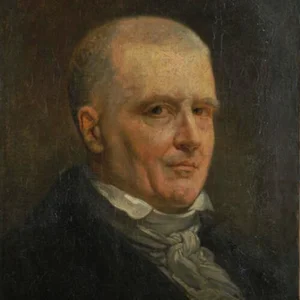
Jean-Honoré Fragonard
1732 — 1806
French painter and engraver of the 18th century, a major figure of the Rococo style. Renowned for his amorous scenes full of virtuosity and lightness, he embodies the refined art of the waning Ancien Régime.
Joseph-Marie Vien
1716 — 1809
French painter (1716–1809), forerunner of Neoclassicism and master of Jacques-Louis David. Director of the French Academy in Rome, then First Painter to the King and senator under Napoleon.
Katsukawa Shunsho
1726 — 1793
Japanese painter and printmaker of the 18th century, master of ukiyo-e woodblock printing. He is celebrated for his portraits of kabuki actors and his depictions of sumo wrestlers, and founded the Katsukawa school.
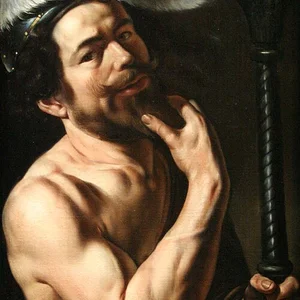
Louis Finson
1580 — 1617
Louis Finson (c. 1580–1617) was a Flemish painter and art dealer, trained in Naples where he associated with Caravaggio. A key figure in spreading Caravaggism to Northern Europe, he owned several works by the master and helped disseminate this style in France and the Low Countries.
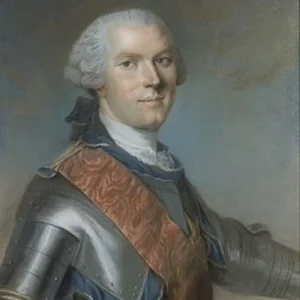
Louis Vigée
1715 — 1767
Louis Vigée (1715–1767) was a French painter and poet, member of the Royal Academy of Painting. He is best known as the father of Élisabeth Vigée Le Brun, one of the greatest portrait painters at the court of Louis XVI.
Madame de Pompadour
1721 — 1764
Official mistress of King Louis XV from 1745 until her death in 1764, she wielded considerable influence over French politics and culture. A great patron of the arts and protector of the Enlightenment philosophers, she helped shape the Rococo style and supported the Encyclopédie of Diderot and d'Alembert.
Maria Sibylla Merian
1647 — 1717
A German naturalist and artist of the 17th century, Maria Sibylla Merian was a pioneer in the study of insects and their metamorphosis. She led an expedition to Suriname (1699–1701) to observe and illustrate tropical flora and fauna, at a time when women rarely had access to the sciences.
Nicolas Poussin
1594 — 1665
Nicolas Poussin was a 17th-century French painter and a leading figure of pictorial classicism. Living in Rome for most of his life, he favored drawing, rigorous composition, and historical, mythological, and religious subjects inspired by Antiquity.
Nur Jahan
1577 — 1645
Mughal empress (1577–1645), wife of Emperor Jahangir, she was the only woman to wield real political power under the Mughal dynasty. An administrator, poet, and patron of the arts, she had coins struck in her own name and effectively governed the empire for several years.
Rembrandt
1606 — 1669
Rembrandt van Rijn was a Dutch painter and etcher of the 17th century, considered one of the greatest masters of Western painting. A virtuoso of chiaroscuro, he excelled in portraits, biblical scenes, and self-portraits. His work, marked by profound humanity, has had a lasting influence on the history of art.
Rosalba Carriera
1675 — 1757
Rosalba Carriera (1675-1757) was a Venetian painter and pastellist, a leading figure of pastel portraiture in Europe. Her stay in Paris in 1720-1721 helped launch the fashion for pastel and the rococo style.
Rose Bertin
1747 — 1813
A French fashion merchant, Rose Bertin was the dressmaker and style advisor to Queen Marie-Antoinette. Nicknamed the “minister of fashion,” she introduced extravagant hairstyles and outfits that made her a pioneering figure of haute couture.
Saskia van Uylenburgh
1612 — 1642
Saskia van Uylenburgh (1612-1642) was the wife and favorite model of the painter Rembrandt. Born into a Frisian patrician family, she inspired numerous portraits, drawings, and etchings by the Dutch master during the years of his success.
Thomas Jefferson
1743 — 1826
An American statesman, Thomas Jefferson was one of the Founding Fathers of the United States and the principal author of the Declaration of Independence (1776). A philosopher of the Enlightenment, he also served as the third President of the United States (1801–1809).
Titus van Rijn
1641 — 1668
The only surviving child of Rembrandt van Rijn, Titus was a painter and art dealer in 17th-century Amsterdam. He worked in his father's studio and strove to support the family after their financial ruin. He died at just 27, shortly after his marriage.
William Blake
1757 — 1827
British poet, painter, and engraver (1757-1827), William Blake is one of the towering figures of English Romanticism. A visionary and mystic, he created a strikingly original body of poetic and artistic work, combining text and image in hand-engraved illuminated books.
Exploration(32)
Anne Bonny
1697 — ?
Anne Bonny was a pirate of Irish origin active in the Caribbean in the early 18th century. The companion of the pirate Calico Jack Rackham, she fought at his side and became one of the few known women of the “Golden Age of Piracy.” Captured in 1720, she escaped hanging by declaring herself pregnant.
Barthélemy de Lesseps
1766 — 1834
French diplomat and explorer (1766–1834), he participated in the La Pérouse expedition as an interpreter and was the only member to return to Europe before the shipwreck. He crossed Siberia to bring the expedition's logbooks back to Paris.
Bartholomew Roberts
1682 — 1722
Bartholomew Roberts, known as “Black Bart,” was a Welsh pirate considered the most prolific of the Golden Age of Piracy. In barely three years (1719–1722), he captured more than 400 ships across the Atlantic and the Caribbean before being killed in battle by the Royal Navy.
Blackbeard
1680 — 1718
Edward Teach, known as Blackbeard, was one of the most famous pirates of the early 18th century. He roamed the Caribbean and the Atlantic coast of North America aboard the Queen Anne's Revenge, spreading terror through his carefully cultivated reputation, before being killed in battle in 1718.
Cabeza de Vaca
A 16th-century Spanish conquistador and explorer, he survived the shipwreck of the Narváez expedition in Florida (1528) and crossed North America for eight years with three companions before reaching Mexico. His account, the *Naufragios*, is one of the first European eyewitness records of the interior of the American continent.
Calico Jack
1682 — 1720
English pirate of the early 18th century, active in the Caribbean during the “Golden Age of Piracy.” He owes his fame to his flag — a skull above two crossed cutlasses — and to the presence in his crew of the female pirates Anne Bonny and Mary Read.
Charles Pierre Claret de Fleurieu
1738 — 1810
French navigator, hydrographer, and statesman (1738–1810), Fleurieu contributed to maritime cartography and oversaw several scientific expeditions. Minister of the Navy under Louis XVI, he played a key role in organizing France's major voyages of exploration.
d'Entrecasteaux
French navigator and admiral (1737–1793), d'Entrecasteaux was sent in 1791 to search for the lost expedition of La Pérouse. He explored the coasts of Australia, New Caledonia, and Tasmania before dying at sea without having found La Pérouse.
Daniel Boone
1734 — 1820
Daniel Boone (1734-1820) was an American pioneer, trapper, and explorer, an iconic figure of the conquest of the West. In 1775 he blazed the Wilderness Road through the Appalachians and founded Boonesborough, in present-day Kentucky.
Edmond Halley
1656 — 1742
An English astronomer and scientist of the 17th–18th century, he is famous for calculating the orbit of the comet that bears his name and predicting its return. A friend and patron of Newton, he played an essential role in the publication of the Principia Mathematica.
Estevanico
1500 — 1540
A Berber slave from Morocco, Estevanico was one of the first Africans to explore North America. A survivor of the wreck of the Narváez expedition (1528), he crossed the present-day American Southwest on foot and opened the route to the legendary Seven Cities of Cíbola.
Henry Every
1659 — 1699
Henry Every, nicknamed “Long Ben,” was an English pirate of the late 17th century. In 1695, he seized the Ganj-i-Sawai, a ship of the Grand Mughal, pulling off one of the largest hauls in the history of piracy. Actively hunted, he vanished without ever being captured.
Henry Hudson
1565 — 1611
An English navigator and explorer of the early 17th century, Henry Hudson led four expeditions in search of a Northwest Passage to Asia. He gave his name to Hudson Bay in Canada, before disappearing during a mutiny by his crew in 1611.
James Cook
1728 — 1779
British navigator, cartographer and explorer (1728–1779), James Cook led three major expeditions into the Pacific Ocean and greatly advanced the world's geographical knowledge. He explored and mapped New Zealand, Australia, and numerous Pacific archipelagos, becoming one of the defining figures of modern exploration.
Jean Bart
1650 — 1702
Jean Bart (1650-1702) was a privateer and naval officer from Dunkirk in the service of Louis XIV. Born into a family of sailors, he distinguished himself through his victories against the English and Dutch fleets and was raised to the nobility by the king.
Jean-François de La Pérouse
1741 — 1788
A French naval officer and explorer of the 18th century, La Pérouse led a major expedition across the Pacific Ocean (1785–1788). The voyage produced important cartographic surveys and scientific studies, but the expedition mysteriously disappeared in 1788.
Jeanne Barret
1740 — 1807
explorer and botanist (1740-1807)
John Harrison
1693 — 1776
A self-taught British clockmaker (1693–1776), John Harrison solved one of the greatest scientific challenges of his era: the precise determination of longitude at sea. His marine chronometer H4 (1759) revolutionized navigation and saved countless lives.
Joseph Banks
1743 — 1820
British naturalist and botanist (1743–1820), Joseph Banks took part in James Cook's first voyage around the world (1768–1771) aboard the Endeavour. He brought back thousands of previously unknown plant specimens and served as President of the Royal Society for 41 years.
Louis-Antoine de Bougainville
1729 — 1811
French navigator and naval officer (1729–1811), he completed the first French circumnavigation of the globe (1766–1769), bringing back accounts of Tahiti that fuelled the myth of the noble savage. He was also a mathematician and played a role in the Seven Years' War.
Mary Read
1685 — 1721
Mary Read (1685-1721) was an English pirate who long concealed her sex beneath men's clothing. She served in the army and then aboard ships before joining the crew of the pirate Calico Jack Rackham, alongside Anne Bonny, in the Caribbean.
Milet-Mureau
Milet-Mureau (1750-1825) was a French general and writer, best known for editing and publishing the account of Lapérouse's voyage after the explorer's disappearance. His editorial work preserved the geographical legacy of the expedition for posterity.
Montgolfier (brothers)
French inventor brothers who achieved the first manned hot-air balloon flight in 1783. Their invention revolutionized the concept of aerial travel and paved the way for aeronautics.
Philibert Commerson
1727 — 1773
French physician, naturalist, and explorer (1727–1773), Commerson took part in Bougainville's circumnavigation (1766–1769) as the official botanist. He described thousands of plant and animal species unknown to Europe, including the bougainvillea, which he named in honour of his expedition commander.
René Duguay-Trouin
1673 — 1736
A privateer from Saint-Malo in the service of the King of France, René Duguay-Trouin distinguished himself through daring captures of enemy ships during the wars of Louis XIV. Ennobled for his exploits, he ended his career as lieutenant general of the naval forces after the capture of Rio de Janeiro in 1711.
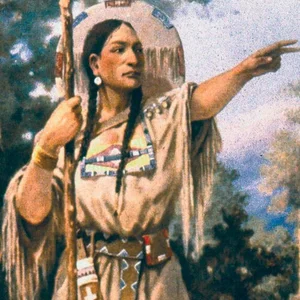
Sacagawea
1786 — 1812
A Shoshone woman (c. 1788–1812), Sacagawea served as the indispensable interpreter and guide for the Lewis and Clark Expedition (1804–1806). Her knowledge of the land, languages, and Indigenous peoples enabled the American expedition to cross the continent all the way to the Pacific.
Samuel Bellamy
1689 — 1717
Samuel “Black Sam” Bellamy (c. 1689-1717) was an English pirate of the golden age of piracy. Captain of the Whydah, a captured former slave ship, he is considered one of the wealthiest pirates in history before perishing in a shipwreck in 1717.
Samuel de Champlain
1567 — 1635
A French navigator and explorer, Samuel de Champlain founded the city of Quebec in 1608 and is known as the Father of New France. He mapped much of Canada and established lasting alliances with Indigenous peoples.
Stede Bonnet
1688 — 1718
Stede Bonnet (c. 1688–1718), nicknamed “the gentleman pirate,” was a wealthy Barbadian planter who abandoned his plantation to become a pirate in the Caribbean. Allied for a time with Blackbeard, he was captured and hanged in Charleston in 1718.
Tupaia
1725 — 1770
Tupaia was a Polynesian navigator, priest, and artist from Ra'iatea. A master of traditional navigation, he joined James Cook's expedition in 1769 and drew up a remarkable chart of more than 130 Pacific islands, a unique testament to Polynesian geographic knowledge.
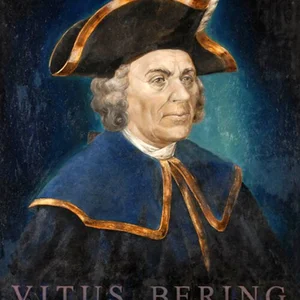
Vitus Bering
1681 — 1741
A Danish navigator and explorer in the service of Imperial Russia, Vitus Bering led two major expeditions to the Russian Far East. He explored the coasts of Siberia and Alaska, and gave his name to the strait separating Asia from America.
William Kidd
1645 — 1701
A Scottish sailor first commissioned as a privateer in the service of the English Crown to hunt down pirates in the Indian Ocean. Accused of piracy himself, he was tried and hanged in London in 1701, becoming a legendary figure of the Golden Age of Piracy.
Music(27)
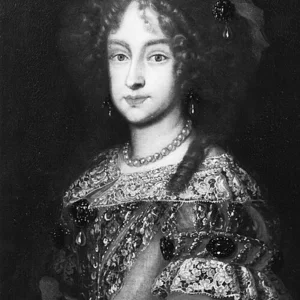
Anna Girò
1710 — ?
Anna Girò (c. 1710–1748) was an Italian contralto singer, pupil and close collaborator of Antonio Vivaldi. She created many roles in the Venetian composer's operas, becoming one of the most celebrated performers of her time.
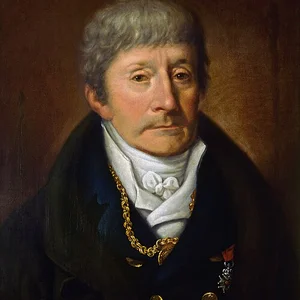
Antonio Salieri
1750 — 1825
Antonio Salieri (1750-1825) was an Italian composer active at the court of Vienna, where he served as imperial Kapellmeister. A major figure of classical opera, he was also a renowned teacher who trained Beethoven, Schubert, and Liszt.
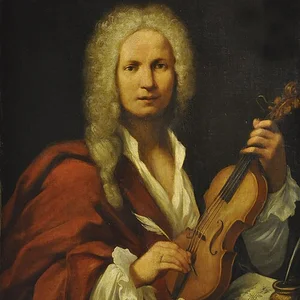
Antonio Vivaldi
1678 — 1741
An 18th-century Venetian composer and violinist, Vivaldi is one of the major figures of Baroque music. He is best known for his violin concertos, particularly The Four Seasons, which remain among the most performed works in the classical repertoire.
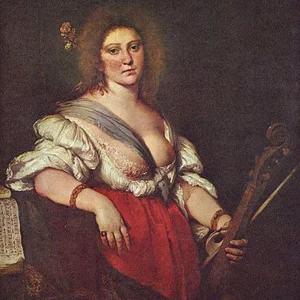
Barbara Strozzi
1619 — 1677
A Venetian singer and composer of the 17th century, Barbara Strozzi was one of the first women to publish music under her own name. She composed more secular vocal works than any other composer of her era.
Charles XII of Sweden
King of Sweden from 1697 to 1718, Charles XII was one of the greatest military commanders of his era. He led the Great Northern War against a European coalition, winning the Battle of Narva (1700) before suffering a crushing defeat at Poltava (1709). He died during the siege of Fredriksten, marking the end of Swedish dominance in Europe.
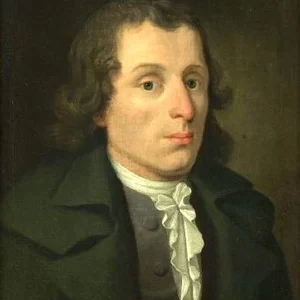
Christian Gottlob Neefe
1748 — 1798
German composer and organist (1748–1798), he is best known for being Ludwig van Beethoven's first teacher in Bonn. A versatile musician, he composed operas, lieder, and chamber music in the spirit of the Enlightenment.
Christian Ludwig of Brandenburg
Margrave of Brandenburg-Schwedt and member of the House of Hohenzollern, he is best known as the dedicatee of Johann Sebastian Bach's six Brandenburg Concertos (1721). A music lover and patron of the arts, he embodies the aristocratic German culture of the early 18th century.
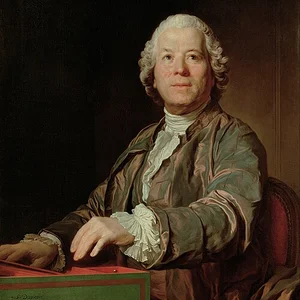
Christoph Willibald Gluck
1714 — 1787
Austro-Bohemian composer (1714–1787), Gluck revolutionized opera in the 18th century by prioritizing dramatic expression over vocal virtuosity. His reform profoundly influenced European lyric music.
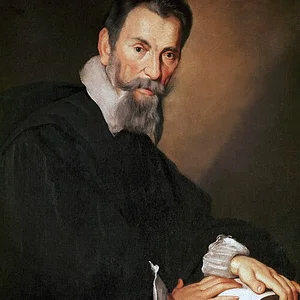
Claudio Monteverdi
1567 — 1643
Italian composer born in Cremona in 1567 and died in Venice in 1643. A pioneer of opera with L'Orfeo (1607), he marks the transition between the Renaissance and the Baroque. Maestro di cappella at St Mark's Basilica in Venice, he revolutionized vocal and instrumental music.
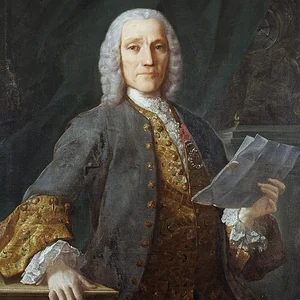
Domenico Scarlatti
1685 — 1757
Domenico Scarlatti was an Italian composer and harpsichordist of the Baroque period. The son of the composer Alessandro Scarlatti, he is famous for his 555 harpsichord sonatas, which revolutionized the instrument's technique. He spent much of his life in the service of the courts of Portugal and Spain.
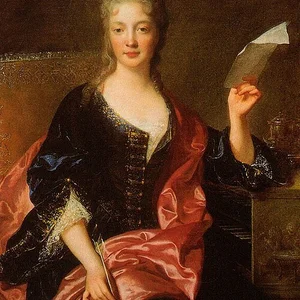
Élisabeth Jacquet de La Guerre
1665 — 1729
French harpsichordist and composer (1665-1729), a prodigy noticed in childhood by Louis XIV. She was one of the few women of her era to publish and have her musical works performed.
Ernst Chladni
1756 — 1827
German physicist and musician, considered the father of modern acoustics. He revealed the vibration modes of plates through the figures that bear his name.
Francesca Caccini
1587 — 1641
Italian composer, singer, and instrumentalist (1587–c.1641), Francesca Caccini is the first known woman to have composed an opera, La liberazione di Ruggiero (1625). Daughter of composer Giulio Caccini, she was the highest-paid musician at the Medici court in Florence.
Frederick II of Denmark
King of Denmark and Norway from 1559 to 1588, Frederick II waged the Northern Seven Years' War against Sweden and was an enlightened patron of the arts, most notably supporting the astronomer Tycho Brahe. He commissioned the construction of Kronborg Castle in Elsinore.
George Frideric Handel
1685 — 1759
German-born Baroque composer who became a British subject (1685–1759), Handel is one of the towering figures of 18th-century music. He is celebrated for his Italian operas, oratorios, and concerti grossi. His work *Messiah* (1741) remains one of the masterpieces of Western sacred music.
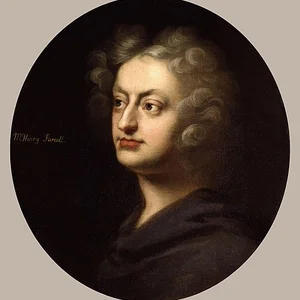
Henry Purcell
1659 — 1695
Henry Purcell was an English composer and organist of the Baroque era. Considered one of the greatest British composers, he left his mark on the music of the Stuart court and composed the opera Dido and Aeneas.
Isabelle de Charrière
1740 — 1805
Born Belle van Zuylen in the Netherlands in 1740, Isabelle de Charrière settled in Switzerland after her marriage and became one of the most remarkable women writers of the 18th century. A novelist, letter-writer, and composer, she advocated with great clarity for women's freedom and critiqued the social conventions of her time.
Jean le Rond d'Alembert
1717 — 1783
A mathematician and philosopher of the Enlightenment, he co-edited the great Encyclopédie with Diderot and wrote its famous Preliminary Discourse. He formulated the mechanical principle that bears his name and embodied the encyclopédiste ideal of bringing together all human knowledge.
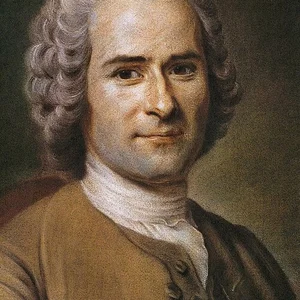
Jean Rousseau
1644 — 1699
Jean Rousseau (1644-1699) was a French musician and music theorist, specialist of the viola da gamba. He is the author of the *Traité de la viole* (1687), a landmark reference work on the technique and history of the instrument in the seventeenth century.
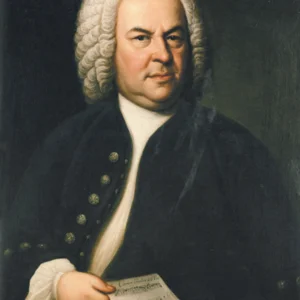
Johann Sebastian Bach
1685 — 1750
German composer and organist (1685–1750), Johann Sebastian Bach is one of the greatest figures of Baroque music. A master of fugue and polyphony, he composed over a thousand works combining mathematical rigor with spiritual depth, decisively influencing the history of Western music.
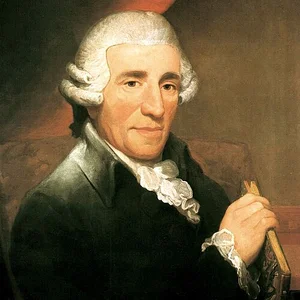
Joseph Haydn
1732 — 1809
Joseph Haydn (1732-1809) was an Austrian composer regarded as the "father of the symphony" and the string quartet. Long in the service of the Esterházy family, he profoundly influenced Mozart and Beethoven. His monumental body of work includes more than 100 symphonies and represents the pinnacle of Viennese Classicism.
Leopold Mozart
1719 — 1787
German composer, violinist, and pedagogue (1719-1787), father and first teacher of Wolfgang Amadeus Mozart. Author of a celebrated treatise on the violin, he devoted much of his life to promoting his son's genius across Europe.
Ludwig van Beethoven
1770 — 1827
German composer (1770–1827) who marked the transition between musical classicism and romanticism. Despite his progressive deafness, he created major works that revolutionized Western music, including the famous 9th Symphony.
Maria Anna Mozart (Nannerl)
Austrian prodigy pianist and composer of the 18th century, elder sister of Wolfgang Amadeus Mozart. Considered as talented as her brother in childhood, she toured the European courts before her career was cut short in adulthood due to her status as a woman.
Marianna Martines
1744 — 1812
Italian composer, singer, and pianist born in Vienna (1744–1812), pupil of Haydn and friend of Mozart. She was one of the few women of her time to be admitted to the Accademia Filarmonica of Bologna.
Philippe II d'Orléans
Regent of France from 1715 to 1723 during the minority of Louis XV, Philippe II d'Orléans governed the kingdom following the death of Louis XIV. A curious and libertine spirit, he was also a musician, painter, and patron of the arts, embodying the transition between the Grand Siècle and the Enlightenment.
Wolfgang Amadeus Mozart
1756 — 1791
An Austrian composer of the 18th century, Wolfgang Amadeus Mozart (1756–1791) is considered one of the greatest composers in the history of music. A child prodigy, he composed more than 600 works spanning every musical genre and stands as the ultimate embodiment of the Classical style.
Culture(20)
Abd al-Rahman al-Saadi
Chronicler, scholar, and secretary from Timbuktu, author of the Tarikh es-Sudan, one of the principal written sources on the Songhai Empire and the scholarly cities of the Western Sudan. His work recounts the succession of the Askias and the intellectual life of Timbuktu.
Árni Magnússon
1663 — 1730
Árni Magnússon was an Icelandic scholar and philologist who devoted his life to gathering and saving Iceland's medieval manuscripts. His collection, bequeathed to the University of Copenhagen, is the principal source of knowledge about the sagas and Old Norse literature.
Davy Jones
Davy Jones is a legendary figure in Anglo-Saxon maritime folklore, appearing in the 18th century. His name refers to the "Davy Jones's Locker," a metaphor for the bottom of the ocean where drowned sailors and sunken ships rest. He embodies the malevolent spirit of the seas.
Gabrielle Danton
Gabrielle Charpentier (c. 1764–1793) was the wife of Georges-Jacques Danton, a leading orator of the French Revolution. The daughter of a Parisian café owner, she died at 28 in February 1793 while her husband was on a mission in Belgium, just months before the Reign of Terror.
Hồ Xuân Hương
1772 — 1822
Vietnamese poetess of the late 18th and early 19th century, nicknamed the "Queen of Nôm Poetry." Her works in chữ Nôm, described as "elegantly licentious" in style, earned her recognition by UNESCO in 2021 as a world cultural personality.
Jean le Rond d'Alembert
1717 — 1783
A mathematician and philosopher of the Enlightenment, he co-edited the great Encyclopédie with Diderot and wrote its famous Preliminary Discourse. He formulated the mechanical principle that bears his name and embodied the encyclopédiste ideal of bringing together all human knowledge.
Jodhaa
16th-century Rajput princess and wife of the Mughal emperor Akbar the Great. Her marriage symbolizes Akbar's policy of religious tolerance between Hinduism and Islam. A controversial figure whose very existence is debated by historians.
Julie de Lespinasse
1732 — 1776
An 18th-century French salonnière, Julie de Lespinasse ran one of the most influential salons in Paris, frequented by the Encyclopédistes. A passionate letter-writer, her correspondence offers a vivid window into the intellectual life of the Enlightenment.
Katsukawa Shunsho
1726 — 1793
Japanese painter and printmaker of the 18th century, master of ukiyo-e woodblock printing. He is celebrated for his portraits of kabuki actors and his depictions of sumo wrestlers, and founded the Katsukawa school.
Krampus
A demonic half-man, half-goat creature from Germanic Alpine folklore, Krampus is the punishing companion of Saint Nicholas. While Saint Nicholas rewards well-behaved children, Krampus punishes the naughty ones by whipping them with birch branches or carrying them away in his basket.
La Llorona
La Llorona is a ghost from Latin American folklore, the figure of a woman who, according to legend, drowned her own children and has since wandered weeping along rivers and lakes. This legend, deeply rooted in Mexico and Latin America, blends pre-Hispanic and Spanish colonial influences.
Madame de Pompadour
1721 — 1764
Official mistress of King Louis XV from 1745 until her death in 1764, she wielded considerable influence over French politics and culture. A great patron of the arts and protector of the Enlightenment philosophers, she helped shape the Rococo style and supported the Encyclopédie of Diderot and d'Alembert.
Madame du Deffand
An eighteenth-century French salonnière, the Marquise du Deffand hosted one of the most influential salons of the Enlightenment in Paris. A correspondent of Voltaire and d'Alembert, she embodied the critical spirit and intellectual sociability of her age.
Marguerite de La Sablière
A salonnière and woman of letters of the seventeenth century, she presided over one of the most celebrated salons in Paris, bringing together poets, philosophers, and scholars. A patron of La Fontaine, she welcomed him into her home for nearly twenty years. Passionate about science, she studied astronomy and natural philosophy under scholars such as Bernier.
Mastani
1699 — 1740
Mastani (c. 1699–1740) was the second wife of Bajirao I, the Maratha Peshwa. Daughter of a Rajput raja and a Muslim concubine, she was an accomplished dancer and warrior. Their interfaith love caused a scandal at the Maratha court and gave rise to legend.
Mumtaz Mahal
1593 — 1631
Mughal empress and favorite wife of Emperor Shah Jahan. Her death in childbirth in 1631 inspired the construction of the Taj Mahal, a marble mausoleum raised to her memory that became one of the most famous monuments in the world.
Pietro Bragadin
Pietro Bragadin was an Italian printer active between 1614 and 1649. He practiced his craft in Venice, contributing to the spread of texts at a time when Venetian printing was flourishing across Europe.
Rose Bertin
1747 — 1813
A French fashion merchant, Rose Bertin was the dressmaker and style advisor to Queen Marie-Antoinette. Nicknamed the “minister of fashion,” she introduced extravagant hairstyles and outfits that made her a pioneering figure of haute couture.
The Flying Dutchman
The Flying Dutchman is a legendary ghost ship doomed to wander the seas forever, never able to make port. Born from the maritime folklore of the great European voyages of exploration, it has become a universal symbol of curse and damnation. The legend has inspired operas, novels, and films.
Wakan Tanka
Wakan Tanka, the “Great Spirit” or “Great Mystery,” is the supreme divine principle of Lakota spirituality. This central concept of the Lakota Sioux refers to a sacred, all-pervading force that animates all things. It structures the cosmology, rituals, and ethics of an entire people.
Mythology(15)
Abel Tasman
1603 — 1659
Abel Tasman was a Dutch navigator and explorer in the service of the Dutch East India Company (VOC). In 1642, he became the first European to reach Tasmania and New Zealand, pushing the boundaries of geographical knowledge of his time.
Abla Pokou II
Legendary queen of the Baoulé people in the 18th century, she led her people from the Ashanti kingdom to present-day Ivory Coast. Oral tradition holds that she sacrificed her only son to allow her people to cross the Comoé River, a founding act of Baoulé identity.
Akwa Boni
1708 — ?
Ivorian political figure and prominent voice in Côte d'Ivoire's public life. Embodying the meeting point between African cultural traditions and modern political engagement, she represents women's participation in the institutions of postcolonial West Africa.
Aura Pokou
Founding queen of the Baoulé people (Côte d'Ivoire) in the 18th century, according to Akan oral tradition. To allow her people to cross the Comoé River during a forced exile, she is said to have sacrificed her only son. Her name means "the child who does not return."
Baron Samedi
Baron Samedi is the loa of death in Haitian Vodou. Depicted in undertaker's attire — top hat and dark glasses — he is the guardian of the passage between the living and the dead. An ambivalent figure, at once protector and obscene trickster, he embodies the boundary between life and death.
Davy Jones
Davy Jones is a legendary figure in Anglo-Saxon maritime folklore, appearing in the 18th century. His name refers to the "Davy Jones's Locker," a metaphor for the bottom of the ocean where drowned sailors and sunken ships rest. He embodies the malevolent spirit of the seas.
Francisco Pizarro
1478 — 1541
Spanish conquistador (c. 1478–1541), he led the conquest of the Inca Empire in Peru between 1532 and 1533, captured the emperor Atahualpa, and founded Lima in 1535. His expedition transformed the New World and opened South America to Spanish colonization.
Krampus
A demonic half-man, half-goat creature from Germanic Alpine folklore, Krampus is the punishing companion of Saint Nicholas. While Saint Nicholas rewards well-behaved children, Krampus punishes the naughty ones by whipping them with birch branches or carrying them away in his basket.
La Llorona
La Llorona is a ghost from Latin American folklore, the figure of a woman who, according to legend, drowned her own children and has since wandered weeping along rivers and lakes. This legend, deeply rooted in Mexico and Latin America, blends pre-Hispanic and Spanish colonial influences.
Lasiren
Lasirèn is a major lwa (spirit) of Haitian Vodou, depicted as a mermaid with long flowing hair holding a mirror. A spirit of the waters, wealth, and beauty, she is associated with Erzulie and rules over the ocean depths where the dead reside.
Louis II de Bourbon, prince de Condé
Nicknamed “the Great Condé,” this prince of the blood distinguished himself at the Battle of Rocroi (1643) by crushing the Spanish infantry. A key figure in the Fronde, he eventually reconciled with Louis XIV and remained one of the greatest military commanders of the Grand Siècle.
Papa Legba
Papa Legba is the loa guardian of crossroads in Haitian Vodou religion. Depicted as an old man with a cane, he is the essential intermediary between humans and the other spirits. No ceremony can begin without first invoking his permission.
The Flying Dutchman
The Flying Dutchman is a legendary ghost ship doomed to wander the seas forever, never able to make port. Born from the maritime folklore of the great European voyages of exploration, it has become a universal symbol of curse and damnation. The legend has inspired operas, novels, and films.
Viracocha
Viracocha is the supreme creator deity of the Andean civilizations of Tiwanaku, Huari, and the Incas. According to Inca cosmogony, he created the world, the sun, the moon, the stars, and humanity from Lake Titicaca. He is depicted as a wandering god who taught civilization to mankind before disappearing toward the ocean.
Wakan Tanka
Wakan Tanka, the “Great Spirit” or “Great Mystery,” is the supreme divine principle of Lakota spirituality. This central concept of the Lakota Sioux refers to a sacred, all-pervading force that animates all things. It structures the cosmology, rituals, and ethics of an entire people.
Performing Arts(11)
Alceste
Alceste is the central character of Molière's *The Misanthrope* (1666). An uncompromising idealist, he refuses the hypocrisy and flattery of court society, while being deeply in love with Célimène, a worldly coquette. He embodies the tension between absolute moral integrity and the compromises of social life.
Anna Girò
1710 — ?
Anna Girò (c. 1710–1748) was an Italian contralto singer, pupil and close collaborator of Antonio Vivaldi. She created many roles in the Venetian composer's operas, becoming one of the most celebrated performers of her time.
Aphra Behn
1640 — 1689
Aphra Behn (1640-1689) was the first English woman to earn her living by the pen. A prolific playwright, novelist, and spy in the service of Charles II, she defied the conventions of her time by making her mark in the male-dominated literary world.
Armand de Bourbon-Conti
1629 — 1666
A prince of the blood and the youngest child of Henri II de Bourbon-Condé, Armand de Bourbon-Conti (1629-1666) was one of the leaders of the Fronde of the Princes before rallying to Louis XIV. Having become governor of Languedoc and Count of Pézenas, he was Molière's first patron.
Christoph Willibald Gluck
1714 — 1787
Austro-Bohemian composer (1714–1787), Gluck revolutionized opera in the 18th century by prioritizing dramatic expression over vocal virtuosity. His reform profoundly influenced European lyric music.
Claudio Monteverdi
1567 — 1643
Italian composer born in Cremona in 1567 and died in Venice in 1643. A pioneer of opera with L'Orfeo (1607), he marks the transition between the Renaissance and the Baroque. Maestro di cappella at St Mark's Basilica in Venice, he revolutionized vocal and instrumental music.
Francesca Caccini
1587 — 1641
Italian composer, singer, and instrumentalist (1587–c.1641), Francesca Caccini is the first known woman to have composed an opera, La liberazione di Ruggiero (1625). Daughter of composer Giulio Caccini, she was the highest-paid musician at the Medici court in Florence.
Gabrielle Danton
Gabrielle Charpentier (c. 1764–1793) was the wife of Georges-Jacques Danton, a leading orator of the French Revolution. The daughter of a Parisian café owner, she died at 28 in February 1793 while her husband was on a mission in Belgium, just months before the Reign of Terror.
George Frideric Handel
1685 — 1759
German-born Baroque composer who became a British subject (1685–1759), Handel is one of the towering figures of 18th-century music. He is celebrated for his Italian operas, oratorios, and concerti grossi. His work *Messiah* (1741) remains one of the masterpieces of Western sacred music.
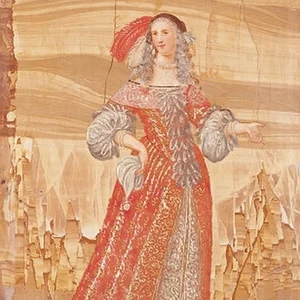
Madeleine Béjart
1618 — 1672
French actress of the 17th century, co-founder of the Illustre Théâtre alongside Molière in 1643. A central figure in Molière's troupe for over thirty years, she contributed to the rise of French classical theatre.
Mastani
1699 — 1740
Mastani (c. 1699–1740) was the second wife of Bajirao I, the Maratha Peshwa. Daughter of a Rajput raja and a Muslim concubine, she was an accomplished dancer and warrior. Their interfaith love caused a scandal at the Maratha court and gave rise to legend.
Technology(10)
Alessandro Volta
1745 — 1827
Italian physicist (1745–1827), Alessandro Volta invented the electric battery in 1800, the first source of direct current in history. His work on electricity revolutionized experimental physics and paved the way for electrochemistry.
Christiaan Huygens
1629 — 1695
Dutch mathematician, physicist, and astronomer (1629–1695), Huygens invented the pendulum clock and developed the wave theory of light. He discovered Titan, Saturn's largest moon, and formulated the laws of elastic collision.
Evangelista Torricelli
1608 — 1647
Italian physicist and mathematician of the 17th century, student of Galileo. He invented the mercury barometer in 1643 and demonstrated the existence of atmospheric pressure, paving the way for modern experimental physics.
George Washington
1732 — 1799
Commander-in-Chief of the Continental Army during the American War of Independence, George Washington became the first President of the United States (1789–1797). A Virginia planter and slaveholder, he embodies the contradictions of the young Republic — torn between ideals of liberty and the reality of slavery.
James Watt
1736 — 1819
Scottish engineer and inventor (1736–1819), James Watt greatly improved Newcomen's steam engine in 1769, making it efficient and economical. His invention revolutionized industry and transportation, earning him a place as one of the fathers of the Industrial Revolution.
John Harrison
1693 — 1776
A self-taught British clockmaker (1693–1776), John Harrison solved one of the greatest scientific challenges of his era: the precise determination of longitude at sea. His marine chronometer H4 (1759) revolutionized navigation and saved countless lives.
Montgolfier (brothers)
French inventor brothers who achieved the first manned hot-air balloon flight in 1783. Their invention revolutionized the concept of aerial travel and paved the way for aeronautics.
Pietro Bragadin
Pietro Bragadin was an Italian printer active between 1614 and 1649. He practiced his craft in Venice, contributing to the spread of texts at a time when Venetian printing was flourishing across Europe.
Roberval
1602 — 1675
French mathematician and physicist (1602–1675), professor at the Collège Royal de France. He is renowned for inventing the balance scale that bears his name, and for his pioneering work in geometry and mechanics.
Vauban
1633 — 1707
French military engineer and architect during the reign of Louis XIV, regarded as the greatest fortification specialist of his time. A Marshal of France, he designed a defensive system protecting the kingdom's borders and revolutionized the art of the siege.
Economics(7)
Adam Smith
1723 — 1790
An 18th-century Scottish philosopher and economist, Adam Smith is considered the father of modern political economy. His landmark work, The Wealth of Nations (1776), laid the foundations of economic liberalism and capitalism.
Alexander Hamilton
1757 — 1804
A Founding Father of the United States, Alexander Hamilton was the first Secretary of the Treasury (1789-1795). The architect of the American financial system, he created the first national bank and laid the foundations of the young United States' economy. He died in 1804 in a duel with Aaron Burr.
Ching Shih
1775 — 1844
Ching Shih (c. 1775–1844) was a Chinese pirate who became one of the most formidable military commanders in history. She led the Red Flag Fleet, a confederation of over 1,800 ships and 80,000 men, imposing her rule across the South China Sea.
Colbert
1619 — 1683
Jean-Baptiste Colbert (1619-1683) was the principal minister of Louis XIV, serving as Controller-General of Finances from 1665. The architect of an interventionist economic policy, he reorganized the royal finances and developed French industry and trade.
James Watt
1736 — 1819
Scottish engineer and inventor (1736–1819), James Watt greatly improved Newcomen's steam engine in 1769, making it efficient and economical. His invention revolutionized industry and transportation, earning him a place as one of the fathers of the Industrial Revolution.
Louis Finson
1580 — 1617
Louis Finson (c. 1580–1617) was a Flemish painter and art dealer, trained in Naples where he associated with Caravaggio. A key figure in spreading Caravaggism to Northern Europe, he owned several works by the master and helped disseminate this style in France and the Low Countries.
Maximilien de Béthune duc de Sully
A loyal companion of Henry IV, Sully served as superintendent of finances from 1598 to 1610. He restored royal finances, reduced the debt, and promoted agriculture and infrastructure. A committed Huguenot, he embodied the kingdom's reconstruction following the Wars of Religion.