 flip
flipFestive Blini with Smetana and Herring
Festive Blini with Smetana and Herring
Why this dish? The first female ambassador in the world, Kollontai presided over diplomatic receptions in Oslo and Stockholm. Though she ate little, preferring to observe, blini topped with herring and sour cream — a festive Russian emblem — would have graced those tables where Soviet Russia presented itself to the world.
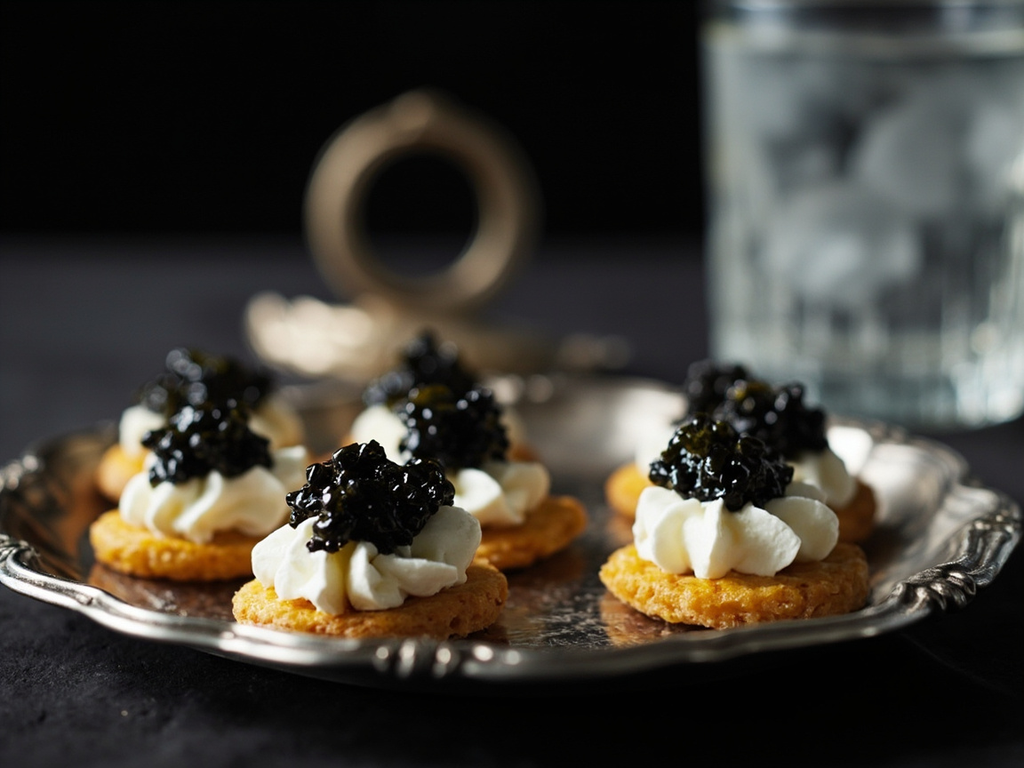
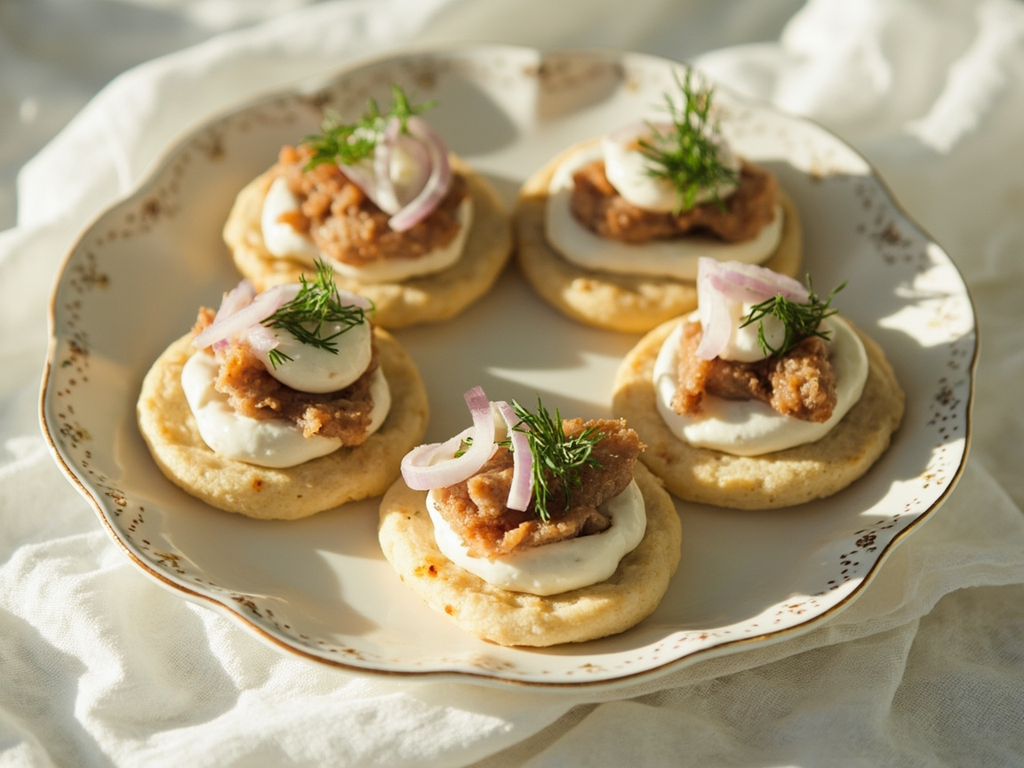
Small, thick, fluffy yeast-raised pancakes, topped with sour cream and marinated herring. A Maslenitsa celebration dish turned national pride, served as bite-sized appetizers at receptions.
At receptions, I ate little — I observed, I listened, for a diplomat learns more by keeping quiet than by gorging. But these blini, I offered them with pride: they tell Russia better than a long speech. A warm golden disk, a touch of smetana, a piece of herring, and our Northern guests discover that our people know how to receive. Celebration, in our home, never needed opulence — only generosity.
- •Wheat flour (and a little buckwheat) — enough for a large batter (base)
- •Brewer's yeast — a portion (leavening)
- •Warm milk — to thin (liquid)
- •Eggs — a few (binder)
- •Melted butter — a drizzle (tenderness)
- •Sour cream (smetana) — for serving (topping)
- •Marinated herring — in strips (savory topping)
Festive Blini with Smetana and Herring
Small, thick, fluffy yeast-raised pancakes, topped with sour cream and marinated herring. A Maslenitsa celebration dish turned national pride, served as bite-sized appetizers at receptions.
Why this dish? The first female ambassador in the world, Kollontai presided over diplomatic receptions in Oslo and Stockholm. Though she ate little, preferring to observe, blini topped with herring and sour cream — a festive Russian emblem — would have graced those tables where Soviet Russia presented itself to the world.
At receptions, I ate little — I observed, I listened, for a diplomat learns more by keeping quiet than by gorging. But these blini, I offered them with pride: they tell Russia better than a long speech. A warm golden disk, a touch of smetana, a piece of herring, and our Northern guests discover that our people know how to receive. Celebration, in our home, never needed opulence — only generosity.
Ingredients (period version)
- Wheat flour (and a little buckwheat) — enough for a large batter (base)
- Brewer's yeast — a portion (leavening)
- Warm milk — to thin (liquid)
- Eggs — a few (binder)
- Melted butter — a drizzle (tenderness)
- Sour cream (smetana) — for serving (topping)
- Marinated herring — in strips (savory topping)
Ingredients
- Wheat flour — 200 g (base)
- Buckwheat flour — 50 g (flavor and tradition)
- Active dry yeast — 1 packet (7 g) (leavening)
- Warm milk — 350 ml (liquid)
- Eggs — 2 (binder)
- Melted butter — 30 g (tenderness)
- Thick crème fraîche — 150 g (topping)
- Marinated herring fillets — 100 g (topping)
- Dill + red onion — to finish (freshness)
Method
- Dissolve the yeast in warm milk, add the flours, and let foam for 1 hour.
- Stir in the egg yolks, melted butter, and salt; let rise another 30 minutes.
- Whip the egg whites to stiff peaks and fold gently into the batter.
- Cook small thick pancakes in a hot buttered skillet, golden on both sides.
- Top each warm blini with a spoonful of sour cream, a piece of herring, dill, and onion.
- Serve immediately as bite-sized appetizers.
How it was made : Blini were traditionally prepared for Maslenitsa, the pancake week preceding Lent; their round, golden shape symbolized the sun. The yeast-raised batter, built in several stages, required patience and skill; they were stacked by the dozens.
The contemporary twist : Assemble the blini in mini-towers alternating cream and herring, pierced with a sprig of dill — an « embassy zakuski » cocktail style.
Sources : Elena Molokhovets, A Gift to Young Housewives (Подарок молодым хозяйкам), 1861 · William Pokhlebkin, The Art of Russian Cuisine
Alexandra Kollontai · Charactorium