 flip
flipGruzdi solionié (Salt-Cured Milk Mushrooms)
Gruzdi solionié (Salt-Cured Milk Mushrooms)
Why this dish? The gathering and salting of mushrooms from the great Russian forests fed all tables, from izbas to the Winter Palace. These salted mushrooms were among the essential zakouski at imperial court banquets, especially during the long Orthodox fasts that Alexander, increasingly pious, scrupulously observed.
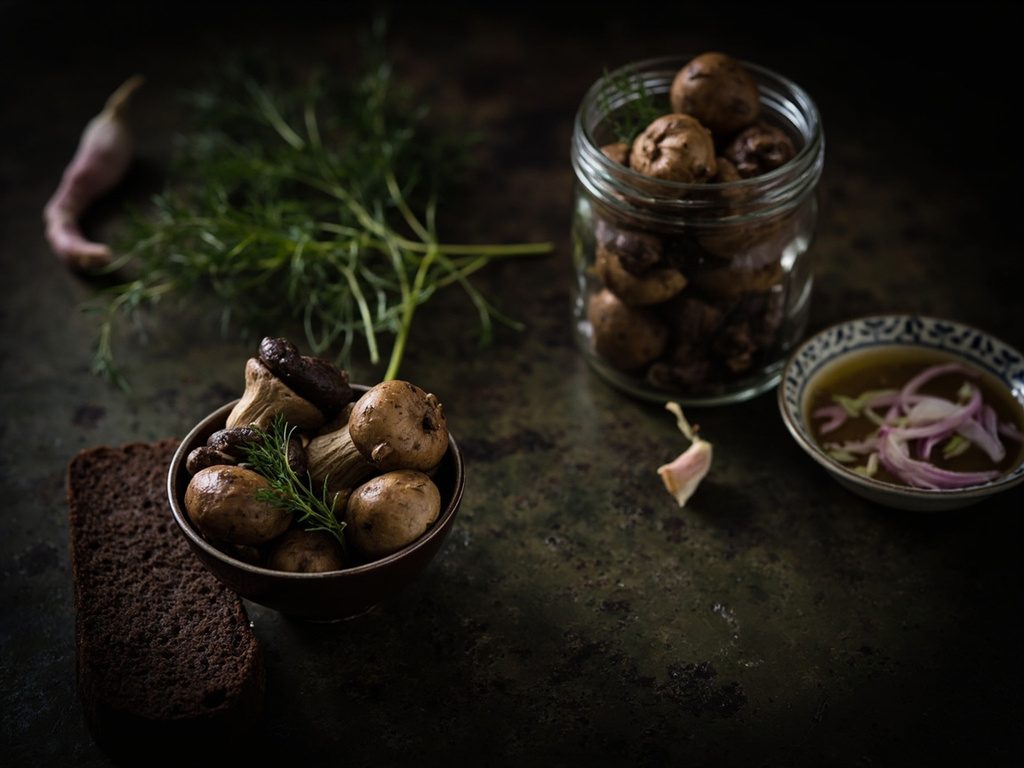
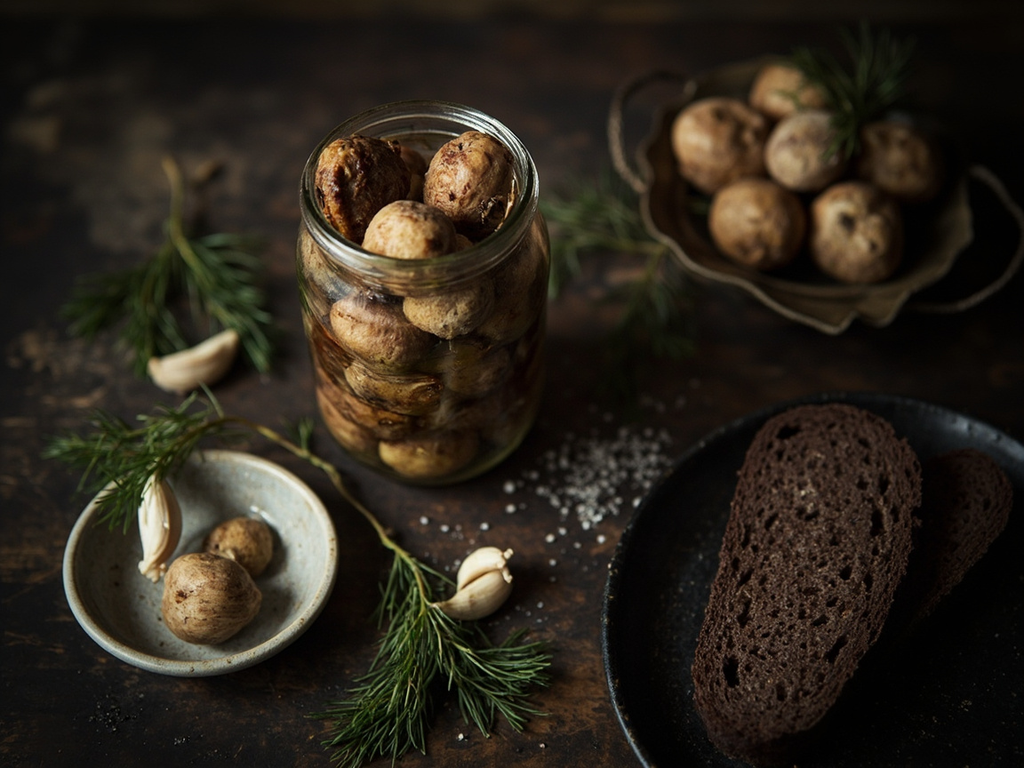
Milk mushrooms (gruzdi) purged then preserved in brine with dill, garlic and blackcurrant leaves. Crunchy, salty, slightly pungent and deeply umami: a pantry treasure that lasts through winter.
The Russian forest is generous to those who know how to listen: after the August rain, peasants bring me baskets of gruzdi that must be soaked for several days to remove their milky bitterness. Then they are layered in an oak barrel, salt, dill, garlic, blackcurrant leaf, and a stone is placed on top. On fasting days, when my table renounces meat, these mushrooms are worth any roast. Patience and brine: that is how we keep summer for the heart of winter.
- •Fresh milk mushrooms (gruzdi) — full basket (main ingredient)
- •Coarse salt — to cover each layer (preservation)
- •Dill (flower heads) — several (aromatic)
- •Garlic — a few cloves (aromatic)
- •Blackcurrant and horseradish leaves — a handful (firmness and aroma)
Gruzdi solionié (Salt-Cured Milk Mushrooms)
Milk mushrooms (gruzdi) purged then preserved in brine with dill, garlic and blackcurrant leaves. Crunchy, salty, slightly pungent and deeply umami: a pantry treasure that lasts through winter.
Why this dish? The gathering and salting of mushrooms from the great Russian forests fed all tables, from izbas to the Winter Palace. These salted mushrooms were among the essential zakouski at imperial court banquets, especially during the long Orthodox fasts that Alexander, increasingly pious, scrupulously observed.
The Russian forest is generous to those who know how to listen: after the August rain, peasants bring me baskets of gruzdi that must be soaked for several days to remove their milky bitterness. Then they are layered in an oak barrel, salt, dill, garlic, blackcurrant leaf, and a stone is placed on top. On fasting days, when my table renounces meat, these mushrooms are worth any roast. Patience and brine: that is how we keep summer for the heart of winter.
Ingredients (period version)
- Fresh milk mushrooms (gruzdi) — full basket (main ingredient)
- Coarse salt — to cover each layer (preservation)
- Dill (flower heads) — several (aromatic)
- Garlic — a few cloves (aromatic)
- Blackcurrant and horseradish leaves — a handful (firmness and aroma)
Ingredients
- Firm mushrooms (chanterelles, hedgehogs, or brown cremini if gruzdi unavailable) — 1 kg (main ingredient)
- Coarse non-iodized salt — 50 g (about 5%) (preservation)
- Dill heads — 3-4 (aromatic)
- Garlic — 4 cloves (aromatic)
- Blackcurrant / bay leaves — a few (firmness and aroma)
- Peppercorns — 10 (mild spice)
Method
- Clean mushrooms; true gruzdi are soaked 2-3 days (water changed often) to remove bitterness — for mild species, skip this.
- Briefly blanch firm mushrooms 5 minutes, drain.
- Line a jar with leaves, dill and garlic; alternate layers of mushrooms and salt.
- Press down, cover with boiled cold water to submerge, place a clean weight on top.
- Let ferment in a cool place 3 to 6 weeks before eating, well chilled.
How it was made : They were salted in large oak or linden barrels, weighted with a stone to keep mushrooms under brine. This was a massive autumn preservation, essential to survive winter and honor the many lean days of the Orthodox calendar.
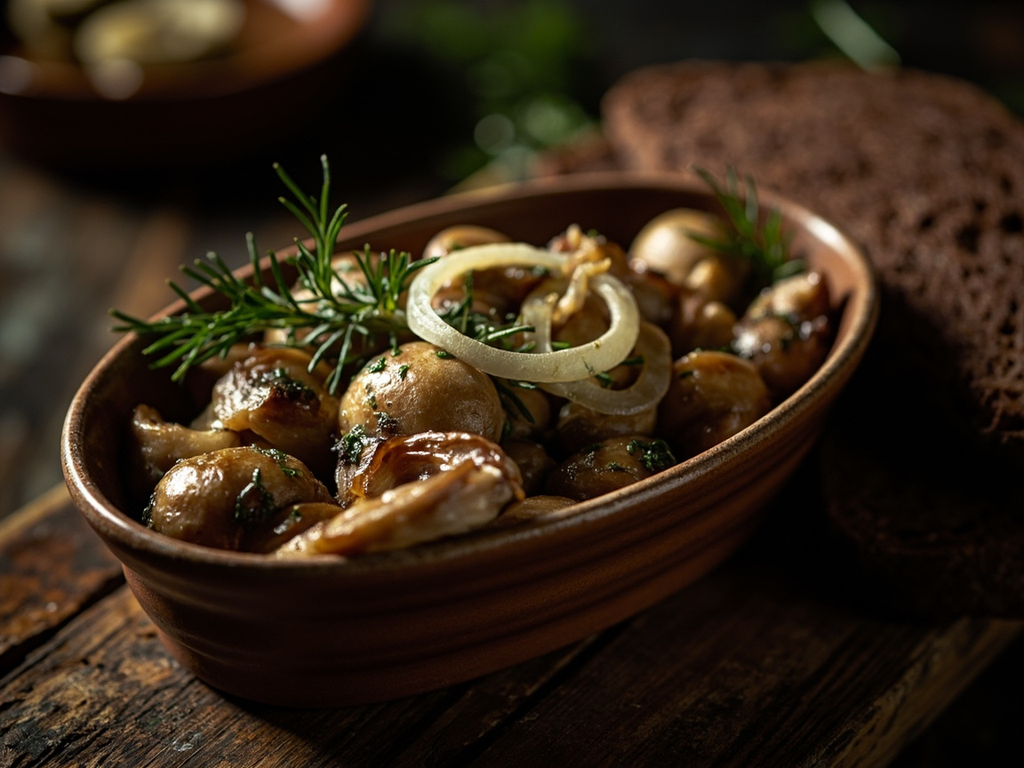
The contemporary twist : Drain, drizzle with oil and sliced red onion: a perfect zakouska on dark rye bread, served ice-cold with a freezer-chilled vodka.
Sources : William Pokhlyobkin, 'History of Russian Cuisine' · Elena Molokhovets, 'Podarok molodym khozyaikam' (1861)
Alexander I · Charactorium