 flip
flipSoukhari, Traveler's Dried Rye Croutons
Soukhari, Traveler's Dried Rye Croutons
Why this dish? Soukhari — slices of black bread dried long until hard and imperishable — were the provision of prisoners in transit, soldiers, and all Russian travelers. Solzhenitsyn, constantly moved from one camp, one prison, one exile to another, knew this iron food that does not mold and fits in a pocket.
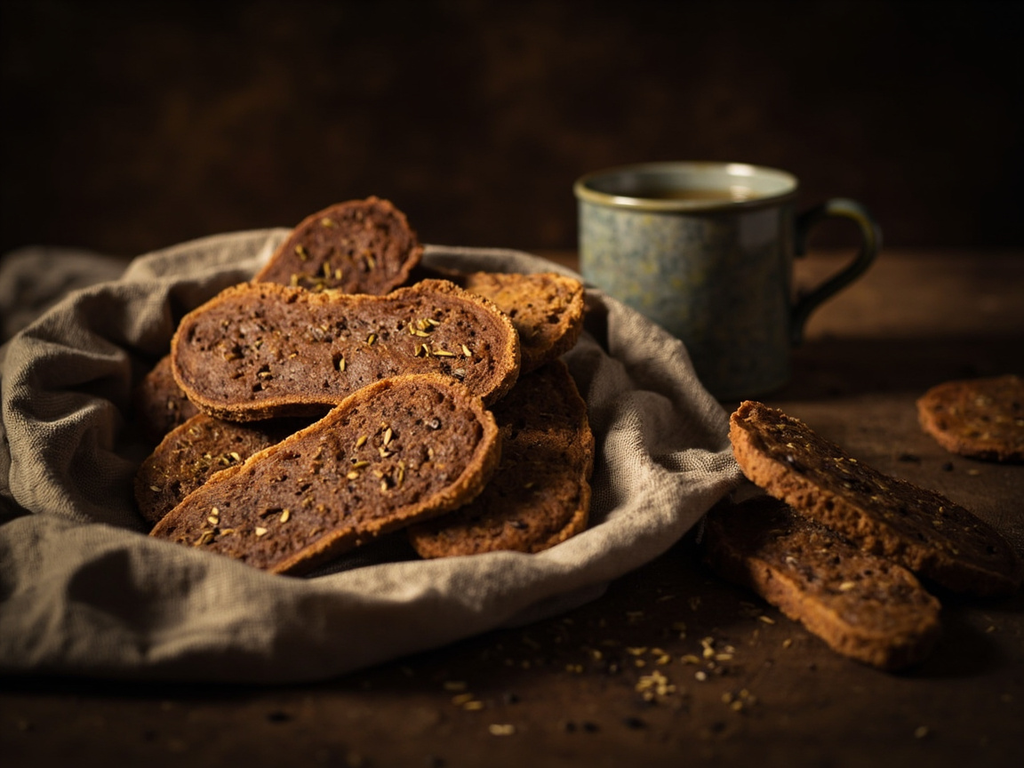
Rye bread cut thinly and dried in the oven until crunchy and unalterable. Eaten as is, or softened in tea or soup. It is the bread that does not die, companion of long roads and lean times.
Learn this, which can save a man: fresh bread spoils, but dried bread follows you to the end of the world. We cut the rye into thin slices, dried it very slowly, and packed it in a canvas bag. In the transfers, these soukhari were a treasure — we dipped them in tea water to soften them, and they fed the man and his courage. He who has a supply of crusts is never quite lost.
- •Black rye bread — a whole loaf (base)
- •Salt — a pinch (optional) (seasoning)
- •Caraway or coriander seeds — a little (optional) (flavor)
Soukhari, Traveler's Dried Rye Croutons
Rye bread cut thinly and dried in the oven until crunchy and unalterable. Eaten as is, or softened in tea or soup. It is the bread that does not die, companion of long roads and lean times.
Why this dish? Soukhari — slices of black bread dried long until hard and imperishable — were the provision of prisoners in transit, soldiers, and all Russian travelers. Solzhenitsyn, constantly moved from one camp, one prison, one exile to another, knew this iron food that does not mold and fits in a pocket.
Learn this, which can save a man: fresh bread spoils, but dried bread follows you to the end of the world. We cut the rye into thin slices, dried it very slowly, and packed it in a canvas bag. In the transfers, these soukhari were a treasure — we dipped them in tea water to soften them, and they fed the man and his courage. He who has a supply of crusts is never quite lost.
Ingredients (period version)
- Black rye bread — a whole loaf (base)
- Salt — a pinch (optional) (seasoning)
- Caraway or coriander seeds — a little (optional) (flavor)
Ingredients
- Rye or black bread — 1 loaf (base)
- Oil (optional, modern version) — 1 tbsp (crispness)
- Fine salt — 1 pinch (seasoning)
- Caraway seeds — 1 tsp (flavor)
- Garlic (optional) — 1 clove (flavor)
Method
- Cut the bread into thin, even slices (1 cm).
- For the austere version, place the slices on a rack and dry in the oven at 120-130 °C for 30 to 45 min, turning once, until hard and dry through.
- For a gourmet version, brush with a little garlic-rubbed oil, sprinkle with salt and caraway before drying.
- Let cool completely (they harden and preserve as they cool).
- Store in a cloth bag or airtight container; eat as is, or dip in hot tea or soup to soften.
How it was made : Drying bread for preservation is an ancient necessity in a country with long winters and vast distances. Soukhari accompanied pilgrims, soldiers, and, sadly, prisoner convoys; a prudent prisoner would save part of his ration to dry in anticipation of worse days. Well dried, they kept for months without molding.
The contemporary twist : Cut into sticks, rubbed with garlic and baked, the same soukhari become the famous Russian croutons served as a beer snack — survival food turned into convivial nibbling.
Sources : Alexander Solzhenitsyn, The Gulag Archipelago (1973) · William Pokhlebkin, The Art of Russian Cuisine (1978)
Aleksandr Solzhenitsyn · Charactorium