The Russian Meal and the Camp Ration (Païok)
The traditional Russian meal is organized into zakouski (small appetizers), pervoïe (the "first," a hot soup), vtoroïe (the "second," kasha or meat), and then tea. But Solzhenitsyn's life was split in two by the gulag: there, everything was reduced to the païok, the daily ration of black bread weighed to the gram, and the balanda, the watery soup of the canteen. These recipes hold together both tables — that of the misery of the prison camp and that, frugal but free, of the Russia he loved.
Signature : Black Rye Bread (Tchorny Khleb)
Rye is the soul of this cuisine and the red thread running through Solzhenitsyn's entire life: a sacred ration in the camp, it becomes a dough kneaded into a rosary for prayer, a dried crust for travel, and even a drink once fermented into kvas. Sour-sweet, dense, indestructible — a bread of survival that became a bread of memory.
Aleksandr Solzhenitsyn at the table
1918 — 2008
5 period recipes
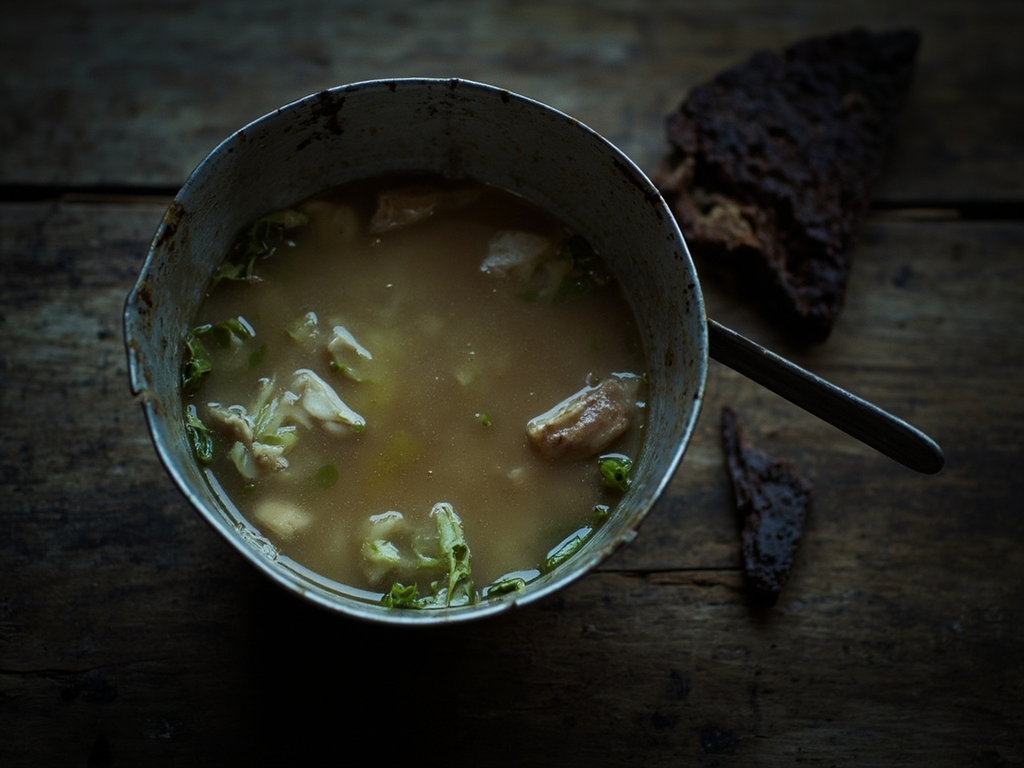 Everyday
Balanda, the Camp Clear Soup
Pervoïe (the first hot dish of the canteen)
🧂 ☕ 🍄· 45 min
View the recipe
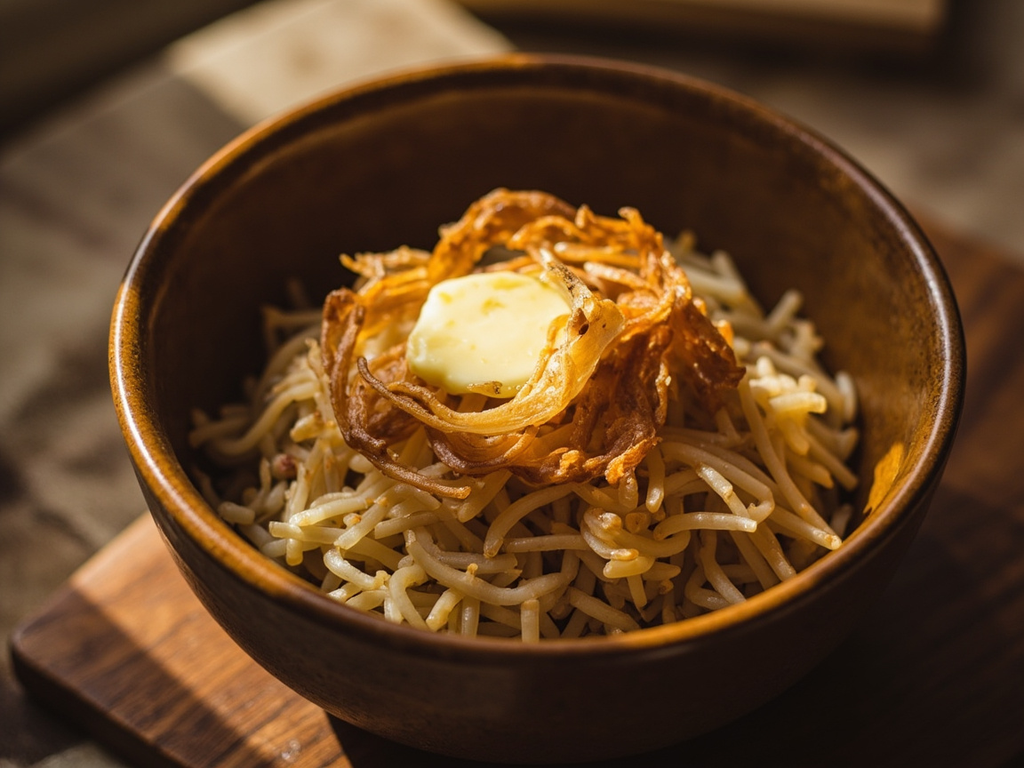 Everyday
Buckwheat Kasha (Gretchnevaïa Kacha)
Vtoroïe (the second dish, nourishing base of the Russian meal)
🍄 🧂· 30 min
View the recipe
 Drink
DrinkBlack Bread Kvass
Domestic fermented beverage (napitok)
🫙 🍋 🍯· 10 min prep + 2 to 3 days fermentation
View the recipe
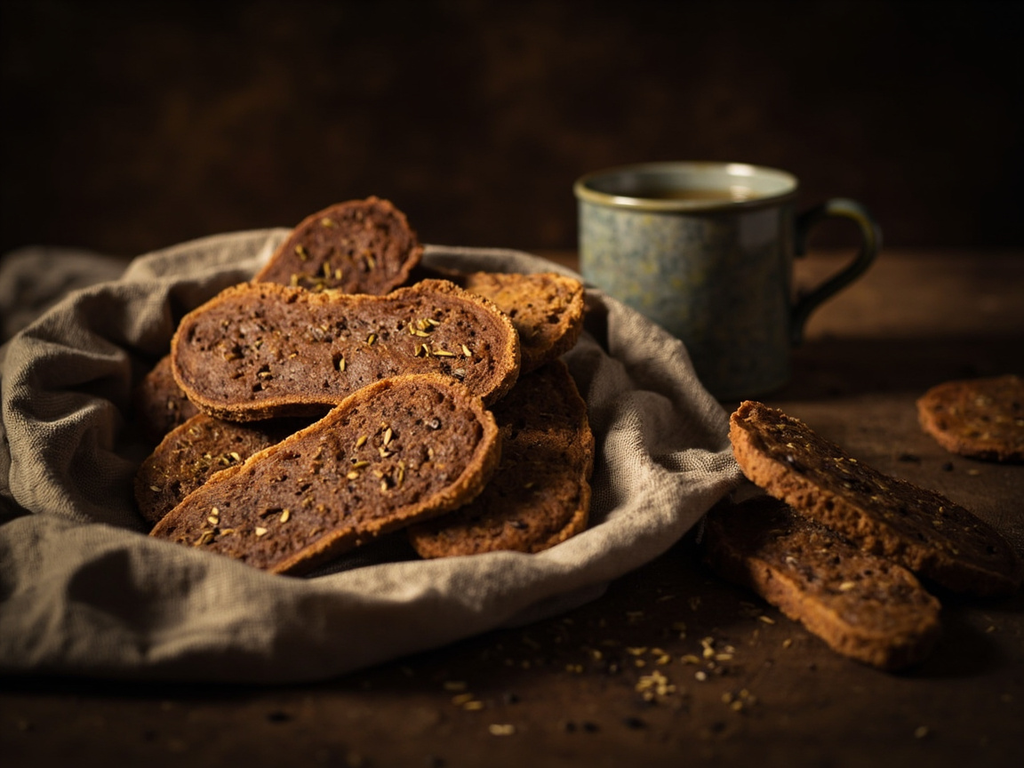 Preserving
Soukhari, Traveler's Dried Rye Croutons
Travel and storage provision (zapas)
☕ 🧂· 1 h
View the recipe
 Festive
Easter Kulich
Festive bread of the Orthodox Easter meal (prazdnitchny stol)
🍯· 3 h (including rises)
View the recipe