 flip
flipEmmer flatbread (ta)
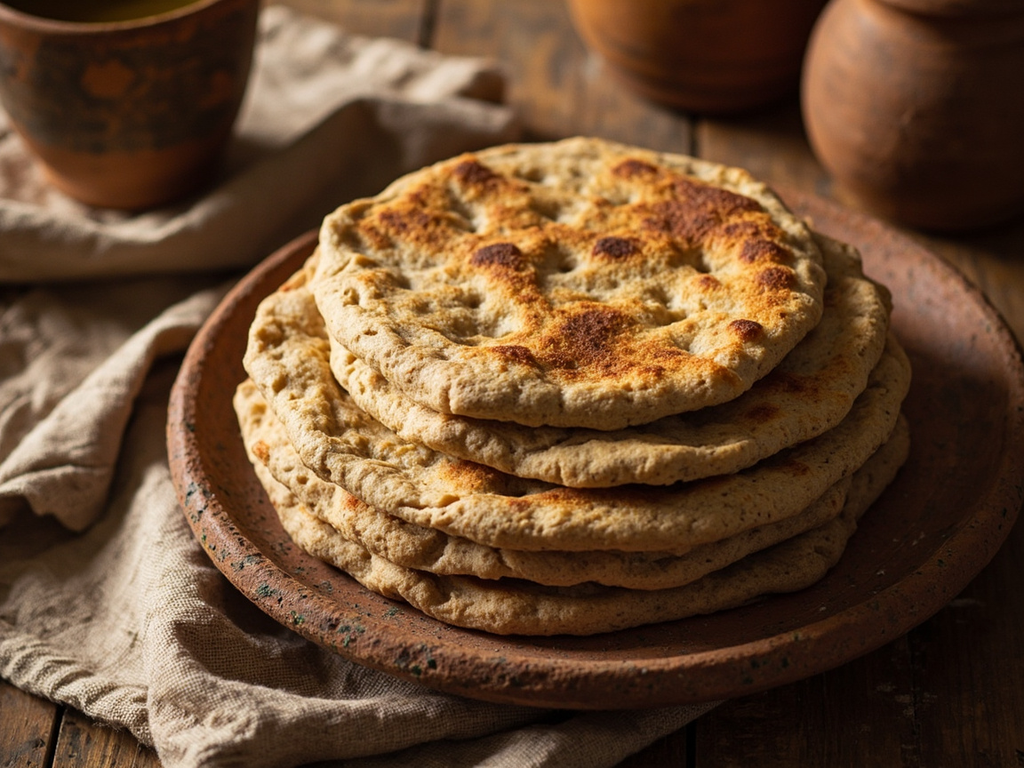
Emmer flatbread (ta)
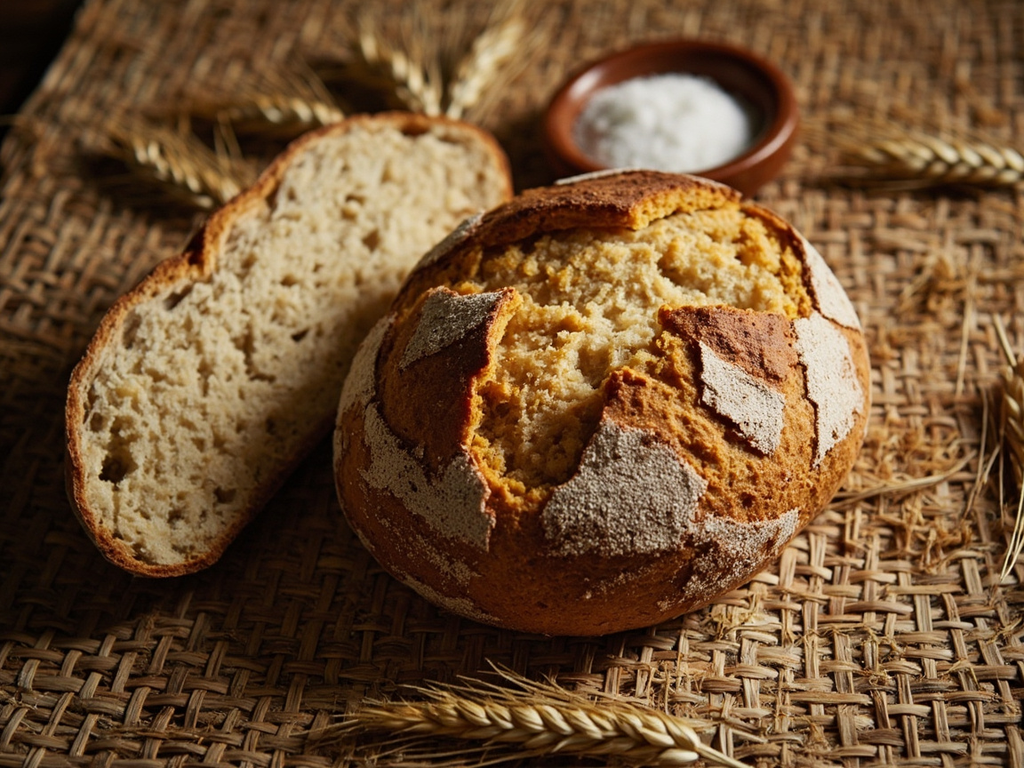
Why this dish? Bread was the absolute foundation of every Egyptian meal, from peasant to pharaoh. The granaries of Malkata palace, residence of Amenhotep III in western Thebes, were overflowing with emmer (the ancestor of wheat), and the royal bakeries baked dozens of shapes of it every day for the household and offerings.
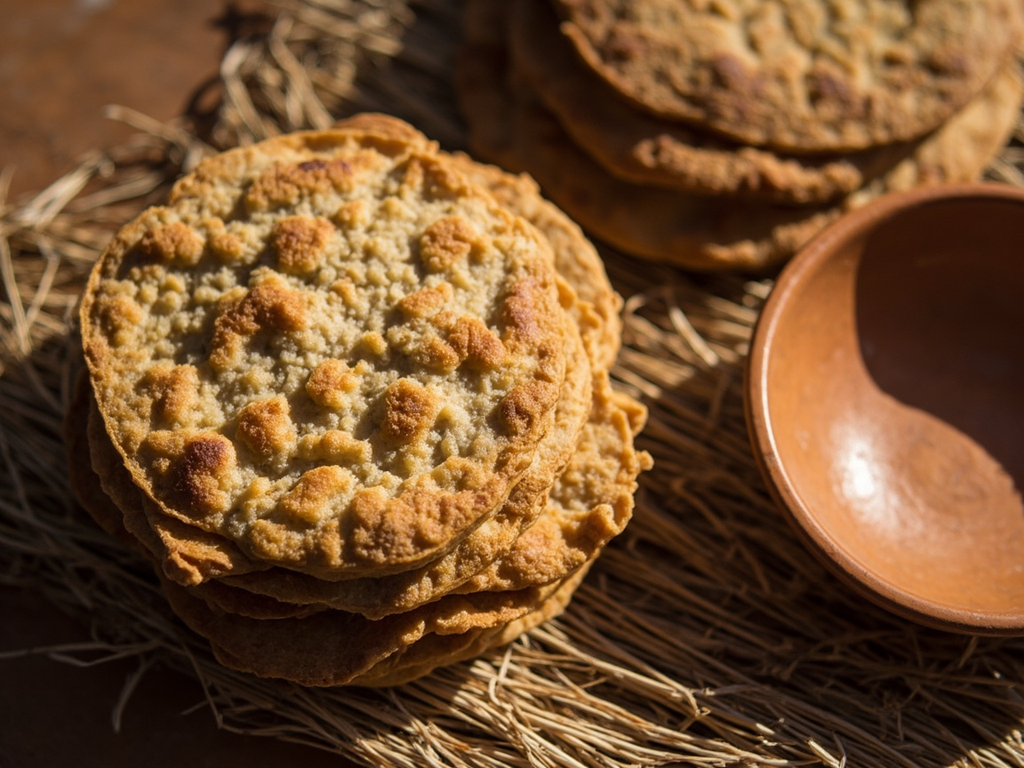
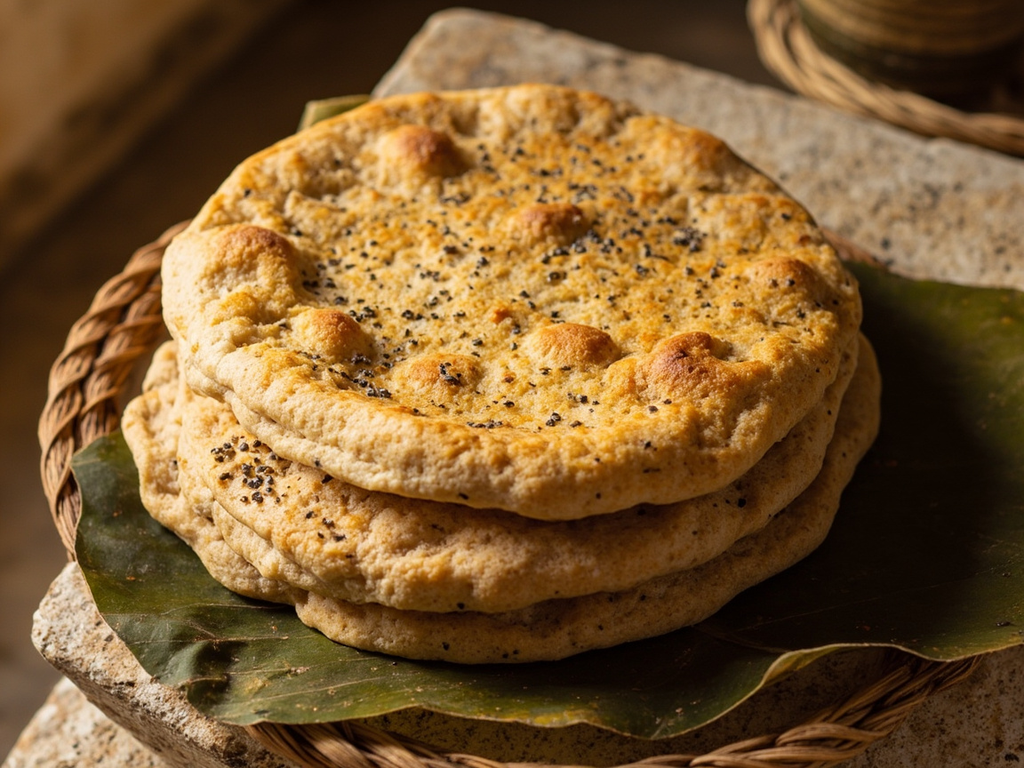
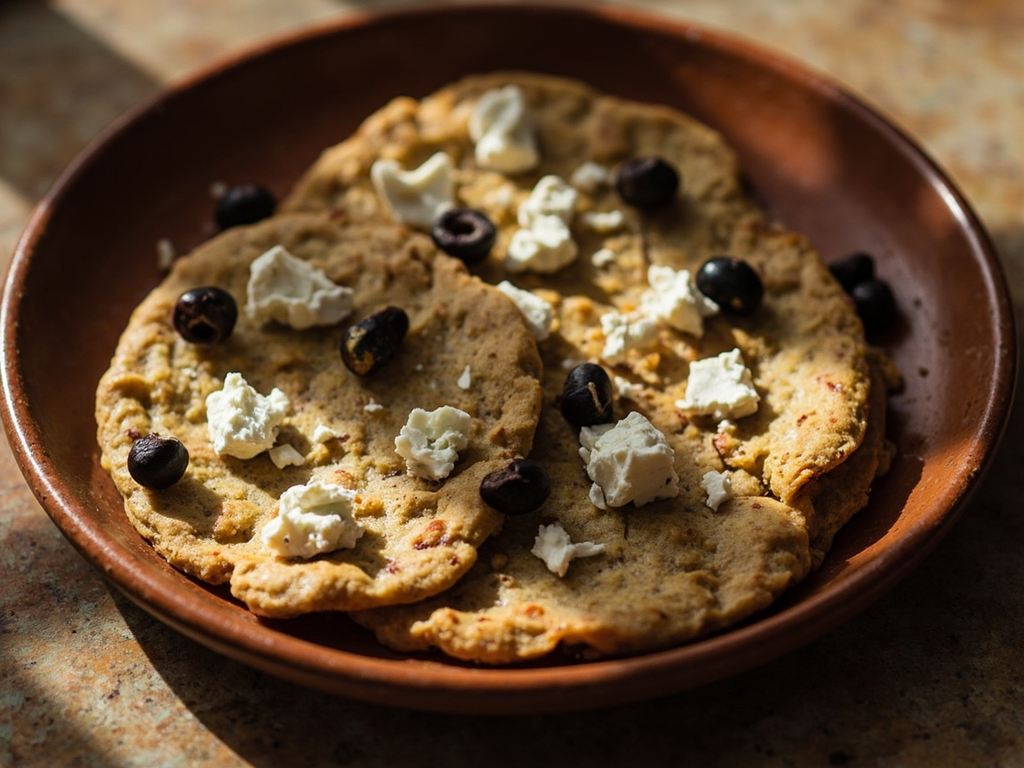
A dense, slightly leavened flatbread, baked on a hot stone or in a clay mold, that accompanied absolutely everything. It was eaten plain, dipped in beer, or topped with onion and fresh cheese.
I, Nebmaatre, the dazzling Sun of Egypt, tell you: no banquet begins without bread. At Malkata, my bakers knead the emmer that Hapi, the Nile, makes rise in my granaries. Break it while still warm, dip it in barley beer, and you will taste what a living god eats as well as what the humblest of my servants eats. For bread, you see, feeds king and pauper from the same grain.
- •Freshly ground emmer flour — a good measure (base)
- •Yesterday's sourdough (soured dough) — a handful (leavening)
- •Nile water — to consistency (binder)
- •Salt — a pinch (seasoning)
Emmer flatbread (ta)
A dense, slightly leavened flatbread, baked on a hot stone or in a clay mold, that accompanied absolutely everything. It was eaten plain, dipped in beer, or topped with onion and fresh cheese.
Why this dish? Bread was the absolute foundation of every Egyptian meal, from peasant to pharaoh. The granaries of Malkata palace, residence of Amenhotep III in western Thebes, were overflowing with emmer (the ancestor of wheat), and the royal bakeries baked dozens of shapes of it every day for the household and offerings.
I, Nebmaatre, the dazzling Sun of Egypt, tell you: no banquet begins without bread. At Malkata, my bakers knead the emmer that Hapi, the Nile, makes rise in my granaries. Break it while still warm, dip it in barley beer, and you will taste what a living god eats as well as what the humblest of my servants eats. For bread, you see, feeds king and pauper from the same grain.
Ingredients (period version)
- Freshly ground emmer flour — a good measure (base)
- Yesterday's sourdough (soured dough) — a handful (leavening)
- Nile water — to consistency (binder)
- Salt — a pinch (seasoning)
Ingredients
- Spelt flour (or emmer if available) — 400 g (base)
- Active natural sourdough (or 5 g fresh yeast) — 100 g (leavening)
- Warm water — 230 ml (binder)
- Salt — 8 g (seasoning)
Method
- Mix the flour, sourdough, salt and water until you have a soft, slightly sticky dough.
- Knead for 8 to 10 minutes, cover with a cloth and let rise for 3 to 4 hours in a warm place.
- Degas, divide into balls, flatten into finger-thick flatbreads.
- Cook on a very hot stone or baking sheet (250 °C) for 10 to 12 minutes, until browned and slightly puffed.
- Eat warm, plain or with a little sliced onion and fresh cheese.
How it was made : Emmer (Triticum dicoccum) was THE wheat of ancient Egypt, more than modern bread wheat. It was ground on stone mills — hence the famous sanding of teeth found on mummies. Bread took dozens of shapes (round, conical, braided, figurine-shaped), baked in preheated clay molds or on slabs.
The contemporary twist : Serve it as long dipping sticks, 'Pharaoh's bread' style, with a homemade tiger nut butter as a nod to the Nile.
Amenhotep III · Charactorium