 Flip the card
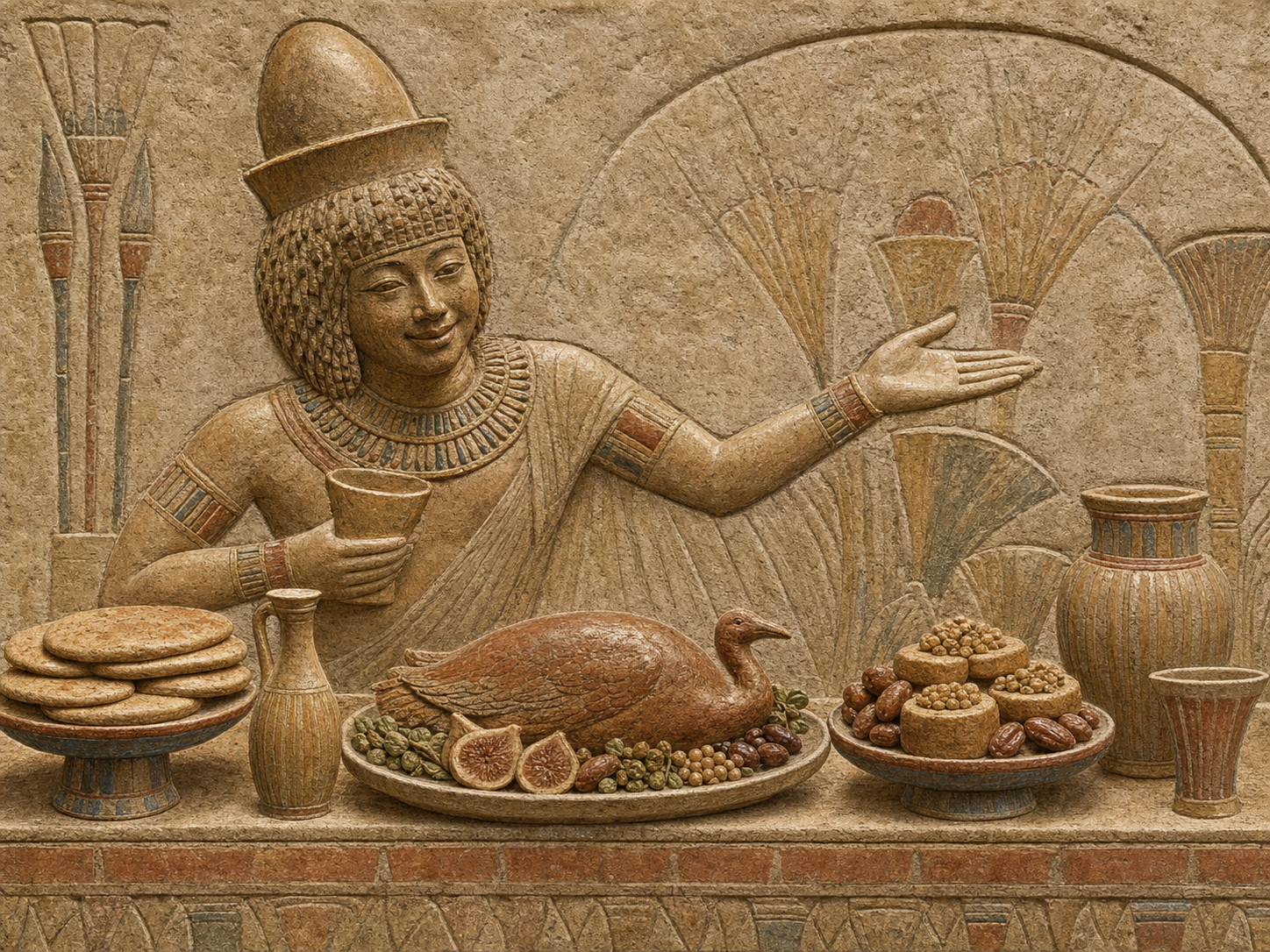
Amenhotep III at the table
1399 av. J.-C. — 1350 av. J.-C.
On the menu
The table of bread and beer (henket-ta)
The ancient Egyptian meal is not divided into starter-main-dessert: it is built on two nourishing pillars, bread (ta) and beer (henket), around which everything else is organized. Depending on rank and occasion, raw vegetables, fish or poultry, and honey sweets are added. At the royal table of Amenhotep III, this popular framework is adorned with roasted meats, wines from the oases, and refined pastries, but the logic remains the same: bread and beer first, the rest in procession.
Signature : Tiger nut and honey (the sweetening duo of the Nile)
Long before sugar, Egypt sweetened with honey and tiger nuts (chufa, a small tuber with an almond-hazelnut taste), attested in offerings and tombs. Along with coriander and cumin for savory dishes, they define the flavor palette of the Nile Valley in the New Kingdom.
click to flip back
Amenhotep III at the table
1399 av. J.-C. — 1350 av. J.-C.
5 period recipes
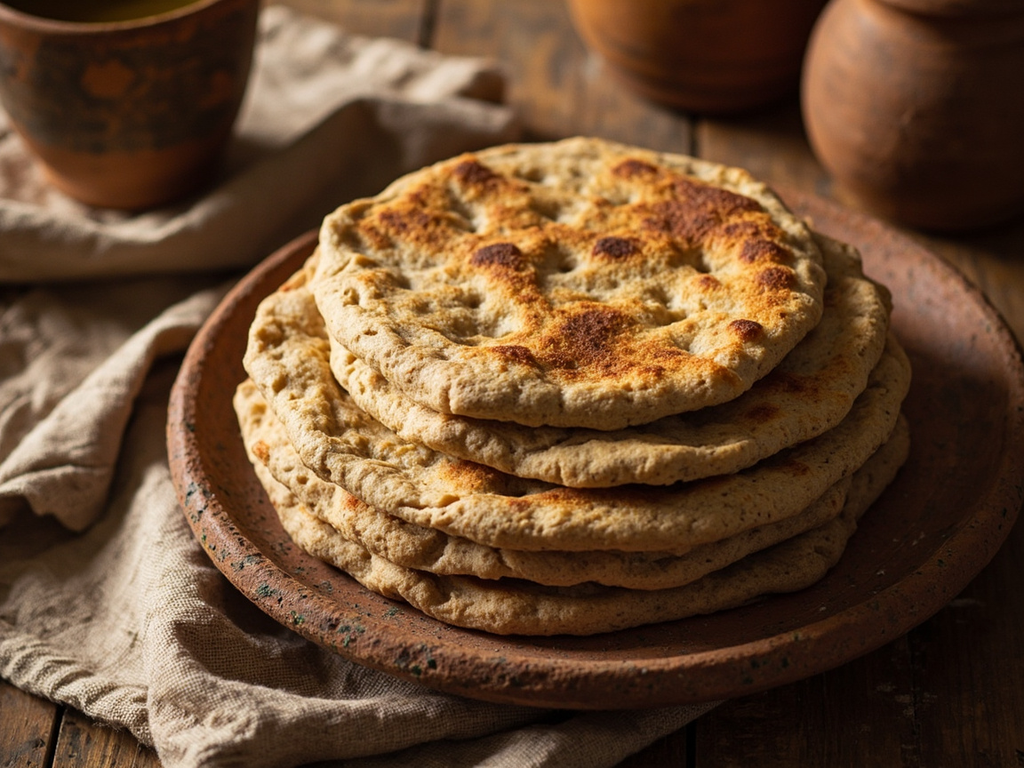 Everyday
Emmer flatbread (ta)
Nourishing pillar — the daily bread
🫙 🧂· 4 h (including resting)
View the recipe
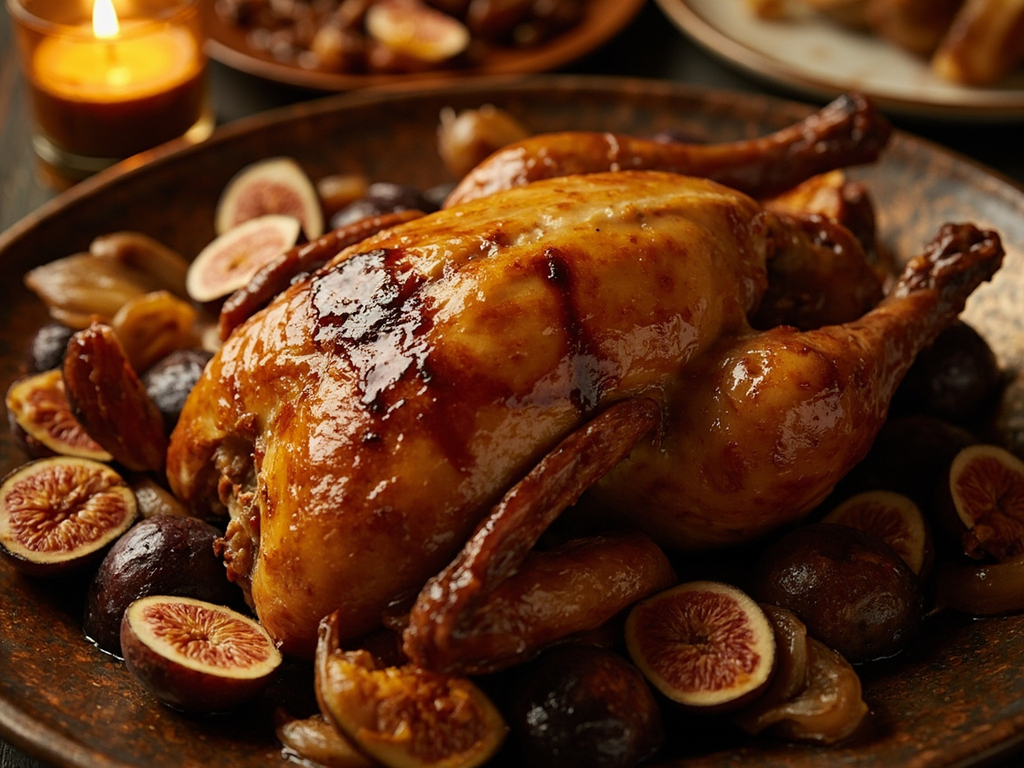 Festive
Honey-glazed roast goose with figs and coriander
Festive procession — the roasted meat of the royal banquet
🍯 🧂 🍄· 2 h 30
View the recipe
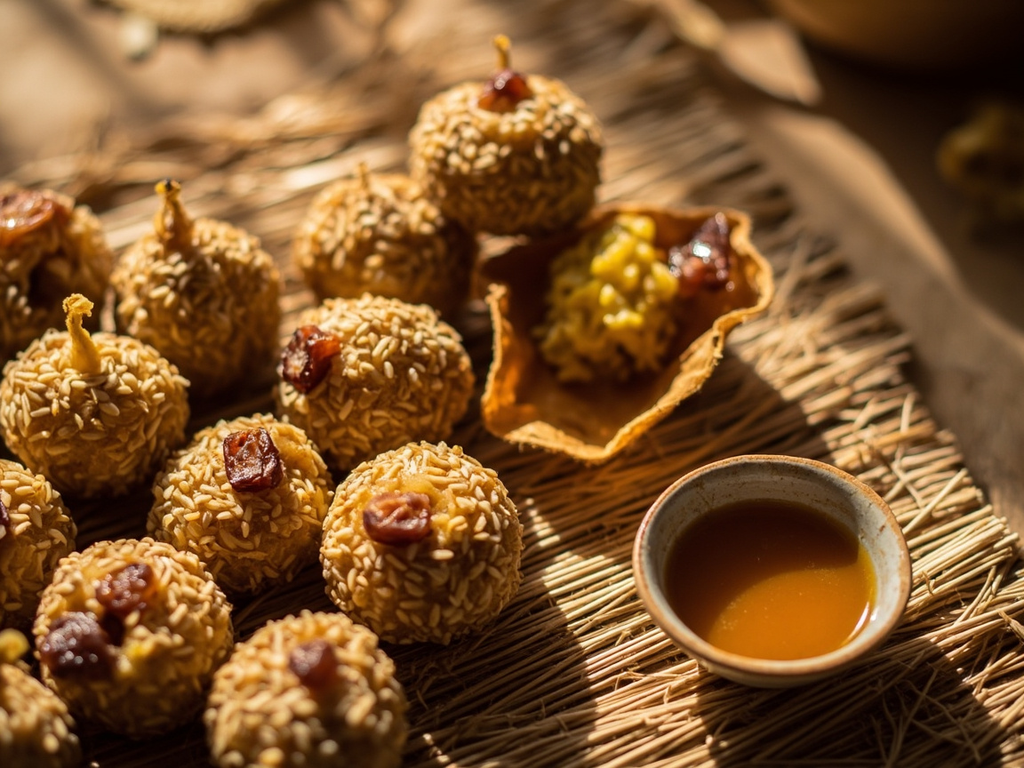 Offering
Honey, tiger nut and date cakes (shat)
Offering sweets — the cakes of gods and the dead
🍯· 40 min
View the recipe
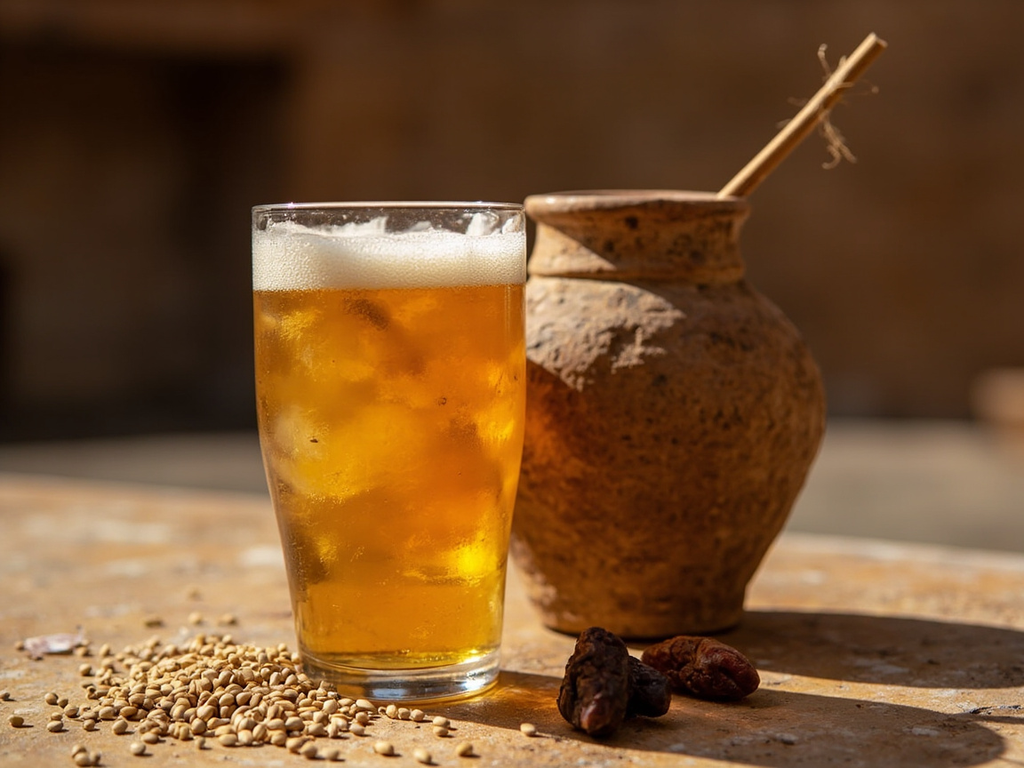 Drink
DrinkEmmer bread beer (henket)
Nourishing pillar — the everyday drink
🫙 🍋· 4 days (fermentation)
View the recipe
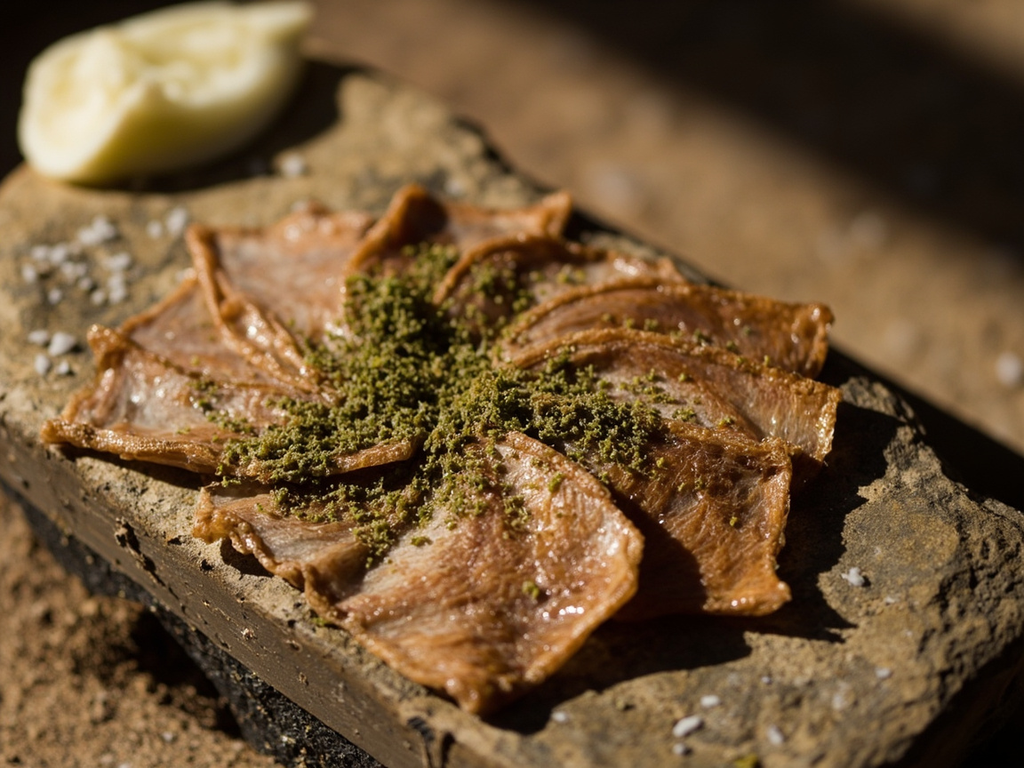 Preserving
Nile salt-dried fish with coriander
Pantry reserve — preserving the river's bounty
🧂 🍄 🫙· 2 days (salting + drying)
View the recipe