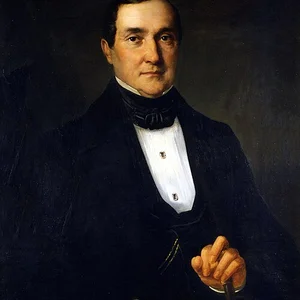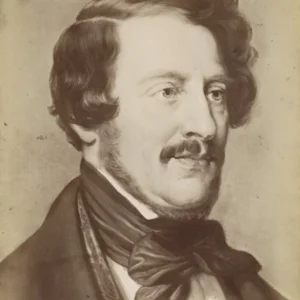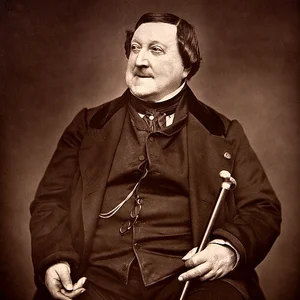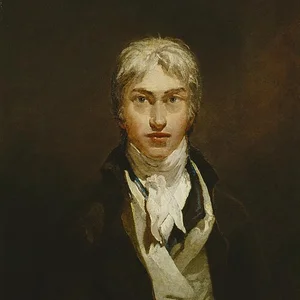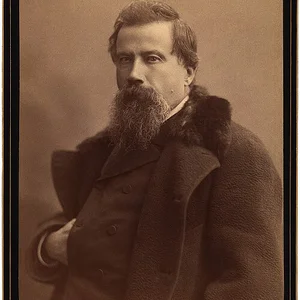

Italian composer (1834–1886), a major figure of Italian Romantic opera. He is best known for La Gioconda (1876), from which the celebrated Dance of the Hours is taken. He was a professor of Puccini and Mascagni at the Milan Conservatory.
Amilcare Ponchielli(1834 — 1886)
Amilcare Ponchielli
royaume d'Italie, royaume de Lombardie-Vénétie
8 min read
Frequently asked questions
Key Facts
- Born on 31 August 1834 in Paderno Fasolaro (Crema), Lombardy
- Composed La Gioconda in 1876, his masterpiece, on a libretto by Boito
- Appointed professor at the Milan Conservatory in 1880, where he taught Puccini and Mascagni
- The Dance of the Hours, taken from La Gioconda, became one of the most popular orchestral pieces in the repertoire
- Died on 16 January 1886 in Milan
Works & Achievements
Ponchielli's first opera, inspired by Manzoni's novel. After a lukewarm reception in 1856, the deeply revised version premiered in Milan in 1872 earned him his first national recognition.
A four-act opera premiered at La Scala, two years before the masterpiece La Gioconda, it bears witness to Ponchielli's growing dramatic mastery on the great Milanese stage.
Ponchielli's absolute masterpiece, premiered at La Scala with a libretto by Arrigo Boito. This four-act opera — home to the celebrated Danza delle ore — is the work that secured its composer's immortality.
A ballet excerpt from the third act of La Gioconda, it became one of the most celebrated orchestral pieces in the world repertoire, thanks in large part to the animated sequence in Walt Disney's film Fantasia (1940).
A four-act opera premiered at La Scala, inspired by the biblical parable of the prodigal son. It confirmed Ponchielli's talent for grand lyrical spectacles on an epic scale.
Ponchielli's final major opera, premiered at La Scala a year before his death. Adapted from Victor Hugo's drama, it illustrates the influence of French literary Romanticism on Italian opera at the close of the nineteenth century.
Anecdotes
To write the libretto for *La Gioconda*, Ponchielli turned to his friend Arrigo Boito, who signed the work under the pseudonym Tobia Gorrio — a perfect anagram of his own name. This ruse allowed Boito, known for his progressive artistic ideas, to collaborate discreetly with Ponchielli without ruffling the feathers of the conservative circles of Italian opera.
The *Dance of the Hours*, drawn from the third act of *La Gioconda*, became one of the most celebrated orchestral pieces in the operatic repertoire. More than half a century after Ponchielli's death, Walt Disney used it in his film *Fantasia* (1940), staging it with dancing hippopotamuses and ostriches — granting it a worldwide fame its composer could never have imagined.
Among Ponchielli's students at the Milan Conservatory were two young men who would go on to revolutionize opera: Giacomo Puccini and Pietro Mascagni. Puccini, who struggled to afford his studies, benefited from his teacher's active support; Ponchielli recognized his genius early on and helped him find patrons.
It took Ponchielli more than twenty years to achieve success. His first version of *I promessi sposi*, premiered in **1856** in Cremona, went almost unnoticed. Only after substantial revisions and its revival in Milan in **1872** did the opera finally earn him national recognition, opening the doors of La Scala.
In **1874**, Ponchielli married the soprano Teresina Brambilla, who came from an illustrious family of Milanese opera singers. It was both a personal and an artistic union: Teresina created several roles written by her husband, and her stage experience directly influenced the way Ponchielli conceived the female voices in his operas.
Primary Sources
I am sending you the last corrected pages of La Gioconda. I hope you will find the fourth act worthy of the whole; I have worked on it without respite these past three months and await your judgment with great anticipation.
Cielo e mar! L'etereo velo splende come un santo altar... — excerpt from the tenor aria of Enzo Grimaldo, Act II, Scene 1.
M. Ponchielli's new score produced a most vivid effect on the audience at La Scala. The Danza delle ore was encored with a unanimity of enthusiasm rarely witnessed within these walls.
The Council of the Royal Conservatory of Milan unanimously appoints M. Amilcare Ponchielli to the post of professor of composition, in succession to M. Mazzucato, with effect from the academic year 1880–1881.
Key Places
Amilcare Ponchielli's birthplace, renamed in his honor after his death. This is where he spent his childhood before leaving to study in Milan at the age of nine.
Ponchielli studied here from 1843 to 1854, then returned as a professor of composition in 1880. Within its walls he trained the future giants of verismo opera, Puccini and Mascagni.
The legendary stage of Italian opera where *La Gioconda* received its world premiere on **8 April 1876**. The triumph at La Scala definitively established Ponchielli's reputation on the national stage.
A city in Lombardy where Ponchielli worked as a church organist and band conductor between 1854 and 1873, before breaking through onto the national operatic scene with the revised version of *I promessi sposi*.
The cultural capital of Risorgimento and post-unification Italy, the city where Ponchielli lived, taught, and created his major works, and where he died on **16 January 1886**.
Typical Objects

An essential instrument for any nineteenth-century composer, Ponchielli used it daily to sketch out his melodies and test his harmonies before committing them to manuscript paper.

Ponchielli wrote out his operas by hand, page by page, with a quill pen and black ink. His manuscripts, preserved in the Ricordi archives in Milan, are covered in crossings-out and corrections that bear witness to his tireless work.

Sold at the entrance of opera houses, the libretto allowed audiences to follow the sung Italian text. The libretto for *La Gioconda*, printed by Ricordi, was one of the most sought-after of the late nineteenth century.

Ponchielli himself conducted the premieres of his works at La Scala. The baton symbolized his authority over the orchestra, chorus, and soloists during rehearsals and performances.

A ubiquitous tool in nineteenth-century music education, Ponchielli used it in his classes at the Milan Conservatory to instill a sense of tempo in his students, among them Puccini and Mascagni.

Obligatory attire for composers and conductors at La Scala performances and at receptions in the drawing rooms of the Milanese bourgeoisie, where artistic connections were forged and contracts signed.
School Curriculum
Vocabulary & Tags
Key Vocabulary
Daily Life
Morning
Ponchielli began his day early, dedicating himself to composition from dawn. Seated at his grand piano or at his desk covered with manuscript paper, he worked in the calm of the morning, correcting his scores and fair-copying the sketches from the day before.
Afternoon
Afternoons were devoted to teaching at the Milan Conservatory, where Ponchielli gave his classes in composition and harmony. He supervised his students' work, commented on their scores, and passed on the rules of counterpoint inherited from the great Italian operatic tradition.
Evening
Evenings revolved around the opera world: rehearsals at La Scala, operatic performances, or receptions in the salons of the Milanese bourgeoisie, where composers, librettists, singers, and patrons mingled. It was in these circles that artistic collaborations took shape and contracts were signed.
Food
Like most Lombards of his social milieu, Ponchielli ate modestly: saffron risotto, polenta, braised meats, and local cheeses such as grana padano. The midday meal, the main one of the day, was often taken with family or Conservatory colleagues at a neighborhood osteria.
Clothing
Ponchielli wore the typical bourgeois dress of the second half of the nineteenth century: a frock coat or black jacket, waistcoat, lavallière cravat, and top hat for official occasions. Day to day, when composing or teaching, he adopted a simpler style with an informal house jacket.
Housing
In Milan, Ponchielli lived in a bourgeois apartment in the city center, close to the Conservatory and La Scala. His home included a drawing room where his grand piano stood as an indispensable work instrument, and a library stocked with scores, librettos, and harmony treatises.