19th Century
Inventors, writers, activists and entrepreneurs of the century of industrial revolutions and national movements.
945 characters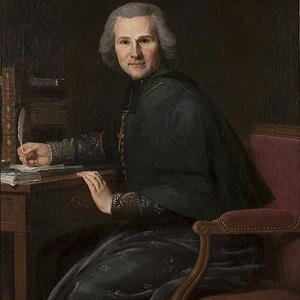
945 characters
Politics(157)
Abbé Henri Grégoire
1750 — 1831
A Catholic priest and politician of the French Revolution, he championed the emancipation of Jews and the abolition of slavery in the colonies. Elected as a constitutional bishop, he sat in the National Convention and helped secure the passage of the 1794 abolition decree.
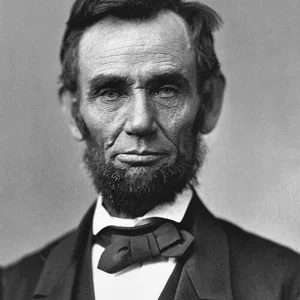
Abraham Lincoln
1809 — 1865
Abraham Lincoln (1809-1865) was the 16th President of the United States. He led the country through the Civil War and abolished slavery in the United States in 1863 with the Emancipation Proclamation.
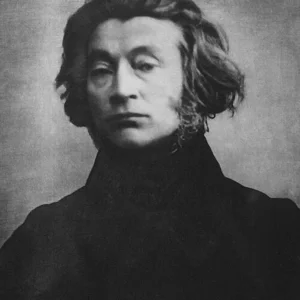
Adam Mickiewicz
1798 — 1855
Adam Mickiewicz (1798-1855) is Poland's greatest national poet and a major figure of European Romanticism. His epic and lyrical work expresses nostalgia for occupied Poland and the aspiration for national freedom.
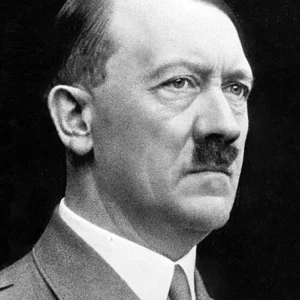
Adolf Hitler
1889 — 1945
Adolf Hitler (1889-1945) was an Austrian politician and military leader who founded the National Socialist German Workers' Party (Nazi Party) and became dictator of Germany from 1933 to 1945. His totalitarian regime, built on Nazi ideology, was responsible for World War II and the Holocaust, a genocide that killed six million Jews.
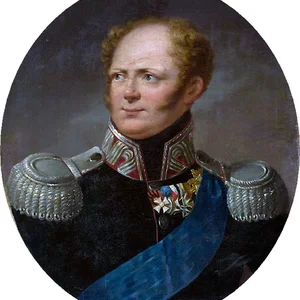
Alexander I
1777 — 1825
Emperor of Russia from 1801 to 1825, Alexander I was one of Napoleon's chief adversaries. Victorious in the campaign of 1812, he played a major role at the Congress of Vienna and founded the Holy Alliance.
Alexandra Kollontai
1872 — 1952
A Russian Bolshevik revolutionary, Alexandra Kollontai was one of the first women in the world to hold a diplomatic post. A theorist of socialist feminism, she championed women's emancipation and freedom from traditional marriage.
Alexandre Auguste Ledru-Rollin
1807 — 1874
French lawyer and republican politician (1807–1874), he was one of the members of the provisional government that emerged from the February 1848 revolution. He was the principal architect of the decree establishing universal male suffrage in France, expanding the electorate from 200,000 to nearly 9 million citizens.
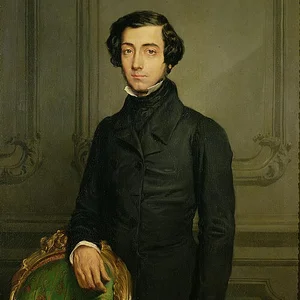
Alexis de Tocqueville
1805 — 1859
French political philosopher, historian, and statesman (1805–1859). Tocqueville is the author of 'Democracy in America', a foundational work analyzing American institutions and society. He is considered a pioneer of sociology and a major thinker of modern politics.
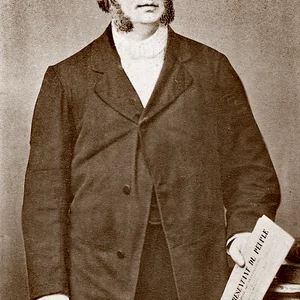
Alphonse Baudin
1811 — 1851
A physician and republican deputy, Alphonse Baudin was killed on December 3, 1851, on a barricade in the faubourg Saint-Antoine while resisting Louis-Napoléon Bonaparte's coup d'état. He became a martyr of the Republic, and his trial in 1868 reignited republican opposition to the Second Empire.
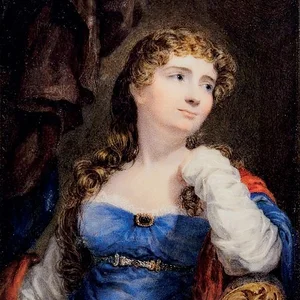
Annabella Milbanke
1792 — 1860
British aristocrat (1792–1860), self-taught mathematician and philanthropist, she married the poet Lord Byron in 1815 before separating from him a year later. She went on to dedicate herself to popular education and social reform, and is the mother of Ada Lovelace, pioneer of computing.
Antoine-César de Choiseul-Praslin
1756 — 1808
French aristocrat (1756-1808), senator of the First Empire and grand officer of the Legion of Honor. Born into a great noble family, he navigated the transition from the Ancien Régime to the Napoleonic institutions.
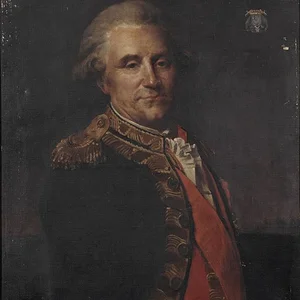
Antoine-Jean-Marie Thévenard
1733 — 1815
French admiral born in 1733, he distinguished himself during the American War of Independence before becoming Minister of the Navy under the Revolution (1791-1792). A senator under the Napoleonic Empire, he embodies the continuity between the Old Regime's naval tradition and the revolutionary institutions.
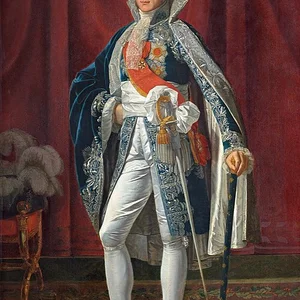
Armand de Caulaincourt
1773 — 1827
French general and diplomat, Duke of Vicenza, he served as Napoleon's ambassador to Russia (1807–1811) and was a privileged eyewitness to the Russian campaign of 1812. Minister of Foreign Affairs during the Hundred Days, he left behind essential Memoirs on the Napoleonic saga.
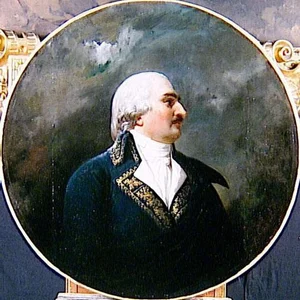
Auguste Marie Henri Picot de Dampierre
1756 — 1793
French general of the Revolution (1756–1793), he took command of the Army of the North after Dumouriez's betrayal and was killed in action during the siege of Condé-sur-l'Escaut. Pantheonized in 1793, his remains were removed during the Restoration.
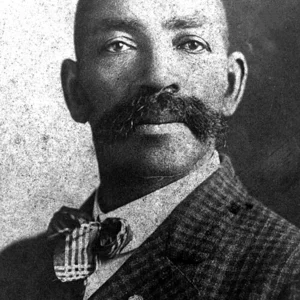
Bass Reeves
1838 — 1910
Bass Reeves (1838-1910) was the first African American deputy U.S. marshal west of the Mississippi. Born into slavery, he became one of the most famous lawmen of the Wild West, credited with more than 3,000 arrests over a thirty-two-year career.
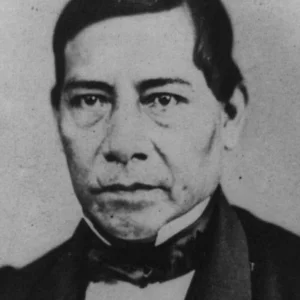
Benito Juárez
1806 — 1872
Benito Juárez was a Mexican statesman of indigenous Zapotec origin who served as president of Mexico on several occasions between 1858 and 1872. A leading figure of liberalism, he carried out major secular reforms and resisted the French intervention and the Empire of Maximilian.
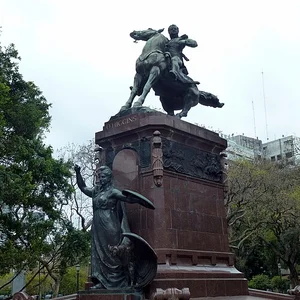
Bernardo O'Higgins
1778 — 1842
Bernardo O'Higgins was a Chilean soldier and statesman, considered one of the principal liberators of Chile from Spanish rule. As the first leader of the independent Republic, he served as its Supreme Director from 1817 to 1823.
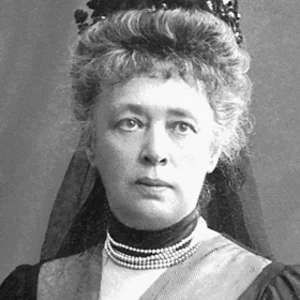
Bertha von Suttner
1843 — 1914
Austrian novelist and pacifist activist (1843–1914), Bertha von Suttner published in 1889 “Die Waffen nieder!” (Lay Down Your Arms!), a novel that shocked Europe with its realistic portrayal of the horrors of war. In 1905, she became the first woman to receive the Nobel Peace Prize.
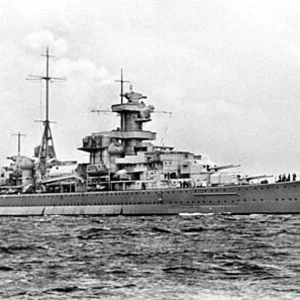
Blücher
Prussian field marshal and a leading figure of the Napoleonic Wars. Nicknamed “Marschall Vorwärts” (Marshal Forward), he played a decisive role in Napoleon's defeat at Waterloo in 1815 by rallying his troops to support Wellington's British forces.
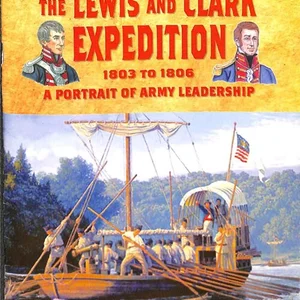
Cameahwait
Chief of the Shoshone tribe, Cameahwait played a crucial role in the Lewis and Clark Expedition (1805) by providing guides and horses to cross the Rocky Mountains. Brother of Sacagawea, he enabled the American expedition to reach the Pacific.
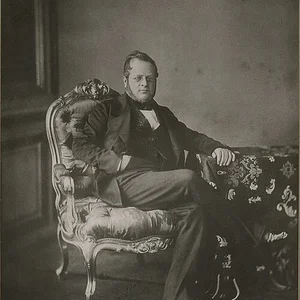
Camillo Cavour
1810 — 1861
Piedmontese statesman (1810–1861), Cavour was the principal architect of Italian unification. As President of the Council of the Kingdom of Sardinia, he pursued a liberal policy and used diplomacy to win over France and isolate Austria.
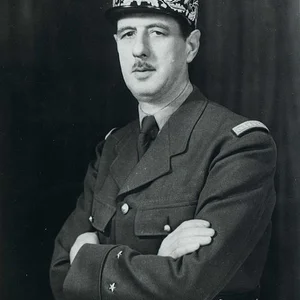
Charles de Gaulle
1890 — 1970
French military officer and statesman (1890–1970), leader of the French Resistance during World War II and founder of the Fifth Republic. A defining figure of the 20th century, he shaped French history through his unwavering commitment to national independence and the greatness of France.
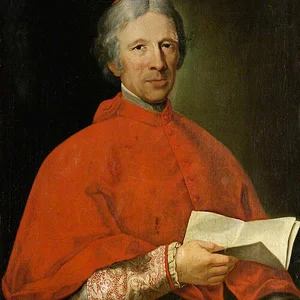
Charles Erskine de Kellie
1739 — 1811
Charles Erskine (1739-1811) was a Scottish cardinal in the service of the Holy See. A diplomat of the Catholic Church, he acted as an intermediary between Rome and the European powers during the Napoleonic era.
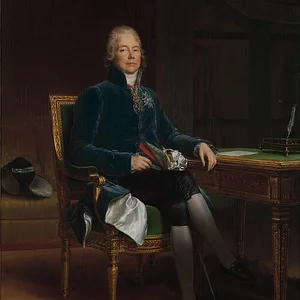
Charles-Maurice de Talleyrand-Périgord
1754 — 1839
French diplomat and statesman (1754–1838), he served under the Ancien Régime, the Revolution, the Empire, and the Restoration. A master negotiator, he defended France's interests at the Congress of Vienna in 1815.
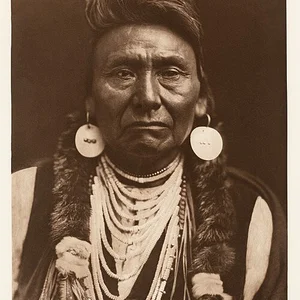
Chief Joseph
1840 — 1904
Chief of the Nez Perce Native American tribe. In 1877, he led his people on a desperate retreat of nearly 1,700 km to escape the U.S. Army and reach Canada, before surrendering just a few kilometers from the border.
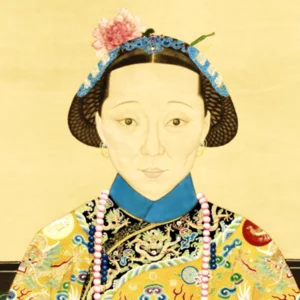
Ci'an
1837 — 1881
Empress dowager of China under the Qing dynasty, Ci'an exercised a joint regency with Ci Xi following the death of Emperor Xianfeng in 1861. Known for her piety and gentleness, she was long overshadowed by the more ambitious Ci Xi in historical accounts.
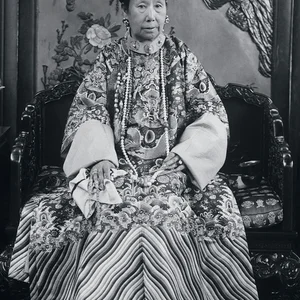
Cixi
1835 — 1908
Cixi, Empress Dowager of China, dominated the politics of the Qing dynasty for nearly fifty years. A shrewd and authoritarian regent, she governed an empire facing Western colonial pressures and internal rebellions, leaving an ambivalent legacy on China's modernization.
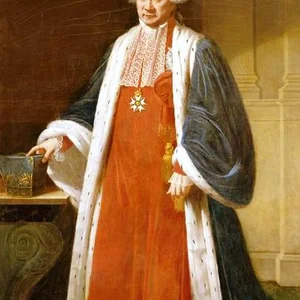
Claude Ambroise Régnier
1746 — 1814
French jurist and politician (1746–1814), Grand Judge and Minister of Justice under the First Empire. A loyal servant of Napoleon, he was created Duke of Massa in 1809 and contributed to the organization of the Napoleonic judicial system.
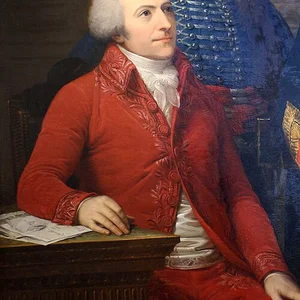
Claude-Louis Petiet
1749 — 1806
French general and politician, Claude-Louis Petiet served as Minister of War under the Directory (1797–1798), then as Councillor of State and senator under the Consulate and the Napoleonic Empire. He died in 1806, becoming the first person interred during the reign of Napoleon I.
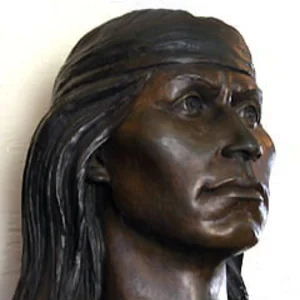
Cochise
1812 — 1874
An Apache chief of the Chiricahua band, Cochise led the armed resistance against the U.S. Army in the Southwest for more than ten years. A major figure of the Apache Wars, he finally made peace in 1872.
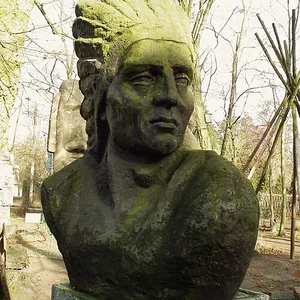
Crazy Horse
1849 — 1877
Oglala Lakota war chief and a leading figure of Native American resistance against the expansion of the United States. Victor over Custer at Little Bighorn in 1876, he was killed the following year while being held at Fort Robinson.
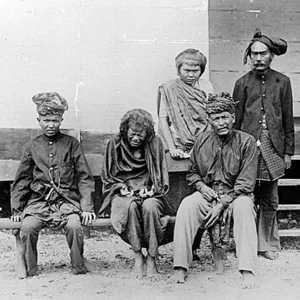
Cut Nyak Dhien
1848 — 1908
An Indonesian national heroine, Cut Nyak Dhien led armed resistance against Dutch occupation in the Aceh region (Sumatra) following the death of her husband. A symbol of Indonesian nationalism, she fought until her capture in 1905 despite serious illness.
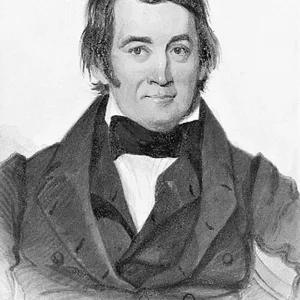
Davy Crockett
1786 — 1836
American pioneer, hunter, and politician, elected several times to Congress for the state of Tennessee. Having become a legendary figure of the conquest of the West, he died defending Fort Alamo during the Texas Revolution in 1836.
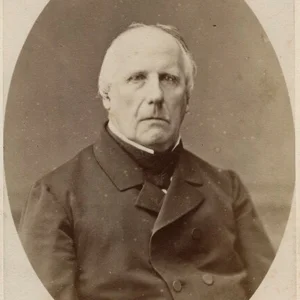
Edgar Quinet
1803 — 1875
French historian, philosopher, and politician (1803-1875), a leading figure of anticlerical republicanism. A professor at the Collège de France, he was exiled during the Second Empire for his opposition to Napoléon III.
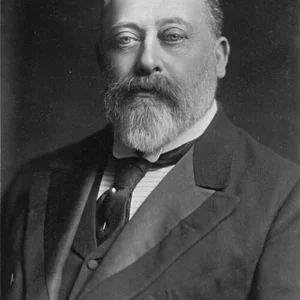
Edward VII
1841 — 1910
Son of Queen Victoria, Edward VII reigned over the United Kingdom and the Empire of India from 1901 to 1910. An emblematic figure of the Belle Époque, he played a decisive role in bringing France and Britain closer together through the Entente Cordiale of 1904.
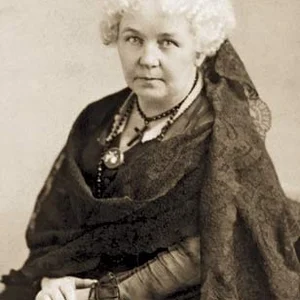
Elizabeth Cady Stanton
1815 — 1902
American women's rights activist (1815–1902), she co-organized the Seneca Falls Convention in 1848, the first major gathering for women's suffrage in the United States. Author of the Declaration of Sentiments, she devoted her life to the civic and political equality of women.
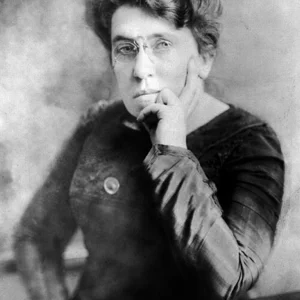
Emma Goldman
1869 — 1940
Emma Goldman (1869-1940) was a Lithuanian-born anarchist and feminist activist who emigrated to the United States. A leading figure in the American labor movement, she championed individual freedom, women's emancipation, and opposed war and capitalism.
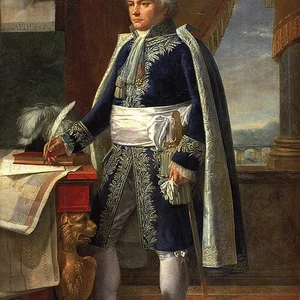
Emmanuel Crétet de Champmol
French statesman (1747-1809), Minister of the Interior under Napoleon I and first governor of the Bank of France. He played a key role in the administrative and financial reorganization of Consular and Imperial France.
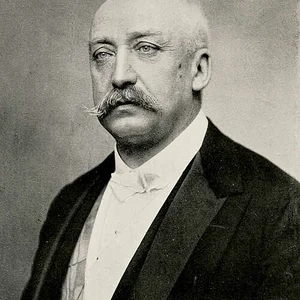
Félix Faure
1841 — 1899
French statesman (1841–1899), President of the Republic from 1895 until his death. Born into the bourgeoisie of Le Havre, his presidency was defined by the Dreyfus Affair, and he died suddenly at the Élysée Palace in circumstances that have since become notorious.
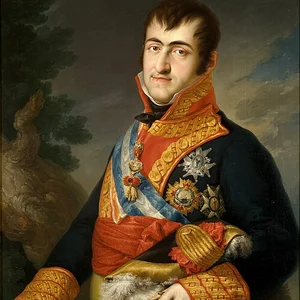
Ferdinand VII
1784 — 1833
King of Spain in 1808 and from 1814 to 1833, Ferdinand VII reigned under Napoleonic occupation and then after the Restoration. His absolutist rule and the loss of Spain's American colonies left a profound mark on Spanish history.
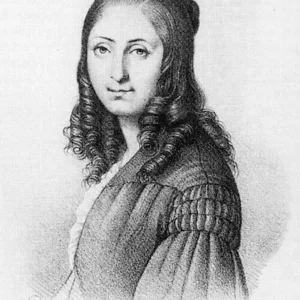
Flora Tristan
1803 — 1844
French journalist and feminist activist (1803–1844), Flora Tristan championed the emancipation of women and the condition of the working class in the 19th century. She was a pioneer of feminism and socialism, placing the question of women at the heart of political and social debate.
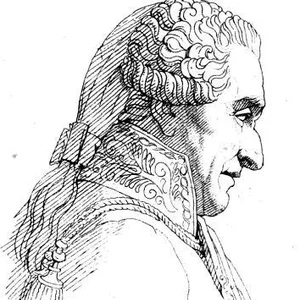
François Denis Tronchet
1726 — 1806
French jurist and statesman (1726–1806), he courageously defended Louis XVI before the Convention in 1792. He was one of the four principal authors of the Civil Code promulgated in 1804, a foundational work of modern French law.
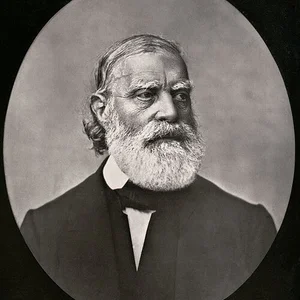
François-Vincent Raspail
1794 — 1878
French chemist and naturalist (1794–1878), pioneer of cellular chemistry and histology. A committed republican, he took part in the revolutions of 1830 and 1848, was imprisoned for his political beliefs, and ran for the presidency of the Republic from his prison cell.
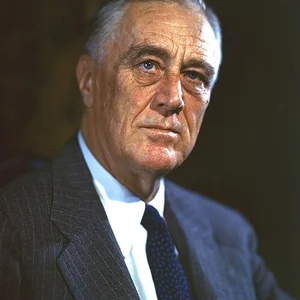
Franklin D. Roosevelt
1882 — 1945
President of the United States from 1933 to 1945, Franklin D. Roosevelt led the country through the Great Depression and World War II. He implemented the New Deal, a sweeping program of social and economic reforms, and played a decisive role in the Allied victory.
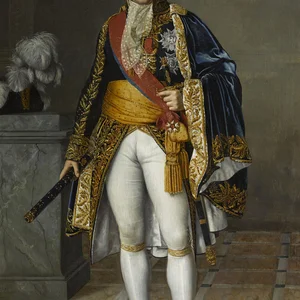
Franz Joseph I
Franz Joseph I (1830–1916) was Emperor of Austria and King of Hungary for 68 years, one of the longest reigns in European history. He embodied the Habsburg monarchy as it faced nationalist upheavals and the crises that led up to the First World War.
Gabriel Louis de Caulaincourt
1749 — 1808
A French general of the First Empire, Gabriel Louis de Caulaincourt distinguished himself during the Napoleonic Wars. He died heroically at the Battle of the Moskva in September 1812, during the Russian campaign.
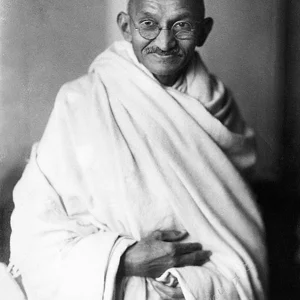
Gandhi
1869 — 1948
Indian political and spiritual leader (1869–1948), Gandhi led the movement for India's independence from British rule by advocating non-violence and civil disobedience. He became an iconic figure in the struggle for civil rights and the emancipation of colonized peoples.
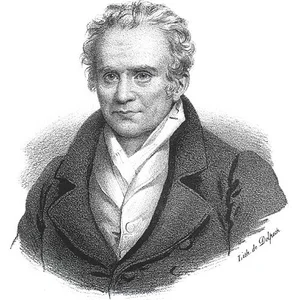
Gaspard Monge
1746 — 1818
French mathematician (1746–1818), inventor of descriptive geometry and co-founder of the École Polytechnique. A close ally of Napoleon, he played a major role in modernizing scientific and technical education in France.
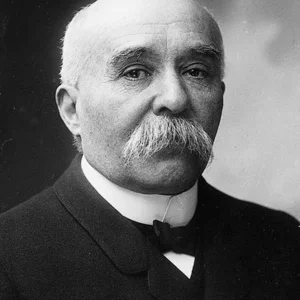
Georges Clemenceau
1841 — 1929
French statesman (1841–1929), Georges Clemenceau is best known for his decisive role during the First World War as Prime Minister (1917–1920). Nicknamed 'The Father of Victory', he led France to victory and negotiated the Treaty of Versailles.
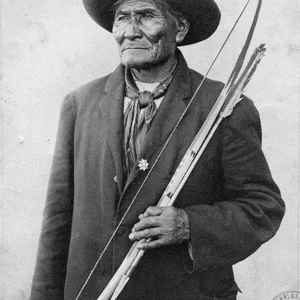
Geronimo
1829 — 1909
A Chiricahua Apache war leader and medicine man, Geronimo led the armed resistance against the expansion of the United States and Mexico in the American Southwest. His surrender in 1886 marked the end of the great Indian Wars.
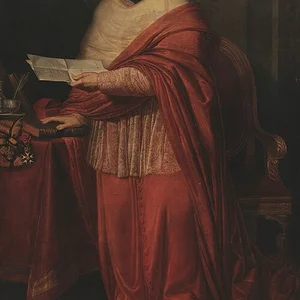
Giovanni Battista Caprara
1733 — 1810
Cardinal and papal legate, Giovanni Battista Caprara (1733–1810) played a central role in the reconciliation between the Catholic Church and Napoleonic France. He negotiated and signed the Concordat of 1801 on behalf of the Holy See, and was subsequently appointed Archbishop of Milan.
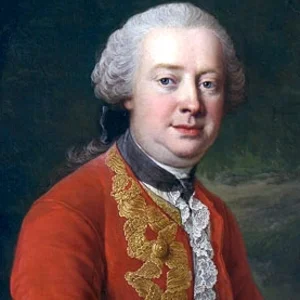
Girolamo Luigi Durazzo
A Genoese aristocrat, Girolamo Luigi Durazzo was one of the last doges of the Republic of Genoa before its annexation by France. He subsequently became a senator under Napoleon's First Empire, embodying the transition between the old republican order and the new French regime.
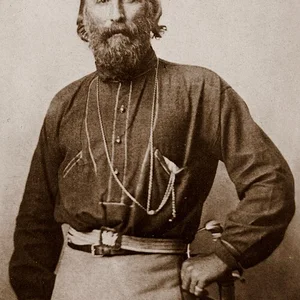
Giuseppe Garibaldi
1807 — 1882
Italian general and patriot (1807–1882), Garibaldi is one of the central figures of the Risorgimento. A charismatic military leader, he unified much of Italy through his campaigns, most notably the famous Expedition of the Thousand in 1860.
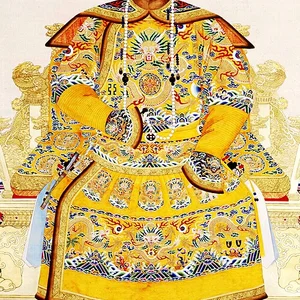
Guangxu
1871 — 1908
Guangxu (1871–1908) was the eleventh emperor of the Qing dynasty. In 1898, he attempted to modernize China through the "Hundred Days' Reform," but Empress Dowager Cixi seized power and placed him under house arrest until his death.
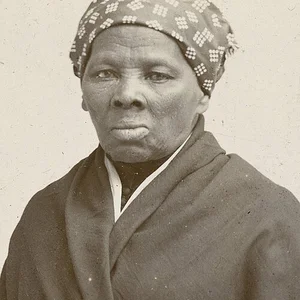
Harriet Tubman
1820 — 1913
Born into slavery around 1822, Harriet Tubman escaped in 1849 and became one of the most celebrated conductors of the Underground Railroad, helping hundreds of enslaved people flee to the North. An abolitionist, a spy for the Union during the Civil War, and an advocate for women's rights, she is a towering figure in the American struggle for freedom.
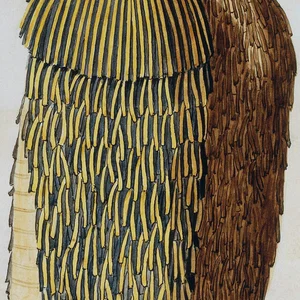
Hone Heke
1807 — 1850
Māori chief of the Ngāpuhi tribe, Hone Heke was the first signatory of the Treaty of Waitangi in 1840, before turning against British colonization. A symbol of indigenous resistance, he cut down the British flagpole at Kororāreka four times, sparking the Flagstaff War (1845–1846).
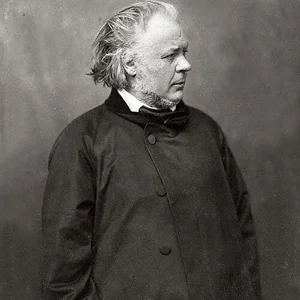
Honoré Daumier
1808 — 1879
Honoré Daumier (1808-1879) was a French engraver, caricaturist, painter and sculptor. A master of lithography, he ferociously sketched the political and social life of his time, becoming one of the greatest satirists of the 19th century.
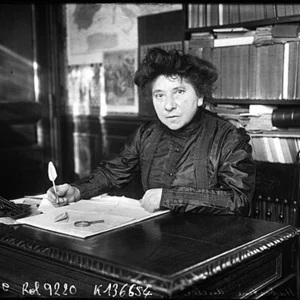
Hubertine Auclert
1848 — 1914
French feminist activist (1848–1914), she was one of the first to demand women's right to vote in France. Founder of the society “Le Suffrage des femmes,” she led militant actions such as refusing to pay her taxes and smashing a ballot box.
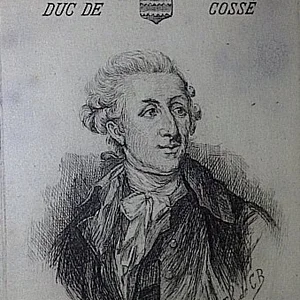
Hyacinthe-Hughes Timoléon de Cossé-Brissac
1746 — 1813
A French general from the high nobility, he served under the Revolution and the Empire. Appointed senator of the First Empire by Napoleon, he embodies the fusion between the old aristocracy and the new Napoleonic institutions.
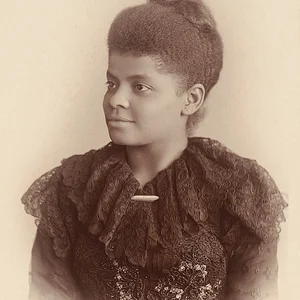
Ida B. Wells
1862 — 1931
African American journalist and activist born into slavery in 1862, Ida B. Wells conducted rigorous investigations into lynching in the United States and co-founded the NAACP. A pioneering figure in investigative journalism and the civil rights movement.
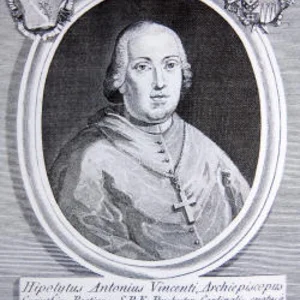
Ippolito-Antonio Vincenti-Mareri
1738 — 1811
Italian Catholic prelate of the 19th century, elevated to the dignity of cardinal within the Roman Curia. He carried out his duties in the context of the Papal States, at a time of deep tensions between the Church and the emerging national states of Europe.
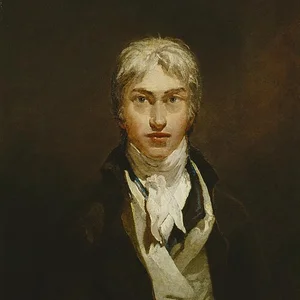
J. M. W. Turner
1775 — 1851
British painter and engraver (1775-1851), Turner is considered the master of Romantic landscape. A forerunner of Impressionism, he revolutionized the depiction of light, water, and atmosphere.
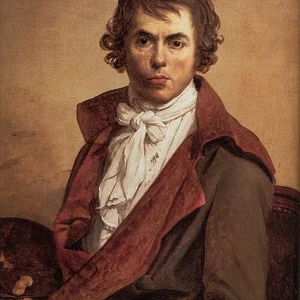
Jacques-Louis David
1748 — 1825
French Neoclassical painter (1748–1825), David was the leading figure in official painting during the Revolution and the Empire. His grand historical compositions and portraits left a lasting mark on Western art.
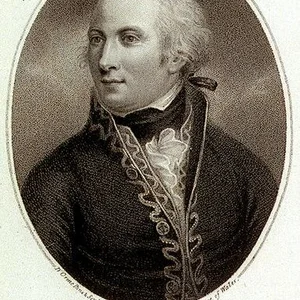
Jan de Winter
1761 — 1812
Dutch admiral (1761-1812) who served the Batavian Republic and later the Napoleonic Empire. Commander of the Batavian fleet, he faced the British Royal Navy at the Battle of Camperdown in 1797, where he was taken prisoner after fierce resistance.
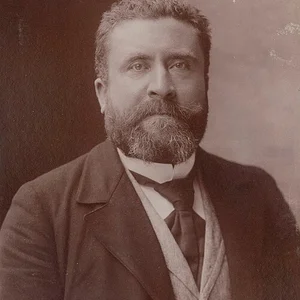
Jean Jaurès
1859 — 1914
Jean Jaurès (1859-1914) was a major French politician and founder of the unified Socialist Party. A passionate advocate for social justice, pacifism, and democracy, he opposed the war before being assassinated in 1914.
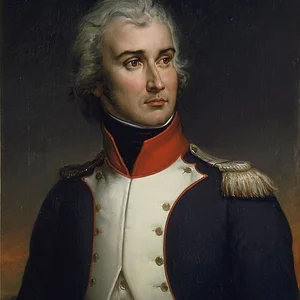
Jean Lannes
1769 — 1809
Marshal of the Empire and Duke of Montebello, Jean Lannes was one of Napoleon's most brilliant generals. A loyal comrade-in-arms since the Italian and Egyptian campaigns, he distinguished himself at Montebello, Austerlitz, and Jena. He died of his wounds at the Battle of Essling in 1809.
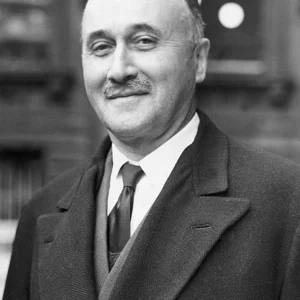
Jean Monnet
1888 — 1979
French statesman (1888–1979), Jean Monnet is regarded as one of the founding fathers of the European Union. He played a decisive role in the creation of the European Coal and Steel Community (ECSC) and championed the economic and political integration of Europe.
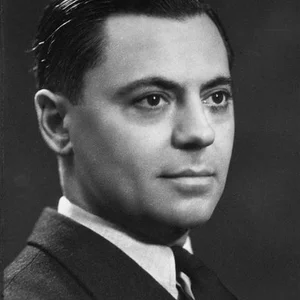
Jean Moulin
1899 — 1943
French senior civil servant (1899–1943), Jean Moulin is one of the most prominent figures of the French Resistance. He unified the resistance movements and created the National Council of the Resistance (CNR) before being arrested and tortured to death by the Nazis.

Jean-Baptiste Papin
1756 — 1809
A French political figure of the First Empire, Jean-Baptiste Papin de Saint-Christau served in the Conservative Senate. He represents the class of notables who rallied to the Napoleonic regime.
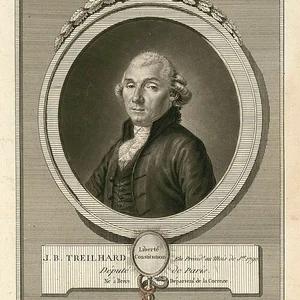
Jean-Baptiste Treilhard
1742 — 1810
French jurist and statesman (1742–1810), a member of the National Convention during the Revolution, briefly a Director, then a Councillor of State and Count of the Empire under Napoleon. He played a key role in drafting the Civil Code.
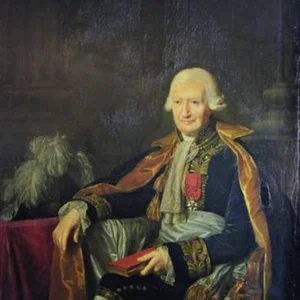
Jean-Baptiste-Pierre Bevière
1723 — 1807
French politician and member of the Convention during the Revolution, he served in the National Convention before becoming a dignitary under the Napoleonic Empire. His career illustrates the political trajectories of those who navigated both the Revolution and the Empire.
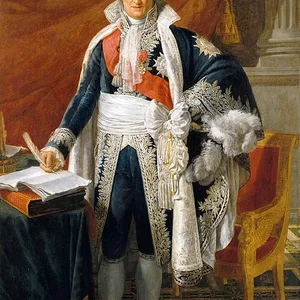
Jean-Étienne-Marie Portalis
1746 — 1807
A French jurist and statesman, Portalis was the principal drafter of the Civil Code enacted in 1804, the cornerstone of modern French private law. As Minister of Religious Affairs under Napoleon, he also contributed to the Concordat of 1801, which regulated relations between the Church and the State.
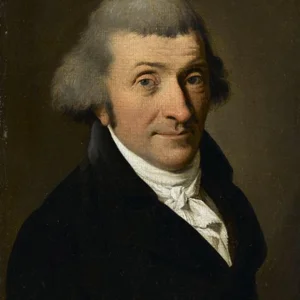
Jean-Frédéric Perregaux
1744 — 1808
A Swiss banker based in Paris, Jean-Frédéric Perregaux was one of the co-founders of the Banque de France in 1800 and its first regent. A senator of the First Empire, he played a central role in stabilizing the finances of Napoleonic France.

Jean-Ignace Jacqueminot de Ham
A French general of the First Empire, Jean-Ignace Jacqueminot de Ham took part in the great Napoleonic campaigns. He later became a senator and peer of France under the Restoration and the July Monarchy.
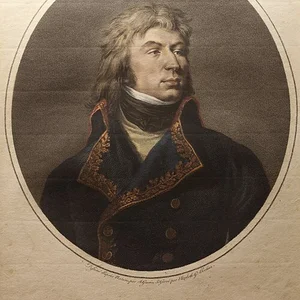
Jean-Louis-Ébénézer Reynier
1771 — 1814
A divisional general of the First Empire, Reynier took part in the great Napoleonic campaigns in Egypt, Italy, and Central Europe. He distinguished himself notably at the Battle of Maida (1806) and during the Russian campaign (1812).
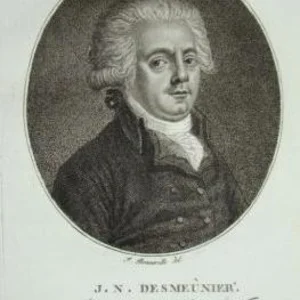
Jean-Nicolas Démeunier
1751 — 1814
French politician and writer (1751-1814), deputy to the Estates-General of 1789 and member of the National Constituent Assembly. He later became a senator under the Napoleonic First Empire.

Jean-Pierre Sers
1746 — 1809
Jean-Pierre Sers (1776-1862) was a French administrator and politician. A prefect under the First Empire, he became a senator and played a role in Napoleonic administration.
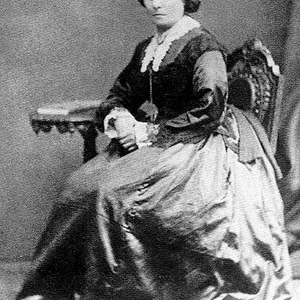
Jenny von Westphalen
1814 — 1881
A Prussian aristocrat who became the wife and collaborator of Karl Marx, she shared the couple's exile and poverty in London. For nearly four decades she was the first reader, copyist, and secretary of Marx's work.
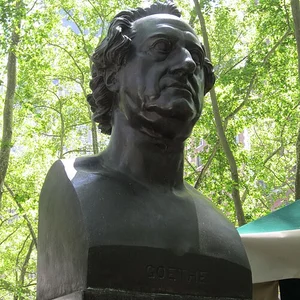
Johann Wolfgang von Goethe
German writer, poet, and scholar (1749–1832), Goethe is the author of Faust and The Sorrows of Young Werther. A central figure of the Sturm und Drang movement and later Weimar Classicism, he embodies the Enlightenment ideal of the universal man.
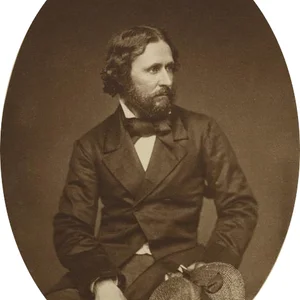
John C. Frémont
1813 — 1890
American explorer, military officer and politician nicknamed “the Pathfinder.” He mapped the American West and the Oregon Trail, played a role in the conquest of California, and then became the first Republican candidate in the 1856 presidential election.
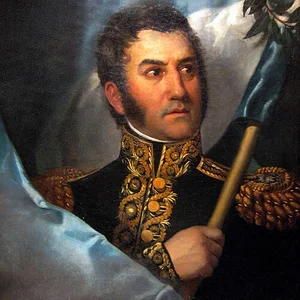
José de San Martín
1778 — 1850
Argentine general and statesman, a major figure in the independence of South America. He freed Argentina, Chile, and Peru from Spanish rule before withdrawing from public life.
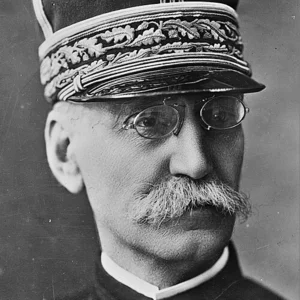
Joseph Gallieni
1849 — 1916
General and Marshal of France, Gallieni was a great colonial administrator in Madagascar and Indochina. Military Governor of Paris in 1914, he organized the counter-offensive at the Marne, saving the capital thanks to the famous “taxis of the Marne.”
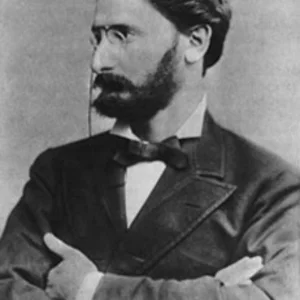
Joseph Pulitzer
1847 — 1911
American journalist and publisher of Hungarian origin (1847–1911), founder of modern journalism. He built a press empire and established the famous Pulitzer Prize, the supreme award in American journalism.
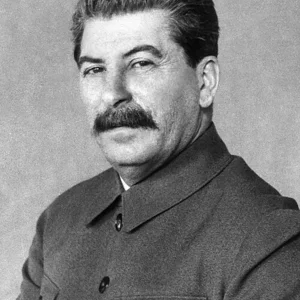
Joseph Stalin
1878 — 1953
Soviet dictator from 1922 to 1953, Joseph Stalin established a totalitarian regime characterized by massive political repression and forced industrialization. His leadership transformed the USSR into a superpower, but at the cost of millions of lives.
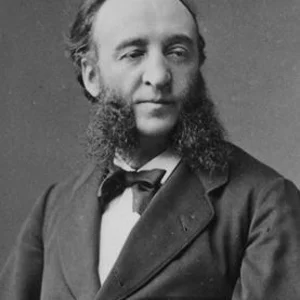
Jules Ferry
1832 — 1893
French statesman (1832–1893) who transformed French education as Minister of Public Instruction. He is responsible for the landmark education laws making primary school free, secular, and compulsory, laying the foundations of the modern French public school system.
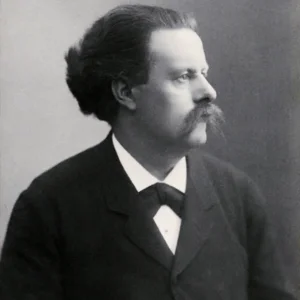
Jules Joffrin
1846 — 1890
Jules Joffrin (1846–1890) was a labor activist and socialist municipal councillor in Paris. A representative of the possibilist current, he embodied reformist socialist engagement under the Third Republic. The Jules Joffrin metro station (line 12) keeps his memory alive in the 18th arrondissement.
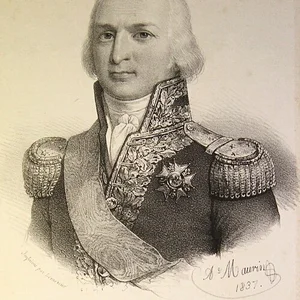
Justin Bonaventure Morard de Galles
1741 — 1809
French admiral born in 1741, he commanded the Brest squadron during the Revolution and took part in the Irish Expedition of 1796. Appointed senator of the First Empire by Napoleon, he died in 1809.
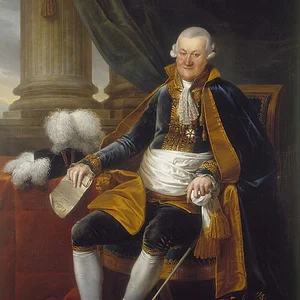
Justin de Viry
1736 — 1813
Justin de Viry (1773-1844) was a politician of Sardinian origin who became a naturalized French citizen. A prefect under the First Empire, he was appointed senator in 1813 by Napoleon I.
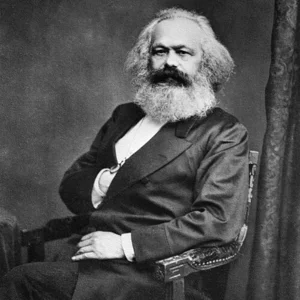
Karl Marx
1818 — 1883
German philosopher, sociologist, and economist (1818–1883), Karl Marx is the founder of historical materialism and the critical analysis of capitalism. He revolutionized political thought by proposing a theory of class struggle and social transformation.

Lakshmibai of Jhansi
Queen of the kingdom of Jhansi, in northern India, Lakshmibai became one of the leading figures of the Sepoy Mutiny of 1857 against the British East India Company. Refusing the annexation of her state, she took up arms and died in battle, becoming a national symbol of Indian resistance.
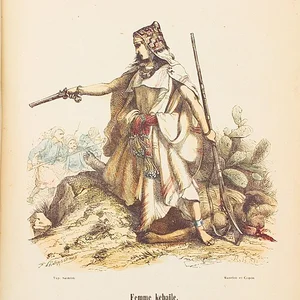
Lalla Fatma N'Soumer
1830 — 1863
A Kabyle resistance fighter from the Amazigh people, Lalla Fatma N'Soumer led the armed struggle against the French conquest of Algeria in the mid-19th century. Both a spiritual and military figure, she is passed down through Berber oral tradition as a symbol of dignity and resistance.
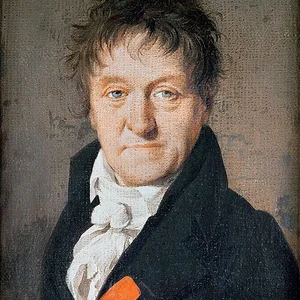
Lazare Carnot
1753 — 1823
French mathematician and general, Lazare Carnot earned the nickname "The Organizer of Victory" for his role on the Committee of Public Safety. He restructured the republican armies, contributing to the victories of revolutionary France, and left a notable mathematical legacy in geometry.
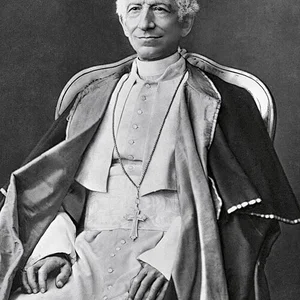
Leo XIII
1810 — 1903
Pope from 1878 to 1903, Leo XIII modernized the social doctrine of the Church with the encyclical Rerum Novarum (1891). He sought to reconcile Catholicism with the modern world and liberal democracies.
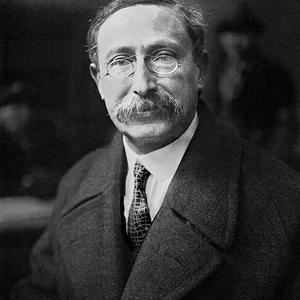
Léon Blum
1872 — 1950
Léon Blum (1872–1950) was a French politician and intellectual, leader of the French Socialist Party and a major figure of the left in the 20th century. He is best known for leading the Popular Front government in 1936, which marked the first time the left came to power in France.
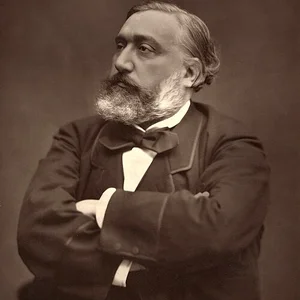
Léon Gambetta
1838 — 1882
Lawyer and republican statesman, Léon Gambetta proclaimed the Third Republic on September 4, 1870 following the defeat at Sedan. He organized national resistance during the Franco-Prussian War, escaping besieged Paris by balloon. A key architect of the republican regime, he served as President of the Chamber of Deputies from 1879 to 1881.
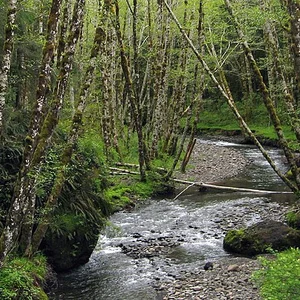
Lewis and Clark
Lewis and Clark led the Corps of Discovery expedition (1804–1806), commissioned by President Jefferson to explore the Louisiana Territory all the way to the Pacific. They were the first Americans to cross the continent from east to west, paving the way for westward expansion.
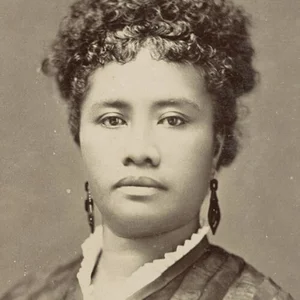
Liliuokalani
1838 — 1917
Liliuokalani was the last queen of the Kingdom of Hawaii, overthrown in 1893 by a coup supported by American settlers. A composer and stateswoman, she fought peacefully for Hawaiian sovereignty and remains a symbol of resistance to American imperialism.
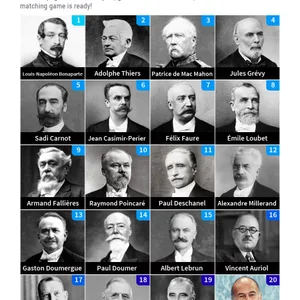
list of Presidents of the French Republic
Since 1848, France has had 25 presidents. The role, largely ceremonial under the Third and Fourth Republics, became central under the Fifth Republic established by de Gaulle in 1958.
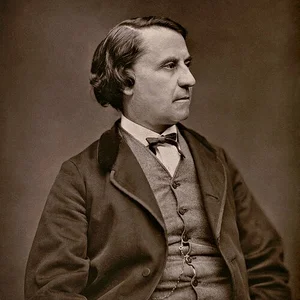
Louis Blanc
1811 — 1882
French journalist, historian, and socialist theorist (1811–1882). A member of the provisional government of the Second Republic in 1848, he championed the National Workshops and the right to work. Exiled in England after the June Days uprising, he returned to France after 1870.
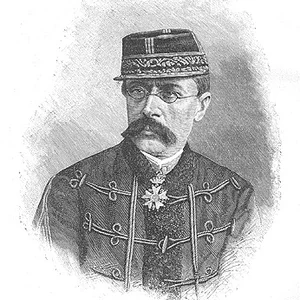
Louis Faidherbe
1818 — 1889
French general and colonial administrator, governor of Senegal from 1854 to 1865. He extended French influence in West Africa, modernized Dakar, and founded lasting institutions. He also commanded the Army of the North during the Franco-Prussian War of 1870.
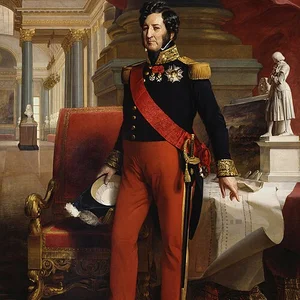
Louis-Philippe I
1773 — 1850
King of the French from 1830 to 1848, Louis-Philippe I came to power following the July Revolution. His July Monarchy embodied the triumph of the liberal bourgeoisie before being overthrown by the Revolution of 1848.

Louis-Pierre-Pantaléon Resnier
1752 — 1807
A French officer of the First Empire, Louis-Pierre-Pantaléon Resnier was a Napoleonic dignitary who served in the military and administrative structures of the Empire. He embodies the profile of the provincial notable elevated by Napoleonic reforms.
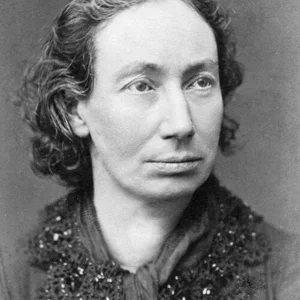
Louise Michel
1830 — 1905
Teacher and leading figure of the French anarchist movement (1830–1905), Louise Michel dedicated herself to educating poor children before becoming one of the heroines of the Paris Commune. Exiled and imprisoned for her revolutionary actions, she devoted her life to the struggle for social equality and the emancipation of the oppressed.
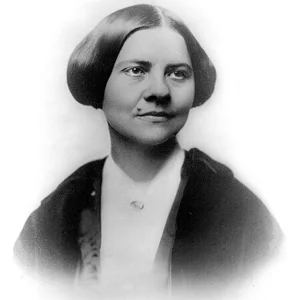
Lucy Stone
1818 — 1893
Lucy Stone (1818-1893) was one of the first American activists to fight simultaneously for the abolition of slavery and women's right to vote. The first woman from Massachusetts to earn a college degree, she refused to take her husband's name after marriage.
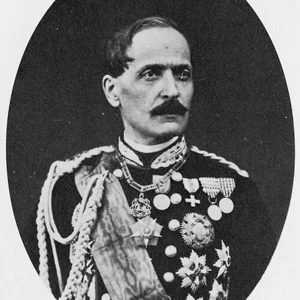
Luigi Menabrea
Italian general, engineer, and statesman of the 19th century. He is best known for writing in 1842 a memoir on Charles Babbage's analytical engine, which Ada Lovelace translated and extensively annotated.
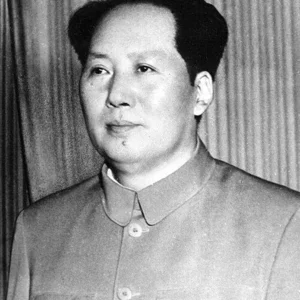
Mao Zedong
1893 — 1976
Chinese statesman (1893-1976) and founder of the People's Republic of China. Leader of the Chinese Communist Party, he established a communist regime and launched the Great Proletarian Cultural Revolution. A major figure of the 20th century, his political legacy remains complex and controversial.
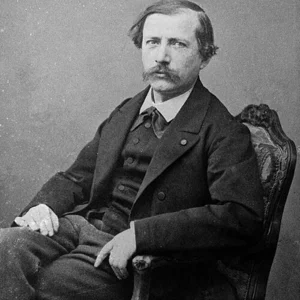
Marcellin Berthelot
1827 — 1907
French chemist (1827–1907), founder of thermochemistry and organic synthesis chemistry. He was also a republican politician, serving as Minister of Public Education and then Minister of Foreign Affairs.
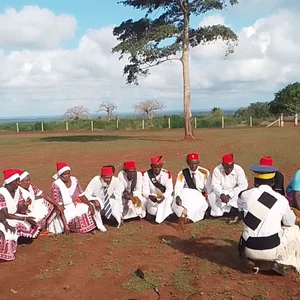
Mekatilili wa Menza
1840 — 1925
A Giriama woman from Kenya, Mekatilili wa Menza led the resistance against British colonial rule during the 1913–1914 revolt. Arrested and deported, she escaped and continued fighting for her people's freedom.
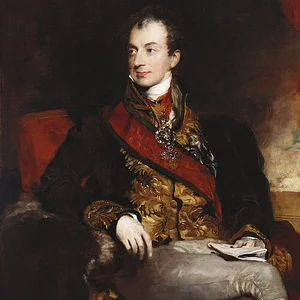
Metternich
1773 — 1859
Austrian statesman and diplomat, Chancellor of the Austrian Empire. The architect of the Congress of Vienna (1815), he was the central figure of the conservative European order after the fall of Napoleon, a defender of the balance of power and an opponent of liberal and national revolutions.
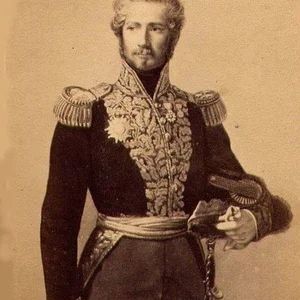
Michel Ordener
1787 — 1862
French cavalry general (1755–1811), Michel Ordener distinguished himself in the Revolutionary and Napoleonic Wars. He commanded the Horse Grenadiers of the Imperial Guard and was created a Count of the Empire.
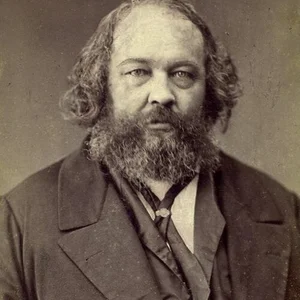
Mikhail Bakunin
1814 — 1876
Russian revolutionary and philosopher, a major figure of anarchism and libertarian socialism in the 19th century. An opponent of Marx within the First International, he advocated the abolition of the State and of all authority in favor of a federalist and collectivist society.
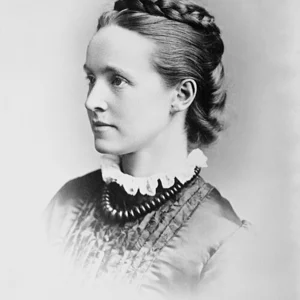
Millicent Fawcett
1847 — 1929
British feminist activist and leading figure of constitutional suffragism. As president of the NUWSS, she championed winning women's voting rights through lawful and peaceful means, in contrast to the militant methods of the suffragettes.
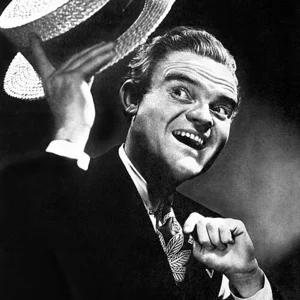
Mother Jones
Nicknamed “Mother Jones,” Mary Harris Jones was one of the most formidable labor activists in the United States. An organizer for coal miners and textile workers, she fought her entire life against the exploitation of workers and child labor.

Moulay Abd er-Rahman
Sultan of Morocco from 1822 to 1859, Moulay Abd er-Rahman had to navigate between French and Spanish colonial pressures while maintaining Moroccan sovereignty. After supporting Abdelkader against France, he was defeated at the Battle of Isly in 1844.
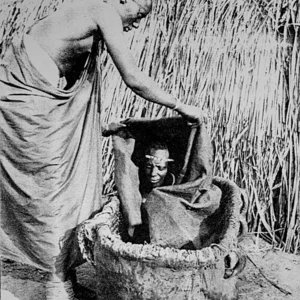
Muhumusa
A Rwandan medium of the Kinyarwanda people, Muhumusa embodied the Nyabingi spirit and led an anti-colonial resistance against European powers in the early 20th century. She is considered a major spiritual and political figure of the African Great Lakes region.
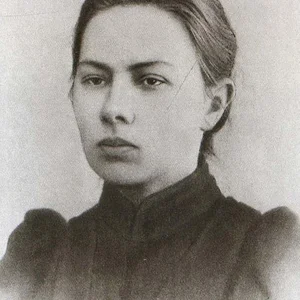
Nadezhda Krupskaya
1869 — 1939
Russian revolutionary and educator (1869–1939), wife of Lenin and Bolshevik activist. She played a central role in Soviet educational policy after 1917, particularly in mass literacy campaigns and the reform of public schooling.
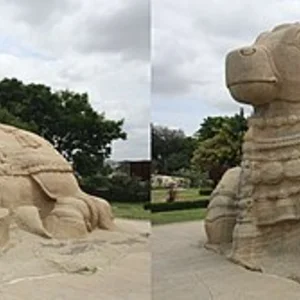
Nandi
1760 — 1827
Mother of Shaka Zulu and a founding figure of the Zulu kingdom, Nandi lived with dignity despite the social rejection brought on by her out-of-wedlock pregnancy. She had a decisive influence on her son, the future builder of the Zulu empire.
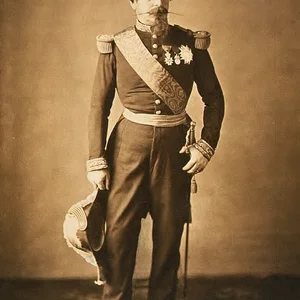
Napoleon III
1808 — 1873
Nephew of Napoleon I, he was elected President of the Republic in 1848, then seized power through a coup d'état on December 2, 1851, before proclaiming the Second Empire. His reign profoundly transformed France: the modernization of Paris under Haussmann, industrial and railway expansion — until the defeat at Sedan in 1870.
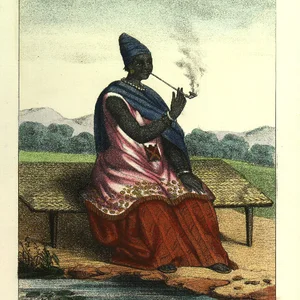
Ndate Yalla Mbodj
The last queen (linguère) of the Waalo, a Wolof kingdom in Senegal, Ndate Yalla Mbodj fiercely resisted French expansion in the 1840s–1850s. An iconic figure of African pre-colonial resistance, she is celebrated in Wolof and Toucouleur oral traditions.
Nehanda Nyakasikana
Nehanda Nyakasikana (c. 1840–1898) was a mhondoro — a spirit medium of the Shona people of present-day Zimbabwe — venerated as the embodiment of the ancestral spirit Nehanda. A central figure of the First Chimurenga, she organized armed resistance against the British colonization of Southern Rhodesia before being captured and hanged by the colonial authorities.
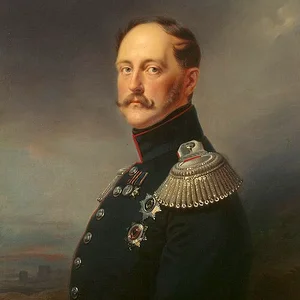
Nicholas I of Russia
1796 — 1855
Nicholas I (1796-1855) was Emperor of Russia, King of Poland, and Grand Duke of Finland from 1825. An autocratic and conservative sovereign, he crushed the Decembrist revolt upon his accession and embodied a reactionary monarchy founded on order, orthodoxy, and nationality.
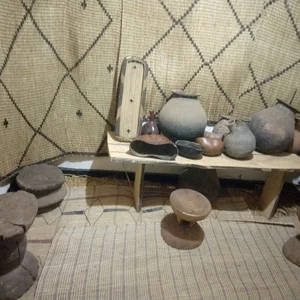
Nyabingi
Queen of Ndorwa (a region straddling present-day Rwanda and Uganda), Nyabingi is, according to the oral traditions of the Kiga and Tutsi peoples, a ruler whose spirit became after her death a powerful symbol of resistance. Her name gave rise to the Nyabingi movement, which opposed European colonization into the 20th century.
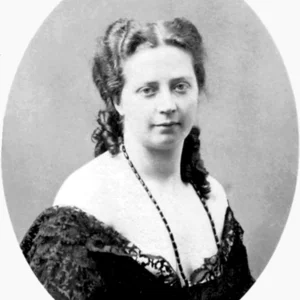
Olympe Audouard
1832 — 1890
Olympe Audouard (1832–1890) was a French writer, journalist, and feminist. A tireless traveler, she journeyed through the Middle East and the United States and published accounts of her travels. She campaigned for women's rights, particularly the right to divorce and access to education.
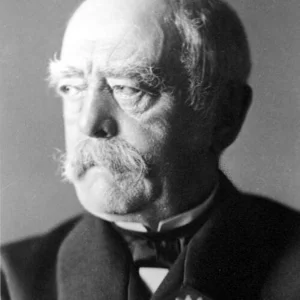
Otto von Bismarck
1815 — 1898
Prussian statesman, first chancellor of the German Empire. Nicknamed the “Iron Chancellor,” he achieved the unification of Germany around Prussia between 1864 and 1871 through a policy of warfare and diplomatic skill.
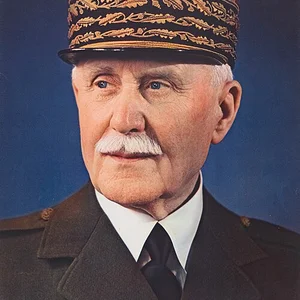
Philippe Pétain
1856 — 1951
Marshal of France and celebrated military commander known for his victory at Verdun in 1916, Philippe Pétain became head of the French government in 1940 and established the authoritarian French State of Vichy. A collaborator during the German occupation, he remains one of the most controversial figures in French history.
Pierre Garnier de Laboissière
1755 — 1809
A French general of the First Empire, Pierre Garnier de Laboissière built his career under the Revolution and Napoleon Bonaparte. He also served as a senator, embodying the fusion of military and political elites characteristic of the Napoleonic era.
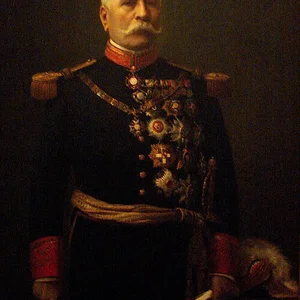
Porfirio Díaz
1830 — 1915
Mexican general and statesman (1830–1915), Porfirio Díaz ruled Mexico from 1876 to 1911 during a period known as the Porfiriato. His authoritarian regime drove economic modernization at the cost of political oppression, ultimately sparking the Mexican Revolution.
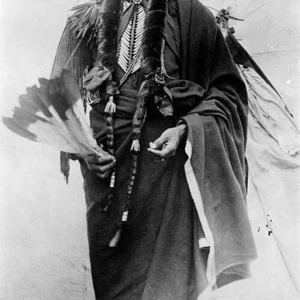
Quanah Parker
1845 — 1911
Quanah Parker was the last great chief of the Quahadi Comanches. The son of Chief Peta Nocona and Cynthia Ann Parker, a white captive, he led armed resistance against the advance of settlers and the U.S. Army, before becoming a respected mediator between his people and the United States government.
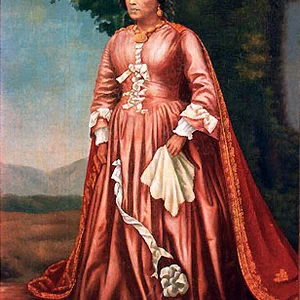
Ranavalona I
1788 — 1861
Queen of Madagascar from 1828 to 1861, Ranavalona I belonged to the Merina people of the Malagasy Highlands. She firmly resisted European encroachment — both British and French — by expelling missionaries and banning Christianity. Her sovereigntist policies preserved the kingdom's independence for more than thirty years.
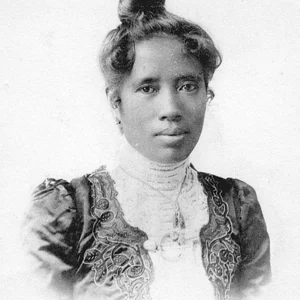
Ranavalona III
1861 — 1917
The last queen of Madagascar, Ranavalona III ruled the Merina Kingdom from 1883 to 1897. Despite her diplomatic resistance, she was unable to prevent French colonization. Deposed and exiled, she died in Algiers in 1917, a symbol of lost Malagasy sovereignty.
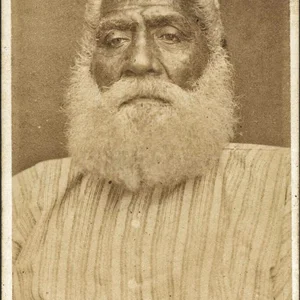
Ratu Seru Cakobau
1815 — 1883
Supreme chief of the Fiji Islands, Cakobau united the islands under his authority after decades of tribal wars. Converted to Christianity in 1854, he ceded Fiji to Great Britain in 1874, thus becoming the last independent ruler of the archipelago.
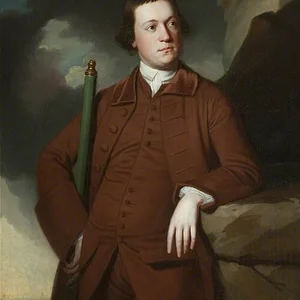
Rawlinson
A British officer and diplomat in the Indian Army, Henry Rawlinson was one of the leading decipherers of cuneiform writing. He copied and translated the trilingual Behistun Inscription, opening the door to the languages of ancient Mesopotamia.
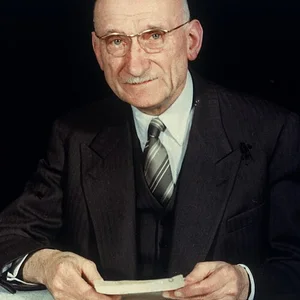
Robert Schuman
1886 — 1963
French statesman (1886-1963), Robert Schuman is one of the principal founding fathers of the European Union. As Foreign Minister, he proposed in 1950 the plan to create the European Coal and Steel Community (ECSC), laying the foundations for European integration.
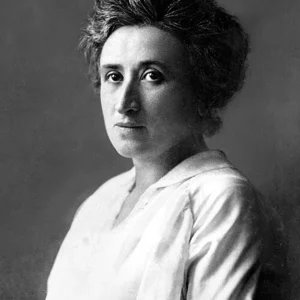
Rosa Luxemburg
1871 — 1919
Rosa Luxemburg was a Polish-born revolutionary activist and Marxist theorist who became a naturalized German citizen. Co-founder of the Communist Party of Germany (KPD), she championed a socialist revolution rooted in the mass consciousness of the working class. Arrested during the Spartacist uprising of January 1919, she was murdered by paramilitary soldiers.
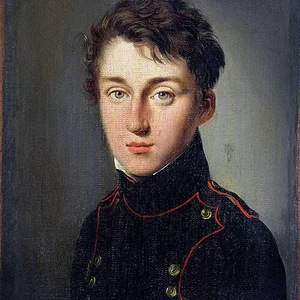
Sadi Carnot
1796 — 1832
A French engineer and statesman trained at the École Polytechnique, Sadi Carnot was elected President of the Republic in 1887. His seven-year term was marked by the scandals of the Third Republic. He was assassinated in Lyon in 1894 by the Italian anarchist Sante Geronimo Caserio.
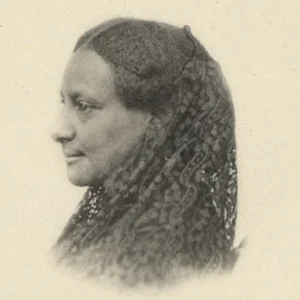
Sarah Parker Remond
1824 — 1894
African American abolitionist and suffragist activist of the nineteenth century. She traveled across Europe to raise public awareness of the anti-slavery cause, and settled in Italy where she became a physician.
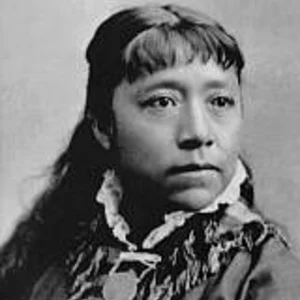
Sarah Winnemucca
1844 — 1891
A Paiute activist and author from Nevada, Sarah Winnemucca defended the rights of her Native American people in the face of American colonization. In 1883, she became the first Native American woman to publish a book in English, a major testimony on the condition of Indigenous nations.
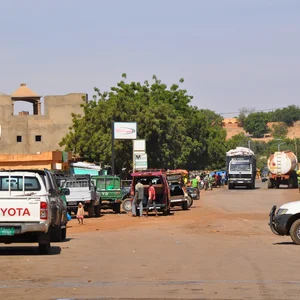
Sarraounia
Queen and spiritual leader of the Azna (animist Hausa people of Niger), Sarraounia successfully resisted the French military mission of Voulet-Chanoine in April 1899. A symbol of anti-colonial resistance, she was immortalized by Abdoulaye Mamani's novel (1980) and Med Hondo's film (1986).
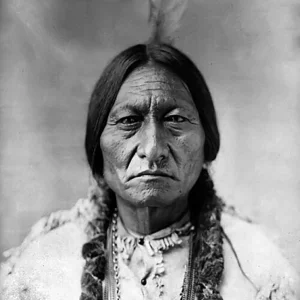
Sitting Bull
1831 — 1890
Sitting Bull (c. 1831-1890) was a chief and medicine man (wičháša wakȟáŋ) of the Hunkpapa clan of the Lakota Sioux. A leading figure of Native American resistance against the expansion of the United States, he embodied the defense of the territory and the way of life of the Plains.

Soshangane
1790 — 1859
Soshangane (Manukosi) was a Nguni military leader who founded the Kingdom of Gaza in southeastern Africa in the early 19th century. Scattered during the Mfecane triggered by Zulu expansion, he established a vast empire covering present-day southern Mozambique.

Stella Zeehandelaar
Dutch-born anarchist and feminist militant who emigrated to the United States, known for her correspondence with Emma Goldman in the 1890s–1900s. A prominent figure in New York's anarchist and labor circles at the end of the nineteenth century.
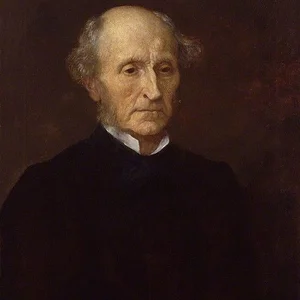
Stuart Mill
John Stuart Mill (1806-1873) was a British philosopher, economist, and politician. A major figure of liberalism and utilitarianism, he championed individual liberties, freedom of expression, and the emancipation of women.
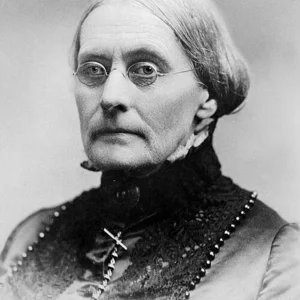
Susan B. Anthony
1820 — 1906
American civil rights activist (1820–1906), Susan B. Anthony is one of the founding figures of the American suffragist movement. She devoted her life to the abolition of slavery and to securing the right to vote for women.
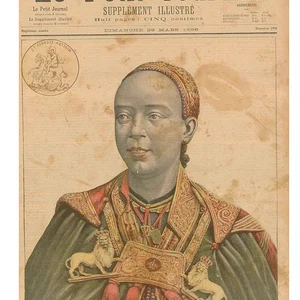
Taytu Betul
1851 — 1918
Empress of Ethiopia and wife of Menelik II, Taytu Betul was a major political and military figure of the late 19th century. Born into the Amhara tradition, she played a decisive strategic role in the Battle of Adwa in 1896, which repelled Italian colonization.
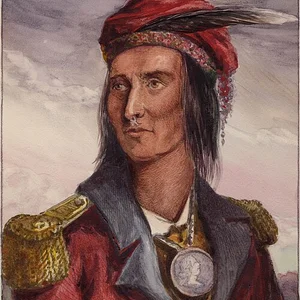
Tecumseh
1768 — 1813
A Shawnee chief and Native American political leader, Tecumseh sought to unite the indigenous peoples of eastern North America into a vast confederacy to resist the expansion of the United States. An ally of the British during the War of 1812, he was killed at the Battle of the Thames in 1813.
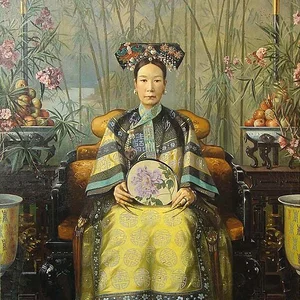
Tzu-Hsi (Cixi)
Cixi was the true ruler of imperial China for nearly fifty years, first as regent and then as the actual holder of power. Born into modest rank, she established herself at the Qing court and profoundly shaped China's destiny in the face of Western imperialism.
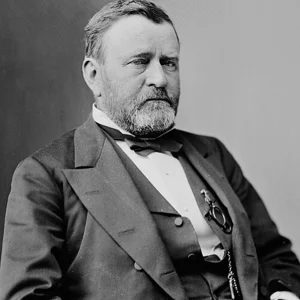
Ulysses S. Grant
1822 — 1885
Commanding general of the Union armies during the American Civil War, Ulysses S. Grant secured the surrender of Confederate general Robert E. Lee at Appomattox in 1865. A military hero, he went on to become the 18th president of the United States from 1869 to 1877.
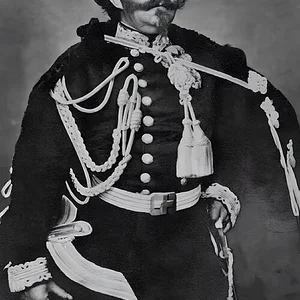
Victor Emmanuel II
1820 — 1878
King of Sardinia and then first King of unified Italy (1861), Victor Emmanuel II was the monarch who, allied with Cavour and Garibaldi, brought the Risorgimento to completion. He reigned until his death in 1878, embodying Italian national unity.
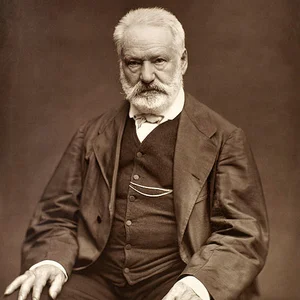
Victor Hugo
1802 — 1885
A major French writer of the 19th century, Victor Hugo (1802–1885) is the author of iconic novels such as Les Misérables and The Hunchback of Notre-Dame. Poet, playwright, and committed politician, he championed the rights of the poor and fought against the death penalty.
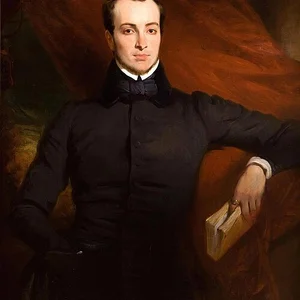
Victor Schoelcher
1804 — 1893
French politician (1804–1893), Victor Schœlcher was one of the greatest abolitionists of the 19th century. He played a decisive role in the abolition of slavery in France in 1848, serving as secretary of the Commission for the Abolition of Slavery.
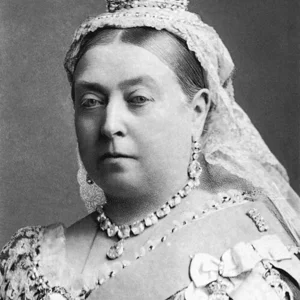
Victoria
1819 — 1901
Victoria ascended to the British throne at 18 in 1837 and reigned for 63 years, becoming one of the most influential monarchs in history. Her reign coincided with the height of the British Empire and the Industrial Revolution. She gave her name to an entire era: the Victorian age.
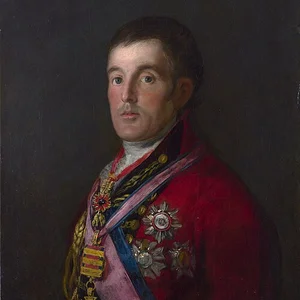
Wellington
1769 — 1852
Arthur Wellesley, Duke of Wellington, was a British general and statesman. The victor over Napoleon at the Battle of Waterloo in 1815, he also served as Prime Minister of the United Kingdom from 1828 to 1830.
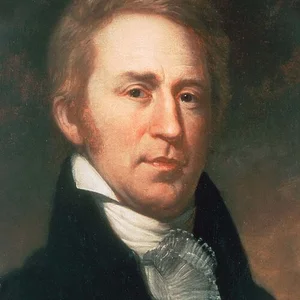
William Clark
1770 — 1838
An American army officer and explorer, William Clark co-led the Corps of Discovery expedition (1804–1806) with Meriwether Lewis, commissioned by President Jefferson. The expedition crossed North America to the Pacific Ocean, paving the way for the settlement of the American West.
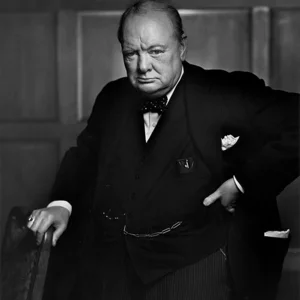
Winston Churchill
1874 — 1965
British statesman and writer (1874–1965), Winston Churchill is best known for his role as Prime Minister of the United Kingdom during the Second World War. As the leader of British resistance against Nazism, he embodied Allied resolve until victory in 1945.
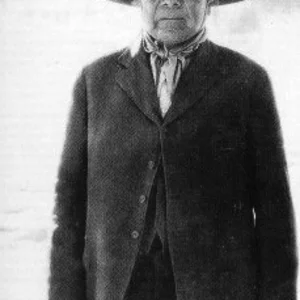
Wovoka
1856 — 1932
A Paiute prophet from Nevada, Wovoka founded the Ghost Dance in 1889, a messianic religious movement that spread among the Native American peoples of the Great Plains. His preaching, which foretold the return of the dead and the disappearance of the settlers, became associated with the Wounded Knee Massacre of 1890.
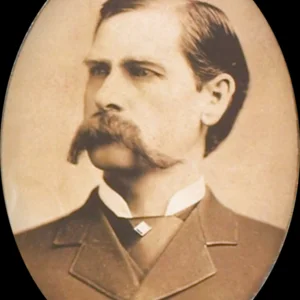
Wyatt Earp
1848 — 1929
Wyatt Earp (1848-1929) is an iconic figure of the American conquest of the West. A roving lawman, gambler, and entrepreneur, he owes his fame to the Gunfight at the O.K. Corral in 1881, which became a founding myth of the Wild West.

Yaa Akyaa
1840 — ?
Yaa Akyaa was queen mother of the Ashanti Kingdom in the nineteenth century, holding considerable political and symbolic power within the Akan matrilineal tradition. Her role was to advise the king (Asantehene) and to embody dynastic legitimacy.
Literature(129)
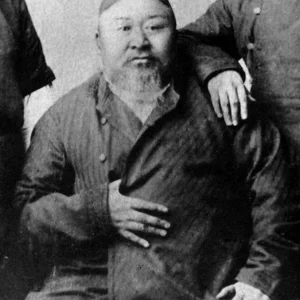
Abai Kunanbaev
1845 — 1904
Abai Kunanbaev is the founding father of written Kazakh literature. A poet, philosopher, and composer, he raised the Kazakh language to the status of a literary language and translated Pushkin, Lermontov, and Goethe. His major work, the Book of Words, remains the definitive philosophical text of Kazakh culture.
Adam Mickiewicz
1798 — 1855
Adam Mickiewicz (1798-1855) is Poland's greatest national poet and a major figure of European Romanticism. His epic and lyrical work expresses nostalgia for occupied Poland and the aspiration for national freedom.
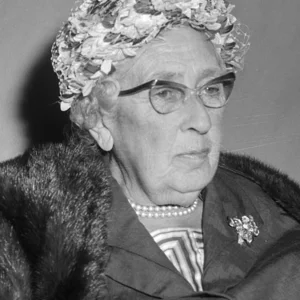
Agatha Christie
1890 — 1976
Agatha Christie (1890-1976) was a British novelist, widely known as the 'Queen of Crime'. The author of 66 detective novels, she created the iconic characters Hercule Poirot and Miss Marple. Her works are among the best-selling in the history of world literature.
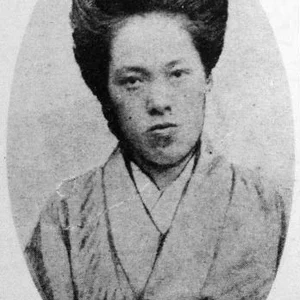
Akiko Yosano
1878 — 1942
Japanese poet and novelist (1878–1942), a major figure in the revival of waka poetry during the Meiji era. A committed feminist, she advocated for women's emancipation and opposed Japanese militarist nationalism.
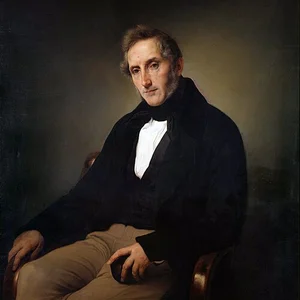
Alessandro Manzoni
1785 — 1873
Alessandro Manzoni (1785–1873) was the greatest Italian novelist of the 19th century and a central figure of Romanticism. His historical novel *I Promessi Sposi* (*The Betrothed*, 1827) is regarded as the first modern novel written in Italian and played a decisive role in the linguistic unification of Italy.
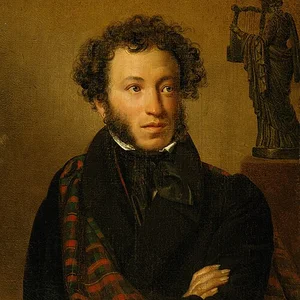
Alexander Pushkin
1799 — 1837
Considered the father of modern Russian literature, Pushkin (1799–1837) wrote foundational works such as Eugene Onegin and The Queen of Spades. Killed in a duel at 37, he embodies Russian Romanticism.
Alexandra Kollontai
1872 — 1952
A Russian Bolshevik revolutionary, Alexandra Kollontai was one of the first women in the world to hold a diplomatic post. A theorist of socialist feminism, she championed women's emancipation and freedom from traditional marriage.
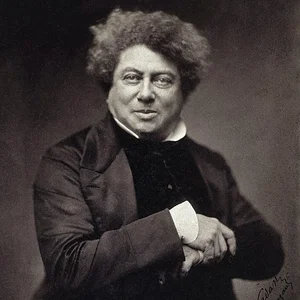
Alexandre Dumas
1802 — 1870
French writer and playwright (1802–1870), author of adventure novels and popular serialized fiction. Father of Alexandre Dumas fils, he is considered a master of the historical and adventure novel in the 19th century.
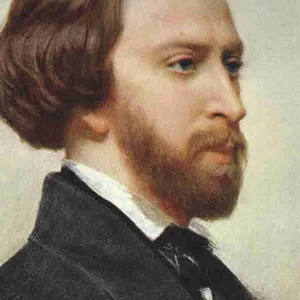
Alfred de Musset
1810 — 1857
French writer and playwright (1810-1857), a major figure of Romanticism. Author of comedies and lyrical dramas, he is best known for his play "No Trifling with Love" and for his turbulent relationship with George Sand.
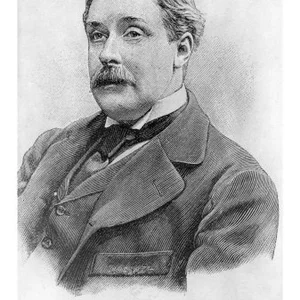
Alphonse Allais
1854 — 1905
Alphonse Allais (1854-1905) was a French writer, journalist, and humorist, a major figure of absurd humor and *fumisme*. A regular at the “Le Chat Noir” cabaret, he is famous for his puns, his short tales, and his paradoxical aphorisms.
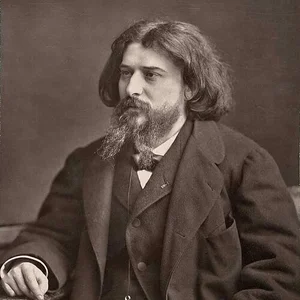
Alphonse Daudet
1840 — 1897
French writer (1840-1897), author of novels and short stories that paint with humor and warmth the life of Provence and Paris. He is best known for his *Letters from My Mill* and his unforgettable characters such as Tartarin of Tarascon.
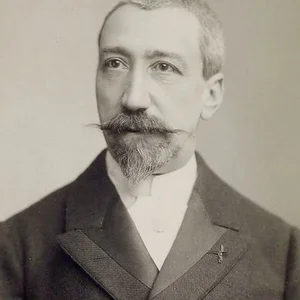
Anatole France
1844 — 1924
Born François-Anatole Thibault, Anatole France was a French writer, literary critic, and essayist, and a major figure of the Belle Époque. A committed Dreyfusard, he was awarded the Nobel Prize in Literature in 1921.

Anna Grigorievna Snitkina
Russian stenographer and memoirist, second wife of Fyodor Dostoevsky. Hired to transcribe his novel The Gambler, she became his collaborator, the manager of his affairs, and the publisher of his works after his death.
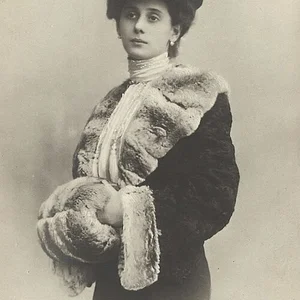
Anna Pavlova
1881 — 1931
Anna Pavlova (1881-1931) was a Russian ballerina considered one of the greatest classical dancers in history. Trained at the Imperial Ballet School in Saint Petersburg, she conquered stages around the world and helped bring the art of classical ballet to an international audience.
Annabella Milbanke
1792 — 1860
British aristocrat (1792–1860), self-taught mathematician and philanthropist, she married the poet Lord Byron in 1815 before separating from him a year later. She went on to dedicate herself to popular education and social reform, and is the mother of Ada Lovelace, pioneer of computing.

Anne Royall
1769 — 1854
Anne Royall was an American writer and journalist, considered one of the first professional women reporters in the United States. The author of travel narratives, she founded newspapers that denounced corruption and championed the separation of Church and State.
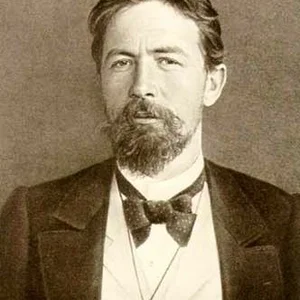
Anton Chekhov
1860 — 1904
Russian writer and playwright, a master of the short story and of modern theatre. Trained as a physician, he renewed dramatic art with plays built on atmosphere and the unspoken rather than on plot, such as The Cherry Orchard and The Three Sisters.
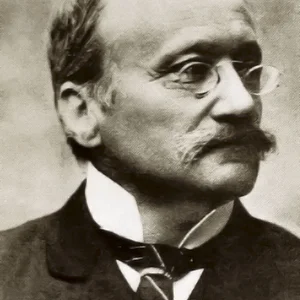
Arrigo Boito
1842 — 1918
Arrigo Boito (1842-1918) was an Italian composer and librettist, a major figure of late Romantic opera. He is best known for the librettos he wrote for Verdi (Otello, Falstaff) and for his own opera Mefistofele.
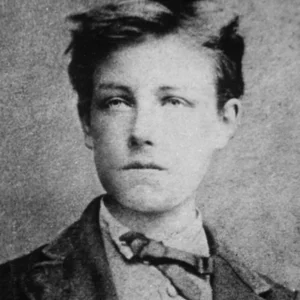
Arthur Rimbaud
1854 — 1891
French poet of the 19th century (1854–1891), Rimbaud is a major figure of modern and visionary poetry. He revolutionized poetry through formal innovation and exploration of the unconscious, before abandoning literature at the age of 20 to live as an adventurer in Africa.
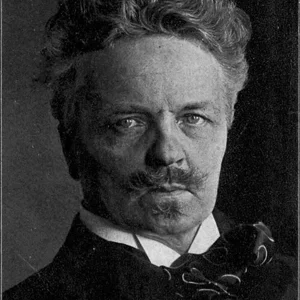
August Strindberg
1849 — 1912
Swedish writer, playwright and painter (1849-1912), a major figure of Scandinavian literature. A pioneer of naturalism and later a forerunner of expressionism and modern theatre, he profoundly renewed European dramatic art.
Bertha von Suttner
1843 — 1914
Austrian novelist and pacifist activist (1843–1914), Bertha von Suttner published in 1889 “Die Waffen nieder!” (Lay Down Your Arms!), a novel that shocked Europe with its realistic portrayal of the horrors of war. In 1905, she became the first woman to receive the Nobel Peace Prize.

Brothers Grimm
1785 — 1863
The Brothers Grimm were two German writers of the 19th century, famous for collecting and publishing traditional folk tales. Their collections, most notably "Kinder- und Hausmärchen" (Children's and Household Tales), include stories that have become timeless classics such as Snow White and Hansel and Gretel.
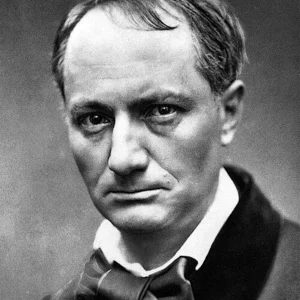
Charles Baudelaire
1821 — 1867
19th-century French poet and founder of modern poetry. Baudelaire is best known for his collection "The Flowers of Evil" (Les Fleurs du Mal, 1857), which revolutionized literature by exploring the beauty of evil, decadence, and existential torment. His work, considered scandalous at the time, profoundly influenced contemporary poetry and subsequent literary movements.
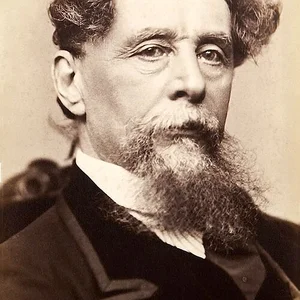
Charles Dickens
1812 — 1870
Charles Dickens was an English novelist of the Victorian era, regarded as one of the greatest writers in the English language. His novels, published in serial form, depict with realism and humanity the industrial society and social misery of his time.
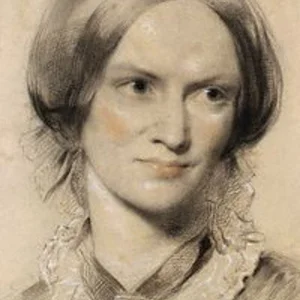
Charlotte Brontë
1816 — 1855
Charlotte Brontë was a 19th-century British novelist, author of Jane Eyre (1847), a masterpiece of Victorian literature. The daughter of a clergyman in Yorkshire, she published under a male pseudonym (Currer Bell) to gain acceptance in the literary world. Her work powerfully explores the feminine condition, independence, and passion.
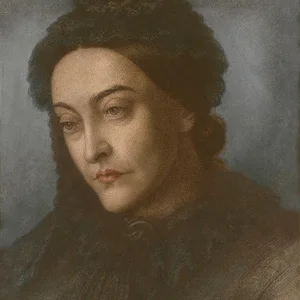
Christina Rossetti
1830 — 1894
British poet of the nineteenth century and a leading figure of the Pre-Raphaelite movement. Author of Goblin Market (1862), a poetry collection blending symbolism and religious fervour. Her work explores love, death, and Christian faith with remarkable lyrical sensitivity.
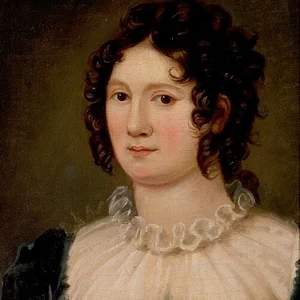
Claire Clairmont
1798 — 1879
British woman of letters and step-sister of Mary Shelley. Part of the circle of English Romantic poets, she had a daughter, Allegra, with Lord Byron. Her journals and correspondence are a valuable testimony to the Romantic era.
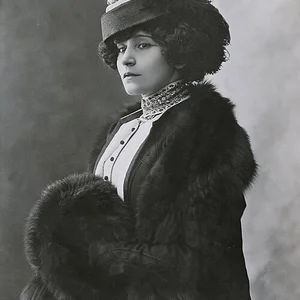
Colette
1873 — 1954
French novelist, playwright, and journalist (1873–1954), Colette is a towering figure of twentieth-century French literature. A prolific author, she explores themes of sensibility, nature, and female freedom through poetic, sensory prose.
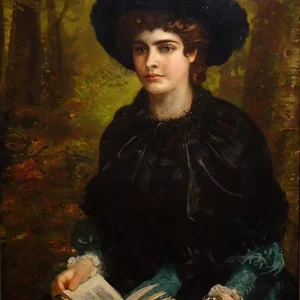
Constance Lloyd
1859 — 1898
British author and activist, wife of Oscar Wilde. Committed to the dress reform movement and to writing for children, she lived first in the shadow and then the scandal of her famous husband.
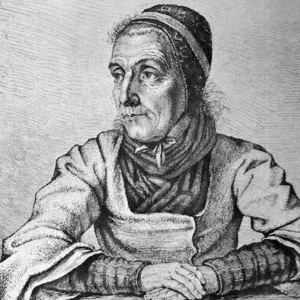
Dorothea Viehmann
1755 — 1816
Dorothea Viehmann (1755-1815) was a German storyteller, the daughter of an innkeeper near Kassel. Her exceptional memory for folk tales made her one of the main sources for the Brothers Grimm, who collected many stories from her for their “Children's and Household Tales.”
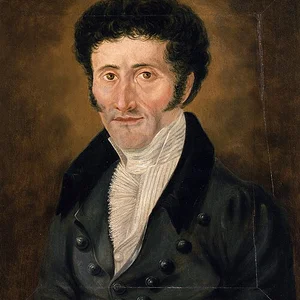
E.T.A. Hoffmann
1776 — 1822
German Romantic writer, composer, and illustrator (1776-1822), Hoffmann is one of the major figures of fantastic Romanticism. Author of the Fantastic Tales, he also composed operas and produced satirical drawings. His work inspired Offenbach, Tchaikovsky, and Schumann.
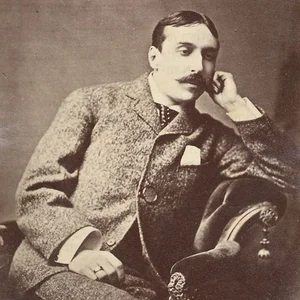
Eça de Queirós
1845 — 1900
Portuguese novelist (1845-1900), a major figure of realism and naturalism in Lusophone literature. A career diplomat, he authored novels offering a scathing critique of the Portuguese society of his time.
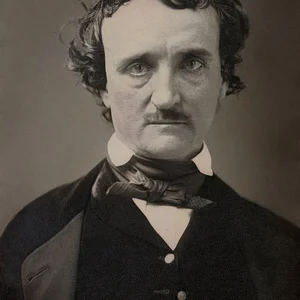
Edgar Allan Poe
1809 — 1849
An American writer of the 19th century, Edgar Allan Poe is the undisputed master of the gothic tale and horror literature. His psychological short stories and dark poems deeply influenced world literature and laid the foundations of the modern detective genre.
Edgar Quinet
1803 — 1875
French historian, philosopher, and politician (1803-1875), a leading figure of anticlerical republicanism. A professor at the Collège de France, he was exiled during the Second Empire for his opposition to Napoléon III.
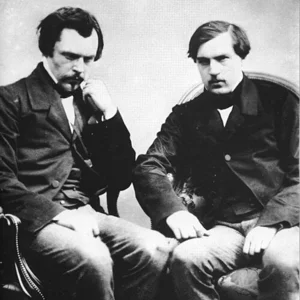
Edmond and Jules de Goncourt
French writer brothers and art critics, they were the co-founders of literary naturalism with novels such as Germinie Lacerteux (1864). Their Journal, kept from 1851 to 1896, is a landmark record of artistic and literary life in the 19th century. In his will, Edmond established the Académie Goncourt, which has awarded France's most prestigious literary prize since 1903.
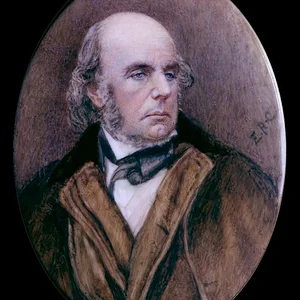
Edward FitzGerald
1809 — 1883
19th-century British poet and translator, celebrated for his free translation of the Rubaiyat of Omar Khayyam (1859), which achieved remarkable success across Europe and helped introduce Persian poetry to Western readers.
Edward VII
1841 — 1910
Son of Queen Victoria, Edward VII reigned over the United Kingdom and the Empire of India from 1901 to 1910. An emblematic figure of the Belle Époque, he played a decisive role in bringing France and Britain closer together through the Entente Cordiale of 1904.
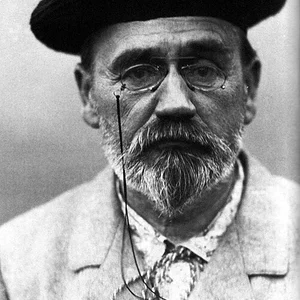
Émile Zola
1840 — 1902
French novelist, journalist and literary critic (1840-1902), founder of the Naturalist movement. He is the author of Germinal and L'Assommoir, landmark novels of the 19th century that expose the living conditions of the working class. Zola took a decisive political stand during the Dreyfus Affair by publishing his famous open letter 'J'Accuse'.
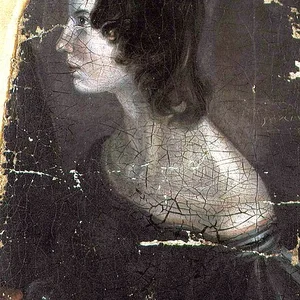
Emily Brontë
1818 — 1848
British writer
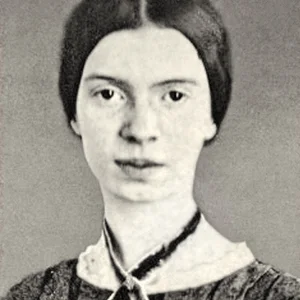
Emily Dickinson
1830 — 1886
Emily Dickinson is one of the greatest American poets of the 19th century. A recluse in her home in Amherst, she composed nearly 1,800 poems, most of which were not published until after her death. Her work, innovative in form and depth, explores death, nature, and the human soul.
Emma Goldman
1869 — 1940
Emma Goldman (1869-1940) was a Lithuanian-born anarchist and feminist activist who emigrated to the United States. A leading figure in the American labor movement, she championed individual freedom, women's emancipation, and opposed war and capitalism.
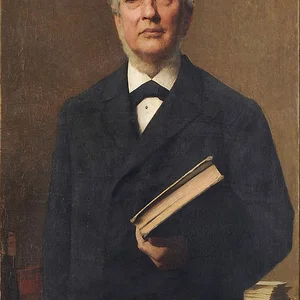
Ernst Förstemann
1822 — 1906
Nineteenth-century German librarian and linguist, regarded as a pioneer in the decipherment of Maya writing. He was the first to understand the calendar system and astronomical calculations of the Dresden Codex.
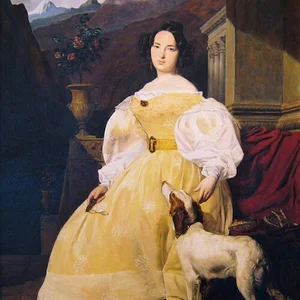
Ewelina Hańska
1805 — 1882
Polish countess famous for her long correspondence with the writer Honoré de Balzac, whom she married in 1850 after eighteen years of exchanging letters. Her relationship with the novelist fed an important part of Balzac's correspondence.
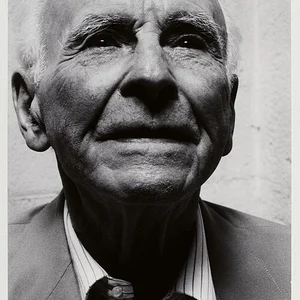
Francis Ponge
1899 — 1988
French writer (1899-1988) and founder of an innovative poetics devoted to everyday objects. Ponge liberates poetry from traditional rhetoric by celebrating simple, material things, inventing a 'rage of expression' to explore the sensory world.
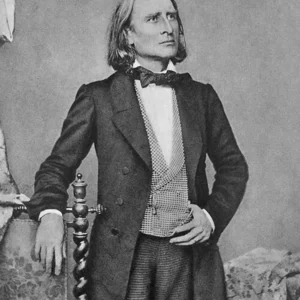
Franz Liszt
1811 — 1886
Hungarian composer and virtuoso pianist (1811–1886), Liszt revolutionized piano technique and invented the symphonic poem. A central figure of musical Romanticism, he profoundly influenced Wagner and European music as a whole.
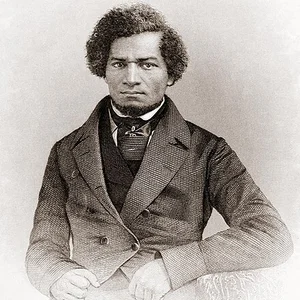
Frederick Douglass
1818 — 1895
abolitionist orator and writer, leader of the African-American community in the 19th century
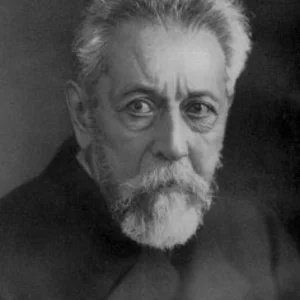
Friedrich Carl Andreas
1846 — 1930
Friedrich Carl Andreas (1846-1930) was a German orientalist and linguist, a specialist in Iranian languages and the ancient texts of Persia. A professor at Göttingen, he was a major figure in oriental philology, married to the writer Lou Andreas-Salomé.
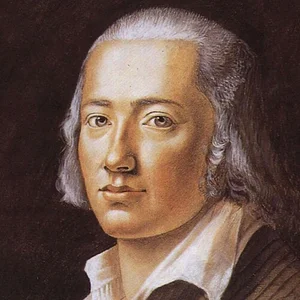
Friedrich Hölderlin
1770 — 1843
German poet, a major figure of German Romanticism and Idealism, and a fellow student of Hegel and Schelling. His work, suffused with a longing for ancient Greece and the divine, was rediscovered in the 20th century. He spent the second half of his life as a recluse, lost in madness.
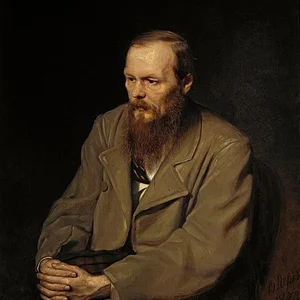
Fyodor Dostoevsky
1821 — 1881
Russian writer
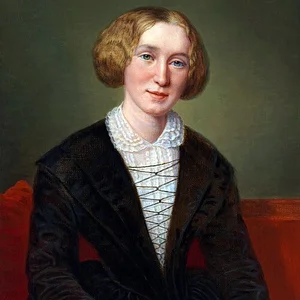
George Eliot
1819 — 1880
Pen name of Mary Ann Evans (1819–1880), one of the leading Victorian novelists. Author of Middlemarch and The Mill on the Floss, she explores the female condition and social morality with rare philosophical depth.
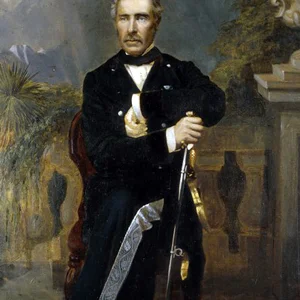
George Grey
1812 — 1898
British colonial governor and ethnologist, George Grey successively administered South Australia, New Zealand, and the Cape Colony. Passionate about indigenous cultures, he devoted part of his life to collecting and publishing Māori myths and language.
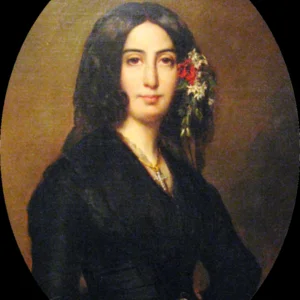
George Sand
1804 — 1876
A French novelist of the 19th century, George Sand (1804-1876) was one of the most prolific and innovative writers of her era. A champion of individual freedom and equal rights, she left a lasting mark on Romantic literature through her social novels and a life that openly defied the conventions of her time.
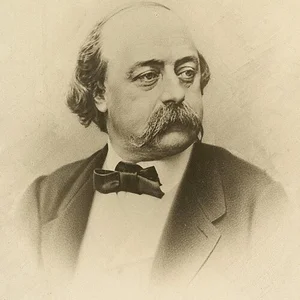
Gustave Flaubert
1821 — 1880
19th-century French novelist (1821–1880), Gustave Flaubert is the author of Madame Bovary, a founding work of literary realism. An obsessive perfectionist, he revolutionized the art of the novel through his refined style and his critique of bourgeois society.
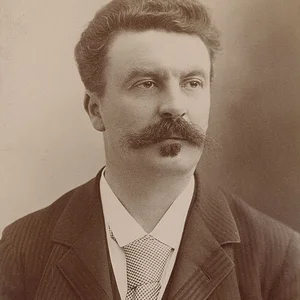
Guy de Maupassant
1850 — 1893
French writer and journalist (1850-1893), Maupassant is one of the masters of the realist short story of the 19th century. A student of Flaubert, he wrote hundreds of tales and short stories characterized by their spare style and critical view of society.
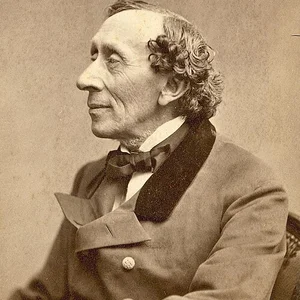
Hans Christian Andersen
1805 — 1875
Danish writer (1805-1875) world-renowned for his fairy tales. Creator of timeless stories such as The Little Mermaid and The Ugly Duckling, blending poetry, moral lessons, and fantastical imagination.
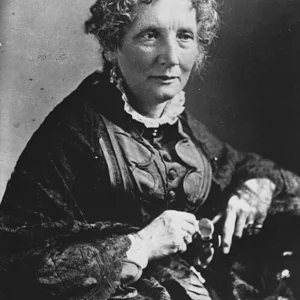
Harriet Beecher Stowe
1811 — 1896
An American novelist and abolitionist activist, she was the author of “Uncle Tom's Cabin” (1852), a novel denouncing slavery that had a worldwide impact. Her work helped to mobilize public opinion against slavery in the United States.
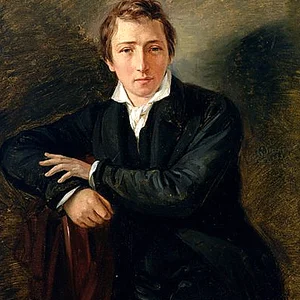
Heinrich Heine
1797 — 1856
Heinrich Heine (1797–1856) is one of the greatest German Romantic poets. Exiled to Paris in 1831, he became a bridge between French and German cultures. His work blends lyricism, irony, and political engagement.
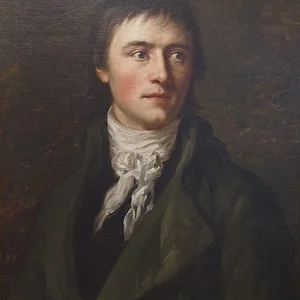
Heinrich von Kleist
1777 — 1811
Heinrich von Kleist (1777-1811) was a German writer, the author of plays, tales, and short stories. A singular figure between Classicism and Romanticism, he is famous for his tragedies and his tautly plotted short stories, before taking his own life at the age of 34.
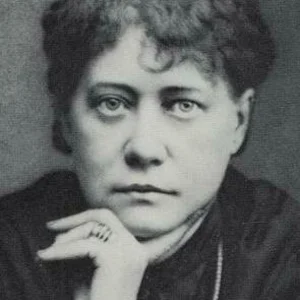
Helena Blavatsky
1831 — 1891
Helena Blavatsky (1831-1891) was a Russian occultist, philosopher, and writer who co-founded the Theosophical Society in 1875. A tireless traveler, she synthesized Eastern spiritualities and Western esotericism in her major works.
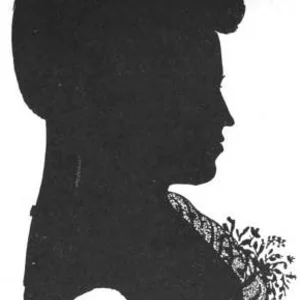
Henriette Dorothea Wild
Henriette Dorothea Wild, known as Dortchen, was a German storyteller who passed on numerous folk tales to the Brothers Grimm. First a neighbour and later the wife of Wilhelm Grimm, she was among their principal sources.
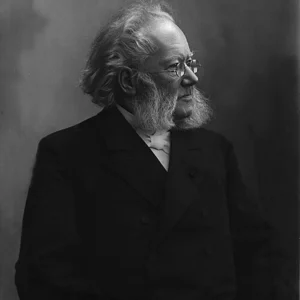
Henrik Ibsen
1828 — 1906
Henrik Ibsen (1828-1906) was a Norwegian playwright and poet, considered the father of modern theatre. His realist plays explore social hypocrisies and the condition of women, notably in A Doll's House.
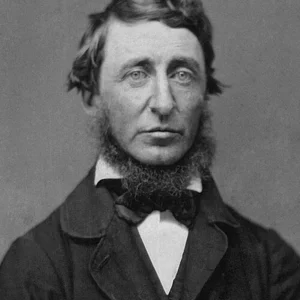
Henry David Thoreau
1817 — 1862
American writer, philosopher, and naturalist, a figure of transcendentalism. He is famous for *Walden; or, Life in the Woods*, an account of his experience of solitary living in close contact with nature, and for his essay *Civil Disobedience*, a plea for individual resistance to the injustice of the State.
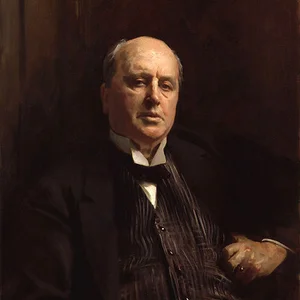
Henry James
1843 — 1916
Henry James (1843-1916) was an American writer who became a naturalized British citizen in 1915. A master of the psychological novel, he explored the relationship between the European Old World and the American New World. He is the author of the celebrated novel The Portrait of a Lady (1881).
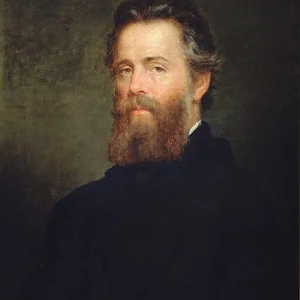
Herman Melville
1819 — 1891
Herman Melville (1819-1891) was an American novelist, short-story writer, and poet. Author of Moby-Dick, a masterpiece of world literature, he drew on his experience as a sailor to explore obsession, evil, and the human condition.
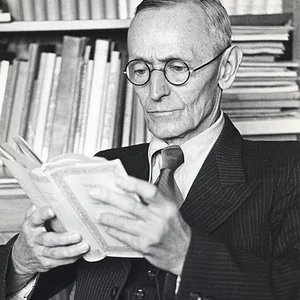
Hermann Hesse
1877 — 1962
Hermann Hesse (1877-1962) was a German-born Swiss writer and poet, awarded the Nobel Prize in Literature in 1946. His work, marked by spiritual quest and introspection, blends Eastern influences and psychoanalysis in novels such as “Siddhartha,” “Steppenwolf,” and “The Glass Bead Game.”
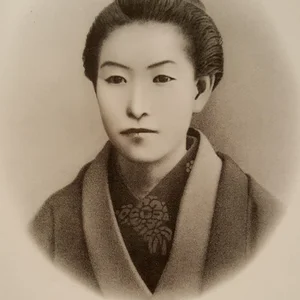
Higuchi Ichiyō
Japanese novelist and poet of the Meiji era (1872–1896), considered one of the greatest writers of modern Japan. Author of major short stories such as Takekurabe, she was the first woman to appear on a Japanese banknote (5,000 yen).
Hippolyte Fauche
1797 — 1869
A French Orientalist and Sanskritist of the 19th century, Hippolyte Fauche was the first to produce a complete French translation of the Mahabharata. His monumental work opened Indian epic literature to French-speaking audiences.
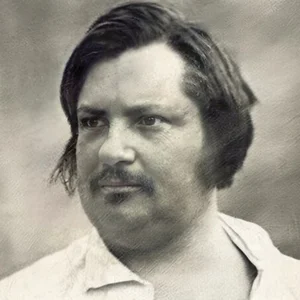
Honoré de Balzac
1799 — 1850
French novelist (1799–1850) and founder of literary realism. He created The Human Comedy, a vast novelistic panorama of French society in the 19th century, comprising more than 90 interconnected works.
Ida B. Wells
1862 — 1931
African American journalist and activist born into slavery in 1862, Ida B. Wells conducted rigorous investigations into lynching in the United States and co-founded the NAACP. A pioneering figure in investigative journalism and the civil rights movement.
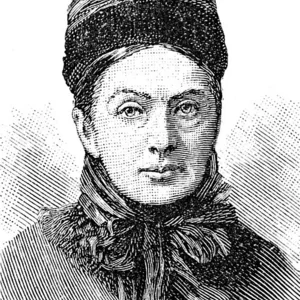
Isabella Bird
1831 — 1904
A nineteenth-century British explorer and writer, Isabella Bird was one of the first women to travel alone in Japan, China, India, Persia, and the American Rockies. She published numerous travel accounts that earned her international recognition and admission to the Royal Geographical Society.
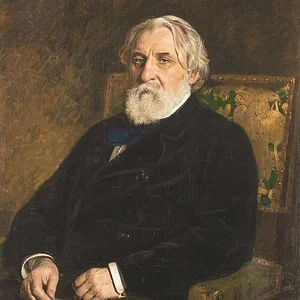
Ivan Turgenev
1818 — 1883
Ivan Turgenev was a 19th-century Russian writer, novelist, and playwright. A major figure of Russian realism, he is the author of *Fathers and Sons* and helped introduce Russian literature to Western Europe.
J. M. W. Turner
1775 — 1851
British painter and engraver (1775-1851), Turner is considered the master of Romantic landscape. A forerunner of Impressionism, he revolutionized the depiction of light, water, and atmosphere.
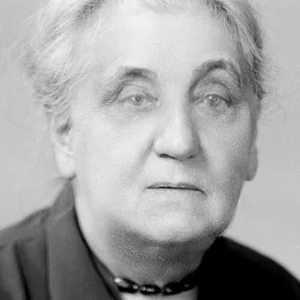
Jane Addams
1860 — 1935
An American social reformer, Jane Addams founded Hull House in Chicago in 1889, a settlement house serving immigrants and disadvantaged communities. A sociologist and committed pacifist, she was awarded the Nobel Peace Prize in 1931.
Jean-Nicolas Démeunier
1751 — 1814
French politician and writer (1751-1814), deputy to the Estates-General of 1789 and member of the National Constituent Assembly. He later became a senator under the Napoleonic First Empire.
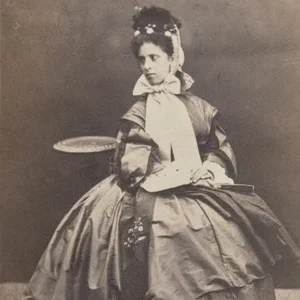
Jeanne Duval
1820 — 1868
Franco-Haitian actress and dancer, Jeanne Duval is best known as the muse and companion of Charles Baudelaire. She inspired the “Black Venus cycle” in *The Flowers of Evil*, while embodying the figure of the exoticized Black woman in the colonial imagination of the 19th century.
Johann Wolfgang von Goethe
German writer, poet, and scholar (1749–1832), Goethe is the author of Faust and The Sorrows of Young Werther. A central figure of the Sturm und Drang movement and later Weimar Classicism, he embodies the Enlightenment ideal of the universal man.
Joseph Pulitzer
1847 — 1911
American journalist and publisher of Hungarian origin (1847–1911), founder of modern journalism. He built a press empire and established the famous Pulitzer Prize, the supreme award in American journalism.
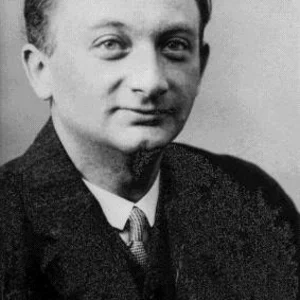
Joseph Roth
1894 — 1939
Joseph Roth (1894-1939) was an Austrian writer and journalist, a major figure in German-language literature between the wars. Author of "The Radetzky March", he celebrated the nostalgia for the vanished Austro-Hungarian Empire and denounced the rise of Nazism before dying in exile in Paris.
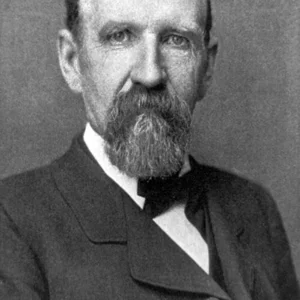
Joshua Slocum
1844 — 1909
Joshua Slocum (1844-1909) was a Canadian-American deep-sea captain. Between 1895 and 1898, he completed the first solo circumnavigation of the globe under sail aboard the Spray. He recounted his feat in a narrative that became a classic of maritime literature.
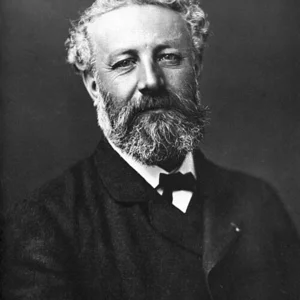
Jules Verne
1828 — 1905
A French writer of the 19th century, Jules Verne is considered the father of science fiction. His adventure novels blending exploration, technology, and imagination captivated generations of readers and continue to influence literature and cinema.
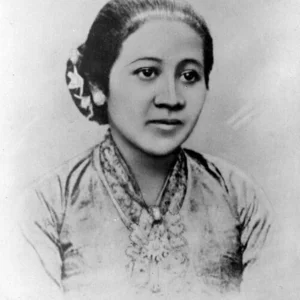
Kartini
1879 — 1904
Kartini (1879-1904) was a Javanese noblewoman who fought for Indonesian women's access to education under Dutch colonial rule. Her letters in Dutch, published posthumously under the title "Through Darkness into Light," inspired the Indonesian feminist movement and made her a major national figure.
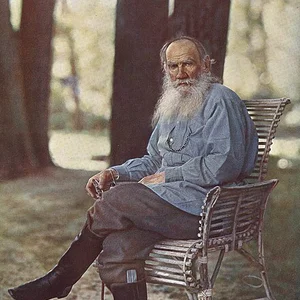
Leo Tolstoy
1828 — 1910
Russian writer, 19th - early 20th c.
Leo XIII
1810 — 1903
Pope from 1878 to 1903, Leo XIII modernized the social doctrine of the Church with the encyclical Rerum Novarum (1891). He sought to reconcile Catholicism with the modern world and liberal democracies.
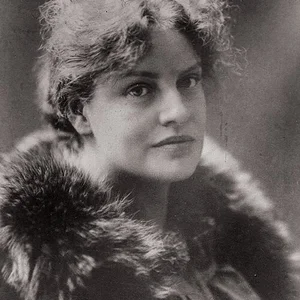
Lou Andreas-Salomé
1861 — 1937
Lou Andreas-Salomé (1861-1937) was a German-Russian writer and psychoanalyst, a major intellectual figure of the late 19th century. A close friend of Nietzsche and Rilke, she was one of the first women to practice psychoanalysis in Europe.
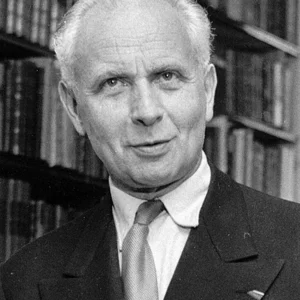
Louis Aragon
1897 — 1982
French poet and novelist (1897-1982), Louis Aragon is a major figure of committed poetry in the 20th century. A founding member of Surrealism alongside André Breton, he became one of the greatest poets of the French Resistance during the Second World War, blending lyricism with political engagement.
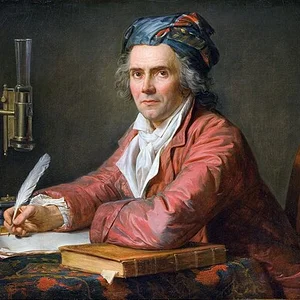
Louis Leroy
1923 — 1961
Louis Leroy (1812-1885) was a French journalist, art critic, and playwright. He is best known for having mockingly given its name to the Impressionist movement in 1874, in his review of the exhibition on the Boulevard des Capucines.
Louis-Philippe I
1773 — 1850
King of the French from 1830 to 1848, Louis-Philippe I came to power following the July Revolution. His July Monarchy embodied the triumph of the liberal bourgeoisie before being overthrown by the Revolution of 1848.
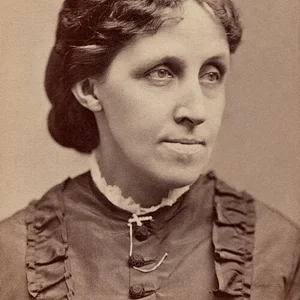
Louisa May Alcott
1832 — 1888
American novelist and short-story writer, famous for her novel *Little Women* (1868), largely inspired by her own childhood. A committed advocate for the abolition of slavery and women's rights, she served as a nurse during the Civil War.
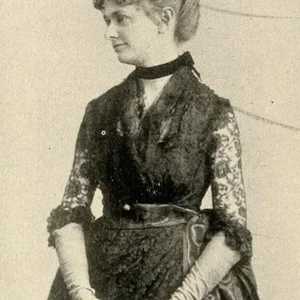
Mabel Loomis Todd
1856 — 1932
An American editor and writer, she was the first to edit and publish Emily Dickinson's poems after the poet's death, playing a decisive role in introducing one of the greatest voices in American poetry.
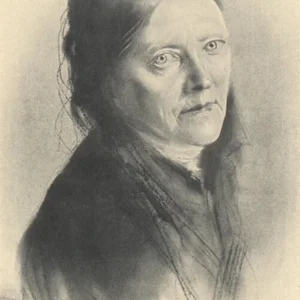
Malwida von Meysenbug
1816 — 1903
German writer and intellectual, a figure of feminism and the democratic ideals of 1848. After the revolution failed she emigrated, hosted a cosmopolitan salon, and was a close friend of Wagner, Nietzsche, and Romain Rolland.
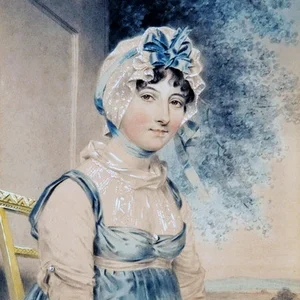
Maria Edgeworth
1768 — 1849
Anglo-Irish novelist and moralist (1768–1849), pioneer of the regional novel and the novel of education. Her works, praised by Walter Scott and Jane Austen, explore morality, the education of women, and Irish society.
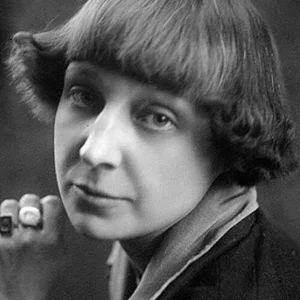
Marina Tsvetaeva
1892 — 1941
One of the greatest Russian poets of the 20th century, Marina Tsvetaeva was born in Moscow in 1892. Exiled in Europe after the Bolshevik Revolution, she returned to the USSR in 1939 and took her own life in 1941, leaving behind a body of lyric poetry of rare intensity.
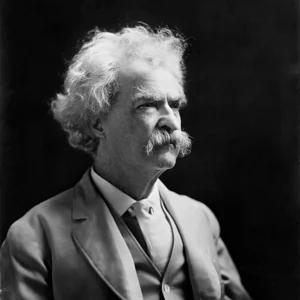
Mark Twain
1835 — 1910
American writer, journalist, and humorist, considered one of the fathers of modern American literature. His novels, rooted in the Mississippi River valley, blend social satire, criticism of racism, and vernacular speech.
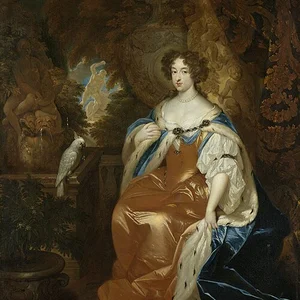
Mary Prince
1788 — 1833
Mary Prince (c. 1788 – after 1833) was an enslaved woman from Bermuda whose autobiographical narrative, published in 1831, is the first autobiography by an enslaved Black woman published in Britain. Her testimony played a decisive role in the British abolitionist movement.
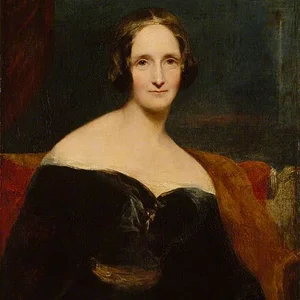
Mary Shelley
1797 — 1851
Peerage person ID=695563
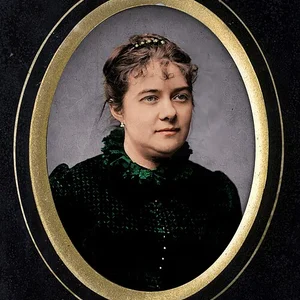
Mathilde Mauté
1853 — 1914
First wife of Paul Verlaine, whom she married in 1870 at the age of sixteen. The dedicatee of the collection La Bonne Chanson, she saw her marriage shattered by the poet's alcoholism and his affair with Arthur Rimbaud.
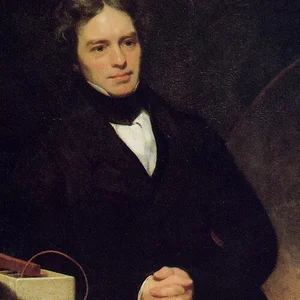
Michael Faraday
1791 — 1867
A self-taught British physicist and chemist (1791–1867), Faraday discovered electromagnetic induction and laid the foundations of modern electrical engineering. His work on electric and magnetic fields inspired Maxwell's theories.

Mwana Hashima
A Swahili poetess from the East African coast (Zanzibar or the coastal region), Mwana Hashima belongs to the rich Swahili literary tradition with its strong Islamic imprint. Her poetic work in the Swahili language reflects Sufi spirituality and the moral values of coastal society.
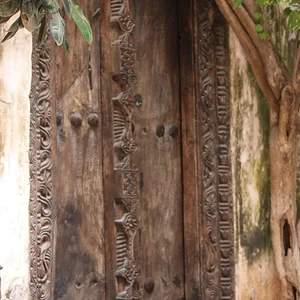
Mwana Kupona
1810 — 1860
A 19th-century Swahili poet born on the island of Pate (present-day Kenya), belonging to the Swahili culture of the East African coast. She is the author of the celebrated Utendi wa Mwana Kupona, a long didactic poem composed around 1858 for her daughter, first transmitted orally and later written down.
Nadezhda Krupskaya
1869 — 1939
Russian revolutionary and educator (1869–1939), wife of Lenin and Bolshevik activist. She played a central role in Soviet educational policy after 1917, particularly in mass literacy campaigns and the reform of public schooling.

Nana Asma'u
1793 — 1864
Princess, poet, and Fulani scholar of the Sokoto Caliphate (present-day Nigeria), daughter of reformer Usman dan Fodio. She wrote in Arabic, Fulfulde, and Hausa, and founded a network of traveling female teachers to educate rural women. A major figure of West African Islam in the 19th century.
Napoleon III
1808 — 1873
Nephew of Napoleon I, he was elected President of the Republic in 1848, then seized power through a coup d'état on December 2, 1851, before proclaiming the Second Empire. His reign profoundly transformed France: the modernization of Paris under Haussmann, industrial and railway expansion — until the defeat at Sedan in 1870.
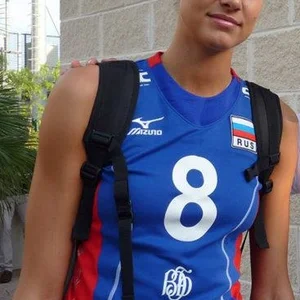
Natalia Goncharova
1881 — 1962
Natalia Goncharova was one of the great figures of the Russian avant-garde in the early 20th century. A painter, draftswoman, and creator of sets and costumes for Diaghilev's Ballets Russes, she blended Russian folk art, icons, and Cubo-Futurist innovations before settling in Paris.
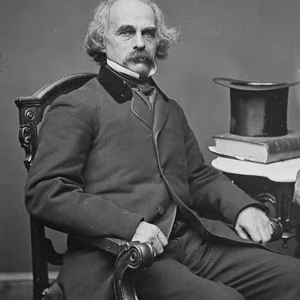
Nathaniel Hawthorne
1804 — 1864
Nathaniel Hawthorne (1804-1864) was an American novelist and short-story writer, a major figure of dark romanticism. He explores guilt, sin, and the Puritan legacy of New England in a psychological and allegorical body of work.
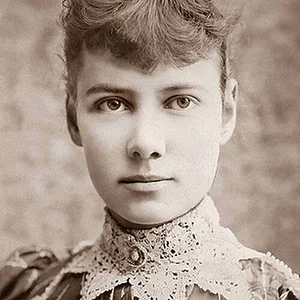
Nellie Bly
1864 — 1922
A pioneering American journalist, Nellie Bly made her mark through undercover investigative journalism, most notably by having herself committed to a psychiatric asylum to expose its conditions. In 1889, she traveled around the world in 72 days, breaking the fictional record of Phileas Fogg.
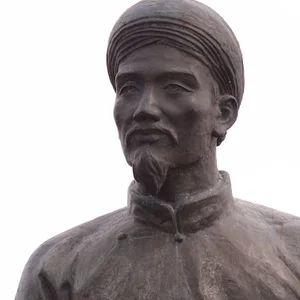
Nguyễn Du
1766 — 1820
Poet and major cultural figure of Vietnam (1766–1820), known as the "Great National Poet." Author of Truyện Kiều, a masterpiece of classical Vietnamese literature, recognized by UNESCO as a World Cultural Personality. [1]
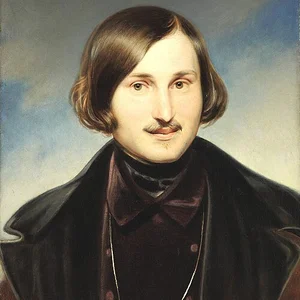
Nikolai Gogol
1809 — 1852
Russian writer and playwright of Ukrainian origin, a major figure of 19th-century Russian literature. A master of satirical realism and the grotesque, he denounced the failings of society and of the imperial Russian administration.
Olympe Audouard
1832 — 1890
Olympe Audouard (1832–1890) was a French writer, journalist, and feminist. A tireless traveler, she journeyed through the Middle East and the United States and published accounts of her travels. She campaigned for women's rights, particularly the right to divorce and access to education.
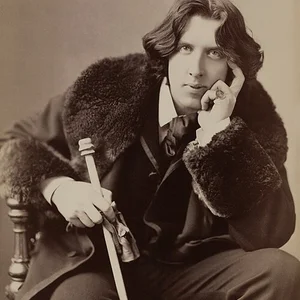
Oscar Wilde
1854 — 1900
A 19th-century Irish writer, Oscar Wilde is the author of major witty comedies and symbolist novels. An iconic figure of the Aesthetic movement, he left a lasting mark on English literature through his brilliant style, biting irony, and celebrated plays.
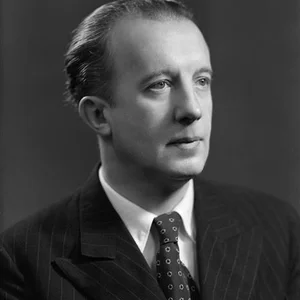
Paul Éluard
1895 — 1952
French poet (1895-1952), a major figure of Surrealism and committed poetry. Author of 'Liberty' (1942), he joined the Resistance during World War II and became a symbol of militant poetry against oppression.
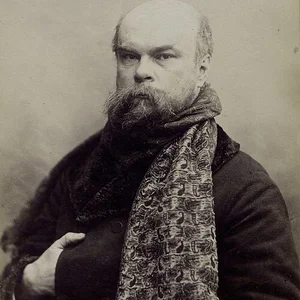
Paul Verlaine
1844 — 1896
A major French poet of the 19th century (1844–1896), Paul Verlaine is one of the central figures of Symbolism. Author of Poèmes saturniens and other groundbreaking collections, he revolutionized French poetry through his musicality and exploration of intimate emotional states.
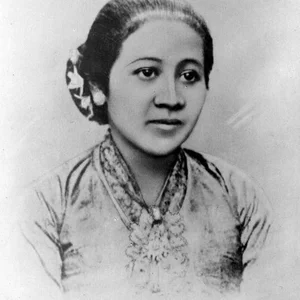
Raden Ajeng Kartini
1879 — 1904
Raden Ajeng Kartini is a Javanese aristocrat from the Dutch East Indies who became a pioneer of women's emancipation in Southeast Asia. Through her letters to Dutch correspondents, she denounced the condition of women in colonial society and advocated for their access to education. Dying at age 25, she remains a national symbol in Indonesia.
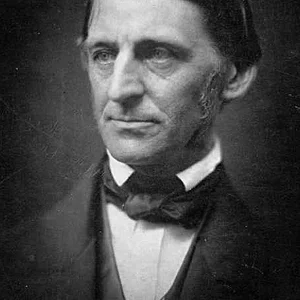
Ralph Waldo Emerson
1803 — 1882
American philosopher, essayist, and poet (1803-1882), a central figure of transcendentalism. He championed self-reliance, intuition, and the spiritual bond between humanity and nature, leaving a lasting mark on American thought.
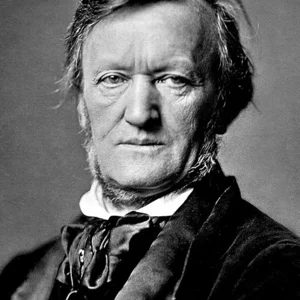
Richard Wagner
1813 — 1883
German composer (1813–1883), Wagner revolutionized opera by creating the concept of the total work of art (Gesamtkunstwerk). His music dramas, including the Ring Cycle and Tristan und Isolde, remain towering monuments of Romanticism.
Sarah Winnemucca
1844 — 1891
A Paiute activist and author from Nevada, Sarah Winnemucca defended the rights of her Native American people in the face of American colonization. In 1883, she became the first Native American woman to publish a book in English, a major testimony on the condition of Indigenous nations.
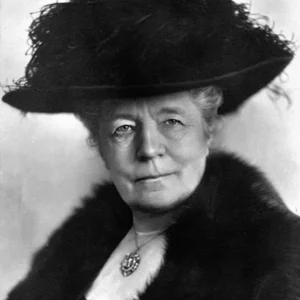
Selma Lagerlöf
1858 — 1940
Selma Lagerlöf (1858-1940) was the first woman to receive the Nobel Prize in Literature, awarded in 1909. This Swedish author is best known for her novel 'The Wonderful Adventures of Nils', which has become a worldwide classic of children's literature.
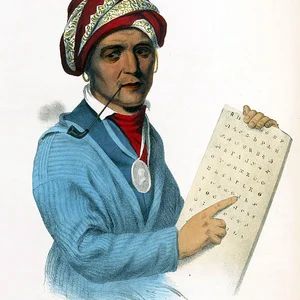
Sequoyah
1770 — 1843
Sequoyah was a Cherokee silversmith and scholar, famous for single-handedly inventing the Cherokee syllabary around 1821. He is the only individual known in history to have created a writing system entirely from scratch without being literate himself beforehand.
Sido
1835 — 1912
Sido (1835-1912) was the mother of the novelist Colette, who dedicated a celebrated autobiographical book to her published in 1930. An idealized maternal figure, she embodies the free-spirited woman, close to nature and to rural life in Burgundy.
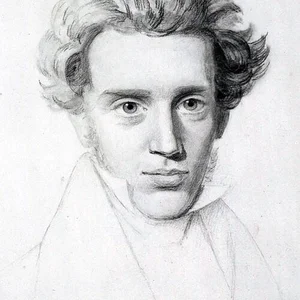
Søren Kierkegaard
1813 — 1855
Danish philosopher and theologian (1813-1855), regarded as the father of existentialism. A critic of the Hegelian system and of institutional Christianity, he placed individual existence, choice, and faith at the heart of his thought.
Stéphane Mallarmé
1842 — 1898
Stéphane Mallarmé (1842-1898) was a French poet and a major figure of Symbolism. An English teacher by profession, he transformed poetic language through his pursuit of suggestion and purity, paving the way for modern poetry.
Teresa Guiccioli
1800 — 1873
Italian countess born in 1800, Teresa Guiccioli is best known for being the last great love of Lord Byron, with whom she shared a celebrated affair from 1819 to 1823. After the poet's death, she dedicated a memorial work to him, “Lord Byron Judged by the Witnesses of His Life” (1868), a precious testament to European Romanticism.
Theodor Fontane
1819 — 1898
Theodor Fontane was a German writer and a major figure of poetic realism. A pharmacist who became a journalist and then a novelist, he is the author of *Effi Briest*, one of the great novels of nineteenth-century German literature.
Théophile Gautier
1811 — 1872
French writer and critic (1811-1872), founder of the doctrine of art for art's sake, which champions the independence of art from moral and social concerns. Author of novels, poetry, and art criticism, he left a lasting mark on the 19th century through his commitment to formal beauty and aestheticism.
Thérèse of Lisieux
1873 — 1897
A French Carmelite nun who entered the Carmel of Lisieux at age 15, she developed a spirituality known as the 'Little Way,' accessible to everyone. Author of Story of a Soul, she was canonized in 1925 and declared a Doctor of the Church in 1997.
Victor Hugo
1802 — 1885
A major French writer of the 19th century, Victor Hugo (1802–1885) is the author of iconic novels such as Les Misérables and The Hunchback of Notre-Dame. Poet, playwright, and committed politician, he championed the rights of the poor and fought against the death penalty.
Virginia Clemm
Wife and first cousin of Edgar Allan Poe, Virginia Clemm married him at the age of 13 in 1835. Her beauty, gentleness, and premature death from tuberculosis at 24 profoundly inspired Poe's poetic work.
Virginia Woolf
1882 — 1941
British author (1882–1941), Virginia Woolf is one of the most important figures in 20th-century modernist literature. Author of Mrs Dalloway and Orlando, she revolutionized the novel through her use of stream of consciousness and her pioneering reflections on feminism and the condition of women.
Walt Whitman
1819 — 1892
American poet, journalist, and essayist (1819-1892), regarded as the father of modern poetry in the United States. His collection *Leaves of Grass*, with its groundbreaking free verse, celebrates democracy, the body, and nature.
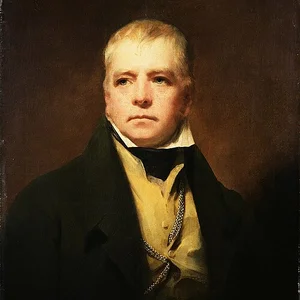
Walter Scott
1771 — 1832
Scottish writer and poet (1771–1832), Walter Scott is the father of the modern historical novel. Works such as *Ivanhoe* and *Waverley* popularized the Romantic vision of the Middle Ages across Europe.
Sciences(121)
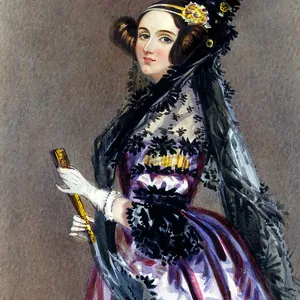
Ada Lovelace
1815 — 1852
British mathematician (1815-1852), pioneer of computing and programming. She wrote the first algorithm intended to be executed by a machine, working on Charles Babbage's Analytical Engine. Her legacy makes her a founding figure of theoretical computer science.
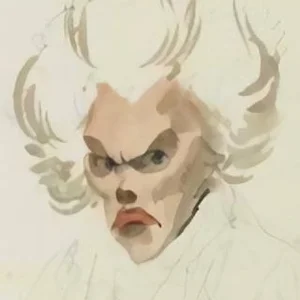
Adrien-Marie Legendre
1752 — 1833
French mathematician (1752–1833), he contributed to number theory, geometry, and analysis. He is known for the Legendre polynomials and the method of least squares.
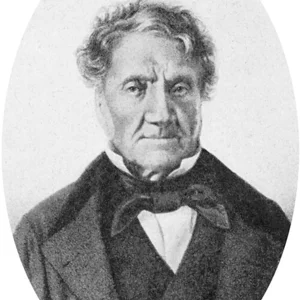
Aimé Bonpland
1773 — 1858
French botanist and explorer (1773-1858), companion of Alexander von Humboldt during their famous expedition to South America (1799-1804). He catalogued thousands of plant species unknown in Europe and spent the rest of his life in Argentina.
Albert Einstein
1879 — 1955
German-born physicist who became Swiss and later American (1879–1955), Albert Einstein revolutionized physics by developing the theories of special and general relativity. He is the author of the famous equation E=mc² and received the Nobel Prize in Physics in 1921 for his work on the photoelectric effect.
Alexander Borodin
1833 — 1887
A 19th-century Russian composer and member of The Five, he was also a renowned chemist. He pursued scientific and musical careers side by side, leaving behind the unfinished opera *Prince Igor*.
Alexander Graham Bell
1847 — 1922
A Scottish-born inventor who became a naturalized American citizen, Alexander Graham Bell is best known for filing the patent for the telephone in 1876. He also conducted research on hearing and communication, particularly to help people who were deaf.
Alexander von Humboldt
1769 — 1859
German naturalist, geographer, and explorer (1769–1859), he carried out a monumental expedition to Latin America (1799–1804) that revolutionized the natural sciences. A pioneer of modern geography and ecology, he was one of the last great universal scholars.
Alexandre-Antoine Hureau de Sénarmont
1769 — 1810
An artillery general of the First Empire, Hureau de Sénarmont distinguished himself at Jena and Friedland through his innovative offensive artillery tactics. He was killed at the Battle of Zaragoza in 1809.
Alfred Russel Wallace
1823 — 1913
British naturalist and geographer (1823-1913), Wallace independently developed the theory of natural selection alongside Darwin. His explorations in the Amazon and Southeast Asia led him to formulate fundamental laws in biogeography.
Alfred Wegener
1880 — 1930
German scientist (1880–1930) who proposed the theory of continental drift in the early 20th century. This revolutionary theory suggests that continents are not fixed but slowly move across the Earth's surface. Though widely rejected at the time, his theory laid the foundations for modern plate tectonics.
André-Marie Ampère
1775 — 1836
French physicist and mathematician, Ampère is the founder of electrodynamics. He established the mathematical laws governing the interactions between electric currents and magnetic fields. The international unit of electric current, the ampere, bears his name.
Annabella Milbanke
1792 — 1860
British aristocrat (1792–1860), self-taught mathematician and philanthropist, she married the poet Lord Byron in 1815 before separating from him a year later. She went on to dedicate herself to popular education and social reform, and is the mother of Ada Lovelace, pioneer of computing.

Auguste Lumière
1862 — 1954
Auguste Lumière (1862–1954) was a French inventor and industrialist who, together with his brother Louis, developed the Cinématographe in 1895, giving birth to cinema. He also contributed to colour photography with the invention of the Autochrome.
Augustus De Morgan
1806 — 1871
Augustus De Morgan was a 19th-century British mathematician and logician. A pioneer of modern formal logic, he helped found the algebra of logic and gave his name to De Morgan's laws, which are fundamental to logic and set theory.
Bernhard Riemann
1826 — 1866
A 19th-century German mathematician, Riemann revolutionized geometry by developing Riemannian geometry, the mathematical foundation of Einstein's general relativity. His work on complex functions and the Riemann hypothesis remains among the most influential in modern mathematics.

Bronisława Dłuska
Polish physician (1865-1939), elder sister of Marie Curie, she funded her sister's studies in Paris. A pioneer of women's medicine in Poland, she ran a clinic in Zakopane and campaigned for women's emancipation.
Büttner
1858 — 1927
Oskar Büttner was a German botanist of the late 19th century. He took part in the botanical exploration of Africa, particularly the Congo and West Africa, where he collected numerous plant specimens described by the naturalists of his time.
Champollion
1790 — 1832
French Egyptologist (1790-1832) who revolutionized the study of ancient Egypt by deciphering Egyptian hieroglyphs using the Rosetta Stone. His work opened the door to understanding Egyptian civilization and established Egyptology as a scientific discipline.
Charles Babbage
1791 — 1871
British mathematician (1791–1871), Charles Babbage is the pioneer of modern computing. He designed the Analytical Engine, the first programmable machine in history, and the Difference Engine, both conceptual ancestors of the computer.
Charles Darwin
1809 — 1882
A 19th-century English naturalist, Charles Darwin revolutionized biology by proposing the theory of evolution by natural selection. His observations during the voyage of the Beagle and his subsequent work laid the foundations of modern biology.
Charles Lyell
1797 — 1875
Charles Lyell was a 19th-century British geologist and a major figure in modern geology. His work 'Principles of Geology' popularized uniformitarianism, the idea that present-day geological processes explain the formation of the Earth over very long stretches of time. He had a profound influence on Charles Darwin.
David Livingstone
1813 — 1873
Physician, Protestant missionary, and Scottish explorer (1813–1873), Livingstone was one of the first Europeans to cross Africa from east to west. He contributed to the geographical knowledge of the continent and actively fought against the slave trade.
Dmitri Mendeleev
1834 — 1907
Russian chemist (1834–1907), he established in 1869 the periodic table of chemical elements, classifying elements by increasing atomic mass and recurring properties. His table even made it possible to predict the existence of then-unknown elements.
Doctor Blanche
1796 — 1852
Esprit Blanche (1796-1852) was a French alienist physician, a pioneer of humane psychiatry. In Montmartre and later in Passy, he founded a nursing home renowned for the treatment of mental illness, where he welcomed many artists and writers.
Dumont d'Urville
1790 — 1842
French naval officer and explorer (1790–1842), he led several expeditions to the southern seas and Antarctica. He discovered Adélie Land in 1840 and helped identify the Venus de Milo.
Édouard Séguin
1812 — 1880
French physician and educator, a pioneer in the education of children with intellectual disabilities. A student of Itard, he developed a physiological method of education before emigrating to the United States, where he influenced Maria Montessori.
Edward Charles Pickering
1846 — 1919
American astronomer (1846–1919), director of the Harvard Observatory for 42 years. He revolutionized stellar classification and led the famous group known as the "Harvard Computers," composed mostly of women scientists.
Ellen Swallow Richards
1842 — 1911
Pioneering American chemist, the first woman admitted to MIT, where she became an instructor. A specialist in sanitary chemistry, she analyzed water and air quality and founded scientific home economics.
Emily Warren Roebling
1843 — 1903
Emily Warren Roebling was an American pioneer of civil engineering. When her husband, chief engineer Washington Roebling, was struck by caisson disease, she took over the technical supervision of the Brooklyn Bridge construction until its completion in 1883.
Emmy Noether
1882 — 1935
German mathematician (1882–1935) considered one of the greatest mathematicians of the 20th century. She revolutionized abstract algebra, and her landmark theorem established the deep connection between symmetries and conservation laws in physics.
Ernest Rutherford
1871 — 1937
New Zealand-born physicist and chemist (1871–1937) who revolutionized our understanding of atomic structure. He discovered the atomic nucleus and elucidated the mechanisms of radioactivity, laying the foundations of modern nuclear physics.
Ernst Förstemann
1822 — 1906
Nineteenth-century German librarian and linguist, regarded as a pioneer in the decipherment of Maya writing. He was the first to understand the calendar system and astronomical calculations of the Dresden Codex.
Eunice Newton Foote
1819 — 1888
An American scientist, Eunice Newton Foote demonstrated as early as 1856 the ability of carbon dioxide to trap heat, anticipating the understanding of the greenhouse effect. An activist as well, she was a forgotten pioneer of climate science.
Évariste Galois
1811 — 1832
French mathematician (1811–1832), a precocious genius who died in a duel at the age of 20. He founded group theory and proved the impossibility of solving by radicals equations of degree higher than 4.
Farkas Bolyai
1775 — 1856
Farkas Bolyai was a Hungarian mathematician, known for his work on the foundations of geometry. He was the father of János Bolyai, one of the founders of non-Euclidean geometry, whom he encouraged despite his own reservations.
Felix Klein
1849 — 1925
German mathematician (1849–1925), Felix Klein is celebrated for his Erlangen Programme, which unifies geometries through group theory. He contributed to topology, analysis, and mathematics education.
Florence Nightingale
1820 — 1910
British nurse and statistician (1820–1910), she revolutionized hospital care during the Crimean War. A pioneer of public health, she founded the first secular nursing school and used statistics to demonstrate the critical importance of hygiene.
François-Vincent Raspail
1794 — 1878
French chemist and naturalist (1794–1878), pioneer of cellular chemistry and histology. A committed republican, he took part in the revolutions of 1830 and 1848, was imprisoned for his political beliefs, and ran for the presidency of the Republic from his prison cell.
Frederick Hodgson
1796 — 1854
Investigator for the Society for Psychical Research (SPR) who, in 1884-1885, examined the phenomena attributed to Helena Blavatsky at the Theosophical headquarters in Adyar, India. His report concluded that they were fraud and trickery.
Gaspard Monge
1746 — 1818
French mathematician (1746–1818), inventor of descriptive geometry and co-founder of the École Polytechnique. A close ally of Napoleon, he played a major role in modernizing scientific and technical education in France.
Georg Cantor
1845 — 1918
German mathematician (1845–1918), founder of set theory. He proved the existence of multiple sizes of infinity and introduced transfinite numbers, revolutionizing the foundations of mathematics.
Georg Ohm
1789 — 1854
German physicist (1787-1854) who discovered the fundamental relationship between voltage, current, and electrical resistance. His law, formulated in 1827, became one of the foundational laws of electricity and bears his name.
George Boole
1815 — 1864
19th-century British mathematician and logician, founder of Boolean algebra. He revolutionized logic by translating it into a mathematical system, laying the foundations of modern computing.
George Everest
1790 — 1866
British geographer and geodesist, George Everest led the Great Trigonometrical Survey of India in the 19th century. He carried out the precise triangulation of the Indian subcontinent — a monumental undertaking that made it possible to accurately measure the Himalayan peaks. Mount Everest, the highest mountain in the world, was named in his honour in 1865.
George Stephenson
1781 — 1848
British engineer (1781–1848), George Stephenson is the father of the railway. He built the first efficient steam locomotive for passenger transport and designed the Liverpool-Manchester line, inaugurated in 1830.
Georges Cuvier
1769 — 1832
French naturalist and anatomist (1769–1832), Georges Cuvier is the founder of paleontology and comparative anatomy. He established the catastrophism theory to explain species extinctions and classified the animal kingdom into four phyla.
Gösta Mittag-Leffler
1846 — 1927
Swedish mathematician, a major figure in complex analysis. Founder of the journal Acta Mathematica, he played an international role in spreading mathematics during the late 19th and early 20th centuries.
Gottfried Reinhold Treviranus
1776 — 1837
A German naturalist and physician, he was one of the first to use the term “biology” to describe the science of living things. His major work sought to unify the study of living beings into a coherent discipline.
Granville Woods
1856 — 1910
African American inventor and engineer (1856–1910), nicknamed the "Black Edison," he filed more than 60 patents in electricity and railroad engineering, including the multiplex telegraph that allowed communication between moving trains.
Gregor Mendel
1822 — 1884
Moravian monk and naturalist (1822–1884), Gregor Mendel is the founder of modern genetics. Through his experiments with pea plants, he discovered the fundamental laws of heredity that govern the transmission of traits from one generation to the next.
Gustave Eiffel
1832 — 1923
French engineer and entrepreneur (1832–1923), Gustave Eiffel is famous for building the tower that bears his name, erected for the 1889 World's Fair. A pioneer of iron architecture, he also designed the internal framework of the Statue of Liberty.
Hans Christian Ørsted
1777 — 1851
A Danish physicist and chemist, Hans Christian Ørsted discovered in 1820 that an electric current deflects a compass needle, revealing the link between electricity and magnetism. He thus founded electromagnetism and was the first to isolate metallic aluminium.
Heinrich Schliemann
1822 — 1890
A self-taught German archaeologist (1822–1890), he devoted his fortune to finding the Homeric Troy. His excavations at Hisarlik in Turkey revealed several superimposed cities, one of which he identified — incorrectly — as the Troy of the *Iliad*.
Henri Becquerel
1852 — 1908
French physicist (1852–1908), Henri Becquerel discovered radioactivity in 1896 by observing that uranium salts exposed photographic plates without any exposure to light. This fundamental discovery earned him the Nobel Prize in Physics in 1903, shared with Pierre and Marie Curie.
Henri Poincaré
1854 — 1912
French mathematician, physicist and philosopher (1854-1912), considered the last universal genius of science. He founded algebraic topology, laid the foundations of special relativity, and discovered deterministic chaos.
Henrietta Leavitt
1868 — 1921
Henrietta Swan Leavitt (1868-1921) was an American astronomer who discovered the period-luminosity relationship of Cepheid stars, giving humanity a tool to measure distances across the universe. Working as a "human computer" at the Harvard Observatory, she transformed astronomy despite the discrimination she faced because of her gender.
Henry de la Beche
British geologist, pioneer of geological mapping. In 1835 he founded the British Geological Survey, the world's first national geological survey, and worked to establish geology as a scientific discipline in its own right.
Herbert Spencer
1820 — 1903
Herbert Spencer (1820-1903) was an English philosopher and sociologist, one of the leading thinkers of social evolutionism in the 19th century. He applied the idea of evolution to all natural and social phenomena and coined the phrase “survival of the fittest.”
Hertha Ayrton
1854 — 1923
British mathematician and engineer (1854-1923), pioneer of electrical engineering. She conducted groundbreaking research on the electric arc and invented several technical devices, becoming the first woman elected as an associate member of the Royal Society.
Hugo de Vries
1848 — 1935
Dutch botanist (1848–1935), Hugo de Vries was one of the rediscoverers of Mendel's laws in 1900. He is best known for his mutation theory, which he developed from his work on evening primrose.
Humphry Davy
1778 — 1829
Humphry Davy was a British chemist and a pioneer of electrochemistry. He isolated several elements using electrolysis and invented the safety lamp for miners.
Isambard Kingdom Brunel
1806 — 1859
19th-century British engineer, Brunel revolutionized transportation with the Great Western Railway, the Thames Tunnel, and giant steamships. An iconic figure of the Victorian Industrial Revolution.
Jagadish Chandra Bose
1858 — 1937
Indian physicist and botanist (1858-1937), a pioneer in the study of radio waves and plant physiology. He demonstrated that plants react to stimuli and invented instruments of remarkable precision.
James Clerk Maxwell
1831 — 1879
Scottish physicist and mathematician (1831–1879), Maxwell authored the unifying equations of electromagnetism. His work predicted the existence of electromagnetic waves and inspired Einstein in developing the theory of special relativity.
Jean Marc Gaspard Itard
1774 — 1838
French physician born in 1774, a pioneer of special education and otolaryngology. He is famous for having tried to educate Victor of Aveyron, “the wild child,” laying the foundations of teaching methods for children with disabilities.
Jean-Martin Charcot
1825 — 1893
Jean-Martin Charcot was a French neurologist, regarded as one of the founders of modern neurology. He practiced at the Salpêtrière hospital in Paris, where he trained many physicians, including Sigmund Freud.
Jean-Nicolas Corvisart
1755 — 1821
French physician (1755–1821), first personal physician to Napoleon I and professor at the Collège de France. He popularized chest percussion as a diagnostic method and trained a generation of clinicians who laid the foundations of modern medicine.

Jeanne Villepreux-Power
1794 — 1871
French naturalist (1794–1871), pioneer of marine biology. She invented the glass aquarium to observe octopuses and cephalopods in situ, revolutionizing the study of the marine world.
Johann Wolfgang von Goethe
German writer, poet, and scholar (1749–1832), Goethe is the author of Faust and The Sorrows of Young Werther. A central figure of the Sturm und Drang movement and later Weimar Classicism, he embodies the Enlightenment ideal of the universal man.
John Dalton
1766 — 1844
John Dalton was a British chemist, physicist and meteorologist. He is regarded as the father of modern atomic theory, according to which matter is made up of indivisible atoms specific to each element. He also described colour blindness, a condition he himself had.
John Stevens Henslow
1796 — 1861
British botanist and geologist, professor at the University of Cambridge. As Charles Darwin's mentor, he recommended the young naturalist for the voyage of HMS Beagle, which gave rise to the theory of evolution.
Josef Breuer
1842 — 1925
Austrian physician and physiologist, a pioneer of the cathartic method. His treatment of the patient “Anna O.” in the 1880s and his collaboration with Sigmund Freud paved the way for the birth of psychoanalysis.
Joseph Fourier
1768 — 1830
French mathematician and physicist (1768–1830), Fourier is renowned for his work on heat propagation and mathematical analysis. He developed the decomposition of functions into trigonometric series, known as the Fourier series.
Joseph Meister
1876 — 1940
Joseph Meister is known for being the first human successfully vaccinated against rabies by Louis Pasteur in 1885, when he was only 9 years old. This historic vaccination marked a decisive turning point in the history of modern medicine.
Karl Benz
1844 — 1929
German engineer and inventor, Karl Benz is considered the father of the automobile. In 1885, he built the Benz Patent-Motorwagen, the first vehicle with an internal combustion engine recognized as a true automobile.
Karl Weierstrass
1815 — 1897
Karl Weierstrass was a German mathematician regarded as the “father of modern analysis.” He placed analysis on rigorous foundations by formalizing the notions of limit and continuity.
Lazare Carnot
1753 — 1823
French mathematician and general, Lazare Carnot earned the nickname "The Organizer of Victory" for his role on the Committee of Public Safety. He restructured the republican armies, contributing to the victories of revolutionary France, and left a notable mathematical legacy in geometry.
Leo XIII
1810 — 1903
Pope from 1878 to 1903, Leo XIII modernized the social doctrine of the Church with the encyclical Rerum Novarum (1891). He sought to reconcile Catholicism with the modern world and liberal democracies.
Lewis Latimer
American inventor and engineer born in 1848, Lewis Latimer improved the carbon filament of the incandescent light bulb, making electric lighting accessible to the general public. A collaborator of Thomas Edison and Alexander Graham Bell, he was one of the few Black engineers recognized during his era.
Louis Agassiz
1807 — 1873
American naturalist of Swiss origin, zoologist, ichthyologist and geologist. A pioneer in the study of fossil fish and a theorist of the great ice ages, he was also a famous opponent of Darwin's theory of evolution.
Louis Braille
1809 — 1852
Louis Braille (1809–1852) was a French teacher who lost his sight at the age of three and invented, at 15, the tactile writing system that bears his name. His raised-dot alphabet revolutionized access to reading and writing for blind people around the world.
Louis Pasteur
1822 — 1895
French chemist and biologist (1822–1895), founder of modern microbiology. He demonstrated the role of microorganisms in diseases and fermentation, revolutionizing medicine and hygiene. His discoveries led to the development of vaccines and pasteurization.
Ludwig Boltzmann
1844 — 1906
Austrian physicist (1844–1906), founder of statistical mechanics. He demonstrated that the laws of thermodynamics arise from the statistical behavior of atoms, laying the foundations of modern physics.
Luigi Menabrea
Italian general, engineer, and statesman of the 19th century. He is best known for writing in 1842 a memoir on Charles Babbage's analytical engine, which Ada Lovelace translated and extensively annotated.
Marcellin Berthelot
1827 — 1907
French chemist (1827–1907), founder of thermochemistry and organic synthesis chemistry. He was also a republican politician, serving as Minister of Public Education and then Minister of Foreign Affairs.
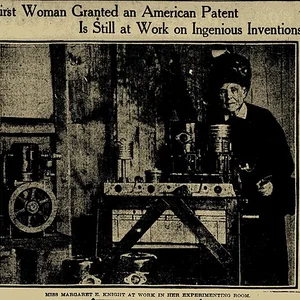
Margaret Knight
1838 — 1914
Margaret Knight (1838–1914) was a prolific American inventor who revolutionized the packaging industry by developing the machine that produces flat-bottomed paper bags. Over the course of her life she filed more than 27 patents across fields as varied as textiles, mechanics, and automotive engineering.
Maria Mitchell
1818 — 1889
America's first professional female astronomer, Maria Mitchell discovered a comet in 1847, earning her a gold medal from the King of Denmark. She was the first woman elected to the American Academy of Arts and Sciences and advocated for the scientific education of women.
Maria Montessori
1870 — 1952
Italian physician and educator
Marie Curie
1867 — 1934
Polish-born French physicist and chemist (1867–1934). A pioneer in the study of radioactivity, she was the first woman to receive a Nobel Prize and the only person to receive two Nobel Prizes in different scientific fields. Her discoveries revolutionized modern physics and chemistry.
Martin Ohm
1792 — 1872
German mathematician (1792–1872), brother of Georg Simon Ohm. He contributed to the formal rigor of mathematical analysis and to mathematics education in 19th-century Germany.
Mary Anning
1799 — 1843
Mary Anning was a self-taught English paleontologist who, from childhood, collected fossils along the cliffs of Lyme Regis. She discovered the first complete skeletons of an ichthyosaur and a plesiosaur, revolutionizing the understanding of extinct species. Despite her major contributions, she was long excluded from scientific circles because of her sex and her modest background.
Mary Kingsley
1862 — 1900
British explorer and ethnographer (1862–1900), Mary Kingsley was one of the first European women to travel alone in West Africa. She brought back invaluable observations on the cultures and wildlife of Gabon and the Congo, and championed African societies against colonial prejudice.
Mary Putnam Jacobi
1842 — 1906
American physician, a pioneer for the place of women in medicine in the 19th century. A rigorous researcher and suffragist activist, she scientifically refuted the medical prejudices that deemed women unfit for intellectual and physical effort.
Mary Somerville
1780 — 1872
Scottish mathematician and scientist (1780–1872), a pioneer of science in the 19th century. She popularised the works of Laplace and contributed to celestial mechanics. Together with Caroline Herschel, she was one of the first women to be elected an honorary member of the Royal Astronomical Society.
Max Planck
1858 — 1947
German physicist (1858–1947) who revolutionized physics by discovering quantum theory in 1900. He established that energy is emitted in small discrete portions called quanta, laying the foundations of quantum mechanics. His work marked the transition from classical physics to modern physics.
Michael Faraday
1791 — 1867
A self-taught British physicist and chemist (1791–1867), Faraday discovered electromagnetic induction and laid the foundations of modern electrical engineering. His work on electric and magnetic fields inspired Maxwell's theories.
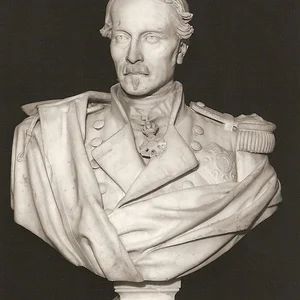
Michel Bizot
1795 — 1855
French general of the Corps of Engineers (1796–1855), director of the École polytechnique. He distinguished himself during the capture of Constantine (1837) and died at the Siege of Sevastopol during the Crimean War.
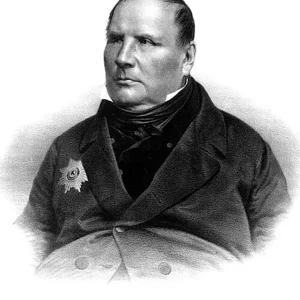
Mikhail Ostrogradsky
1801 — 1862
Russian mathematician and physicist (of Ukrainian origin), a major figure of the Saint Petersburg mathematical school. He is known for his work in mathematical analysis, mechanics, and mathematical physics, notably the divergence theorem.
Napoleon III
1808 — 1873
Nephew of Napoleon I, he was elected President of the Republic in 1848, then seized power through a coup d'état on December 2, 1851, before proclaiming the Second Empire. His reign profoundly transformed France: the modernization of Paris under Haussmann, industrial and railway expansion — until the defeat at Sedan in 1870.
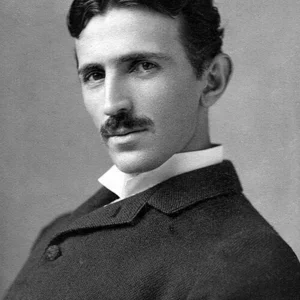
Nikola Tesla
1856 — 1943
Serbian-American inventor and engineer (1856-1943), Nikola Tesla is one of the central figures of the electrical revolution. His work on alternating current and his technological innovations transformed modern electricity and energy transmission.
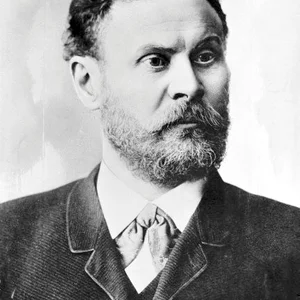
Otto Lilienthal
1848 — 1896
German engineer and inventor (1848–1896), Otto Lilienthal was the first person to achieve repeated and controlled gliding flights. His experiments with gliders laid the scientific foundations of modern aviation.
Paul Gordan
1837 — 1912
Paul Gordan was a 19th-century German mathematician, famous for his work on invariant theory. Nicknamed the “king of invariant theory,” he left his mark on algebra through his mastery of calculations.
Paul Vidal de La Blache
1845 — 1918
Paul Vidal de La Blache (1845-1918) was a French geographer regarded as the founder of the French school of geography. He developed the concept of the “genre de vie” (way of life) and the notion of possibilism, establishing a human geography attentive to the relationships between societies and their environment.
Richard Dedekind
1831 — 1916
German mathematician, a student of Gauss and Dirichlet, he profoundly renewed algebra and number theory. We owe to him a rigorous construction of the real numbers and the notion of an ideal.
Richard Owen
1804 — 1892
Richard Owen was a 19th-century British palaeontologist and anatomist. He coined the term “Dinosauria” (dinosaurs) in 1842 and was the founder of the Natural History Museum in London. A famous opponent of Darwin's theories on evolution.
Robert Koch
1843 — 1910
German physician and microbiologist (1843–1910), pioneer of modern bacteriology. He identified the agents responsible for tuberculosis, cholera, and anthrax, revolutionizing the understanding of infectious diseases.
Samuel Morse
1791 — 1872
American inventor and painter (1791–1872), Samuel Morse is famous for developing the electric telegraph and the code that bears his name. His invention revolutionized long-distance communications in the 19th century.
Santiago Ramón y Cajal
1852 — 1934
Spanish histologist and neuroscientist
Sigmund Freud
1856 — 1939
Austrian neurologist and psychoanalyst (1856-1939), founder of psychoanalysis. Freud developed a revolutionary theory of the unconscious and the psychological mechanisms governing human behavior, profoundly influencing modern psychology, psychiatry, and philosophy.
Siméon Denis Poisson
1781 — 1840
French mathematician and physicist (1781-1840), student of Laplace and Lagrange. He contributed to celestial mechanics, electrostatics, and probability theory, lending his name to the Poisson distribution.
Sofia Kovalevskaya
1850 — 1891
Sofia Kovalevskaya (1850–1891) was the first woman to earn a doctorate in mathematics in Europe and the first female professor of mathematics at a modern university. A pioneer in analysis and mechanics, she broke through the barriers of the male academic world to establish herself as a leading mathematician.
Sophie Berthelot
1837 — 1907
Wife of the great chemist Marcellin Berthelot, Sophie Berthelot (1837-1907) was a cultured woman who accompanied her husband throughout his entire career. Having died on the same day as him, she became the first woman interred in the Panthéon in 1907, a symbol of the grateful Republic.
Srinivasa Ramanujan
1887 — 1920
A self-taught Indian mathematician (1887–1920), Ramanujan discovered thousands of remarkable mathematical formulas with no formal university training. Recognized by mathematician G.H. Hardy, he made major contributions to number theory and modular functions before dying prematurely at the age of 32.
Thomas Edison
1847 — 1931
American inventor and industrialist (1847–1931), Edison is one of the greatest innovators in history. He filed more than 1,000 patents and created the incandescent light bulb, the phonograph, and the electrical distribution system.
Thomas Henry Huxley
1825 — 1895
A British biologist and palaeontologist, and a fervent defender of Charles Darwin's theory of evolution — which earned him the nickname “Darwin's bulldog.” A renowned comparative anatomist, he was one of the foremost popularizers of science in the 19th century.
Vladimir Kovalevski
1842 — 1883
Vladimir Kovalevski was a Russian paleontologist, considered one of the founders of evolutionary paleontology. He notably studied the evolution of hoofed mammals from fossils, drawing on the theories of Darwin.
Wilhelm Röntgen
1845 — 1923
A German physicist, in 1895 he discovered an unknown radiation that he named “X-rays.” This discovery revolutionized medicine and physics. He received the very first Nobel Prize in Physics in 1901.
William Buckland
1784 — 1856
British geologist and palaeontologist, a pioneer of palaeontology. In 1824, he described and named Megalosaurus, the first dinosaur ever described scientifically.
William Conybeare
1787 — 1857
William Conybeare was a 19th-century British geologist and palaeontologist. A pioneer in the study of fossil marine reptiles, he notably described the plesiosaur and contributed to the rise of stratigraphic geology.
William Thomson (Lord Kelvin)
British physicist and mathematician of the 19th century, he made fundamental contributions to thermodynamics and electromagnetism. He is the originator of the absolute temperature scale that bears his name. He also oversaw the laying of the first transatlantic telegraph cable.
Williamina Fleming
1857 — 1911
Scottish-American astronomer, she joined the Harvard Observatory as a "Harvard Computer." She developed a system for classifying stellar spectra and discovered the Horsehead Nebula in 1888.
Society(109)
Abbé Henri Grégoire
1750 — 1831
A Catholic priest and politician of the French Revolution, he championed the emancipation of Jews and the abolition of slavery in the colonies. Elected as a constitutional bishop, he sat in the National Convention and helped secure the passage of the 1794 abolition decree.
Alexandra Kollontai
1872 — 1952
A Russian Bolshevik revolutionary, Alexandra Kollontai was one of the first women in the world to hold a diplomatic post. A theorist of socialist feminism, she championed women's emancipation and freedom from traditional marriage.
Alexandre Auguste Ledru-Rollin
1807 — 1874
French lawyer and republican politician (1807–1874), he was one of the members of the provisional government that emerged from the February 1848 revolution. He was the principal architect of the decree establishing universal male suffrage in France, expanding the electorate from 200,000 to nearly 9 million citizens.
Alphonse Baudin
1811 — 1851
A physician and republican deputy, Alphonse Baudin was killed on December 3, 1851, on a barricade in the faubourg Saint-Antoine while resisting Louis-Napoléon Bonaparte's coup d'état. He became a martyr of the Republic, and his trial in 1868 reignited republican opposition to the Second Empire.
Anne Royall
1769 — 1854
Anne Royall was an American writer and journalist, considered one of the first professional women reporters in the United States. The author of travel narratives, she founded newspapers that denounced corruption and championed the separation of Church and State.
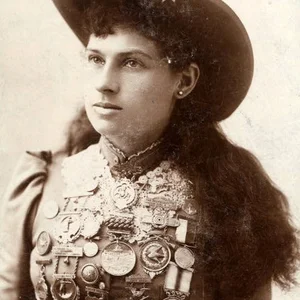
Annie Oakley
1860 — 1926
Annie Oakley (1860-1926) was an American sharpshooter who became the star of Buffalo Bill's Wild West Show. Nicknamed “Little Sure Shot,” she embodied the mythologized figure of the conquest of the West while pushing back the limits placed on the women of her time.
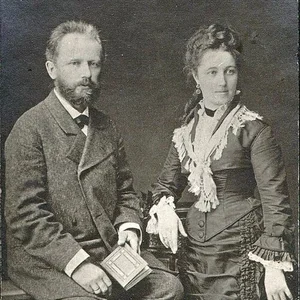
Antonina Miliukova
1848 — 1917
Russian pianist born in 1848, known primarily for marrying composer Pyotr Ilyich Tchaikovsky in 1877. Their union was brief and unhappy, with Tchaikovsky leaving her shortly after the wedding.
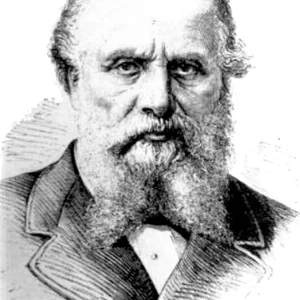
Aristide Boucicaut
1810 — 1877
Aristide Boucicaut (1810-1877) was a French entrepreneur who founded Le Bon Marché in Paris in 1852, inventing the concept of the modern department store. He revolutionized retail by introducing fixed prices, free entry, and clearance sales.
Bass Reeves
1838 — 1910
Bass Reeves (1838-1910) was the first African American deputy U.S. marshal west of the Mississippi. Born into slavery, he became one of the most famous lawmen of the Wild West, credited with more than 3,000 arrests over a thirty-two-year career.
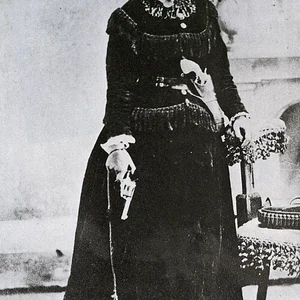
Belle Starr
1848 — 1889
Belle Starr (1848-1889) was an American outlaw of the Wild West, nicknamed the “Bandit Queen.” A fence, horse thief, and associate of several gangs in the Indian Territory, she became a legendary figure popularized by the sensationalist press and dime novels.
Bertha von Suttner
1843 — 1914
Austrian novelist and pacifist activist (1843–1914), Bertha von Suttner published in 1889 “Die Waffen nieder!” (Lay Down Your Arms!), a novel that shocked Europe with its realistic portrayal of the horrors of war. In 1905, she became the first woman to receive the Nobel Peace Prize.
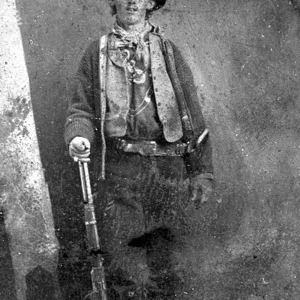
Billy the Kid
1859 — 1881
American outlaw of the Wild West, famous for his skill as a gunfighter and his involvement in the Lincoln County War. Killed at age 21 by Sheriff Pat Garrett, he became a legendary figure of the conquest of the American West.
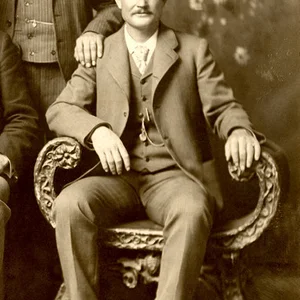
Butch Cassidy
1866 — 1908
An American outlaw of the Old West, Butch Cassidy was the leader of the Wild Bunch gang, which specialized in robbing banks and trains. Hunted by detective agencies, he fled to South America, where he is believed to have met his death in Bolivia.
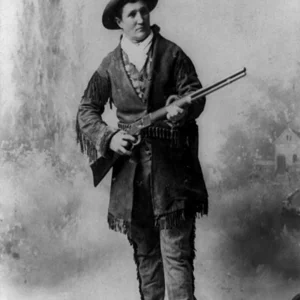
Calamity Jane
1852 — 1903
Martha Jane Cannary (c. 1852-1903), known as Calamity Jane, was a scout, stagecoach driver, and iconic figure of the American conquest of the West. A legend in her own lifetime, she performed in Wild West shows and was associated with the gunfighter Wild Bill Hickok.
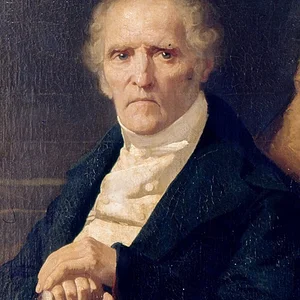
Charles Fourier
1772 — 1837
Charles Fourier was a French philosopher and social theorist, one of the leading representatives of utopian socialism. He envisioned a harmonious society organized into self-sufficient communities called phalansteries.
Charles-Maurice de Talleyrand-Périgord
1754 — 1839
French diplomat and statesman (1754–1838), he served under the Ancien Régime, the Revolution, the Empire, and the Restoration. A master negotiator, he defended France's interests at the Congress of Vienna in 1815.
Chief Joseph
1840 — 1904
Chief of the Nez Perce Native American tribe. In 1877, he led his people on a desperate retreat of nearly 1,700 km to escape the U.S. Army and reach Canada, before surrendering just a few kilometers from the border.
Claire Clairmont
1798 — 1879
British woman of letters and step-sister of Mary Shelley. Part of the circle of English Romantic poets, she had a daughter, Allegra, with Lord Byron. Her journals and correspondence are a valuable testimony to the Romantic era.
Claude Ambroise Régnier
1746 — 1814
French jurist and politician (1746–1814), Grand Judge and Minister of Justice under the First Empire. A loyal servant of Napoleon, he was created Duke of Massa in 1809 and contributed to the organization of the Napoleonic judicial system.
Constance Lloyd
1859 — 1898
British author and activist, wife of Oscar Wilde. Committed to the dress reform movement and to writing for children, she lived first in the shadow and then the scandal of her famous husband.
Crazy Horse
1849 — 1877
Oglala Lakota war chief and a leading figure of Native American resistance against the expansion of the United States. Victor over Custer at Little Bighorn in 1876, he was killed the following year while being held at Fort Robinson.
Doc Holliday
1851 — 1887
American dentist turned professional gambler and gunfighter, an iconic figure of the Wild West. A friend and ally of Wyatt Earp, he took part in the Gunfight at the O.K. Corral in 1881 in Tombstone, Arizona.
Doctor Blanche
1796 — 1852
Esprit Blanche (1796-1852) was a French alienist physician, a pioneer of humane psychiatry. In Montmartre and later in Passy, he founded a nursing home renowned for the treatment of mental illness, where he welcomed many artists and writers.
Édouard Chaligny
A French industrialist of the 19th century, Édouard Chaligny was a key figure in the development of the 12th arrondissement of Paris. His name lives on through the rue Chaligny and the Faidherbe-Chaligny metro station (line 8).
Édouard Séguin
1812 — 1880
French physician and educator, a pioneer in the education of children with intellectual disabilities. A student of Itard, he developed a physiological method of education before emigrating to the United States, where he influenced Maria Montessori.
Edward VII
1841 — 1910
Son of Queen Victoria, Edward VII reigned over the United Kingdom and the Empire of India from 1901 to 1910. An emblematic figure of the Belle Époque, he played a decisive role in bringing France and Britain closer together through the Entente Cordiale of 1904.
Élisa Schlésinger
1810 — 1888
A woman of the French bourgeoisie whom Gustave Flaubert met at Trouville in 1836, when he was fifteen years old. This encounter left a lasting mark on the writer: she inspired the character of Madame Arnoux in Sentimental Education.
Elizabeth Cady Stanton
1815 — 1902
American women's rights activist (1815–1902), she co-organized the Seneca Falls Convention in 1848, the first major gathering for women's suffrage in the United States. Author of the Declaration of Sentiments, she devoted her life to the civic and political equality of women.
Ellen Gates Starr
1859 — 1940
American social reformer, co-founder with Jane Addams of Hull House in Chicago in 1889. An activist in the Arts and Crafts movement and workers' rights, she worked for popular education and improving the living conditions of immigrants.
Ellen Swallow Richards
1842 — 1911
Pioneering American chemist, the first woman admitted to MIT, where she became an instructor. A specialist in sanitary chemistry, she analyzed water and air quality and founded scientific home economics.
Emmeline Pankhurst
1858 — 1928
British feminist political activist (1858–1928)
Ewelina Hańska
1805 — 1882
Polish countess famous for her long correspondence with the writer Honoré de Balzac, whom she married in 1850 after eighteen years of exchanging letters. Her relationship with the novelist fed an important part of Balzac's correspondence.
Florence Nightingale
1820 — 1910
British nurse and statistician (1820–1910), she revolutionized hospital care during the Crimean War. A pioneer of public health, she founded the first secular nursing school and used statistics to demonstrate the critical importance of hygiene.
François Denis Tronchet
1726 — 1806
French jurist and statesman (1726–1806), he courageously defended Louis XVI before the Convention in 1792. He was one of the four principal authors of the Civil Code promulgated in 1804, a foundational work of modern French law.
François Richard-Lenoir
1765 — 1839
A Norman industrialist, he became one of the greatest French cotton manufacturers under the First Empire, taking advantage of the Continental Blockade to eliminate British competition. The fall of Napoleon and the return of British cotton ruined his fortune, but he is remembered for his genuine concern for the well-being of his workers.
François-Vincent Raspail
1794 — 1878
French chemist and naturalist (1794–1878), pioneer of cellular chemistry and histology. A committed republican, he took part in the revolutions of 1830 and 1848, was imprisoned for his political beliefs, and ran for the presidency of the Republic from his prison cell.
Frederick Douglass
1818 — 1895
abolitionist orator and writer, leader of the African-American community in the 19th century
Frederick Hodgson
1796 — 1854
Investigator for the Society for Psychical Research (SPR) who, in 1884-1885, examined the phenomena attributed to Helena Blavatsky at the Theosophical headquarters in Adyar, India. His report concluded that they were fraud and trickery.
Friedrich Carl Andreas
1846 — 1930
Friedrich Carl Andreas (1846-1930) was a German orientalist and linguist, a specialist in Iranian languages and the ancient texts of Persia. A professor at Göttingen, he was a major figure in oriental philology, married to the writer Lou Andreas-Salomé.
Geronimo
1829 — 1909
A Chiricahua Apache war leader and medicine man, Geronimo led the armed resistance against the expansion of the United States and Mexico in the American Southwest. His surrender in 1886 marked the end of the great Indian Wars.
Harriet Beecher Stowe
1811 — 1896
An American novelist and abolitionist activist, she was the author of “Uncle Tom's Cabin” (1852), a novel denouncing slavery that had a worldwide impact. Her work helped to mobilize public opinion against slavery in the United States.
Harriet Tubman
1820 — 1913
Born into slavery around 1822, Harriet Tubman escaped in 1849 and became one of the most celebrated conductors of the Underground Railroad, helping hundreds of enslaved people flee to the North. An abolitionist, a spy for the Union during the Civil War, and an advocate for women's rights, she is a towering figure in the American struggle for freedom.
Henri Dunant
1828 — 1910
Founder of the Red Cross, first Nobel Peace Prize laureate
Henry David Thoreau
1817 — 1862
American writer, philosopher, and naturalist, a figure of transcendentalism. He is famous for *Walden; or, Life in the Woods*, an account of his experience of solitary living in close contact with nature, and for his essay *Civil Disobedience*, a plea for individual resistance to the injustice of the State.
Herbert Spencer
1820 — 1903
Herbert Spencer (1820-1903) was an English philosopher and sociologist, one of the leading thinkers of social evolutionism in the 19th century. He applied the idea of evolution to all natural and social phenomena and coined the phrase “survival of the fittest.”
Honoré Daumier
1808 — 1879
Honoré Daumier (1808-1879) was a French engraver, caricaturist, painter and sculptor. A master of lithography, he ferociously sketched the political and social life of his time, becoming one of the greatest satirists of the 19th century.
Hubertine Auclert
1848 — 1914
French feminist activist (1848–1914), she was one of the first to demand women's right to vote in France. Founder of the society “Le Suffrage des femmes,” she led militant actions such as refusing to pay her taxes and smashing a ballot box.
Ida B. Wells
1862 — 1931
African American journalist and activist born into slavery in 1862, Ida B. Wells conducted rigorous investigations into lynching in the United States and co-founded the NAACP. A pioneering figure in investigative journalism and the civil rights movement.
J. M. W. Turner
1775 — 1851
British painter and engraver (1775-1851), Turner is considered the master of Romantic landscape. A forerunner of Impressionism, he revolutionized the depiction of light, water, and atmosphere.
Jane Addams
1860 — 1935
An American social reformer, Jane Addams founded Hull House in Chicago in 1889, a settlement house serving immigrants and disadvantaged communities. A sociologist and committed pacifist, she was awarded the Nobel Peace Prize in 1931.
Jean Marc Gaspard Itard
1774 — 1838
French physician born in 1774, a pioneer of special education and otolaryngology. He is famous for having tried to educate Victor of Aveyron, “the wild child,” laying the foundations of teaching methods for children with disabilities.
Jean-Baptiste Treilhard
1742 — 1810
French jurist and statesman (1742–1810), a member of the National Convention during the Revolution, briefly a Director, then a Councillor of State and Count of the Empire under Napoleon. He played a key role in drafting the Civil Code.
Jean-Étienne-Marie Portalis
1746 — 1807
A French jurist and statesman, Portalis was the principal drafter of the Civil Code enacted in 1804, the cornerstone of modern French private law. As Minister of Religious Affairs under Napoleon, he also contributed to the Concordat of 1801, which regulated relations between the Church and the State.
Jean-Nicolas Corvisart
1755 — 1821
French physician (1755–1821), first personal physician to Napoleon I and professor at the Collège de France. He popularized chest percussion as a diagnostic method and trained a generation of clinicians who laid the foundations of modern medicine.
Jeanne Duval
1820 — 1868
Franco-Haitian actress and dancer, Jeanne Duval is best known as the muse and companion of Charles Baudelaire. She inspired the “Black Venus cycle” in *The Flowers of Evil*, while embodying the figure of the exoticized Black woman in the colonial imagination of the 19th century.
Jenny von Westphalen
1814 — 1881
A Prussian aristocrat who became the wife and collaborator of Karl Marx, she shared the couple's exile and poverty in London. For nearly four decades she was the first reader, copyist, and secretary of Marx's work.
Jesse James
1847 — 1882
American outlaw, a former Confederate guerrilla who became the leader of the James-Younger gang. A robber of banks and trains across the Midwest after the American Civil War, he was assassinated in 1882 and became a legendary figure of Western folklore.
John Wesley Hardin
1853 — 1895
American outlaw from Texas, regarded as one of the most feared gunfighters of the Wild West. He claimed more than 40 killings before being imprisoned, then became a lawyer after his release, before being shot dead in 1895.
Joseph Meister
1876 — 1940
Joseph Meister is known for being the first human successfully vaccinated against rabies by Louis Pasteur in 1885, when he was only 9 years old. This historic vaccination marked a decisive turning point in the history of modern medicine.
Joseph Pulitzer
1847 — 1911
American journalist and publisher of Hungarian origin (1847–1911), founder of modern journalism. He built a press empire and established the famous Pulitzer Prize, the supreme award in American journalism.
Jules Joffrin
1846 — 1890
Jules Joffrin (1846–1890) was a labor activist and socialist municipal councillor in Paris. A representative of the possibilist current, he embodied reformist socialist engagement under the Third Republic. The Jules Joffrin metro station (line 12) keeps his memory alive in the 18th arrondissement.
Julia Stephen
1846 — 1895
English philanthropist and artist's model of the Victorian era, wife of the man of letters Leslie Stephen and mother of Virginia Woolf and Vanessa Bell. Devoted to caring for the sick and the poor, she wrote a handbook on home nursing.
Kartini
1879 — 1904
Kartini (1879-1904) was a Javanese noblewoman who fought for Indonesian women's access to education under Dutch colonial rule. Her letters in Dutch, published posthumously under the title "Through Darkness into Light," inspired the Indonesian feminist movement and made her a major national figure.
Léon Gambetta
1838 — 1882
Lawyer and republican statesman, Léon Gambetta proclaimed the Third Republic on September 4, 1870 following the defeat at Sedan. He organized national resistance during the Franco-Prussian War, escaping besieged Paris by balloon. A key architect of the republican regime, he served as President of the Chamber of Deputies from 1879 to 1881.
list of Presidents of the French Republic
Since 1848, France has had 25 presidents. The role, largely ceremonial under the Third and Fourth Republics, became central under the Fifth Republic established by de Gaulle in 1958.
Louis Blanc
1811 — 1882
French journalist, historian, and socialist theorist (1811–1882). A member of the provisional government of the Second Republic in 1848, he championed the National Workshops and the right to work. Exiled in England after the June Days uprising, he returned to France after 1870.
Louis Braille
1809 — 1852
Louis Braille (1809–1852) was a French teacher who lost his sight at the age of three and invented, at 15, the tactile writing system that bears his name. His raised-dot alphabet revolutionized access to reading and writing for blind people around the world.
Lozen
1840 — 1889
Chiricahua Apache warrior and shaman, sister of Chief Victorio. Renowned for her skill in combat and her spiritual power to locate the enemy, she fought the American and Mexican armies, then alongside Geronimo until the surrender of 1886.
Lucy Stone
1818 — 1893
Lucy Stone (1818-1893) was one of the first American activists to fight simultaneously for the abolition of slavery and women's right to vote. The first woman from Massachusetts to earn a college degree, she refused to take her husband's name after marriage.
Malwida von Meysenbug
1816 — 1903
German writer and intellectual, a figure of feminism and the democratic ideals of 1848. After the revolution failed she emigrated, hosted a cosmopolitan salon, and was a close friend of Wagner, Nietzsche, and Romain Rolland.
Margarete Steiff
1847 — 1909
Margarete Steiff (1847-1909) was a German seamstress and entrepreneur, founder of the Steiff toy manufacturing company. Stricken with polio and using a wheelchair, she built a thriving business from her hand-sewn felt animals, which gave rise to the famous teddy bear.
Margherita Barezzi
1814 — 1840
Margherita Barezzi was the first wife of the Italian composer Giuseppe Verdi. The daughter of Antonio Barezzi, a patron and protector of the young Verdi, she married him in 1836. Her untimely death in 1840, following that of their two infant children, plunged the composer into deep despair.
Maria Montessori
1870 — 1952
Italian physician and educator
Mary Kingsley
1862 — 1900
British explorer and ethnographer (1862–1900), Mary Kingsley was one of the first European women to travel alone in West Africa. She brought back invaluable observations on the cultures and wildlife of Gabon and the Congo, and championed African societies against colonial prejudice.
Mary Prince
1788 — 1833
Mary Prince (c. 1788 – after 1833) was an enslaved woman from Bermuda whose autobiographical narrative, published in 1831, is the first autobiography by an enslaved Black woman published in Britain. Her testimony played a decisive role in the British abolitionist movement.
Mary Putnam Jacobi
1842 — 1906
American physician, a pioneer for the place of women in medicine in the 19th century. A rigorous researcher and suffragist activist, she scientifically refuted the medical prejudices that deemed women unfit for intellectual and physical effort.
Mekatilili wa Menza
1840 — 1925
A Giriama woman from Kenya, Mekatilili wa Menza led the resistance against British colonial rule during the 1913–1914 revolt. Arrested and deported, she escaped and continued fighting for her people's freedom.
Mikhail Bakunin
1814 — 1876
Russian revolutionary and philosopher, a major figure of anarchism and libertarian socialism in the 19th century. An opponent of Marx within the First International, he advocated the abolition of the State and of all authority in favor of a federalist and collectivist society.
Millicent Fawcett
1847 — 1929
British feminist activist and leading figure of constitutional suffragism. As president of the NUWSS, she championed winning women's voting rights through lawful and peaceful means, in contrast to the militant methods of the suffragettes.
Mother Jones
Nicknamed “Mother Jones,” Mary Harris Jones was one of the most formidable labor activists in the United States. An organizer for coal miners and textile workers, she fought her entire life against the exploitation of workers and child labor.
Nadezhda von Meck
1831 — 1894
A wealthy Russian widow and businesswoman, patron of Pyotr Ilyich Tchaikovsky, whom she supported financially for thirteen years. Their relationship, kept strictly to letters by mutual agreement, produced more than 1,200 letters.
Napoleon III
1808 — 1873
Nephew of Napoleon I, he was elected President of the Republic in 1848, then seized power through a coup d'état on December 2, 1851, before proclaiming the Second Empire. His reign profoundly transformed France: the modernization of Paris under Haussmann, industrial and railway expansion — until the defeat at Sedan in 1870.
Olympe Audouard
1832 — 1890
Olympe Audouard (1832–1890) was a French writer, journalist, and feminist. A tireless traveler, she journeyed through the Middle East and the United States and published accounts of her travels. She campaigned for women's rights, particularly the right to divorce and access to education.
Pat Garrett
1850 — 1908
Pat Garrett was an American lawman of the Old West, who became famous for tracking down and killing the outlaw Billy the Kid in 1881. A former cowboy and buffalo hunter, he embodied the figure of the law during the Lincoln County War in New Mexico.
Paul Vidal de La Blache
1845 — 1918
Paul Vidal de La Blache (1845-1918) was a French geographer regarded as the founder of the French school of geography. He developed the concept of the “genre de vie” (way of life) and the notion of possibilism, establishing a human geography attentive to the relationships between societies and their environment.
Pearl Hart
1871 — 1928
Pearl Hart was a Canadian-born American outlaw, famous for committing one of the last stagecoach robberies in the history of the American West, in Arizona in 1899. A media figure in her own lifetime, she embodies the myth of the dying Wild West.

Pereire Brothers (Émile and Isaac)
Banker brothers of Bordeaux origin and disciples of Saint-Simonianism, they financed the first French railway (Paris–Saint-Germain, 1837) and founded the Crédit Mobilier (1852), an innovative investment bank that rivaled the Rothschilds under the Second Empire.
Quanah Parker
1845 — 1911
Quanah Parker was the last great chief of the Quahadi Comanches. The son of Chief Peta Nocona and Cynthia Ann Parker, a white captive, he led armed resistance against the advance of settlers and the U.S. Army, before becoming a respected mediator between his people and the United States government.
Raden Ajeng Kartini
1879 — 1904
Raden Ajeng Kartini is a Javanese aristocrat from the Dutch East Indies who became a pioneer of women's emancipation in Southeast Asia. Through her letters to Dutch correspondents, she denounced the condition of women in colonial society and advocated for their access to education. Dying at age 25, she remains a national symbol in Indonesia.
Robert Owen
1771 — 1858
A Welsh industrialist and socialist theorist, Robert Owen transformed the New Lanark cotton mill into a model of social reform. A pioneer of utopian socialism and the cooperative movement, he championed better conditions for workers and education for all.
Sadi Carnot
1796 — 1832
A French engineer and statesman trained at the École Polytechnique, Sadi Carnot was elected President of the Republic in 1887. His seven-year term was marked by the scandals of the Third Republic. He was assassinated in Lyon in 1894 by the Italian anarchist Sante Geronimo Caserio.

Sadie Gordon Richmond
English governess employed by a family with whom she lived under the same roof. She had a ten-year affair with the family's father, illustrating the ambiguous status of servants attached to a middle-class household.
Sarah Parker Remond
1824 — 1894
African American abolitionist and suffragist activist of the nineteenth century. She traveled across Europe to raise public awareness of the anti-slavery cause, and settled in Italy where she became a physician.
Sarah Winnemucca
1844 — 1891
A Paiute activist and author from Nevada, Sarah Winnemucca defended the rights of her Native American people in the face of American colonization. In 1883, she became the first Native American woman to publish a book in English, a major testimony on the condition of Indigenous nations.
Sequoyah
1770 — 1843
Sequoyah was a Cherokee silversmith and scholar, famous for single-handedly inventing the Cherokee syllabary around 1821. He is the only individual known in history to have created a writing system entirely from scratch without being literate himself beforehand.
Sojourner Truth
1797 — 1883
African-American abolitionist and women's rights activist
Sophie Berthelot
1837 — 1907
Wife of the great chemist Marcellin Berthelot, Sophie Berthelot (1837-1907) was a cultured woman who accompanied her husband throughout his entire career. Having died on the same day as him, she became the first woman interred in the Panthéon in 1907, a symbol of the grateful Republic.
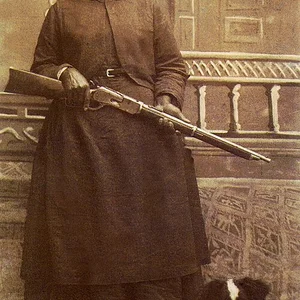
Stagecoach Mary
1832 — 1914
Born into slavery in Tennessee around 1832, Mary Fields became in 1895 the first African American woman mail carrier (Star Route) in the United States, in Montana. Nicknamed “Stagecoach Mary,” she became a legendary figure of the American conquest of the West.
Stella Zeehandelaar
Dutch-born anarchist and feminist militant who emigrated to the United States, known for her correspondence with Emma Goldman in the 1890s–1900s. A prominent figure in New York's anarchist and labor circles at the end of the nineteenth century.
Sundance Kid
1867 — 1908
The Sundance Kid was an American Old West outlaw and a member of the famous Wild Bunch gang. A loyal sidekick of Butch Cassidy, he took part in numerous train and bank robberies before fleeing to South America.
Susan B. Anthony
1820 — 1906
American civil rights activist (1820–1906), Susan B. Anthony is one of the founding figures of the American suffragist movement. She devoted her life to the abolition of slavery and to securing the right to vote for women.

Takai Kozan
Takai Kozan (1806-1883) was a wealthy Japanese merchant, scholar, calligrapher, and painter of the nanga school. He is best known for welcoming the master Hokusai into his home in Obuse, and for his involvement in the sonnō jōi imperialist movement at the end of the Edo period.
Teresa Guiccioli
1800 — 1873
Italian countess born in 1800, Teresa Guiccioli is best known for being the last great love of Lord Byron, with whom she shared a celebrated affair from 1819 to 1823. After the poet's death, she dedicated a memorial work to him, “Lord Byron Judged by the Witnesses of His Life” (1868), a precious testament to European Romanticism.
Truganini
1812 — 1876
Truganini (c. 1812–1876) was an Aboriginal woman from Tasmania who witnessed the near-extermination of her people during the Black War. She was deported to Flinders Island along with the last surviving Tasmanian Aboriginals. Long referred to as 'the last Tasmanian', she became a global symbol of colonial genocide.
Vilfredo Pareto
1848 — 1923
Vilfredo Pareto (1848-1923) was an Italian economist and sociologist, a major figure of the Lausanne School. He left his mark on neoclassical political economy and sociology through his work on the distribution of wealth and the behavior of elites.
Virginia Clemm
Wife and first cousin of Edgar Allan Poe, Virginia Clemm married him at the age of 13 in 1835. Her beauty, gentleness, and premature death from tuberculosis at 24 profoundly inspired Poe's poetic work.
Wild Bill Hickok
1837 — 1876
An iconic figure of the American West, James Butler Hickok was in turn a Union scout, a Kansas lawman, a professional gambler, and a stage performer. A renowned gunfighter, he became a living legend before being shot in the back in 1876.
Wovoka
1856 — 1932
A Paiute prophet from Nevada, Wovoka founded the Ghost Dance in 1889, a messianic religious movement that spread among the Native American peoples of the Great Plains. His preaching, which foretold the return of the dead and the disappearance of the settlers, became associated with the Wounded Knee Massacre of 1890.
Wyatt Earp
1848 — 1929
Wyatt Earp (1848-1929) is an iconic figure of the American conquest of the West. A roving lawman, gambler, and entrepreneur, he owes his fame to the Gunfight at the O.K. Corral in 1881, which became a founding myth of the Wild West.
Military(87)
Alexander I
1777 — 1825
Emperor of Russia from 1801 to 1825, Alexander I was one of Napoleon's chief adversaries. Victorious in the campaign of 1812, he played a major role at the Congress of Vienna and founded the Holy Alliance.
Alexandre-Antoine Hureau de Sénarmont
1769 — 1810
An artillery general of the First Empire, Hureau de Sénarmont distinguished himself at Jena and Friedland through his innovative offensive artillery tactics. He was killed at the Battle of Zaragoza in 1809.
Alfred Dreyfus
1859 — 1935
French army officer of Alsatian and Jewish origin (1859–1935). He was wrongly accused of espionage in 1894, triggering the Dreyfus Affair, one of the greatest political crises of the Third Republic. His innocence was officially recognized in 1906, marking a turning point in the fight against antisemitism in France.
Annabella Milbanke
1792 — 1860
British aristocrat (1792–1860), self-taught mathematician and philanthropist, she married the poet Lord Byron in 1815 before separating from him a year later. She went on to dedicate herself to popular education and social reform, and is the mother of Ada Lovelace, pioneer of computing.
Antoine-Jean-Marie Thévenard
1733 — 1815
French admiral born in 1733, he distinguished himself during the American War of Independence before becoming Minister of the Navy under the Revolution (1791-1792). A senator under the Napoleonic Empire, he embodies the continuity between the Old Regime's naval tradition and the revolutionary institutions.
Armand de Caulaincourt
1773 — 1827
French general and diplomat, Duke of Vicenza, he served as Napoleon's ambassador to Russia (1807–1811) and was a privileged eyewitness to the Russian campaign of 1812. Minister of Foreign Affairs during the Hundred Days, he left behind essential Memoirs on the Napoleonic saga.
Auguste Marie Henri Picot de Dampierre
1756 — 1793
French general of the Revolution (1756–1793), he took command of the Army of the North after Dumouriez's betrayal and was killed in action during the siege of Condé-sur-l'Escaut. Pantheonized in 1793, his remains were removed during the Restoration.
Bernardo O'Higgins
1778 — 1842
Bernardo O'Higgins was a Chilean soldier and statesman, considered one of the principal liberators of Chile from Spanish rule. As the first leader of the independent Republic, he served as its Supreme Director from 1817 to 1823.
Blücher
Prussian field marshal and a leading figure of the Napoleonic Wars. Nicknamed “Marschall Vorwärts” (Marshal Forward), he played a decisive role in Napoleon's defeat at Waterloo in 1815 by rallying his troops to support Wellington's British forces.
Butch Cassidy
1866 — 1908
An American outlaw of the Old West, Butch Cassidy was the leader of the Wild Bunch gang, which specialized in robbing banks and trains. Hunted by detective agencies, he fled to South America, where he is believed to have met his death in Bolivia.
Chief Joseph
1840 — 1904
Chief of the Nez Perce Native American tribe. In 1877, he led his people on a desperate retreat of nearly 1,700 km to escape the U.S. Army and reach Canada, before surrendering just a few kilometers from the border.
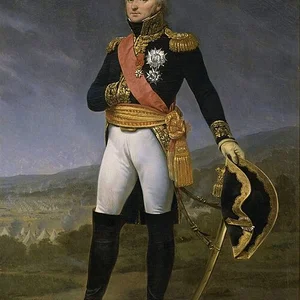
Claude-Juste-Alexandre Legrand
1762 — 1815
A French divisional general of the First Empire, Claude-Juste-Alexandre Legrand distinguished himself during the Napoleonic Wars, most notably at Austerlitz. He commanded several army corps under Napoleon Bonaparte.
Claude-Louis Petiet
1749 — 1806
French general and politician, Claude-Louis Petiet served as Minister of War under the Directory (1797–1798), then as Councillor of State and senator under the Consulate and the Napoleonic Empire. He died in 1806, becoming the first person interred during the reign of Napoleon I.
Cochise
1812 — 1874
An Apache chief of the Chiricahua band, Cochise led the armed resistance against the U.S. Army in the Southwest for more than ten years. A major figure of the Apache Wars, he finally made peace in 1872.
Crazy Horse
1849 — 1877
Oglala Lakota war chief and a leading figure of Native American resistance against the expansion of the United States. Victor over Custer at Little Bighorn in 1876, he was killed the following year while being held at Fort Robinson.
Cut Nyak Dhien
1848 — 1908
An Indonesian national heroine, Cut Nyak Dhien led armed resistance against Dutch occupation in the Aceh region (Sumatra) following the death of her husband. A symbol of Indonesian nationalism, she fought until her capture in 1905 despite serious illness.
Davy Crockett
1786 — 1836
American pioneer, hunter, and politician, elected several times to Congress for the state of Tennessee. Having become a legendary figure of the conquest of the West, he died defending Fort Alamo during the Texas Revolution in 1836.
Dumont d'Urville
1790 — 1842
French naval officer and explorer (1790–1842), he led several expeditions to the southern seas and Antarctica. He discovered Adélie Land in 1840 and helped identify the Venus de Milo.
Edward VII
1841 — 1910
Son of Queen Victoria, Edward VII reigned over the United Kingdom and the Empire of India from 1901 to 1910. An emblematic figure of the Belle Époque, he played a decisive role in bringing France and Britain closer together through the Entente Cordiale of 1904.
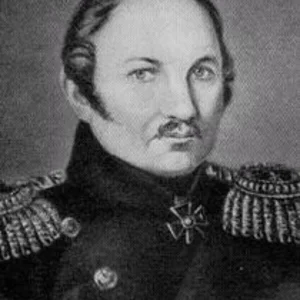
Fabian von Bellingshausen
A Russian naval officer and explorer of Baltic German origin, he commanded the first Russian Antarctic expedition (1819-1821). He was one of the first navigators to sight the Antarctic continent, on 28 January 1820.
Ferdinand VII
1784 — 1833
King of Spain in 1808 and from 1814 to 1833, Ferdinand VII reigned under Napoleonic occupation and then after the Restoration. His absolutist rule and the loss of Spain's American colonies left a profound mark on Spanish history.

François Barthélemy Béguinot
A French divisional general of the First Empire, François Barthélemy Béguinot built his career in the Revolutionary and Napoleonic armies. He took part in the major military campaigns of the late 18th and early 19th centuries.
Franz Joseph I
Franz Joseph I (1830–1916) was Emperor of Austria and King of Hungary for 68 years, one of the longest reigns in European history. He embodied the Habsburg monarchy as it faced nationalist upheavals and the crises that led up to the First World War.
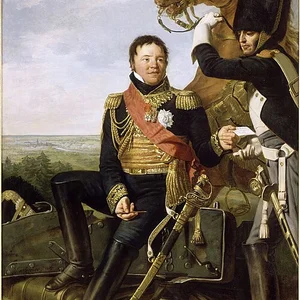
Frédéric Henri Walther
1761 — 1813
A French general of the Revolution and the Empire, Frédéric Henri Walther commanded the cavalry of the Imperial Guard. He distinguished himself in the major Napoleonic campaigns and was granted the title of Count of the Empire.
Gabriel Louis de Caulaincourt
1749 — 1808
A French general of the First Empire, Gabriel Louis de Caulaincourt distinguished himself during the Napoleonic Wars. He died heroically at the Battle of the Moskva in September 1812, during the Russian campaign.
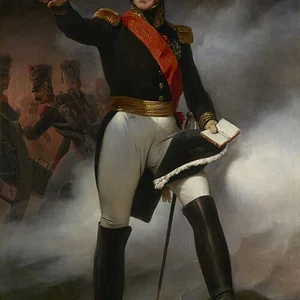
Gabriel Molitor
1770 — 1849
French general who served in the Revolutionary and Napoleonic Wars, distinguishing himself at Zurich, Wagram, and in Spain. Elevated to the dignity of Marshal of France in 1823 following the Spanish campaign under the Restoration.
Geronimo
1829 — 1909
A Chiricahua Apache war leader and medicine man, Geronimo led the armed resistance against the expansion of the United States and Mexico in the American Southwest. His surrender in 1886 marked the end of the great Indian Wars.
Giuseppe Garibaldi
1807 — 1882
Italian general and patriot (1807–1882), Garibaldi is one of the central figures of the Risorgimento. A charismatic military leader, he unified much of Italy through his campaigns, most notably the famous Expedition of the Thousand in 1860.
Harriet Tubman
1820 — 1913
Born into slavery around 1822, Harriet Tubman escaped in 1849 and became one of the most celebrated conductors of the Underground Railroad, helping hundreds of enslaved people flee to the North. An abolitionist, a spy for the Union during the Civil War, and an advocate for women's rights, she is a towering figure in the American struggle for freedom.
Hippolyte Fauche
1797 — 1869
A French Orientalist and Sanskritist of the 19th century, Hippolyte Fauche was the first to produce a complete French translation of the Mahabharata. His monumental work opened Indian epic literature to French-speaking audiences.
Hone Heke
1807 — 1850
Māori chief of the Ngāpuhi tribe, Hone Heke was the first signatory of the Treaty of Waitangi in 1840, before turning against British colonization. A symbol of indigenous resistance, he cut down the British flagpole at Kororāreka four times, sparking the Flagstaff War (1845–1846).
Hyacinthe-Hughes Timoléon de Cossé-Brissac
1746 — 1813
A French general from the high nobility, he served under the Revolution and the Empire. Appointed senator of the First Empire by Napoleon, he embodies the fusion between the old aristocracy and the new Napoleonic institutions.
Jan de Winter
1761 — 1812
Dutch admiral (1761-1812) who served the Batavian Republic and later the Napoleonic Empire. Commander of the Batavian fleet, he faced the British Royal Navy at the Battle of Camperdown in 1797, where he was taken prisoner after fierce resistance.
Jean Lafitte
1776 — 1826
French privateer and smuggler based in the Gulf of Mexico in the early 19th century. As leader of the buccaneer community of Barataria, near New Orleans, he came to the aid of the Americans at the Battle of New Orleans in 1815.
Jean Lannes
1769 — 1809
Marshal of the Empire and Duke of Montebello, Jean Lannes was one of Napoleon's most brilliant generals. A loyal comrade-in-arms since the Italian and Egyptian campaigns, he distinguished himself at Montebello, Austerlitz, and Jena. He died of his wounds at the Battle of Essling in 1809.
Jean-Ignace Jacqueminot de Ham
A French general of the First Empire, Jean-Ignace Jacqueminot de Ham took part in the great Napoleonic campaigns. He later became a senator and peer of France under the Restoration and the July Monarchy.
Jean-Louis-Ébénézer Reynier
1771 — 1814
A divisional general of the First Empire, Reynier took part in the great Napoleonic campaigns in Egypt, Italy, and Central Europe. He distinguished himself notably at the Battle of Maida (1806) and during the Russian campaign (1812).
Jean-Marie-Pierre-François Le Paige Dorsenne
A French general of the Empire, Dorsenne was one of the most distinguished officers of the Imperial Guard. Colonel of the Foot Grenadiers, he covered himself in glory at Austerlitz, Jena, and Eylau before dying from his wounds in 1812.
Jean-Pierre Firmin Malher
1761 — 1808
French divisional general of the Napoleonic Wars. He took part in the major campaigns of the Empire and died at Burgos in Spain during the Peninsular War.
Jesse James
1847 — 1882
American outlaw, a former Confederate guerrilla who became the leader of the James-Younger gang. A robber of banks and trains across the Midwest after the American Civil War, he was assassinated in 1882 and became a legendary figure of Western folklore.
Johann Wolfgang von Goethe
German writer, poet, and scholar (1749–1832), Goethe is the author of Faust and The Sorrows of Young Werther. A central figure of the Sturm und Drang movement and later Weimar Classicism, he embodies the Enlightenment ideal of the universal man.
John C. Frémont
1813 — 1890
American explorer, military officer and politician nicknamed “the Pathfinder.” He mapped the American West and the Oregon Trail, played a role in the conquest of California, and then became the first Republican candidate in the 1856 presidential election.
José de San Martín
1778 — 1850
Argentine general and statesman, a major figure in the independence of South America. He freed Argentina, Chile, and Peru from Spanish rule before withdrawing from public life.
Joseph Gallieni
1849 — 1916
General and Marshal of France, Gallieni was a great colonial administrator in Madagascar and Indochina. Military Governor of Paris in 1914, he organized the counter-offensive at the Marne, saving the capital thanks to the famous “taxis of the Marne.”
Justin Bonaventure Morard de Galles
1741 — 1809
French admiral born in 1741, he commanded the Brest squadron during the Revolution and took part in the Irish Expedition of 1796. Appointed senator of the First Empire by Napoleon, he died in 1809.
Kit Carson
1809 — 1868
American trapper, guide, and soldier, an iconic figure of the conquest of the West. As guide for John C. Frémont's expeditions to the Rockies and California, he later became a Union Army officer and Indian agent, marked by the deportation of the Navajo.
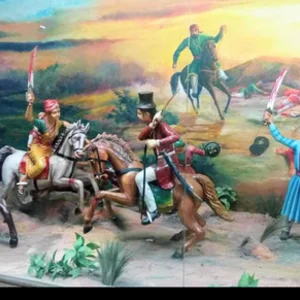
Lakshmi Bai
1828 — 1858
Queen of Jhansi (central India), she became one of the most iconic figures of the Indian Rebellion of 1857–1858 against British rule. Refusing the annexation of her kingdom by the East India Company, she personally led the fighting and died on the battlefield at age 29.
Lakshmibai of Jhansi
Queen of the kingdom of Jhansi, in northern India, Lakshmibai became one of the leading figures of the Sepoy Mutiny of 1857 against the British East India Company. Refusing the annexation of her state, she took up arms and died in battle, becoming a national symbol of Indian resistance.
Lalla Fatma N'Soumer
1830 — 1863
A Kabyle resistance fighter from the Amazigh people, Lalla Fatma N'Soumer led the armed struggle against the French conquest of Algeria in the mid-19th century. Both a spiritual and military figure, she is passed down through Berber oral tradition as a symbol of dignity and resistance.
Lazare Carnot
1753 — 1823
French mathematician and general, Lazare Carnot earned the nickname "The Organizer of Victory" for his role on the Committee of Public Safety. He restructured the republican armies, contributing to the victories of revolutionary France, and left a notable mathematical legacy in geometry.
Lewis and Clark
Lewis and Clark led the Corps of Discovery expedition (1804–1806), commissioned by President Jefferson to explore the Louisiana Territory all the way to the Pacific. They were the first Americans to cross the continent from east to west, paving the way for westward expansion.
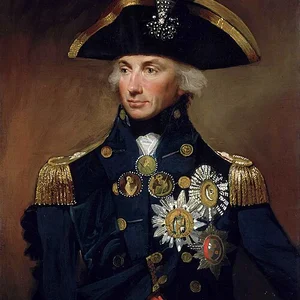
Lord Nelson
1758 — 1805
Horatio Nelson (1758-1805) was a British admiral and hero of the Napoleonic Wars. His decisive victory at Trafalgar in 1805, where he was killed, secured the United Kingdom's naval supremacy for more than a century.
Louis Charles Vincent Le Blond de Saint-Hilaire
1766 — 1809
A French divisional general of the Napoleonic era, Saint-Hilaire distinguished himself in several major campaigns including Austerlitz. He was mortally wounded at the Battle of Essling in 1809.
Louis Faidherbe
1818 — 1889
French general and colonial administrator, governor of Senegal from 1854 to 1865. He extended French influence in West Africa, modernized Dakar, and founded lasting institutions. He also commanded the Army of the North during the Franco-Prussian War of 1870.
Louis-Pierre-Pantaléon Resnier
1752 — 1807
A French officer of the First Empire, Louis-Pierre-Pantaléon Resnier was a Napoleonic dignitary who served in the military and administrative structures of the Empire. He embodies the profile of the provincial notable elevated by Napoleonic reforms.
Lozen
1840 — 1889
Chiricahua Apache warrior and shaman, sister of Chief Victorio. Renowned for her skill in combat and her spiritual power to locate the enemy, she fought the American and Mexican armies, then alongside Geronimo until the surrender of 1886.
Luigi Menabrea
Italian general, engineer, and statesman of the 19th century. He is best known for writing in 1842 a memoir on Charles Babbage's analytical engine, which Ada Lovelace translated and extensively annotated.
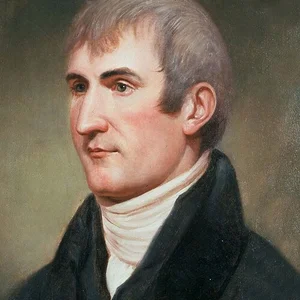
Meriwether Lewis
1774 — 1809
American army officer and explorer, Meriwether Lewis co-led with William Clark the 1804–1806 expedition commissioned by Thomas Jefferson to explore the American West all the way to the Pacific. This expedition, known as the Corps of Discovery, crossed the newly acquired Louisiana Territory and paved the way for the westward settlement of the continent.
Michel Bizot
1795 — 1855
French general of the Corps of Engineers (1796–1855), director of the École polytechnique. He distinguished himself during the capture of Constantine (1837) and died at the Siege of Sevastopol during the Crimean War.
Michel Ordener
1787 — 1862
French cavalry general (1755–1811), Michel Ordener distinguished himself in the Revolutionary and Napoleonic Wars. He commanded the Horse Grenadiers of the Imperial Guard and was created a Count of the Empire.
Moulay Abd er-Rahman
Sultan of Morocco from 1822 to 1859, Moulay Abd er-Rahman had to navigate between French and Spanish colonial pressures while maintaining Moroccan sovereignty. After supporting Abdelkader against France, he was defeated at the Battle of Isly in 1844.
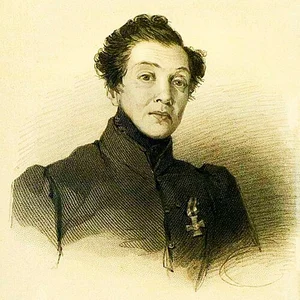
Nadezhda Durova
Nadezhda Durova was a Russian cavalrywoman who disguised herself as a man to enlist in the imperial army. She fought in the Napoleonic Wars, notably during the 1812 campaign, and became a decorated officer before publishing her memoirs.
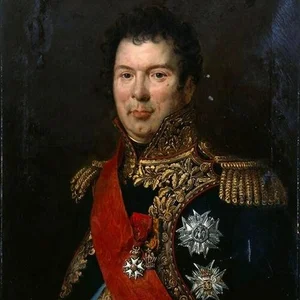
Nicolas Marie Songis des Courbons
1761 — 1810
French general (1761–1810), Songis des Courbons was commander-in-chief of the artillery of the Grande Armée under Napoleon Bonaparte. A specialist in the technical arm of the military, he made decisive contributions to the great Napoleonic victories at Austerlitz, Jena, and Eylau.
Pat Garrett
1850 — 1908
Pat Garrett was an American lawman of the Old West, who became famous for tracking down and killing the outlaw Billy the Kid in 1881. A former cowboy and buffalo hunter, he embodied the figure of the law during the Lincoln County War in New Mexico.
Philippe Pétain
1856 — 1951
Marshal of France and celebrated military commander known for his victory at Verdun in 1916, Philippe Pétain became head of the French government in 1940 and established the authoritarian French State of Vichy. A collaborator during the German occupation, he remains one of the most controversial figures in French history.
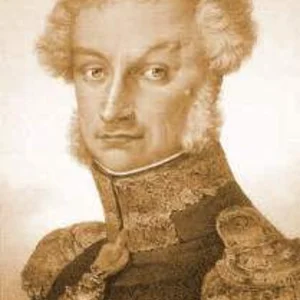
Pierre Cambronne
1770 — 1842
French general of the Grande Armée, Pierre Cambronne commanded a battalion of the Old Guard at Waterloo in 1815. He passed into legend for the “mot de Cambronne” and the phrase “The Guard dies but does not surrender.”
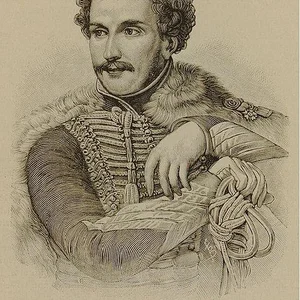
Pierre Daumesnil
1776 — 1832
Imperial general born in 1776, he lost a leg at the Battle of Wagram (1809). Governor of the Château de Vincennes, he refused to surrender it to the Allies in 1814 and 1815, delivering his famous retort about his leg. He died of cholera in 1832.
Pierre de Pelleport
1773 — 1855
French general born in 1773, Baron of the Empire under Napoleon I. He took part in the major Napoleonic campaigns and was appointed Baron of Saint-Avold. His name lives on through the Pelleport metro station in Paris (line 3bis).
Pierre Garnier de Laboissière
1755 — 1809
A French general of the First Empire, Pierre Garnier de Laboissière built his career under the Revolution and Napoleon Bonaparte. He also served as a senator, embodying the fusion of military and political elites characteristic of the Napoleonic era.
Porfirio Díaz
1830 — 1915
Mexican general and statesman (1830–1915), Porfirio Díaz ruled Mexico from 1876 to 1911 during a period known as the Porfiriato. His authoritarian regime drove economic modernization at the cost of political oppression, ultimately sparking the Mexican Revolution.
Quanah Parker
1845 — 1911
Quanah Parker was the last great chief of the Quahadi Comanches. The son of Chief Peta Nocona and Cynthia Ann Parker, a white captive, he led armed resistance against the advance of settlers and the U.S. Army, before becoming a respected mediator between his people and the United States government.
Ratu Seru Cakobau
1815 — 1883
Supreme chief of the Fiji Islands, Cakobau united the islands under his authority after decades of tribal wars. Converted to Christianity in 1854, he ceded Fiji to Great Britain in 1874, thus becoming the last independent ruler of the archipelago.
Rawlinson
A British officer and diplomat in the Indian Army, Henry Rawlinson was one of the leading decipherers of cuneiform writing. He copied and translated the trilingual Behistun Inscription, opening the door to the languages of ancient Mesopotamia.
Richard Wagner
1813 — 1883
German composer (1813–1883), Wagner revolutionized opera by creating the concept of the total work of art (Gesamtkunstwerk). His music dramas, including the Ring Cycle and Tristan und Isolde, remain towering monuments of Romanticism.
Robert E. Lee
1807 — 1870
Robert E. Lee was the principal general of the Confederate army of the Southern states during the American Civil War. A brilliant tactician commanding the Army of Northern Virginia, he surrendered at Appomattox in 1865, sealing the Southern defeat.
Robert Surcouf
1773 — 1827
French Malouin privateer, shipowner and slave trader (1773-1827). Nicknamed the “King of Corsairs,” he led feared campaigns against British maritime trade in the Indian Ocean during the Revolutionary and Napoleonic Wars, before becoming a wealthy shipowner in Saint-Malo.
Sitting Bull
1831 — 1890
Sitting Bull (c. 1831-1890) was a chief and medicine man (wičháša wakȟáŋ) of the Hunkpapa clan of the Lakota Sioux. A leading figure of Native American resistance against the expansion of the United States, he embodied the defense of the territory and the way of life of the Plains.
Soshangane
1790 — 1859
Soshangane (Manukosi) was a Nguni military leader who founded the Kingdom of Gaza in southeastern Africa in the early 19th century. Scattered during the Mfecane triggered by Zulu expansion, he established a vast empire covering present-day southern Mozambique.
Tecumseh
1768 — 1813
A Shawnee chief and Native American political leader, Tecumseh sought to unite the indigenous peoples of eastern North America into a vast confederacy to resist the expansion of the United States. An ally of the British during the War of 1812, he was killed at the Battle of the Thames in 1813.
Théophile-Malo de La Tour d'Auvergne-Corret
1743 — 1800
A Breton officer nicknamed "First Grenadier of France" by Bonaparte in 1800, he embodies the ideal of the republican soldier. Coming out of retirement at age 49 to replace his conscripted godson, he refused every promotion to remain among his grenadiers and died on the field of honor at Oberhausen.
Ulysses S. Grant
1822 — 1885
Commanding general of the Union armies during the American Civil War, Ulysses S. Grant secured the surrender of Confederate general Robert E. Lee at Appomattox in 1865. A military hero, he went on to become the 18th president of the United States from 1869 to 1877.
Victor Emmanuel II
1820 — 1878
King of Sardinia and then first King of unified Italy (1861), Victor Emmanuel II was the monarch who, allied with Cavour and Garibaldi, brought the Risorgimento to completion. He reigned until his death in 1878, embodying Italian national unity.
Wellington
1769 — 1852
Arthur Wellesley, Duke of Wellington, was a British general and statesman. The victor over Napoleon at the Battle of Waterloo in 1815, he also served as Prime Minister of the United Kingdom from 1828 to 1830.
Wild Bill Hickok
1837 — 1876
An iconic figure of the American West, James Butler Hickok was in turn a Union scout, a Kansas lawman, a professional gambler, and a stage performer. A renowned gunfighter, he became a living legend before being shot in the back in 1876.
William Clark
1770 — 1838
An American army officer and explorer, William Clark co-led the Corps of Discovery expedition (1804–1806) with Meriwether Lewis, commissioned by President Jefferson. The expedition crossed North America to the Pacific Ocean, paving the way for the settlement of the American West.
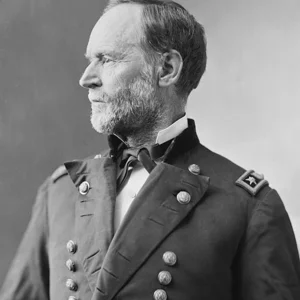
William Sherman
1820 — 1891
American general in the Union Army during the Civil War. He is famous for his “march to the sea” across Georgia in 1864, an early application of the concept of total war.
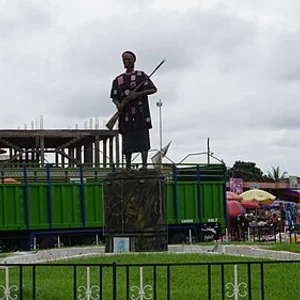
Yaa Asantewaa
1832 — 1921
Queen Mother of Ejisu in the Ashanti Empire, Yaa Asantewaa is the emblematic figure of African resistance to British colonization. In 1900, she led the War of the Golden Stool against the British, who demanded the surrender of the Ashanti's sacred seat of power. Captured, she was exiled to the Seychelles, where she died in 1921.
Visual Arts(63)
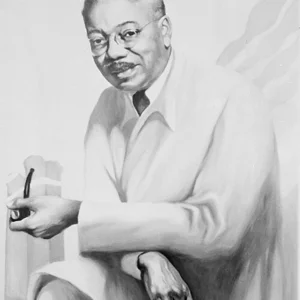
Aaron Douglas
1899 — 1979
Aaron Douglas was an African American painter and illustrator, a major figure of the Harlem Renaissance. Nicknamed the “father of African American art,” he developed a style blending geometric patterns, silhouettes, and references to African art to celebrate Black history and identity.
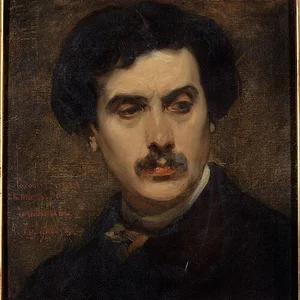
Alexandre Falguière
1831 — 1900
French sculptor and painter (1831-1900), winner of the Grand Prix de Rome in 1859. A leading figure of academic sculpture under the Second Empire and the Third Republic, he created iconic works blending realism with the classical ideal.
Alfred Boucher
1850 — 1934
Alfred Boucher (1850-1934) was a French sculptor born in Nogent-sur-Seine, a student of Paul Dubois and Auguste Dumont. He is particularly known for encouraging young artists, including Camille Claudel, and for founding La Ruche, an artists' colony in Paris.
Alfred Bruyas
1821 — 1877
Alfred Bruyas (1821-1877) was a French collector, patron of the arts, and amateur painter from Montpellier. Heir to a family fortune, he devoted his life to building a major art collection, most notably by supporting Gustave Courbet. His collection forms the core holdings of the Musée Fabre in Montpellier.
Antoine-Louis Barye
1795 — 1875
French sculptor (1795–1875) and pioneer of Romantic animalism. His bronzes depicting wild animals in combat combine naturalistic precision with dramatic tension. He is considered the undisputed master of animal sculpture in the 19th century.
Antoni Gaudí
1852 — 1926
Catalan architect
August Strindberg
1849 — 1912
Swedish writer, playwright and painter (1849-1912), a major figure of Scandinavian literature. A pioneer of naturalism and later a forerunner of expressionism and modern theatre, he profoundly renewed European dramatic art.
Auguste Rodin
1840 — 1917
French sculptor (1840–1917) considered the father of modern sculpture. He revolutionized sculptural art by abandoning academicism to explore expressiveness, emotion, and movement. His masterwork, The Thinker, has become one of the most iconic sculptures in Western art.
Berthe Morisot
1841 — 1895
Berthe Morisot (1841–1895) is one of the leading figures of French Impressionism. The first woman to exhibit with the Impressionist group from 1874 onward, she developed a luminous style centered on intimate life, motherhood, and gardens. Sister-in-law of Édouard Manet, she established herself as a fully independent artist in a world dominated by men.
Camille Claudel
1864 — 1943
French sculptor and painter (1864–1943), she is one of the great artists of the late 19th century. A student and collaborator of Auguste Rodin, she developed her own artistic language before being gradually forgotten and committed to an asylum in 1913.
Camille Corot
1796 — 1875
French painter and printmaker (1796–1875), Corot is one of the leading figures of 19th-century landscape painting. A forerunner of Impressionism, he was a prominent member of the Barbizon school and profoundly influenced the generations that followed.
Camille Pissarro
1830 — 1903
Camille Pissarro was a French-Danish painter, a major founding figure of Impressionism. The only artist to take part in all eight Impressionist exhibitions, he was a mentor to Cézanne, Gauguin and Van Gogh.
Caspar David Friedrich
1774 — 1840
German Romantic painter (1774–1840), a leading figure of pictorial Romanticism. His melancholic and sublime landscapes explore human solitude in the face of infinite nature and divine transcendence.
Charlie Chaplin
1889 — 1977
British actor, director and composer (1889-1977), pioneer of silent cinema. Creator of the iconic Tramp character, he shaped film history through his comedic genius and social commentary, most notably in The Great Dictator (1940).
Claude Monet
1840 — 1926
French painter (1840–1926), founder of the Impressionist movement. Monet revolutionized art by capturing the effects of light and atmosphere, most notably through his series of water lilies and his famous painting "Impression, Sunrise."
Coco Chanel
1883 — 1971
Revolutionary French fashion designer (1883–1971), Coco Chanel transformed women's fashion by offering simple, comfortable, and elegant clothing. Founder of the eponymous fashion house, she established modern style and freedom of movement as the new standards of elegance.
E.T.A. Hoffmann
1776 — 1822
German Romantic writer, composer, and illustrator (1776-1822), Hoffmann is one of the major figures of fantastic Romanticism. Author of the Fantastic Tales, he also composed operas and produced satirical drawings. His work inspired Offenbach, Tchaikovsky, and Schumann.
Edgar Degas
1834 — 1917
French painter and sculptor (1834–1917), Degas is one of the founders of Impressionism. He is celebrated for his depictions of dancers at the Paris Opera and scenes of modern life.
Edmond and Jules de Goncourt
French writer brothers and art critics, they were the co-founders of literary naturalism with novels such as Germinie Lacerteux (1864). Their Journal, kept from 1851 to 1896, is a landmark record of artistic and literary life in the 19th century. In his will, Edmond established the Académie Goncourt, which has awarded France's most prestigious literary prize since 1903.
Edmonia Lewis
1844 — 1907
Edmonia Lewis was an American sculptor of African-American and Native American (Ojibwe) descent. The first sculptor of color to gain international recognition, she worked marble in the neoclassical style and set up her studio in Rome.
Édouard Manet
1832 — 1883
French painter and printmaker (1832–1883), Manet is a pivotal figure between Realism and Impressionism. His provocative works such as Le Déjeuner sur l'herbe and Olympia overturned academic conventions.
Ellen Gates Starr
1859 — 1940
American social reformer, co-founder with Jane Addams of Hull House in Chicago in 1889. An activist in the Arts and Crafts movement and workers' rights, she worked for popular education and improving the living conditions of immigrants.

Esteve Comella
Esteve Comella was a nineteenth-century Catalan artist whose work belongs to the cultural renewal movement known as the *Renaixença*. He contributed to the development of the visual arts in Catalonia during a period of strong regional identity assertion.
Eugène Delacroix
1798 — 1863
French painter of the 19th century and leading figure of the Romantic movement. Delacroix revolutionized painting through his bold use of color, movement, and political and Orientalist subjects. His masterpiece "Liberty Leading the People" became an icon of republican freedom.
Eusebi Güell
Catalan industrialist and patron of the arts (1846–1918), Eusebi Güell was the principal supporter of architect Antoni Gaudí. Using his textile fortune, he funded the boldest works of Catalan Modernisme, including Park Güell and Palau Güell in Barcelona.
Félix Nadar
1820 — 1910
Félix Nadar (1820–1910) was a French photographer, caricaturist, and aeronaut. A pioneer of photography, he produced the first photographic portraits of the artists and intellectuals of his time, and took the first aerial photographs from a balloon.
Franz Matsch
1861 — 1942
Franz Matsch (1861–1942) was an Austrian painter and sculptor, and a classmate of Gustav Klimt at the Vienna School of Applied Arts. He collaborated closely with Klimt and Ernst Klimt within the Künstler-Compagnie, creating large-scale decorative works for theaters and museums.
Georges Seurat
1859 — 1891
Georges Seurat (1859-1891) was a French painter and a major figure of Post-Impressionism. He invented Pointillism (or Divisionism), a technique based on the scientific juxtaposition of small dabs of pure color.
Gustave Courbet
1819 — 1877
19th-century French painter and founder of the Realist movement. Courbet revolutionized painting by depicting everyday reality and landscapes in an innovative style, rejecting the academic conventions of his time.
Gustave Klimt
1862 — 1918
The Kiss, Vienna Secession, Art Nouveau
Gustave Moreau
1826 — 1898
Gustave Moreau was a French painter and a major figure of Symbolism. His work, populated with mythological and biblical figures rendered with ornamental richness and a dreamlike quality, left a deep mark on the late 19th century. As a professor at the École des Beaux-Arts, he notably taught Matisse and Rouault.
Henri de Toulouse-Lautrec
1864 — 1901
French painter, draughtsman, lithographer and poster artist, a major figure of Post-Impressionism. A witness to the Paris of the Belle Époque, he immortalized the cabarets, the music halls and the nightlife of Montmartre.
Hilma af Klint
1862 — 1944
Swedish painter, theosophist, and pioneer of abstract art (1862–1944)
Hokusai
1760 — 1849
Japanese painter, draftsman, and printmaker of the Edo period (1760–1849), master of ukiyo-e woodblock printing, celebrated for his series *Thirty-six Views of Mount Fuji*. His work had a major influence on European Impressionist and Post-Impressionist artists.
Honoré Daumier
1808 — 1879
Honoré Daumier (1808-1879) was a French engraver, caricaturist, painter and sculptor. A master of lithography, he ferociously sketched the political and social life of his time, becoming one of the greatest satirists of the 19th century.
J. M. W. Turner
1775 — 1851
British painter and engraver (1775-1851), Turner is considered the master of Romantic landscape. A forerunner of Impressionism, he revolutionized the depiction of light, water, and atmosphere.
Jacques-Louis David
1748 — 1825
French Neoclassical painter (1748–1825), David was the leading figure in official painting during the Revolution and the Empire. His grand historical compositions and portraits left a lasting mark on Western art.
Jean-Auguste-Dominique Ingres
1780 — 1867
French Neoclassical painter (1780–1867), student of David and rival of Delacroix. Master of drawing and portraiture, he defended the classical ideal against the emerging Romantic movement.
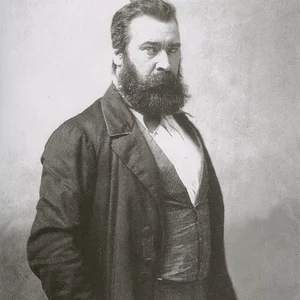
Jean-François Millet
1814 — 1875
Jean-François Millet was a 19th-century French painter and a leading figure of the Barbizon school. He is famous for his scenes of peasant life, depicting the labour of the fields with dignity.
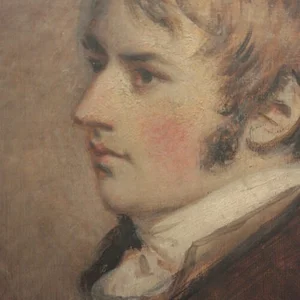
John Constable
1776 — 1837
John Constable (1776-1837) was a major English Romantic landscape painter. He revolutionized landscape painting by observing nature directly and depicting atmospheric effects with great fidelity.
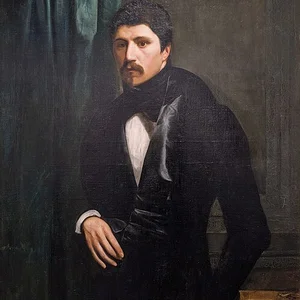
Joseph Guichard
1806 — 1880
Joseph Guichard (1806–1880) was a French painter, a student of both Ingres and Delacroix. He was Berthe Morisot's teacher and played an important role in passing on academic techniques at the dawn of Impressionism.
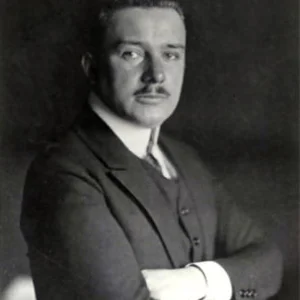
Joseph Maria Olbrich
1867 — 1908
Austrian architect and co-founder of the Vienna Secession, Olbrich is one of the masters of Art Nouveau. He designed the Secession Building in Vienna (1897–1898) and went on to develop an artists' colony in Darmstadt from 1899.
Leo XIII
1810 — 1903
Pope from 1878 to 1903, Leo XIII modernized the social doctrine of the Church with the encyclical Rerum Novarum (1891). He sought to reconcile Catholicism with the modern world and liberal democracies.
Louis Leroy
1923 — 1961
Louis Leroy (1812-1885) was a French journalist, art critic, and playwright. He is best known for having mockingly given its name to the Impressionist movement in 1874, in his review of the exhibition on the Boulevard des Capucines.
Louis-Philippe I
1773 — 1850
King of the French from 1830 to 1848, Louis-Philippe I came to power following the July Revolution. His July Monarchy embodied the triumph of the liberal bourgeoisie before being overthrown by the Revolution of 1848.
Manuel Vicens
A 19th-century Catalan businessman, ceramic tile merchant and stockbroker, Manuel Vicens i Montaner is best known for commissioning Antoni Gaudí to build his summer home in Barcelona, the Casa Vicens (1883–1885), the architect's first major work.
Mary Cassatt
1844 — 1926
Mary Cassatt (1844-1926) was an American painter and printmaker who settled in France, one of the few women to join the Impressionist movement. She is famous for her intimate paintings of women's lives, especially her scenes of mothers and children.
Napoleon III
1808 — 1873
Nephew of Napoleon I, he was elected President of the Republic in 1848, then seized power through a coup d'état on December 2, 1851, before proclaiming the Second Empire. His reign profoundly transformed France: the modernization of Paris under Haussmann, industrial and railway expansion — until the defeat at Sedan in 1870.
Pablo Picasso
1881 — 1973
Spanish painter, sculptor and printmaker (1881-1973), Pablo Picasso was the co-founder of Cubism and one of the most influential figures in modern art. His work revolutionized artistic representation in the 20th century through radical formal innovations and political engagement, particularly against war.
Paul Cézanne
1839 — 1906
A French painter born in Aix-en-Provence in 1839, Paul Cézanne is considered the father of modern painting. His work on the geometry of forms and construction through color paved the way for Cubism and 20th-century art.
Paul Durand-Ruel
1831 — 1922
Paul Durand-Ruel (1831-1922) was the principal art dealer of the French Impressionists. He provided financial support to Monet, Renoir, Pissarro, and their contemporaries at a time when their art was being rejected, playing a decisive role in their international recognition.
Paul Gauguin
1848 — 1903
Paul Gauguin was a French Post-Impressionist painter and a major figure of modern art. Rejecting Western civilization, he settled in Polynesia, where he painted brightly colored works celebrating Tahitian life. His synthetist style profoundly influenced 20th-century art.
Paul Signac
1863 — 1935
Paul Signac was a French painter and a major figure of Neo-Impressionism. Together with Georges Seurat, he developed and theorized Divisionism (or Pointillism), a technique based on the juxtaposition of strokes of pure color.
Pierre Puvis de Chavannes
1824 — 1898
French painter (1824–1898), a major figure of Symbolism and mural painting. He is celebrated for his large allegorical compositions rendered in pale tones with a timeless atmosphere, which profoundly influenced painters at the end of the 19th century.
Pierre-Auguste Renoir
1841 — 1919
French painter (1841–1919) and a leading figure of Impressionism. Celebrated for his luminous scenes of Parisian life and his portrayals of women and childhood, he developed a warm and sensual style.
Pierre-Narcisse Guérin
1774 — 1833
French Neoclassical painter (1774–1833), pupil of Regnault and winner of the Prix de Rome in 1797. An influential professor at the École des Beaux-Arts, he taught students such as Géricault and Delacroix, shaping the transition between Neoclassicism and Romanticism.
Rosa Bonheur
1822 — 1899
Rosa Bonheur (1822-1899) was a French painter and sculptor, a major figure in 19th-century animal painting. Famous for her meticulous realism, she was the first female artist to receive the Legion of Honour.
Rose Beuret
1844 — 1917
French seamstress, companion of Auguste Rodin for over fifty years and one of his very first models. She married him in January 1917, just a few weeks before she died, and Rodin followed her in death the same year.
Takai Kozan
Takai Kozan (1806-1883) was a wealthy Japanese merchant, scholar, calligrapher, and painter of the nanga school. He is best known for welcoming the master Hokusai into his home in Obuse, and for his involvement in the sonnō jōi imperialist movement at the end of the Edo period.
Théodore Géricault
1791 — 1824
French painter (1791–1824), a major figure of Romanticism. His masterpiece, *The Raft of the Medusa* (1819), marks a break from academic painting through its expressive violence and political engagement.
Utagawa Hiroshige
1797 — 1858
Utagawa Hiroshige is one of the greatest Japanese masters of the woodblock print (ukiyo-e). Famous for his landscapes and travel scenes, he profoundly influenced European Impressionists and Post-Impressionists such as Van Gogh and Monet.
Vincent van Gogh
1853 — 1890
A Dutch painter of the 19th century, Vincent van Gogh is one of the towering figures of Post-Impressionism. Known for his expressive canvases with intense colors and distinctive brushwork, he revolutionized modern art despite receiving little recognition during his lifetime.
William Turner
1832 — 1916
British painter and watercolourist, a major figure of Romanticism. A master of landscape, he revolutionised the depiction of light, atmosphere and the natural elements, paving the way for Impressionism.
Music(48)
Alexander Borodin
1833 — 1887
A 19th-century Russian composer and member of The Five, he was also a renowned chemist. He pursued scientific and musical careers side by side, leaving behind the unfinished opera *Prince Igor*.
Amilcare Ponchielli
1834 — 1886
Italian composer (1834–1886), a major figure of Italian Romantic opera. He is best known for La Gioconda (1876), from which the celebrated Dance of the Hours is taken. He was a professor of Puccini and Mascagni at the Milan Conservatory.
Antoine François Marmontel
1816 — 1898
French pianist, composer and pedagogue (1816–1898), professor at the Paris Conservatoire for nearly forty years. He trained generations of pianists, including Bizet, Debussy and d'Indy, and contributed to the rise of music education in France.
Anton Bruckner
1824 — 1896
An Austrian composer and organist of the Romantic period, Anton Bruckner is famous for his nine monumental symphonies and his sacred works. A deeply devout Catholic, he left his mark on symphonic music through its grandeur and his religious fervor.
Antonín Dvořák
1841 — 1904
Antonín Dvořák was a 19th-century Czech composer, a major figure of Romanticism and of the nationalist movement in music. He drew on the folklore of his homeland and, during a stay in the United States, on African American and Native American music.
Antonina Miliukova
1848 — 1917
Russian pianist born in 1848, known primarily for marrying composer Pyotr Ilyich Tchaikovsky in 1877. Their union was brief and unhappy, with Tchaikovsky leaving her shortly after the wedding.
Arrigo Boito
1842 — 1918
Arrigo Boito (1842-1918) was an Italian composer and librettist, a major figure of late Romantic opera. He is best known for the librettos he wrote for Verdi (Otello, Falstaff) and for his own opera Mefistofele.
Bartolomeo Merelli
1794 — 1879
Italian theater director and librettist (1794–1879), Merelli ran La Scala in Milan and the Kärntnertortheater in Vienna. He played a decisive role in Verdi's career by commissioning Nabucco in 1842.
Carl Friedrich Zelter
1758 — 1832
German composer and choral conductor (1758–1832), director of the Sing-Akademie zu Berlin and teacher of Felix Mendelssohn. A close friend of Goethe, he contributed to the revival of Bach's music in Germany.
Cécile Chaminade
1857 — 1944
French composer and pianist (1857–1944), Cécile Chaminade was one of the first women to establish herself in the classical music world. Celebrated for her Concertstück for piano and orchestra and her Concertino for flute, she enjoyed tremendous international success during her lifetime.
Charles Gounod
1818 — 1893
French composer (1818–1893), Charles Gounod is the creator of the opera Faust and the Ave Maria. A major figure in French lyric music, he left a profound mark on 19th-century musical life.
Clara Schumann
1819 — 1896
German pianist and composer
Claude Debussy
1862 — 1918
French composer (1862–1918) and founder of musical impressionism. He revolutionized classical music by rejecting traditional harmonic conventions to create a suggestive and colorful music inspired by sensations and poetic imagery.
E.T.A. Hoffmann
1776 — 1822
German Romantic writer, composer, and illustrator (1776-1822), Hoffmann is one of the major figures of fantastic Romanticism. Author of the Fantastic Tales, he also composed operas and produced satirical drawings. His work inspired Offenbach, Tchaikovsky, and Schumann.
Edvard Grieg
1843 — 1907
Edvard Grieg (1843-1907) was a Norwegian pianist and composer, a major figure of national Romanticism. He is famous for drawing on Norwegian folklore to create music expressing a national identity.
Edward VII
1841 — 1910
Son of Queen Victoria, Edward VII reigned over the United Kingdom and the Empire of India from 1901 to 1910. An emblematic figure of the Belle Époque, he played a decisive role in bringing France and Britain closer together through the Entente Cordiale of 1904.
Fanny Mendelssohn
1805 — 1847
Fanny Mendelssohn (1805–1847) was a German composer and virtuoso pianist, sister of Felix Mendelssohn. Despite exceptional talent recognized from childhood, the conventions of the era long prevented her from publishing her works under her own name. She composed more than 460 pieces, including lieder, chamber music, and piano works.
Felix Mendelssohn
1809 — 1847
German Romantic composer, conductor and pianist. A child prodigy, he left his mark on the 19th century through his symphonies, his oratorio and the rediscovery of Johann Sebastian Bach's work.
Franz Liszt
1811 — 1886
Hungarian composer and virtuoso pianist (1811–1886), Liszt revolutionized piano technique and invented the symphonic poem. A central figure of musical Romanticism, he profoundly influenced Wagner and European music as a whole.
Franz Schubert
1797 — 1828
Franz Schubert (1797-1828) was an Austrian composer of the early Romantic period, who wrote more than 600 lieder, symphonies, and chamber music. Despite his short life, he left behind a body of work of exceptional richness, distinguished by its melodic gift and emotional depth.
Frédéric Chopin
1810 — 1849
French-Polish composer and pianist
Gaetano Donizetti
1797 — 1848
Italian composer (1797-1848), a leading figure of bel canto alongside Bellini and Rossini. He composed more than 70 operas, including Lucia di Lammermoor (1835) and L'Elisir d'amore (1832).
Georges Bizet
1838 — 1875
A French composer of the 19th century (1838–1875), Georges Bizet is best known for his opera Carmen, a masterpiece of lyric music. Despite a relatively short career, he revolutionized French opera by incorporating bold dramatic elements and daring orchestration.
Gioachino Rossini
1792 — 1868
Italian composer (1792–1868), Rossini is one of the masters of 19th-century opera. His most celebrated work, The Barber of Seville (1816), remains a masterpiece of the world operatic repertoire.
Giuseppe Verdi
1813 — 1901
Giuseppe Verdi (1813-1901) was a major Italian composer of the Romantic era, creator of world-famous operas such as Rigoletto, La Traviata, and Aida. His musical work accompanied the unification of Italy and remains at the heart of the European operatic repertoire.
Giuseppina Strepponi
1815 — 1897
Giuseppina Strepponi was an Italian soprano, one of the leading bel canto singers of the early 19th century. She notably created the role of Abigaille in Nabucco and became the companion, then the wife, of the composer Giuseppe Verdi.
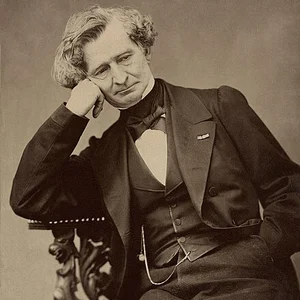
Hector Berlioz
1803 — 1869
French composer and music critic
Heinrich Heine
1797 — 1856
Heinrich Heine (1797–1856) is one of the greatest German Romantic poets. Exiled to Paris in 1831, he became a bridge between French and German cultures. His work blends lyricism, irony, and political engagement.
J. M. W. Turner
1775 — 1851
British painter and engraver (1775-1851), Turner is considered the master of Romantic landscape. A forerunner of Impressionism, he revolutionized the depiction of light, water, and atmosphere.
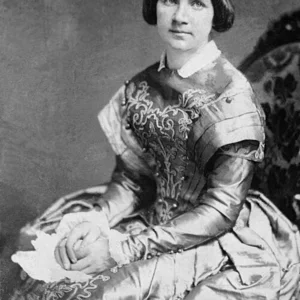
Jenny Lind
1820 — 1887
Nineteenth-century Swedish singer, a coloratura soprano of international fame nicknamed “the Swedish Nightingale.” She enjoyed immense success in Europe and then in the United States during a tour organized by the impresario P. T. Barnum.
Johann Wolfgang von Goethe
German writer, poet, and scholar (1749–1832), Goethe is the author of Faust and The Sorrows of Young Werther. A central figure of the Sturm und Drang movement and later Weimar Classicism, he embodies the Enlightenment ideal of the universal man.
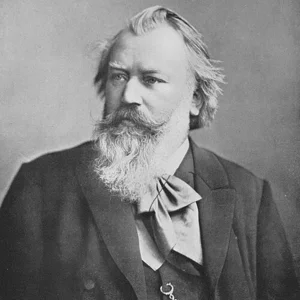
Johannes Brahms
1833 — 1897
German composer, pianist, and conductor (1833–1897), Brahms is one of the towering figures of musical Romanticism. He is celebrated for his four symphonies, his German Requiem, and his chamber music of remarkable formal rigor.
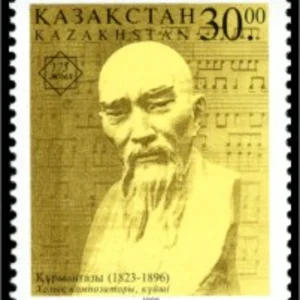
Kourmangazy
1823 — 1896
Kourmangazy Sagyrbayuly (1823-1896) is the greatest composer and dombra player in Kazakh history. Nicknamed the “father of classical Kazakh music,” he created küis (instrumental pieces) of exceptional poetic depth. His art became a symbol of cultural resistance against Russian imperial expansion in the steppes.
Leo XIII
1810 — 1903
Pope from 1878 to 1903, Leo XIII modernized the social doctrine of the Church with the encyclical Rerum Novarum (1891). He sought to reconcile Catholicism with the modern world and liberal democracies.
Louis-Philippe I
1773 — 1850
King of the French from 1830 to 1848, Louis-Philippe I came to power following the July Revolution. His July Monarchy embodied the triumph of the liberal bourgeoisie before being overthrown by the Revolution of 1848.
Mikhail Glinka
1804 — 1857
Russian composer regarded as the father of Russian classical music. His operas inspired an entire generation of Russian nationalist composers and founded a distinctly Russian school of music.
Modest Mussorgsky
1839 — 1881
Modest Mussorgsky was a 19th-century Russian composer and member of “The Five,” a group that sought to create a distinctly Russian national music. He is famous for his opera Boris Godunov and his piano suite Pictures at an Exhibition.
Nadezhda von Meck
1831 — 1894
A wealthy Russian widow and businesswoman, patron of Pyotr Ilyich Tchaikovsky, whom she supported financially for thirteen years. Their relationship, kept strictly to letters by mutual agreement, produced more than 1,200 letters.
Napoleon III
1808 — 1873
Nephew of Napoleon I, he was elected President of the Republic in 1848, then seized power through a coup d'état on December 2, 1851, before proclaiming the Second Empire. His reign profoundly transformed France: the modernization of Paris under Haussmann, industrial and railway expansion — until the defeat at Sedan in 1870.
Nellie Melba
1861 — 1931
Nellie Melba (1861-1931) was the most celebrated Australian coloratura soprano of her time. Triumphing at Covent Garden and the Paris Opera, she embodied the prestige of bel canto and the grand operatic tradition of the Belle Époque.
Niccolò Paganini
1782 — 1840
Niccolò Paganini (1782–1840) was an Italian violinist and composer, considered the greatest virtuoso of his era. His revolutionary technique and stage charisma earned him extraordinary fame across Europe, fuelling a dark and mysterious legend.
Nikolai Rimsky-Korsakov
1844 — 1908
Russian composer of the 19th century and member of The Five. An undisputed master of orchestration, he is famous for his symphonic suite Scheherazade and his many operas inspired by Russian folklore.
Pauline Viardot
1821 — 1910
French mezzo-soprano and composer (1821–1910), daughter of tenor Manuel García and sister of La Malibran. She was one of the great opera singers of the 19th century, muse to Ivan Turgenev and many Romantic composers.
Pyotr Tchaikovsky
1840 — 1893
Swan Lake, The Nutcracker, symphonies
Richard Wagner
1813 — 1883
German composer (1813–1883), Wagner revolutionized opera by creating the concept of the total work of art (Gesamtkunstwerk). His music dramas, including the Ring Cycle and Tristan und Isolde, remain towering monuments of Romanticism.
Robert Schumann
1810 — 1856
Robert Schumann was a German composer and pianist, a major figure of musical Romanticism. He is famous for his piano works, his lieder, and his chamber music, as well as for his activity as a music critic.
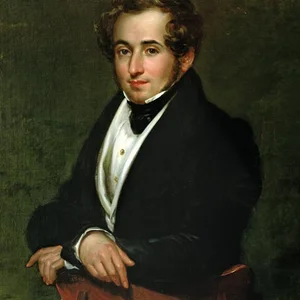
Vincenzo Bellini
1801 — 1835
Vincenzo Bellini was an Italian opera composer of the Romantic period, a major figure of bel canto alongside Rossini and Donizetti. His brief but brilliant career established him as a master of the long, expressive melody, before his untimely death at 33.
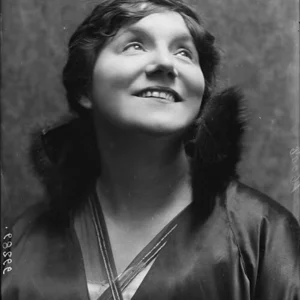
Yvette Guilbert
1865 — 1944
French café-concert singer and *diseuse* (1865–1944), an icon of the Belle Époque immortalized by Toulouse-Lautrec. Famous for her long black gloves and her expressionist delivery of Parisian realist songs.
Philosophy(39)
Abai Kunanbaev
1845 — 1904
Abai Kunanbaev is the founding father of written Kazakh literature. A poet, philosopher, and composer, he raised the Kazakh language to the status of a literary language and translated Pushkin, Lermontov, and Goethe. His major work, the Book of Words, remains the definitive philosophical text of Kazakh culture.
Alessandro Manzoni
1785 — 1873
Alessandro Manzoni (1785–1873) was the greatest Italian novelist of the 19th century and a central figure of Romanticism. His historical novel *I Promessi Sposi* (*The Betrothed*, 1827) is regarded as the first modern novel written in Italian and played a decisive role in the linguistic unification of Italy.
Alexis de Tocqueville
1805 — 1859
French political philosopher, historian, and statesman (1805–1859). Tocqueville is the author of 'Democracy in America', a foundational work analyzing American institutions and society. He is considered a pioneer of sociology and a major thinker of modern politics.
André-Marie Ampère
1775 — 1836
French physicist and mathematician, Ampère is the founder of electrodynamics. He established the mathematical laws governing the interactions between electric currents and magnetic fields. The international unit of electric current, the ampere, bears his name.
Charles Fourier
1772 — 1837
Charles Fourier was a French philosopher and social theorist, one of the leading representatives of utopian socialism. He envisioned a harmonious society organized into self-sufficient communities called phalansteries.
Edgar Quinet
1803 — 1875
French historian, philosopher, and politician (1803-1875), a leading figure of anticlerical republicanism. A professor at the Collège de France, he was exiled during the Second Empire for his opposition to Napoléon III.
Emma Goldman
1869 — 1940
Emma Goldman (1869-1940) was a Lithuanian-born anarchist and feminist activist who emigrated to the United States. A leading figure in the American labor movement, she championed individual freedom, women's emancipation, and opposed war and capitalism.
Friedrich Hölderlin
1770 — 1843
German poet, a major figure of German Romanticism and Idealism, and a fellow student of Hegel and Schelling. His work, suffused with a longing for ancient Greece and the divine, was rediscovered in the 20th century. He spent the second half of his life as a recluse, lost in madness.
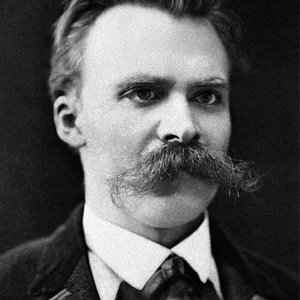
Friedrich Nietzsche
1844 — 1900
A 19th-century German philosopher, Nietzsche revolutionized Western thought by challenging traditional morality and metaphysics. A central figure in high school philosophy curricula, his concepts of the will to power and the Übermensch remain foundational in the teaching of philosophy.
Fyodor Dostoevsky
1821 — 1881
Russian writer
Georg Cantor
1845 — 1918
German mathematician (1845–1918), founder of set theory. He proved the existence of multiple sizes of infinity and introduced transfinite numbers, revolutionizing the foundations of mathematics.
George Eliot
1819 — 1880
Pen name of Mary Ann Evans (1819–1880), one of the leading Victorian novelists. Author of Middlemarch and The Mill on the Floss, she explores the female condition and social morality with rare philosophical depth.
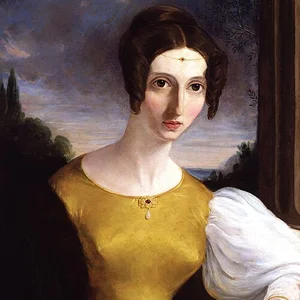
Harriet Taylor Mill
1807 — 1858
Harriet Taylor Mill (1807-1858) was a British philosopher and feminist, a major figure in 19th-century liberal thought. A collaborator and wife of John Stuart Mill, she profoundly influenced his works, particularly on individual liberty and the emancipation of women.
Helena Blavatsky
1831 — 1891
Helena Blavatsky (1831-1891) was a Russian occultist, philosopher, and writer who co-founded the Theosophical Society in 1875. A tireless traveler, she synthesized Eastern spiritualities and Western esotericism in her major works.
Henri Bergson
1859 — 1941
French philosopher (1859–1941) who revolutionized modern thought by opposing intuition to rational intelligence and developing a philosophy of duration. His major works, 'Laughter' and 'The Creative Mind', explore creativity and the evolution of consciousness. He received the Nobel Prize in Literature in 1927 for the body of his philosophical work.
Henri Poincaré
1854 — 1912
French mathematician, physicist and philosopher (1854-1912), considered the last universal genius of science. He founded algebraic topology, laid the foundations of special relativity, and discovered deterministic chaos.
Henry David Thoreau
1817 — 1862
American writer, philosopher, and naturalist, a figure of transcendentalism. He is famous for *Walden; or, Life in the Woods*, an account of his experience of solitary living in close contact with nature, and for his essay *Civil Disobedience*, a plea for individual resistance to the injustice of the State.
Herbert Spencer
1820 — 1903
Herbert Spencer (1820-1903) was an English philosopher and sociologist, one of the leading thinkers of social evolutionism in the 19th century. He applied the idea of evolution to all natural and social phenomena and coined the phrase “survival of the fittest.”
Jane Addams
1860 — 1935
An American social reformer, Jane Addams founded Hull House in Chicago in 1889, a settlement house serving immigrants and disadvantaged communities. A sociologist and committed pacifist, she was awarded the Nobel Peace Prize in 1931.
Jean-Étienne-Marie Portalis
1746 — 1807
A French jurist and statesman, Portalis was the principal drafter of the Civil Code enacted in 1804, the cornerstone of modern French private law. As Minister of Religious Affairs under Napoleon, he also contributed to the Concordat of 1801, which regulated relations between the Church and the State.
Johann Wolfgang von Goethe
German writer, poet, and scholar (1749–1832), Goethe is the author of Faust and The Sorrows of Young Werther. A central figure of the Sturm und Drang movement and later Weimar Classicism, he embodies the Enlightenment ideal of the universal man.
Karl Marx
1818 — 1883
German philosopher, sociologist, and economist (1818–1883), Karl Marx is the founder of historical materialism and the critical analysis of capitalism. He revolutionized political thought by proposing a theory of class struggle and social transformation.
Leo XIII
1810 — 1903
Pope from 1878 to 1903, Leo XIII modernized the social doctrine of the Church with the encyclical Rerum Novarum (1891). He sought to reconcile Catholicism with the modern world and liberal democracies.
Lou Andreas-Salomé
1861 — 1937
Lou Andreas-Salomé (1861-1937) was a German-Russian writer and psychoanalyst, a major intellectual figure of the late 19th century. A close friend of Nietzsche and Rilke, she was one of the first women to practice psychoanalysis in Europe.
Louis Blanc
1811 — 1882
French journalist, historian, and socialist theorist (1811–1882). A member of the provisional government of the Second Republic in 1848, he championed the National Workshops and the right to work. Exiled in England after the June Days uprising, he returned to France after 1870.
Louis-Philippe I
1773 — 1850
King of the French from 1830 to 1848, Louis-Philippe I came to power following the July Revolution. His July Monarchy embodied the triumph of the liberal bourgeoisie before being overthrown by the Revolution of 1848.
Ludwig Boltzmann
1844 — 1906
Austrian physicist (1844–1906), founder of statistical mechanics. He demonstrated that the laws of thermodynamics arise from the statistical behavior of atoms, laying the foundations of modern physics.
Maria Edgeworth
1768 — 1849
Anglo-Irish novelist and moralist (1768–1849), pioneer of the regional novel and the novel of education. Her works, praised by Walter Scott and Jane Austen, explore morality, the education of women, and Irish society.
Mikhail Bakunin
1814 — 1876
Russian revolutionary and philosopher, a major figure of anarchism and libertarian socialism in the 19th century. An opponent of Marx within the First International, he advocated the abolition of the State and of all authority in favor of a federalist and collectivist society.
Napoleon III
1808 — 1873
Nephew of Napoleon I, he was elected President of the Republic in 1848, then seized power through a coup d'état on December 2, 1851, before proclaiming the Second Empire. His reign profoundly transformed France: the modernization of Paris under Haussmann, industrial and railway expansion — until the defeat at Sedan in 1870.
Ralph Waldo Emerson
1803 — 1882
American philosopher, essayist, and poet (1803-1882), a central figure of transcendentalism. He championed self-reliance, intuition, and the spiritual bond between humanity and nature, leaving a lasting mark on American thought.
Ramakrishna
1836 — 1886
A 19th-century Bengali Hindu mystic and saint, a priest of the goddess Kali at the Dakshineswar temple near Calcutta. His spiritual quest led him to experience several religious paths (Hinduism, Islam, Christianity) and to teach the fundamental unity of all religions. He was the spiritual master of Vivekananda.
Richard Wagner
1813 — 1883
German composer (1813–1883), Wagner revolutionized opera by creating the concept of the total work of art (Gesamtkunstwerk). His music dramas, including the Ring Cycle and Tristan und Isolde, remain towering monuments of Romanticism.
Robert Owen
1771 — 1858
A Welsh industrialist and socialist theorist, Robert Owen transformed the New Lanark cotton mill into a model of social reform. A pioneer of utopian socialism and the cooperative movement, he championed better conditions for workers and education for all.
Rosa Luxemburg
1871 — 1919
Rosa Luxemburg was a Polish-born revolutionary activist and Marxist theorist who became a naturalized German citizen. Co-founder of the Communist Party of Germany (KPD), she championed a socialist revolution rooted in the mass consciousness of the working class. Arrested during the Spartacist uprising of January 1919, she was murdered by paramilitary soldiers.
Sigmund Freud
1856 — 1939
Austrian neurologist and psychoanalyst (1856-1939), founder of psychoanalysis. Freud developed a revolutionary theory of the unconscious and the psychological mechanisms governing human behavior, profoundly influencing modern psychology, psychiatry, and philosophy.
Søren Kierkegaard
1813 — 1855
Danish philosopher and theologian (1813-1855), regarded as the father of existentialism. A critic of the Hegelian system and of institutional Christianity, he placed individual existence, choice, and faith at the heart of his thought.
Stuart Mill
John Stuart Mill (1806-1873) was a British philosopher, economist, and politician. A major figure of liberalism and utilitarianism, he championed individual liberties, freedom of expression, and the emancipation of women.
Vivekananda
1863 — 1902
Indian Hindu monk and disciple of the mystic Ramakrishna, he was one of the foremost figures who brought Hindu spirituality (vedanta and yoga) to the West in the late 19th century. His speech at the World's Parliament of Religions in Chicago in 1893 made him famous.
Technology(33)
Alexander Graham Bell
1847 — 1922
A Scottish-born inventor who became a naturalized American citizen, Alexander Graham Bell is best known for filing the patent for the telephone in 1876. He also conducted research on hearing and communication, particularly to help people who were deaf.
Auguste Lumière
1862 — 1954
Auguste Lumière (1862–1954) was a French inventor and industrialist who, together with his brother Louis, developed the Cinématographe in 1895, giving birth to cinema. He also contributed to colour photography with the invention of the Autochrome.
Eli Whitney
1765 — 1825
American inventor and industrialist (1765–1825), Eli Whitney is famous for inventing the cotton gin in 1793 and for developing the concept of interchangeable parts in industrial production. His innovations profoundly transformed the American economy and foreshadowed the Industrial Revolution.
Emily Warren Roebling
1843 — 1903
Emily Warren Roebling was an American pioneer of civil engineering. When her husband, chief engineer Washington Roebling, was struck by caisson disease, she took over the technical supervision of the Brooklyn Bridge construction until its completion in 1883.
Félix Nadar
1820 — 1910
Félix Nadar (1820–1910) was a French photographer, caricaturist, and aeronaut. A pioneer of photography, he produced the first photographic portraits of the artists and intellectuals of his time, and took the first aerial photographs from a balloon.
François Richard-Lenoir
1765 — 1839
A Norman industrialist, he became one of the greatest French cotton manufacturers under the First Empire, taking advantage of the Continental Blockade to eliminate British competition. The fall of Napoleon and the return of British cotton ruined his fortune, but he is remembered for his genuine concern for the well-being of his workers.
Gaspard Monge
1746 — 1818
French mathematician (1746–1818), inventor of descriptive geometry and co-founder of the École Polytechnique. A close ally of Napoleon, he played a major role in modernizing scientific and technical education in France.
George Stephenson
1781 — 1848
British engineer (1781–1848), George Stephenson is the father of the railway. He built the first efficient steam locomotive for passenger transport and designed the Liverpool-Manchester line, inaugurated in 1830.
George Westinghouse
1846 — 1914
American engineer and industrialist (1846–1914), George Westinghouse invented the air brake for trains, revolutionizing railroad safety. He championed alternating current (AC) against Thomas Edison in the famous "War of Currents," helping to electrify the modern world.
Georges Méliès
1861 — 1938
French filmmaker, actor, producer, director, conjurer and illusionist, pioneer and inventor of cinematic spectacle (1861–1938)
Granville Woods
1856 — 1910
African American inventor and engineer (1856–1910), nicknamed the "Black Edison," he filed more than 60 patents in electricity and railroad engineering, including the multiplex telegraph that allowed communication between moving trains.
Gustave Eiffel
1832 — 1923
French engineer and entrepreneur (1832–1923), Gustave Eiffel is famous for building the tower that bears his name, erected for the 1889 World's Fair. A pioneer of iron architecture, he also designed the internal framework of the Statue of Liberty.
Isambard Kingdom Brunel
1806 — 1859
19th-century British engineer, Brunel revolutionized transportation with the Great Western Railway, the Thames Tunnel, and giant steamships. An iconic figure of the Victorian Industrial Revolution.
Jagadish Chandra Bose
1858 — 1937
Indian physicist and botanist (1858-1937), a pioneer in the study of radio waves and plant physiology. He demonstrated that plants react to stimuli and invented instruments of remarkable precision.
Joseph Maria Olbrich
1867 — 1908
Austrian architect and co-founder of the Vienna Secession, Olbrich is one of the masters of Art Nouveau. He designed the Secession Building in Vienna (1897–1898) and went on to develop an artists' colony in Darmstadt from 1899.
Joseph Marie Jacquard
1752 — 1834
French inventor born in Lyon in 1752, Jacquard developed in 1801 an automated loom using punched cards to control patterns. His invention revolutionized the textile industry and foreshadowed the concept of computer programming.
Josephine Cochrane
1839 — 1913
Josephine Cochrane was an American inventor who designed the first truly functional mechanical dishwasher, patented in 1886. A well-to-do woman from Illinois, she devised a machine using water jets to protect her porcelain dishes from breakage caused by her servants.
Karl Benz
1844 — 1929
German engineer and inventor, Karl Benz is considered the father of the automobile. In 1885, he built the Benz Patent-Motorwagen, the first vehicle with an internal combustion engine recognized as a true automobile.
Lewis Latimer
American inventor and engineer born in 1848, Lewis Latimer improved the carbon filament of the incandescent light bulb, making electric lighting accessible to the general public. A collaborator of Thomas Edison and Alexander Graham Bell, he was one of the few Black engineers recognized during his era.
Louis Braille
1809 — 1852
Louis Braille (1809–1852) was a French teacher who lost his sight at the age of three and invented, at 15, the tactile writing system that bears his name. His raised-dot alphabet revolutionized access to reading and writing for blind people around the world.

Louis Lumière
1864 — 1948
French inventor and industrialist, Louis Lumière developed the Cinématographe with his brother Auguste in 1895. On December 28, 1895, they organized the first paid public film screening in Paris, a founding moment in the history of cinema worldwide. He also invented the Autochrome process, the first commercially available color photography technique.
Lumière Brothers
1862/1864 — 1954/1948
Inventors of the cinematograph, pioneers of cinema
Margaret Knight
1838 — 1914
Margaret Knight (1838–1914) was a prolific American inventor who revolutionized the packaging industry by developing the machine that produces flat-bottomed paper bags. Over the course of her life she filed more than 27 patents across fields as varied as textiles, mechanics, and automotive engineering.
Maria Beasley
1836 — 1913
Maria Beasley (1836-1904) was an American inventor and entrepreneur. She is famous for perfecting the life raft and for designing a barrel-making machine that made her fortune.
Michael Faraday
1791 — 1867
A self-taught British physicist and chemist (1791–1867), Faraday discovered electromagnetic induction and laid the foundations of modern electrical engineering. His work on electric and magnetic fields inspired Maxwell's theories.
Michel Bizot
1795 — 1855
French general of the Corps of Engineers (1796–1855), director of the École polytechnique. He distinguished himself during the capture of Constantine (1837) and died at the Siege of Sevastopol during the Crimean War.
Otto Lilienthal
1848 — 1896
German engineer and inventor (1848–1896), Otto Lilienthal was the first person to achieve repeated and controlled gliding flights. His experiments with gliders laid the scientific foundations of modern aviation.
Pereire Brothers (Émile and Isaac)
Banker brothers of Bordeaux origin and disciples of Saint-Simonianism, they financed the first French railway (Paris–Saint-Germain, 1837) and founded the Crédit Mobilier (1852), an innovative investment bank that rivaled the Rothschilds under the Second Empire.
Samuel Morse
1791 — 1872
American inventor and painter (1791–1872), Samuel Morse is famous for developing the electric telegraph and the code that bears his name. His invention revolutionized long-distance communications in the 19th century.
Sarah E. Goode
1855 — 1905
Sarah E. Goode was an American inventor and entrepreneur, one of the first African American women to receive a patent in the United States. Born into slavery, she became a furniture merchant in Chicago and invented a folding cabinet bed in 1885.
Tabitha Babbitt
1779 — 1853
Tabitha Babbitt (1779-1853) was an American inventor and a member of the Shaker community in Harvard, Massachusetts. She is credited with inventing the circular saw adapted for sawmills, as well as improvements to cut nails and carding teeth.
Thomas Edison
1847 — 1931
American inventor and industrialist (1847–1931), Edison is one of the greatest innovators in history. He filed more than 1,000 patents and created the incandescent light bulb, the phonograph, and the electrical distribution system.
William Thomson (Lord Kelvin)
British physicist and mathematician of the 19th century, he made fundamental contributions to thermodynamics and electromagnetism. He is the originator of the absolute temperature scale that bears his name. He also oversaw the laying of the first transatlantic telegraph cable.
Spirituality(33)
Abbé Henri Grégoire
1750 — 1831
A Catholic priest and politician of the French Revolution, he championed the emancipation of Jews and the abolition of slavery in the colonies. Elected as a constitutional bishop, he sat in the National Convention and helped secure the passage of the 1794 abolition decree.
Bahá'u'lláh
1817 — 1892
Iranian founder of the Bahá'í Faith, a monotheistic religion advocating the unity of humanity and of all religions. Proclaiming himself a messenger of God in 1863, he spent the greater part of his life in exile and captivity within the Ottoman Empire.
Bernadette Soubirous
1844 — 1879
Bernadette Soubirous was a young French miller's daughter who claimed to have experienced eighteen apparitions of the Virgin Mary at the grotto of Massabielle, in Lourdes, in 1858. She became a nun with the Sisters of Charity of Nevers and was canonized in 1933.
Caspar David Friedrich
1774 — 1840
German Romantic painter (1774–1840), a leading figure of pictorial Romanticism. His melancholic and sublime landscapes explore human solitude in the face of infinite nature and divine transcendence.
Charles Erskine de Kellie
1739 — 1811
Charles Erskine (1739-1811) was a Scottish cardinal in the service of the Holy See. A diplomat of the Catholic Church, he acted as an intermediary between Rome and the European powers during the Napoleonic era.
Charles Gounod
1818 — 1893
French composer (1818–1893), Charles Gounod is the creator of the opera Faust and the Ave Maria. A major figure in French lyric music, he left a profound mark on 19th-century musical life.
Charlotte Guest
1812 — 1895
British translator and businesswoman (1812–1895), celebrated for her English translation of the Mabinogion, a foundational collection of medieval Welsh myths and legends. She also managed the Dowlais ironworks in Wales, becoming one of the first women to run a major industrial enterprise.
David Livingstone
1813 — 1873
Physician, Protestant missionary, and Scottish explorer (1813–1873), Livingstone was one of the first Europeans to cross Africa from east to west. He contributed to the geographical knowledge of the continent and actively fought against the slave trade.
Frederick Hodgson
1796 — 1854
Investigator for the Society for Psychical Research (SPR) who, in 1884-1885, examined the phenomena attributed to Helena Blavatsky at the Theosophical headquarters in Adyar, India. His report concluded that they were fraud and trickery.
George Grey
1812 — 1898
British colonial governor and ethnologist, George Grey successively administered South Australia, New Zealand, and the Cape Colony. Passionate about indigenous cultures, he devoted part of his life to collecting and publishing Māori myths and language.
Giovanni Battista Caprara
1733 — 1810
Cardinal and papal legate, Giovanni Battista Caprara (1733–1810) played a central role in the reconciliation between the Catholic Church and Napoleonic France. He negotiated and signed the Concordat of 1801 on behalf of the Holy See, and was subsequently appointed Archbishop of Milan.
Hippolyte Fauche
1797 — 1869
A French Orientalist and Sanskritist of the 19th century, Hippolyte Fauche was the first to produce a complete French translation of the Mahabharata. His monumental work opened Indian epic literature to French-speaking audiences.
Ippolito-Antonio Vincenti-Mareri
1738 — 1811
Italian Catholic prelate of the 19th century, elevated to the dignity of cardinal within the Roman Curia. He carried out his duties in the context of the Papal States, at a time of deep tensions between the Church and the emerging national states of Europe.
James Thorne
1795 — 1872
James Thorne (1795-1872) was an English preacher of the Bible Christian Methodist movement. He played a leading role in organizing and expanding this Protestant denomination that grew out of Methodism.
Joseph Smith
1805 — 1844
Joseph Smith was an American religious leader and founder of the Latter Day Saint movement (Mormonism) in 1830. He published the Book of Mormon, which he presented as a translation of golden plates revealed by an angel, and organized a new church before being assassinated in 1844.
Lalla Fatma N'Soumer
1830 — 1863
A Kabyle resistance fighter from the Amazigh people, Lalla Fatma N'Soumer led the armed struggle against the French conquest of Algeria in the mid-19th century. Both a spiritual and military figure, she is passed down through Berber oral tradition as a symbol of dignity and resistance.
Leo XIII
1810 — 1903
Pope from 1878 to 1903, Leo XIII modernized the social doctrine of the Church with the encyclical Rerum Novarum (1891). He sought to reconcile Catholicism with the modern world and liberal democracies.
Lozen
1840 — 1889
Chiricahua Apache warrior and shaman, sister of Chief Victorio. Renowned for her skill in combat and her spiritual power to locate the enemy, she fought the American and Mexican armies, then alongside Geronimo until the surrender of 1886.
Marie Laveau
1801 — 1881
Marie Laveau (c. 1801–1881) was the famous 'Voodoo Queen' of New Orleans. A free woman of color, she practiced Louisiana Voodoo, blending African and Caribbean traditions with Creole Catholicism. Her spiritual and social influence in Louisiana's Afro-Creole community remains legendary.
Mary Baker Eddy
1821 — 1910
American theologian, founder of Christian Science, a religious movement based on healing through prayer. In 1875 she published the movement's foundational work and established a Church as well as a respected newspaper.
Muhumusa
A Rwandan medium of the Kinyarwanda people, Muhumusa embodied the Nyabingi spirit and led an anti-colonial resistance against European powers in the early 20th century. She is considered a major spiritual and political figure of the African Great Lakes region.
Mwana Hashima
A Swahili poetess from the East African coast (Zanzibar or the coastal region), Mwana Hashima belongs to the rich Swahili literary tradition with its strong Islamic imprint. Her poetic work in the Swahili language reflects Sufi spirituality and the moral values of coastal society.
Mwana Kupona
1810 — 1860
A 19th-century Swahili poet born on the island of Pate (present-day Kenya), belonging to the Swahili culture of the East African coast. She is the author of the celebrated Utendi wa Mwana Kupona, a long didactic poem composed around 1858 for her daughter, first transmitted orally and later written down.
Nana Asma'u
1793 — 1864
Princess, poet, and Fulani scholar of the Sokoto Caliphate (present-day Nigeria), daughter of reformer Usman dan Fodio. She wrote in Arabic, Fulfulde, and Hausa, and founded a network of traveling female teachers to educate rural women. A major figure of West African Islam in the 19th century.
Nehanda Nyakasikana
Nehanda Nyakasikana (c. 1840–1898) was a mhondoro — a spirit medium of the Shona people of present-day Zimbabwe — venerated as the embodiment of the ancestral spirit Nehanda. A central figure of the First Chimurenga, she organized armed resistance against the British colonization of Southern Rhodesia before being captured and hanged by the colonial authorities.
Nyabingi
Queen of Ndorwa (a region straddling present-day Rwanda and Uganda), Nyabingi is, according to the oral traditions of the Kiga and Tutsi peoples, a ruler whose spirit became after her death a powerful symbol of resistance. Her name gave rise to the Nyabingi movement, which opposed European colonization into the 20th century.
Ramakrishna
1836 — 1886
A 19th-century Bengali Hindu mystic and saint, a priest of the goddess Kali at the Dakshineswar temple near Calcutta. His spiritual quest led him to experience several religious paths (Hinduism, Islam, Christianity) and to teach the fundamental unity of all religions. He was the spiritual master of Vivekananda.
Sarraounia
Queen and spiritual leader of the Azna (animist Hausa people of Niger), Sarraounia successfully resisted the French military mission of Voulet-Chanoine in April 1899. A symbol of anti-colonial resistance, she was immortalized by Abdoulaye Mamani's novel (1980) and Med Hondo's film (1986).
Sitting Bull
1831 — 1890
Sitting Bull (c. 1831-1890) was a chief and medicine man (wičháša wakȟáŋ) of the Hunkpapa clan of the Lakota Sioux. A leading figure of Native American resistance against the expansion of the United States, he embodied the defense of the territory and the way of life of the Plains.
Søren Kierkegaard
1813 — 1855
Danish philosopher and theologian (1813-1855), regarded as the father of existentialism. A critic of the Hegelian system and of institutional Christianity, he placed individual existence, choice, and faith at the heart of his thought.
Thérèse of Lisieux
1873 — 1897
A French Carmelite nun who entered the Carmel of Lisieux at age 15, she developed a spirituality known as the 'Little Way,' accessible to everyone. Author of Story of a Soul, she was canonized in 1925 and declared a Doctor of the Church in 1997.
Vivekananda
1863 — 1902
Indian Hindu monk and disciple of the mystic Ramakrishna, he was one of the foremost figures who brought Hindu spirituality (vedanta and yoga) to the West in the late 19th century. His speech at the World's Parliament of Religions in Chicago in 1893 made him famous.
Wovoka
1856 — 1932
A Paiute prophet from Nevada, Wovoka founded the Ghost Dance in 1889, a messianic religious movement that spread among the Native American peoples of the Great Plains. His preaching, which foretold the return of the dead and the disappearance of the settlers, became associated with the Wounded Knee Massacre of 1890.
Exploration(32)
Aimé Bonpland
1773 — 1858
French botanist and explorer (1773-1858), companion of Alexander von Humboldt during their famous expedition to South America (1799-1804). He catalogued thousands of plant species unknown in Europe and spent the rest of his life in Argentina.
Alexander von Humboldt
1769 — 1859
German naturalist, geographer, and explorer (1769–1859), he carried out a monumental expedition to Latin America (1799–1804) that revolutionized the natural sciences. A pioneer of modern geography and ecology, he was one of the last great universal scholars.
Alexandra David-Néel
1868 — 1969
French explorer and writer (1868-1969), Alexandra David-Néel was the first Western woman to reach Lhasa, the capital of Tibet, in 1924. A passionate Orientalist, she devoted her life to exploring and studying Asian cultures, particularly Tibetan Buddhism.
Alfred Russel Wallace
1823 — 1913
British naturalist and geographer (1823-1913), Wallace independently developed the theory of natural selection alongside Darwin. His explorations in the Amazon and Southeast Asia led him to formulate fundamental laws in biogeography.
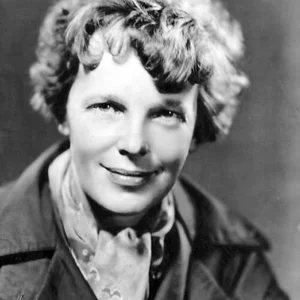
Amelia Earhart
1897 — 1939
A pioneering American aviator of the 20th century, Amelia Earhart made history in aviation by becoming the first woman to cross the Atlantic by plane in 1928. She disappeared in 1937 during an attempt to circumnavigate the globe along the equator, becoming a legendary figure in the history of aerial exploration.
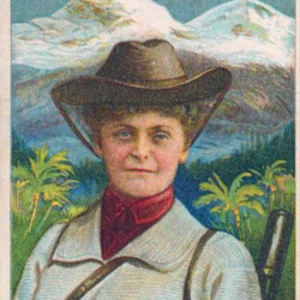
Annie Smith Peck
1850 — 1935
American mountaineer and educator (1850–1935), pioneer of women's mountaineering. In 1908 she climbed Huascarán in Peru, a summit of nearly 6,800 meters, setting an altitude record for the Western Hemisphere. A women's rights activist, she planted a suffragist flag at the top of a Peruvian mountain.
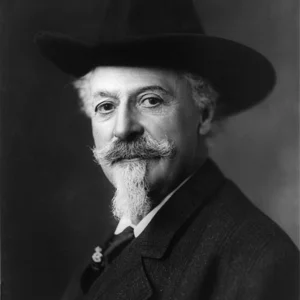
Buffalo Bill
1846 — 1917
William Cody (1846-1917), known as Buffalo Bill, was a scout for the U.S. Army and a bison hunter before becoming a worldwide showman. His Wild West Show staged the conquest of the West before millions of spectators in America and Europe.
Calamity Jane
1852 — 1903
Martha Jane Cannary (c. 1852-1903), known as Calamity Jane, was a scout, stagecoach driver, and iconic figure of the American conquest of the West. A legend in her own lifetime, she performed in Wild West shows and was associated with the gunfighter Wild Bill Hickok.
Cameahwait
Chief of the Shoshone tribe, Cameahwait played a crucial role in the Lewis and Clark Expedition (1805) by providing guides and horses to cross the Rocky Mountains. Brother of Sacagawea, he enabled the American expedition to reach the Pacific.
David Livingstone
1813 — 1873
Physician, Protestant missionary, and Scottish explorer (1813–1873), Livingstone was one of the first Europeans to cross Africa from east to west. He contributed to the geographical knowledge of the continent and actively fought against the slave trade.
Dumont d'Urville
1790 — 1842
French naval officer and explorer (1790–1842), he led several expeditions to the southern seas and Antarctica. He discovered Adélie Land in 1840 and helped identify the Venus de Milo.
Fabian von Bellingshausen
A Russian naval officer and explorer of Baltic German origin, he commanded the first Russian Antarctic expedition (1819-1821). He was one of the first navigators to sight the Antarctic continent, on 28 January 1820.
George Everest
1790 — 1866
British geographer and geodesist, George Everest led the Great Trigonometrical Survey of India in the 19th century. He carried out the precise triangulation of the Indian subcontinent — a monumental undertaking that made it possible to accurately measure the Himalayan peaks. Mount Everest, the highest mountain in the world, was named in his honour in 1865.
Heinrich Schliemann
1822 — 1890
A self-taught German archaeologist (1822–1890), he devoted his fortune to finding the Homeric Troy. His excavations at Hisarlik in Turkey revealed several superimposed cities, one of which he identified — incorrectly — as the Troy of the *Iliad*.
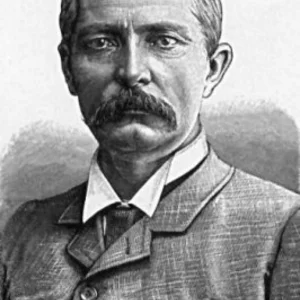
Henry Morton Stanley
1841 — 1904
British journalist and explorer (1841–1904), famous for finding David Livingstone in central Africa in 1871. He led several major expeditions across Africa and played a significant role in the colonization of the Congo.
Isabella Bird
1831 — 1904
A nineteenth-century British explorer and writer, Isabella Bird was one of the first women to travel alone in Japan, China, India, Persia, and the American Rockies. She published numerous travel accounts that earned her international recognition and admission to the Royal Geographical Society.
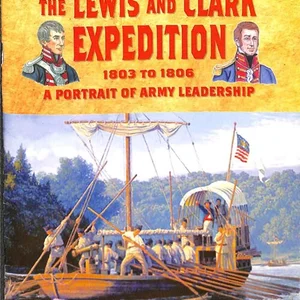
Jean-Baptiste Charbonneau
1805 — 1866
Son of Sacagawea and Toussaint Charbonneau, Jean-Baptiste Charbonneau was born in 1805 during the Lewis and Clark Expedition. He became a guide, trapper, and scout in the American West, roaming the Great Plains and the Rockies for decades.
Jeanne Villepreux-Power
1794 — 1871
French naturalist (1794–1871), pioneer of marine biology. She invented the glass aquarium to observe octopuses and cephalopods in situ, revolutionizing the study of the marine world.
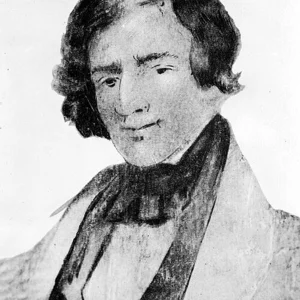
Jedediah Smith
1799 — 1831
American trapper, explorer, and cartographer. The first known man to cross the Sierra Nevada range and the Great Basin desert overland, he helped map the American West before his early death at age 32.
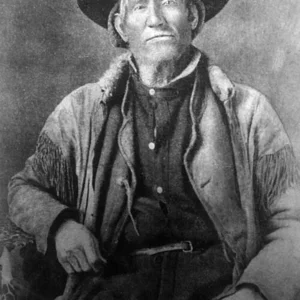
Jim Bridger
1804 — 1881
American trapper, guide, and explorer, an iconic figure among the “mountain men” of the Rockies. In 1824, he was one of the first Anglo-Americans to reach the Great Salt Lake. He founded Fort Bridger, a key way station on the western trails.
John C. Frémont
1813 — 1890
American explorer, military officer and politician nicknamed “the Pathfinder.” He mapped the American West and the Oregon Trail, played a role in the conquest of California, and then became the first Republican candidate in the 1856 presidential election.
Joseph Gallieni
1849 — 1916
General and Marshal of France, Gallieni was a great colonial administrator in Madagascar and Indochina. Military Governor of Paris in 1914, he organized the counter-offensive at the Marne, saving the capital thanks to the famous “taxis of the Marne.”
Joshua Slocum
1844 — 1909
Joshua Slocum (1844-1909) was a Canadian-American deep-sea captain. Between 1895 and 1898, he completed the first solo circumnavigation of the globe under sail aboard the Spray. He recounted his feat in a narrative that became a classic of maritime literature.
Kit Carson
1809 — 1868
American trapper, guide, and soldier, an iconic figure of the conquest of the West. As guide for John C. Frémont's expeditions to the Rockies and California, he later became a Union Army officer and Indian agent, marked by the deportation of the Navajo.
Lewis and Clark
Lewis and Clark led the Corps of Discovery expedition (1804–1806), commissioned by President Jefferson to explore the Louisiana Territory all the way to the Pacific. They were the first Americans to cross the continent from east to west, paving the way for westward expansion.
Louis Faidherbe
1818 — 1889
French general and colonial administrator, governor of Senegal from 1854 to 1865. He extended French influence in West Africa, modernized Dakar, and founded lasting institutions. He also commanded the Army of the North during the Franco-Prussian War of 1870.
Mary Kingsley
1862 — 1900
British explorer and ethnographer (1862–1900), Mary Kingsley was one of the first European women to travel alone in West Africa. She brought back invaluable observations on the cultures and wildlife of Gabon and the Congo, and championed African societies against colonial prejudice.
Meriwether Lewis
1774 — 1809
American army officer and explorer, Meriwether Lewis co-led with William Clark the 1804–1806 expedition commissioned by Thomas Jefferson to explore the American West all the way to the Pacific. This expedition, known as the Corps of Discovery, crossed the newly acquired Louisiana Territory and paved the way for the westward settlement of the continent.
Nellie Bly
1864 — 1922
A pioneering American journalist, Nellie Bly made her mark through undercover investigative journalism, most notably by having herself committed to a psychiatric asylum to expose its conditions. In 1889, she traveled around the world in 72 days, breaking the fictional record of Phileas Fogg.
Otto Lilienthal
1848 — 1896
German engineer and inventor (1848–1896), Otto Lilienthal was the first person to achieve repeated and controlled gliding flights. His experiments with gliders laid the scientific foundations of modern aviation.
Stagecoach Mary
1832 — 1914
Born into slavery in Tennessee around 1832, Mary Fields became in 1895 the first African American woman mail carrier (Star Route) in the United States, in Montana. Nicknamed “Stagecoach Mary,” she became a legendary figure of the American conquest of the West.
William Clark
1770 — 1838
An American army officer and explorer, William Clark co-led the Corps of Discovery expedition (1804–1806) with Meriwether Lewis, commissioned by President Jefferson. The expedition crossed North America to the Pacific Ocean, paving the way for the settlement of the American West.
Performing Arts(30)
Amilcare Ponchielli
1834 — 1886
Italian composer (1834–1886), a major figure of Italian Romantic opera. He is best known for La Gioconda (1876), from which the celebrated Dance of the Hours is taken. He was a professor of Puccini and Mascagni at the Milan Conservatory.
Annie Oakley
1860 — 1926
Annie Oakley (1860-1926) was an American sharpshooter who became the star of Buffalo Bill's Wild West Show. Nicknamed “Little Sure Shot,” she embodied the mythologized figure of the conquest of the West while pushing back the limits placed on the women of her time.
Anton Chekhov
1860 — 1904
Russian writer and playwright, a master of the short story and of modern theatre. Trained as a physician, he renewed dramatic art with plays built on atmosphere and the unspoken rather than on plot, such as The Cherry Orchard and The Three Sisters.
August Strindberg
1849 — 1912
Swedish writer, playwright and painter (1849-1912), a major figure of Scandinavian literature. A pioneer of naturalism and later a forerunner of expressionism and modern theatre, he profoundly renewed European dramatic art.
Auguste Lumière
1862 — 1954
Auguste Lumière (1862–1954) was a French inventor and industrialist who, together with his brother Louis, developed the Cinématographe in 1895, giving birth to cinema. He also contributed to colour photography with the invention of the Autochrome.
Bartolomeo Merelli
1794 — 1879
Italian theater director and librettist (1794–1879), Merelli ran La Scala in Milan and the Kärntnertortheater in Vienna. He played a decisive role in Verdi's career by commissioning Nabucco in 1842.
Buffalo Bill
1846 — 1917
William Cody (1846-1917), known as Buffalo Bill, was a scout for the U.S. Army and a bison hunter before becoming a worldwide showman. His Wild West Show staged the conquest of the West before millions of spectators in America and Europe.
Calamity Jane
1852 — 1903
Martha Jane Cannary (c. 1852-1903), known as Calamity Jane, was a scout, stagecoach driver, and iconic figure of the American conquest of the West. A legend in her own lifetime, she performed in Wild West shows and was associated with the gunfighter Wild Bill Hickok.
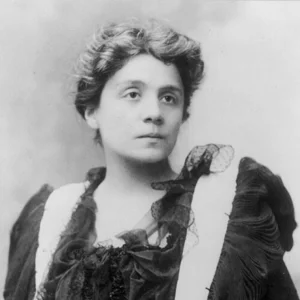
Eleonora Duse
1858 — 1924
Nicknamed “La Duse,” this Italian tragedienne (1858–1924) revolutionized dramatic art through a style of unprecedented inner truth, free of makeup and theatrical effects. Legendary rival of Sarah Bernhardt, she embodied the heroines of Ibsen and D’Annunzio on the greatest stages of Europe and America.
Elizabeth Arnold Poe
1787 — 1811
American actress of English origin, a figure of the traveling theater of the early years of the United States. Mother of the famous writer Edgar Allan Poe, she died young of tuberculosis, leaving her children orphaned.
Gaetano Donizetti
1797 — 1848
Italian composer (1797-1848), a leading figure of bel canto alongside Bellini and Rossini. He composed more than 70 operas, including Lucia di Lammermoor (1835) and L'Elisir d'amore (1832).
Georges Méliès
1861 — 1938
French filmmaker, actor, producer, director, conjurer and illusionist, pioneer and inventor of cinematic spectacle (1861–1938)
Gioachino Rossini
1792 — 1868
Italian composer (1792–1868), Rossini is one of the masters of 19th-century opera. His most celebrated work, The Barber of Seville (1816), remains a masterpiece of the world operatic repertoire.
Harriet Smithson
1800 — 1854
Irish actress famous for her Shakespearean roles, she triumphed in Paris in 1827. Hector Berlioz, madly in love with her, dedicated his Symphonie fantastique to her before marrying her in 1833.
Helena Modrzejewska
1840 — 1909
Polish actress regarded as one of the greatest tragediennes of her time. After emigrating to the United States in 1876, she pursued a brilliant career under the name Helena Modjeska, particularly in Shakespearean roles. She inspired Susan Sontag's novel 'In America'.
Henrik Ibsen
1828 — 1906
Henrik Ibsen (1828-1906) was a Norwegian playwright and poet, considered the father of modern theatre. His realist plays explore social hypocrisies and the condition of women, notably in A Doll's House.
J. M. W. Turner
1775 — 1851
British painter and engraver (1775-1851), Turner is considered the master of Romantic landscape. A forerunner of Impressionism, he revolutionized the depiction of light, water, and atmosphere.
Jeanne Duval
1820 — 1868
Franco-Haitian actress and dancer, Jeanne Duval is best known as the muse and companion of Charles Baudelaire. She inspired the “Black Venus cycle” in *The Flowers of Evil*, while embodying the figure of the exoticized Black woman in the colonial imagination of the 19th century.
Jenny Lind
1820 — 1887
Nineteenth-century Swedish singer, a coloratura soprano of international fame nicknamed “the Swedish Nightingale.” She enjoyed immense success in Europe and then in the United States during a tour organized by the impresario P. T. Barnum.
Louis Lumière
1864 — 1948
French inventor and industrialist, Louis Lumière developed the Cinématographe with his brother Auguste in 1895. On December 28, 1895, they organized the first paid public film screening in Paris, a founding moment in the history of cinema worldwide. He also invented the Autochrome process, the first commercially available color photography technique.
Lumière Brothers
1862/1864 — 1954/1948
Inventors of the cinematograph, pioneers of cinema
Marie Taglioni
1804 — 1884
A 19th-century Italian prima ballerina, Marie Taglioni revolutionized Romantic ballet by popularizing dancing on pointe. Her performance in *La Sylphide* (1832) defined the airy, ethereal aesthetic of Romantic ballet for generations to come.
Napoleon III
1808 — 1873
Nephew of Napoleon I, he was elected President of the Republic in 1848, then seized power through a coup d'état on December 2, 1851, before proclaiming the Second Empire. His reign profoundly transformed France: the modernization of Paris under Haussmann, industrial and railway expansion — until the defeat at Sedan in 1870.
Nellie Melba
1861 — 1931
Nellie Melba (1861-1931) was the most celebrated Australian coloratura soprano of her time. Triumphing at Covent Garden and the Paris Opera, she embodied the prestige of bel canto and the grand operatic tradition of the Belle Époque.
Niccolò Paganini
1782 — 1840
Niccolò Paganini (1782–1840) was an Italian violinist and composer, considered the greatest virtuoso of his era. His revolutionary technique and stage charisma earned him extraordinary fame across Europe, fuelling a dark and mysterious legend.
Rachel Félix
1821 — 1858
A brilliant tragedienne of the Comédie-Française, Rachel Félix (1821–1858) revived French classical tragedy in the nineteenth century. Born into a modest Jewish family, she rose to fame through her electrifying performances in the roles of Racine and Corneille, becoming the most celebrated actress in Europe.
Richard Wagner
1813 — 1883
German composer (1813–1883), Wagner revolutionized opera by creating the concept of the total work of art (Gesamtkunstwerk). His music dramas, including the Ring Cycle and Tristan und Isolde, remain towering monuments of Romanticism.
Sarah Bernhardt
1844 — 1923
painter (born 1989)
Wild Bill Hickok
1837 — 1876
An iconic figure of the American West, James Butler Hickok was in turn a Union scout, a Kansas lawman, a professional gambler, and a stage performer. A renowned gunfighter, he became a living legend before being shot in the back in 1876.
Yvette Guilbert
1865 — 1944
French café-concert singer and *diseuse* (1865–1944), an icon of the Belle Époque immortalized by Toulouse-Lautrec. Famous for her long black gloves and her expressionist delivery of Parisian realist songs.
Economics(28)
Alfred Marshall
1842 — 1924
Alfred Marshall (1842-1924) was a British economist and a leading figure of the neoclassical school. His textbook *Principles of Economics* (1890) profoundly shaped the teaching of economic science for several decades.
Aristide Boucicaut
1810 — 1877
Aristide Boucicaut (1810-1877) was a French entrepreneur who founded Le Bon Marché in Paris in 1852, inventing the concept of the modern department store. He revolutionized retail by introducing fixed prices, free entry, and clearance sales.
Camillo Cavour
1810 — 1861
Piedmontese statesman (1810–1861), Cavour was the principal architect of Italian unification. As President of the Council of the Kingdom of Sardinia, he pursued a liberal policy and used diplomacy to win over France and isolate Austria.
Carl Menger
1840 — 1921
Carl Menger (1840-1921) was an Austrian economist and the founder of the Austrian School of economics. With his theory of marginal utility, he took part in the “marginalist revolution” that transformed economic thought in the 19th century.
Charles Fourier
1772 — 1837
Charles Fourier was a French philosopher and social theorist, one of the leading representatives of utopian socialism. He envisioned a harmonious society organized into self-sufficient communities called phalansteries.
Édouard Chaligny
A French industrialist of the 19th century, Édouard Chaligny was a key figure in the development of the 12th arrondissement of Paris. His name lives on through the rue Chaligny and the Faidherbe-Chaligny metro station (line 8).
Eli Whitney
1765 — 1825
American inventor and industrialist (1765–1825), Eli Whitney is famous for inventing the cotton gin in 1793 and for developing the concept of interchangeable parts in industrial production. His innovations profoundly transformed the American economy and foreshadowed the Industrial Revolution.
Emmanuel Crétet de Champmol
French statesman (1747-1809), Minister of the Interior under Napoleon I and first governor of the Bank of France. He played a key role in the administrative and financial reorganization of Consular and Imperial France.
Eusebi Güell
Catalan industrialist and patron of the arts (1846–1918), Eusebi Güell was the principal supporter of architect Antoni Gaudí. Using his textile fortune, he funded the boldest works of Catalan Modernisme, including Park Güell and Palau Güell in Barcelona.
François Richard-Lenoir
1765 — 1839
A Norman industrialist, he became one of the greatest French cotton manufacturers under the First Empire, taking advantage of the Continental Blockade to eliminate British competition. The fall of Napoleon and the return of British cotton ruined his fortune, but he is remembered for his genuine concern for the well-being of his workers.
Friedrich List
1789 — 1846
German economist and publicist, theorist of educational protectionism. He advocated the temporary protection of infant industries to allow developing nations to catch up with England.
George Westinghouse
1846 — 1914
American engineer and industrialist (1846–1914), George Westinghouse invented the air brake for trains, revolutionizing railroad safety. He championed alternating current (AC) against Thomas Edison in the famous "War of Currents," helping to electrify the modern world.
Henry George
1839 — 1897
Henry George was an American economist and journalist. He is famous for his book Progress and Poverty (1879), in which he argues for a single tax on land value as a remedy for inequality.
Jean Lafitte
1776 — 1826
French privateer and smuggler based in the Gulf of Mexico in the early 19th century. As leader of the buccaneer community of Barataria, near New Orleans, he came to the aid of the Americans at the Battle of New Orleans in 1815.
Jean-Frédéric Perregaux
1744 — 1808
A Swiss banker based in Paris, Jean-Frédéric Perregaux was one of the co-founders of the Banque de France in 1800 and its first regent. A senator of the First Empire, he played a central role in stabilizing the finances of Napoleonic France.
Joseph Marie Jacquard
1752 — 1834
French inventor born in Lyon in 1752, Jacquard developed in 1801 an automated loom using punched cards to control patterns. His invention revolutionized the textile industry and foreshadowed the concept of computer programming.
Léon Walras
1834 — 1910
Léon Walras (1834-1910) was a French economist and founder of the Lausanne School. He is one of the fathers of the neoclassical approach and developed the theory of general equilibrium, described using mathematical tools.
Madam C.J. Walker
1867 — 1919
First self-made female millionaire in the USA, born to formerly enslaved parents
Manuel Vicens
A 19th-century Catalan businessman, ceramic tile merchant and stockbroker, Manuel Vicens i Montaner is best known for commissioning Antoni Gaudí to build his summer home in Barcelona, the Casa Vicens (1883–1885), the architect's first major work.
Margarete Steiff
1847 — 1909
Margarete Steiff (1847-1909) was a German seamstress and entrepreneur, founder of the Steiff toy manufacturing company. Stricken with polio and using a wheelchair, she built a thriving business from her hand-sewn felt animals, which gave rise to the famous teddy bear.
Maria Beasley
1836 — 1913
Maria Beasley (1836-1904) was an American inventor and entrepreneur. She is famous for perfecting the life raft and for designing a barrel-making machine that made her fortune.
Paul Durand-Ruel
1831 — 1922
Paul Durand-Ruel (1831-1922) was the principal art dealer of the French Impressionists. He provided financial support to Monet, Renoir, Pissarro, and their contemporaries at a time when their art was being rejected, playing a decisive role in their international recognition.
Pereire Brothers (Émile and Isaac)
Banker brothers of Bordeaux origin and disciples of Saint-Simonianism, they financed the first French railway (Paris–Saint-Germain, 1837) and founded the Crédit Mobilier (1852), an innovative investment bank that rivaled the Rothschilds under the Second Empire.
Robert Owen
1771 — 1858
A Welsh industrialist and socialist theorist, Robert Owen transformed the New Lanark cotton mill into a model of social reform. A pioneer of utopian socialism and the cooperative movement, he championed better conditions for workers and education for all.
Robert Surcouf
1773 — 1827
French Malouin privateer, shipowner and slave trader (1773-1827). Nicknamed the “King of Corsairs,” he led feared campaigns against British maritime trade in the Indian Ocean during the Revolutionary and Napoleonic Wars, before becoming a wealthy shipowner in Saint-Malo.
Stuart Mill
John Stuart Mill (1806-1873) was a British philosopher, economist, and politician. A major figure of liberalism and utilitarianism, he championed individual liberties, freedom of expression, and the emancipation of women.
Thomas Edison
1847 — 1931
American inventor and industrialist (1847–1931), Edison is one of the greatest innovators in history. He filed more than 1,000 patents and created the incandescent light bulb, the phonograph, and the electrical distribution system.
Vilfredo Pareto
1848 — 1923
Vilfredo Pareto (1848-1923) was an Italian economist and sociologist, a major figure of the Lausanne School. He left his mark on neoclassical political economy and sociology through his work on the distribution of wealth and the behavior of elites.
Culture(26)
Adam Mickiewicz
1798 — 1855
Adam Mickiewicz (1798-1855) is Poland's greatest national poet and a major figure of European Romanticism. His epic and lyrical work expresses nostalgia for occupied Poland and the aspiration for national freedom.
Alessandro Manzoni
1785 — 1873
Alessandro Manzoni (1785–1873) was the greatest Italian novelist of the 19th century and a central figure of Romanticism. His historical novel *I Promessi Sposi* (*The Betrothed*, 1827) is regarded as the first modern novel written in Italian and played a decisive role in the linguistic unification of Italy.
Alfred Bruyas
1821 — 1877
Alfred Bruyas (1821-1877) was a French collector, patron of the arts, and amateur painter from Montpellier. Heir to a family fortune, he devoted his life to building a major art collection, most notably by supporting Gustave Courbet. His collection forms the core holdings of the Musée Fabre in Montpellier.
Anatole France
1844 — 1924
Born François-Anatole Thibault, Anatole France was a French writer, literary critic, and essayist, and a major figure of the Belle Époque. A committed Dreyfusard, he was awarded the Nobel Prize in Literature in 1921.
Auguste Escoffier
1846 — 1935
French chef and culinary author
Billy the Kid
1859 — 1881
American outlaw of the Wild West, famous for his skill as a gunfighter and his involvement in the Lincoln County War. Killed at age 21 by Sheriff Pat Garrett, he became a legendary figure of the conquest of the American West.
Cameahwait
Chief of the Shoshone tribe, Cameahwait played a crucial role in the Lewis and Clark Expedition (1805) by providing guides and horses to cross the Rocky Mountains. Brother of Sacagawea, he enabled the American expedition to reach the Pacific.
Davy Crockett
1786 — 1836
American pioneer, hunter, and politician, elected several times to Congress for the state of Tennessee. Having become a legendary figure of the conquest of the West, he died defending Fort Alamo during the Texas Revolution in 1836.
Doc Holliday
1851 — 1887
American dentist turned professional gambler and gunfighter, an iconic figure of the Wild West. A friend and ally of Wyatt Earp, he took part in the Gunfight at the O.K. Corral in 1881 in Tombstone, Arizona.
Dorothea Viehmann
1755 — 1816
Dorothea Viehmann (1755-1815) was a German storyteller, the daughter of an innkeeper near Kassel. Her exceptional memory for folk tales made her one of the main sources for the Brothers Grimm, who collected many stories from her for their “Children's and Household Tales.”
Edmond and Jules de Goncourt
French writer brothers and art critics, they were the co-founders of literary naturalism with novels such as Germinie Lacerteux (1864). Their Journal, kept from 1851 to 1896, is a landmark record of artistic and literary life in the 19th century. In his will, Edmond established the Académie Goncourt, which has awarded France's most prestigious literary prize since 1903.
Edward FitzGerald
1809 — 1883
19th-century British poet and translator, celebrated for his free translation of the Rubaiyat of Omar Khayyam (1859), which achieved remarkable success across Europe and helped introduce Persian poetry to Western readers.
Edward VII
1841 — 1910
Son of Queen Victoria, Edward VII reigned over the United Kingdom and the Empire of India from 1901 to 1910. An emblematic figure of the Belle Époque, he played a decisive role in bringing France and Britain closer together through the Entente Cordiale of 1904.
Élisa Schlésinger
1810 — 1888
A woman of the French bourgeoisie whom Gustave Flaubert met at Trouville in 1836, when he was fifteen years old. This encounter left a lasting mark on the writer: she inspired the character of Madame Arnoux in Sentimental Education.
Eusebi Güell
Catalan industrialist and patron of the arts (1846–1918), Eusebi Güell was the principal supporter of architect Antoni Gaudí. Using his textile fortune, he funded the boldest works of Catalan Modernisme, including Park Güell and Palau Güell in Barcelona.
Guangxu
1871 — 1908
Guangxu (1871–1908) was the eleventh emperor of the Qing dynasty. In 1898, he attempted to modernize China through the "Hundred Days' Reform," but Empress Dowager Cixi seized power and placed him under house arrest until his death.
Jesse James
1847 — 1882
American outlaw, a former Confederate guerrilla who became the leader of the James-Younger gang. A robber of banks and trains across the Midwest after the American Civil War, he was assassinated in 1882 and became a legendary figure of Western folklore.
Marie Laveau
1801 — 1881
Marie Laveau (c. 1801–1881) was the famous 'Voodoo Queen' of New Orleans. A free woman of color, she practiced Louisiana Voodoo, blending African and Caribbean traditions with Creole Catholicism. Her spiritual and social influence in Louisiana's Afro-Creole community remains legendary.
Marie Taglioni
1804 — 1884
A 19th-century Italian prima ballerina, Marie Taglioni revolutionized Romantic ballet by popularizing dancing on pointe. Her performance in *La Sylphide* (1832) defined the airy, ethereal aesthetic of Romantic ballet for generations to come.
Nguyễn Du
1766 — 1820
Poet and major cultural figure of Vietnam (1766–1820), known as the "Great National Poet." Author of Truyện Kiều, a masterpiece of classical Vietnamese literature, recognized by UNESCO as a World Cultural Personality. [1]
Rachel Félix
1821 — 1858
A brilliant tragedienne of the Comédie-Française, Rachel Félix (1821–1858) revived French classical tragedy in the nineteenth century. Born into a modest Jewish family, she rose to fame through her electrifying performances in the roles of Racine and Corneille, becoming the most celebrated actress in Europe.
Richard Wagner
1813 — 1883
German composer (1813–1883), Wagner revolutionized opera by creating the concept of the total work of art (Gesamtkunstwerk). His music dramas, including the Ring Cycle and Tristan und Isolde, remain towering monuments of Romanticism.
Takai Kozan
Takai Kozan (1806-1883) was a wealthy Japanese merchant, scholar, calligrapher, and painter of the nanga school. He is best known for welcoming the master Hokusai into his home in Obuse, and for his involvement in the sonnō jōi imperialist movement at the end of the Edo period.
Walter Scott
1771 — 1832
Scottish writer and poet (1771–1832), Walter Scott is the father of the modern historical novel. Works such as *Ivanhoe* and *Waverley* popularized the Romantic vision of the Middle Ages across Europe.
Yaa Akyaa
1840 — ?
Yaa Akyaa was queen mother of the Ashanti Kingdom in the nineteenth century, holding considerable political and symbolic power within the Akan matrilineal tradition. Her role was to advise the king (Asantehene) and to embody dynastic legitimacy.
Yvette Guilbert
1865 — 1944
French café-concert singer and *diseuse* (1865–1944), an icon of the Belle Époque immortalized by Toulouse-Lautrec. Famous for her long black gloves and her expressionist delivery of Parisian realist songs.
Mythology(6)
Charlotte Guest
1812 — 1895
British translator and businesswoman (1812–1895), celebrated for her English translation of the Mabinogion, a foundational collection of medieval Welsh myths and legends. She also managed the Dowlais ironworks in Wales, becoming one of the first women to run a major industrial enterprise.
George Grey
1812 — 1898
British colonial governor and ethnologist, George Grey successively administered South Australia, New Zealand, and the Cape Colony. Passionate about indigenous cultures, he devoted part of his life to collecting and publishing Māori myths and language.
Hippolyte Fauche
1797 — 1869
A French Orientalist and Sanskritist of the 19th century, Hippolyte Fauche was the first to produce a complete French translation of the Mahabharata. His monumental work opened Indian epic literature to French-speaking audiences.
J. M. W. Turner
1775 — 1851
British painter and engraver (1775-1851), Turner is considered the master of Romantic landscape. A forerunner of Impressionism, he revolutionized the depiction of light, water, and atmosphere.
Napoleon III
1808 — 1873
Nephew of Napoleon I, he was elected President of the Republic in 1848, then seized power through a coup d'état on December 2, 1851, before proclaiming the Second Empire. His reign profoundly transformed France: the modernization of Paris under Haussmann, industrial and railway expansion — until the defeat at Sedan in 1870.
Richard Wagner
1813 — 1883
German composer (1813–1883), Wagner revolutionized opera by creating the concept of the total work of art (Gesamtkunstwerk). His music dramas, including the Ring Cycle and Tristan und Isolde, remain towering monuments of Romanticism.
Sports(2)
Annie Oakley
1860 — 1926
Annie Oakley (1860-1926) was an American sharpshooter who became the star of Buffalo Bill's Wild West Show. Nicknamed “Little Sure Shot,” she embodied the mythologized figure of the conquest of the West while pushing back the limits placed on the women of her time.
Annie Smith Peck
1850 — 1935
American mountaineer and educator (1850–1935), pioneer of women's mountaineering. In 1908 she climbed Huascarán in Peru, a summit of nearly 6,800 meters, setting an altitude record for the Western Hemisphere. A women's rights activist, she planted a suffragist flag at the top of a Peruvian mountain.
Old West(2)
Buffalo Bill
1846 — 1917
William Cody (1846-1917), known as Buffalo Bill, was a scout for the U.S. Army and a bison hunter before becoming a worldwide showman. His Wild West Show staged the conquest of the West before millions of spectators in America and Europe.
Jim Bridger
1804 — 1881
American trapper, guide, and explorer, an iconic figure among the “mountain men” of the Rockies. In 1824, he was one of the first Anglo-Americans to reach the Great Salt Lake. He founded Fort Bridger, a key way station on the western trails.