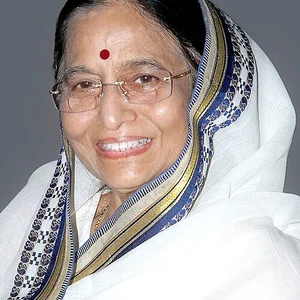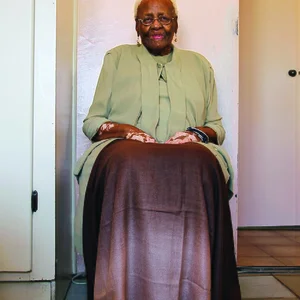

A South African anti-apartheid activist of Indian descent, Amina Cachalia devoted her life to fighting racial segregation in South Africa. A close ally of Nelson Mandela and the ANC, she was a leading figure in the Federation of South African Women.
Amina Cachalia(1930 — 2013)
Amina Cachalia
Afrique du Sud
8 min read
Frequently asked questions
Key Facts
- Born in 1930 into an activist Indian family in South Africa
- Active member of the African National Congress (ANC) and the Federation of South African Women from the 1950s onwards
- Signatory of the Freedom Charter in 1955
- Subject to banning orders and restrictions imposed by the apartheid regime for decades
- Passed away in 2013, hailed by Jacob Zuma as an icon of the anti-apartheid struggle
Works & Achievements
Amina Cachalia was one of the founders of this pioneering multiracial organization. She contributed to drafting the Women's Charter, the first text demanding equal rights for all South African women regardless of race.
Amina took part in this peaceful resistance campaign organized jointly by the ANC and the Indian Congress, which inspired civil rights movements around the world and strengthened the multiracial anti-apartheid coalition.
Alongside her husband Yusuf Cachalia, Amina worked to mobilize South Africa's Indian community in the shared struggle against apartheid, embodying the strategic alliance between the country's various oppressed communities.
In her later years, Amina Cachalia spoke extensively about the history of the anti-apartheid struggle, preserving invaluable memories of that era for historians and new generations of South Africans.
Following the first democratic elections, Amina continued to engage in South African civil society on behalf of women's rights and equality, working to ensure that the ideals of the anti-apartheid struggle were translated into reality.
Anecdotes
Amina Cachalia and Nelson Mandela shared a deep friendship that lasted their entire lives. When Mandela was released in 1990 after 27 years in prison, visiting Amina was among his first acts as a free man. She recalled that this friendship, forged in their shared struggle against apartheid, had survived all the years of forced separation.
In 1952, Amina took an active part in the Defiance Campaign alongside the ANC and the Indian Congress. Activists deliberately disobeyed segregationist laws and allowed themselves to be arrested, filling the prisons to expose the injustice of the regime. Amina was among the many women who defied the restrictions by entering areas reserved for white people.
Amina was one of the founding members of the Federation of South African Women in 1954. This multiracial organisation drafted the Women's Charter, a pioneering document demanding equal rights for all women regardless of race. It directly inspired the Freedom Charter adopted the following year at the Congress of the People in Kliptown.
The apartheid government imposed banning orders on Amina Cachalia on several occasions, prohibiting her from attending meetings, travelling freely, or speaking publicly. Despite these severe restrictions, she continued to support the resistance movement quietly, keeping solidarity networks alive from her home in Johannesburg.
Born into a politically committed Indian family — her father Molvi I.A. Cachalia was himself an activist — Amina married Yusuf Cachalia, a leading figure in the Transvaal Indian Congress. Their home became a gathering place for resistance, frequented by prominent figures in the anti-apartheid struggle. This dual belonging, to both the Indian community and the ANC's multiracial movement, made her a symbol of unity in the fight for freedom.
Primary Sources
We, the women of South Africa, wives and mothers, working women and housewives, Africans, Indians, Coloured and European women — we speak here together, for the first time united in our purpose, to tell of our aims, our desires and our feelings.
We, the People of South Africa, declare for all our country and the world to know: that South Africa belongs to all who live in it, black and white, and that no government can justly claim authority unless it is based on the will of all the people.
The campaign is directed against unjust laws. Its immediate aims are the repeal of the pass laws, the stock limitation laws, the Group Areas Act, the Separate Representation of Voters Act, the Suppression of Communism Act and certain regulations made under the Veterinary Act.
Amina was a remarkable woman — strong, courageous and deeply committed to freedom and equality. She never wavered in her dedication to our struggle, even when subjected to banning orders and constant harassment by the apartheid government.
Key Places
Amina Cachalia's birthplace and the economic heart of South Africa. It was here that she grew up, fought for justice, and spent most of her life, within an Indian community deeply committed to opposing apartheid.
The site where the Freedom Charter was adopted on June 26, 1955, during the Congress of the People, attended by thousands of delegates from all racial backgrounds. This document, which Amina championed, remains a symbol of the multiracial struggle against apartheid.
The seat of the South African government, in front of which 20,000 women marched in August 1956 to protest the pass laws. This landmark event was part of the broader struggle to which Amina devoted herself.
The prison where Nelson Mandela, a close friend of Amina, was held for 18 of his 27 years of imprisonment. This place symbolizes the forced separation of activists from their families and communities under the apartheid regime.
A Johannesburg neighborhood designated for the Indian community under the Group Areas Act. Amina and her family lived here, in enforced segregation — yet one that also strengthened community bonds and solidarity.
Typical Objects

The African National Congress was the central resistance organization against apartheid. Amina joined its women's league and campaigned actively within it, at the risk of her own arrest.

An official document issued by the apartheid government restricting the movements, meetings, and public speech of activists deemed dangerous. Amina received several of these during the 1950s and 1960s, a symbol of the repression she endured.

A founding document drafted in 1954 by the Federation of South African Women, of which Amina was one of the driving forces. It demanded equal rights for all women, regardless of race.

The traditional Indian garment worn by Amina, a symbol of her cultural identity. Her membership in South Africa's Indian community allowed her to build bridges between the different non-white communities fighting against apartheid.

The mandatory identity document required of Black South Africans, a symbol of racial oppression. Although Amina, as an Indian woman, was not subject to the same pass laws, opposing this system was at the heart of her activism.

An essential tool of activism in that era, used to produce leaflets, petitions, and clandestine correspondence. In activist households like Amina's, the typewriter was an instrument of resistance.
School Curriculum
Vocabulary & Tags
Key Vocabulary
Tags
Daily Life
Morning
Amina starts her day early, preparing the family meal in a home that also serves as a gathering point for activists. She listens to the radio to follow the news — official pro-apartheid broadcasts she takes in with a critical eye — and reads the tracts and clandestine letters that arrived overnight.
Afternoon
Her afternoons are devoted to meetings of the Federation of Women or the Indian Congress, often held discreetly to avoid police surveillance. She drafts correspondence, organizes solidarity collections for the families of imprisoned activists, and coordinates information networks between communities.
Evening
In the evenings, the Cachalia home becomes a place of exchange: activists of all backgrounds — African, Indian, mixed-race — gather to discuss strategy and resistance. Despite banning orders, conversations continue under the cover of family gatherings, over the warmth of a shared meal.
Food
Amina's cooking reflects her Indian roots: curries fragrant with spices (cumin, coriander, turmeric), rice, chapatis, and samosas, prepared with local South African ingredients. The table is often shared with fellow activists of all backgrounds, embodying in everyday life the multiracial ideal of the movement.
Clothing
Amina frequently wears the sari, the traditional Indian garment in colorful silks or cottons — saffron, emerald green, burgundy — paired with understated jewelry. At public political meetings, she sometimes opts for more Western dress to avoid drawing the attention of the authorities.
Housing
The Cachalia family lives in a neighborhood assigned to the Indian community in Johannesburg, in a comfortable house but one under constant police surveillance. Their home, with its reception room regularly welcoming activists, serves as both a family refuge and a nerve center of local resistance.
Historical Timeline
Period Vocabulary
Visual Style
Esthétique documentaire des années 1950-1960 mêlant la photographie militante en noir et blanc, les couleurs de l'ANC (vert, or, noir) et les textiles indiens chatoyants — portrait d'une femme à l'intersection de deux cultures unies dans la résistance.
Sound Ambience
Les sons du township de Johannesburg des années 1950 : chants de résistance, réunions militantes clandestines, rumeurs de la ville multilingue et bruits du quotidien d'un foyer indien engagé dans la lutte contre l'apartheid.
Liens externes & ressources
Références
Œuvres
Fondation de la Fédération des femmes sud-africaines
1954
Participation à la Campagne de désobéissance civile
1952
Engagement au sein du Congrès indien de Transvaal
Années 1950-1960
Mémoires et témoignages oraux
Années 2000-2010
Activisme post-apartheid et engagement civique
Après 1994