Politics
Gouvernance, diplomatie, droit, révolutions
894 characters

894 characters
Before Christ(99)
Abel
Abel is the second son of Adam and Eve in Genesis. A devout shepherd, he offers God the finest of his flock. Slain by his brother Cain, he becomes the first murder victim in the Abrahamic tradition.
Aeëtes
King of Colchis in Greek mythology, son of the god Helios and the Oceanid Perseis. Father of Medea, he is the guardian of the Golden Fleece and the main adversary of Jason during the quest of the Argonauts.
Agariste
600 av. J.-C. — 460 av. J.-C.
Athenian aristocrat from the powerful Alcmaeonid family, daughter of Hippocrates and niece of the reformer Cleisthenes. Wife of Xanthippus, she was the mother of Pericles, the great statesman of classical Athens.
Ahmose
1504 av. J.-C. — 1492 av. J.-C.
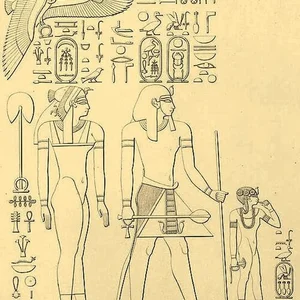
Ahmose was an Egyptian queen of the 18th Dynasty, wife of Pharaoh Thutmose I. She is the mother of the famous pharaoh Hatshepsut. Her role at court illustrates the importance of queens in establishing Egyptian dynastic legitimacy.
Akhenaten
1400 av. J.-C. — 1335 av. J.-C.
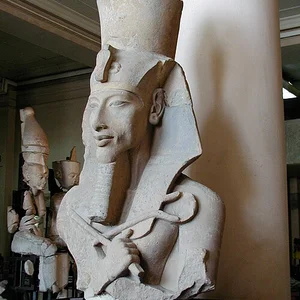
Pharaoh of the 18th Dynasty of Egypt (c. 1353–1336 BCE), Akhenaten revolutionized religion by imposing the monotheistic worship of Aten, the solar disk. He relocated the capital to Akhetaten (Amarna) and profoundly transformed Egyptian art.
Alexander II of Macedon
King of Macedon from 370 to 368 BC, son of Amyntas III and elder brother of Philip II. His brief reign was marked by internal unrest before his assassination by Ptolemy of Aloros.
Amenhotep III
1399 av. J.-C. — 1350 av. J.-C.
Pharaoh of the 18th Egyptian dynasty (c. 1391–1353 BC), he ruled Egypt at the height of its diplomatic and artistic power. His reign was marked by relative peace, intensive building activity, and exceptional cultural refinement.
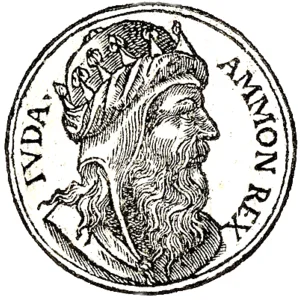
Amon
663 av. J.-C. — 639 av. J.-C.
Amon was the fourteenth king of Judah, son of Manasseh, who reigned around 642–640 BC. Like his father, he practiced idol worship and abandoned the Yahwist faith. He was assassinated by his own servants after only two years of rule.

Amytis
559 av. J.-C. — 600 av. J.-C.
Achaemenid queen presented by certain ancient sources, notably Ctesias of Cnidus, as the daughter of the Median king Astyages and the wife of Cyrus II the Great, founder of the Persian Empire. Her union is said to have sealed the alliance between the Medes and the Persians in the 6th century BC.
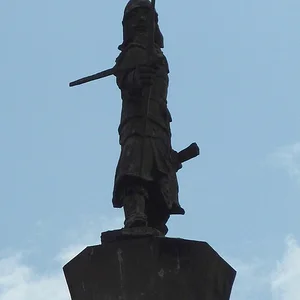
An Dương Vương
250 av. J.-C. — 206 av. J.-C.
An Dương Vương, whose real name was Thục Phán, was the founder and sole ruler of the kingdom of Âu Lạc, formed by the union of the Âu Việt and the Lạc Việt after his victory over the last Hùng king of Văn Lang. He reigned until his defeat by Triệu Đà in 179 BCE, which brought his kingdom to an end.
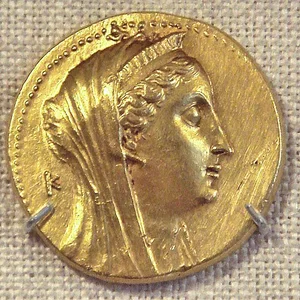
Arsinoe II
315 av. J.-C. — 269 av. J.-C.
A Macedonian princess born around 316 BCE, daughter of Ptolemy I, she became queen of Ptolemaic Egypt. Co-regent alongside her brother and husband Ptolemy II, she wielded considerable political influence and was deified during her own lifetime.
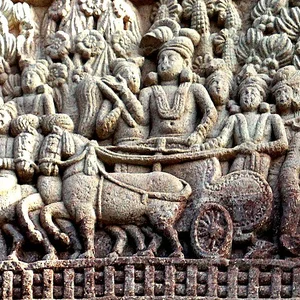
Ashoka
303 av. J.-C. — 231 av. J.-C.
Ashoka was the third emperor of the Maurya dynasty, ruling over nearly the entire Indian subcontinent in the 3rd century BC. Shaken by the carnage of the Kalinga War, he converted to Buddhism and promoted a policy of non-violence (ahimsa) and tolerance. He spread his moral precepts, carved on stone edicts, throughout his empire.
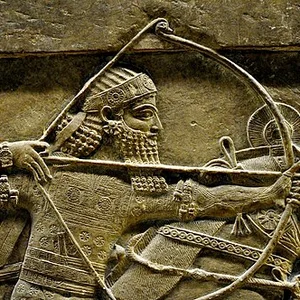
Ashurbanipal
684 av. J.-C. — 630 av. J.-C.
Ashurbanipal was one of the last great kings of the Neo-Assyrian Empire, reigning from 669 to roughly 627 BC. A warrior and scholar king, he brought Assyria to its greatest territorial extent and founded at Nineveh a vast library gathering tens of thousands of cuneiform tablets.
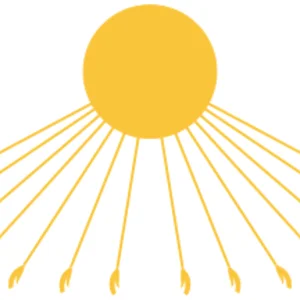
Aten
Aten is the solar deity of ancient Egypt, represented as the sun disk whose rays end in human hands. Elevated to the status of sole god by Pharaoh Akhenaten in the 14th century BCE, Aten stood at the heart of an unprecedented religious revolution.
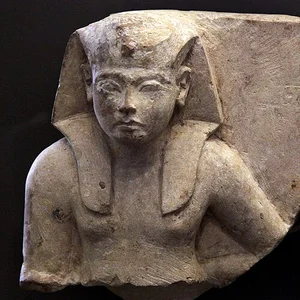
Ay
1400 av. J.-C. — 1400 av. J.-C.
Ay was pharaoh of Egypt around 1323–1319 BCE, successor to Tutankhamun. A senior official and priest, he played a key role at the close of the Amarna period by restoring the traditional worship of the Egyptian gods.
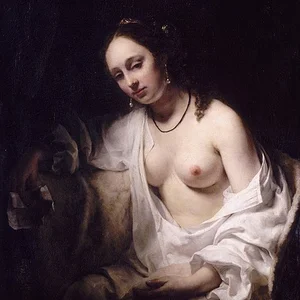
Bathsheba
1008 av. J.-C. — 936 av. J.-C.
Bathsheba is a figure from the Old Testament, wife of Uriah the Hittite and later of King David after Uriah's death. As the mother of Solomon, she played a decisive role in the royal succession by interceding with David to ensure her son would inherit the throne of Israel.
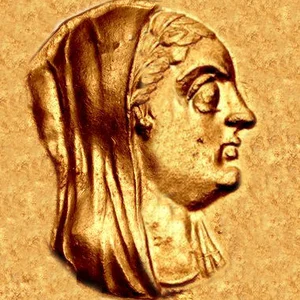
Berenice I
339 av. J.-C. — ?
Macedonian queen who became the wife of Ptolemy I, founder of the Lagid dynasty in Egypt. Mother of Ptolemy II Philadelphus, she was deified after her death and played a foundational role in establishing the dynastic legitimacy of the Ptolemies.
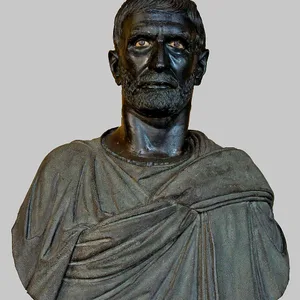
Brutus
1983 — ?
A Roman senator and statesman of the late Republic, Brutus was one of the main instigators of the assassination of Julius Caesar on the Ides of March, 44 BC. Defeated by the triumvirs Octavian and Mark Antony at Philippi, he took his own life in 42 BC.
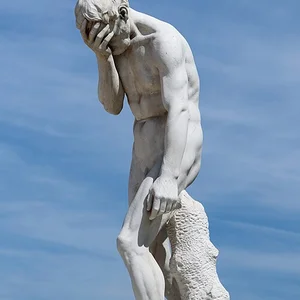
Cain
3899 av. J.-C. — 3199 av. J.-C.
Eldest son of Adam and Eve in the Bible, Cain committed the first murder in human history by killing his brother Abel out of jealousy. Condemned to wander the earth, he received a protective mark from God.
Cambyses II
558 av. J.-C. — 521 av. J.-C.
Cambyses II was a king of the Achaemenid Persian Empire, son and successor of Cyrus the Great. He conquered Egypt in 525 BC and proclaimed himself pharaoh, thereby greatly expanding the empire founded by his father.
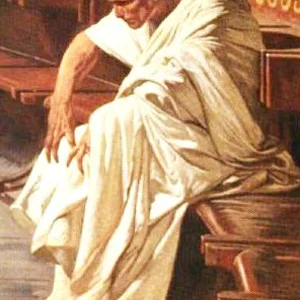
Catiline
107 av. J.-C. — 61 av. J.-C.
Lucius Sergius Catiline was a Roman patrician and politician, famous for plotting a conspiracy to seize power in 63 BC. Exposed by Cicero, he died fighting at the Battle of Pistoria in 62 BC.
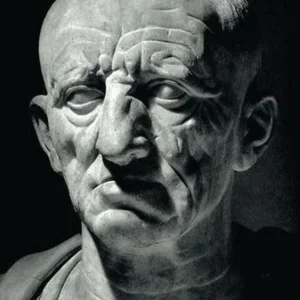
Cato the Elder
233 av. J.-C. — 148 av. J.-C.
Roman statesman and writer (234–149 BC), consul in 195 BC and censor in 184 BC. An uncompromising defender of traditional Roman values, he opposed Greek influence and pursued strict economic policies. He is also considered the first great Latin prose writer, known for his treatise on agriculture.
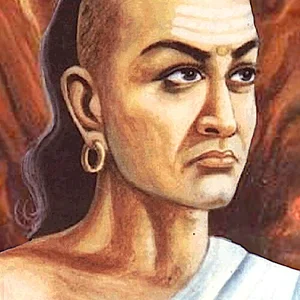
Chanakya
374 av. J.-C. — 282 av. J.-C.
An Indian philosopher, economist, and political strategist of the 4th century BCE, Chanakya served as advisor to Chandragupta Maurya, founder of the Maurya Empire. Often called the "Indian Machiavelli," he authored the Arthashastra, a foundational treatise on politics and economics.
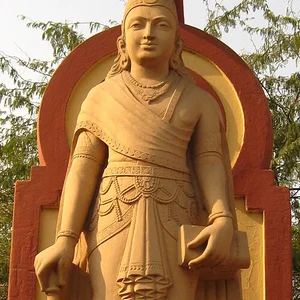
Chandragupta Maurya
339 av. J.-C. — 296 av. J.-C.
Founder of the Maurya Empire in the 4th century BCE, Chandragupta unified the Indian subcontinent after overthrowing the Nanda dynasty. He established the first great centralized empire in Indian history.
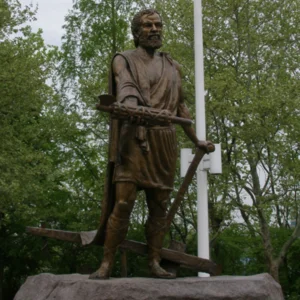
Cincinnatus
518 av. J.-C. — 430 av. J.-C.
Roman patrician of the 5th century BC, appointed dictator in 458 BC to rescue an army surrounded by the Aequi. After his victory in sixteen days, he immediately renounced absolute power to return to tilling his field, becoming the model of Roman civic virtue.
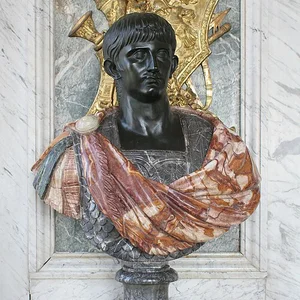
Claudius
9 av. J.-C. — 54
Fourth Roman emperor (41–54 AD), Claudius succeeded Caligula. Despite physical disabilities that long kept him on the margins of power, he proved to be a skilled administrator, reformer, and conqueror of Britain.
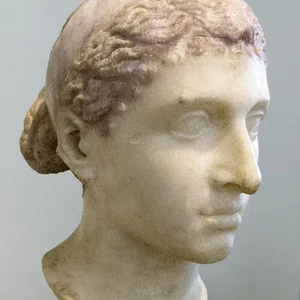
Cleopatra
68 av. J.-C. — 29 av. J.-C.
The last queen of Egypt's Ptolemaic dynasty, Cleopatra VII ruled from 51 to 30 BC. A woman of power and learning, she allied herself with Julius Caesar and later Mark Antony in an effort to preserve her kingdom's independence against Rome.
Clodia Metella
Roman aristocrat of the late Republic, sister of the tribune Publius Clodius Pulcher and wife of the consul Metellus Celer. A cultured and independent woman, she is traditionally identified as the “Lesbia” celebrated by Catullus and was violently attacked by Cicero in the Pro Caelio.
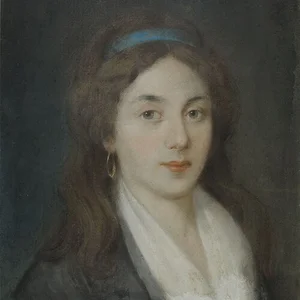
Cornelia
190 av. J.-C. — 100 av. J.-C.
Daughter of Scipio Africanus and wife of Tiberius Sempronius Gracchus, Cornelia (c. 190–100 BC) is the model of the virtuous Roman matron. She raised her twelve children alone after being widowed, refusing a royal remarriage. She is famous for pointing to her sons Tiberius and Gaius as "her most precious jewels."
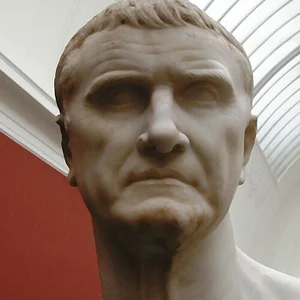
Crassus
114 av. J.-C. — 52 av. J.-C.
A Roman politician and general of the 1st century BC, Crassus was the wealthiest man in Rome. He formed the First Triumvirate with Caesar and Pompey in 60 BC. He died in the disastrous Battle of Carrhae against the Parthians.

Croesus of Lydia
The last king of Lydia (c. 561–546 BC), Croesus remained famous for his legendary wealth, drawn from the gold mines of the Pactolus River. His kingdom was conquered by Cyrus the Great, marking the end of Lydian independence.
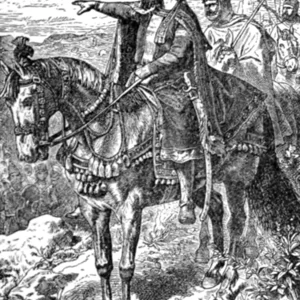
Cyrus II
599 av. J.-C. — 529 av. J.-C.
Founder of the Persian Achaemenid Empire in the 6th century BCE, Cyrus II unified the Median and Persian peoples. Renowned for his tolerance toward conquered peoples, he notably freed the Jewish captives held in Babylon.
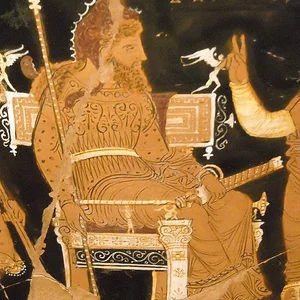
Darius I
549 av. J.-C. — 485 av. J.-C.
Darius I (c. 549–485 BC) was the third great king of the Achaemenid Persian Empire. He expanded the empire to its greatest territorial extent, from the Indus River to Thrace, and profoundly reorganized its administration. He was defeated by the Greeks at the Battle of Marathon in 490 BC.
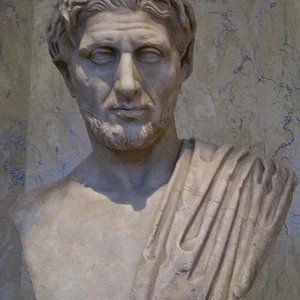
Demetrius of Phalerum
349 av. J.-C. — 282 av. J.-C.
Demetrius of Phalerum was an Athenian philosopher and statesman, a disciple of Aristotle and the Lyceum. As governor of Athens on behalf of Macedonia from 317 to 307 BC, he later took refuge in Alexandria, where he advised Ptolemy I and helped found the Library and the Museum.
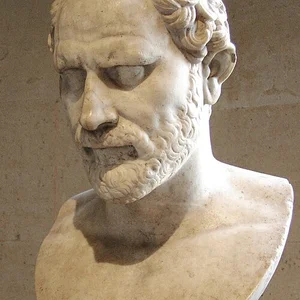
Demosthenes
383 av. J.-C. — 321 av. J.-C.
Demosthenes (384–322 BC) was the greatest orator of ancient Greece. An Athenian statesman, he vigorously opposed the expansion of Philip II of Macedon through his famous speeches, the Philippics.
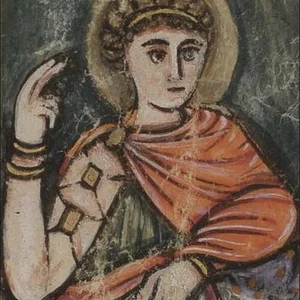
Dido
A Phoenician princess from Tyre, Dido is the legendary founder of Carthage (in present-day Tunisia), according to Greek and Latin tradition. Made famous by Virgil's Aeneid, she embodies the figure of the queen-builder and the tragic woman abandoned by Aeneas.
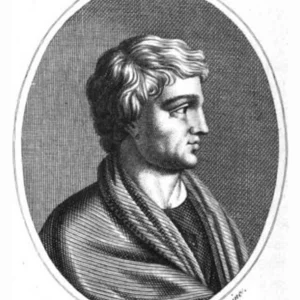
Diodorus Siculus
89 av. J.-C. — 19 av. J.-C.
Greek historian of the 1st century BC, born in Sicily, author of the Bibliotheca historica, a vast universal history encyclopedia in 40 volumes covering mythical origins through the age of Caesar.
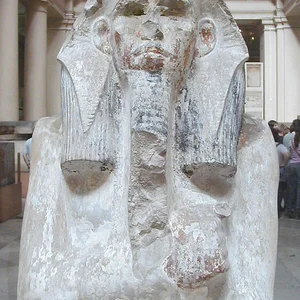
Djoser
2800 av. J.-C. — 2700 av. J.-C.
Pharaoh of the Third Egyptian Dynasty (c. 2650 BCE), Djoser is famous for commissioning the Step Pyramid of Saqqara, the first great funerary monument built in stone in history.
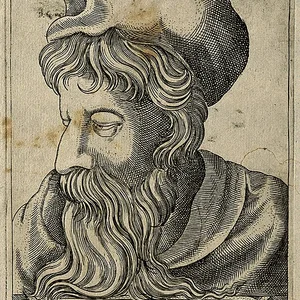
Empedocles
493 av. J.-C. — 433 av. J.-C.
Greek philosopher, physician, and statesman of the 5th century BC, from Akragas in Sicily. He is famous for his theory of the four elements (earth, water, fire, air) and two cosmic forces (Love and Strife). A major figure in Presocratic philosophy, he also had deep interests in medicine and natural phenomena.
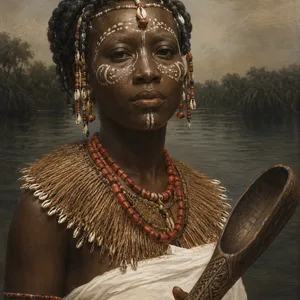
Esimirin
Esimirin is an aquatic deity from the Ijaw (Ijo) mythology, a people of the Niger Delta in Nigeria. A spiritual figure associated with water and prosperity, she holds a central place in the beliefs and traditional rituals of this community.
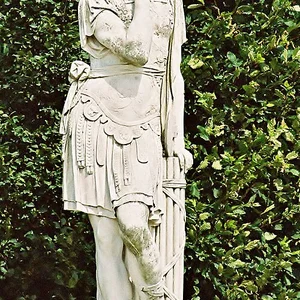
Fabius Cunctator
Roman general and statesman of the late 3rd century BC. Appointed dictator after the disaster at Lake Trasimene (217 BC), he opposed Hannibal through a strategy of attrition and avoidance of pitched battle, earning him the nickname Cunctator, “the Delayer.”
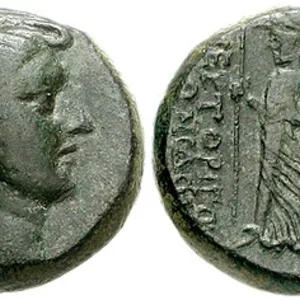
Fulvia
76 av. J.-C. — 39 av. J.-C.
Fulvia was a Roman aristocrat of the late Republic, famous for her exceptional political involvement for a woman of her time. Successively the wife of Clodius, Curio, and then Mark Antony, she led the armed resistance against Octavian during the Perusine War.
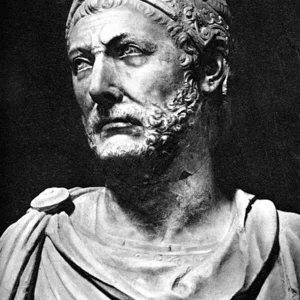
Hannibal Barca
246 av. J.-C. — 182 av. J.-C.
Carthaginian general (246–182 BC), son of Hamilcar Barca, he is one of the greatest military strategists of the ancient world. He led the Second Punic War against Rome, crossing the Alps with his war elephants to invade Italy. His victory at Cannae (216 BC) remains one of the most studied battles in military history.
Hanno the Navigator
500 av. J.-C. — 500 av. J.-C.
A Carthaginian explorer of the 5th century BC, Hanno led an expedition along the West African coast with a fleet of sixty ships. His voyage, recorded in the Periplus of Hanno, is one of the earliest accounts of African exploration from antiquity.
Hatshepsut
1506 av. J.-C. — 1457 av. J.-C.
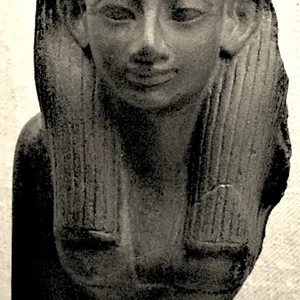
Hatshepsut is one of the rare women to have reigned as pharaoh of Egypt. After serving as regent for her stepson Thutmose III, she took power around 1478 BCE and ruled for more than twenty years. Her reign was marked by prosperity, major architectural projects, and a celebrated trading expedition to the land of Punt.
Heraclea
Heraclea refers to several Greek cities founded in honor of the hero Heracles, the most famous of which is Heraclea Pontica. These colonial foundations illustrate the role of mythological heroes in shaping ancient Greek identity.
Horemheb
1350 av. J.-C. — 1291 av. J.-C.
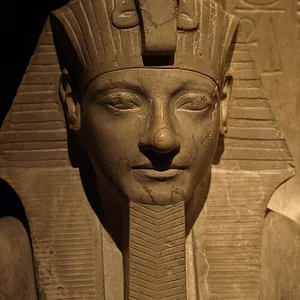
The last pharaoh of the Eighteenth Dynasty of Egypt, Horemheb was first a general under Tutankhamun and Ay before seizing the throne. He restored the traditional order and erased the traces of Akhenaten's religious revolution.
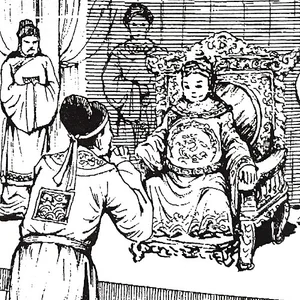
Hùng Vương
Title held by the semi-legendary rulers of the kingdom of Văn Lang, founded by the Lạc Việt people and attested between the 7th and 2nd centuries BCE [1]. Eighteen generations of kings are said to have held this title, but their historicity remains debated among historians [1].
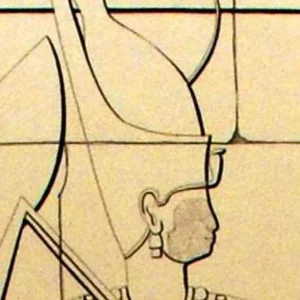
Kandake Amanirenas
Warrior queen of the Kingdom of Meroë (Nubia, present-day Sudan), Amanirenas led Kushite armies against the Roman legions of Augustus around 27–21 BCE. According to Roman sources and Sudanese oral tradition, she lost an eye in battle yet never surrendered, ultimately securing a peace treaty favorable to her kingdom.
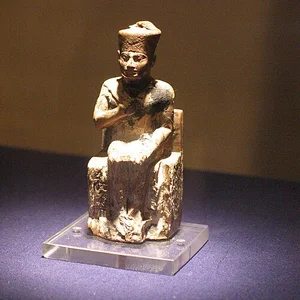
Khufu
2700 av. J.-C. — 2565 av. J.-C.
Pharaoh of the 4th Dynasty of ancient Egypt (c. 2589–2566 BC), Khufu is famous for commissioning the Great Pyramid of Giza, one of the Seven Wonders of the Ancient World. His reign stands as a symbol of the absolute power of pharaonic rule.
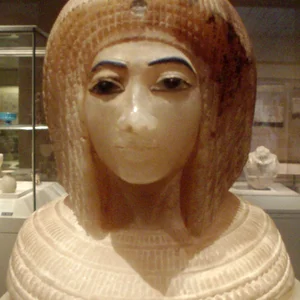
Kiya
1400 av. J.-C. — 1400 av. J.-C.
A secondary wife of Pharaoh Akhenaten, Kiya held a singular place at the court of Amarna in the 14th century BCE. Her identity and origins remain partly mysterious, though her name and likeness appear on several monuments from the Amarna period.
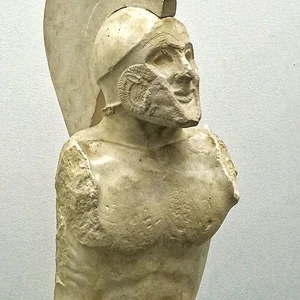
Leonidas
Leonidas I was king of Sparta in the 5th century BC. A member of the Agiad dynasty, he commanded the Greek coalition at the Battle of Thermopylae against the Persian army of Xerxes I in 480 BC. His heroic resistance and death in battle made him a lasting symbol of patriotic sacrifice.
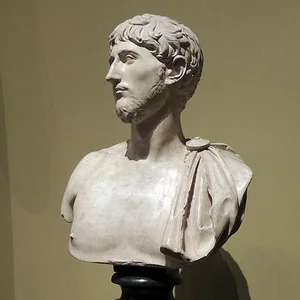
Lepidus
89 av. J.-C. — 12 av. J.-C.
Roman politician and general of the 1st century BC, Lepidus formed the Second Triumvirate with Octavian and Mark Antony in 43 BC. Gradually marginalized, he was removed from power by Octavian in 36 BC.
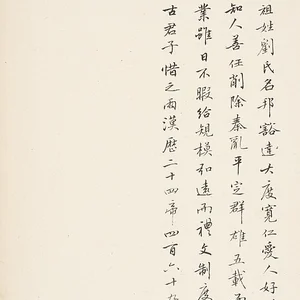
Liu Bang
Liu Bang, of peasant origin, led the revolt against the Qin dynasty and then triumphed over Xiang Yu during the Chu–Han Contention. In 202 BC he founded the Han dynasty, one of the longest-lasting in Chinese history, and reigned under the name Gaozu.
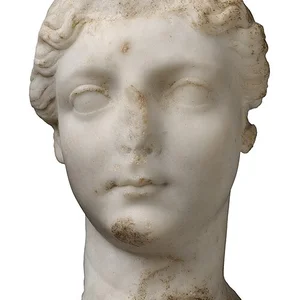
Livia
58 av. J.-C. — 29
Wife of Emperor Augustus, Livia was one of the most powerful women in ancient Rome. For more than fifty years, she wielded considerable influence over imperial politics. Mother of Emperor Tiberius, she was granted the title of "Augusta" after her death.
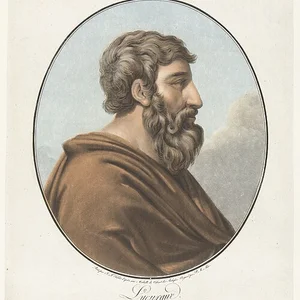
Lycurgus
250 av. J.-C. — 210 av. J.-C.
Lycurgus is the legendary lawgiver of Sparta, traditionally regarded as the founder of the city's political, social, and military institutions (the “Great Rhetra”). His historical existence is uncertain and largely belongs to the realm of myth.
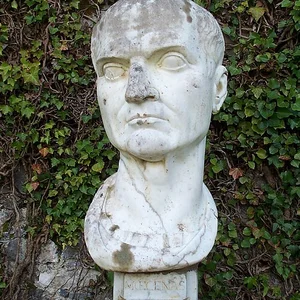
Maecenas
69 av. J.-C. — 7 av. J.-C.
A close advisor to Augustus and great patron of the arts in Rome, Maecenas supported poets such as Virgil and Horace. His name has become synonymous with support for artists and men of letters.
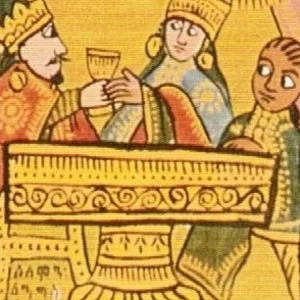
Makeda
Makeda is the central figure of the Ethiopian tradition (Kebra Nagast), venerated as the legendary queen of the Kingdom of Sheba. Rooted in Ethiopian and Eritrean oral tradition, she is known for her encounter with King Solomon of Jerusalem, from which Menelik I would be born — the founding ancestor of the Ethiopian imperial lineage.
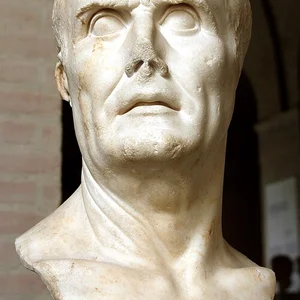
Marius
157 av. J.-C. — 85 av. J.-C.
Roman general and statesman, seven times consul. Victor over Jugurtha and over the Cimbri and Teuton invasions, he profoundly reformed the Roman army by opening recruitment to the poorest citizens.
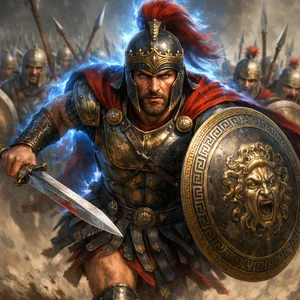
Menelaus
King of Sparta in Greek mythology, husband of Helen, the most beautiful woman in the world. The abduction of Helen by the Trojan Paris leads him to seek the aid of his brother Agamemnon and to unite the Greek kings against Troy.

Meritaten
Eldest daughter of Pharaoh Akhenaten and Queen Nefertiti, Meritaten lived during the Amarna religious revolution in the 14th century BCE. She became Great Royal Wife of Pharaoh Smenkhkare and was abundantly depicted in the art of the Amarna period.
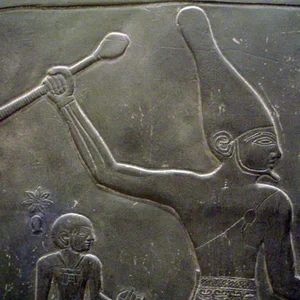
Narmer
3200 av. J.-C. — 3124 av. J.-C.
Narmer is considered the first pharaoh of unified Egypt, around 3100 BCE. He is credited with uniting Upper and Lower Egypt under a single crown, thereby founding the first Egyptian dynasty.
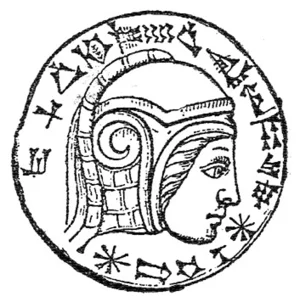
Nebuchadnezzar II
641 av. J.-C. — 561 av. J.-C.
King of Babylon from 604 to 562 BC, Nebuchadnezzar II brought the Neo-Babylonian Empire to its height. He conquered Jerusalem, destroyed the Temple of Solomon, and deported the Hebrews to Babylonia. A great builder, he is associated with the legendary Hanging Gardens of Babylon.
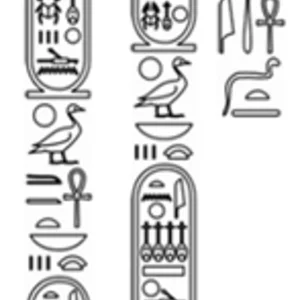
Neferneferuaten
1400 av. J.-C. — 1400 av. J.-C.
Neferneferuaten was a queen of Egypt from the 18th Dynasty, probably co-regent or direct successor to Akhenaten around 1335 BCE. Her exact identity remains debated: she may be Nefertiti under a new name, or a daughter of Akhenaten.
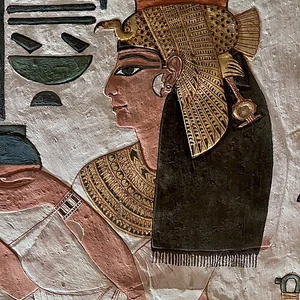
Nefertari
1289 av. J.-C. — 1254 av. J.-C.
Great Royal Wife of Ramesses II, Nefertari is one of the most celebrated queens of ancient Egypt. Her tomb in the Valley of the Queens, with its exceptionally well-preserved paintings, reflects her extraordinary status. Ramesses II dedicated the smaller temple at Abu Simbel to her, where she was depicted at the same scale as the pharaoh himself.
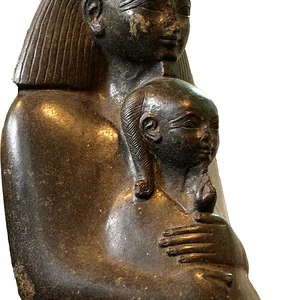
Neferure
1500 av. J.-C. — 1500 av. J.-C.
Daughter of pharaoh Hatshepsut and Thutmose II, Neferure was raised at the Egyptian court in the 18th century BC. Educated by the renowned royal steward Senenmut, she held the title of God's Wife of Amun.

Nitocris
2250 av. J.-C. — 2191 av. J.-C.
Nitocris is a legendary queen or female pharaoh of ancient Egypt, associated with the end of the Sixth Dynasty (c. 2184 BC). Mentioned by Herodotus and Manetho, she is said to have avenged the murder of her brother before taking her own life. Her historical existence remains debated.
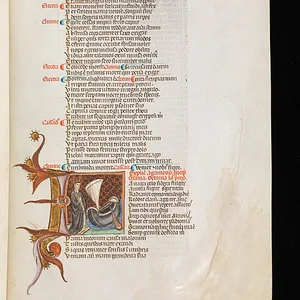
Octavia
Sister of Octavian (the future Augustus) and wife of Mark Antony, Octavia was a major figure in the final years of the Roman Republic. Renowned for her loyalty and dignity, she tried in vain to reconcile her feuding brother and husband.
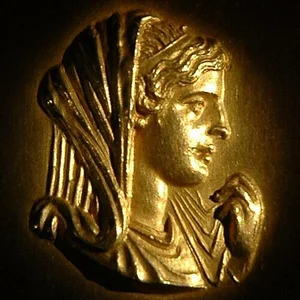
Olympias
374 av. J.-C. — 315 av. J.-C.
Princess of Epirus and Queen of Macedon, Olympias was the wife of Philip II and the mother of Alexander the Great. A formidable wielder of power, she played a major political role during the Wars of the Diadochi following her son's death.

Padmavati
278 av. J.-C. — ?
Wife of Emperor Ashoka (3rd century BCE), Padmavati is a figure of the Mauryan court in ancient India. She is mentioned in Buddhist sources as one of the queens of the great ruler who unified the Indian subcontinent and embraced Buddhism.
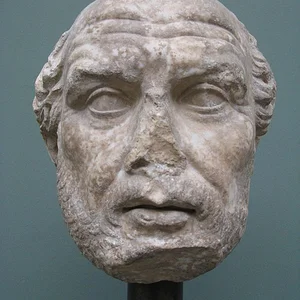
Phidias
499 av. J.-C. — 429 av. J.-C.
Phidias is considered the greatest sculptor of ancient Greece in the 5th century BC. He created the chryselephantine statue of Athena Parthenos and the statue of Zeus at Olympia, counted among the Seven Wonders of the Ancient World.
Pisistratus
Youngest son of Nestor, king of Pylos, Pisistratus is a character in Homer's Odyssey. He welcomes Telemachus at Pylos and accompanies him to Sparta to meet Menelaus. A figure of friendship and hospitality, he embodies the aristocratic virtues of the Greek epic.

Polycrates
Tyrant of the island of Samos in the 6th century BC, Polycrates raised his city to the height of its power through a formidable fleet and strategic alliances. His brilliant reign, marked by patronage of the arts and prosperity, ended in a violent death at the hands of the Persian satrap Oroites.
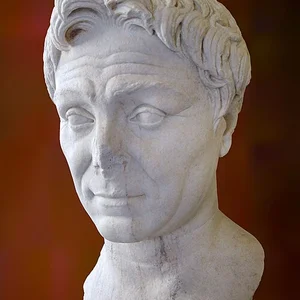
Pompey
105 av. J.-C. — 47 av. J.-C.
Pompey (106–48 BC) was a Roman general and statesman who distinguished himself through his military victories in the East. A rival and later enemy of Caesar, he was one of the key figures in the fall of the Roman Republic.
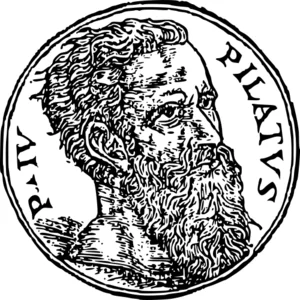
Pontius Pilate
11 av. J.-C. — ?
Pontius Pilate was a Roman prefect of Judaea from 26 to 36 AD. He is best known for ordering the crucifixion of Jesus of Nazareth. His governorship was marked by several conflicts with the Jewish population.
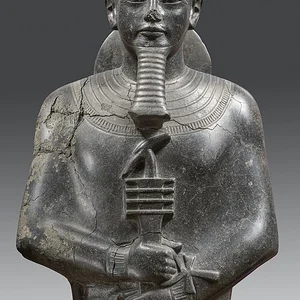
Ptah
Ptah is one of the oldest and most important gods of ancient Egypt, a creator god and patron of craftsmen and architects. Venerated at Memphis since the Old Kingdom, he embodies creation through thought and speech. His triad with Sekhmet and Nefertum forms the heart of the Memphite cult.
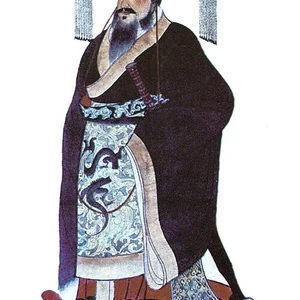
Qin Shi Huang
258 av. J.-C. — 209 av. J.-C.
Qin Shi Huang (258–210 BC) unified the Chinese kingdoms for the first time in 221 BC, founding the Qin dynasty. As China's first emperor, he standardized writing, weights and measures, and initiated construction of the Great Wall.
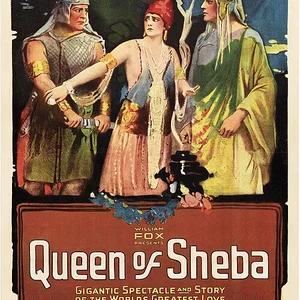
Queen of Sheba
Legendary ruler mentioned in the Bible, the Quran, and Ethiopian tradition. She is said to have visited King Solomon in Jerusalem, drawn by his wisdom. An iconic figure of exchange between ancient Arabia, Africa, and the Near East.
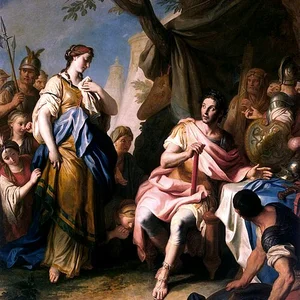
Roxana
346 av. J.-C. — 309 av. J.-C.
Roxana was a Bactrian princess, the first wife of Alexander the Great, whom he married in 327 BC following the conquest of Bactria. She was the mother of Alexander IV, the posthumous heir to the empire.

Saṃghamittā
Daughter of Emperor Ashoka, she was a Buddhist nun who brought Buddhism to Sri Lanka around 246 BCE. She founded the first order of Buddhist nuns (bhikkhunis) on the island and brought a cutting from the sacred fig tree of Bodh Gaya.

Sammu-ramat (Semiramis)
Regent of the Assyrian Empire around 811–808 BC, Sammu-ramat held power in the name of her son Adad-nirari III. A historical figure, she quickly became a legendary character in the Greek world, symbolizing the warrior queen and great builder of the ancient Near East.
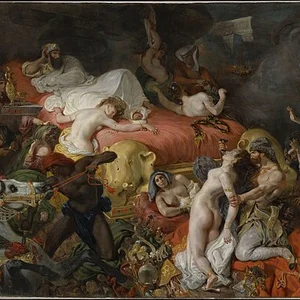
Sardanapalus
Sardanapalus is a legendary king of Assyria, a figure from ancient Greek tradition. Renowned for his extreme luxury and dissolute lifestyle, he is said to have chosen to die in flames rather than surrender to his enemies. His tragic fate inspired numerous works of art, most notably the painting by Eugène Delacroix.
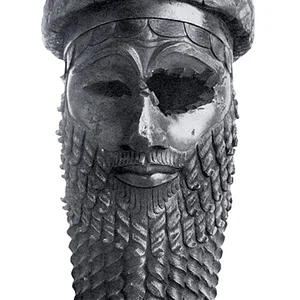
Sargon of Akkad
2350 av. J.-C. — 2300 av. J.-C.
Sargon of Akkad (c. 2334–2279 BCE) was the founder of the first empire in history, the Akkadian Empire. Rising from humble origins according to legend, he unified Mesopotamia under his rule and governed a territory stretching from the Persian Gulf to the Mediterranean.
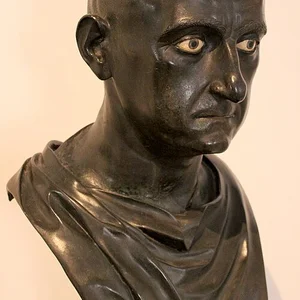
Scipio Africanus
234 av. J.-C. — 182 av. J.-C.
Roman general of the 2nd century BC, victor over Hannibal at the Battle of Zama (202 BC). He brought the Second Punic War to an end and secured Rome's dominance over Carthage.
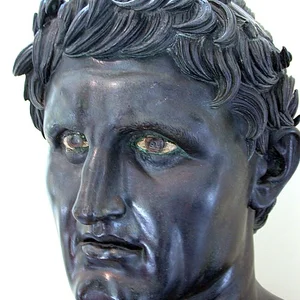
Seleucus I Nicator
357 av. J.-C. — 280 av. J.-C.
A Macedonian general under Alexander the Great, Seleucus became one of the Diadochi after his death and founded the Seleucid dynasty. He built the largest of the Hellenistic kingdoms, stretching from Anatolia to the Indus.
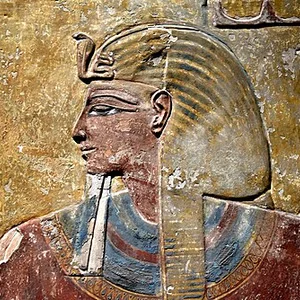
Seti I
1322 av. J.-C. — 1278 av. J.-C.
Seti I was the second pharaoh of the Nineteenth Dynasty of Egypt, reigning around 1294–1279 BC. Son of Ramesses I, he restored Egypt's military and religious power following the Amarna period. He is renowned for his campaigns in Canaan and Libya, as well as for his magnificent temple at Abydos.
Shanakdakhete
200 av. J.-C. — 160 av. J.-C.
Shanakdakhete is the earliest known reigning queen of Meroë, capital of the Kingdom of Kush (Nubia), in the 2nd century BCE. A product of Meroitic civilization, she ruled in her own right, with no attested male consort. Her memory has been passed down through inscriptions in the Meroitic script and through the oral traditions of Nubian peoples.
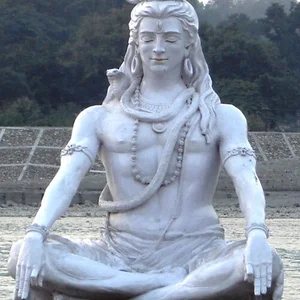
Shiva
Shiva is one of the three principal deities of Hinduism, forming the Trimūrti alongside Brahmā and Vishnu. God of destruction and transformation, he also embodies meditation, the arts, and fertility. His cult, rooted in the Indus Valley civilization, is one of the oldest in the world.
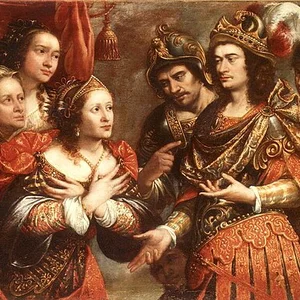
Sisygambis
301 av. J.-C. — 322 av. J.-C.
Sisygambis was an Achaemenid princess, the mother of Darius III, the last king of the Persian Empire. Captured by Alexander the Great after the Battle of Issus in 333 BC, she became a symbol of royal dignity in defeat and was treated with a respect that became famous.
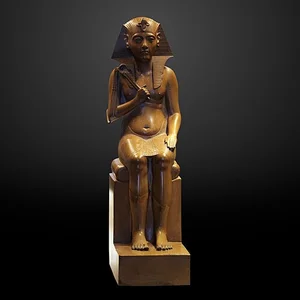
Smenkhkare
1400 av. J.-C. — 1333 av. J.-C.
A short-lived pharaoh of ancient Egypt's 18th Dynasty, Smenkhkare reigned briefly around 1338–1336 BC, succeeding Akhenaten. His identity remains one of the most enigmatic puzzles of ancient Egypt.
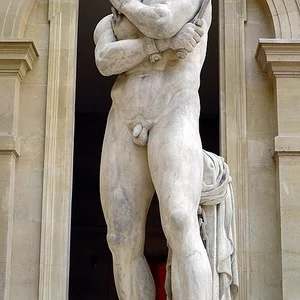
Spartacus
102 av. J.-C. — 70 av. J.-C.
A gladiator of Thracian origin, Spartacus led the Third Servile War against Rome (73–71 BC), commanding an army of rebel slaves that threatened the very existence of the Roman Republic before being defeated by Crassus.
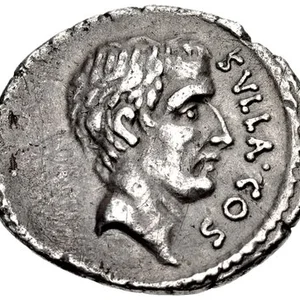
Sulla
137 av. J.-C. — 77 av. J.-C.
A Roman general and statesman, Sulla seized power by force in the aftermath of civil wars. Appointed dictator, he reformed the institutions of the Republic in favor of the Senate before stepping down.
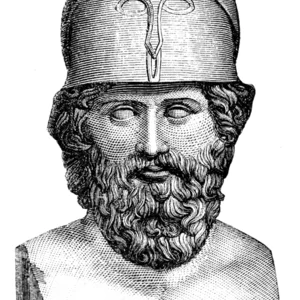
Themistocles
523 av. J.-C. — 458 av. J.-C.
Athenian statesman and strategist, architect of Athens' naval power. He led the Greeks to the decisive victory at Salamis against the Persians in 480 BC.
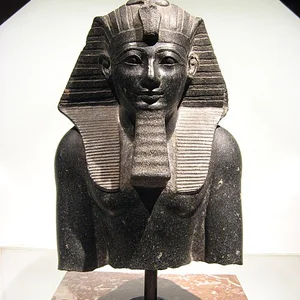
Thutmose III
1480 av. J.-C. — 1424 av. J.-C.
Pharaoh of the 18th Egyptian Dynasty (c. 1479–1425 BCE), Thutmose III is considered the greatest conqueror of ancient Egypt. He led seventeen military campaigns and brought the Egyptian empire to its greatest territorial extent.
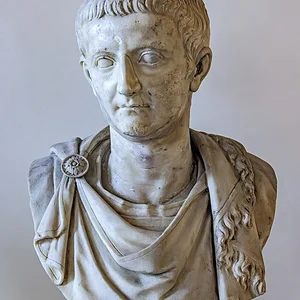
Tiberius
41 av. J.-C. — 37
Tiberius (42 BC – 37 AD) was the second Roman emperor, successor to Augustus. He reigned from 14 to 37 AD and withdrew to Capri from 27 AD onward, leaving power in the hands of Sejanus.
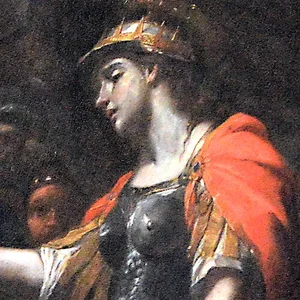
Tomyris
600 av. J.-C. — 600 av. J.-C.
Queen of the Massagetae, a nomadic people of Central Asia, Tomyris is famous for defeating and killing Cyrus the Great around 530 BC. She embodies the resistance of the steppe peoples against the expansion of the Achaemenid Persian Empire.
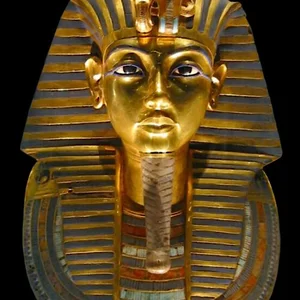
Tutankhamun
1340 av. J.-C. — 1323 av. J.-C.
An Egyptian pharaoh of the 18th Dynasty, he reigned around 1332–1323 BCE. Ascending to the throne at approximately nine years old, he restored polytheistic worship after the Atenist revolution of Akhenaten. His tomb, discovered intact in 1922, is one of the greatest archaeological discoveries of the 20th century.
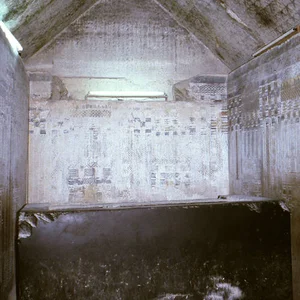
Unas
2374 av. J.-C. — 2349 av. J.-C.
Unas was the last pharaoh of the Fifth Dynasty of ancient Egypt, reigning around 2375–2345 BCE. His pyramid at Saqqara is world-famous for containing the Pyramid Texts, the oldest known corpus of religious writings in human history.
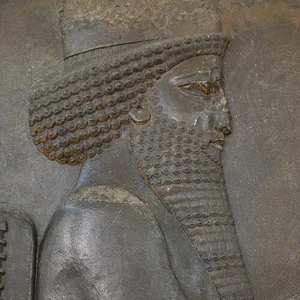
Xerxes I
518 av. J.-C. — 464 av. J.-C.
King of the Achaemenid Persian Empire from 485 to 465 BC, son of Darius I. He is famous for leading the second Greco-Persian War against the Greek city-states, notably at the battles of Thermopylae and Salamis.
Antiquity(78)
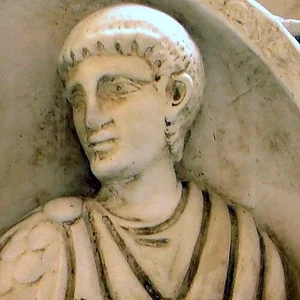
Aetius
390 — 454
Flavius Aetius was a Roman general and statesman of the 5th century, the dominant figure of the waning Western Roman Empire. Nicknamed “the last of the Romans,” he is famous for stopping Attila and the Huns at the Catalaunian Plains in 451.
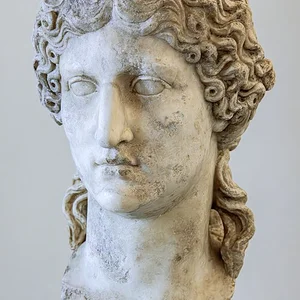
Agrippina the Elder
13 av. J.-C. — 33
Granddaughter of Augustus and wife of Germanicus, Agrippina the Elder played a major political role during the principate of Tiberius. Her opposition to the emperor led to her exile and death in captivity in AD 33.
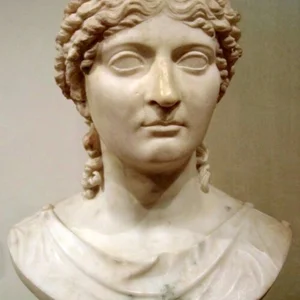
Agrippina the Younger
15 — 59
Agrippina the Younger (15–59 AD) was a Roman empress, sister of Caligula, and mother of Nero. She wielded considerable influence over imperial power, most notably by marrying her uncle, Emperor Claudius, and arranging for her son Nero to be adopted as his heir.
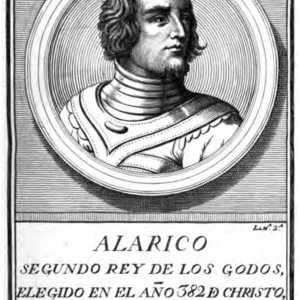
Alaric I
370 — 410
King of the Visigoths from 395 to 410, Alaric I is famous for leading the sack of Rome in 410, a symbolic event marking the beginning of the end of the Western Roman Empire.
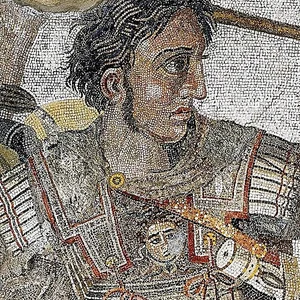
Alexander the Great
355 av. J.-C. — 322 av. J.-C.
King of Macedon and legendary conqueror, Alexander built one of the largest empires of the ancient world in less than thirteen years. Tutored by the philosopher Aristotle, he conquered the Achaemenid Persian Empire and extended his dominion as far as India, spreading Greek culture across Asia.
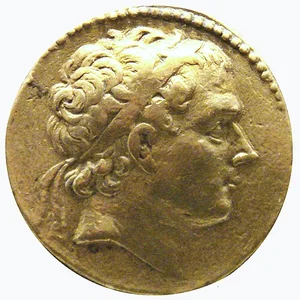
Antiochus III
241 av. J.-C. — 186 av. J.-C.
Antiochus III, known as the Great, was a Seleucid king who reigned from 223 to 187 BC. He restored the Seleucid Empire through vast campaigns into the East, but was defeated by Rome, which marked the rise of Roman power in the eastern Mediterranean.
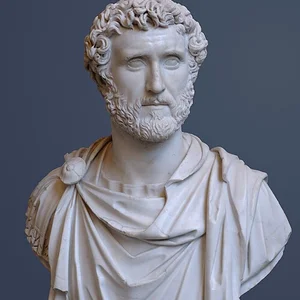
Antoninus Pius
86 — 161
Antoninus Pius was Roman emperor from 138 to 161, the third of the “good emperors” of the Antonine dynasty. His exceptionally long and peaceful reign remained a symbol of stability and prosperity for the Empire.
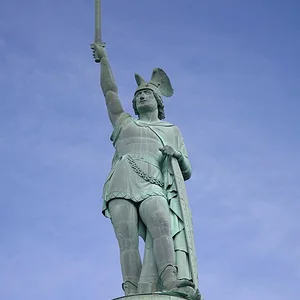
Arminius
16 av. J.-C. — 21
War chief of the Germanic Cherusci tribe. In 9 AD, he annihilated three Roman legions commanded by Varus in the Teutoburg Forest, lastingly halting Roman expansion east of the Rhine.
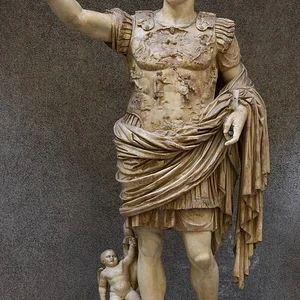
Augustus
62 av. J.-C. — 14
Augustus was the first Roman emperor, ruling from 27 BC to 14 AD. Grand-nephew and adopted son of Julius Caesar, he established a lasting political regime and brought peace after decades of civil wars. His reign marks the beginning of the Roman Empire and a period of cultural prosperity.
Aurelian
214 — 275
Aurelian was Roman emperor from 270 to 275, nicknamed “restorer of the world” (restitutor orbis). A general of Illyrian origin, he reunified the Roman Empire by reconquering the Gallic Empire and the kingdom of Palmyra, putting an end to the Crisis of the Third Century.

Avidius Cassius
130 — 175
A Roman general of Syrian origin, Avidius Cassius was one of the finest military commanders of the Antonine period. In 175, he wrongly proclaimed himself emperor, believing Marcus Aurelius to be dead, and was assassinated by his own soldiers after only three months of rule.
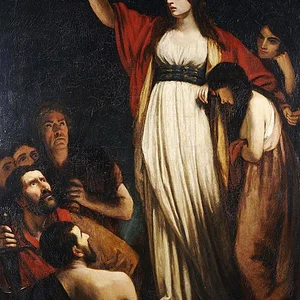
Boudicca
30 — 61
Queen of the Iceni, a Celtic people of Britain, she led a major revolt against Roman occupation around 60–61 AD. At the head of a coalition of British tribes, she destroyed Camulodunum, Londinium, and Verulamium before being defeated by the governor Paulinus.
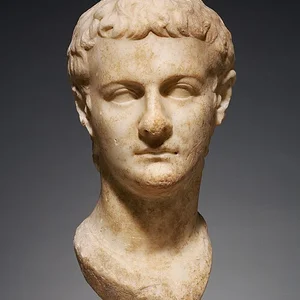
Caligula
12 — 41
The third Roman emperor, Caligula ruled from 37 to 41 AD. After a promising start, his reign descended into tyranny and extravagance. He was assassinated by officers of the Praetorian Guard.
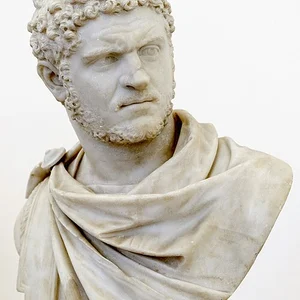
Caracalla
188 — 217
Roman Emperor from 211 to 217 AD, Caracalla is best known for the Edict of Caracalla (212 AD), which granted Roman citizenship to all free inhabitants of the Empire. Despite his reforms, his reign was marked by political instability and his assassination in 217 AD.
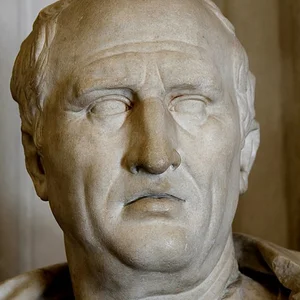
Cicero
106 av. J.-C. — 42 av. J.-C.
Roman orator, politician, and philosopher (106–43 BC), Cicero is one of the greatest figures of the Roman Republic. He left a lasting mark on Latin literature through his eloquence and philosophical works, becoming a model of rhetoric for centuries to come.
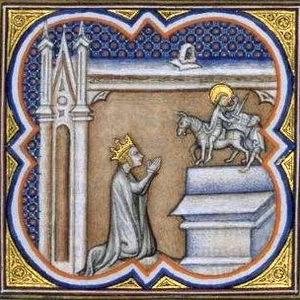
Clotilde
474 — 545
Queen of the Franks and wife of Clovis I, she played a decisive role in her husband's conversion to Christianity. Venerated as a saint by the Catholic Church, she embodies the bringing together of Frankish royalty and Christianity at the dawn of the Middle Ages.
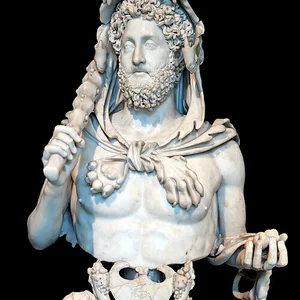
Commodus
161 — 192
Roman emperor from 180 to 192, son and successor of Marcus Aurelius. His authoritarian and eccentric reign marked the end of the Antonine dynasty and the close of the imperial golden age. He was assassinated in 192, opening a period of turmoil.
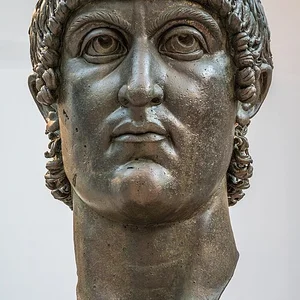
Constantine I
272 — 337
Roman Emperor from 306 to 337, Constantine I is renowned for establishing religious tolerance toward Christianity through the Edict of Milan in 313 and for founding Constantinople in 330. He marks the turning point of the Roman Empire toward Christianity and the East.
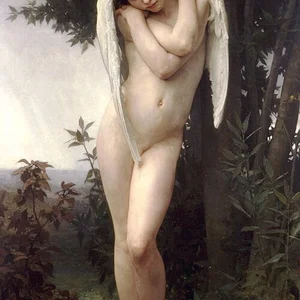
Cupid
God of love in Roman mythology, Cupid is the son of Venus and Mars (or Mercury, depending on the version). Armed with a bow and golden arrows, he strikes humans with romantic passion. His Greek equivalent is Eros.
Deng Sui
Empress then regent of Eastern Han China (1st–2nd century), she governed the empire for fifteen years with wisdom and firmness. She promoted education, reduced court expenditures, and effectively managed famines, earthquakes, and border tensions.
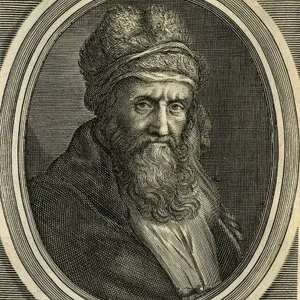
Diogenes Laërtius
A Greek biographer and doxographer of the 3rd century AD, Diogenes Laërtius is the author of Lives and Opinions of Eminent Philosophers, the principal source of knowledge about ancient Greek philosophers. His work compiles the biographies and views of more than 80 thinkers, from Thales to Epicurus.
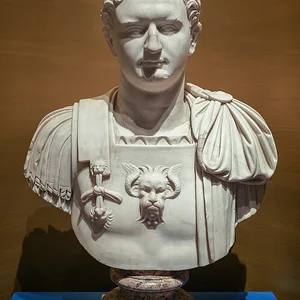
Domitian
51 — 96
Domitian (51–96) was the third and last emperor of the Flavian dynasty. His authoritarian reign was marked by persecutions of Christians and senators, but also by efficient provincial administration.
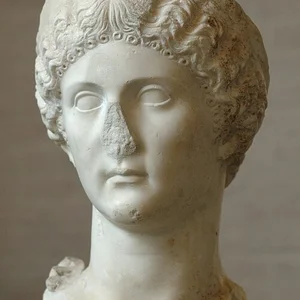
Drusilla
16 — 38
Julia Drusilla (16-38 AD) was a Roman princess of the Julio-Claudian dynasty, daughter of Germanicus and Agrippina the Elder, and the favorite sister of the emperor Caligula. Upon her death, she became the first Roman woman to be deified by the Senate.
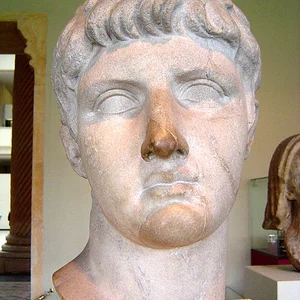
Drusus
37 av. J.-C. — 8 av. J.-C.
Roman general and statesman, son of Livia and stepson of Augustus. He led the campaigns of conquest in Germania as far as the Elbe before dying prematurely from the effects of a fall from his horse. He was the father of the emperor Claudius and of Germanicus.
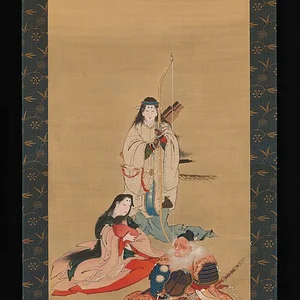
Empress Jingu
A legendary empress of Japan, Jingū is said to have reigned in the 3rd century according to Japanese chronicles. Tradition credits her with a military campaign against the Korean peninsula, carried out while she was pregnant. Her historical existence is unattested and she belongs to Japan's founding mythology.
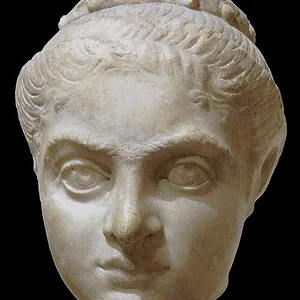
Fausta
289 — 326
Fausta was a Roman empress, daughter of Emperor Maximian and wife of Constantine I. Mother of three future emperors, she died in 326 under obscure circumstances, shortly after the execution of Prince Crispus.
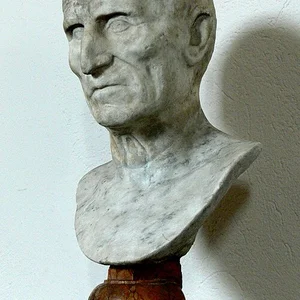
Galba
2 av. J.-C. — 69
Galba was the sixth Roman emperor, in power from 68 to 69. An elderly former governor from the high aristocracy, he came to the throne after the fall of Nero but was assassinated after only seven months of rule, opening the Year of the Four Emperors.
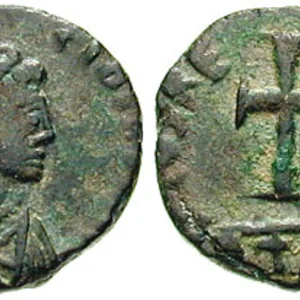
Galla Placidia
386 — 450
Daughter of Emperor Theodosius I, Galla Placidia was Augusta of the Western Roman Empire and regent for her son Valentinian III. A major political figure of the 5th century, she navigated barbarian invasions and court intrigues to preserve imperial power.
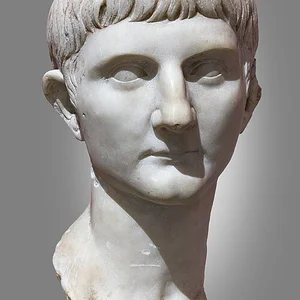
Germanicus
14 av. J.-C. — 19
Roman general of the early Empire, nephew and adopted son of the emperor Tiberius. Popular for his campaigns in Germania, he died in Syria in AD 19 under suspicious circumstances often blamed on Tiberius.
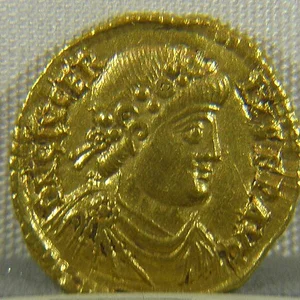
Glycerius
430 — 480
Glycerius was a Western Roman emperor who briefly reigned from 473 to 474, during the period of the Empire's collapse. Brought to power by the Burgundian general Gundobad, he was deposed by Julius Nepos and forced to become bishop of Salona.
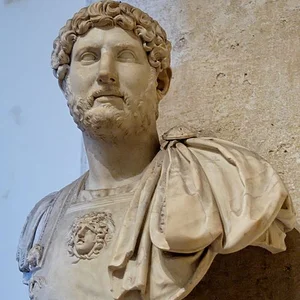
Hadrian
76 — 138
Hadrian was Roman emperor from 117 to 138 AD, successor to Trajan. A reformer and builder, he consolidated the Empire's borders and traveled to nearly all its provinces. A passionate admirer of Greek culture, he oversaw the construction of the Pantheon in Rome and Hadrian's Wall in Britannia.
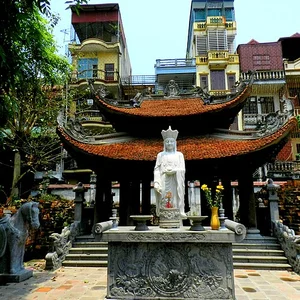
Hai Bà Trưng
Two Vietnamese sisters (died 43 CE) who led the first major uprising against Han rule in 40 CE. Trưng Trắc proclaimed herself queen after retaking 65 cities; defeated by General Mã Viện in 43 CE, they are revered as national heroines of Vietnam.
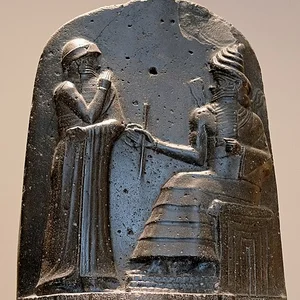
Hammurabi
1809 av. J.-C. — 1749 av. J.-C.
Sixth king of Babylon (1792–1750 BC), Hammurabi transformed a small kingdom into a regional empire. He is best known for promulgating the Code of Hammurabi, one of the oldest written compilations of laws in history.

Himiko
Queen and shamaness of the kingdom of Yamatai in Japan, mentioned in Chinese chronicles of the 3rd century. She ruled through her shamanic powers and conducted diplomacy with Wei China, which granted her an official title.
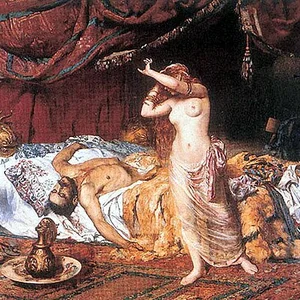
Ildico
500 — ?
Ildico was the last wife of Attila, King of the Huns, whom she married in 453. She was found in tears beside her husband's body the morning after their wedding night, his death remaining shrouded in mystery.
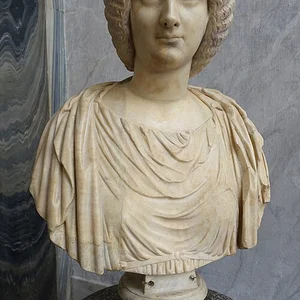
Julia Domna
165 — 217
Roman empress of Syrian origin and wife of Septimius Severus, she wielded considerable political influence and gathered around her a circle of philosophers and intellectuals. As the mother of Caracalla and Geta, she embodied female power at the very summit of the Roman Empire.
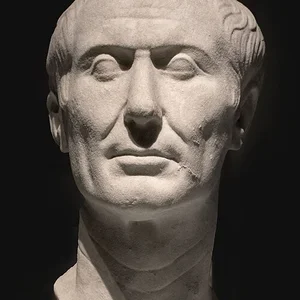
Julius Caesar
99 av. J.-C. — 43 av. J.-C.
Roman general and statesman (100–44 BC), Julius Caesar conquered Gaul between 58 and 50 BC and established his political dominance in Rome. His assassination in 44 BC hastened the fall of the Roman Republic.
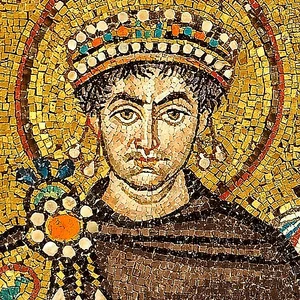
Justinian
482 — 565
Justinian was a Byzantine emperor who reigned from 527 to 565. He is famous for codifying Roman law in the Justinian Code and for conquering vast territories. His reign marks the height of the Byzantine Empire.
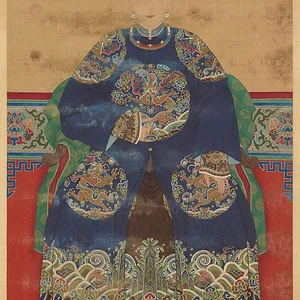
Lady Triệu
A Vietnamese warrior of the 3rd century, she led a revolt against Chinese Wu occupation at the age of 19. Known as 'Lady Triệu', she fought for six months before being defeated in 248 CE.
Man Thiện
A figure of Vietnamese tradition, Man Thiện is held to be the mother of the Trưng sisters (Trưng Trắc and Trưng Nhị). A descendant of the Hùng kings, she is said to have raised and supported her daughters in their uprising against the Chinese Han occupation, around 40 CE.
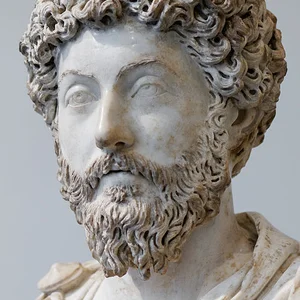
Marcus Aurelius
121 — 180
Roman Emperor from 161 to 180 and Stoic philosopher. Author of Meditations, personal reflections on wisdom and virtue. Represents the ideal of the philosopher-emperor in ancient Rome.
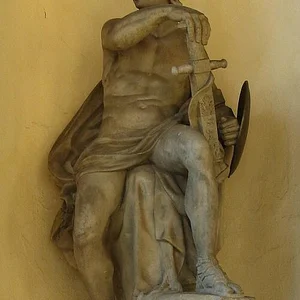
Mars
Roman god of war and protector of agriculture, Mars is one of the most venerated deities in the Roman pantheon. Legendary father of Romulus and Remus, he embodies Rome's military power and its destiny of conquest.
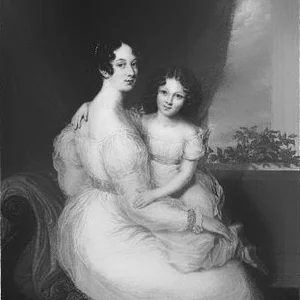
Mavia
400 — 425
Queen of the Tanukh Arabs in the 4th century, Mavia led a victorious war against the Roman Empire after the death of her husband. She negotiated peace from a position of strength and sent troops to defend Constantinople against the Goths.
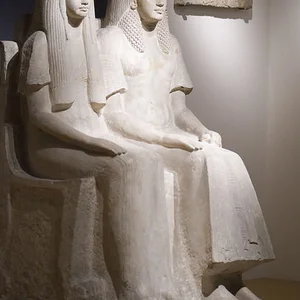
Maya
1400 av. J.-C. — 1300 av. J.-C.
Maya was a high dignitary of ancient Egypt who held important positions at the royal court. He is known for having served as Overseer of the Treasury under Tutankhamun and Horemheb, playing a key role in the administration of the kingdom.
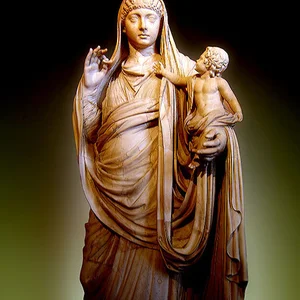
Messalina
20 — 48
Roman empress and third wife of Emperor Claudius (41–48 AD), Messalina wielded considerable political influence in Rome. She is remembered in antiquity for her palace intrigues and violent death, ordered by Claudius himself.
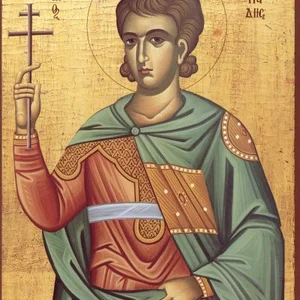
Miltiades
Miltiades was the 32nd bishop of Rome (pope) from 311 to 314. His pontificate coincided with the Constantinian turning point: the Edict of Milan (313) ended the persecutions and granted Christians freedom of worship within the Roman Empire.
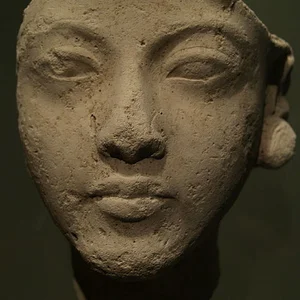
Nefertiti
1369 av. J.-C. — 1329 av. J.-C.
Nefertiti was the Great Royal Wife of Pharaoh Akhenaten, in the 14th century BC. She played an important role in the monotheistic religious reform of her era, promoting the cult of Aten, the sun god. Her idealized face, known through the famous bust, makes her one of the most depicted queens of Egypt.
Neoptolemus I
369 av. J.-C. — 350 av. J.-C.
Neoptolemus I was a historical king of Epirus in the 4th century BC, from the Aeacid dynasty of the Molossians. He is best known as the father of Olympias, wife of Philip II of Macedon, and thus the grandfather of Alexander the Great.
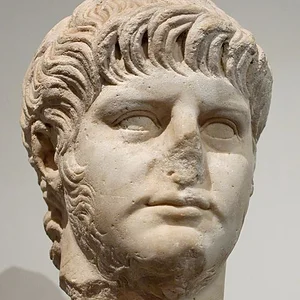
Nero
37 — 68
The fifth Roman emperor from 54 to 68, Nero is known for a reign marked by persecutions of Christians and the Great Fire of Rome in 64. The last representative of the Julio-Claudian dynasty, he consolidated imperial power against the Roman aristocracy.
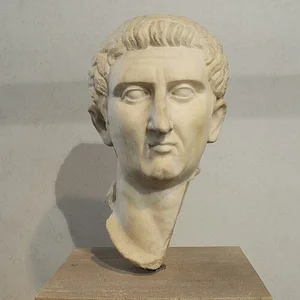
Nerva
30 — 98
Nerva was Roman emperor from 96 to 98 AD. Brought to power by the Senate after the assassination of Domitian, he founded the Antonine dynasty and the line of the “good emperors.” His brief reign was marked by a policy of appeasement and the adoption of Trajan as his successor.
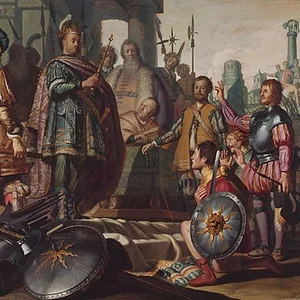
Orestes
399 — 499
Roman imperial prefect of Egypt in the early 5th century, based in Alexandria. A Christian but concerned with civil order, he opposed the growing grip of Bishop Cyril and was devastated by the murder of the philosopher Hypatia, his friend, in 415.
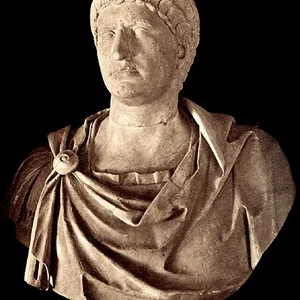
Otho
32 — 69
Otho was the seventh Roman emperor, in power for three months in the year 69. A former governor of Lusitania and companion of Nero, he came to the throne after having Galba assassinated, before being defeated by Vitellius and taking his own life.
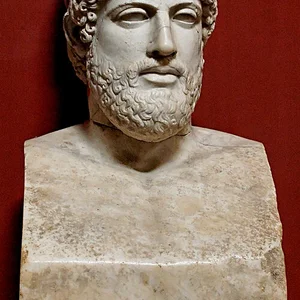
Pericles
493 av. J.-C. — 428 av. J.-C.
Pericles (495–429 BC) was an Athenian statesman who presided over the golden age of Athenian democracy in the 5th century BC. A dominant political leader for more than thirty years, he transformed Athens into the cultural and artistic center of ancient Greece, most notably by overseeing the construction of the Parthenon.
Philostratus of Athens
300 — ?
Greek writer and sophist of the 2nd–3rd century AD, Philostratus of Athens is celebrated for his Life of Apollonius of Tyana and his Lives of the Sophists. He moved in the literary circle of Empress Julia Domna in Rome.
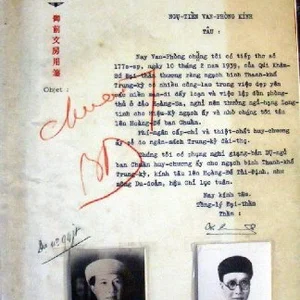
Phùng Thị Chính
Semi-legendary Vietnamese general who served under the Trưng sisters during the revolt against the rule of China's Han dynasty, around 40 AD. Tradition holds that she gave birth on the battlefield before returning to the fight, her newborn strapped to her back.
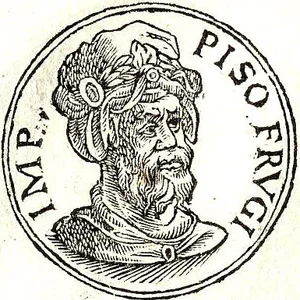
Piso
250 — 261
A Roman aristocrat of the 1st century, Gaius Calpurnius Piso was the figurehead of a sweeping conspiracy to overthrow the emperor Nero in 65 AD. The plot was uncovered, failed, and triggered a wave of deadly repression.

Poppaea Sabina
Poppaea Sabina (c. 30–65 AD) was the second wife of Emperor Nero. An ambitious woman of great beauty, she wielded considerable influence over Roman imperial politics.
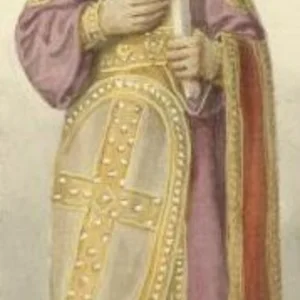
Pulcheria
399 — 453
Pulcheria (399-453) was an Eastern Roman (Byzantine) empress, daughter of Emperor Arcadius. As regent for her brother Theodosius II during his minority, she wielded major influence over the politics and religious affairs of the Empire for nearly half a century.
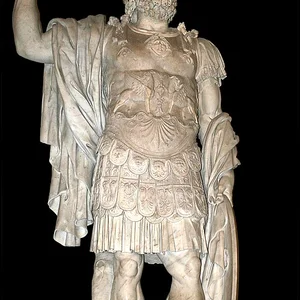
Pyrrhus
317 av. J.-C. — 271 av. J.-C.
Pyrrhus I (c. 319-272 BC) was king of Epirus and one of the most brilliant Hellenistic strategists. A cousin of Alexander the Great, he fought the Romans in Italy and the Carthaginians in Sicily, remaining the model of the general whose victories cost too much.
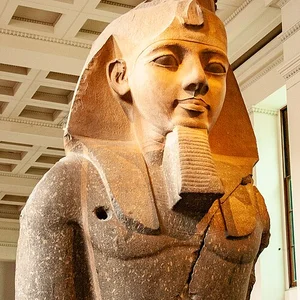
Ramesses II
1302 av. J.-C. — 1212 av. J.-C.
Ramesses II is one of the greatest pharaohs of ancient Egypt, who reigned for 66 years in the 13th century BC. He is famous for his colossal monuments, including the temples of Abu Simbel, and for the Battle of Kadesh against the Hittites.
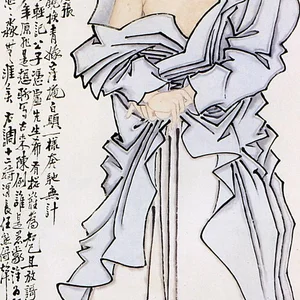
Ren An
124 — 202
Officer and court official of the Han dynasty under Emperor Wu (2nd–1st century BC). He is primarily known as the recipient of Sima Qian's famous letter, in which the historian justifies his acceptance of castration in order to complete the Records of the Grand Historian.
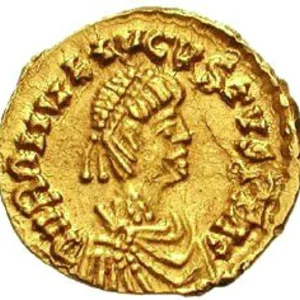
Romulus Augustulus
462 — ?
Last emperor of the Western Roman Empire, Romulus Augustulus reigned in 475–476 AD, placed on the throne by his father Orestes. Deposed at around age 15 by the Germanic chieftain Odoacer, his abdication marks the conventional end of the Western Roman Empire.
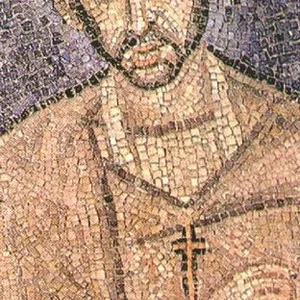
Saint Ambrose of Milan
339 — 397
Bishop of Milan from 374 to 397, Ambrose is one of the four Fathers of the Latin Church. A spiritual and political figure of Late Antiquity, he imposed public penance on Emperor Theodosius I and baptized Augustine of Hippo in 387.

Saint Denis (Martyr of Paris)
First bishop of Paris, sent on a mission to Gaul around 250 AD, Denis was beheaded on the hill of Montmartre during the Roman persecutions. According to legend, he picked up his severed head and walked to the site of his future basilica. He became the patron saint of France and a founding figure of Christianity in the Île-de-France region.
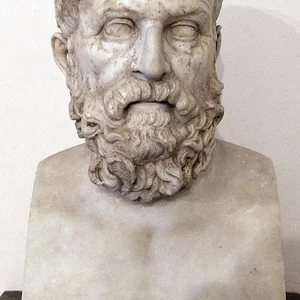
Solon
629 av. J.-C. — 559 av. J.-C.
Solon (629–559 BC) was an Athenian statesman and lawmaker who profoundly reformed the city of Athens in the early 6th century BC. His laws laid the foundations of Athenian democracy by limiting the power of the aristocracy and granting rights to citizens.
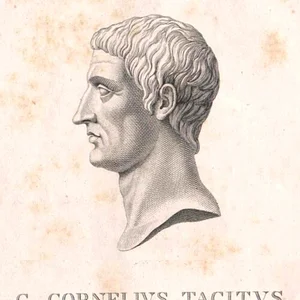
Tacitus
55 — 120
Tacitus is one of the greatest historians of ancient Rome. A senator and consul, he is the author of the Annals and the Histories, landmark works on the early Roman Empire. His incisive style and critical eye make him an irreplaceable witness to the imperial age.
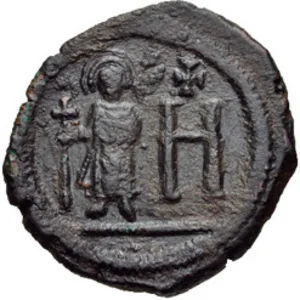
Theodosius
583 — 602
Byzantine emperor who reigned from 408 to 450, Theodosius II is known for consolidating the Eastern Empire and his devotion to Christianity. He ordered the construction of the famous Theodosian Walls around Constantinople and promulgated the Theodosian Code, a landmark collection of Roman laws.
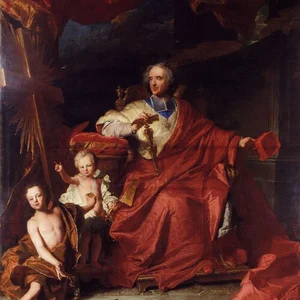
Theodosius I
Theodosius I was the last emperor to rule over the entire Roman Empire, both East and West. He made Nicene Christianity the official religion of the Empire through the Edict of Thessalonica in 380 and banned pagan worship.
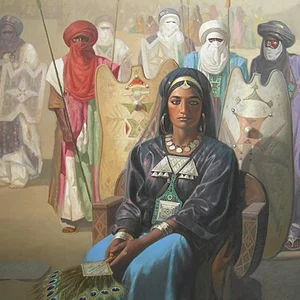
Tin Hinan
350 — ?
Legendary queen of the Tuareg people, Tin Hinan is considered by oral tradition to be the matriarchal ancestor of the Hoggar (Ahaggar) nobles. A founding figure said to have come from the Tafilalt region, according to stories passed down through generations, she is believed to have lived around the 4th–5th century CE.

Titus Vinius
12 — 69
Roman consul in 69 AD, Titus Vinius was one of Emperor Galba's most influential advisors. A central figure of the 'Year of the Four Emperors', he was assassinated during Otho's coup in January 69.
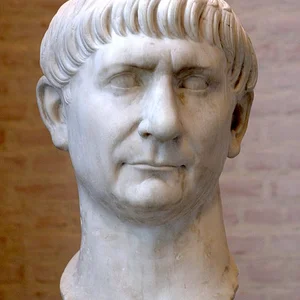
Trajan
53 — 117
Trajan (53–117) was the first Roman emperor born outside Italy, from the province of Hispania. His reign is considered the height of the Roman Empire, marked by major conquests and a generous social policy.
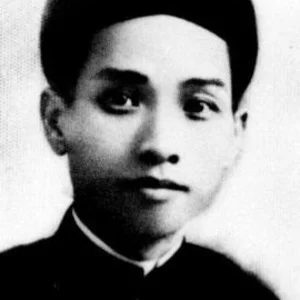
Trung Nhi
Younger sister of Trưng Trắc, she co-led the great Vietnamese revolt against Han Chinese domination in 40 CE. A formidable warrior, she played a key role in the temporary liberation of the country before their defeat by Chinese forces in 43 CE.
Trưng Trắc
Vietnamese national heroine who, alongside her sister Trưng Nhị, led a victorious revolt against Chinese Han rule in 40 CE. She briefly reigned over an independent kingdom before being defeated in 43 CE by the Chinese general Ma Yuan.

Varus
Roman general and statesman during the age of Augustus. As governor of Germania, he suffered a catastrophic defeat in AD 9 in the Teutoburg Forest, where three Roman legions were annihilated by a Germanic coalition led by Arminius. He took his own life on the battlefield.
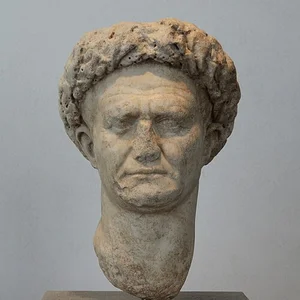
Vespasian
9 — 79
Vespasian (9–79 AD) was the ninth Roman emperor and founder of the Flavian dynasty. A general of equestrian background, he rose to power after the civil war of 69 AD. His reign marked a period of stability and reconstruction following the excesses of Nero.
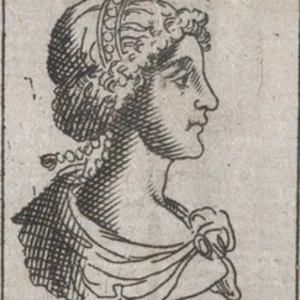
Vipsania
Vipsania Agrippina was a Roman citizen of the Augustan age, daughter of the general Agrippa and of Caecilia Pomponia Attica. The first wife of Tiberius, whom she loved, she was forced to divorce by Augustus for dynastic reasons. Her life illustrates the burden of imperial marriage politics.
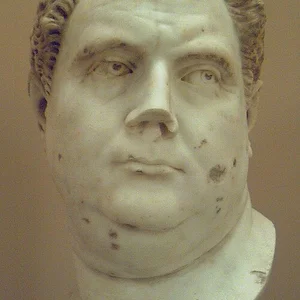
Vitellius
15 — 69
Aulus Vitellius was the eighth Roman emperor, proclaimed by the legions of Germania in 69 AD. His reign lasted only a few months before he was overthrown and killed by the supporters of Vespasian. He embodies the instability of the Year of the Four Emperors.
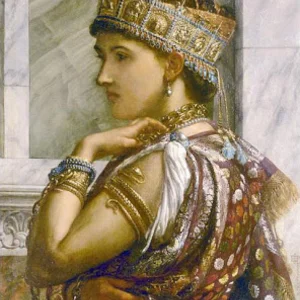
Zenobia
240 — 275
Queen of the Palmyrene Empire in the 3rd century, Zenobia ruled as regent in her son's name and expanded her empire to Egypt and Asia Minor, openly defying Rome. Defeated by Emperor Aurelian in 272, she remains the enduring symbol of an indomitable Eastern queen.
Middle Ages(126)

Abdallah ibn Saad
Arab general and administrator of the 7th century, foster brother of Caliph Uthman. As governor of Egypt, he led the conquest of Ifriqiya and commanded the first Muslim fleet to defeat the Byzantines.
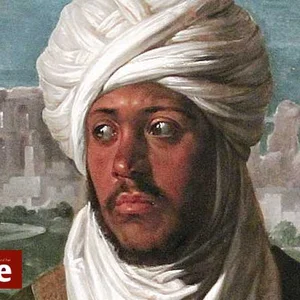
Abou Inan
Marinid sultan of Morocco (1348–1358), Abou Inan Faris is known for welcoming Ibn Battuta at his court and commissioning the writing of his famous travel account. A great patron of the arts, he had the Bou Inania madrasa built in Fez.
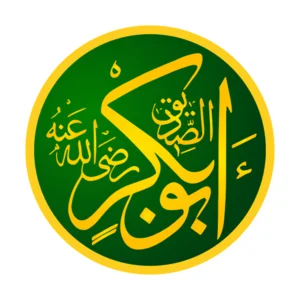
Abu Bakr as-Siddiq
573 — 634
A close companion of the Prophet Muhammad, Abu Bakr became the first caliph of Islam following the Prophet's death in 632. His two-year reign consolidated the unity of the Muslim community and laid the foundations of the first Islamic state.

Abu Lu'lu'a Fīrūz
A slave of Persian origin captured during the Arab conquests, he assassinated the second caliph of Islam, Umar ibn al-Khattab, in the mosque of Medina in 644. His act, driven by personal and fiscal grievances, left a lasting mark on the history of the young caliphate.
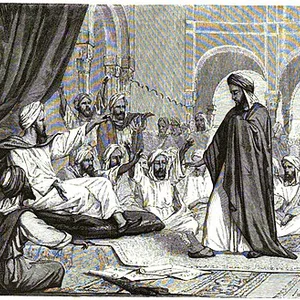
Abu Yaqub Yusuf
The second Almohad caliph (not Almoravid), he reigned from 1163 to 1184 over the Maghreb and al-Andalus. A man of letters and a patron of scholars, he brought the philosophers Ibn Tufayl and Averroes (Ibn Rushd) to his court. He died during the siege of Santarém in Portugal.

Adalberon of Reims
Archbishop of Reims from 969 to 989, Adalberon was a major political figure of the late 10th century. Advised by Gerbert of Aurillac, he played a decisive role in the accession of Hugh Capet to the throne in 987, bringing the Carolingian dynasty to an end.
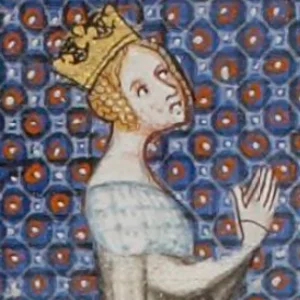
Adela of Champagne
1140 — 1206
Queen of France through her marriage to Louis VII in 1160, Adela of Champagne is best known as the mother of Philip II Augustus. She served as regent of the kingdom during her son's crusade in 1190–1191.
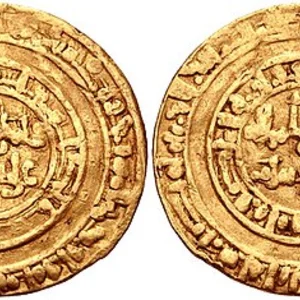
Al-Hakim bi-Amr Allah
985 — 1021
Sixth Fatimid caliph of Egypt (996–1021), Al-Hakim is a controversial figure known for his unpredictable decrees and uncompromising religious policies. He is venerated as a divine manifestation by the Druze religion, which emerged during his reign.
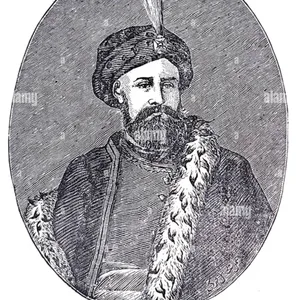
Al-Ma'mun
786 — 833
Seventh Abbasid caliph (reigned 813-833), son of Harun al-Rashid. A patron of scholars, he expanded the House of Wisdom (Bayt al-Hikma) in Baghdad, a center of translation and scientific research.
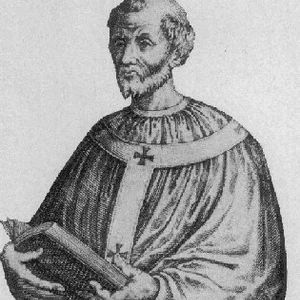
Alexander IV
1200 — 1261
Rinaldo di Jenne, nephew of Gregory IX, became the 181st pope under the name Alexander IV from 1254 to 1261. His pontificate was marked by conflict with the Hohenstaufen and the promotion of the mendicant orders.
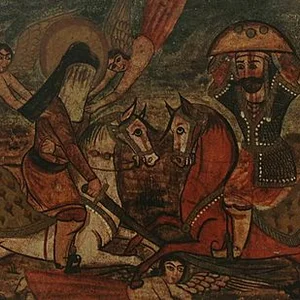
Ali ibn Abi Talib
599 — 661
Cousin and son-in-law of the Prophet Muhammad, Ali ibn Abi Talib was the fourth caliph of Islam (656–661). A central figure of Shia Islam, he is regarded by Shia Muslims as the first rightful imam. His caliphate was marked by the First Fitna, a civil war that gave rise to the foundational Sunni-Shia divide.

Amr ibn al-As
570 — 664
Amr ibn al-As (c. 573-664) was an Arab military commander and administrator, a companion of the Prophet Muhammad. He led the conquest of Byzantine Egypt on behalf of the caliphate and became its first governor, founding the city of Fustat.
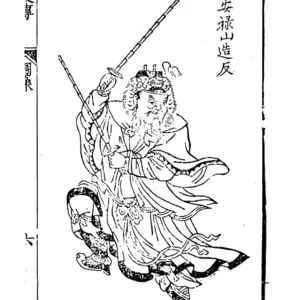
An Lushan
703 — 757
A general of Sogdian and Turkic origin in the service of the Tang dynasty, An Lushan rebelled in 755 against Emperor Xuanzong and proclaimed himself emperor of the short-lived Yan dynasty. His rebellion plunged China into a devastating civil war before his assassination in 757.
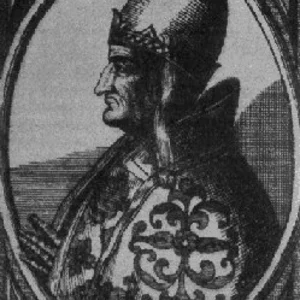
Anastasius IV
Pope of the Catholic Church from 1153 to 1154, Anastasius IV was the 168th successor of Peter. His brief pontificate was marked by efforts at reconciliation with the Byzantine Empire and the management of ecclesiastical affairs across Europe.
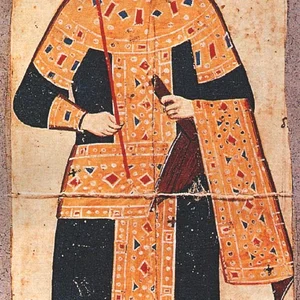
Andronikos III Palaiologos
1297 — 1341
Andronikos III Palaiologos (1297–1341) was Byzantine emperor from 1328 to 1341. He came to power after a civil war against his grandfather Andronikos II. His reign was marked by military campaigns and the rising power of the Ottoman Empire.

Anna Komnene
Byzantine princess (1083–c.1153), daughter of Emperor Alexios I Komnenos, Anna Komnene is one of the earliest female historians in recorded history. She is the author of the Alexiad, an epic narrative chronicling her father's reign and an invaluable testimony on Byzantium and the Crusades.
Anne I
Anne I was Queen of Great Britain and Ireland from 1702 to 1714, the last sovereign of the Stuart dynasty. Her reign saw the birth of the Kingdom of Great Britain through the union of England and Scotland in 1707.
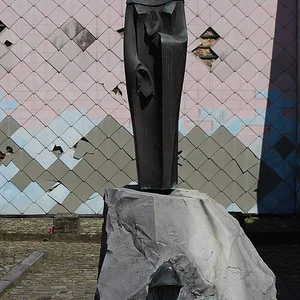
Arlette
1010 — 1050
Arlette of Falaise, daughter of a tanner or leather-worker from Falaise, in Normandy, was the concubine of Duke Robert the Magnificent. From this union was born William, the future William the Conqueror, King of England. Born among the common people, she became the mother of a royal line.
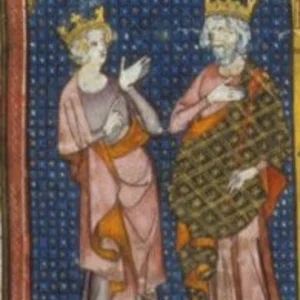
Basina of Thuringia
438 — 477
Queen of the Salian Franks in the 5th century, wife of King Childeric I and mother of Clovis I. A semi-legendary figure of the origins of the Merovingian dynasty, passed down through the accounts of Gregory of Tours.
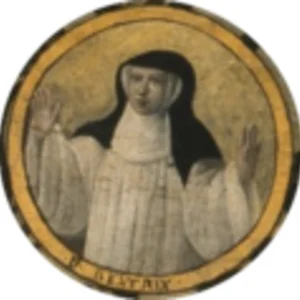
Beatrice of Nazareth
1200 — 1268
Flemish Cistercian nun (c. 1200–1268), abbess of the monastery of Nazareth near Lier. Author of The Seven Manners of Love, one of the earliest mystical works written in the vernacular Dutch language.
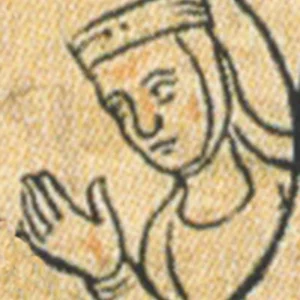
Berthe de Bourgogne
964 — 1010
Daughter of Duke Conrad of Burgundy, Berthe was first Countess of Blois through her marriage to Odo I. After becoming a widow, she married King Robert II the Pious around 997, but this union, deemed incestuous by the Church due to their close kinship, was condemned by the pope and annulled around 1001.
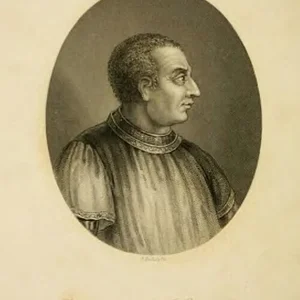
Bertrand du Guesclin
1320 — 1380
Bertrand du Guesclin (c. 1320-1380) was a Breton knight who became Constable of France under Charles V. A skilled strategist of the Hundred Years' War, he reconquered much of French territory from the English through guerrilla warfare and harassment tactics.
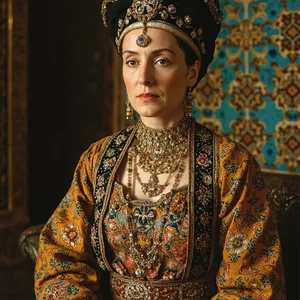
Bibi Khanym
1341 — 1408
Bibi Khanym, the principal wife of Tamerlane, was one of the most powerful women of the Timurid Empire. Her name is inseparable from the great mosque of Samarkand that Tamerlane had built in her honor upon his return from the Indian campaign (1399). A symbol of Timurid magnificence, she embodies the political and symbolic role of women at Tamerlane's court.
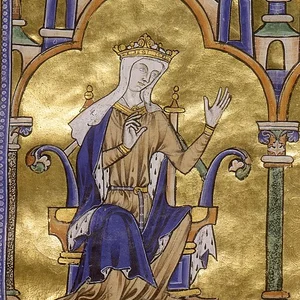
Blanche de Castille
1188 — 1252
Queen of France and regent, Blanche de Castille (1188–1252) governed the kingdom during the minority of her son Louis IX (Saint Louis) and again during his crusade. A woman of exceptional power, she successfully asserted royal authority against the great barons.
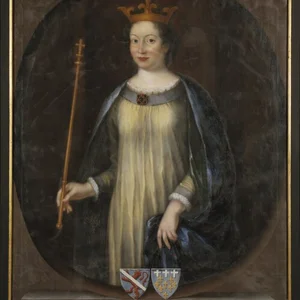
Blanche de Namur
1320 — 1363
Princess of Namur (c. 1320–1363), she married Magnus IV of Sweden in 1335 and became Queen of Sweden and Norway. Mother of Eric XII of Sweden and Haakon VI of Norway, she played a role of dynastic representation in medieval Northern Europe.
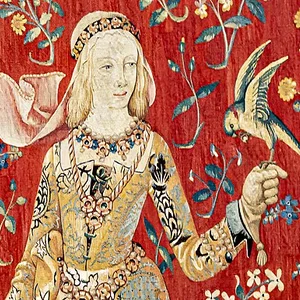
Blanche of Lancaster
1342 — 1368
Blanche of Lancaster (c. 1341–1368) was the daughter of Henry of Grosmont, first Duke of Lancaster, and the wife of John of Gaunt, son of King Edward III of England. Her early death inspired her husband to commission the poem *The Book of the Duchess* from Geoffrey Chaucer.
Blanchefleur
460 — 510
A Frankish princess and sister of King Clovis I, Audofleda married Theodoric the Great, king of the Ostrogoths, around 493. This union sealed a major diplomatic alliance between the Franks and the Ostrogoths in the aftermath of the fall of the Western Roman Empire.
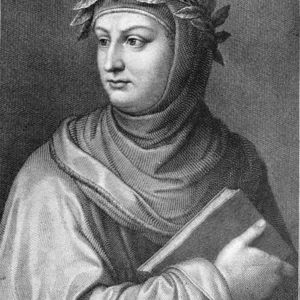
Boccaccio
1313 — 1375
A 14th-century Italian writer, Boccaccio is the author of the Decameron, a collection of one hundred tales told by a group of people sheltering from the Black Death in 1348. A diplomat in the service of Florence, he was also a pioneering humanist and close friend of Petrarch.
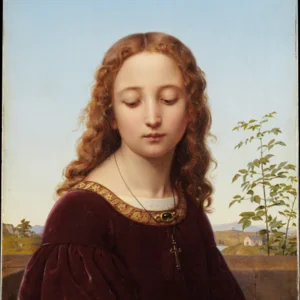
Börte
1161 — 1230
Börte was the first wife and principal empress of Genghis Khan. Abducted shortly after her marriage and then rescued by her husband, she ruled the imperial court and played a major political role, with her four sons becoming the heirs of the Mongol Empire.
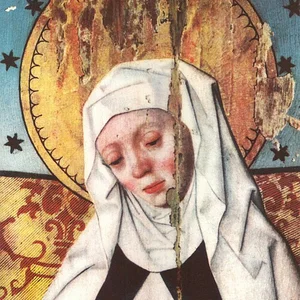
Bridget of Sweden
1303 — 1373
A mystic and Swedish saint of the 14th century, Bridget of Sweden was a wife, mother of eight children, then a pilgrim and founder of the Order of the Most Holy Savior. Her divine revelations, dictated and spread throughout Europe, gave her exceptional spiritual authority.
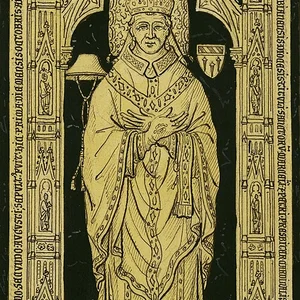
Cardinal Jean Lemoine
French cardinal (c. 1250–1313), renowned canonist and papal legate, he founded the Collège du Cardinal Lemoine in Paris in 1302 to train young clerics from Picardy. Close to Popes Boniface VIII and Clement V, he played a key role at the Roman Curia during the transfer of the papacy to Avignon.
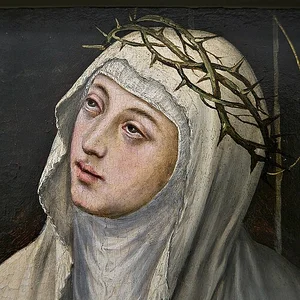
Catherine of Siena
1347 — 1380
An Italian mystic and theologian of the 14th century, Catherine of Siena played a major political role by convincing Pope Gregory XI to leave Avignon and return to Rome. A Doctor of the Church, she left behind a remarkable body of spiritual and epistolary work.
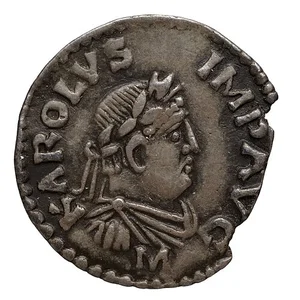
Charlemagne
742 — 814
Charlemagne (742-814) was a Frankish king who became the first Emperor of the West. He founded the Carolingian Empire and established an education policy that shaped the Middle Ages. His reign was marked by major territorial conquests and cultural reforms.
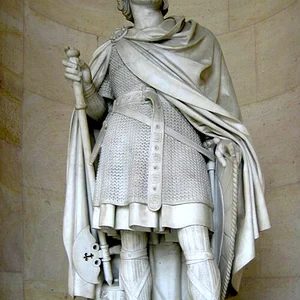
Charles Martel
688 — 741
Charles Martel was mayor of the palace of Austrasia and then de facto ruler of the kingdom of the Franks. Born into the Pippinid family, he imposed Carolingian authority and halted the Arab-Muslim advance at the Battle of Poitiers in 732. The grandfather of Charlemagne, he paved the way for the rise of the Carolingian dynasty.
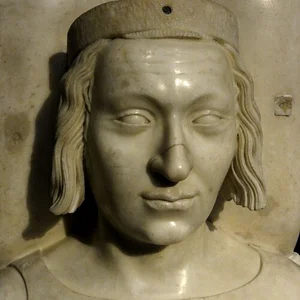
Charles V the Wise
1338 — 1380
King of France from 1364 to 1380, Charles V restored the kingdom after the defeats of the early Hundred Years' War. Thanks to his constable Du Guesclin, he reconquered nearly all the lost territory and reestablished royal authority.
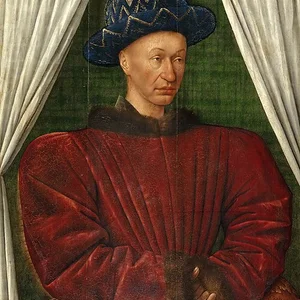
Charles VII
1403 — 1461
King of France (1422–1461), Charles VII is best known for his coronation at Reims in 1429, made possible by Joan of Arc, who restored French confidence during the Hundred Years' War. He continued the reconquest of French territory and ended the conflict with England in 1453.
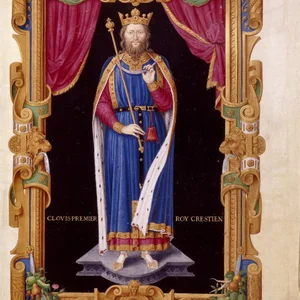
Clovis
466 — 511
Clovis I (466-511) was the king of the Franks who unified the Frankish kingdoms and founded the Merovingian dynasty. His baptism in 496 sealed the alliance between the Franks and the Catholic Church. He laid the foundations of what would become the kingdom of France.
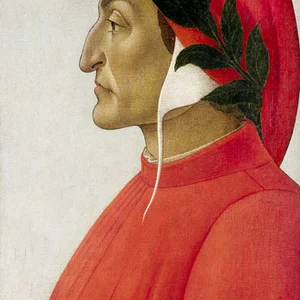
Dante Alighieri
1265 — 1321
Florentine poet of the 13th–14th century, author of *The Divine Comedy*, a masterpiece of medieval literature. Exiled from Florence for political reasons, he laid the foundations of the Italian literary language.
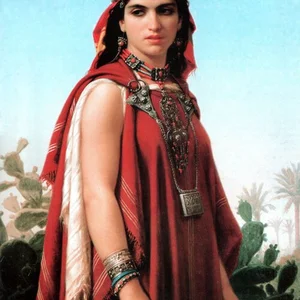
Dihya
668 — 703
A Berber queen and prophetess of the Djerawa people, Dihya led the resistance against the Arab conquest of North Africa in the late 7th century. Known as the Kahina ("the seeress"), she is a central figure in Amazigh memory, preserved chiefly through oral tradition.
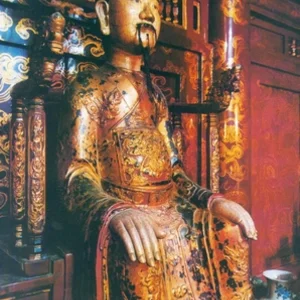
Đinh Bộ Lĩnh
924 — 979
Born in 924 in Đại Hoàng (present-day Ninh Bình), Đinh Bộ Lĩnh ended the War of the Twelve Warlords (loạn 12 sứ quân) and unified the country in 968 [1]. He founded the state of Đại Cồ Việt and became the first emperor of independent Vietnam after the period of Chinese domination (Bắc thuộc) [1].
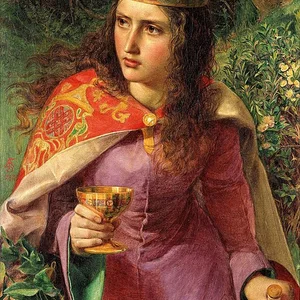
Eleanor of Aquitaine
1124 — 1204
Duchess of Aquitaine and Countess of Poitou, Eleanor of Aquitaine (1124–1204) was Queen of France through her marriage to Louis VII, then Queen of England after her union with Henry II Plantagenet. A towering figure of the Middle Ages, she wielded considerable political influence and was the mother of several kings of England.

Empress Teishi
Empress consort of Japan (976–1001), wife of Emperor Ichijō and daughter of regent Fujiwara no Michitaka. She was the patron of Sei Shōnagon, whose celebrated *The Pillow Book* bears witness to the brilliant life at her court. Her rivalry with Fujiwara no Shōshi, patroness of Murasaki Shikibu, illustrates the literary ferment of the Heian period.
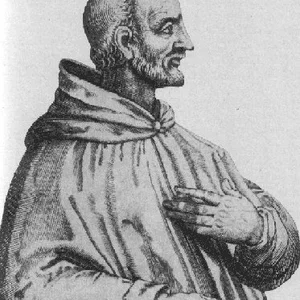
Eugene III
1200 — 1153
Pope from 1145 to 1153, Eugene III was the first Cistercian to rise to the papacy. A disciple of Saint Bernard of Clairvaux, he preached the Second Crusade and sought to reform the Church by strengthening papal authority.
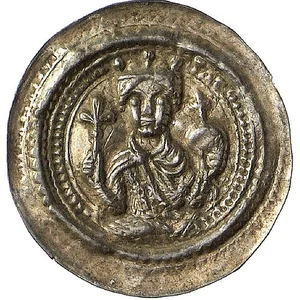
Frederick Barbarossa
1122 — 1190
Holy Roman Emperor from 1155 to 1190 and a major figure of the Hohenstaufen dynasty. He sought to restore imperial authority in Italy against the Lombard communes and the papacy, and drowned during the Third Crusade.
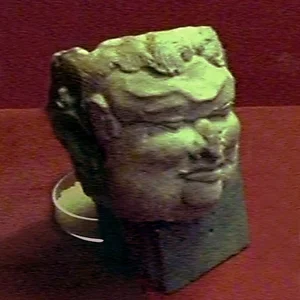
Gajah Mada
1290 — 1364
Gajah Mada was the Mahapatih (Prime Minister) of the Majapahit Empire in the 14th century. A strategist and conqueror, he pronounced the famous Palapa Oath, pledging to unify the entire Nusantara archipelago under Majapahit’s authority before tasting spices. He led the empire to its zenith and remains an Indonesian national hero.
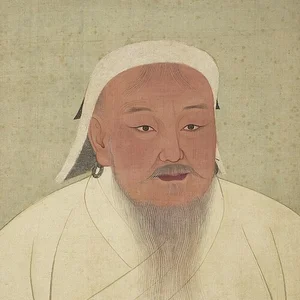
Gengis Khan
1162 — 1227
Founder and first Great Khan of the Mongol Empire, Genghis Khan unified the nomadic tribes of Central Asia in the early 13th century. His conquests created the largest contiguous empire in history.
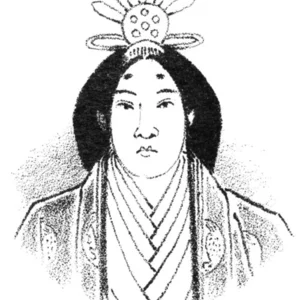
Genmei
661 — 722
Reigning empress of Japan from 707 to 715, Genmei is one of the few women to have held supreme power in Japan. She is notably responsible for commissioning the Kojiki, Japan's first historical chronicle.
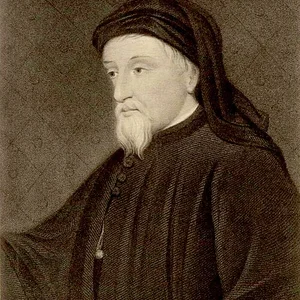
Geoffrey Chaucer
1343 — 1400
Geoffrey Chaucer (c. 1343–1400) is the greatest English poet of the Middle Ages, author of The Canterbury Tales. A diplomat and royal official, he brought the vernacular English language into high literature, leaving a lasting influence on English letters.
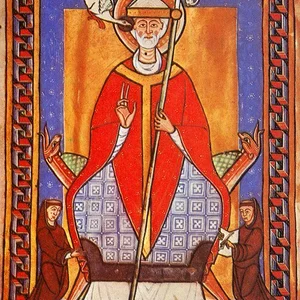
Gregory I
540 — 604
Pope from 590 to 604, Gregory I is one of the greatest pontiffs of Late Antiquity and the early Middle Ages. A reformer of the Church, he organized the evangelization mission to England and left a remarkable theological and liturgical legacy.
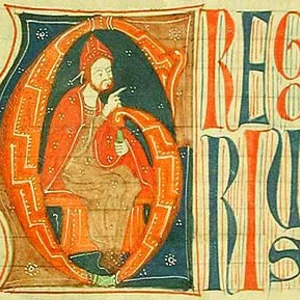
Gregory IX
1170 — 1241
Gregory IX was the 178th pope of the Catholic Church, from 1227 to 1241. A jurist and a man of power, he fiercely opposed Emperor Frederick II and institutionalized the papal Inquisition by entrusting it to the mendicant orders.
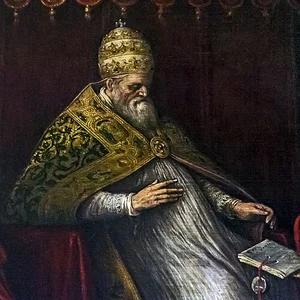
Honorius III
1148 — 1227
177th pope of the Catholic Church from 1216 to 1227. A skilled diplomat, he approved the emerging mendicant orders and worked to organize the Fifth Crusade.
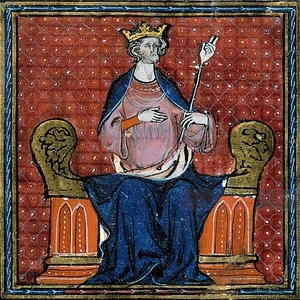
Hugh Capet
940 — 996
Hugh Capet (940–996) was a French nobleman who founded the Capetian dynasty by becoming King of the Franks in 987. He brought an end to the Carolingian dynasty and established a new royal lineage from which all kings of France would descend until the Revolution.
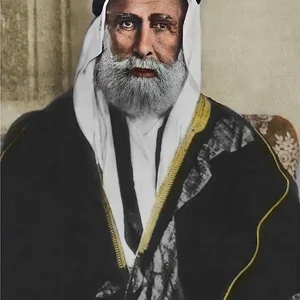
Husayn ibn Ali
626 — 680
Grandson of the prophet Muhammad and son of Ali, he is the third imam of Shia Islam. His refusal to pledge allegiance to the Umayyad caliph Yazid I led to his death at the Battle of Karbala in 680, a founding event of Shia Islam.
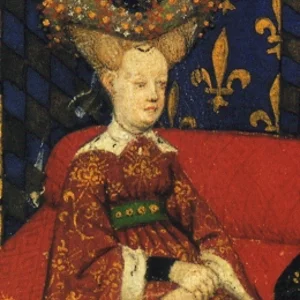
Isabeau of Bavaria
1370 — 1435
Queen of France through her marriage to Charles VI, Isabeau of Bavaria played a major political role during the king's bouts of madness. Regent and a central figure in the civil war between the Armagnacs and the Burgundians, she remains associated with the Treaty of Troyes of 1420.
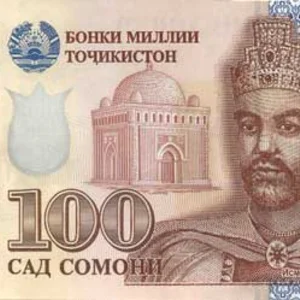
Ismail Samani
849 — 907
Ismail Samani (849-907) is the true founder of the Samanid Empire, the first great Persian dynasty to break free from the Abbasid caliphate. A visionary ruler and brilliant strategist, he made Bukhara a shining center of the Persian cultural and linguistic renaissance.
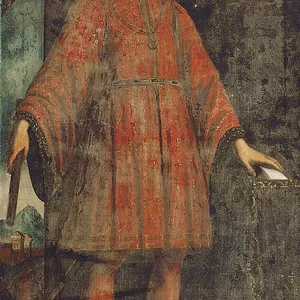
Jacques Cœur
1395 — 1456
A French merchant and financier of the 15th century, Jacques Cœur became the chief treasurer (*grand argentier*) of King Charles VII. The builder of a vast trading empire reaching toward the Levant, he was one of the wealthiest men in the kingdom before falling from grace.
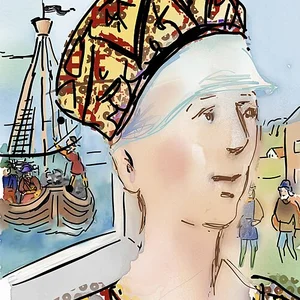
Jeanne de Clisson
1300 — 1359
A 14th-century Breton noblewoman, Jeanne de Clisson became a privateer after the execution of her husband Olivier IV de Clisson by the King of France in 1343. Nicknamed “the Lioness of Brittany,” she armed a fleet to wage a war of vengeance in the English Channel during the Hundred Years' War.
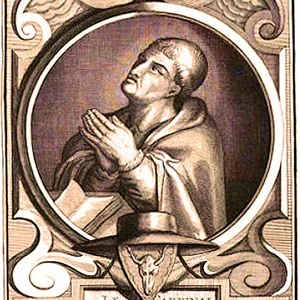
John XXIII (antipope)
Antipope from 1410 to 1415, elected during the Western Schism when three simultaneous claimants contested the papal throne. Deposed by the Council of Constance, he embodies the deep crisis of the medieval Church and the triumph of conciliarism.
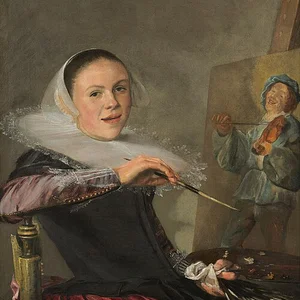
Judith
950 — ?
Legendary ruler of the Kingdom of Semien, Gudit led a revolt around 960 CE that overthrew the Aksumite dynasty of Ethiopia. This warrior queen is said to have reigned for several decades over the Ethiopian highlands, leaving a lasting mark on the collective memory of the region.
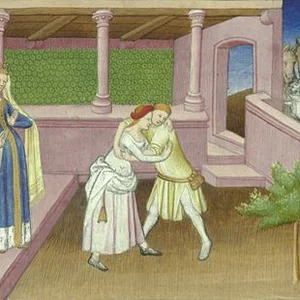
Khutulun
1260 — 1306
Mongol princess of the 13th century, great-niece of Kublai Khan and daughter of Khan Kaidu. A legendary warrior and wrestler, she challenged her suitors to wrestling matches and remained undefeated, winning horses with each victory.
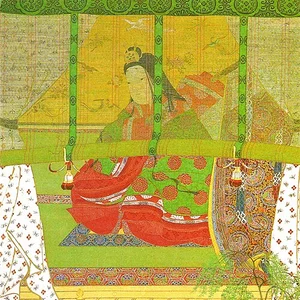
Koken
718 — 770
Empress of Japan who reigned twice (749–758 then 764–770), she is one of the very few women to have occupied the Japanese imperial throne. A devout Buddhist, she actively promoted the spread of Buddhism throughout the country and commissioned the construction of numerous temples.
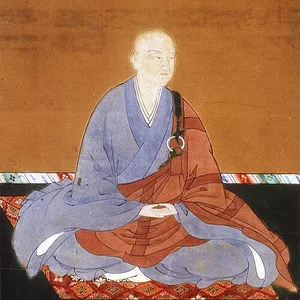
Kōmyō
1322 — 1380
Kōmyō was emperor of Japan from the Northern Court (1336–1348), enthroned by shogun Ashikaga Takauji during the great imperial split of the Nanboku-chō period. After his abdication, he withdrew from political life and became a Buddhist monk, ending his days in prayer and contemplation.
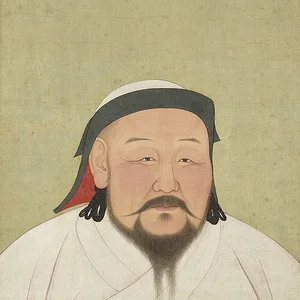
Kublai Khan
1215 — 1294
Grandson of Genghis Khan, Kublai Khan founded the Yuan dynasty in China and ruled from 1260 to 1294. He expanded the Mongol Empire to its greatest extent and opened China to international trade, most notably welcoming Marco Polo.
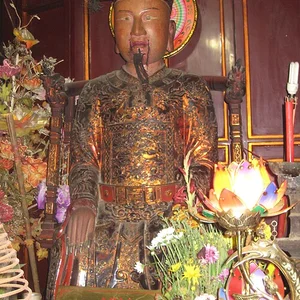
Lê Hoàn
941 — 1005
Founder of the Tiền Lê dynasty (980–1005), Lê Hoàn ruled Đại Cồ Việt for 25 years. A general under the Đinh dynasty who became regent and then emperor, he victoriously repelled the Song invasion in 981 and defended the country's independence.
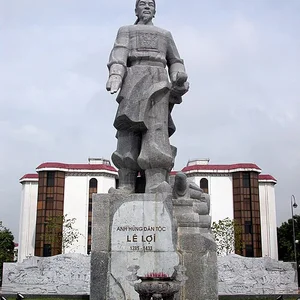
Lê Lợi
1384 — 1433
Vietnamese military and political leader (1385–1433), he led ten years of resistance against Ming occupation (1418–1428) and founded the Later Lê dynasty by restoring the independence of Đại Việt.
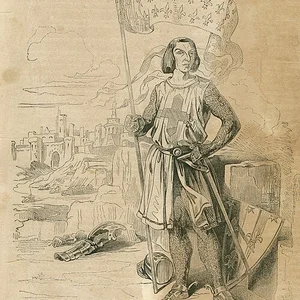
Louis IX (Saint Louis)
1214 — 1270
King of France from 1226 to 1270, Louis IX is renowned for his piety, his commitment to the Crusades, and his reform of royal justice. Canonized in 1297, he embodies the ideal of the medieval Christian king and strengthened the prestige of the French monarchy.
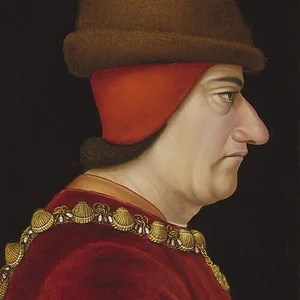
Louis XI
1423 — 1483
King of France from 1461 to 1483, nicknamed “the Prudent” or “the Universal Spider.” Son of Charles VII, he consolidated royal power by weakening the great nobility, notably Charles the Bold, Duke of Burgundy, and considerably expanded the territory of the kingdom.
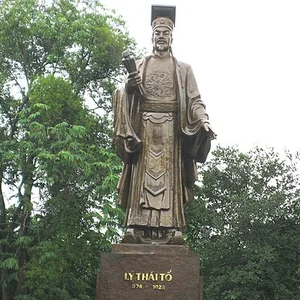
Lý Thái Tổ
974 — 1028
Founder of the Lý dynasty in Vietnam (1009–1028), he moved the capital from Hoa Lư to Đại La, renaming it Thăng Long (present-day Hanoi) in 1010, inaugurating over a thousand years of the Vietnamese capital's history.
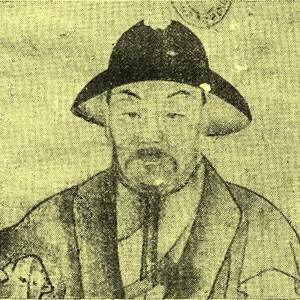
Lý Thường Kiệt
1019 — 1105
General and statesman of Đại Việt (1019–1105), he served under three emperors of the Lý dynasty. Renowned for his preemptive strike against the Song prefectures (1075–1076) and his victory against the Song invasion, he is regarded as one of the greatest military heroes in Vietnamese history.
Magira
Title held by the queen mother in the Kanem-Bornu Empire (present-day Chad and Nigeria), a figure of female political authority in the Kanuri tradition. According to Kanuri oral traditions, the Magira served as advisor and regent to the mai (king), embodying an institutionalized form of female power within one of the largest political structures of medieval sub-Saharan Africa.
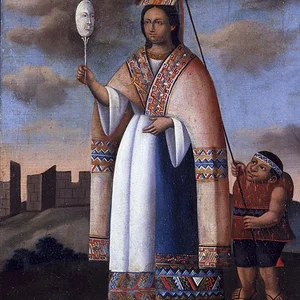
Mama Ocllo
1197 — 1230
Founding goddess of Inca civilization, according to Quechua oral tradition. Wife of Manco Cápac, she is said to have emerged from Lake Titicaca and taught women the art of weaving and domestic skills, thereby establishing the Inca social order.
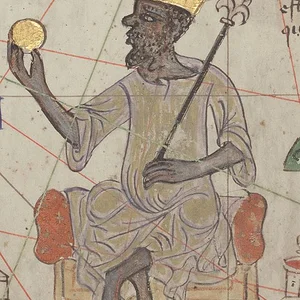
Mansa Musa
1280 — 1337
Mansa Musa (c. 1280–1337) was the tenth mansa (king) of the Mali Empire, one of the largest and wealthiest empires in the medieval world. His pilgrimage to Mecca in 1324–1325 revealed to the world the extraordinary riches of his kingdom.

Mansa Souleymane
1400 — 1360
Mansa (emperor) of the Mali Empire from 1341 to 1360, Souleymane was the brother and successor of Mansa Musa. His reign was marked by rigorous administration, economic prosperity, and the Islamic prestige of the empire.
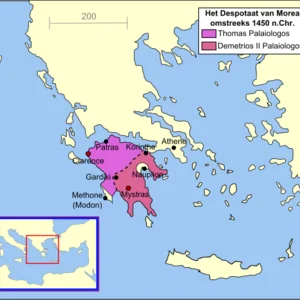
Manuel I
1326 — 1380
Manuel Kantakouzenos was Despot of the Morea in the fourteenth century, ruling the Byzantine despotate of the Peloponnese. Son of Emperor John VI Kantakouzenos, he defended Byzantine presence in Greece against the Ottomans and the Latins.
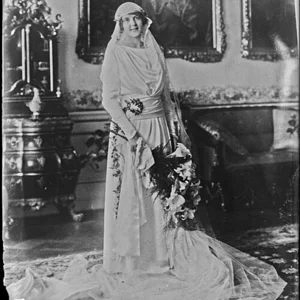
Margaret I of Denmark
Regent and then de facto sovereign of Denmark, Norway, and Sweden, she founded the Kalmar Union in 1397, uniting the three Scandinavian kingdoms under a single crown. Considered the most influential woman of power in the Nordic Middle Ages.
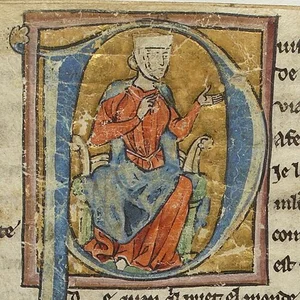
Marie of Champagne
1145 — 1198
Daughter of King Louis VII and Eleanor of Aquitaine, Marie of Champagne was Countess of Champagne and one of the greatest patrons of letters in the 12th century. A patron of Chrétien de Troyes, she made her court at Troyes a radiant center of courtly literature.

Mas'ud I of Ghazni
Sultan of the Ghaznavid Empire from 1030 to 1040, son of Mahmud of Ghazni. He led numerous military campaigns but was crushed by the Seljuks at the Battle of Dandanaqan (1040), hastening the decline of his empire.
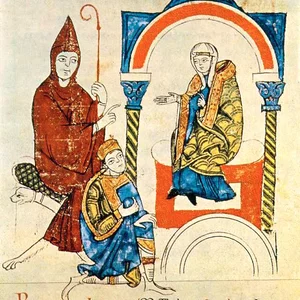
Matilda of Tuscany
1040 — 1115
Countess of Tuscany (1046–1115), Matilda was one of the most powerful women of the medieval Western world. An unwavering ally of the papacy, she played a decisive role in the Investiture Controversy, hosting at her Castle of Canossa the famous penance of Henry IV before Gregory VII in 1077.
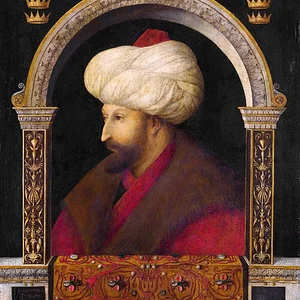
Mehmed
Ottoman Sultan (1432–1481), Mehmed II captured Constantinople in 1453, bringing the Byzantine Empire to an end. This event traditionally marks the close of the Middle Ages in Western historiography.
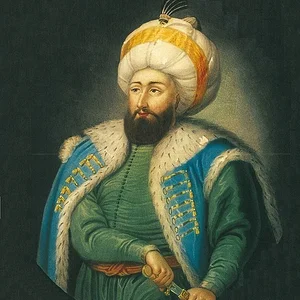
Mehmet II
1432 — 1481
Mehmed II, known as the Conqueror (1432–1481), was an Ottoman sultan who conquered Constantinople in 1453, bringing the Byzantine Empire to an end. He modernized Ottoman administration and transformed Constantinople into the capital of his empire.
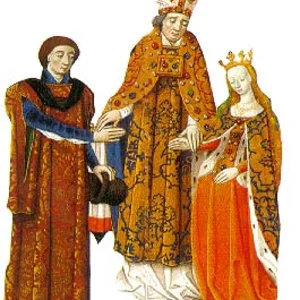
Melisende of Jerusalem
1105 — 1161
Queen of Jerusalem from 1131 to 1153, Melisende was one of the most powerful rulers of the Crusader States. She governed with authority, resisting attempts by her son Baldwin III to remove her from power.

Mohammed ben Toughlouq
Sultan of the Delhi Sultanate from 1324 to 1351, Muhammad ibn Tughluq was one of the most ambitious and controversial rulers of medieval India. A bold reformer, he attempted to relocate the capital from Delhi to Daulatabad and to introduce copper currency — projects that failed and ruined the sultanate.
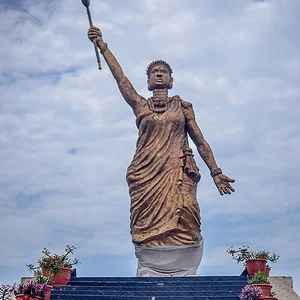
Moremi Ajasoro
Legendary heroine of the Yoruba people of Ilé-Ifè (present-day Nigeria), a figure of African oral tradition. According to legend, she sacrificed herself to infiltrate the ranks of Ifè's enemies and liberate her people through cunning and courage.
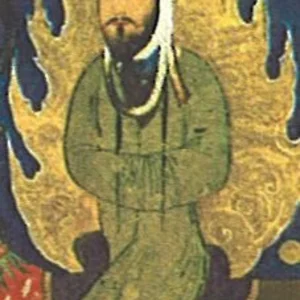
Muhammad
571 — 632
Born around 571 in Mecca, Muhammad is the founder of Islam and the prophet of the Muslim faith. A merchant turned preacher, he received what he believed to be a divine revelation at the age of 40 and united the Arab tribes under a new monotheistic religion.
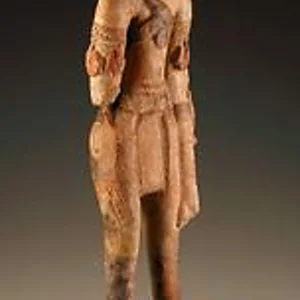
Nana Triban
Sister of Sundiata Keita, a figure from the 13th-century Mande epic. According to griot oral tradition, she accompanied her brother into exile and played a decisive diplomatic role in the reconquest of the Mande against Soumaoro Kante.

Naré Maghann Konaté
1135 — 1212
King of Manding in the 12th century, Naré Maghann Konaté is best known as the father of Sundiata Keita, founder of the Mali Empire. According to Mande oral tradition, a prophecy foretold that he would father a conqueror who would unite the Mande peoples.
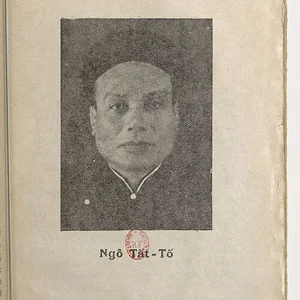
Ngô Quyền
897 — 944
Ngô Quyền (898–944) was the first king of the Ngô dynasty in Vietnam. In 938, he led the Vietnamese resistance and crushed the Southern Han fleet at the Battle of Bạch Đằng, ending nearly a millennium of Chinese domination and ushering in an era of lasting independence [1].
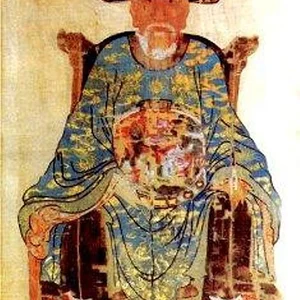
Nguyễn Trãi
Nguyễn Trãi (1380–1442) was a Vietnamese scholar, poet, and statesman, a central figure in the resistance against Ming occupation of Đại Việt. Strategic adviser to Lê Lợi during the Lam Sơn uprising, he is one of the founding fathers of the Hậu Lê dynasty and a cornerstone of classical Vietnamese literature.
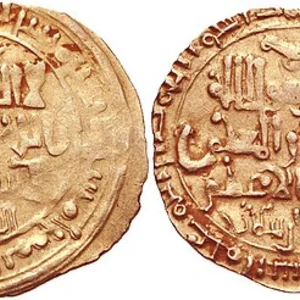
Nizam al-Mulk
1018 — 1092
Nizam al-Mulk was the grand vizier of the Seljuk sultans Alp Arslan and Malik-Shah I in the 11th century. A brilliant administrator, he equipped the Seljuk Empire with lasting institutions and founded a network of madrasas, the Nizamiyya, which left a deep mark on the teaching of Sunni Islam.

Nuh ibn Mansur
Nuh ibn Mansur (961–997) was the Samanid emir who ruled over Khorasan and Transoxiana. His reign witnessed the flourishing of Persian culture, and he welcomed the young Avicenna to his court, where the latter began his medical career.
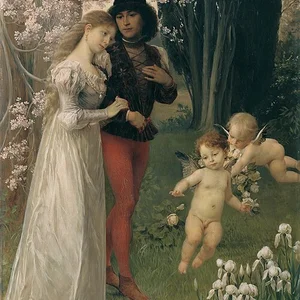
Paolo Malatesta
1246 — 1285
A thirteenth-century Italian nobleman and lord of Rimini, Paolo Malatesta is best known for his tragic passion with Francesca da Rimini, his sister-in-law. Immortalized by Dante in the Inferno of the Divine Comedy, he has become one of the great symbols of courtly and fatal love in medieval literature.
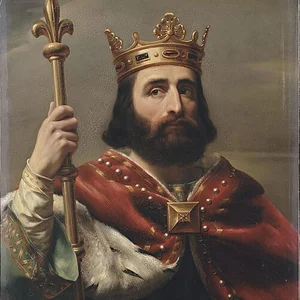
Pepin the Short
714 — 768
Pepin the Short (714–768) was the first king of the Carolingian dynasty. He overthrew the last Merovingian kings and founded a new dynasty that would dominate Western Europe for several centuries.
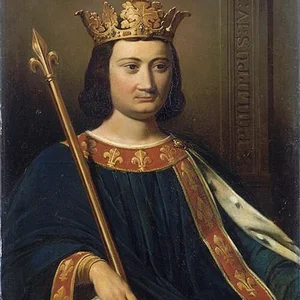
Philip the Fair
King of France from 1285 to 1314, Philip the Fair considerably strengthened the royal Capetian power against the papacy and the great feudal lords. His reign is marked by the trial of the Knights Templar and the convening of the first Estates General.
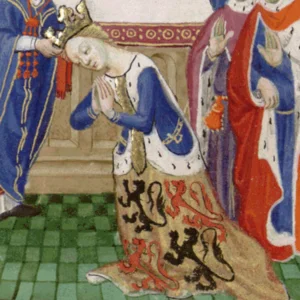
Philippa de Hainaut
1310 — 1369
Queen of England through her marriage to Edward III in 1328, Philippa of Hainaut was a respected sovereign, known for her clemency and benevolent influence. She played an important role in the English court and was a patron of the arts and letters.
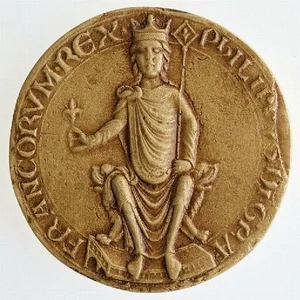
Philippe Auguste
1165 — 1223
King of France from 1180 to 1223, Philippe Auguste is one of the greatest monarchs of the Middle Ages. He strengthened royal power, vastly expanded the royal domain, and won the decisive victory of Bouvines in 1214. His reign marks the beginning of medieval France's rise as a major power.
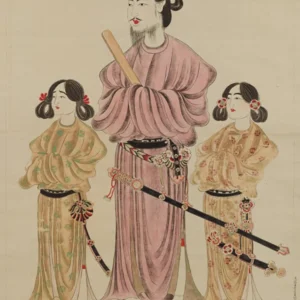
Prince Shōtoku
574 — 622
Regent of Japan under Empress Suiko (593–622), he promoted the spread of Buddhism and Confucianism, promulgated Japan's first constitution, and modernized the state by drawing on the Chinese model.
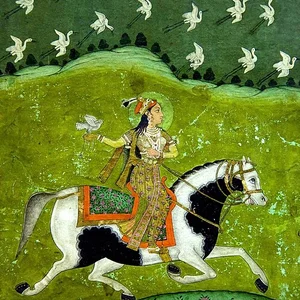
Razia Sultana
1205 — 1240
Razia Sultana was the first and only woman to rule the Delhi Sultanate (1236–1240). Daughter of Sultan Iltutmish, she governed unveiled and on horseback, defying the conventions of her time. A revolt by Turkish nobles led to her downfall and death in 1240.

Razia Sultana
The first woman to reign over the Delhi Sultanate (1236–1240), Razia Sultana was chosen by her father Iltutmish as his successor. She led her armies in person and governed unveiled, defying the conventions of her era, before being overthrown and killed by a coalition of nobles.
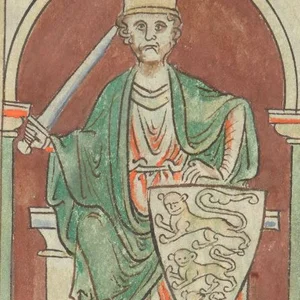
Richard the Lionheart
1157 — 1199
King of England from 1189 to 1199, Richard the Lionheart was a medieval monarch renowned for his leading role in the Third Crusade (1191–1192). He embodied the chivalric ideal of his era, though he spent very little time in England during his reign.
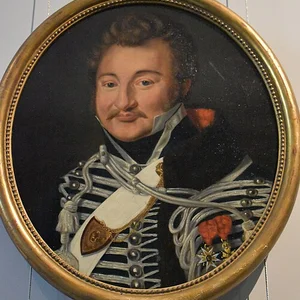
Saint Louis
King of France from 1226 to 1270, Louis IX is a major figure of the Middle Ages. Renowned for his piety and his sense of justice, he was canonized in 1297. He led two crusades and died in Tunis in 1270.
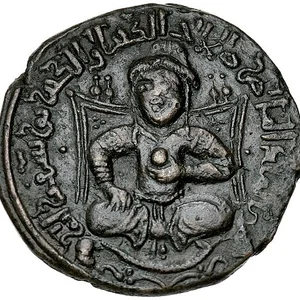
Saladin
1138 — 1193
Saladin (1138–1193) was a Muslim sultan of Egypt and Syria and the founder of the Ayyubid dynasty. He is renowned for uniting the Muslim world and recapturing Jerusalem from the Crusaders in 1187, bringing an end to the Latin Kingdom of Jerusalem established after the First Crusade.
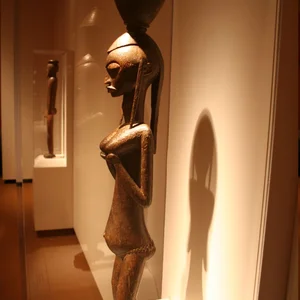
Sassuma Bérété
First wife of King Naré Maghann Konaté in the Sundiata epic, Sassuma Bérété is a figure of political ambition in the Mandinka griot tradition (13th century). A fierce rival of Sogolon, mother of Sundiata, she seeks to place her son Dankaran Touman on the throne of Mande.
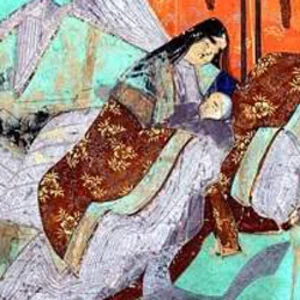
Shōshi
988 — 1074
Empress consort of Emperor Ichijō and daughter of regent Fujiwara no Michinaga, Shōshi was one of the most influential women in Heian-period Japan. Her court was a leading intellectual and artistic hub, most notably welcoming the author Murasaki Shikibu.
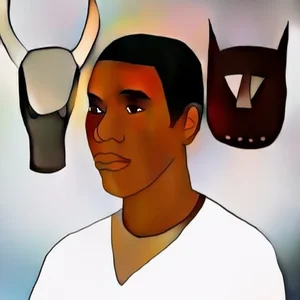
Sogolon Kondé
A central figure in the Mande epic tradition preserved by griots, Sogolon Kondé is the mother of Sundiata Keita, founder of the Mali Empire in the 13th century. Said to be ugly yet endowed with supernatural powers, she embodies hidden strength and maternal dignity in the oral tradition of the Mande peoples.
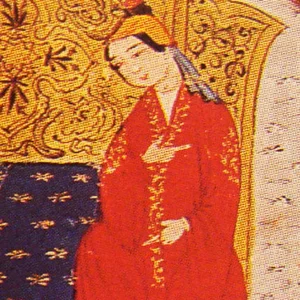
Sorghaghtani Beki
1190 — 1252
Mongol princess, daughter-in-law of Genghis Khan and wife of Tolui. Mother of four sons, including the emperors Möngke and Kublai Khan and the Ilkhan Hulagu, she exerted a decisive political influence on the succession of the Mongol Empire in the 13th century.

Soundiata Keïta
1190 — 1255
Founder of the Mali Empire in the 13th century, Soundiata Keïta united the Mandinka peoples and defeated King Soumaoro Kanté at the Battle of Kirina (c. 1235). His epic, passed down by griots, is one of the great works of African oral literature.

Sumanguru Kante
King of the Sosso Kingdom in the 13th century, Sumanguru Kante was a formidable ruler who dominated West Africa following the fall of the Ghana Empire. He was defeated by Sundiata Keita at the Battle of Kirina around 1235, an event that marked the birth of the Mali Empire.
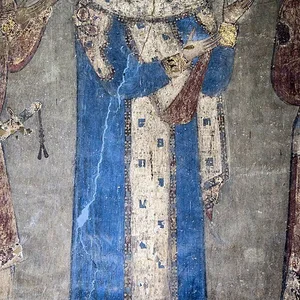
Tamar of Georgia
1166 — 1213
Queen of Georgia (1184–1213), the first woman to rule alone over this Caucasian kingdom. Her reign marks the Georgian Golden Age: territorial expansion, cultural and religious flourishing, and decisive military victories against the Seljuks.
Tamerlane
1336 — 1405
Timur, known as Tamerlane (“Timur the Lame”), was a Turco-Mongol conqueror who built one of the vastest empires of the 14th century, stretching from Anatolia to India. Claiming descent from Genghis Khan, he subdued dozens of kingdoms through fearsome violence. His capital, Samarkand, shone as a great center of Islamic culture and architecture.
Tamerlane
1336 — 1405
A Turco-Mongol conqueror of the 14th century, Tamerlane founded an empire stretching from Anatolia to India. His military campaigns, marked by extreme violence, reshaped the map of Central Asia.

Tata Oule
Mandinka princess of the 13th century, daughter of Sundiata Keita according to the oral traditions of the Kouyaté griots. She is celebrated as a guardian figure of the Manden Charter, the first proclamation of rights in the Mali Empire.
Theodora
497 — 548
Theodora, empress of Byzantium alongside Justinian I, is one of the most powerful women of late antiquity. Born into humble origins, she became co-regent and played a decisive role in Byzantine imperial politics, most notably during the suppression of the Nika revolt in 532.
Theophanu
Byzantine princess, she married Emperor Otto II in 972, becoming Empress of the Holy Roman Empire. After her husband's death in 983, she served as regent on behalf of their son Otto III until her own death in 991, governing with authority and introducing Byzantine influence to the Ottonian court.
Thomas Becket
Archbishop of Canterbury in the 12th century, he clashed fiercely with King Henry II of England over the rights and freedoms of the Church. Murdered in his cathedral in 1170, he was canonized as early as 1173.
Tokhtamysh
1342 — 1406
Tokhtamysh was one of the last great khans of the Golden Horde, managing to reunify this fragmented Mongol empire in the late 14th century. Backed by Tamerlane before becoming his rival, he sacked Moscow in 1382 and clashed with the Timurid army several times, suffering devastating defeats that sealed the decline of the Horde.
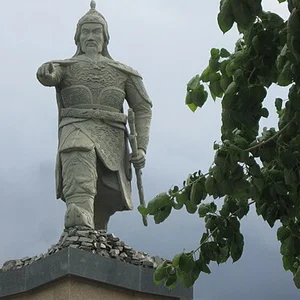
Trần Hưng Đạo
1228 — 1300
Vietnamese prince and great general of the Trần dynasty (c. 1228–1300), he commanded the armies of Đại Việt during the three Mongol-Yuan invasions (1258, 1285, 1288) and repelled each one, most notably through the decisive victory on the Bạch Đằng River.
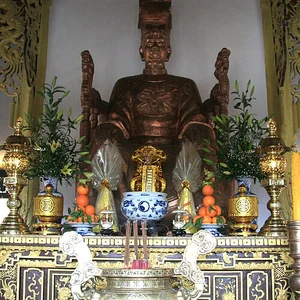
Trần Nhân Tông
1258 — 1308
Third emperor of the Trần dynasty in Đại Việt (r. 1278–1293), he led the victorious resistance against two Mongol invasions under Kublai Khan (1285, 1287). After abdicating, he became a Buddhist monk and founded the Trúc Lâm Yên Tử sect, the first truly Vietnamese school of Chan meditation.
Umar ibn al-Khattab
586 — 644
A close companion of the Prophet Muhammad, Umar ibn al-Khattab became the second caliph of Islam (634–644). His reign saw a lightning expansion of the Muslim empire, from Persia to Egypt.
Urban II
1035 — 1099
Pope from 1088 to 1099, Urban II was the instigator of the First Crusade, proclaimed at the Council of Clermont in 1095. A Cluniac monk of French origin, he strengthened papal authority and continued the Gregorian Reform of the Church.
Uthman ibn Affan
574 — 656
The third caliph of Islam (644–656), Uthman ibn Affan was one of the closest companions of the Prophet Muhammad. His caliphate was marked by the standardization of the Quran and the expansion of the Muslim empire, but also by internal tensions that ultimately led to his assassination.

William of Poitiers
969 — 1030
Count of Poitiers and Duke of Aquitaine, nicknamed "the Great," he was one of the most powerful lords in the feudal West around the year 1000. He consolidated the Duchy of Aquitaine, protected the Church, and distinguished himself as a pilgrim to Santiago de Compostela.
William the Conqueror
1028 — 1087
Duke of Normandy, William the Conqueror became King of England after his victory at the Battle of Hastings in 1066. This event marked one of the most significant conquests of the Middle Ages and profoundly transformed English society.
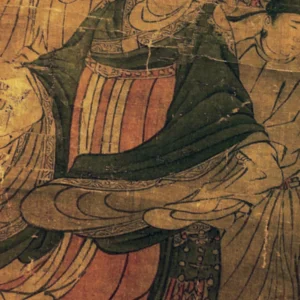
Wu Zetian
624 — 705
Wu Zetian (624–705) is the only woman ever to have ruled as reigning empress of China. A concubine of Emperor Taizong and later wife of Emperor Gaozong, she gradually seized power before founding her own Zhou dynasty in 690. An ambitious reformer, she modernized the imperial administration and championed merit-based examinations.

Yahya ibn Muhammad
829 — 864
Idrisid emir of Morocco from 849 to 863, reigning from Fez. His reign was marked by the rise of the city and the founding, in 859, of the al-Qarawiyyin mosque and university.
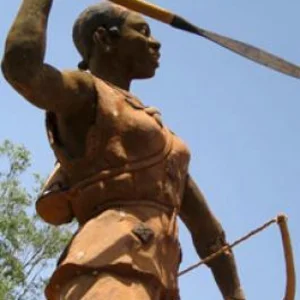
Yennenga
1101 — 1101
A warrior princess of the Dagomba people (present-day Ghana/northern Burkina Faso), Yennenga is venerated in Mossi oral tradition as the founding mother of the Moogo kingdom. Daughter of King Nedega, she united with a hunter named Riale, and their son Ouédraogo became the eponymous ancestor of the Mossi.
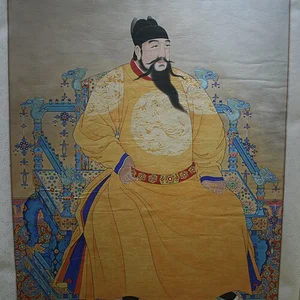
Yongle
Third emperor of the Ming dynasty (1402–1424), Yongle is known for moving the capital to Beijing, commissioning Zheng He's great maritime expeditions, and consolidating Chinese imperial power.
Renaissance(86)
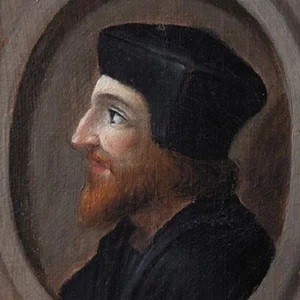
Agostino Chigi
1466 — 1520
Agostino Chigi (1466–1520) was the greatest banker of the Italian Renaissance, financier to popes Julius II and Leo X. A lavish patron of the arts, he commissioned the construction and decoration of the Villa Farnesina in Rome, with frescoes by Raphael and his pupils.
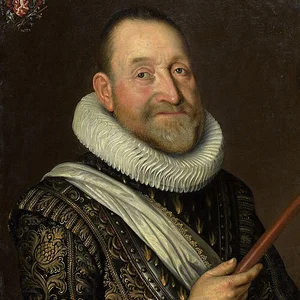
Agrippa d'Aubigné
1552 — 1630
French writer, poet, and soldier, a major figure of Protestantism. A companion-in-arms of Henri de Navarre (the future Henri IV), he is the author of Les Tragiques, a great epic of the Wars of Religion.
Akbar
1542 — 1605
Jalal ud-Din Muhammad Akbar (1542-1605) was the third and greatest Mughal emperor of India. He unified the Indian subcontinent under his rule and championed a policy of religious tolerance remarkable for his time.
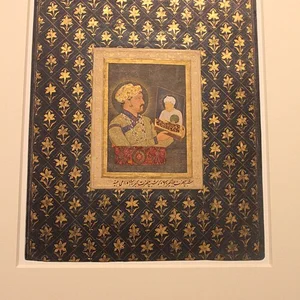
Akbar the Great
The third emperor of the Mughal dynasty, Akbar ruled over northern India from 1556 to 1605. A brilliant military strategist and administrator, he left his mark on history through his policy of religious tolerance toward Hindus and Muslims alike.
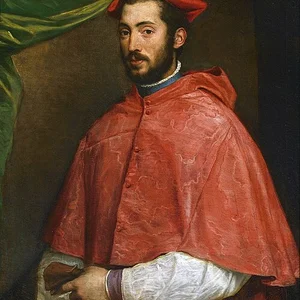
Alessandro Farnese
1520 — 1589
Italian general and statesman in the service of Spain, governor of the Spanish Netherlands. A renowned strategist of his time, he was meant to support the Spanish Armada in 1588 to invade England, a threat referenced by Elizabeth I in her Tilbury speech.
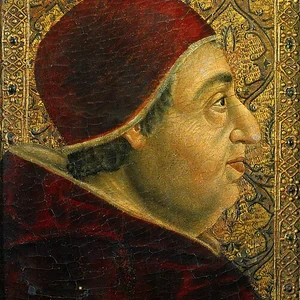
Alexander VI
1431 — 1503
Spanish pope from 1492 to 1503, Alexander VI is one of the most controversial figures in the history of the papacy. Head of the powerful Borgia family, he blended politics, nepotism, and diplomacy in Renaissance Rome.
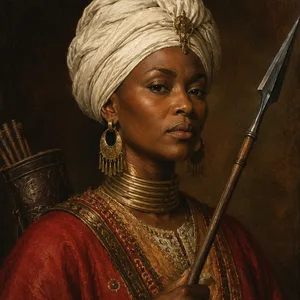
Amina de Zaria
1533 — 1610
Warrior princess of the Hausa city-state of Zazzau (present-day Nigeria), she reigned around 1576–1610 and led numerous military campaigns that significantly expanded her kingdom's territory. The first woman to rule Zazzau, she has become a symbol of female power in West Africa.
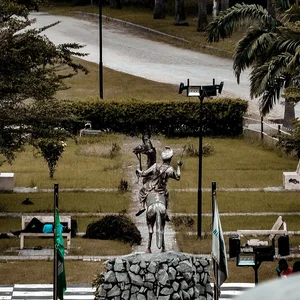
Amina of Zazzau
A Hausa warrior queen of the kingdom of Zazzau (present-day Zaria, Nigeria), Amina reigned around the 16th century according to Hausa oral traditions. She greatly expanded her kingdom's territory through military conquest and is celebrated as a symbol of female power in Hausa collective memory.
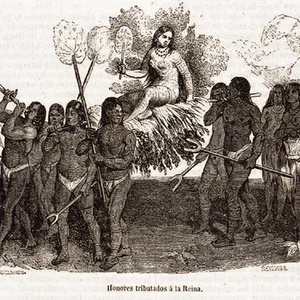
Anacaona
1474 — 1503
Taíno queen and poet of Hispaniola (c. 1474–1503), Anacaona was renowned for her areítos — ceremonial songs and poems passed down through oral tradition. A fierce resister of Spanish colonization, she was captured and executed by Nicolás de Ovando.
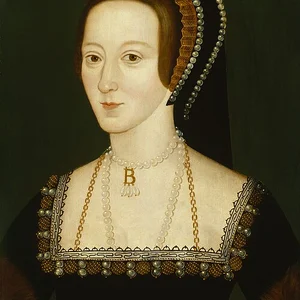
Anne Boleyn
1507 — 1536
Queen of England from 1533 to 1536, Anne Boleyn was the second wife of Henry VIII. Her marriage required England's break with Rome, giving rise to the Church of England. Mother of Elizabeth I, she was accused of adultery and beheaded at the Tower of London.
Anne de Montmorency
1493 — 1567
Anne de Montmorency (1493-1567) was Constable of France and one of the most powerful servants of kings Francis I and Henry II. A great military leader and statesman, he left a lasting mark on the town of Pézenas, where he established his power as governor of Languedoc.
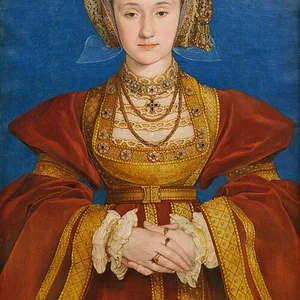
Anne of Cleves
1515 — 1557
A German princess of the House of La Marck, Anne of Cleves became the fourth wife of King Henry VIII of England in January 1540. The marriage, motivated by a diplomatic alliance with the Protestant princes, was annulled after six months.
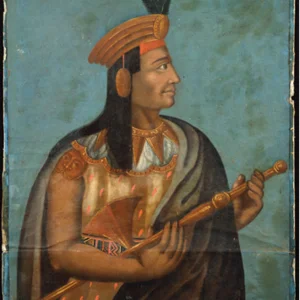
Atahualpa
1500 — 1533
The last Inca emperor, Atahualpa seized power at the end of a civil war against his brother Huáscar. Captured by Francisco Pizarro's Spanish conquistadors in 1532, he was executed in 1533, marking the collapse of the Inca Empire.
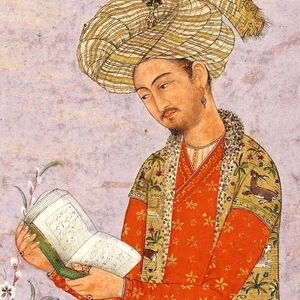
Babur
1483 — 1530
Founder of the Mughal Empire, Babur was a Timurid prince who, after losing Samarkand, conquered India in 1526 at the Battle of Panipat. A refined poet and memoirist, he left behind the Baburnama, one of the earliest autobiographies in Islamic literature.
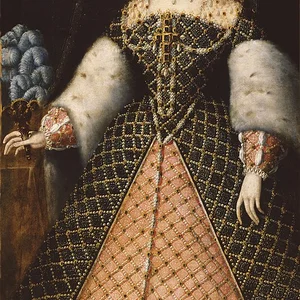
Catherine de Medici
1519 — 1589
Queen consort of France (1547–1559) and regent of the kingdom during the Wars of Religion. Born in Florence in 1519, she played a major political role by attempting to maintain the balance between Catholics and Protestants in France.
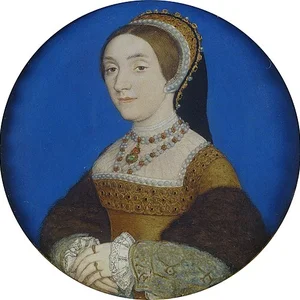
Catherine Howard
1523 — 1542
Catherine Howard was the fifth wife of King Henry VIII of England, whom she married in 1540. A very young queen consort, she was accused of adultery and treason, then executed in 1542.
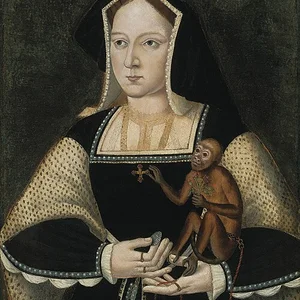
Catherine of Aragon
1485 — 1536
A Spanish Infanta who became Queen of England, Catherine of Aragon was the first wife of Henry VIII. Her refusal to have their marriage annulled triggered the Anglican schism and England's break with Rome.
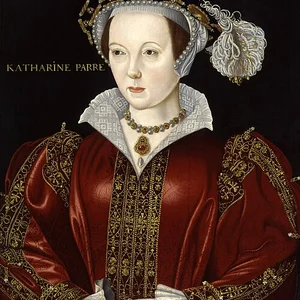
Catherine Parr
1512 — 1548
Sixth and last wife of King Henry VIII of England, whom she married in 1543. A cultured woman with reformist convictions, she was the only one of the six wives to outlive the king. She served as Regent of England in 1544 during Henry VIII's French campaign.
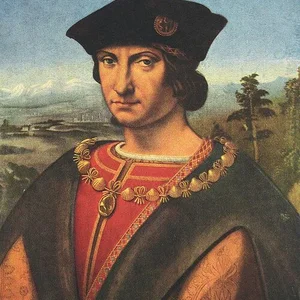
Charles d'Amboise
Lord of Chaumont and governor of the Duchy of Milan on behalf of Louis XII, Charles d'Amboise (1473–1511) was one of the leading French military commanders during the Italian Wars. He is particularly known for having been Leonardo da Vinci's patron in Milan.
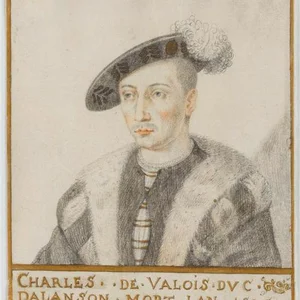
Charles IV of Alençon
1489 — 1525
Charles IV of Alençon (1489-1525) was Duke of Alençon and Count of Perche, a prince of the blood and a great aristocrat during the reign of Francis I. Husband of Marguerite of Angoulême (the future Marguerite of Navarre), he took part in the Battle of Pavia in 1525.
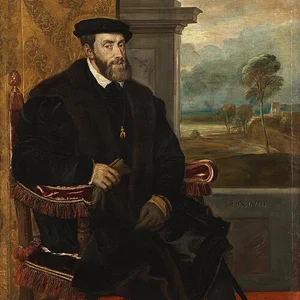
Charles V
1500 — 1558
Born in 1500 in Ghent, Charles V inherited a vast empire spanning Spain, the Netherlands, Austria, and much of Italy. King of Spain as Charles I, then elected Holy Roman Emperor in 1519, he ruled the largest European empire of the Renaissance. He abdicated in 1556 and retired to the monastery of Yuste, where he died in 1558.
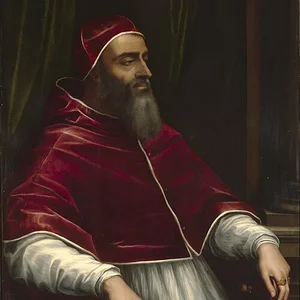
Clement VII
1478 — 1534
Pope from 1523 to 1534, Clement VII was a sovereign pontiff from the powerful Medici family. His pontificate was marked by the Sack of Rome in 1527 and his refusal to annul the marriage of Henry VIII of England, which triggered the Anglican schism.
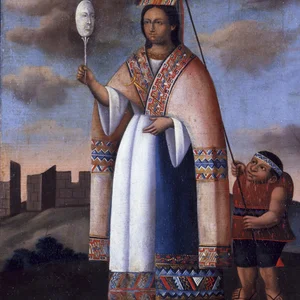
Coya Pacsa
Coya Pacsa was an Inca queen (coya), wife of the Inca Huayna Cápac, who ruled the Tawantinsuyu at the end of the 15th and beginning of the 16th century. A figure of the highest Inca nobility, she embodies the power and political role of the great royal wives in Inca civilization on the eve of the Spanish conquest. Information about her comes primarily from Quechua oral tradition and Spanish colonial chronicles.
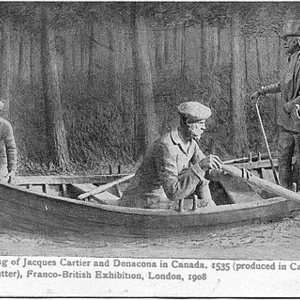
Donnacona
1500 — 1539
Chief of the St. Lawrence Iroquoians settled at Stadacona (present-day Quebec), Donnacona met Jacques Cartier during his voyages of 1534 and 1535. Taken to France by force by Cartier, he died at the court of King Francis I without ever seeing his homeland again.
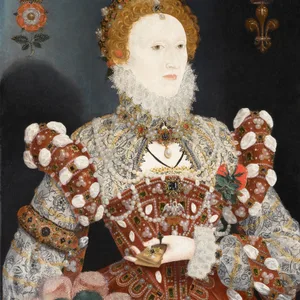
Elizabeth I
Queen of England and Ireland from 1558 to 1603, daughter of Henry VIII and Anne Boleyn. Her reign, the “Elizabethan era,” marks a golden age of culture and the consolidation of Protestantism in England. She embodies the figure of the “Virgin Queen,” an absolute sovereign who never married any of her suitors.
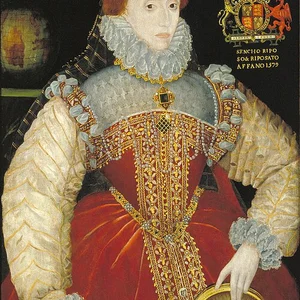
Elizabeth I of England
1533 — 1603
Elizabeth I (1533–1603) was Queen of England and Ireland for 45 years. The daughter of Henry VIII and Anne Boleyn, she consolidated Protestantism in England and led her kingdom to exceptional prominence in Europe. Her reign, known as the "Elizabethan era," was marked by the defeat of the Spanish Armada and a flourishing of arts and literature.

Fabrizio Moncada
1535 — 1579
Fabrizio Moncada was a Sicilian nobleman and politician from the powerful Moncada family, of Catalan origin, established in Sicily and playing a key role in the administration of the kingdom under Hispanic rule during the 15th and 16th centuries.
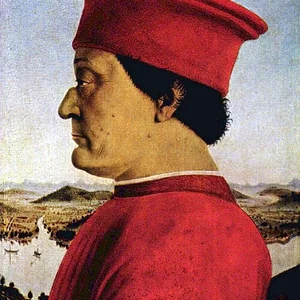
Federico da Montefeltro
1422 — 1482
Condottiere and lord of Urbino (1422–1482), Federico da Montefeltro was one of the most cultured princes of the Italian Renaissance. An exceptional patron of the arts, he made Urbino a major artistic center, commissioning his famous profile portrait from Piero della Francesca.
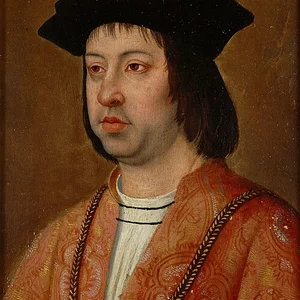
Ferdinand II of Aragon
1452 — 1516
King of Aragon, Ferdinand II married Isabella of Castile in 1469, uniting the two great Iberian crowns. Together, the “Catholic Monarchs” completed the Reconquista in 1492, financed Christopher Columbus's voyage, and laid the foundations of modern Spain.
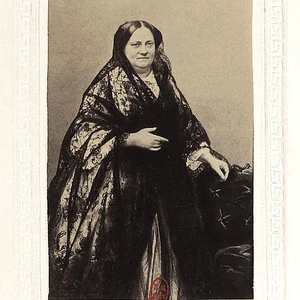
Ferdinand II of Spain
King of Aragon and, through his marriage to Isabella of Castile, co-ruler of a unified Spain. He completed the Reconquista in 1492 and funded Christopher Columbus's voyages, laying the foundations of the Spanish colonial empire.
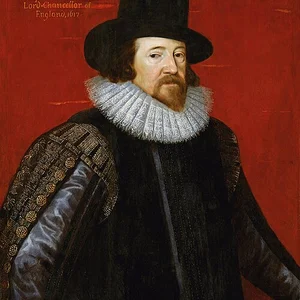
Francis Bacon
1561 — 1626
English philosopher and statesman (1561–1626), Francis Bacon is the founder of the modern experimental method. Lord Chancellor of England under James I, he championed the idea that science must be based on observation and induction rather than authority.
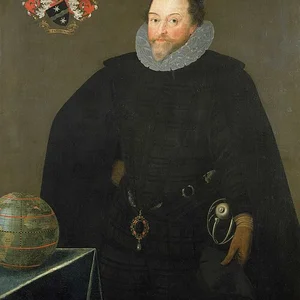
Francis Drake
1540 — 1596
Francis Drake was an English privateer and navigator of the 16th century, famous for being the second person to circumnavigate the globe by ship (1577–1580). Vice Admiral of the English fleet, he played a decisive role in the defeat of the Spanish Armada in 1588.
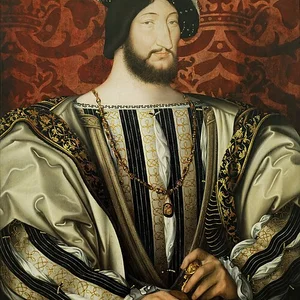
Francis I
1494 — 1547
Francis I (1494–1547) was one of the greatest kings of France and an iconic figure of the Renaissance. A great patron of the arts, he brought Leonardo da Vinci to France and transformed the royal court into a vibrant center of art and intellectual life. His reign was shaped by the Italian Wars and his rivalry with Charles V.
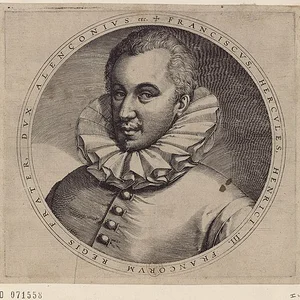
Francis of Anjou
The youngest son of Henry II and Catherine de' Medici, he was an ambitious figure of the Wars of Religion. Leader of the “Malcontents,” a suitor for the hand of Elizabeth I, and briefly sovereign of the rebellious Netherlands, his death in 1584 opened the crisis of succession to the French throne.
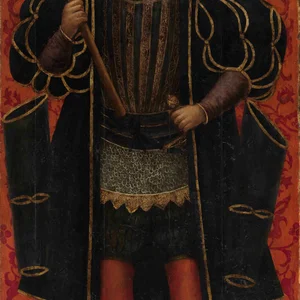
Francisco de Almeida
1450 — 1510
First Viceroy of Portuguese India (1505–1509), Francisco de Almeida consolidated the Lusitanian presence in the Indian Ocean. He won the decisive Battle of Diu (1509) against the Ottoman-Egyptian fleet, securing Portuguese maritime supremacy in Asia.
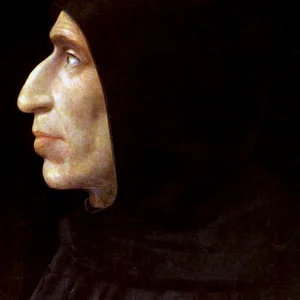
Girolamo Savonarola
1452 — 1498
Italian Dominican friar (1452–1498), Savonarola seized control of Florence after the expulsion of the Medici in 1494. A fiery preacher, he imposed a rigorist theocracy before being excommunicated and executed.
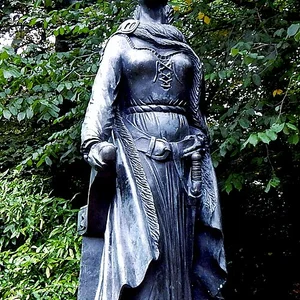
Grace O'Malley
1539 — 1599
Irish clan chief and navigator of the 16th century, nicknamed the “pirate queen.” At the head of the Ó Máille fleet, she scoured the west coast of Ireland through raiding and tolls, and negotiated in person with Elizabeth I of England.
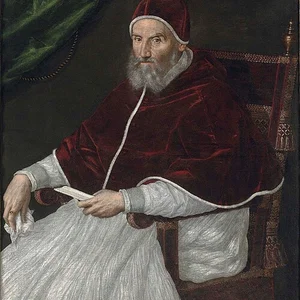
Gregory XIII
1502 — 1585
Gregory XIII was the 226th pope of the Catholic Church, from 1572 to 1585. Trained as a lawyer, he is best known for the calendar reform that bears his name, the Gregorian calendar, introduced in 1582 and still in use today.

Helena Glinskaya
A princess of Lithuanian origin, the second wife of the Grand Prince of Moscow Vasili III. Upon his death in 1533, she served as regent in the name of her son Ivan IV (the future Ivan the Terrible), then three years old, until her own death in 1538.
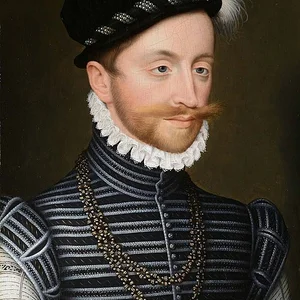
Henri I de Montmorency
1534 — 1614
Henri I de Montmorency (1534-1614) was a great French lord and military commander, governor of Languedoc for half a century. A Marshal and then Constable of France, he played a major role during the Wars of Religion and in the service of Henry IV.
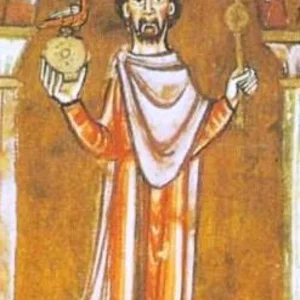
Henri IV
1553 — 1610
Henry IV (1050–1106) was Holy Roman Emperor from 1084 to 1105. He is best known for his power struggle with the papacy, particularly the Investiture Controversy, which pitted imperial authority against that of Pope Gregory VII.
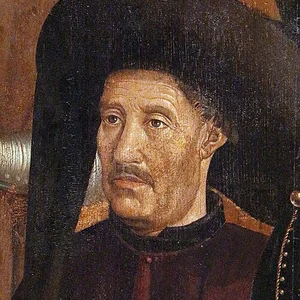
Henry the Navigator
1394 — 1460
A 15th-century Portuguese prince, son of King John I of Portugal. Although he himself rarely went to sea, he was the great organizer and patron of the expeditions along the coasts of Africa, ushering in the era of the great Portuguese discoveries.
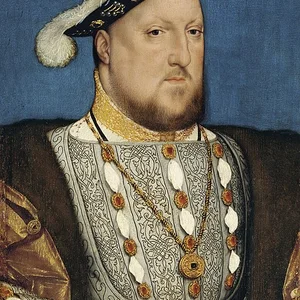
Henry VIII
1491 — 1547
King of England and Ireland from 1509 to 1547, Henry VIII is famous for breaking with the Catholic Church and founding the Church of England in order to annul his marriage. He married six wives and had two of them executed, leaving a lasting mark on England's political and religious history.
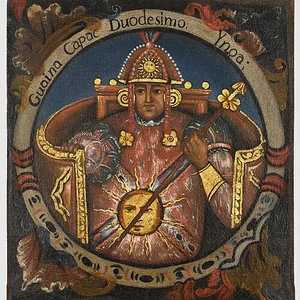
Huayna Cápac
1464 — 1525
Huayna Cápac was the eleventh Sapa Inca, ruler of the Inca Empire (Tahuantinsuyu) at its greatest territorial extent. He reigned from roughly 1493 to 1527 and expanded the empire northward as far as present-day Ecuador. His death, probably caused by an epidemic that arrived from Europe, triggered a war of succession between his sons Huáscar and Atahualpa.

Humabon
1500 — ?
Humabon was the raja of Cebu in the Philippines in the early 16th century. He welcomed Magellan's expedition in 1521 and converted to Christianity along with many of the island's inhabitants. He played a central role in the first contacts between the Philippine world and European explorers.

Inti
Inti is the principal solar deity of the Inca pantheon, venerated as the father of the Incas and the source of all life. His cult was at the heart of the state religion of the Inca Empire (Tawantinsuyu). The Sapa Inca was considered his direct son on Earth.
Isabella I of Castile
1451 — 1504
Isabella I of Castile (1451-1504) unified Spain by marrying Ferdinand II of Aragon, forming the Catholic Monarchs. She financed Christopher Columbus's voyage in 1492, opening the era of conquest in the Americas. Her reign was marked by the establishment of the Spanish Inquisition and the expulsion of the Jews from Spain.
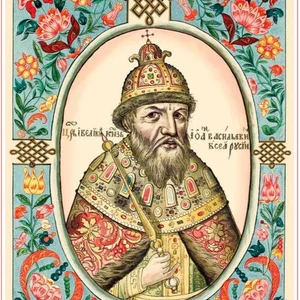
Ivan IV
1530 — 1584
The first tsar of Russia, Ivan IV unified and centralized Russian power in the 16th century. His reign was marked by significant territorial conquests and the brutal repression of the aristocracy through the oprichnina.
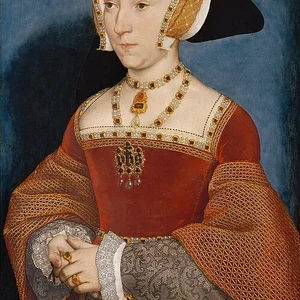
Jane Seymour
1508 — 1537
Jane Seymour was the third wife of King Henry VIII of England and queen consort from 1536 to 1537. She gave birth to the long-awaited male heir, the future Edward VI, but died a few days later from complications of childbirth.
Jean Bodin
1530 — 1596
Jean Bodin was a French jurist, philosopher, and political theorist of the Renaissance. He is famous for developing the modern theory of state sovereignty in *The Six Books of the Commonwealth* (1576).
Jeanne d'Albret
1528 — 1572
Queen of Navarre from 1555 to 1572, Jeanne d'Albret was one of the leading figures of the Protestant Reformation in France. Mother of Henry IV, she imposed Calvinism in her territories and played a decisive political role in the Wars of Religion.

Joanna la Beltraneja
Castilian princess, acknowledged daughter of King Henry IV of Castile, claimant to the throne upon his death in 1474. Her contested legitimacy triggered a war of succession that pitted her against her aunt Isabella the Catholic. Defeated, she withdrew to Portugal where she ended her days.
Julius III
1487 — 1555
Julius III (Giovanni Maria Ciocchi Del Monte, 1487–1555) was the 221st pope of the Catholic Church from 1550 to 1555. He convened the resumption of the Council of Trent and was a patron of the arts, protector of Michelangelo and Palestrina.
Kassa
Kassa is the mother of Askia Mohammed I, founder of the Askia dynasty in the Songhai Empire in the 15th century. Her memory is preserved through oral traditions and mentioned in the Tarikh al-Fattash, an Arabic chronicle written in the 16th century. Her role in legitimizing her son's succession illustrates the place of women in medieval Sahelian societies.
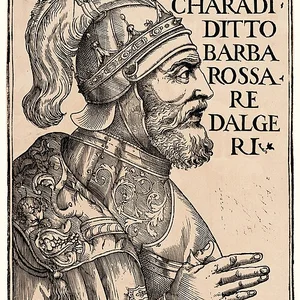
Khayr ad-Dîn Barbarossa
A corsair of Greek origin who became commander-in-chief of the Ottoman fleet under Suleiman the Magnificent. He dominated the western Mediterranean in the 16th century and turned the Regency of Algiers into an Ottoman stronghold.
Khoja Ahrar
1404 — 1490
Khoja Ahrar (1404-1490) was the most influential Naqshbandi Sufi master in Central Asia, wielding considerable political power over the Timurid sultans. From Samarkand, he interceded with princes to protect the population and amassed immense wealth, which he redistributed through pious foundations.
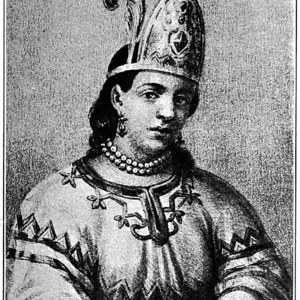
La Malinche
Born around 1500 into a noble Nahuatl family, sold into slavery and later given to Hernán Cortés, she became his interpreter, advisor, and companion. A central figure in the Conquest of Mexico, she remains an ambiguous symbol of betrayal and survival in Mexican historical memory.
Lapu-Lapu
1491 — 1542
Lapu-Lapu was the datu (chief) of the island of Mactan in the Philippines. He is famous for defeating and killing the explorer Ferdinand Magellan at the Battle of Mactan on April 27, 1521, thus repelling the first Spanish attempt to conquer the Philippines.
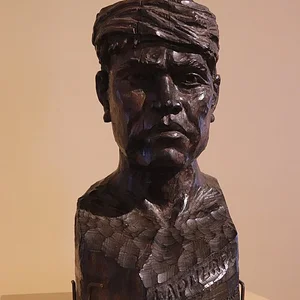
Lapulapu
1492 — 1542
A warrior chieftain from the island of Mactan in the Philippines, Lapulapu is famous for defeating and killing the explorer Ferdinand Magellan on April 27, 1521. He is considered the first national hero of the Philippines for resisting European colonization.
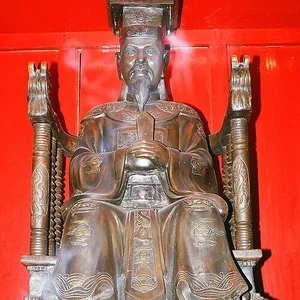
Lê Thánh Tông
1442 — 1497
Fifth emperor of Vietnam's Lê sơ dynasty (r. 1460–1497), he promulgated the Hồng Đức legal code and carried out sweeping reforms of the administration, education, and military. He conquered the Kingdom of Champa in 1471, permanently extending Vietnamese territory southward. A prolific poet, he founded the Tao Đàn literary circle and left more than 350 poems in classical Chinese. [1]
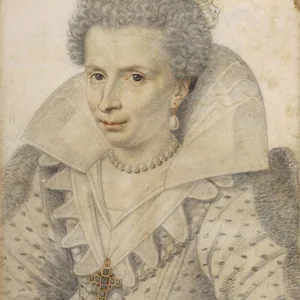
Leonora Galigaï
1568 — 1617
An Italian favorite and lady of the wardrobe to Queen Marie de' Medici, she wielded great influence at the French court during the regency alongside her husband Concino Concini. Accused of witchcraft, she was beheaded and then burned at the Place de Grève in 1617.
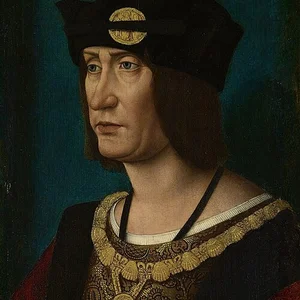
Louis XII
1462 — 1515
King of France from 1498 to 1515, Louis XII was nicknamed “Father of the People” for his fiscal and judicial reforms. He waged numerous Italian Wars to assert his claims over Milan and Naples.
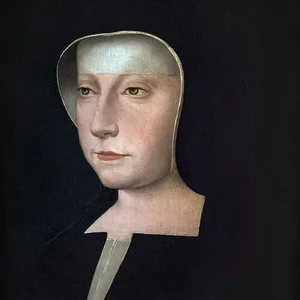
Louise de Savoie
1476 — 1531
Louise de Savoie (1476–1531), Duchess of Angoulême, was the mother of Francis I and Margaret of Navarre. She served twice as regent of France and played a major diplomatic role by negotiating the Peace of Cambrai in 1529.
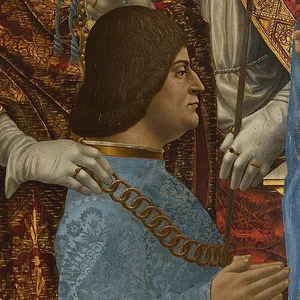
Ludovic Sforza
1452 — 1508
Duke of Milan from 1494 to 1499, nicknamed "il Moro" (the Moor), he was one of the most powerful princes in Renaissance Italy. A celebrated patron of the arts, he brought Leonardo da Vinci to his court and played a key role in the Italian Wars before being overthrown by Louis XII.
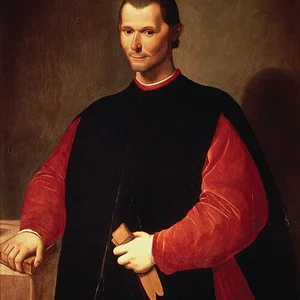
Machiavelli
1469 — 1527
Florentine philosopher and statesman (1469–1527), Machiavelli is the author of The Prince, a treatise that laid the foundations of modern political realism. He analyzes power as it is actually exercised, not as it should be, revolutionizing political thought during the Renaissance.
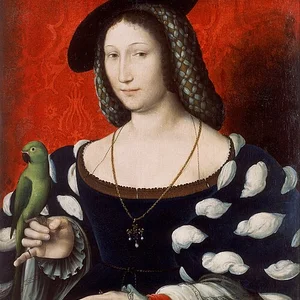
Margaret of Navarre
1492 — 1549
Elder sister of Francis I, Margaret of Navarre was one of the most educated women of the French Renaissance. A patron of humanists and religious reformers, she authored the Heptameron, a collection of tales inspired by Boccaccio's Decameron.
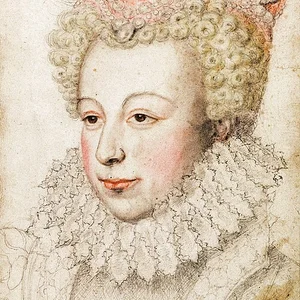
Marguerite de Valois
1553 — 1615
Queen consort of Navarre and later of France, nicknamed 'Queen Margot', she was a central figure in the Wars of Religion. A learned woman of letters, she left behind her Memoirs and was the first wife of Henry IV.
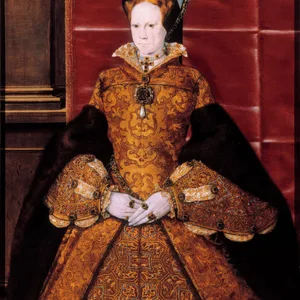
Mary I Tudor
Queen of England and Ireland from 1553 to 1558, Mary I Tudor was the first woman to reign in her own right over England. The daughter of Henry VIII and Catherine of Aragon, she restored Catholicism and persecuted Protestants, earning her the nickname "Bloody Mary".
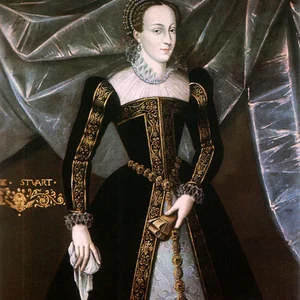
Mary, Queen of Scots
1542 — 1587
Queen of Scotland at six days old, raised at the French court, Mary Stuart became Queen consort of France before ruling a Scotland torn apart by the Protestant Reformation. A Catholic in a kingdom that had embraced Calvinism, she abdicated in 1567 and sought refuge with Elizabeth I, who had her imprisoned for eighteen years before having her beheaded in 1587.
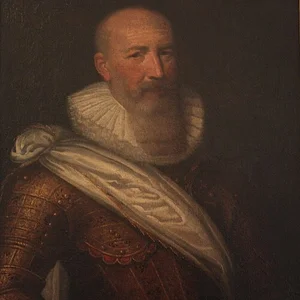
Maximilien II
Maximilien II (1527–1576) was Holy Roman Emperor from 1564 to 1576. The son of Ferdinand I, he pursued a policy of relative religious tolerance amid tensions between Catholics and Protestants, seeking to preserve the unity of the Empire during the height of the Reformation.
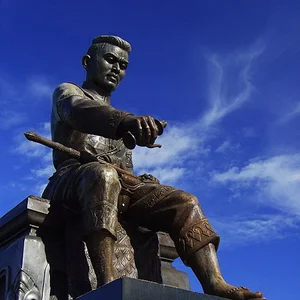
Naresuan
1555 — 1605
Naresuan the Great is the king of Ayutthaya who liberated the Siamese kingdom from Burmese domination at the end of the 16th century. A formidable strategist, he is famous for his elephant-back duel against the Burmese crown prince in 1593, a victory that sealed his people's independence.
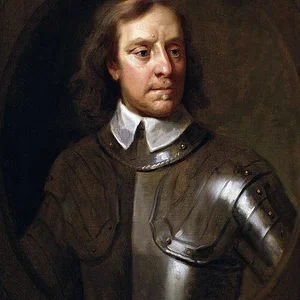
Oliver Cromwell
1599 — 1658
An English statesman and military leader, Oliver Cromwell led the Puritan revolution against Charles I. Commander of the Roundheads, he had the king executed in 1649 and ruled England as Lord Protector until his death in 1658.

Orazio Lomellini
Genoese nobleman and merchant of the 16th century, from the influential Lomellini family. The Lomellinis controlled major commercial networks across the Mediterranean, including the concession of the island of Tabarka for coral fishing and trade with North Africa.
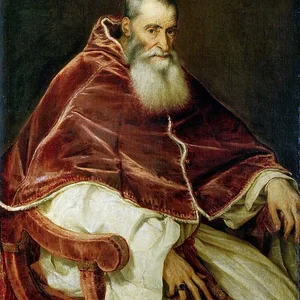
Paul III
1468 — 1549
Pope from 1534 to 1549, Alessandro Farnese was a major figure of the Catholic Counter-Reformation. He convened the Council of Trent, approved the Society of Jesus, and defended the dignity of the indigenous peoples of the Americas.
Pedro Álvares Cabral
1467 — 1520
Portuguese navigator and explorer (c. 1467–1520), Pedro Álvares Cabral is officially the first European to have reached Brazil in 1500. Commissioned by King Manuel I of Portugal, he claimed the land in the name of the Portuguese Crown.
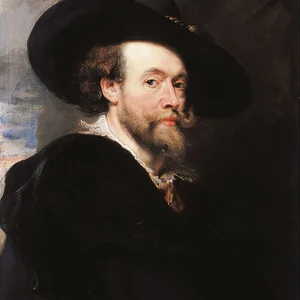
Peter Paul Rubens
1577 — 1640
A Flemish painter of the 17th century, Rubens is one of the masters of the European Baroque. As much a diplomat as an artist, he worked for the greatest courts of Europe. His monumental body of work, rich in color and movement, had a lasting influence on Western painting.
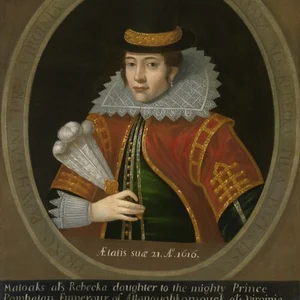
Pocahontas
1596 — 1617
Daughter of Chief Powhatan, leader of the Algonquian confederacy of Virginia, Pocahontas (c. 1596–1617) is a central figure in the encounter between the Powhatan peoples and the English settlers of Jamestown. Her story, passed down through colonial written sources and her people's oral tradition, symbolizes both the dialogue and the tensions between two worlds.
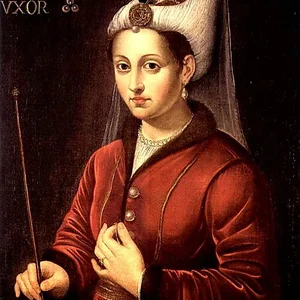
Roxelane
A slave of Ukrainian origin, she became the legal wife of Suleiman the Magnificent — the first concubine ever to be officially freed and married by an Ottoman sultan. Her influence over the politics of the Sublime Porte was considerable throughout the 16th century.
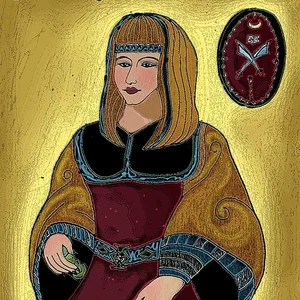
Sayyida al-Hurra
1485 — 1561
Born into an Andalusian family exiled after the fall of Granada, Sayyida al-Hurra became governor of Tétouan in the early 16th century. An ally of the corsair Barbarossa of Algiers, she led privateering campaigns in the western Mediterranean against the Iberian powers and was one of the few women to rule as a sovereign in the Muslim world of her time.
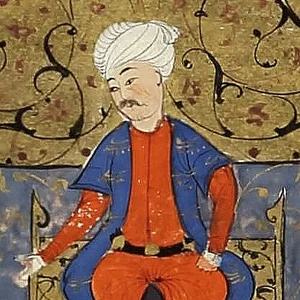
Selim I
1470 — 1520
Ottoman sultan from 1512 to 1520, Selim I tripled the size of the Empire by conquering Egypt, Syria, and the Hejaz. Nicknamed “the Grim,” he crushed the Safavids at Chaldiran and made the Ottoman sultan the guardian of Islam’s Holy Sites.
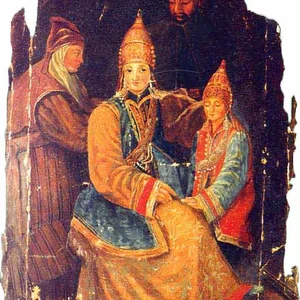
Söyembikä
1516 — 1557
Söyembikä was the last ruling khanum of the Khanate of Kazan in the 16th century. As regent for her infant son, she resisted Russian expansion before being captured by Ivan the Terrible in 1551. A national symbol for the Tatars, she remains a tragic figure of resistance to the Muscovite conquest.
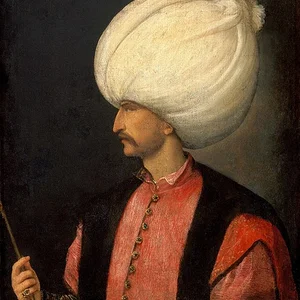
Suleiman the Magnificent
1494 — 1566
Suleiman I, known as the Magnificent, was the tenth Ottoman sultan, reigning from 1520 to 1566. He brought the Ottoman Empire to its territorial and cultural peak, threatening Christian Europe at the very gates of Vienna.
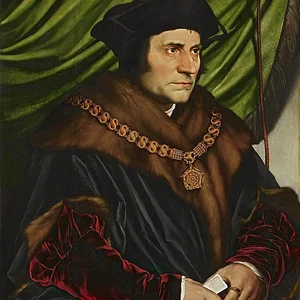
Thomas More
1478 — 1535
An English humanist and statesman, Thomas More served as Lord Chancellor to Henry VIII before opposing the Anglican schism. Author of Utopia (1516), he was executed for refusing to acknowledge the king as Supreme Head of the Church of England.
Titian
1490 — 1576
Titian, whose real name is Tiziano Vecellio, is the undisputed master of the Venetian school of the Renaissance. A prolific painter famous for his revolutionary use of color, he dominated the art scene for over sixty years and was the official portraitist of the greatest sovereigns of Europe.
Vasco Núñez de Balboa
1475 — 1519
Spanish conquistador born around 1475, Balboa was the first European to see the Pacific Ocean from the New World in 1513. He crossed the Isthmus of Panama at the head of an expedition and claimed the “South Sea” in the name of the Spanish Crown.
Walter Raleigh
1552 — 1618
English explorer, poet, and courtier (1552–1618), a favourite of Queen Elizabeth I. He organised several expeditions to North America and searched for El Dorado in South America. Imprisoned and later executed under James I, he remains an iconic figure of English expansion.
Early Modern(115)
Abla Pokou II
Legendary queen of the Baoulé people in the 18th century, she led her people from the Ashanti kingdom to present-day Ivory Coast. Oral tradition holds that she sacrificed her only son to allow her people to cross the Comoé River, a founding act of Baoulé identity.
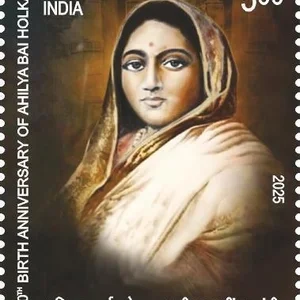
Ahilyabai Holkar
1725 — 1795
Queen of the Malwa kingdom (Indore) from 1767 to 1795, she ruled with wisdom and justice. Widowed at 29, she refused sati and took charge of the state, personally leading her armies. She had hundreds of temples, wells, and roads built across India.
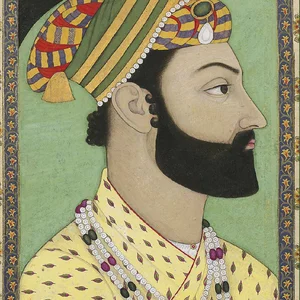
Ahmad Shah Durrani
1722 — 1772
Ahmad Shah Durrani (1722-1772) was the founder of the Durrani Empire and is regarded as the father of the Afghan nation. A former general under Nader Shah of Persia, he unified the Pashtun tribes after Nader Shah's assassination and built an empire stretching from Persia to Northern India.

Akwa Boni
1708 — ?
Ivorian political figure and prominent voice in Côte d'Ivoire's public life. Embodying the meeting point between African cultural traditions and modern political engagement, she represents women's participation in the institutions of postcolonial West Africa.
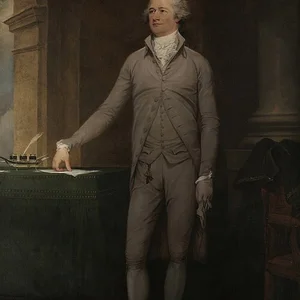
Alexander Hamilton
1757 — 1804
A Founding Father of the United States, Alexander Hamilton was the first Secretary of the Treasury (1789-1795). The architect of the American financial system, he created the first national bank and laid the foundations of the young United States' economy. He died in 1804 in a duel with Aaron Burr.
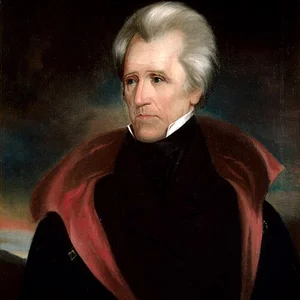
Andrew Jackson
1767 — 1845
An American general and hero of the War of 1812, Andrew Jackson became the 7th President of the United States (1829–1837). A populist figure, he embodied Jacksonian democracy while also being a slaveholder and the architect of the policy to forcibly remove Native Americans from their lands.
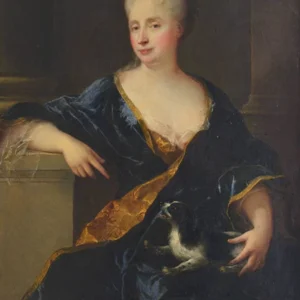
Anne Thérèse de Marguenat de Courcelles, marquise de Lambert
A Parisian writer and salon hostess (1647–1733), she presided over one of the most influential literary salons of the Regency period, frequented by Fontenelle, Montesquieu, and Marivaux. A pioneer in thinking about women's education, she championed their access to intellectual life.
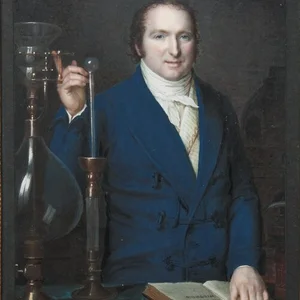
Antoine François de Fourcroy
1755 — 1809
French chemist and statesman, a collaborator of Lavoisier in the reform of chemical nomenclature. A member of the National Convention, he played a major role in reorganizing scientific education during the Revolution.
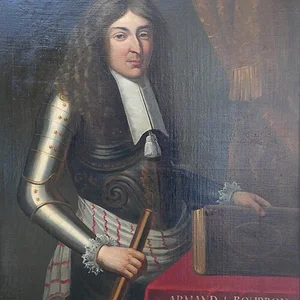
Armand de Bourbon-Conti
1629 — 1666
A prince of the blood and the youngest child of Henri II de Bourbon-Condé, Armand de Bourbon-Conti (1629-1666) was one of the leaders of the Fronde of the Princes before rallying to Louis XIV. Having become governor of Languedoc and Count of Pézenas, he was Molière's first patron.
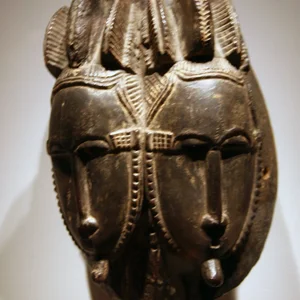
Aura Pokou
Founding queen of the Baoulé people (Côte d'Ivoire) in the 18th century, according to Akan oral tradition. To allow her people to cross the Comoé River during a forced exile, she is said to have sacrificed her only son. Her name means "the child who does not return."
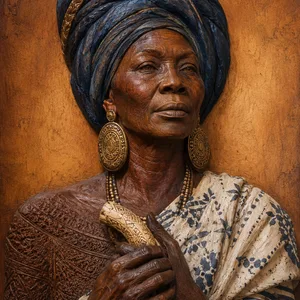
Bakwa Turunku
1468 — 1566
Queen of the kingdom of Zazzau (present-day Zaria, Nigeria) in the 16th century, Bakwa Turunku founded the city of Zaria around 1536. She is the mother of the famous warrior queen Amina of Zaria, a symbol of female power in West Africa.
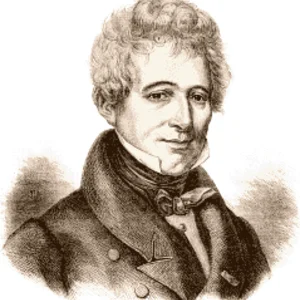
Barthélemy de Lesseps
1766 — 1834
French diplomat and explorer (1766–1834), he participated in the La Pérouse expedition as an interpreter and was the only member to return to Europe before the shipwreck. He crossed Siberia to bring the expedition's logbooks back to Paris.
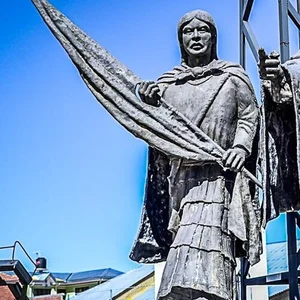
Bartolina Sisa
1750 — 1782
Bartolina Sisa is a heroic figure of the Aymara people and wife of Túpac Katari. Around 1781–1782, she co-led the siege of La Paz against Spanish colonial forces. Captured, she was executed by the Spanish in 1782 and is today revered as a symbol of indigenous resistance in Bolivia.
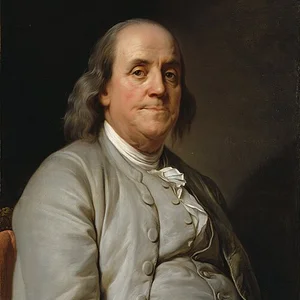
Benjamin Franklin
1706 — 1790
An 18th-century American statesman, scientist, and writer, Benjamin Franklin is one of the Founding Fathers of the United States. The inventor of the lightning rod, he contributed to drafting the Declaration of Independence and negotiated the Franco-American alliance.
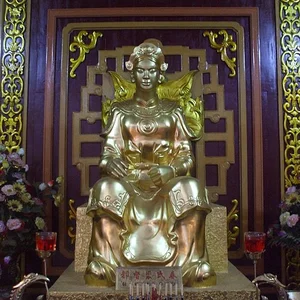
Bùi Thị Xuân
1752 — 1802
Vietnamese general (1752–1802), one of the five great heroines of the Tây Sơn dynasty. Wife of General Trần Quang Diệu, she commanded the war elephant corps and distinguished herself against Siamese and Manchu armies. Captured after the fall of the Tây Sơn, she was executed by elephant in 1802.
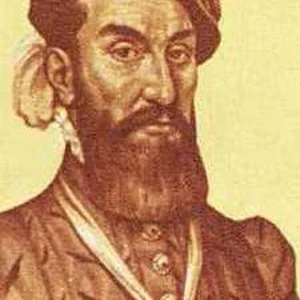
Cabeza de Vaca
A 16th-century Spanish conquistador and explorer, he survived the shipwreck of the Narváez expedition in Florida (1528) and crossed North America for eight years with three companions before reaching Mexico. His account, the *Naufragios*, is one of the first European eyewitness records of the interior of the American continent.
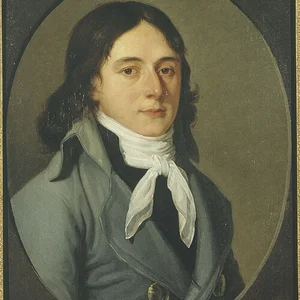
Camille Desmoulins
1760 — 1794
French lawyer, journalist and politician, a figure of the Revolution. An orator at the Palais-Royal in July 1789, he was one of the most influential pamphleteers of his time before being guillotined alongside the Indulgents in 1794.
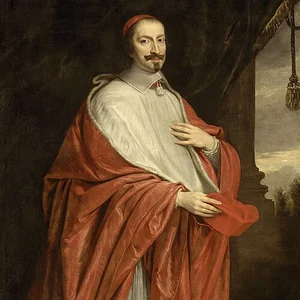
Cardinal Mazarin
1602 — 1661
Cardinal and chief minister of state of France, he governed the kingdom during Louis XIV's minority under the regency of Anne of Austria. Richelieu's successor, he signed the Treaties of Westphalia and overcame the Fronde to consolidate the monarchy.
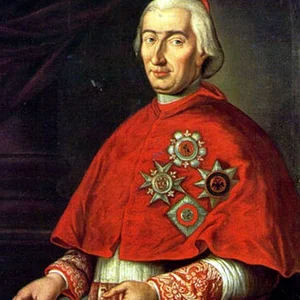
Cardinal Ruffo
1744 — 1827
Neapolitan cardinal (1744–1827), known for reconquering the Kingdom of Naples in 1799 at the head of an army of Calabrian peasants, the Sanfedists. A symbol of counter-revolutionary reaction and the Bourbon restoration.
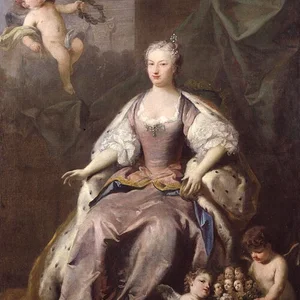
Caroline of Ansbach
1683 — 1737
Queen consort of Great Britain and Ireland (1727–1737), wife of George II. An Enlightenment intellectual, she corresponded with Leibniz and actively supported Newton in the philosophical and scientific dispute between the two men. Regent on several occasions, she wielded major political influence over the British monarchy.
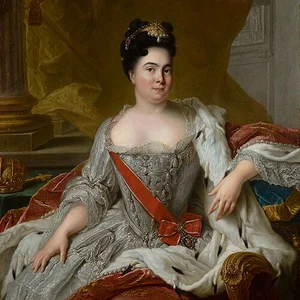
Catherine I
Empress of Russia from 1725 to 1727, second wife of Peter the Great. Born to a humble Baltic peasant family, she was the first woman to rule the Russian Empire, ushering in the century of the empresses.
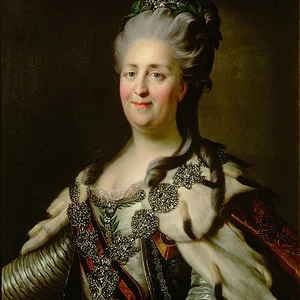
Catherine II of Russia
1729 — 1796
Catherine II, known as Catherine the Great, was Empress of Russia from 1762 to 1796. Of German origin, she overthrew her husband Peter III and modernized the Russian Empire by drawing on the ideas of Enlightenment philosophers, while strengthening autocratic power.
Charles de Mornay
1514 — 1574
Charles de Mornay was a French-born Swedish court officer active in the 17th and 18th centuries. Of French noble origin, he established himself at the Swedish court during the era of great power (Stormaktstiden). He exemplifies the mobility of European noble elites across the great courts of the continent.
Charles Pierre Claret de Fleurieu
1738 — 1810
French navigator, hydrographer, and statesman (1738–1810), Fleurieu contributed to maritime cartography and oversaw several scientific expeditions. Minister of the Navy under Louis XVI, he played a key role in organizing France's major voyages of exploration.
Charles XII of Sweden
King of Sweden from 1697 to 1718, Charles XII was one of the greatest military commanders of his era. He led the Great Northern War against a European coalition, winning the Battle of Narva (1700) before suffering a crushing defeat at Poltava (1709). He died during the siege of Fredriksten, marking the end of Swedish dominance in Europe.
Charlotte Corday
1768 — 1793
A Norman Girondin activist, Charlotte Corday assassinated Jean-Paul Marat in his bathtub on July 13, 1793. Convinced she was putting an end to the Terror, she was guillotined four days later at the age of 24.
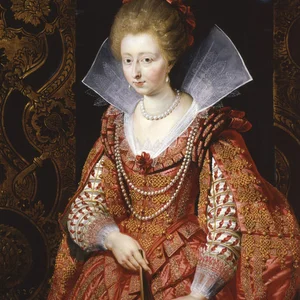
Charlotte-Marguerite de Montmorency
1594 — 1650
Charlotte-Marguerite de Montmorency (1594-1650), Princess of Condé, was one of the most celebrated beauties of the French court. Coveted by the aging King Henry IV, her marriage to Henry II of Bourbon-Condé sparked a diplomatic crisis when the couple fled to the Spanish Netherlands.

Christian Ludwig of Brandenburg
Margrave of Brandenburg-Schwedt and member of the House of Hohenzollern, he is best known as the dedicatee of Johann Sebastian Bach's six Brandenburg Concertos (1721). A music lover and patron of the arts, he embodies the aristocratic German culture of the early 18th century.
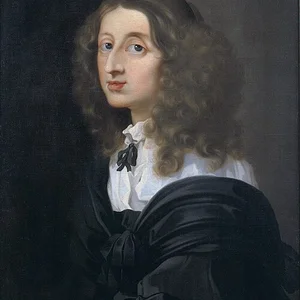
Christina of Sweden
1626 — 1689
Queen of Sweden from 1632 to 1654, Christina voluntarily abdicated her throne to convert to Catholicism and settle in Rome. An exceptional woman, she invited Descartes to her court and ruled with authority in the Europe of the Thirty Years' War.
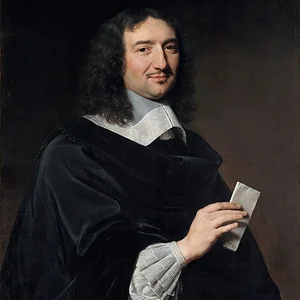
Colbert
1619 — 1683
Jean-Baptiste Colbert (1619-1683) was the principal minister of Louis XIV, serving as Controller-General of Finances from 1665. The architect of an interventionist economic policy, he reorganized the royal finances and developed French industry and trade.
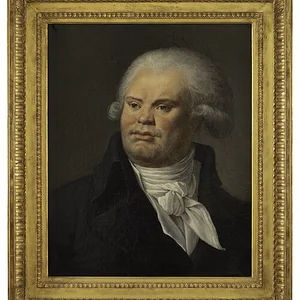
Danton
1759 — 1794
French lawyer and politician (1759–1794), Danton is a major figure of the French Revolution. Known for his eloquence and charisma, he played a key role in revolutionary events before being executed during the Terror.
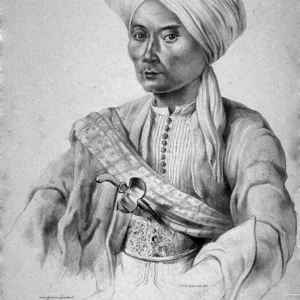
Diponegoro
1785 — 1855
A Javanese prince, Diponegoro led the Java War (1825-1830) against Dutch colonial rule, mobilizing hundreds of thousands of men in the name of Islam and Javanese sovereignty. Betrayed during peace talks, he was captured and exiled to Makassar, where he died in 1855, becoming one of Indonesia's first national heroes.
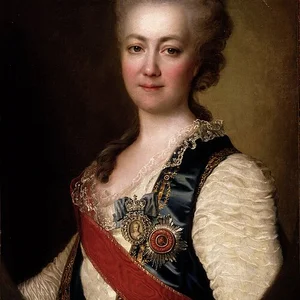
Ekaterina Vorontsova-Dashkova
1743 — 1810
A learned Russian aristocrat and close associate of Catherine II, she played a part in the coup d'état of 1762. The first woman to head the Russian Academy of Sciences, she founded the Russian Academy devoted to the language.
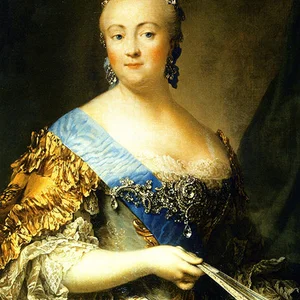
Elizabeth I of Russia
1709 — 1762
Daughter of Peter the Great, Elizabeth I ruled Russia from 1741 to 1762. Her reign was marked by a flourishing of culture, the founding of Moscow University, and Russia's victorious participation in the Seven Years' War.
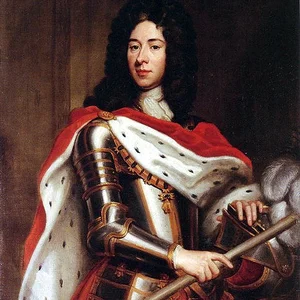
Eugene of Savoy
1663 — 1736
A prince of the House of Savoy who entered the service of the Habsburgs, Eugene of Savoy became one of the greatest military commanders of his time. As generalissimo of the imperial armies, he distinguished himself against the Ottomans and during the War of the Spanish Succession.
Florin Périer
1605 — 1672
Florin Périer (c. 1605-1672) was a magistrate and jurist from the Auvergne region, a councillor at the cour des aides (tax court) of Clermont. The brother-in-law of Blaise Pascal, in 1648 he carried out the Puy de Dôme experiment, which demonstrated the weight of air.
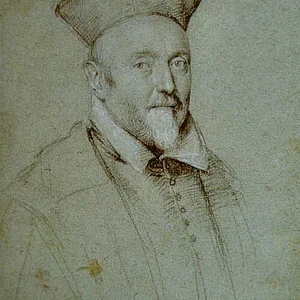
Francesco Maria Del Monte
Italian cardinal (1549–1626), diplomat and influential patron of Baroque Rome. He was Caravaggio's first major patron, housing him in his palace and commissioning several of his key works. Close to Galileo, he also had a keen interest in science and music.
Francisco Pizarro
1478 — 1541
Spanish conquistador (c. 1478–1541), he led the conquest of the Inca Empire in Peru between 1532 and 1533, captured the emperor Atahualpa, and founded Lima in 1535. His expedition transformed the New World and opened South America to Spanish colonization.
François d'Aix de La Chaise
1624 — 1709
French Jesuit (1624–1709), confessor to Louis XIV for 34 years. His influence at court was considerable, particularly during the revocation of the Edict of Nantes (1685). The Père-Lachaise cemetery, opened in 1804 on land that had once belonged to the Jesuits, bears his name.
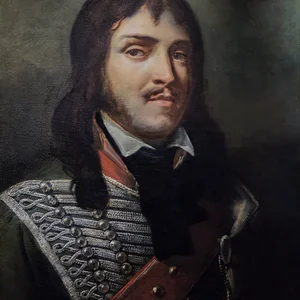
François Séverin Marceau
1769 — 1796
A general of the French Revolution, Marceau enlisted at 16 and became one of the youngest generals of the Republic. A hero of the pacification of the Vendée and the Rhine campaigns, he died in battle at 27 in 1796, embodying the ideal of the republican soldier.

Frederick II of Denmark
King of Denmark and Norway from 1559 to 1588, Frederick II waged the Northern Seven Years' War against Sweden and was an enlightened patron of the arts, most notably supporting the astronomer Tycho Brahe. He commissioned the construction of Kronborg Castle in Elsinore.
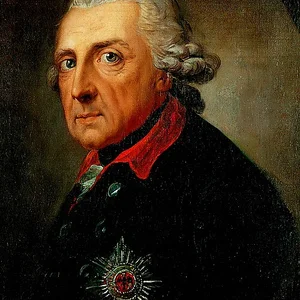
Frederick II the Great
1712 — 1786
Frederick II, known as Frederick the Great, was King of Prussia from 1740 to 1786. An enlightened ruler and a leading military strategist, he turned Prussia into a major European power while corresponding with Enlightenment philosophers, including Voltaire.
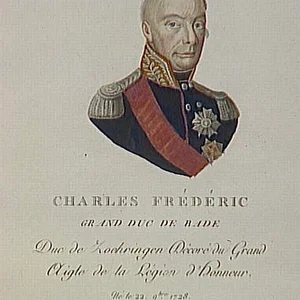
Frederick the Great
King of Prussia from 1740 to 1786, Frederick II was both a formidable war leader and a reforming sovereign. A figure of enlightened despotism, he corresponded with Voltaire and made Prussia a major European power.
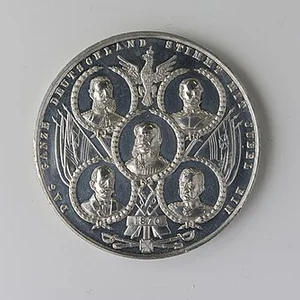
Frederick William I of Prussia
King of Prussia from 1713 to 1740, nicknamed the “Soldier King.” A rigorous and thrifty administrator, he reorganized the Prussian state and built a powerful army that turned Prussia into a major European military power.
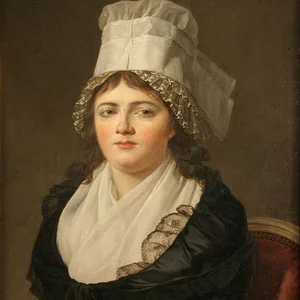
Gabrielle Danton
Gabrielle Charpentier (c. 1764–1793) was the wife of Georges-Jacques Danton, a leading orator of the French Revolution. The daughter of a Parisian café owner, she died at 28 in February 1793 while her husband was on a mission in Belgium, just months before the Reign of Terror.
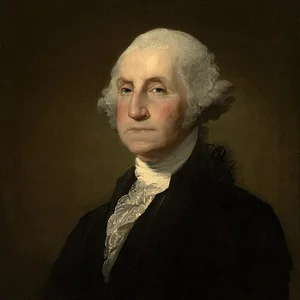
George Washington
1732 — 1799
Commander-in-Chief of the Continental Army during the American War of Independence, George Washington became the first President of the United States (1789–1797). A Virginia planter and slaveholder, he embodies the contradictions of the young Republic — torn between ideals of liberty and the reality of slavery.
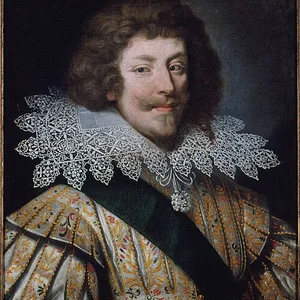
Henri II de Montmorency
1595 — 1632
Henri II de Montmorency (1595-1632) was the last Duke of Montmorency, Governor of Languedoc, and Marshal of France. Drawn into Gaston of Orléans's revolt against Richelieu, he was captured at Castelnaudary and then beheaded in Toulouse in 1632.
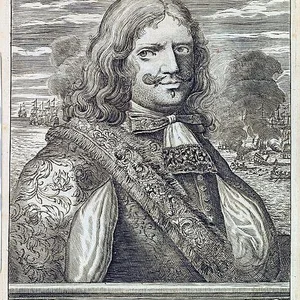
Henry Morgan
1631 — 1688
Henry Morgan (c. 1635–1688) was a Welsh privateer in the service of England who led devastating raids against Spanish possessions in the Caribbean. Knighted by the Crown, he ended his career as Lieutenant Governor of Jamaica.
Hugo Grotius
1583 — 1645
Hugo Grotius (Huig de Groot), a Dutch jurist, philosopher, and diplomat, is regarded as one of the founders of modern international law and natural law. His major work, “De jure belli ac pacis” (1625), lays the foundations of a body of law governing relations between nations.
James Madison
1751 — 1836
American statesman (1751–1836), regarded as the "Father of the Constitution" of the United States. Architect of the Bill of Rights and fourth President of the United States, he was one of the foremost theorists of American republicanism.
James Wolfe
1727 — 1759
British general (1727–1759), James Wolfe is renowned for his decisive victory over the French at the Battle of the Plains of Abraham in Quebec in 1759. He died in combat on the very day of his victory, becoming a British national hero.
Jean le Rond d'Alembert
1717 — 1783
A mathematician and philosopher of the Enlightenment, he co-edited the great Encyclopédie with Diderot and wrote its famous Preliminary Discourse. He formulated the mechanical principle that bears his name and embodied the encyclopédiste ideal of bringing together all human knowledge.
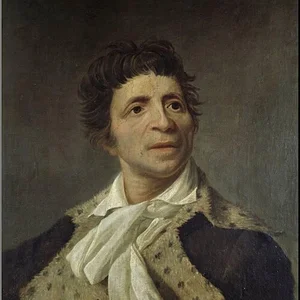
Jean-Paul Marat
1743 — 1793
A physician, physicist, and journalist who became one of the most radical figures of the French Revolution. Founder of the newspaper L'Ami du peuple, he served as a Montagnard deputy in the National Convention before being assassinated in his bath by Charlotte Corday in 1793.

Jodhaa
16th-century Rajput princess and wife of the Mughal emperor Akbar the Great. Her marriage symbolizes Akbar's policy of religious tolerance between Hinduism and Islam. A controversial figure whose very existence is debated by historians.
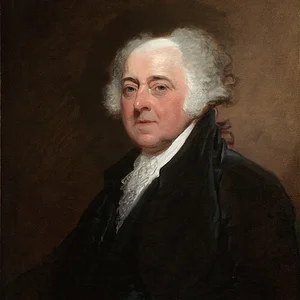
John Adams
1735 — 1826
John Adams (1735-1826) was an American lawyer, diplomat, and statesman, one of the Founding Fathers of the United States. Vice President under George Washington, he became the second President of the United States (1797-1801). A key figure of the American Revolution, he contributed to the drafting of the Constitution.
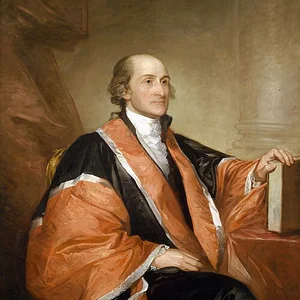
John Jay
1745 — 1829
John Jay (1745-1829) was an American statesman, diplomat, and jurist, one of the Founding Fathers of the United States. A co-author of the Federalist Papers, he was the first Chief Justice of the United States Supreme Court.
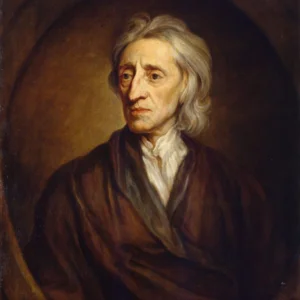
John Locke
1632 — 1704
A 17th-century English philosopher, John Locke is the founder of modern empiricism and a major thinker of political liberalism. He developed the theory of natural rights (life, liberty, property) and justified the right to revolt against tyrannical power, profoundly influencing democratic revolutions.
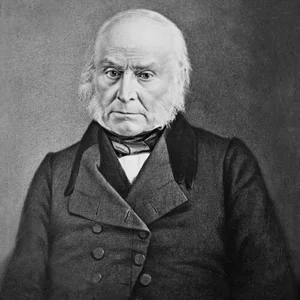
John Quincy Adams
1767 — 1848
Son of President John Adams, John Quincy Adams was the sixth President of the United States (1825–1829). A seasoned diplomat, he negotiated the Treaty of Ghent (1814) ending the Anglo-American War and helped formulate the Monroe Doctrine. He later championed the rights of enslaved people as a congressman.
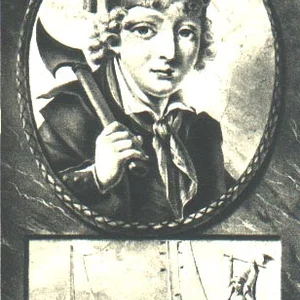
Joseph Agricol Viala
1778 — 1793
Revolutionary child-soldier born in Avignon in 1780, killed at age 13 on July 23, 1793, while attempting to cut the moorings of Federalist boats on the Durance river. Proclaimed a martyr of the Republic by the National Convention, his name was included among the heroes decreed for pantheonization, though the transfer never took place.
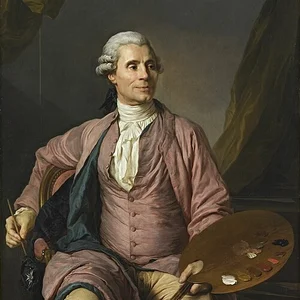
Joseph-Marie Vien
1716 — 1809
French painter (1716–1809), forerunner of Neoclassicism and master of Jacques-Louis David. Director of the French Academy in Rome, then First Painter to the King and senator under Napoleon.
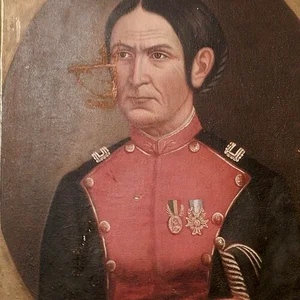
Juana Azurduy
A mestiza guerrilla fighter born in 1780 in Upper Peru (present-day Bolivia), she commanded indigenous troops against the Spanish during the independence wars. Known as "the Pachamama of freedom," she was appointed lieutenant colonel by Simón Bolívar.
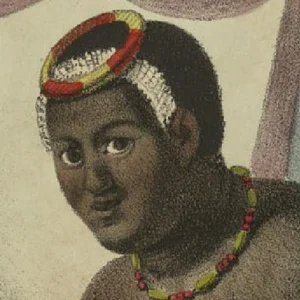
Ka'ahumanu
1768 — 1832
Queen consort and later regent of the Kingdom of Hawaii, Kaʻahumanu was the favorite wife of King Kamehameha I. In 1819, she abolished the system of religious taboos (kapu) and played a key role in introducing Christianity to Hawaii.
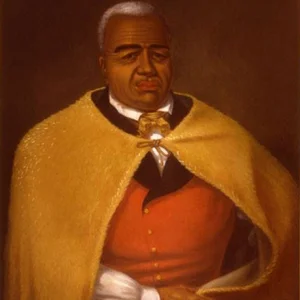
Kamehameha I
1758 — 1819
Kamehameha I unified the Hawaiian Islands under his rule between 1795 and 1810, founding the Kingdom of Hawaii. A formidable strategist, he skillfully integrated European firearms into his military conquests. He established the Law of the Splintered Paddle, protecting civilians in times of war.
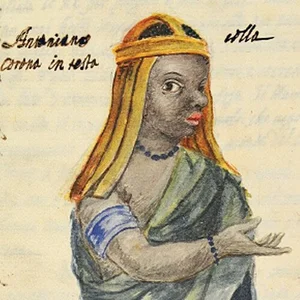
Kimpa Vita
1684 — 1706
A Kongolese prophetess of the Bakongo people, Kimpa Vita founded around 1704 the Antonian movement, preaching an African interpretation of Christianity. Arrested by Capuchin missionaries, she was burned at the stake in 1706 for heresy and witchcraft.
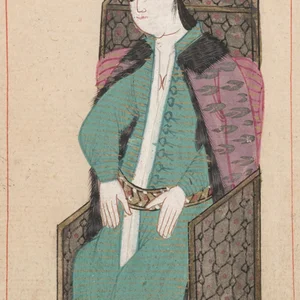
Kösem Sultan
1589 — 1651
Valide sultan and regent of the Ottoman Empire in the 17th century, Kösem Sultan wielded considerable political influence for over thirty years. She governed as regent for her sons Murad IV and Ibrahim I, and later for her grandson Mehmed IV.
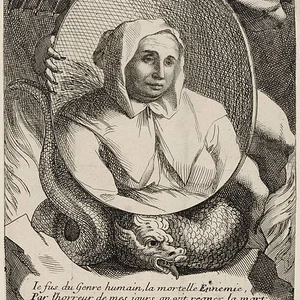
La Voisin
1640 — 1680
Poisoner, fortune-teller, and abortionist in 17th-century Paris, Catherine Deshayes was the central figure of the Affair of the Poisons (1679–1682). Supplying poisons, love potions, and black masses to an aristocratic clientele, she was burned alive at the Place de Grève in 1680.
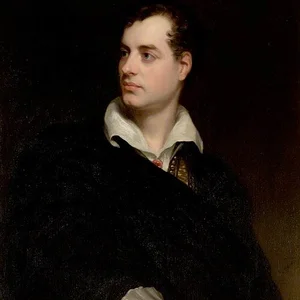
Lord Byron
1788 — 1824
Lord Byron (1788-1824) was the most celebrated British poet of the Romantic era. A scandalous and politically engaged figure, he embodied the "Byronic hero": brooding, rebellious, and passionate. He died in Greece while fighting for Greek independence.
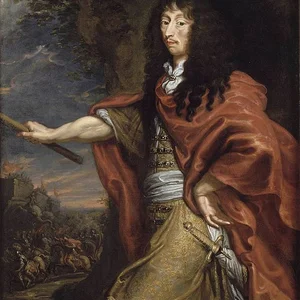
Louis II de Bourbon, prince de Condé
Nicknamed “the Great Condé,” this prince of the blood distinguished himself at the Battle of Rocroi (1643) by crushing the Spanish infantry. A key figure in the Fronde, he eventually reconciled with Louis XIV and remained one of the greatest military commanders of the Grand Siècle.
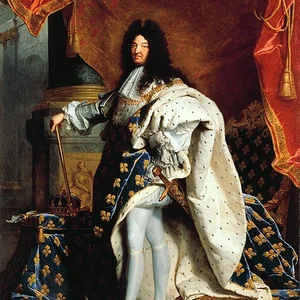
Louis XIV
1638 — 1715
King of France and Navarre from 1643 to 1715, Louis XIV is the symbol of French royal absolutism. He concentrated power in his own hands and transformed the monarchy into a centralized political system, embodied by the Palace of Versailles, which he had built.
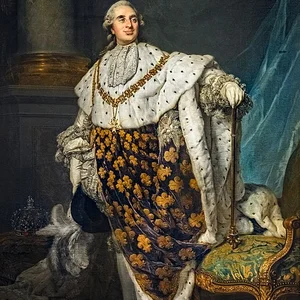
Louis XVI
1754 — 1793
King of France and Navarre from 1774 to 1791, then King of the French from 1791 to 1792. His reign was marked by the French Revolution, attempted reforms, and the abolition of the Ancien Régime. Arrested during the Flight to Varennes in 1791, he was tried and executed by guillotine on January 21, 1793.
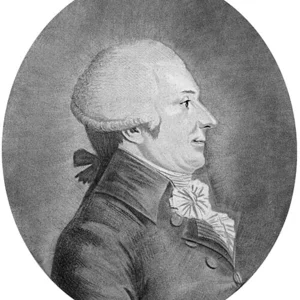
Louis-Bernard Guyton de Morveau
1737 — 1816
A French chemist, jurist and statesman, Guyton de Morveau was one of the architects of the reform of chemical nomenclature alongside Lavoisier in 1787. As a member of the National Convention, he also took part in the Revolution and contributed to the founding of the École Polytechnique.
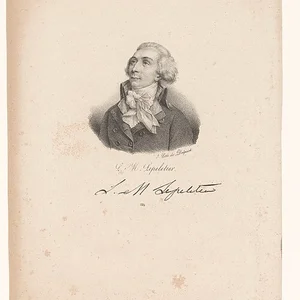
Louis-Michel Lepeletier de Saint-Fargeau
An aristocrat who embraced the Revolution, he was elected to the Estates-General and later served as a deputy in the National Convention, where he voted for the execution of King Louis XVI in January 1793. Assassinated on the eve of the king's execution by a royal guard, he became the first martyr of the French Revolution and was temporarily interred in the Panthéon.
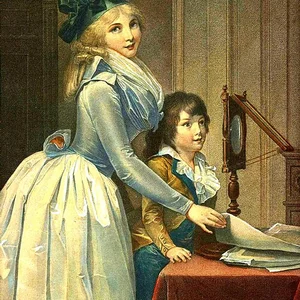
Louise Gély
1776 — 1856
Second wife of Georges Danton, whom she married in 1793 at the age of sixteen after caring for his children. A figure in the intimate circle of a major actor of the French Revolution, she lived through the Terror and then remarried after Danton's execution.
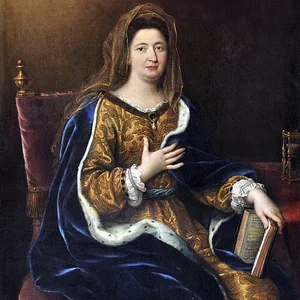
Madame de Maintenon
1635 — 1719
Born in 1635, Françoise d'Aubigné endured a wretched childhood before becoming governess to the legitimized children of Louis XIV, then his secret wife around 1683. In 1686, she founded the Maison royale de Saint-Louis at Saint-Cyr, a pioneering educational institution for young women from impoverished noble families.
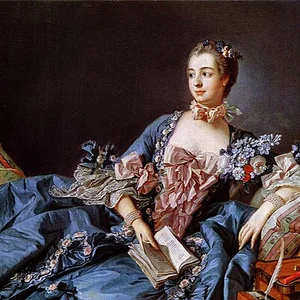
Madame de Pompadour
1721 — 1764
Official mistress of King Louis XV from 1745 until her death in 1764, she wielded considerable influence over French politics and culture. A great patron of the arts and protector of the Enlightenment philosophers, she helped shape the Rococo style and supported the Encyclopédie of Diderot and d'Alembert.
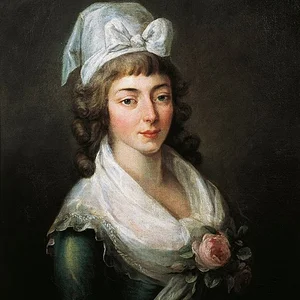
Madame Roland
1754 — 1793
Salon hostess and Girondin political figure, Manon Roland (1754–1793) exerted considerable influence over the Girondin party during the French Revolution. Arrested during the Terror, she was guillotined in 1793, uttering her famous words about liberty.
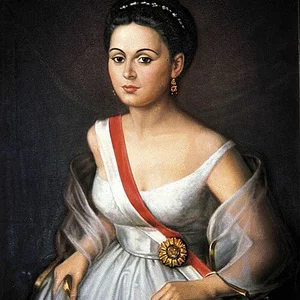
Manuela Sáenz
1797 — 1856
Ecuadorian revolutionary born in Quito around 1797, of mixed heritage (Creole mother, Spanish father), Manuela Sáenz was a central figure in the Spanish American wars of independence and the companion of Simón Bolívar. She saved the Liberator's life in 1828 and was nicknamed the "Libertadora del Libertador."
Maria Luisa of Parma
Princess of Parma who became Queen of Spain through her marriage to Charles IV. A woman of strong character, she wielded considerable political influence and promoted the rise of her favorite, Manuel Godoy, within the government.
Maria Theresa of Austria
1717 — 1780
Archduchess of Austria and Queen of Hungary and Bohemia (1717–1780), she defended her inheritance against the major European powers and profoundly modernized the Habsburg state. The only woman to have ruled over Habsburg territories, she stands as one of the great reforming monarchs of the 18th century.
Marie Jean Antoine Nicolas de Condorcet
Mathematician and Enlightenment philosopher (1743–1794), Condorcet served as Permanent Secretary of the Academy of Sciences, championed equal rights for women and enslaved people, and played an active role in the French Revolution. He died during the Reign of Terror, having written his intellectual testament on human progress.
Marie-Antoinette
1755 — 1793
Queen consort of France from 1774 to 1792, wife of Louis XVI. A symbol of the Ancien Régime and its excesses, she became deeply unpopular with the French people and came to embody the frivolity of the Versailles court. Accused of treason during the French Revolution, she was executed by guillotine in 1793.
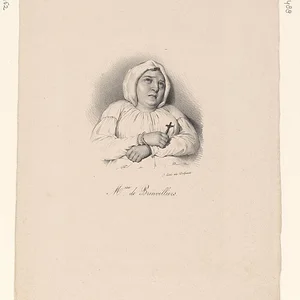
Marie-Madeleine de Dreux
French noblewoman from the House of Dreux, a family of high Capetian lineage. A figure of the French aristocracy in the early modern period, her name combines Catholic devotion with membership in one of France's great seigneurial dynasties.
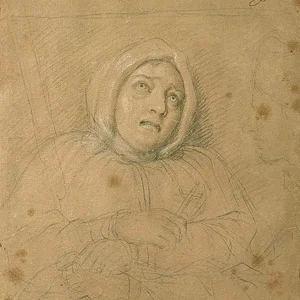
Marquise de Brinvilliers
1630 — 1676
A French aristocrat of the 17th century, notorious for poisoning her father and brothers in order to inherit their fortune. Her trial and execution in 1676 triggered the Affair of the Poisons, exposing the widespread use of poison in high society.
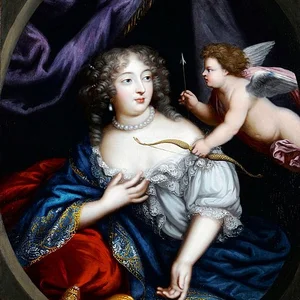
Marquise de Montespan
1640 — 1707
Official favorite of Louis XIV from 1667 to 1681, she reigned over the court of Versailles and had seven legitimized children with the Sun King. Implicated in the Affair of the Poisons, she subsequently fell from grace.
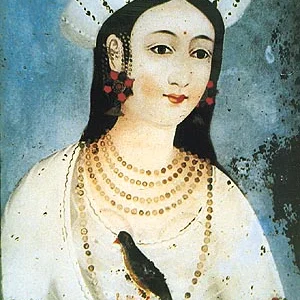
Mastani
1699 — 1740
Mastani (c. 1699–1740) was the second wife of Bajirao I, the Maratha Peshwa. Daughter of a Rajput raja and a Muslim concubine, she was an accomplished dancer and warrior. Their interfaith love caused a scandal at the Maratha court and gave rise to legend.

Maximilien de Béthune duc de Sully
A loyal companion of Henry IV, Sully served as superintendent of finances from 1598 to 1610. He restored royal finances, reduced the debt, and promoted agriculture and infrastructure. A committed Huguenot, he embodied the kingdom's reconstruction following the Wars of Religion.
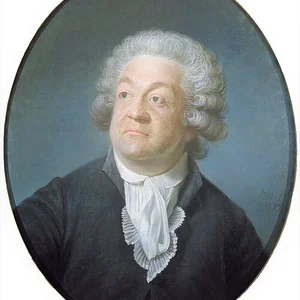
Mirabeau
1749 — 1791
Orator and French statesman, Mirabeau is one of the towering figures of the early French Revolution. Elected to the Estates-General in 1789 by the Third Estate, he embodied the bridge between the nobility and the people, championing a constitutional monarchy. His death in 1791 earned him a state funeral and a place in the Panthéon.
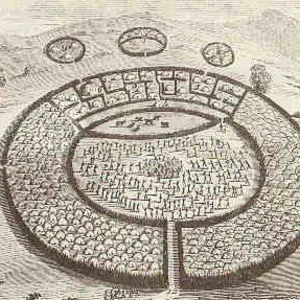
Mkabayi kaJama
1750 — 1843
Zulu princess (c. 1750–1843), influential aunt and advisor to King Shaka, and a major figure in Zulu oral tradition. Born among the Zulu people of southern Africa, she wielded considerable political power within the royal household, particularly during royal successions.
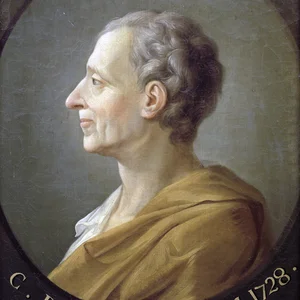
Montesquieu
1689 — 1755
An 18th-century French philosopher and writer, Montesquieu is the author of the landmark work 'The Spirit of the Laws' (1748). He theorized the separation of powers, a foundational concept of modern political thought, and contributed to the emergence of Enlightenment philosophy.
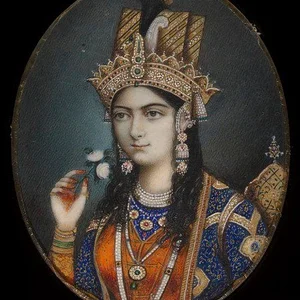
Mumtaz Mahal
1593 — 1631
Mughal empress and favorite wife of Emperor Shah Jahan. Her death in childbirth in 1631 inspired the construction of the Taj Mahal, a marble mausoleum raised to her memory that became one of the most famous monuments in the world.
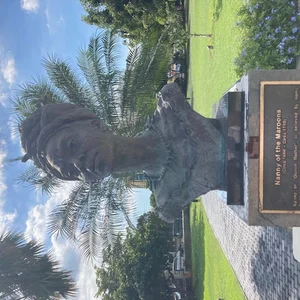
Nanny of the Maroons
A central figure of Maroon resistance in Jamaica during the 18th century, Nanny led the Windward Maroons from their stronghold in the Blue Mountains. A warrior and spiritual leader of Akan origin (present-day Ghana), she led the struggle against British colonial slavery for decades. A Jamaican national heroine, her life is transmitted primarily through Maroon oral tradition.
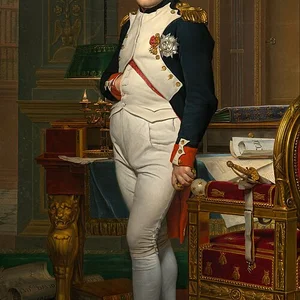
Napoleon Bonaparte
1769 — 1821
Napoleon Bonaparte (1769-1821) was a French military leader and statesman who seized power in 1799 and proclaimed himself Emperor in 1804. He transformed France and Europe through his reforms and military campaigns, most notably by establishing the Civil Code, which modernized the French legal system.
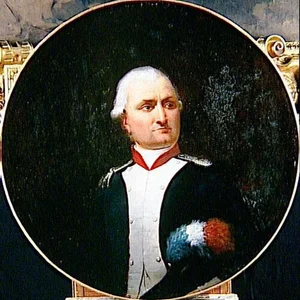
Nicolas-Joseph Beaurepaire
1740 — 1792
French general (1740–1792), commander of Verdun during the Prussian invasion of 1792. Refusing to surrender, he died on September 2, 1792, rather than sign the capitulation of the fortress. His sacrifice became a symbol of revolutionary patriotism.
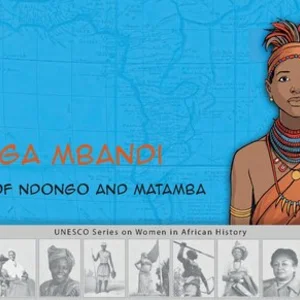
Njinga of Matamba
Warrior queen of Angola (c. 1583–1663), Njinga of Matamba fiercely resisted Portuguese colonization in Central Africa. A skilled diplomat, she negotiated directly with the Portuguese while forging alliances with the Dutch. She ruled the kingdom of Matamba for more than thirty years.
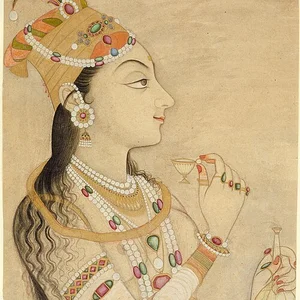
Nur Jahan
1577 — 1645
Mughal empress (1577–1645), wife of Emperor Jahangir, she was the only woman to wield real political power under the Mughal dynasty. An administrator, poet, and patron of the arts, she had coins struck in her own name and effectively governed the empire for several years.
Nzinga
Queen of Ndongo and Matamba (Angola) in the 17th century, Nzinga led a fierce resistance against Portuguese colonization and the slave trade. A skilled diplomat and formidable warrior, she negotiated with the Portuguese before waging decades of guerrilla warfare against them.
Nzinga Mbandi
Queen of Ndongo and later Matamba (Mbundu people, present-day Angola), Nzinga Mbandi was a formidable political and military strategist who resisted Portuguese expansionism and the Atlantic slave trade throughout the 17th century. An iconic figure of pre-colonial African resistance, she negotiated, waged war, and allied with the Dutch to defend her people's sovereignty.
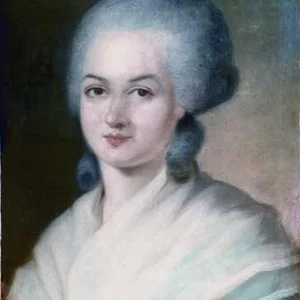
Olympe de Gouges
1748 — 1793
French author, politician and pamphleteer (1748–1793), Olympe de Gouges campaigned for women's rights and the abolition of slavery during the French Revolution. She wrote the Declaration of the Rights of Woman and of the Female Citizen in 1791, a founding document of feminism.
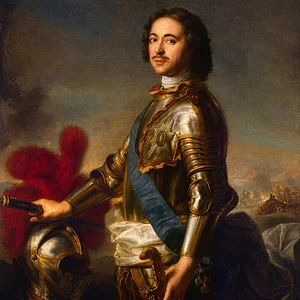
Peter I of Russia
1672 — 1725
Tsar and first Emperor of Russia (1682–1725), Peter I undertook a radical modernization of his empire inspired by Western European models. He founded Saint Petersburg, reformed the army and administration, and transformed Russia into a major European power.
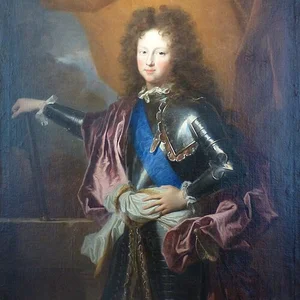
Philippe II d'Orléans
Regent of France from 1715 to 1723 during the minority of Louis XV, Philippe II d'Orléans governed the kingdom following the death of Louis XIV. A curious and libertine spirit, he was also a musician, painter, and patron of the arts, embodying the transition between the Grand Siècle and the Enlightenment.
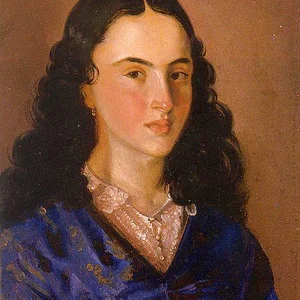
Policarpa Salavarrieta
1795 — 1817
Heroine of Colombian independence (c. 1795–1817), nicknamed "La Pola". A seamstress and patriot spy, she recruited soldiers for the independence cause. Captured by the Spanish, she was executed by firing squad in Bogotá on November 14, 1817.
Quang Trung
1752 — 1792
Nguyễn Huệ (1753-1792), known by his reign name Quang Trung, was the second emperor of the Tây Sơn dynasty in Vietnam. An undefeated military commander across twenty years of campaigns, he ended two centuries of north-south division and repelled both Siamese and Qing invasions. A visionary reformer, he promoted Vietnamese script (chữ Nôm) and modernized the economy, education, and army in just three years of reign. [1]
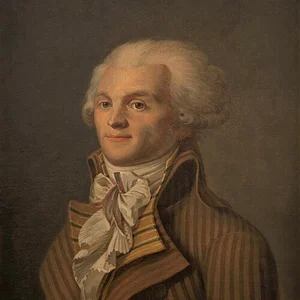
Robespierre
1758 — 1794
French lawyer and politician (1758–1794), Robespierre was a central figure of the French Revolution. Leader of the Montagnards, he dominated the Committee of Public Safety and became the embodiment of the Reign of Terror before being executed in 1794.
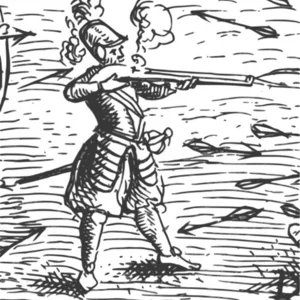
Samuel de Champlain
1567 — 1635
A French navigator and explorer, Samuel de Champlain founded the city of Quebec in 1608 and is known as the Father of New France. He mapped much of Canada and established lasting alliances with Indigenous peoples.
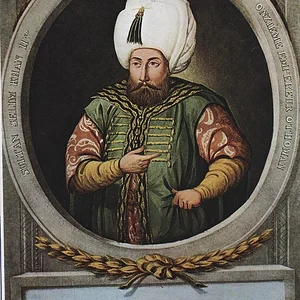
Selim II
1524 — 1574
Selim II (1524–1574) was Ottoman sultan and caliph from 1566 to 1574. His reign is marked by the conquest of Cyprus and the naval defeat at Lepanto against the Christian coalition in 1571.
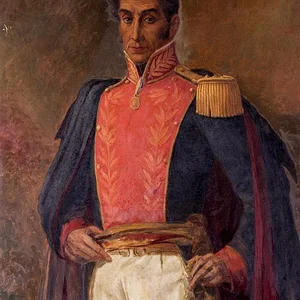
Simón Bolívar
1783 — 1830
Born in Caracas in 1783, Simón Bolívar was the leading architect of South American independence from the Spanish Empire. Known as 'El Libertador,' he liberated several nations and dreamed of a great Latin American federation.
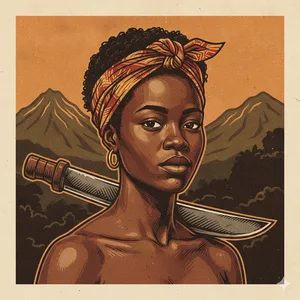
Solitude
1772 — 1802
Born around 1772 in Guadeloupe to an enslaved African mother, Solitude joined the mixed-race insurgents during the armed resistance against the restoration of slavery decreed by Bonaparte in 1802. Pregnant, she fought until her capture and was hanged the day after giving birth, on November 29, 1802. Her story, passed down through Creole and Caribbean oral tradition, has made her an emblematic figure of resistance against colonial oppression.
Te Rauparaha
1768 — 1849
Te Rauparaha (c. 1768-1849) was the great warrior chief of the Ngāti Toa, one of the most formidable Māori strategists of his time. He extended his influence over the North Island and Cook Strait, and composed the famous haka Ka Mate. His reign coincided with the arrival of Europeans and British colonization.
Théroigne de Méricourt
A Belgian revolutionary activist (1762–1817), Théroigne de Méricourt played an active role in the French Revolution, most notably during the Women's March on Versailles (1789). A fierce champion of women's political rights, she was one of the first revolutionary feminists before being committed to the Salpêtrière asylum, where she remained until her death.
Thomas Hobbes
1588 — 1679
A 17th-century English philosopher, Thomas Hobbes is the author of Leviathan (1651), a founding work of modern political philosophy. He develops a social contract theory justifying the absolute authority of the state to guarantee peace and security.
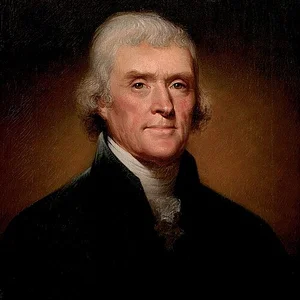
Thomas Jefferson
1743 — 1826
An American statesman, Thomas Jefferson was one of the Founding Fathers of the United States and the principal author of the Declaration of Independence (1776). A philosopher of the Enlightenment, he also served as the third President of the United States (1801–1809).
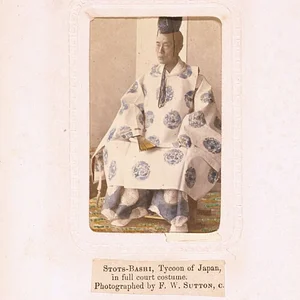
Tokugawa (shogun)
Tokugawa Ieyasu (1543-1616) unified Japan after decades of civil wars and founded the Tokugawa shogunate in 1603, establishing a peace lasting more than two centuries. His regime, the Edo period, kept Japan in near-total isolation until 1868.
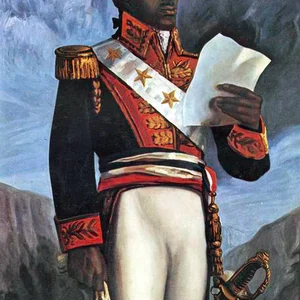
Toussaint Louverture
1743 — 1803
A freed slave and Haitian military leader (1743–1803), Toussaint Louverture led the Haitian Revolution and abolished slavery in Saint-Domingue. An iconic figure in the fight for freedom, he transformed a slave colony into the first independent Black republic.
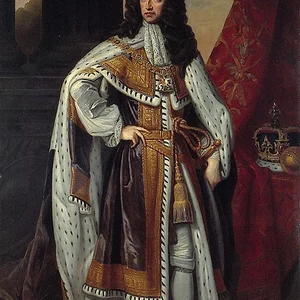
William III of Orange
1650 — 1702
Stadtholder of the United Provinces from 1672, William III of Orange became King of England, Scotland, and Ireland in 1689 following the Glorious Revolution that overthrew James II. A Protestant champion, he devoted his reign to containing the power of Louis XIV.
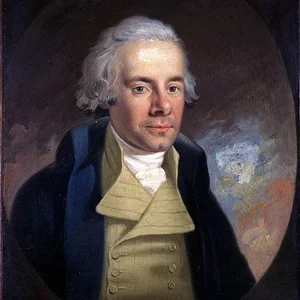
William Wilberforce
1759 — 1833
British politician and philanthropist, a leading figure in the parliamentary fight against the slave trade. An evangelical Member of Parliament, he devoted his life to the abolition of slavery throughout the British Empire.
19th Century(157)
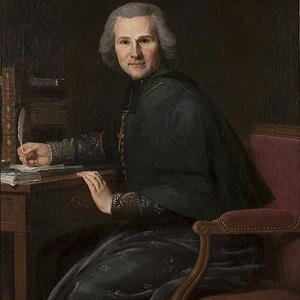
Abbé Henri Grégoire
1750 — 1831
A Catholic priest and politician of the French Revolution, he championed the emancipation of Jews and the abolition of slavery in the colonies. Elected as a constitutional bishop, he sat in the National Convention and helped secure the passage of the 1794 abolition decree.
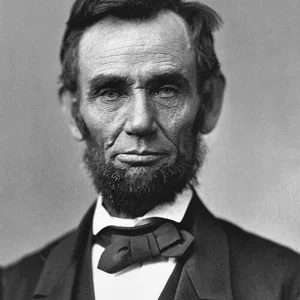
Abraham Lincoln
1809 — 1865
Abraham Lincoln (1809-1865) was the 16th President of the United States. He led the country through the Civil War and abolished slavery in the United States in 1863 with the Emancipation Proclamation.
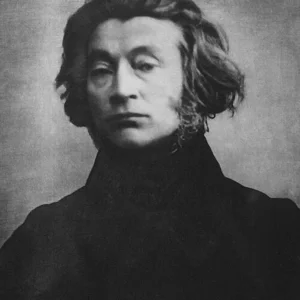
Adam Mickiewicz
1798 — 1855
Adam Mickiewicz (1798-1855) is Poland's greatest national poet and a major figure of European Romanticism. His epic and lyrical work expresses nostalgia for occupied Poland and the aspiration for national freedom.
Adolf Hitler
1889 — 1945
Adolf Hitler (1889-1945) was an Austrian politician and military leader who founded the National Socialist German Workers' Party (Nazi Party) and became dictator of Germany from 1933 to 1945. His totalitarian regime, built on Nazi ideology, was responsible for World War II and the Holocaust, a genocide that killed six million Jews.
Alexander I
1777 — 1825
Emperor of Russia from 1801 to 1825, Alexander I was one of Napoleon's chief adversaries. Victorious in the campaign of 1812, he played a major role at the Congress of Vienna and founded the Holy Alliance.
Alexandra Kollontai
1872 — 1952
A Russian Bolshevik revolutionary, Alexandra Kollontai was one of the first women in the world to hold a diplomatic post. A theorist of socialist feminism, she championed women's emancipation and freedom from traditional marriage.
Alexandre Auguste Ledru-Rollin
1807 — 1874
French lawyer and republican politician (1807–1874), he was one of the members of the provisional government that emerged from the February 1848 revolution. He was the principal architect of the decree establishing universal male suffrage in France, expanding the electorate from 200,000 to nearly 9 million citizens.
Alexis de Tocqueville
1805 — 1859
French political philosopher, historian, and statesman (1805–1859). Tocqueville is the author of 'Democracy in America', a foundational work analyzing American institutions and society. He is considered a pioneer of sociology and a major thinker of modern politics.
Alphonse Baudin
1811 — 1851
A physician and republican deputy, Alphonse Baudin was killed on December 3, 1851, on a barricade in the faubourg Saint-Antoine while resisting Louis-Napoléon Bonaparte's coup d'état. He became a martyr of the Republic, and his trial in 1868 reignited republican opposition to the Second Empire.
Annabella Milbanke
1792 — 1860
British aristocrat (1792–1860), self-taught mathematician and philanthropist, she married the poet Lord Byron in 1815 before separating from him a year later. She went on to dedicate herself to popular education and social reform, and is the mother of Ada Lovelace, pioneer of computing.
Antoine-César de Choiseul-Praslin
1756 — 1808
French aristocrat (1756-1808), senator of the First Empire and grand officer of the Legion of Honor. Born into a great noble family, he navigated the transition from the Ancien Régime to the Napoleonic institutions.
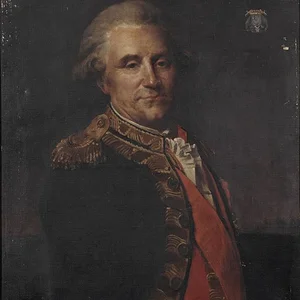
Antoine-Jean-Marie Thévenard
1733 — 1815
French admiral born in 1733, he distinguished himself during the American War of Independence before becoming Minister of the Navy under the Revolution (1791-1792). A senator under the Napoleonic Empire, he embodies the continuity between the Old Regime's naval tradition and the revolutionary institutions.
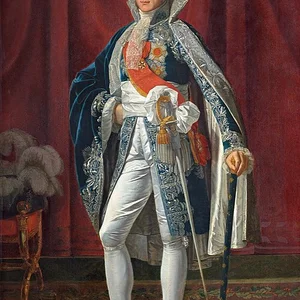
Armand de Caulaincourt
1773 — 1827
French general and diplomat, Duke of Vicenza, he served as Napoleon's ambassador to Russia (1807–1811) and was a privileged eyewitness to the Russian campaign of 1812. Minister of Foreign Affairs during the Hundred Days, he left behind essential Memoirs on the Napoleonic saga.
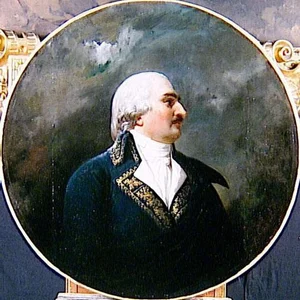
Auguste Marie Henri Picot de Dampierre
1756 — 1793
French general of the Revolution (1756–1793), he took command of the Army of the North after Dumouriez's betrayal and was killed in action during the siege of Condé-sur-l'Escaut. Pantheonized in 1793, his remains were removed during the Restoration.
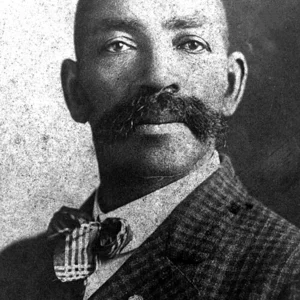
Bass Reeves
1838 — 1910
Bass Reeves (1838-1910) was the first African American deputy U.S. marshal west of the Mississippi. Born into slavery, he became one of the most famous lawmen of the Wild West, credited with more than 3,000 arrests over a thirty-two-year career.
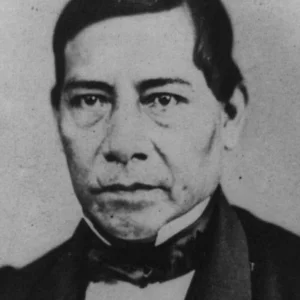
Benito Juárez
1806 — 1872
Benito Juárez was a Mexican statesman of indigenous Zapotec origin who served as president of Mexico on several occasions between 1858 and 1872. A leading figure of liberalism, he carried out major secular reforms and resisted the French intervention and the Empire of Maximilian.
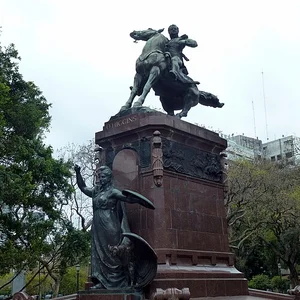
Bernardo O'Higgins
1778 — 1842
Bernardo O'Higgins was a Chilean soldier and statesman, considered one of the principal liberators of Chile from Spanish rule. As the first leader of the independent Republic, he served as its Supreme Director from 1817 to 1823.
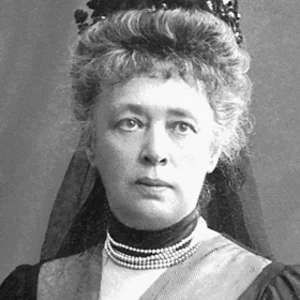
Bertha von Suttner
1843 — 1914
Austrian novelist and pacifist activist (1843–1914), Bertha von Suttner published in 1889 “Die Waffen nieder!” (Lay Down Your Arms!), a novel that shocked Europe with its realistic portrayal of the horrors of war. In 1905, she became the first woman to receive the Nobel Peace Prize.
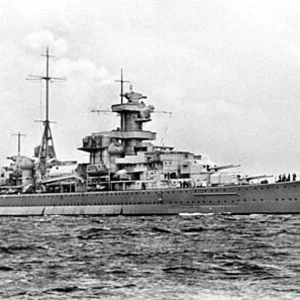
Blücher
Prussian field marshal and a leading figure of the Napoleonic Wars. Nicknamed “Marschall Vorwärts” (Marshal Forward), he played a decisive role in Napoleon's defeat at Waterloo in 1815 by rallying his troops to support Wellington's British forces.
Cameahwait
Chief of the Shoshone tribe, Cameahwait played a crucial role in the Lewis and Clark Expedition (1805) by providing guides and horses to cross the Rocky Mountains. Brother of Sacagawea, he enabled the American expedition to reach the Pacific.
Camillo Cavour
1810 — 1861
Piedmontese statesman (1810–1861), Cavour was the principal architect of Italian unification. As President of the Council of the Kingdom of Sardinia, he pursued a liberal policy and used diplomacy to win over France and isolate Austria.
Charles de Gaulle
1890 — 1970
French military officer and statesman (1890–1970), leader of the French Resistance during World War II and founder of the Fifth Republic. A defining figure of the 20th century, he shaped French history through his unwavering commitment to national independence and the greatness of France.
Charles Erskine de Kellie
1739 — 1811
Charles Erskine (1739-1811) was a Scottish cardinal in the service of the Holy See. A diplomat of the Catholic Church, he acted as an intermediary between Rome and the European powers during the Napoleonic era.
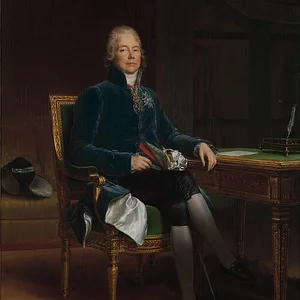
Charles-Maurice de Talleyrand-Périgord
1754 — 1839
French diplomat and statesman (1754–1838), he served under the Ancien Régime, the Revolution, the Empire, and the Restoration. A master negotiator, he defended France's interests at the Congress of Vienna in 1815.
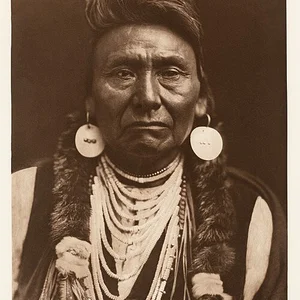
Chief Joseph
1840 — 1904
Chief of the Nez Perce Native American tribe. In 1877, he led his people on a desperate retreat of nearly 1,700 km to escape the U.S. Army and reach Canada, before surrendering just a few kilometers from the border.
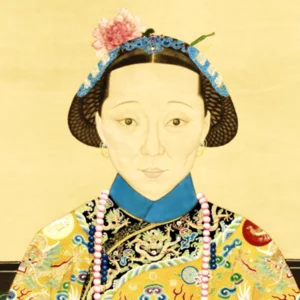
Ci'an
1837 — 1881
Empress dowager of China under the Qing dynasty, Ci'an exercised a joint regency with Ci Xi following the death of Emperor Xianfeng in 1861. Known for her piety and gentleness, she was long overshadowed by the more ambitious Ci Xi in historical accounts.
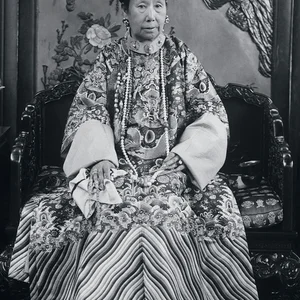
Cixi
1835 — 1908
Cixi, Empress Dowager of China, dominated the politics of the Qing dynasty for nearly fifty years. A shrewd and authoritarian regent, she governed an empire facing Western colonial pressures and internal rebellions, leaving an ambivalent legacy on China's modernization.
Claude Ambroise Régnier
1746 — 1814
French jurist and politician (1746–1814), Grand Judge and Minister of Justice under the First Empire. A loyal servant of Napoleon, he was created Duke of Massa in 1809 and contributed to the organization of the Napoleonic judicial system.
Claude-Louis Petiet
1749 — 1806
French general and politician, Claude-Louis Petiet served as Minister of War under the Directory (1797–1798), then as Councillor of State and senator under the Consulate and the Napoleonic Empire. He died in 1806, becoming the first person interred during the reign of Napoleon I.
Cochise
1812 — 1874
An Apache chief of the Chiricahua band, Cochise led the armed resistance against the U.S. Army in the Southwest for more than ten years. A major figure of the Apache Wars, he finally made peace in 1872.
Crazy Horse
1849 — 1877
Oglala Lakota war chief and a leading figure of Native American resistance against the expansion of the United States. Victor over Custer at Little Bighorn in 1876, he was killed the following year while being held at Fort Robinson.
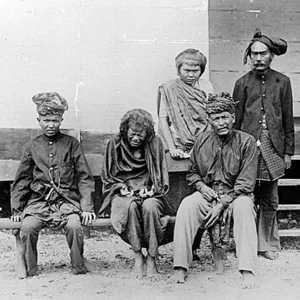
Cut Nyak Dhien
1848 — 1908
An Indonesian national heroine, Cut Nyak Dhien led armed resistance against Dutch occupation in the Aceh region (Sumatra) following the death of her husband. A symbol of Indonesian nationalism, she fought until her capture in 1905 despite serious illness.
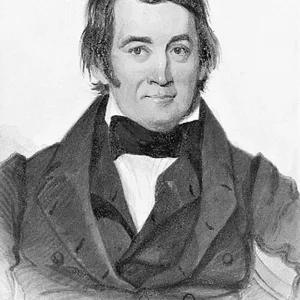
Davy Crockett
1786 — 1836
American pioneer, hunter, and politician, elected several times to Congress for the state of Tennessee. Having become a legendary figure of the conquest of the West, he died defending Fort Alamo during the Texas Revolution in 1836.
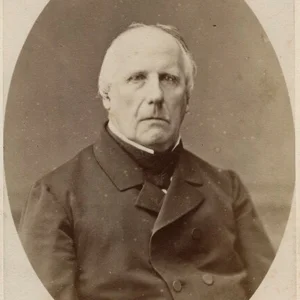
Edgar Quinet
1803 — 1875
French historian, philosopher, and politician (1803-1875), a leading figure of anticlerical republicanism. A professor at the Collège de France, he was exiled during the Second Empire for his opposition to Napoléon III.
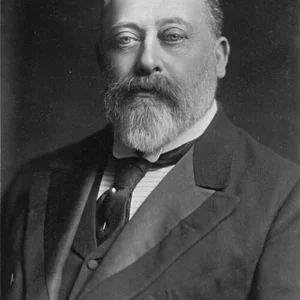
Edward VII
1841 — 1910
Son of Queen Victoria, Edward VII reigned over the United Kingdom and the Empire of India from 1901 to 1910. An emblematic figure of the Belle Époque, he played a decisive role in bringing France and Britain closer together through the Entente Cordiale of 1904.
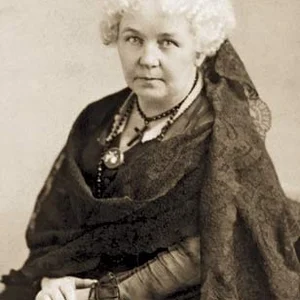
Elizabeth Cady Stanton
1815 — 1902
American women's rights activist (1815–1902), she co-organized the Seneca Falls Convention in 1848, the first major gathering for women's suffrage in the United States. Author of the Declaration of Sentiments, she devoted her life to the civic and political equality of women.
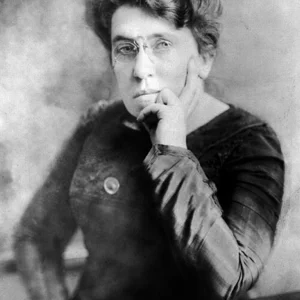
Emma Goldman
1869 — 1940
Emma Goldman (1869-1940) was a Lithuanian-born anarchist and feminist activist who emigrated to the United States. A leading figure in the American labor movement, she championed individual freedom, women's emancipation, and opposed war and capitalism.
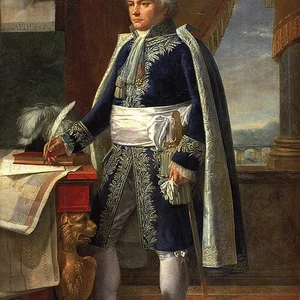
Emmanuel Crétet de Champmol
French statesman (1747-1809), Minister of the Interior under Napoleon I and first governor of the Bank of France. He played a key role in the administrative and financial reorganization of Consular and Imperial France.
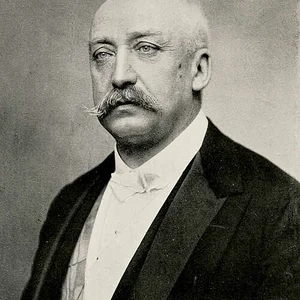
Félix Faure
1841 — 1899
French statesman (1841–1899), President of the Republic from 1895 until his death. Born into the bourgeoisie of Le Havre, his presidency was defined by the Dreyfus Affair, and he died suddenly at the Élysée Palace in circumstances that have since become notorious.
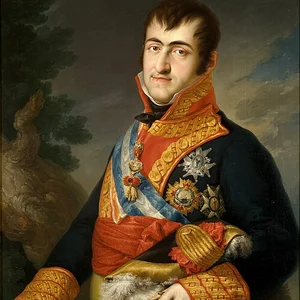
Ferdinand VII
1784 — 1833
King of Spain in 1808 and from 1814 to 1833, Ferdinand VII reigned under Napoleonic occupation and then after the Restoration. His absolutist rule and the loss of Spain's American colonies left a profound mark on Spanish history.
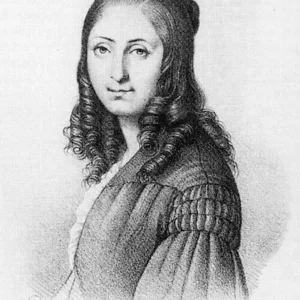
Flora Tristan
1803 — 1844
French journalist and feminist activist (1803–1844), Flora Tristan championed the emancipation of women and the condition of the working class in the 19th century. She was a pioneer of feminism and socialism, placing the question of women at the heart of political and social debate.
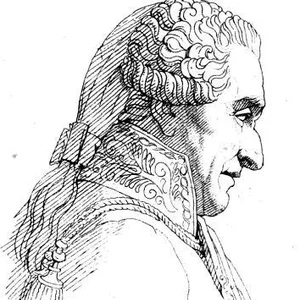
François Denis Tronchet
1726 — 1806
French jurist and statesman (1726–1806), he courageously defended Louis XVI before the Convention in 1792. He was one of the four principal authors of the Civil Code promulgated in 1804, a foundational work of modern French law.
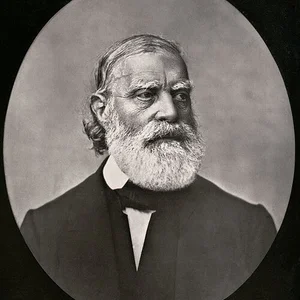
François-Vincent Raspail
1794 — 1878
French chemist and naturalist (1794–1878), pioneer of cellular chemistry and histology. A committed republican, he took part in the revolutions of 1830 and 1848, was imprisoned for his political beliefs, and ran for the presidency of the Republic from his prison cell.
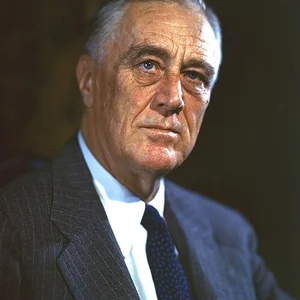
Franklin D. Roosevelt
1882 — 1945
President of the United States from 1933 to 1945, Franklin D. Roosevelt led the country through the Great Depression and World War II. He implemented the New Deal, a sweeping program of social and economic reforms, and played a decisive role in the Allied victory.
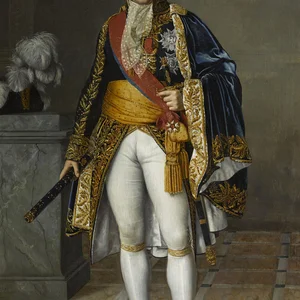
Franz Joseph I
Franz Joseph I (1830–1916) was Emperor of Austria and King of Hungary for 68 years, one of the longest reigns in European history. He embodied the Habsburg monarchy as it faced nationalist upheavals and the crises that led up to the First World War.
Gabriel Louis de Caulaincourt
1749 — 1808
A French general of the First Empire, Gabriel Louis de Caulaincourt distinguished himself during the Napoleonic Wars. He died heroically at the Battle of the Moskva in September 1812, during the Russian campaign.
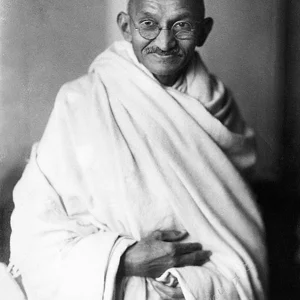
Gandhi
1869 — 1948
Indian political and spiritual leader (1869–1948), Gandhi led the movement for India's independence from British rule by advocating non-violence and civil disobedience. He became an iconic figure in the struggle for civil rights and the emancipation of colonized peoples.
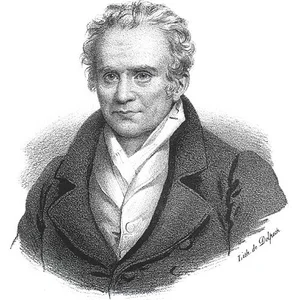
Gaspard Monge
1746 — 1818
French mathematician (1746–1818), inventor of descriptive geometry and co-founder of the École Polytechnique. A close ally of Napoleon, he played a major role in modernizing scientific and technical education in France.
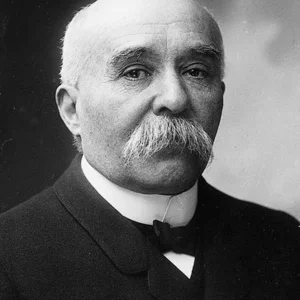
Georges Clemenceau
1841 — 1929
French statesman (1841–1929), Georges Clemenceau is best known for his decisive role during the First World War as Prime Minister (1917–1920). Nicknamed 'The Father of Victory', he led France to victory and negotiated the Treaty of Versailles.
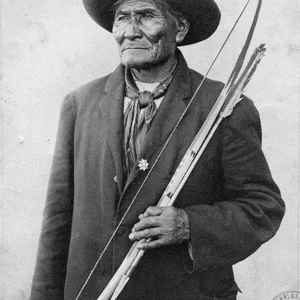
Geronimo
1829 — 1909
A Chiricahua Apache war leader and medicine man, Geronimo led the armed resistance against the expansion of the United States and Mexico in the American Southwest. His surrender in 1886 marked the end of the great Indian Wars.
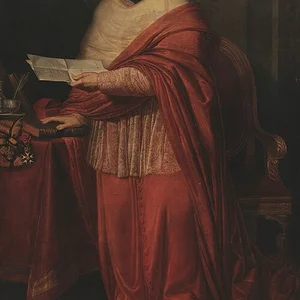
Giovanni Battista Caprara
1733 — 1810
Cardinal and papal legate, Giovanni Battista Caprara (1733–1810) played a central role in the reconciliation between the Catholic Church and Napoleonic France. He negotiated and signed the Concordat of 1801 on behalf of the Holy See, and was subsequently appointed Archbishop of Milan.
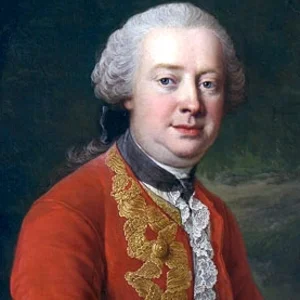
Girolamo Luigi Durazzo
A Genoese aristocrat, Girolamo Luigi Durazzo was one of the last doges of the Republic of Genoa before its annexation by France. He subsequently became a senator under Napoleon's First Empire, embodying the transition between the old republican order and the new French regime.
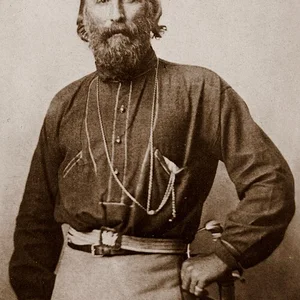
Giuseppe Garibaldi
1807 — 1882
Italian general and patriot (1807–1882), Garibaldi is one of the central figures of the Risorgimento. A charismatic military leader, he unified much of Italy through his campaigns, most notably the famous Expedition of the Thousand in 1860.
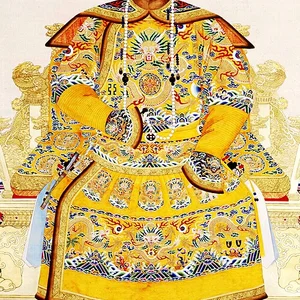
Guangxu
1871 — 1908
Guangxu (1871–1908) was the eleventh emperor of the Qing dynasty. In 1898, he attempted to modernize China through the "Hundred Days' Reform," but Empress Dowager Cixi seized power and placed him under house arrest until his death.
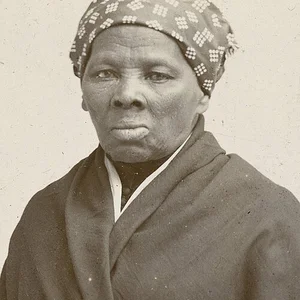
Harriet Tubman
1820 — 1913
Born into slavery around 1822, Harriet Tubman escaped in 1849 and became one of the most celebrated conductors of the Underground Railroad, helping hundreds of enslaved people flee to the North. An abolitionist, a spy for the Union during the Civil War, and an advocate for women's rights, she is a towering figure in the American struggle for freedom.
Hone Heke
1807 — 1850
Māori chief of the Ngāpuhi tribe, Hone Heke was the first signatory of the Treaty of Waitangi in 1840, before turning against British colonization. A symbol of indigenous resistance, he cut down the British flagpole at Kororāreka four times, sparking the Flagstaff War (1845–1846).
Honoré Daumier
1808 — 1879
Honoré Daumier (1808-1879) was a French engraver, caricaturist, painter and sculptor. A master of lithography, he ferociously sketched the political and social life of his time, becoming one of the greatest satirists of the 19th century.
Hubertine Auclert
1848 — 1914
French feminist activist (1848–1914), she was one of the first to demand women's right to vote in France. Founder of the society “Le Suffrage des femmes,” she led militant actions such as refusing to pay her taxes and smashing a ballot box.
Hyacinthe-Hughes Timoléon de Cossé-Brissac
1746 — 1813
A French general from the high nobility, he served under the Revolution and the Empire. Appointed senator of the First Empire by Napoleon, he embodies the fusion between the old aristocracy and the new Napoleonic institutions.
Ida B. Wells
1862 — 1931
African American journalist and activist born into slavery in 1862, Ida B. Wells conducted rigorous investigations into lynching in the United States and co-founded the NAACP. A pioneering figure in investigative journalism and the civil rights movement.
Ippolito-Antonio Vincenti-Mareri
1738 — 1811
Italian Catholic prelate of the 19th century, elevated to the dignity of cardinal within the Roman Curia. He carried out his duties in the context of the Papal States, at a time of deep tensions between the Church and the emerging national states of Europe.
J. M. W. Turner
1775 — 1851
British painter and engraver (1775-1851), Turner is considered the master of Romantic landscape. A forerunner of Impressionism, he revolutionized the depiction of light, water, and atmosphere.
Jacques-Louis David
1748 — 1825
French Neoclassical painter (1748–1825), David was the leading figure in official painting during the Revolution and the Empire. His grand historical compositions and portraits left a lasting mark on Western art.
Jan de Winter
1761 — 1812
Dutch admiral (1761-1812) who served the Batavian Republic and later the Napoleonic Empire. Commander of the Batavian fleet, he faced the British Royal Navy at the Battle of Camperdown in 1797, where he was taken prisoner after fierce resistance.
Jean Jaurès
1859 — 1914
Jean Jaurès (1859-1914) was a major French politician and founder of the unified Socialist Party. A passionate advocate for social justice, pacifism, and democracy, he opposed the war before being assassinated in 1914.
Jean Lannes
1769 — 1809
Marshal of the Empire and Duke of Montebello, Jean Lannes was one of Napoleon's most brilliant generals. A loyal comrade-in-arms since the Italian and Egyptian campaigns, he distinguished himself at Montebello, Austerlitz, and Jena. He died of his wounds at the Battle of Essling in 1809.
Jean Monnet
1888 — 1979
French statesman (1888–1979), Jean Monnet is regarded as one of the founding fathers of the European Union. He played a decisive role in the creation of the European Coal and Steel Community (ECSC) and championed the economic and political integration of Europe.
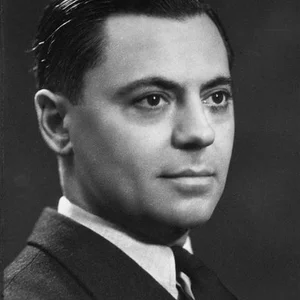
Jean Moulin
1899 — 1943
French senior civil servant (1899–1943), Jean Moulin is one of the most prominent figures of the French Resistance. He unified the resistance movements and created the National Council of the Resistance (CNR) before being arrested and tortured to death by the Nazis.

Jean-Baptiste Papin
1756 — 1809
A French political figure of the First Empire, Jean-Baptiste Papin de Saint-Christau served in the Conservative Senate. He represents the class of notables who rallied to the Napoleonic regime.
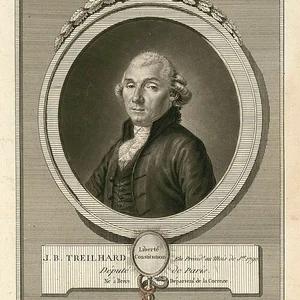
Jean-Baptiste Treilhard
1742 — 1810
French jurist and statesman (1742–1810), a member of the National Convention during the Revolution, briefly a Director, then a Councillor of State and Count of the Empire under Napoleon. He played a key role in drafting the Civil Code.
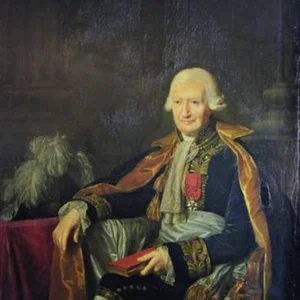
Jean-Baptiste-Pierre Bevière
1723 — 1807
French politician and member of the Convention during the Revolution, he served in the National Convention before becoming a dignitary under the Napoleonic Empire. His career illustrates the political trajectories of those who navigated both the Revolution and the Empire.
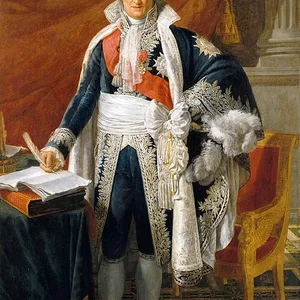
Jean-Étienne-Marie Portalis
1746 — 1807
A French jurist and statesman, Portalis was the principal drafter of the Civil Code enacted in 1804, the cornerstone of modern French private law. As Minister of Religious Affairs under Napoleon, he also contributed to the Concordat of 1801, which regulated relations between the Church and the State.
Jean-Frédéric Perregaux
1744 — 1808
A Swiss banker based in Paris, Jean-Frédéric Perregaux was one of the co-founders of the Banque de France in 1800 and its first regent. A senator of the First Empire, he played a central role in stabilizing the finances of Napoleonic France.

Jean-Ignace Jacqueminot de Ham
A French general of the First Empire, Jean-Ignace Jacqueminot de Ham took part in the great Napoleonic campaigns. He later became a senator and peer of France under the Restoration and the July Monarchy.
Jean-Louis-Ébénézer Reynier
1771 — 1814
A divisional general of the First Empire, Reynier took part in the great Napoleonic campaigns in Egypt, Italy, and Central Europe. He distinguished himself notably at the Battle of Maida (1806) and during the Russian campaign (1812).
Jean-Nicolas Démeunier
1751 — 1814
French politician and writer (1751-1814), deputy to the Estates-General of 1789 and member of the National Constituent Assembly. He later became a senator under the Napoleonic First Empire.

Jean-Pierre Sers
1746 — 1809
Jean-Pierre Sers (1776-1862) was a French administrator and politician. A prefect under the First Empire, he became a senator and played a role in Napoleonic administration.
Jenny von Westphalen
1814 — 1881
A Prussian aristocrat who became the wife and collaborator of Karl Marx, she shared the couple's exile and poverty in London. For nearly four decades she was the first reader, copyist, and secretary of Marx's work.
Johann Wolfgang von Goethe
German writer, poet, and scholar (1749–1832), Goethe is the author of Faust and The Sorrows of Young Werther. A central figure of the Sturm und Drang movement and later Weimar Classicism, he embodies the Enlightenment ideal of the universal man.
John C. Frémont
1813 — 1890
American explorer, military officer and politician nicknamed “the Pathfinder.” He mapped the American West and the Oregon Trail, played a role in the conquest of California, and then became the first Republican candidate in the 1856 presidential election.
José de San Martín
1778 — 1850
Argentine general and statesman, a major figure in the independence of South America. He freed Argentina, Chile, and Peru from Spanish rule before withdrawing from public life.
Joseph Gallieni
1849 — 1916
General and Marshal of France, Gallieni was a great colonial administrator in Madagascar and Indochina. Military Governor of Paris in 1914, he organized the counter-offensive at the Marne, saving the capital thanks to the famous “taxis of the Marne.”
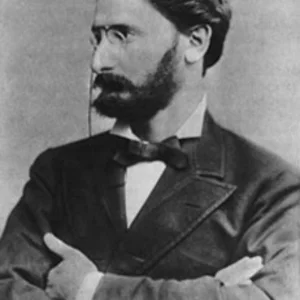
Joseph Pulitzer
1847 — 1911
American journalist and publisher of Hungarian origin (1847–1911), founder of modern journalism. He built a press empire and established the famous Pulitzer Prize, the supreme award in American journalism.
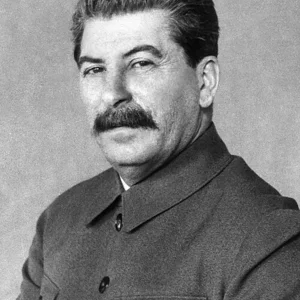
Joseph Stalin
1878 — 1953
Soviet dictator from 1922 to 1953, Joseph Stalin established a totalitarian regime characterized by massive political repression and forced industrialization. His leadership transformed the USSR into a superpower, but at the cost of millions of lives.
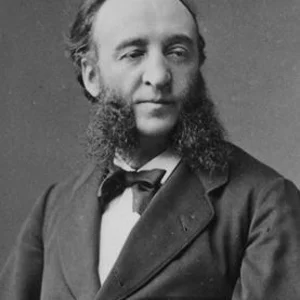
Jules Ferry
1832 — 1893
French statesman (1832–1893) who transformed French education as Minister of Public Instruction. He is responsible for the landmark education laws making primary school free, secular, and compulsory, laying the foundations of the modern French public school system.
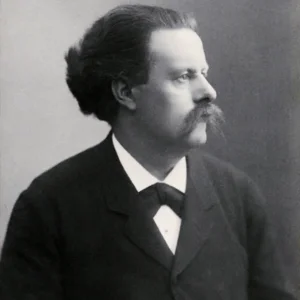
Jules Joffrin
1846 — 1890
Jules Joffrin (1846–1890) was a labor activist and socialist municipal councillor in Paris. A representative of the possibilist current, he embodied reformist socialist engagement under the Third Republic. The Jules Joffrin metro station (line 12) keeps his memory alive in the 18th arrondissement.
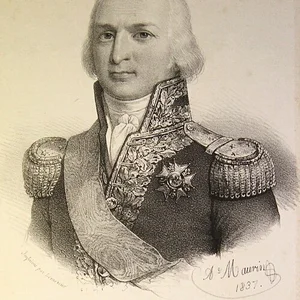
Justin Bonaventure Morard de Galles
1741 — 1809
French admiral born in 1741, he commanded the Brest squadron during the Revolution and took part in the Irish Expedition of 1796. Appointed senator of the First Empire by Napoleon, he died in 1809.
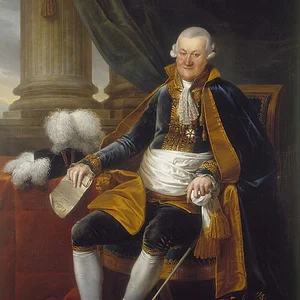
Justin de Viry
1736 — 1813
Justin de Viry (1773-1844) was a politician of Sardinian origin who became a naturalized French citizen. A prefect under the First Empire, he was appointed senator in 1813 by Napoleon I.
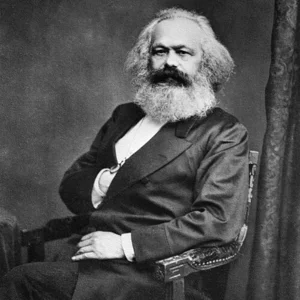
Karl Marx
1818 — 1883
German philosopher, sociologist, and economist (1818–1883), Karl Marx is the founder of historical materialism and the critical analysis of capitalism. He revolutionized political thought by proposing a theory of class struggle and social transformation.

Lakshmibai of Jhansi
Queen of the kingdom of Jhansi, in northern India, Lakshmibai became one of the leading figures of the Sepoy Mutiny of 1857 against the British East India Company. Refusing the annexation of her state, she took up arms and died in battle, becoming a national symbol of Indian resistance.
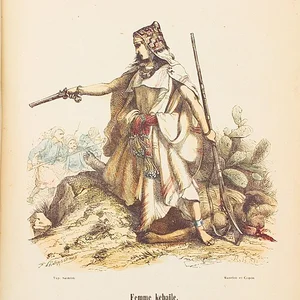
Lalla Fatma N'Soumer
1830 — 1863
A Kabyle resistance fighter from the Amazigh people, Lalla Fatma N'Soumer led the armed struggle against the French conquest of Algeria in the mid-19th century. Both a spiritual and military figure, she is passed down through Berber oral tradition as a symbol of dignity and resistance.
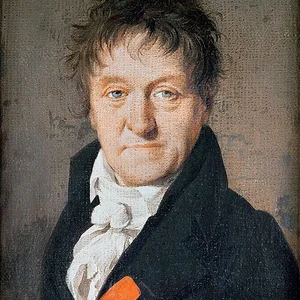
Lazare Carnot
1753 — 1823
French mathematician and general, Lazare Carnot earned the nickname "The Organizer of Victory" for his role on the Committee of Public Safety. He restructured the republican armies, contributing to the victories of revolutionary France, and left a notable mathematical legacy in geometry.
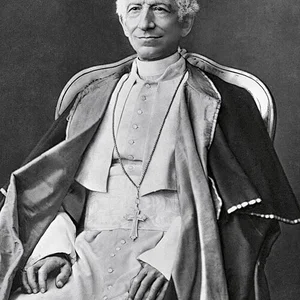
Leo XIII
1810 — 1903
Pope from 1878 to 1903, Leo XIII modernized the social doctrine of the Church with the encyclical Rerum Novarum (1891). He sought to reconcile Catholicism with the modern world and liberal democracies.
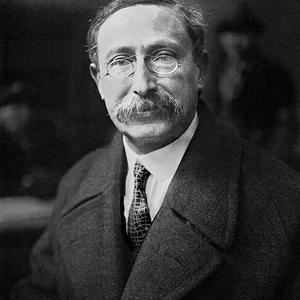
Léon Blum
1872 — 1950
Léon Blum (1872–1950) was a French politician and intellectual, leader of the French Socialist Party and a major figure of the left in the 20th century. He is best known for leading the Popular Front government in 1936, which marked the first time the left came to power in France.
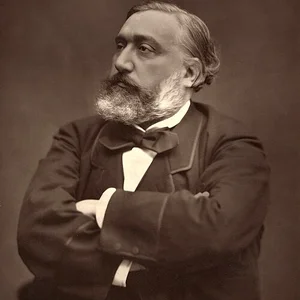
Léon Gambetta
1838 — 1882
Lawyer and republican statesman, Léon Gambetta proclaimed the Third Republic on September 4, 1870 following the defeat at Sedan. He organized national resistance during the Franco-Prussian War, escaping besieged Paris by balloon. A key architect of the republican regime, he served as President of the Chamber of Deputies from 1879 to 1881.

Lewis and Clark
Lewis and Clark led the Corps of Discovery expedition (1804–1806), commissioned by President Jefferson to explore the Louisiana Territory all the way to the Pacific. They were the first Americans to cross the continent from east to west, paving the way for westward expansion.
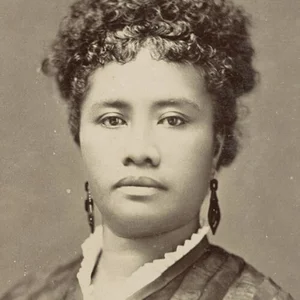
Liliuokalani
1838 — 1917
Liliuokalani was the last queen of the Kingdom of Hawaii, overthrown in 1893 by a coup supported by American settlers. A composer and stateswoman, she fought peacefully for Hawaiian sovereignty and remains a symbol of resistance to American imperialism.
list of Presidents of the French Republic
Since 1848, France has had 25 presidents. The role, largely ceremonial under the Third and Fourth Republics, became central under the Fifth Republic established by de Gaulle in 1958.
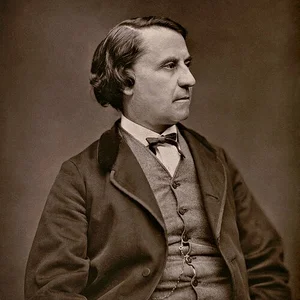
Louis Blanc
1811 — 1882
French journalist, historian, and socialist theorist (1811–1882). A member of the provisional government of the Second Republic in 1848, he championed the National Workshops and the right to work. Exiled in England after the June Days uprising, he returned to France after 1870.
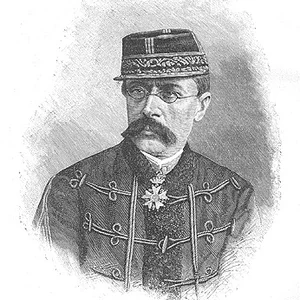
Louis Faidherbe
1818 — 1889
French general and colonial administrator, governor of Senegal from 1854 to 1865. He extended French influence in West Africa, modernized Dakar, and founded lasting institutions. He also commanded the Army of the North during the Franco-Prussian War of 1870.
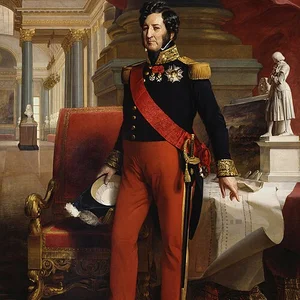
Louis-Philippe I
1773 — 1850
King of the French from 1830 to 1848, Louis-Philippe I came to power following the July Revolution. His July Monarchy embodied the triumph of the liberal bourgeoisie before being overthrown by the Revolution of 1848.

Louis-Pierre-Pantaléon Resnier
1752 — 1807
A French officer of the First Empire, Louis-Pierre-Pantaléon Resnier was a Napoleonic dignitary who served in the military and administrative structures of the Empire. He embodies the profile of the provincial notable elevated by Napoleonic reforms.
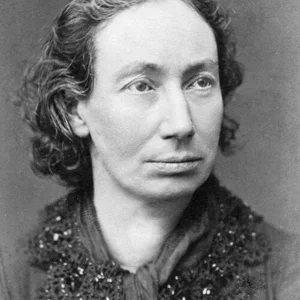
Louise Michel
1830 — 1905
Teacher and leading figure of the French anarchist movement (1830–1905), Louise Michel dedicated herself to educating poor children before becoming one of the heroines of the Paris Commune. Exiled and imprisoned for her revolutionary actions, she devoted her life to the struggle for social equality and the emancipation of the oppressed.
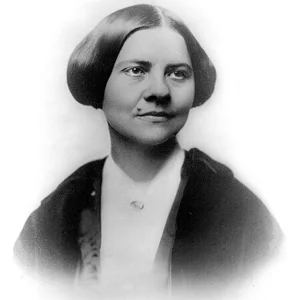
Lucy Stone
1818 — 1893
Lucy Stone (1818-1893) was one of the first American activists to fight simultaneously for the abolition of slavery and women's right to vote. The first woman from Massachusetts to earn a college degree, she refused to take her husband's name after marriage.
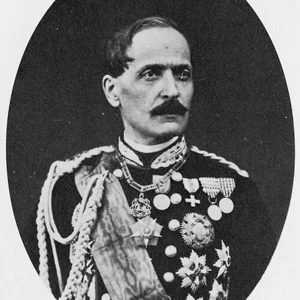
Luigi Menabrea
Italian general, engineer, and statesman of the 19th century. He is best known for writing in 1842 a memoir on Charles Babbage's analytical engine, which Ada Lovelace translated and extensively annotated.
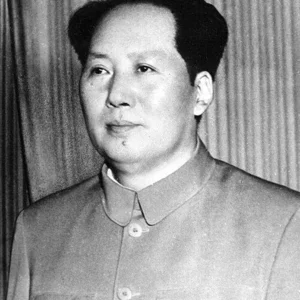
Mao Zedong
1893 — 1976
Chinese statesman (1893-1976) and founder of the People's Republic of China. Leader of the Chinese Communist Party, he established a communist regime and launched the Great Proletarian Cultural Revolution. A major figure of the 20th century, his political legacy remains complex and controversial.
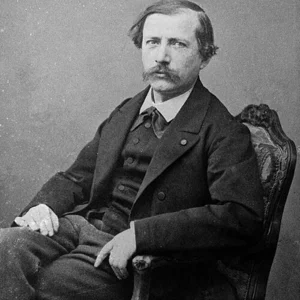
Marcellin Berthelot
1827 — 1907
French chemist (1827–1907), founder of thermochemistry and organic synthesis chemistry. He was also a republican politician, serving as Minister of Public Education and then Minister of Foreign Affairs.
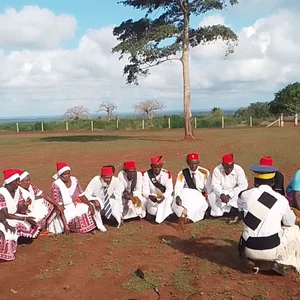
Mekatilili wa Menza
1840 — 1925
A Giriama woman from Kenya, Mekatilili wa Menza led the resistance against British colonial rule during the 1913–1914 revolt. Arrested and deported, she escaped and continued fighting for her people's freedom.
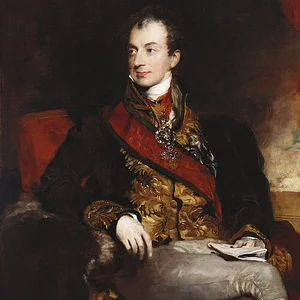
Metternich
1773 — 1859
Austrian statesman and diplomat, Chancellor of the Austrian Empire. The architect of the Congress of Vienna (1815), he was the central figure of the conservative European order after the fall of Napoleon, a defender of the balance of power and an opponent of liberal and national revolutions.
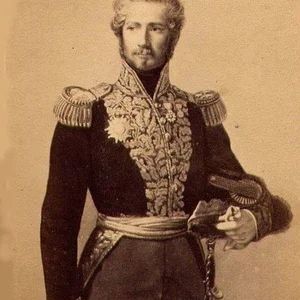
Michel Ordener
1787 — 1862
French cavalry general (1755–1811), Michel Ordener distinguished himself in the Revolutionary and Napoleonic Wars. He commanded the Horse Grenadiers of the Imperial Guard and was created a Count of the Empire.
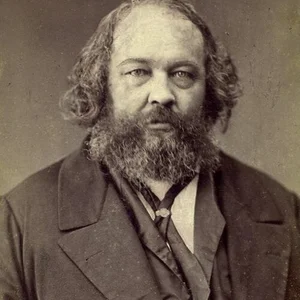
Mikhail Bakunin
1814 — 1876
Russian revolutionary and philosopher, a major figure of anarchism and libertarian socialism in the 19th century. An opponent of Marx within the First International, he advocated the abolition of the State and of all authority in favor of a federalist and collectivist society.
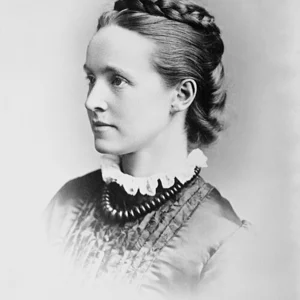
Millicent Fawcett
1847 — 1929
British feminist activist and leading figure of constitutional suffragism. As president of the NUWSS, she championed winning women's voting rights through lawful and peaceful means, in contrast to the militant methods of the suffragettes.
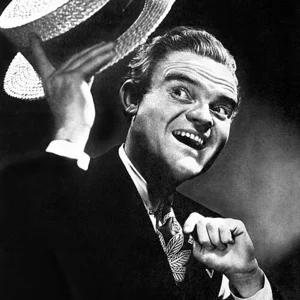
Mother Jones
Nicknamed “Mother Jones,” Mary Harris Jones was one of the most formidable labor activists in the United States. An organizer for coal miners and textile workers, she fought her entire life against the exploitation of workers and child labor.

Moulay Abd er-Rahman
Sultan of Morocco from 1822 to 1859, Moulay Abd er-Rahman had to navigate between French and Spanish colonial pressures while maintaining Moroccan sovereignty. After supporting Abdelkader against France, he was defeated at the Battle of Isly in 1844.
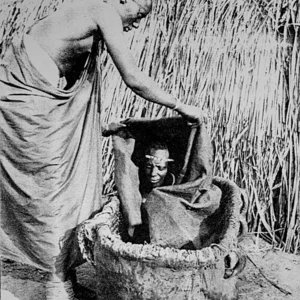
Muhumusa
A Rwandan medium of the Kinyarwanda people, Muhumusa embodied the Nyabingi spirit and led an anti-colonial resistance against European powers in the early 20th century. She is considered a major spiritual and political figure of the African Great Lakes region.
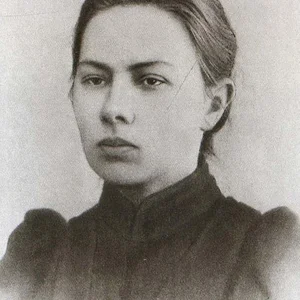
Nadezhda Krupskaya
1869 — 1939
Russian revolutionary and educator (1869–1939), wife of Lenin and Bolshevik activist. She played a central role in Soviet educational policy after 1917, particularly in mass literacy campaigns and the reform of public schooling.
Nandi
1760 — 1827
Mother of Shaka Zulu and a founding figure of the Zulu kingdom, Nandi lived with dignity despite the social rejection brought on by her out-of-wedlock pregnancy. She had a decisive influence on her son, the future builder of the Zulu empire.
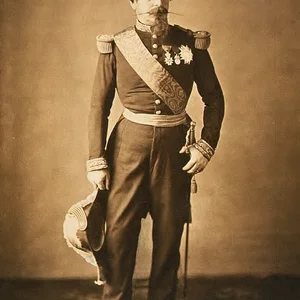
Napoleon III
1808 — 1873
Nephew of Napoleon I, he was elected President of the Republic in 1848, then seized power through a coup d'état on December 2, 1851, before proclaiming the Second Empire. His reign profoundly transformed France: the modernization of Paris under Haussmann, industrial and railway expansion — until the defeat at Sedan in 1870.
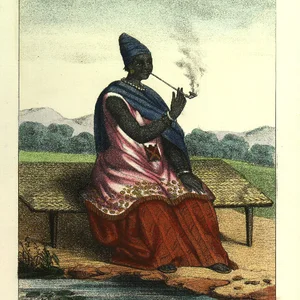
Ndate Yalla Mbodj
The last queen (linguère) of the Waalo, a Wolof kingdom in Senegal, Ndate Yalla Mbodj fiercely resisted French expansion in the 1840s–1850s. An iconic figure of African pre-colonial resistance, she is celebrated in Wolof and Toucouleur oral traditions.
Nehanda Nyakasikana
Nehanda Nyakasikana (c. 1840–1898) was a mhondoro — a spirit medium of the Shona people of present-day Zimbabwe — venerated as the embodiment of the ancestral spirit Nehanda. A central figure of the First Chimurenga, she organized armed resistance against the British colonization of Southern Rhodesia before being captured and hanged by the colonial authorities.
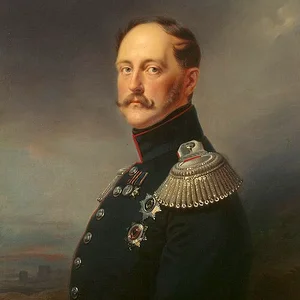
Nicholas I of Russia
1796 — 1855
Nicholas I (1796-1855) was Emperor of Russia, King of Poland, and Grand Duke of Finland from 1825. An autocratic and conservative sovereign, he crushed the Decembrist revolt upon his accession and embodied a reactionary monarchy founded on order, orthodoxy, and nationality.
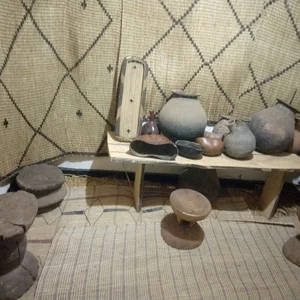
Nyabingi
Queen of Ndorwa (a region straddling present-day Rwanda and Uganda), Nyabingi is, according to the oral traditions of the Kiga and Tutsi peoples, a ruler whose spirit became after her death a powerful symbol of resistance. Her name gave rise to the Nyabingi movement, which opposed European colonization into the 20th century.
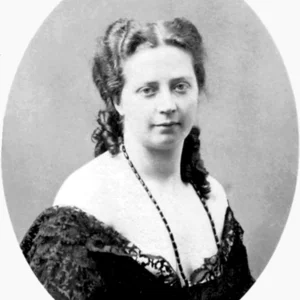
Olympe Audouard
1832 — 1890
Olympe Audouard (1832–1890) was a French writer, journalist, and feminist. A tireless traveler, she journeyed through the Middle East and the United States and published accounts of her travels. She campaigned for women's rights, particularly the right to divorce and access to education.
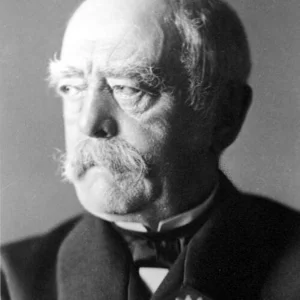
Otto von Bismarck
1815 — 1898
Prussian statesman, first chancellor of the German Empire. Nicknamed the “Iron Chancellor,” he achieved the unification of Germany around Prussia between 1864 and 1871 through a policy of warfare and diplomatic skill.
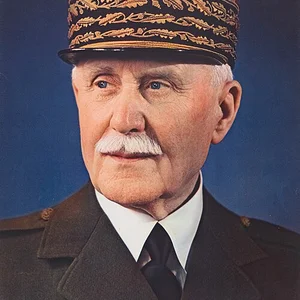
Philippe Pétain
1856 — 1951
Marshal of France and celebrated military commander known for his victory at Verdun in 1916, Philippe Pétain became head of the French government in 1940 and established the authoritarian French State of Vichy. A collaborator during the German occupation, he remains one of the most controversial figures in French history.
Pierre Garnier de Laboissière
1755 — 1809
A French general of the First Empire, Pierre Garnier de Laboissière built his career under the Revolution and Napoleon Bonaparte. He also served as a senator, embodying the fusion of military and political elites characteristic of the Napoleonic era.
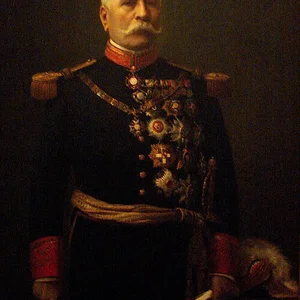
Porfirio Díaz
1830 — 1915
Mexican general and statesman (1830–1915), Porfirio Díaz ruled Mexico from 1876 to 1911 during a period known as the Porfiriato. His authoritarian regime drove economic modernization at the cost of political oppression, ultimately sparking the Mexican Revolution.
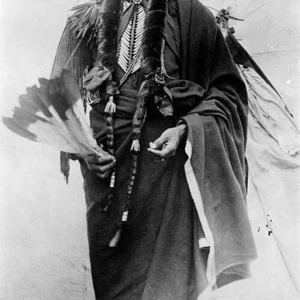
Quanah Parker
1845 — 1911
Quanah Parker was the last great chief of the Quahadi Comanches. The son of Chief Peta Nocona and Cynthia Ann Parker, a white captive, he led armed resistance against the advance of settlers and the U.S. Army, before becoming a respected mediator between his people and the United States government.
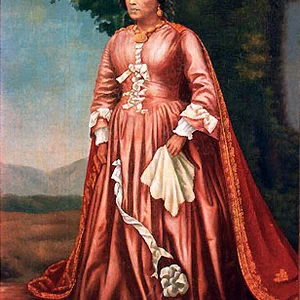
Ranavalona I
1788 — 1861
Queen of Madagascar from 1828 to 1861, Ranavalona I belonged to the Merina people of the Malagasy Highlands. She firmly resisted European encroachment — both British and French — by expelling missionaries and banning Christianity. Her sovereigntist policies preserved the kingdom's independence for more than thirty years.
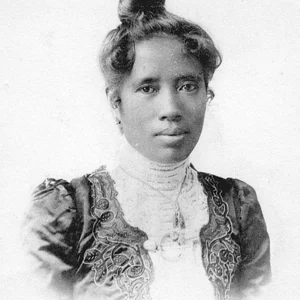
Ranavalona III
1861 — 1917
The last queen of Madagascar, Ranavalona III ruled the Merina Kingdom from 1883 to 1897. Despite her diplomatic resistance, she was unable to prevent French colonization. Deposed and exiled, she died in Algiers in 1917, a symbol of lost Malagasy sovereignty.
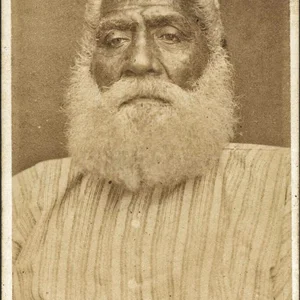
Ratu Seru Cakobau
1815 — 1883
Supreme chief of the Fiji Islands, Cakobau united the islands under his authority after decades of tribal wars. Converted to Christianity in 1854, he ceded Fiji to Great Britain in 1874, thus becoming the last independent ruler of the archipelago.
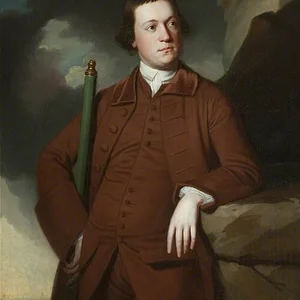
Rawlinson
A British officer and diplomat in the Indian Army, Henry Rawlinson was one of the leading decipherers of cuneiform writing. He copied and translated the trilingual Behistun Inscription, opening the door to the languages of ancient Mesopotamia.
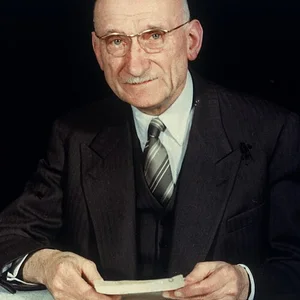
Robert Schuman
1886 — 1963
French statesman (1886-1963), Robert Schuman is one of the principal founding fathers of the European Union. As Foreign Minister, he proposed in 1950 the plan to create the European Coal and Steel Community (ECSC), laying the foundations for European integration.
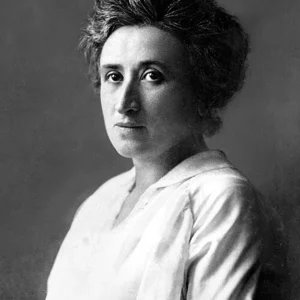
Rosa Luxemburg
1871 — 1919
Rosa Luxemburg was a Polish-born revolutionary activist and Marxist theorist who became a naturalized German citizen. Co-founder of the Communist Party of Germany (KPD), she championed a socialist revolution rooted in the mass consciousness of the working class. Arrested during the Spartacist uprising of January 1919, she was murdered by paramilitary soldiers.
Sadi Carnot
1796 — 1832
A French engineer and statesman trained at the École Polytechnique, Sadi Carnot was elected President of the Republic in 1887. His seven-year term was marked by the scandals of the Third Republic. He was assassinated in Lyon in 1894 by the Italian anarchist Sante Geronimo Caserio.
Sarah Parker Remond
1824 — 1894
African American abolitionist and suffragist activist of the nineteenth century. She traveled across Europe to raise public awareness of the anti-slavery cause, and settled in Italy where she became a physician.
Sarah Winnemucca
1844 — 1891
A Paiute activist and author from Nevada, Sarah Winnemucca defended the rights of her Native American people in the face of American colonization. In 1883, she became the first Native American woman to publish a book in English, a major testimony on the condition of Indigenous nations.
Sarraounia
Queen and spiritual leader of the Azna (animist Hausa people of Niger), Sarraounia successfully resisted the French military mission of Voulet-Chanoine in April 1899. A symbol of anti-colonial resistance, she was immortalized by Abdoulaye Mamani's novel (1980) and Med Hondo's film (1986).
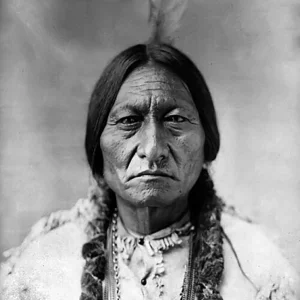
Sitting Bull
1831 — 1890
Sitting Bull (c. 1831-1890) was a chief and medicine man (wičháša wakȟáŋ) of the Hunkpapa clan of the Lakota Sioux. A leading figure of Native American resistance against the expansion of the United States, he embodied the defense of the territory and the way of life of the Plains.

Soshangane
1790 — 1859
Soshangane (Manukosi) was a Nguni military leader who founded the Kingdom of Gaza in southeastern Africa in the early 19th century. Scattered during the Mfecane triggered by Zulu expansion, he established a vast empire covering present-day southern Mozambique.

Stella Zeehandelaar
Dutch-born anarchist and feminist militant who emigrated to the United States, known for her correspondence with Emma Goldman in the 1890s–1900s. A prominent figure in New York's anarchist and labor circles at the end of the nineteenth century.
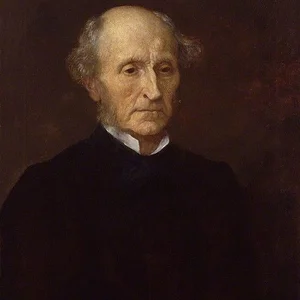
Stuart Mill
John Stuart Mill (1806-1873) was a British philosopher, economist, and politician. A major figure of liberalism and utilitarianism, he championed individual liberties, freedom of expression, and the emancipation of women.
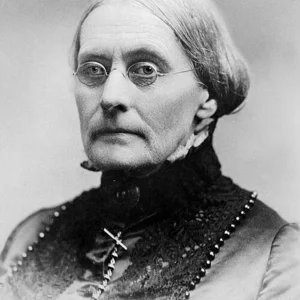
Susan B. Anthony
1820 — 1906
American civil rights activist (1820–1906), Susan B. Anthony is one of the founding figures of the American suffragist movement. She devoted her life to the abolition of slavery and to securing the right to vote for women.
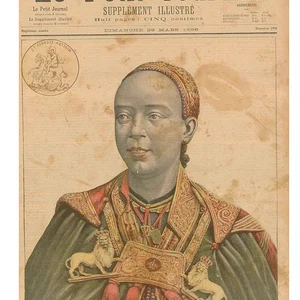
Taytu Betul
1851 — 1918
Empress of Ethiopia and wife of Menelik II, Taytu Betul was a major political and military figure of the late 19th century. Born into the Amhara tradition, she played a decisive strategic role in the Battle of Adwa in 1896, which repelled Italian colonization.
Tecumseh
1768 — 1813
A Shawnee chief and Native American political leader, Tecumseh sought to unite the indigenous peoples of eastern North America into a vast confederacy to resist the expansion of the United States. An ally of the British during the War of 1812, he was killed at the Battle of the Thames in 1813.
Tzu-Hsi (Cixi)
Cixi was the true ruler of imperial China for nearly fifty years, first as regent and then as the actual holder of power. Born into modest rank, she established herself at the Qing court and profoundly shaped China's destiny in the face of Western imperialism.
Ulysses S. Grant
1822 — 1885
Commanding general of the Union armies during the American Civil War, Ulysses S. Grant secured the surrender of Confederate general Robert E. Lee at Appomattox in 1865. A military hero, he went on to become the 18th president of the United States from 1869 to 1877.
Victor Emmanuel II
1820 — 1878
King of Sardinia and then first King of unified Italy (1861), Victor Emmanuel II was the monarch who, allied with Cavour and Garibaldi, brought the Risorgimento to completion. He reigned until his death in 1878, embodying Italian national unity.
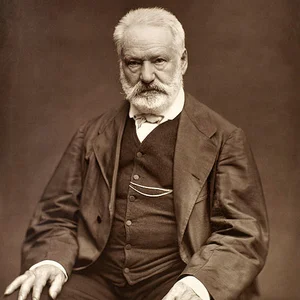
Victor Hugo
1802 — 1885
A major French writer of the 19th century, Victor Hugo (1802–1885) is the author of iconic novels such as Les Misérables and The Hunchback of Notre-Dame. Poet, playwright, and committed politician, he championed the rights of the poor and fought against the death penalty.
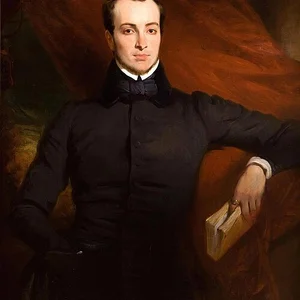
Victor Schoelcher
1804 — 1893
French politician (1804–1893), Victor Schœlcher was one of the greatest abolitionists of the 19th century. He played a decisive role in the abolition of slavery in France in 1848, serving as secretary of the Commission for the Abolition of Slavery.
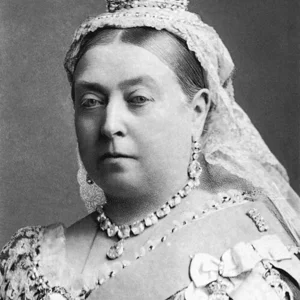
Victoria
1819 — 1901
Victoria ascended to the British throne at 18 in 1837 and reigned for 63 years, becoming one of the most influential monarchs in history. Her reign coincided with the height of the British Empire and the Industrial Revolution. She gave her name to an entire era: the Victorian age.
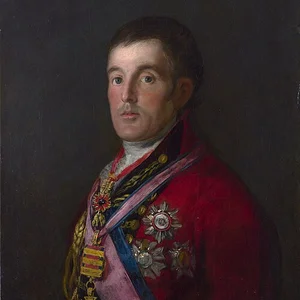
Wellington
1769 — 1852
Arthur Wellesley, Duke of Wellington, was a British general and statesman. The victor over Napoleon at the Battle of Waterloo in 1815, he also served as Prime Minister of the United Kingdom from 1828 to 1830.
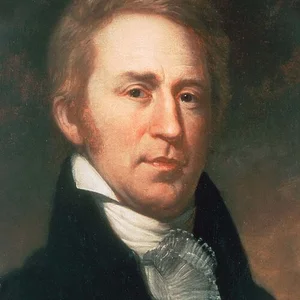
William Clark
1770 — 1838
An American army officer and explorer, William Clark co-led the Corps of Discovery expedition (1804–1806) with Meriwether Lewis, commissioned by President Jefferson. The expedition crossed North America to the Pacific Ocean, paving the way for the settlement of the American West.
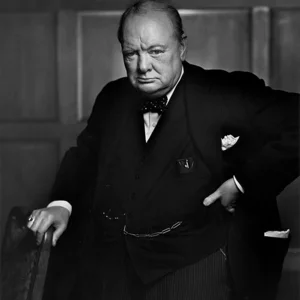
Winston Churchill
1874 — 1965
British statesman and writer (1874–1965), Winston Churchill is best known for his role as Prime Minister of the United Kingdom during the Second World War. As the leader of British resistance against Nazism, he embodied Allied resolve until victory in 1945.
Wovoka
1856 — 1932
A Paiute prophet from Nevada, Wovoka founded the Ghost Dance in 1889, a messianic religious movement that spread among the Native American peoples of the Great Plains. His preaching, which foretold the return of the dead and the disappearance of the settlers, became associated with the Wounded Knee Massacre of 1890.
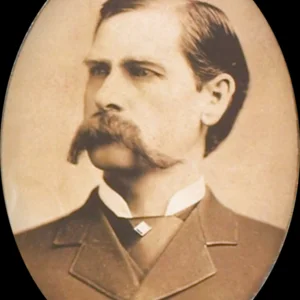
Wyatt Earp
1848 — 1929
Wyatt Earp (1848-1929) is an iconic figure of the American conquest of the West. A roving lawman, gambler, and entrepreneur, he owes his fame to the Gunfight at the O.K. Corral in 1881, which became a founding myth of the Wild West.

Yaa Akyaa
1840 — ?
Yaa Akyaa was queen mother of the Ashanti Kingdom in the nineteenth century, holding considerable political and symbolic power within the Akan matrilineal tradition. Her role was to advise the king (Asantehene) and to embody dynastic legitimacy.
20th Century(204)
A. Philip Randolph
1889 — 1979
A. Philip Randolph was an African-American trade unionist and civil rights activist. Founder of the first major Black union in the United States, he was a key architect of desegregation and the 1963 March on Washington.
Ahmed Ben Bella
1916 — 2012
Ahmed Ben Bella (1916-2012) was an Algerian statesman and a leading figure in the struggle for Algerian independence. A co-founder of the FLN, in 1963 he became the first president of the Algerian Republic, before being overthrown by a coup d'état in 1965.
Aimé Césaire
1913 — 2008
Martinican writer, poet and politician (1913-2008), founder of the Négritude movement. He served as mayor of Fort-de-France and deputy of Martinique, combining literary commitment with political action to defend the rights of colonized peoples.
Aleksandr Solzhenitsyn
1918 — 2008
Russian writer and dissident, a former Gulag prisoner. His work denounces the Soviet prison-camp system and totalitarianism. Winner of the 1970 Nobel Prize in Literature, he was expelled from the USSR in 1974 before returning in 1994.
Amina Cachalia
1930 — 2013
A South African anti-apartheid activist of Indian descent, Amina Cachalia devoted her life to fighting racial segregation in South Africa. A close ally of Nelson Mandela and the ANC, she was a leading figure in the Federation of South African Women.
André Malraux
1901 — 1976
French novelist, Resistance fighter, and statesman (1901–1976). Author of La Condition humaine, he served as Minister of Cultural Affairs under General de Gaulle from 1959 to 1969 and was a theorist of art.
Angela Davis
1944 — ?
African-American civil rights activist, philosopher, and university professor born in 1944 in Birmingham, Alabama. An iconic figure of the Black Power movement and intersectional feminism, she was imprisoned in 1970 before being acquitted. She remains a leading voice against systemic racism and social inequality.
Anita Hill
1956 — ?
Anita Hill is an African American lawyer and law professor. In 1991, her testimony before the U.S. Senate, accusing Judge Clarence Thomas of sexual harassment during his nomination to the Supreme Court, marked a turning point in public awareness of workplace harassment.
Antoine Veil
1926 — 2013
A senior French civil servant and business executive, Antoine Veil served as an inspector of finances and led major corporations. Married to Simone Veil since 1946, he shared her life and her commitments. Their ashes were transferred together to the Panthéon in 2018.
Anwar Sadat
1918 — 1981
Anwar Sadat was President of Egypt from 1970 to 1981. The architect of the Yom Kippur War and then of peace with Israel, he signed the Camp David Accords and received the Nobel Peace Prize in 1978. He was assassinated in 1981 by Islamists opposed to this peace.
Ariel Sharon
1928 — 2014
Israeli general and statesman, a major military figure in the Arab-Israeli wars. Prime Minister of Israel from 2001 to 2006, he ordered the unilateral withdrawal from the Gaza Strip in 2005 before being struck by a stroke that left him in a coma.
Assis Chateaubriand
1892 — 1968
Assis Chateaubriand (1892-1968) was a Brazilian journalist, entrepreneur, and patron of the arts, founder of the largest media empire in Latin America in the 20th century. He created the Diários Associados, a network of newspapers, radio stations, and television channels, and introduced television to Brazil in 1950.
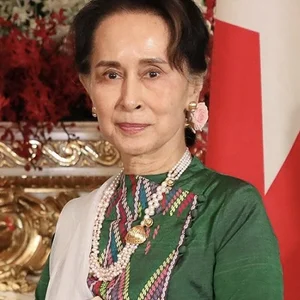
Aung San Suu Kyi
1945 — ?
Burmese democracy activist, Aung San Suu Kyi devoted her life to peaceful resistance against the military junta in Myanmar. Winner of the Nobel Peace Prize in 1991, she spent 15 years under house arrest before leading her country from 2016 to 2021.
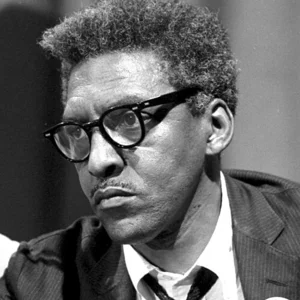
Bayard Rustin
1912 — 1987
African-American civil rights activist, advisor to Martin Luther King and chief organizer of the 1963 March on Washington. A pacifist and advocate of nonviolence, he was also a pioneering figure in the gay rights movement.
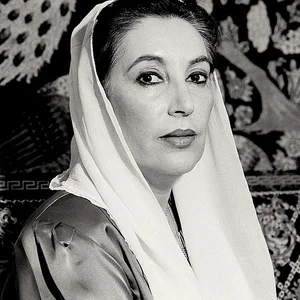
Benazir Bhutto
1953 — 2007
Benazir Bhutto was the first woman to lead a government in a Muslim-majority country, becoming Prime Minister of Pakistan in 1988. The daughter of Prime Minister Ali Bhutto, she fought against military dictatorships and became a symbol of democracy and women's rights in South Asia. Assassinated in an attack in 2007, she remains an iconic figure of political courage.
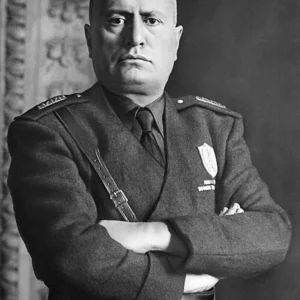
Benito Mussolini
1883 — 1945
Italian politician, founder of fascism and head of the government from 1922 to 1943. A dictator (“Duce”), he established a totalitarian regime in Italy and brought the country into World War II alongside Nazi Germany.
Bettino Craxi
1934 — 2000
Italian statesman, secretary of the Italian Socialist Party (PSI) and then Prime Minister from 1983 to 1987. A major figure in Italian political life, his career ended in the “Mani pulite” corruption scandal.
Betty Friedan
1921 — 2006
American essayist and feminist activist (1921–2006), Betty Friedan transformed society with her book The Feminine Mystique (1963), which ignited the second wave of feminism in the United States. Co-founder of the National Organization for Women (NOW), she fought for equal rights for women.
Birendra
King of Nepal from 1972 to 2001, Birendra established a constitutional monarchy in 1990 under pressure from a popular democratic movement. He perished in the royal massacre of June 2001, which decimated the Nepalese royal family.
Bobby Seale
1936 — ?
Bobby Seale is an African American activist who, in 1966, co-founded the Black Panther Party with Huey P. Newton. A leading figure in the civil rights movement and the Black Power movement, he championed a revolutionary program to defend Black communities in the United States.
Boris Yeltsin
1931 — 2007
Russian statesman, first President of the Russian Federation (1991-1999). A key figure in the fall of the USSR, he opposed the August 1991 coup before leading Russia's transition to a market economy.
Bruno Coquatrix
1910 — 1979
Bruno Coquatrix (1910-1979) was the legendary director of the Olympia in Paris, which he bought in 1954 and transformed into the temple of French music hall. He launched or cemented the careers of major artists such as Édith Piaf, Jacques Brel, and Johnny Hallyday.
Bruno Kreisky
1911 — 1990
Austrian social-democratic statesman, Federal Chancellor of Austria from 1970 to 1983. A major figure of European social democracy, he profoundly modernized Austrian society and played an active role on the international stage, particularly in the Middle East.
Caetano Veloso
1942 — ?
Caetano Veloso (born 1942) is a Brazilian singer, songwriter, and musician, a central figure of the Tropicália movement in the 1960s. Blending Brazilian popular music, rock, and avant-garde, he was exiled by the Brazilian military dictatorship.
Catharine MacKinnon
1946 — ?
An American legal scholar and feminist theorist, Catharine MacKinnon is one of the most influential intellectuals of radical feminism. She theorized sexual harassment as a form of discrimination and helped establish its legal recognition in the United States.
Cesar Chavez
1927 — 1993
César Chávez (1927-1993) was an American labor leader and activist of Mexican descent. He co-founded the United Farm Workers union and defended the rights of farm workers in the United States through nonviolent means.
Chandrika Kumaratunga
1945 — ?
A Sri Lankan politician, she was the first woman president of Sri Lanka (1994-2005). The daughter of two Prime Ministers, she sought to end the civil war between the state and the Tamil Tigers.
Charles Michels
1903 — 1941
A trade unionist and Communist member of parliament for Paris, Charles Michels was one of the 27 hostages shot by the Germans at Châteaubriant on 22 October 1941. His sacrifice made him a symbol of the Resistance and of working-class commitment against Nazism.
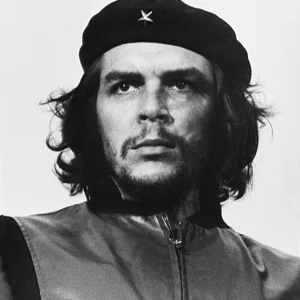
Che Guevara
1928 — 1967
Argentine Marxist revolutionary (1928–1967) and iconic figure of 20th-century guerrilla warfare. A key player in the Cuban Revolution alongside Fidel Castro, he went on to lead revolutionary movements in Africa and Latin America before his death in Bolivia.
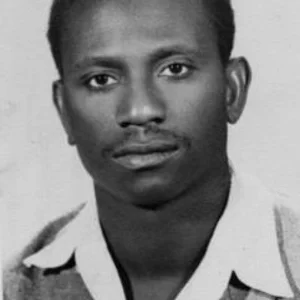
Cheikh Anta Diop
1923 — 1986
Senegalese historian, anthropologist, and physicist (1923-1986). He championed the precedence of Black African civilizations and the African origin of ancient Egypt, leaving a lasting mark on historiography and Pan-Africanism.
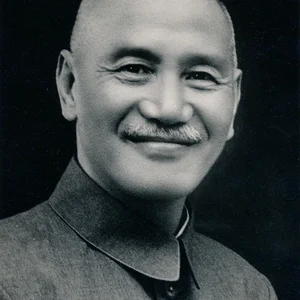
Chiang Kai-shek
1887 — 1975
Chinese military leader and statesman, head of the Kuomintang (Nationalist Party) after the death of Sun Yat-sen. Defeated by Mao Zedong's communists in 1949, he withdrew to the island of Taiwan, where he led the Republic of China until his death.
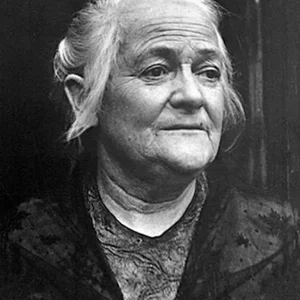
Clara Zetkin
1857 — 1933
German socialist and feminist activist (1857–1933), Clara Zetkin was the driving force behind International Women's Day. A leading figure of the Second International, she championed the emancipation of women within the framework of the class struggle.

Corazón Aquino
1933 — 2009
Corazón Aquino, wife of assassinated political activist Benigno Aquino, became in 1986 the first female president of the Philippines after leading the “People Power Revolution” against Ferdinand Marcos's dictatorship. A symbol of democracy and civic courage, she embodies peaceful resistance and democratic transition in Southeast Asia.
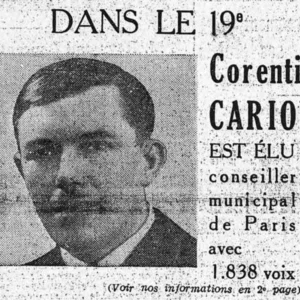
Corentin Cariou
1898 — 1942
A Communist municipal councillor of the 19th arrondissement of Paris, Corentin Cariou was arrested by the Germans and shot in 1942 as a hostage in reprisal. His name was given to a station on the Paris Métro (line 7).
Coretta Scott King
1927 — 2006
American civil rights activist and wife of Martin Luther King Jr. After her husband's assassination in 1968, she continued his fight for racial equality and peace, founding the King Center in Atlanta.
Cornelius Castoriadis
1922 — 1997
French philosopher, economist, and psychoanalyst of Greek origin, co-founder of the group and journal Socialisme ou Barbarie. A thinker of autonomy and the social imaginary, he developed a radical critique of Marxism and bureaucracies.
Dalai Lama
Spiritual and temporal leader of Tibet, the 14th Dalai Lama is the foremost representative of Tibetan Buddhism in the world. Exiled in India since 1959 following the Chinese invasion of Tibet, he has waged a nonviolent campaign for his people's autonomy. Nobel Peace Prize laureate in 1989.
Desmond Tutu
1931 — 2021
South African Anglican archbishop and a leading figure in the non-violent struggle against apartheid. Winner of the 1984 Nobel Peace Prize, he chaired the Truth and Reconciliation Commission after the fall of the segregationist regime.
Diane Nash
1938 — ?
African-American civil rights activist, Diane Nash organized the Nashville sit-ins in 1960 and co-founded the Student Nonviolent Coordinating Committee (SNCC). A major figure of nonviolence, she contributed to the abolition of segregation in the American South.
Diego Rivera
1886 — 1957
Diego Rivera was a Mexican painter and muralist, a major figure of 20th-century muralism. His monumental frescoes celebrate the history and people of Mexico from a revolutionary perspective. He was the husband of the painter Frida Kahlo.
Draupadi Murmu
1958 — ?
Draupadi Murmu is an Indian stateswoman born in 1958 into a family from the Santali tribal community. The first woman from a tribal community to become President of India in 2022, she symbolizes the political rise of marginalized populations.
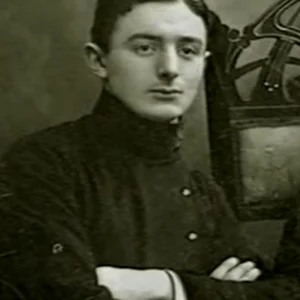
Dziga Vertov
1896 — 1954
Soviet avant-garde filmmaker (1896–1954), pioneer of documentary cinema and theorist of the "Cine-Eye." He revolutionized cinematic language with his Cine-Pravda newsreels and his masterpiece Man with a Movie Camera (1929).
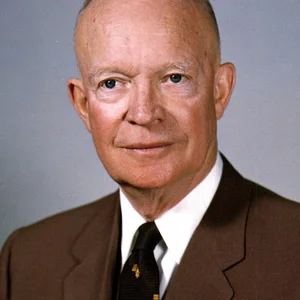
Eisenhower
American general, Supreme Commander of the Allied forces in Europe during World War II and architect of the Normandy landings. He went on to become the 34th President of the United States from 1953 to 1961.
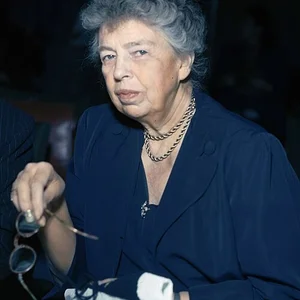
Eleanor Roosevelt
1884 — 1962
First Lady of the United States (1933–1945), Eleanor Roosevelt established herself as a tireless advocate for civil rights and social justice. She chaired the UN commission that drafted the Universal Declaration of Human Rights (1948).
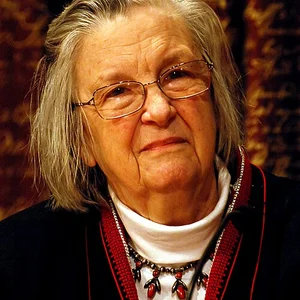
Elinor Ostrom
1933 — 2012
Elinor Ostrom (1933-2012) was an American economist and political scientist. The first woman to receive the Nobel Prize in Economics, in 2009, she showed how communities can sustainably manage shared resources (the “commons”) without resorting to either the state or the private market.
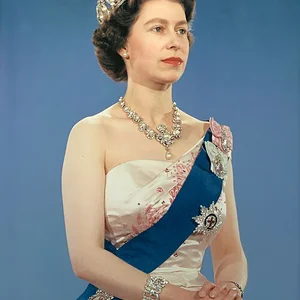
Elizabeth II
1926 — 2022
Queen of the United Kingdom from 1952 to 2022, Elizabeth II was the longest-reigning monarch in British history. She embodied the stability of constitutional monarchy through decolonisation, the Cold War, and globalisation.
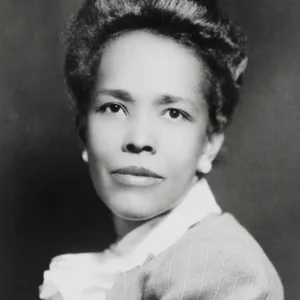
Ella Baker
1903 — 1986
An American civil rights activist, Ella Baker dedicated her life to community organizing and the fight against racial segregation. Co-founder of the SNCC, she shaped a generation of activists by championing collective leadership over individual charisma.
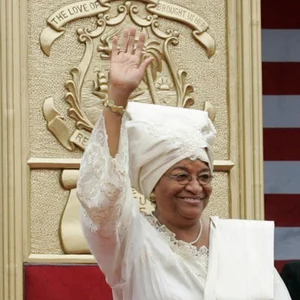
Ellen Johnson Sirleaf
1938 — ?
Ellen Johnson Sirleaf became in 2006 the first woman elected president of an African state, leading Liberia after a long civil war. A trained economist, she worked to rebuild the country and foster national reconciliation, receiving the Nobel Peace Prize in 2011.
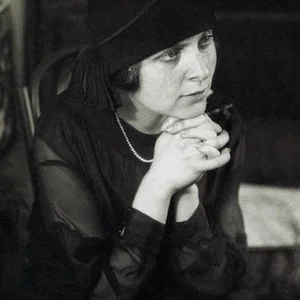
Elsa Triolet
1896 — 1970
Elsa Triolet (1896–1970) was a French novelist of Russian origin, partner of the poet Louis Aragon. The first woman to receive the Prix Goncourt, in 1945 for her short story collection 'A Fine of Two Hundred Francs', she was also a committed figure in the Resistance and the Communist movement.
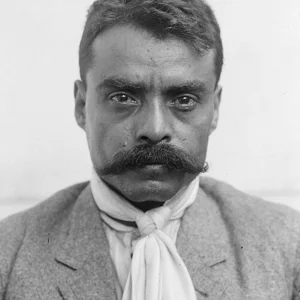
Emiliano Zapata
1879 — 1919
Emiliano Zapata (1879-1919) was a Mexican peasant leader and a major figure of the Mexican Revolution. A champion of the southern peasants, he demanded the return of land to rural communities under the rallying cry “Tierra y Libertad” (Land and Liberty).
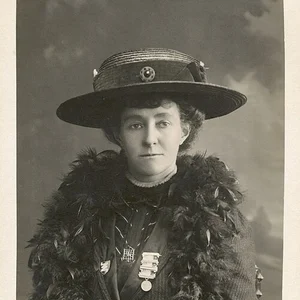
Emily Wilding Davison
1872 — 1913
British suffragette activist and a leading figure of the movement for women's voting rights. She died after throwing herself under King George V's horse at the 1913 Epsom Derby, becoming a martyr for the suffragette cause.
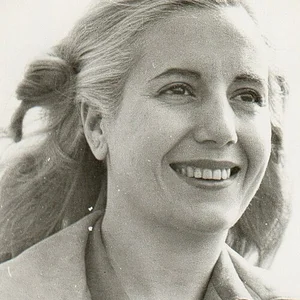
Eva Perón
1919 — 1952
Eva Perón, wife of Argentine president Juan Perón, became one of the most influential political figures in Latin America. A symbol of the descamisados (shirtless ones), she fought for workers' and women's rights, notably securing women's suffrage in Argentina in 1947.
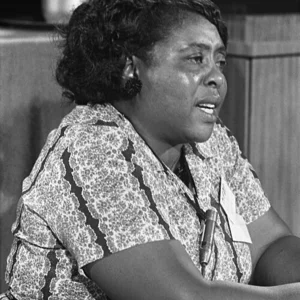
Fannie Lou Hamer
1917 — 1977
An American civil rights activist, Fannie Lou Hamer was a leading figure in the movement for Black voting rights in Mississippi. Co-founder of the Mississippi Freedom Democratic Party, she challenged American apartheid through her courage and her voice.
Félix Éboué
1884 — 1944
Guyanese colonial administrator (1884–1944), Félix Éboué was the first governor to rally French Equatorial Africa to Free France in 1940. Appointed Governor-General of the FEA by de Gaulle, he died in Cairo in 1944 and was interred in the Panthéon in 1949.
François Mitterrand
1916 — 1996
A French statesman, François Mitterrand served as President of the Republic from 1981 to 1995, becoming the first socialist elected under the Fifth Republic. His two consecutive seven-year terms remain the longest in the history of the French presidency.
Frantz Fanon
1925 — 1961
Frantz Fanon (1925-1961) was a psychiatrist and essayist born in Martinique. A major thinker of anti-colonialism, he analyzed the psychological mechanisms of colonial oppression and supported the Algerian liberation struggle.
Franz Ferdinand of Austria
1863 — 1914
Archduke and heir to the Austro-Hungarian Empire, his assassination in Sarajevo on June 28, 1914, by Gavrilo Princip triggered the First World War. A central figure in the nationalism and European tensions of the early twentieth century.
Fred Hampton
1948 — 1969
Fred Hampton (1948-1969) was an African American activist and chairman of the Illinois chapter of the Black Panther Party. A charismatic organizer, he founded the “Rainbow Coalition,” uniting several movements. He was killed at the age of 21 during a police raid, becoming a symbol of the repression of the civil rights movement.
Fridtjof Nansen
1861 — 1930
Norwegian polar explorer who crossed Greenland on skis in 1888 and attempted to reach the North Pole in 1893–1896 aboard the Fram. Nobel Peace Prize laureate in 1922, he created the Nansen passport for stateless refugees.
Friedrich Hayek
1899 — 1992
Austrian economist and philosopher, a major figure of classical liberalism and the Austrian school of economics. Winner of the Nobel Prize in Economics in 1974, he championed the spontaneous order of the market and criticized central planning.
Funmilayo Ransome-Kuti
1900 — 1978
Nigerian educator and activist (1900–1978), she led the Abeokuta women's movement against British colonial taxation. A pioneer of women's suffrage in Nigeria, she was the first woman to drive a car in her country and the mother of musician Fela Kuti.
Gabriel Péri
1902 — 1941
A French Communist journalist and member of parliament, Gabriel Péri vigorously opposed Nazism and fascism throughout the 1930s. Arrested by the Gestapo in May 1941, he was shot at Mont-Valérien on December 15, 1941, becoming one of the most iconic martyrs of the French Resistance.
Gamal Abdel Nasser
1918 — 1970
Egyptian military officer and statesman (1918–1970), Nasser was the chief architect of the 1952 revolution that overthrew the monarchy. President of Egypt from 1956 until his death, he became the embodiment of Arab nationalism and Third Worldism.
Geneviève de Gaulle-Anthonioz
1920 — 2002
Niece of General de Gaulle, French resistance fighter deported to Ravensbrück (1944–1945). After the war, she committed herself to ATD Fourth World and led the organization from 1964 to 1998, dedicating her life to the fight against extreme poverty.
George Grosz
1893 — 1959
German painter and draughtsman (1893-1959), a major figure of Berlin Dada and the New Objectivity. His ferocious caricatures denounced the corruption, militarism, and inequality of the Weimar Republic.
Georges Marchais
1920 — 1997
Secretary General of the French Communist Party from 1972 to 1994, Georges Marchais was one of the major figures of the French left during the Cold War. He embodied an orthodox communism, publicly supporting the Soviet intervention in Afghanistan in 1980.
Georges Pompidou
1911 — 1974
Georges Pompidou (1911-1974) was a French statesman, Prime Minister under de Gaulle from 1962 to 1968, then the second President of the Fifth Republic from 1969 until his death. A former literature teacher, he left his mark on France through his policy of industrial modernization and his support for contemporary arts.
Gertrude Bell
1868 — 1926
British explorer, archaeologist, and diplomat (1868–1926), she traveled extensively across the Middle East and played a decisive role in the creation of modern Iraq after the First World War. Nicknamed “the Queen of the Desert,” she was one of the first women to exert major political influence in the region.
Gilberto Gil
1942 — ?
Gilberto Gil is a Brazilian singer, guitarist, and composer, a major figure of the Tropicália movement of the 1960s. Having become Brazil's Minister of Culture under President Lula (2003-2008), he embodies the link between artistic engagement and public service.
Gisèle Halimi
1927 — 2020
A Franco-Tunisian lawyer and feminist activist, Gisèle Halimi championed the rights of women and colonized peoples throughout the twentieth century. She is best known for the Bobigny trial (1972) and her fight to decriminalize abortion in France.
Gloria Steinem
1934 — ?
An American journalist and feminist activist, Gloria Steinem is one of the iconic figures of the women's movement of the 1960s and 1970s. Co-founder of Ms. magazine in 1972, she dedicated her life to defending gender equality and civil rights.
Golda Meir
1898 — 1978
Golda Meir, born in Ukraine and emigrated to Mandatory Palestine, is one of the founders of the State of Israel. The first woman Prime Minister of Israel (1969–1974), she embodies the building of the young state and faced the Yom Kippur War in 1973.
Gorbachev
1931 — 2022
Last General Secretary of the Soviet Union (1985–1991), Gorbachev initiated sweeping reforms with Perestroika and Glasnost, transforming the USSR before its dissolution in 1991. His actions marked the end of the Cold War and the restructuring of the Soviet bloc.
Graça Machel
1945 — ?
A Mozambican activist born in 1945, Graça Machel has established herself as a global figure in the defense of children's rights and women's rights. First Lady of Mozambique and later of South Africa, she has dedicated her life to fighting poverty and advancing education.
Grace Kelly
1929 — 1982
An Oscar-winning American actress of the 1950s, Grace Kelly left Hollywood at the height of her fame to marry Prince Rainier III of Monaco in 1956. As princess consort, she embodied elegance and cultural prestige until her accidental death in 1982.
Guy Môquet
1924 — 1941
Young French communist militant, arrested at 16 in 1940 and shot as a hostage at Châteaubriant on October 22, 1941, at the age of 17. His farewell letter to his family, written a few hours before his execution, became a symbol of the French Resistance.
Habib Bourguiba
1903 — 2000
Tunisian statesman and founder of modern Tunisia. The architect of Tunisia's independence in 1956, he became the first president of the Tunisian Republic in 1957 and led the country until his removal from office in 1987.
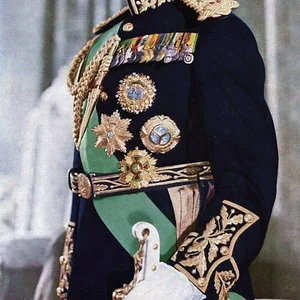
Haile Selassie
1892 — 1975
The last emperor of Ethiopia (1930-1974), he modernized his country and resisted the Italian Fascist invasion. A messianic figure of the Rastafari movement, he was overthrown by a military coup in 1974.
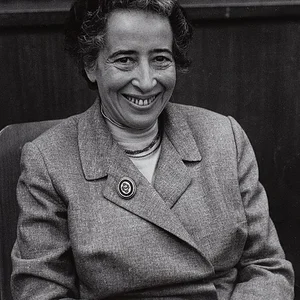
Hannah Arendt
1906 — 1975
German-born American philosopher (1906–1975), Hannah Arendt is one of the most influential thinkers of the 20th century. A refugee in the United States after fleeing Nazism, she developed a critical analysis of totalitarianism, political violence, and the human condition in the modern world.
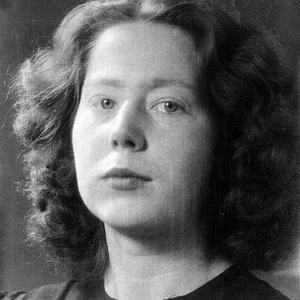
Hannie Schaft
1920 — 1945
Dutch resistance fighter during the Nazi occupation of the Netherlands. Nicknamed “the girl with the red hair,” she took part in sabotage operations and the execution of collaborators before being arrested and shot at the age of 24, three weeks before the liberation.
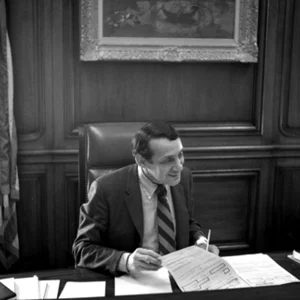
Harvey Milk
1930 — 1978
Harvey Milk was an American politician, the first openly gay person elected to a major public office in California. As a San Francisco city supervisor, he became a leading figure in the fight for LGBT rights before being assassinated in 1978.
Hazel Scott
1920 — 1981
Jazz pianist and singer of Trinidadian and American descent, a virtuoso known for her arrangements blending classical music and swing. A star of nightclubs and the silver screen, she was also a civil rights activist who refused to perform for segregated audiences.
Helmut Kohl
1930 — 2017
German statesman, Chancellor of the Federal Republic of Germany from 1982 to 1998. The architect of German reunification in 1990, he was also a passionate advocate of European integration and the euro.
Helmut Schmidt
1918 — 2015
German statesman and Social Democrat (SPD), he served as Chancellor of the Federal Republic of Germany from 1974 to 1982. A pragmatist, he defined his tenure through his handling of economic crises and domestic terrorism.
Hiram Bingham
1875 — 1956
American explorer and politician (1875–1956), he rediscovered the Inca site of Machu Picchu in 1911, perched in the Peruvian Andes. A professor at Yale, he helped bring this lost city to the attention of the entire world.
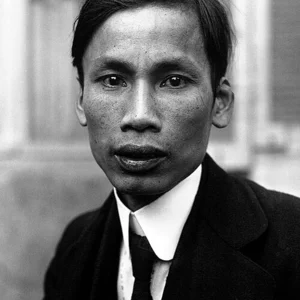
Ho Chi Minh
Vietnamese revolutionary and statesman, founder of the Indochinese Communist Party and later of the Democratic Republic of Vietnam. A leading figure in the anti-colonial struggle against France and then the United States, he embodies the independence and reunification of Vietnam.
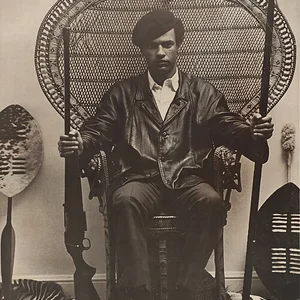
Huey P. Newton
1942 — 1989
African-American activist, co-founder of the Black Panther Party in 1966 with Bobby Seale. A theorist of black nationalism and armed self-defense, he became a major figure in the struggle for civil rights and against police violence in the United States.
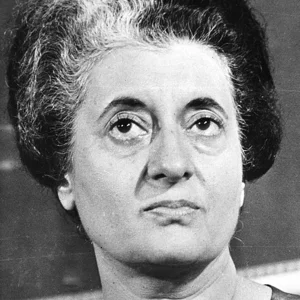
Indira Gandhi
1917 — 1984
Indira Gandhi (1917-1984) was the first female Prime Minister of India, serving from 1966 to 1977 and again from 1980 to 1984. The daughter of Jawaharlal Nehru, she left a lasting mark on history through her nationalization policies, her leadership during the 1971 war, and her authoritarian rule during the state of emergency. She was assassinated by her own bodyguards in 1984.
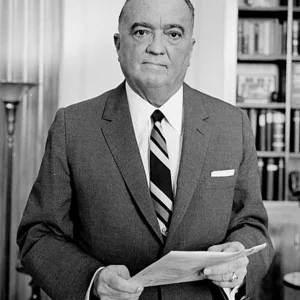
J. Edgar Hoover
1895 — 1972
J. Edgar Hoover was the first director of the Federal Bureau of Investigation (FBI), which he led from 1924 until his death in 1972. A powerful and controversial figure, he modernized the American federal police while conducting intrusive political surveillance of numerous citizens and activists.

Jacques Bonsergent
1912 — 1940
A French civil engineer, Jacques Bonsergent was the first Parisian civilian executed by the Germans during the Occupation, on December 23, 1940. His execution, following a scuffle with German soldiers, made him a symbol of passive resistance and martyrdom.
Jacques Chirac
1932 — 2019
French statesman, President of the Republic from 1995 to 2007. A major figure of the Gaullist right, he was also Prime Minister and Mayor of Paris over a long political career.
Jacques Rancière
1940 — ?
Jacques Rancière is a French philosopher born in 1940, a former student of Althusser from whom he later distanced himself. A thinker of emancipation, the equality of intelligences, and the distribution of the sensible, he brings together political philosophy and aesthetics.
Jawaharlal Nehru
1889 — 1964
Prime Minister of independent India from 1947 to 1964, Nehru was one of the architects of independence alongside Gandhi. Architect of the modern Indian state, he embodied the Non-Aligned Movement during the Cold War.
Jean Perrin
1870 — 1942
French physicist (1870–1942), he experimentally demonstrated the existence of atoms through the study of Brownian motion. Winner of the 1926 Nobel Prize in Physics, he founded the CNRS in 1939.
Jean Zay
1904 — 1944
French lawyer and politician (1904–1944), Minister of National Education and Fine Arts under the Popular Front from 1936 to 1939. A Resistance member arrested by Vichy, he was assassinated by the Milice in 1944. Inducted into the Panthéon in 2015.
Jeanne Levylier
Jeanne Levylier, known as Janot, was the third wife of Léon Blum, the French socialist statesman. She voluntarily joined him in deportation and married him at the Buchenwald concentration camp in 1943.
Jimmy Carter
1924 — 2024
American statesman, 39th President of the United States from 1977 to 1981. A Democrat from Georgia, he remained famous for his diplomatic work and humanitarian commitment after his presidency, crowned by the Nobel Peace Prize in 2002.
John F. Kennedy
1917 — 1963
President of the United States from 1961 to 1963, John F. Kennedy embodies the political modernity of the 20th century. His term was marked by critical moments of the Cold War, notably the Cuban Missile Crisis, and by his commitment to civil rights before his assassination in Dallas.
John Glenn
1921 — 2016
John Glenn was the first American to orbit the Earth on February 20, 1962, aboard the Friendship 7 capsule. A military pilot and Korean War hero, he later became a senator from Ohio and returned to space in 1998 at age 77.
John Paul II
1920 — 2005
Polish pope from 1978 to 2005, the first non-Italian pope in more than four centuries. A major figure of the 20th century, he played a role in the fall of communism in Eastern Europe and left his mark on the Catholic Church through his very numerous travels.
John Rawls
1921 — 2002
John Rawls was an American philosopher, one of the most influential of the 20th century in political and moral philosophy. His Theory of Justice (1971) profoundly renewed thinking about social justice and political liberalism.
Jomo Kenyatta
1893 — 1978
Kenyan statesman, a leading figure of Pan-Africanism and the anti-colonial struggle, he became the first Prime Minister and then the first President of independent Kenya. He led the country from independence in 1963 until his death in 1978.
José Vasconcelos
1881 — 1959
Mexican philosopher, politician, and writer (1882–1959), a towering figure of post-Revolutionary Mexico. As Secretary of Education, he launched a sweeping national literacy program and became the patron of the muralist movement. Author of “La Raza Cósmica,” he developed a theory of a mestizo Latin American identity.
Julius Nyerere
1922 — 1999
Tanzanian statesman, the first president of Tanzania from 1964 to 1985. A major figure of Pan-Africanism and decolonization, he sought to build an African socialism founded on village solidarity (ujamaa).
Jürgen Habermas
1929 — 2026
German philosopher and sociologist, a major figure of the second generation of the Frankfurt School. A theorist of communicative action and the public sphere, he is one of the most influential thinkers in contemporary political philosophy.
Kim Campbell
1947 — ?
Kim Campbell is a Canadian politician, the first woman to hold the office of Prime Minister of Canada in 1993. A member of the Progressive Conservative Party, she led the country for a few months before being defeated in the federal election.
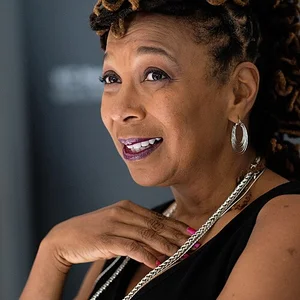
Kimberlé Crenshaw
1959 — ?
American legal scholar and theorist born in 1959, she coined the concept of intersectionality in 1989, showing how racial, gender, and class discrimination intersect and mutually reinforce one another. A professor at UCLA and Columbia, she is one of the founders of Critical Race Theory.
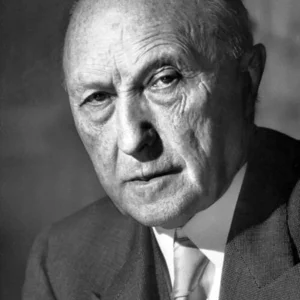
Konrad Adenauer
1876 — 1967
German statesman, first Chancellor of the Federal Republic of Germany (West Germany) from 1949 to 1963. A major figure in the rebuilding of post-war Germany, he anchored his country in the Western bloc and worked toward Franco-German reconciliation.
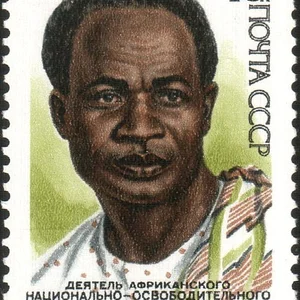
Kwame Nkrumah
1909 — 1972
A Ghanaian statesman, Kwame Nkrumah led the Gold Coast to independence and became the first president of Ghana in 1957. A leading figure of Pan-Africanism, he championed the unity of the African continent before being overthrown by a coup d'état in 1966.
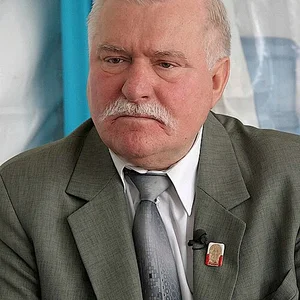
Lech Wałęsa
1943 — ?
An electrician at the Gdańsk shipyards who became the leader of the independent trade union Solidarność, the first free trade union in the Soviet bloc. A major figure in the fall of communism in Poland, he was elected the first president of the Polish Republic by universal suffrage (1990-1995).
Lee Kuan Yew
1923 — 2015
Singaporean statesman, Prime Minister of Singapore from 1959 to 1990. The founder of modern Singapore, he transformed a small, poor city-state into one of the most prosperous economies in Asia.
Lenin
1870 — 1924
Russian revolutionary and statesman, theorist of Marxism. He led the October Revolution of 1917 and founded the USSR, the first communist state in history, of which he became the first head of government.
Léo Lagrange
1900 — 1940
A French socialist politician, Léo Lagrange was appointed Under-Secretary of State for Sports and Leisure in the Popular Front government in 1936. He worked to make sport and holidays accessible to the working classes, before dying in combat in June 1940.
Leon Trotsky
1879 — 1940
Russian revolutionary, Marxist theorist, and organizer of the Red Army, Leon Trotsky was one of the chief architects of the October Revolution of 1917 alongside Lenin. Ousted from power by Stalin and later exiled, he continued his political struggle until his assassination in Mexico City in 1940.
Leonid Brezhnev
1906 — 1982
Soviet statesman, General Secretary of the Communist Party of the Soviet Union from 1964 to 1982. His long rule, which followed Khrushchev's, is associated with the “stagnation” of the USSR and with the détente and subsequent renewed tensions of the Cold War.
Léopold Sédar Senghor
1906 — 2001
Senegalese poet, writer, and statesman (1906–2001), Senghor was the first president of independent Senegal. A leading theorist of the Négritude movement, he championed a humanist vision of African culture and left a lasting mark on twentieth-century Francophone literature.
Lillian Hellman
1905 — 1984
American playwright and screenwriter (1905–1984), Lillian Hellman made her mark on Broadway with politically engaged plays denouncing social injustice and fascism. She became an iconic figure of resistance to McCarthyism by refusing to name her colleagues before the HUAC committee.
Lowitja O'Donoghue
1932 — 2024
An Australian activist for Indigenous peoples' rights, Lowitja O'Donoghue was the first Aboriginal woman to lead ATSIC (the Aboriginal and Torres Strait Islander Commission). A trained nurse, she dedicated her life to defending civil rights and promoting reconciliation between Indigenous and non-Indigenous Australians.
Lucie Aubrac
1912 — 2007
A French Resistance fighter, she organized the escape of her husband Raymond Aubrac from a Lyon prison on October 21, 1943. A committed history teacher, she became after the war a symbol of the Resistance and spent her entire life working to keep its memory alive.
Lyndon B. Johnson
1908 — 1973
American statesman, 36th President of the United States (1963-1969) following the assassination of John F. Kennedy. He pushed through major laws against racial segregation but became bogged down in the Vietnam War.
MacArthur
American general, one of the great military figures of the United States in the 20th century. Allied commander-in-chief in the Pacific during the Second World War, he then led the occupation of Japan and afterward the UN forces at the start of the Korean War.
Mahmoud Darwish
1941 — 2008
Mahmoud Darwish (1941-2008) was a Palestinian poet regarded as the national voice of his people. A major figure of contemporary Arabic poetry, he made exile, the loss of one's land and Palestinian identity the great themes of his work.
Malcolm X
1925 — 1965
Malcolm X (1925-1965), born Malcolm Little, was an African American civil rights activist and a spokesman for the Nation of Islam. An advocate of Black nationalism, he championed the pride and emancipation of Black Americans before evolving toward a more universalist Sunni Islam.
Manmohan Singh
1932 — 2024
Indian economist and statesman, Manmohan Singh served as Prime Minister of India from 2004 to 2014. Architect of the economic reforms of the 1990s, he profoundly modernized the Indian economy.
Marc Bloch
1886 — 1944
French historian and co-founder of the Annales School with Lucien Febvre, Marc Bloch revolutionized historical method by prioritizing social and economic structures over event-driven history. A resistance fighter from the very start, he was arrested by the Gestapo and shot in 1944.
Marcel Sembat
1862 — 1922
Socialist deputy for the Seine and close associate of Jean Jaurès, Marcel Sembat served as Minister of Public Works in the Sacred Union government (1914–1916). A committed pacifist, he left a political legacy shaped by his defense of socialism and his polemical 1913 essay.
Marcus Garvey
1887 — 1940
Marcus Garvey (1887-1940) was a Jamaican activist and founder of the Universal Negro Improvement Association (UNIA). A theorist of Pan-Africanism and the “Back to Africa” movement, he was one of the most influential promoters of Black pride and Black nationalism in the early 20th century.
Margaret Thatcher
1925 — 2013
Margaret Thatcher, the first female Prime Minister of the United Kingdom (1979–1990), transformed the British economy through radical free-market policies. Nicknamed the “Iron Lady,” she privatized state-owned enterprises, took on the trade unions, and played a major role in ending the Cold War alongside Reagan and Gorbachev.

Maria Sharapova
1987 — ?
A Russian tennis player born in 1987, Maria Sharapova is one of the most decorated athletes of her generation. A former world number 1, she won five Grand Slam titles before retiring in 2020.
Mario Vargas Llosa
1936 — 2025
Peruvian writer, a major figure of the Latin American “Boom” and winner of the 2010 Nobel Prize in Literature. A novelist, essayist and engaged intellectual, he also ran for the presidency of Peru in 1990.
Marsha P. Johnson
1945 — 1992
A transgender African American activist, Marsha P. Johnson was one of the iconic figures of the Stonewall uprising in 1969. Co-founder of STAR, she spent her entire life fighting for the rights of LGBT+ people and the homeless.
Martin Luther King
1929 — 1968
African-American Baptist pastor (1929–1968) and major leader of the civil rights movement in the United States. He championed nonviolence and racial equality, becoming one of the most influential figures of the 20th century before his assassination.
Marx Dormoy
1888 — 1941
French socialist politician (1888–1941), Minister of the Interior in Léon Blum's government under the Popular Front. He was assassinated by the Cagoule, a clandestine fascist organization.
Maya Angelou
1928 — 2014
African-American poet, memoirist, and activist (1928–2014), Maya Angelou is best known for her autobiography I Know Why the Caged Bird Sings. A committed figure in the civil rights movement alongside Martin Luther King Jr., she became one of the most important voices in 20th-century American literature.
Michelle Bachelet
1951 — ?
Michelle Bachelet, born in 1951 in Chile, is a physician and politician who became the first female president of Chile (2006–2010, then 2014–2018). A human rights activist, she also led UN Women and the UN High Commissioner for Human Rights.
Miep Gies
1909 — 2010
Miep Gies (1909-2010) was a Dutch office worker of Austrian origin who hid Anne Frank and her family in the Secret Annex in Amsterdam from 1942 to 1944. After their arrest by the Gestapo, she gathered Anne Frank's notebooks and kept them safe, making their worldwide publication possible.
Miguel Primo de Rivera
1870 — 1930
A Spanish general born in 1870, he established a dictatorship in Spain from 1923 to 1930 following a coup d'état. His authoritarian regime, backed by King Alfonso XIII, preceded the political crisis that led to the Second Spanish Republic.
Missak Manouchian
1906 — 1944
Armenian poet and Communist resistance fighter, Missak Manouchian led the FTP-MOI group in Paris during the Occupation. Arrested by the Gestapo, he was featured on the Affiche rouge by Nazi propaganda before being shot at Mont-Valérien on February 21, 1944.
Mongo Beti
1932 — 2001
Mongo Beti (1932-2001) was a Cameroonian writer and teacher, a major figure of anticolonial French-language African literature. A committed novelist and essayist, he denounced colonialism and then the excesses of postcolonial regimes.
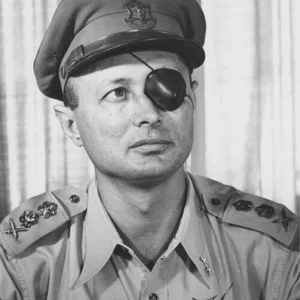
Moshe Dayan
1915 — 1981
Moshe Dayan (1915-1981) was an Israeli general and politician, famous for the black patch over his left eye. As Chief of Staff and later Minister of Defense, he embodied Israel's military victories during the Six-Day War (1967).
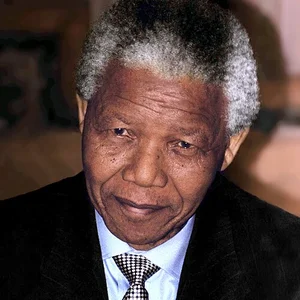
Nelson Mandela
1918 — 2013
South African political leader (1918–2013), founding figure of the struggle against apartheid and first Black president of South Africa. Imprisoned for 27 years for his revolutionary activities, he became a symbol of reconciliation and democratic transition in his country.
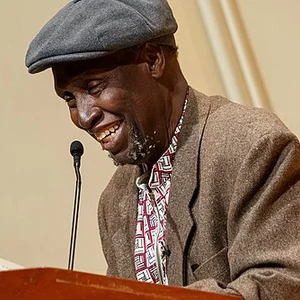
Ngũgĩ wa Thiong'o
1938 — 2025
Major Kenyan writer, novelist, playwright, and essayist. First published in English under the name James Ngugi, he chose, from the late 1970s onward, to write in Kikuyu and Swahili in order to decolonize African literatures. A central figure of postcolonial thought.
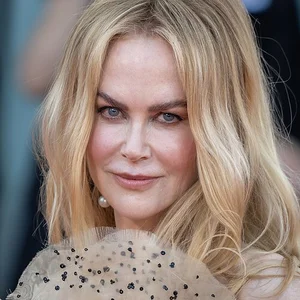
Nicole Kidman
1967 — ?
An Australian-American actress born in 1967, Nicole Kidman is one of Hollywood's greatest stars. She won the Academy Award in 2003 for The Hours, and has left her mark on world cinema through the range of her roles and her artistic commitment.
Nikita Khrushchev
1894 — 1971
Soviet leader from 1953 to 1964, Khrushchev succeeded Stalin and launched a policy of de-Stalinization. A central figure of the Cold War, he confronted the United States during the Cuban Missile Crisis of 1962.
Octavio Paz
1914 — 1998
Octavio Paz (1914-1998) was a Mexican poet, essayist, and diplomat who won the Nobel Prize in Literature in 1990. A major figure in Hispano-American letters, he blended reflection on Mexican identity, Surrealism, and critical political thought.
Olof Palme
1927 — 1986
Swedish social democratic statesman, twice Prime Minister of Sweden. A major figure of the European left and of Third World solidarity, he was assassinated on a Stockholm street in 1986, a crime that long remained unsolved.
Pancho Villa
1878 — 1923
A Mexican revolutionary leader, Pancho Villa was one of the key figures of the Mexican Revolution (1910-1920). At the head of his famous Division of the North, he fought against the regimes of Porfirio Díaz and then Victoriano Huerta before leading an armed raid against the town of Columbus, New Mexico, in 1916.
Patrice Lumumba
1925 — 1961
Patrice Lumumba was a Congolese politician and a leading figure in the independence of the Belgian Congo. As the first head of government of the Democratic Republic of the Congo in 1960, he became a symbol of African anti-colonialism before his assassination in 1961.
Paul Langevin
1872 — 1946
French physicist (1872–1946), student of Pierre Curie and friend of Einstein, pioneer of the theory of magnetism and ultrasonics. A committed philosopher of science, he was a passionate anti-fascist activist and defender of secular public education.
Paul Painlevé
1863 — 1933
A renowned French mathematician, Paul Painlevé (1863–1933) is known for his work on differential equations. He entered politics and served twice as President of the Council in 1917 and 1925, as well as Minister of War.
Paul Vaillant-Couturier
1892 — 1937
French writer, journalist, and politician (1892–1937), co-founder of the French Communist Party and editor-in-chief of L'Humanité. A World War I veteran, he was a leading figure of pacifism and the workers' left during the interwar period.
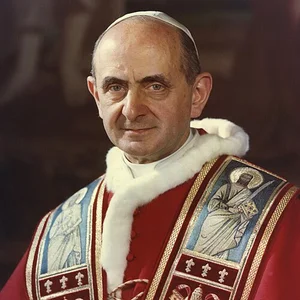
Paul VI
1897 — 1978
262nd pope of the Catholic Church from 1963 to 1978, Paul VI completed the Second Vatican Council and worked to modernize the Church and to foster dialogue with the contemporary world.
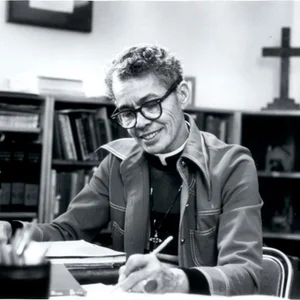
Pauli Murray
1910 — 1985
Lawyer, civil rights activist, and African American feminist, Pauli Murray fought simultaneously against racial segregation and gender discrimination. In 1977, she became the first Black woman ordained as a priest in the American Episcopal Church.
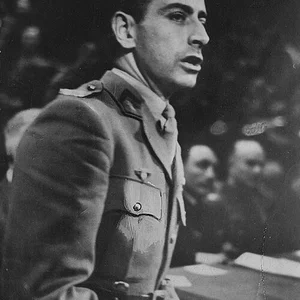
Pierre Brossolette
1903 — 1944
Journalist, politician, and French resistance fighter (1903–1944), Pierre Brossolette was one of the principal organizers of the internal Resistance in liaison with Free France. Arrested by the Gestapo, he took his own life to avoid betraying his comrades under torture.
Pierre Georges (Colonel Fabien)
A French communist militant and resistance fighter, he became famous for shooting German officer candidate Alfons Moser at a Paris Métro station on 21 August 1941, the first armed attack against the Nazi occupiers in Paris. He went on to fight with the FTP and later commanded a Free French brigade, dying in combat in Alsace in December 1944.
Pierre Mendès France
1907 — 1982
French statesman, a figure of the radical left and of moral rigor in politics. President of the Council in 1954-1955, he ended the Indochina War and set Tunisia on the path to autonomy.
Pius XII
1876 — 1958
260th pope of the Catholic Church (1939–1958), Pius XII led the Church through the Second World War and the Cold War. His attitude toward the Holocaust remains controversial to this day.
Pol Pot
1925 — 1998
Pol Pot, whose real name was Saloth Sâr, was a Cambodian statesman and revolutionary, general secretary of the Communist Party of Kampuchea. As leader of the Khmer Rouge, he ruled Cambodia from 1975 to 1979 and bears responsibility for the Cambodian genocide, which killed around 1.7 million people.
Pratibha Patil
1934 — ?
Pratibha Patil is an Indian politician born in 1934 who became the first female President of India from 2007 to 2012. Trained as a lawyer, she was active within the Indian National Congress party and held numerous government positions before reaching the country's highest office.
Ralph Nader
1934 — ?
Ralph Nader is an American lawyer and activist born in 1934, a pioneer of consumer advocacy. His fight for automobile safety transformed industrial regulation in the United States. He also ran for president several times.
René Cassin
1887 — 1976
French jurist and statesman, René Cassin was one of the principal drafters of the Universal Declaration of Human Rights (1948). A resistance fighter from the very first days alongside General de Gaulle, he was awarded the Nobel Peace Prize in 1968.
Richard Nixon
1913 — 1994
American statesman, 37th President of the United States from 1969 to 1974. He ended the Vietnam War and reopened relations with China, but resigned in the wake of the Watergate scandal.
Robert Badinter
1928 — 2024
French lawyer, jurist, and politician (1928–2024), Robert Badinter is renowned for championing the abolition of the death penalty in France in 1981 as Minister of Justice (Garde des Sceaux). A lifelong defender of human rights, he served as President of the Constitutional Council from 1986 to 1995.
Robert Mugabe
1924 — 2019
Robert Mugabe (1924-2019) was a Zimbabwean statesman and a leading figure in the struggle for independence against the Rhodesian regime. As Prime Minister and then President of Zimbabwe for nearly four decades, he led the country from 1980 to 2017, gradually shifting from a hero of liberation into an authoritarian ruler.
Robert Nozick
1938 — 2002
American philosopher, a major figure in 20th-century political philosophy. A professor at Harvard, he was the great theorist of libertarianism and the chief opponent of John Rawls.
Ronald Reagan
1911 — 2004
Ronald Reagan was the 40th President of the United States (1981-1989). A former Hollywood actor who became Governor of California, he embodied American conservatism and played a major role in the final years of the Cold War.
Rosa Parks
1913 — 2005
Rosa Parks was an African American civil rights activist, born in 1913 in Alabama. She became famous in 1955 for refusing to give up her seat to a white passenger on a bus in Montgomery — an act of civil disobedience that sparked the Montgomery Bus Boycott and helped accelerate the end of racial segregation in the United States.
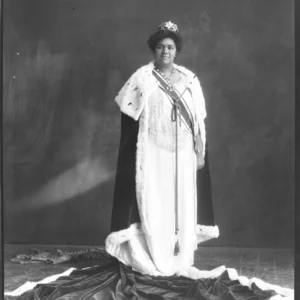
Salote Tupou III
1900 — 1965
Salote Tupou III reigned over Tonga from 1918 to 1965, becoming one of the most beloved figures in the South Pacific. At the coronation of Elizabeth II in 1953, she caused a sensation in London by braving the rain in an open carriage, winning the hearts of people worldwide. A great poet and guardian of Tongan traditions, she modernized her kingdom while preserving its cultural identity.
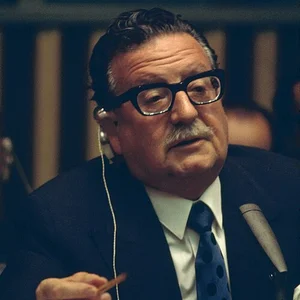
Salvador Allende
1908 — 1973
Salvador Allende (1908-1973) was a Chilean statesman and trained physician. As the first democratically elected Marxist president in Latin America in 1970, he pursued a socialist agenda before being overthrown and dying during the military coup led by General Pinochet on 11 September 1973.
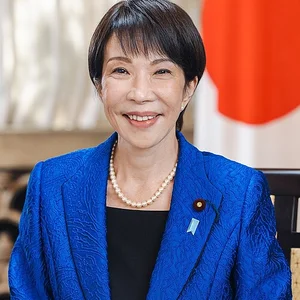
Sanae Takaichi
1961 — ?
Japanese politician born in 1961, member of the Liberal Democratic Party. She has held several ministerial positions in Japan, including Minister of Internal Affairs and Communications. Known for her conservative views and interest in Japanese pop culture.
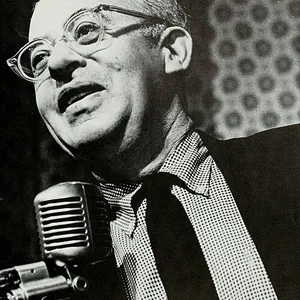
Saul Alinsky
1909 — 1972
Saul Alinsky was an American sociologist and community activist, considered the founder of modern community organizing. He developed methods of collective action to empower disadvantaged populations in urban neighborhoods.
Septima Clark
An African American educator nicknamed the “mother of the civil rights movement,” she founded the Citizenship Schools in the segregationist South to teach Black people to read and help them register to vote.
Simone Veil
1927 — 2017
French politician (1927-2017), Holocaust survivor, and Minister of Health under Valéry Giscard d'Estaing. She is celebrated for championing the law decriminalizing abortion in France in 1975, a landmark victory for women's rights.
Sirimavo Bandaranaike
1916 — 2000
Sirimavo Bandaranaike was the first woman to become head of government in the world, elected Prime Minister of Ceylon in 1960. The widow of assassinated Prime Minister Solomon Bandaranaike, she succeeded him as leader of the Sri Lanka Freedom Party and served in the role three times.
Sonia Gandhi
1946 — ?
Born Edvige Antonia Albina Màino in 1946 in Italy, Sonia Gandhi married Rajiv Gandhi in 1968 and became an Indian citizen. Following her husband's assassination in 1991, she took over the leadership of the Indian National Congress in 1998 and led the UPA coalition to victory in 2004, declining the position of Prime Minister.
Sri Aurobindo
1872 — 1950
Sri Aurobindo is an Indian philosopher, poet, and spiritual master. First a militant in the Indian nationalist movement against British rule, he later withdrew to Pondicherry where he developed integral yoga and founded a celebrated ashram.
Steve Biko
1946 — 1977
Steve Biko was a South African anti-apartheid activist, founder of the Black Consciousness Movement in the 1970s. A leading figure in the emancipation of black South Africans, he died in 1977 from the injuries inflicted on him in police custody, becoming a global symbol of the struggle against apartheid.
Stokely Carmichael
1941 — 1998
Stokely Carmichael was an African American civil rights activist and a major figure of the Black Power movement in the 1960s. A leader of the SNCC and later close to the Black Panthers, he popularized the slogan “Black Power” and radicalized the struggle for racial equality in the United States.
Suharto
1921 — 2008
An Indonesian general and statesman, Suharto was the second president of Indonesia from 1967 to 1998. He came to power after a bloody anti-communist purge and established an authoritarian regime known as the “New Order” before being toppled by the Asian financial crisis.
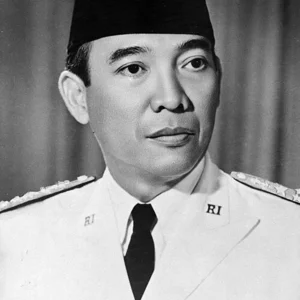
Sukarno
1901 — 1970
Indonesian statesman and leader of the nationalist movement against Dutch colonization. He proclaimed Indonesia's independence in 1945 and became its first president. A major figure of the Third World and the Non-Aligned Movement.
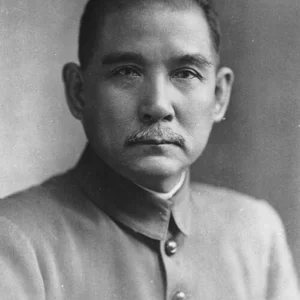
Sun Yat-sen
1866 — 1925
Chinese revolutionary and statesman, founder of the Kuomintang nationalist party and first president of the Republic of China in 1912. Regarded as the “father of the nation” by the Chinese for his role in overthrowing the Manchu Qing dynasty.
Sylvia Rivera
1951 — 2002
An American Latina trans activist, Sylvia Rivera took part in the Stonewall riots of 1969. She co-founded STAR (Street Transvestite Action Revolutionaries) to help homeless trans youth and LGBTQ+ people.
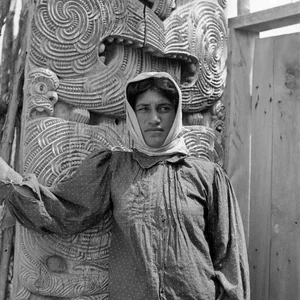
Te Puea Herangi
1883 — 1952
Māori princess from New Zealand (1883–1952), granddaughter of King Tāwhiao, she devoted her life to the cultural and political revival of her people. She resisted the conscription of Māori during World War I and built the village of Tūrangawaewae, a symbol of Māori dignity.
Theodore Roosevelt
1858 — 1919
American statesman, 26th President of the United States (1901-1909). A leading figure of progressivism, he championed the regulation of the great industrial trusts and was a pioneer of nature conservation in the United States.
Theresa May
1956 — ?
Theresa May (born 1956) is a British politician and member of the Conservative Party. She served as Prime Minister of the United Kingdom from 2016 to 2019, succeeding David Cameron following the Brexit referendum.
Thomas Sankara
1949 — 1987
Burkinabè officer and revolutionary, president of Burkina Faso from 1983 to 1987. A figure of Pan-Africanism and anti-imperialism, he renamed Upper Volta “Burkina Faso” (“land of upright people”) and led radical reforms before being assassinated during a coup d'état.
Tojo
1884 — 1948
Japanese general and statesman, Prime Minister of Japan from 1941 to 1944. A leading figure of Japanese militarism, he ordered the attack on Pearl Harbor, which brought Japan into war against the United States. Tried as a Class A war criminal, he was sentenced to death and executed in 1948.
Valéry Giscard d'Estaing
1926 — 2020
French statesman, President of the Republic from 1974 to 1981. A liberal reformer at the start of his term, he modernized French society before being defeated by François Mitterrand. He was also a key architect of European integration.
Vandana Shiva
1952 — ?
Vandana Shiva (born 1952) is an Indian physicist, philosopher, and environmental activist. Founder of the Navdanya movement, she champions biodiversity and farmers' rights while opposing GMOs and neoliberal globalization. A leading figure in ecofeminism, she received the Right Livelihood Award (the Alternative Nobel Prize) in 1993.
Vigdís Finnbogadóttir
1930 — ?
Vigdís Finnbogadóttir was elected President of Iceland in 1980, becoming the first woman in the world to be democratically elected head of state. Re-elected four times, she served until 1996 and became a global figure in feminism and cultural diplomacy.
Vladimir Lenin
Russian revolutionary and Marxist theorist (1870–1924), Lenin led the Bolshevik Revolution of October 1917 and founded the Soviet Union. He developed Leninism, an adaptation of Marxism to Russian conditions.
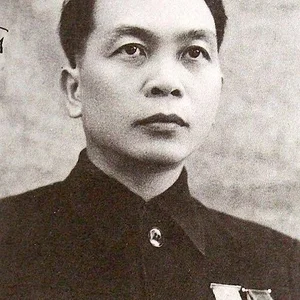
Vo Nguyen Giap
1911 — 2013
Vietnamese general and politician, the principal military leader of the Việt Minh and later of the North Vietnamese army. The architect of the victory at Diên Biên Phu against France in 1954, he was one of the strategists of both the war of independence and the Vietnam War.
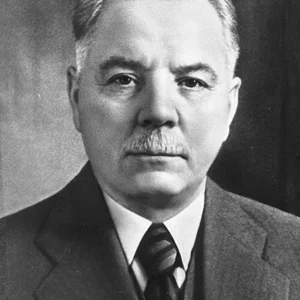
Voroshilov
1881 — 1969
Soviet marshal and statesman, one of the first Marshals of the Soviet Union appointed in 1935. A close associate of Stalin, he served as People's Commissar for Defence and later as the nominal head of the Soviet state from 1953 to 1960.
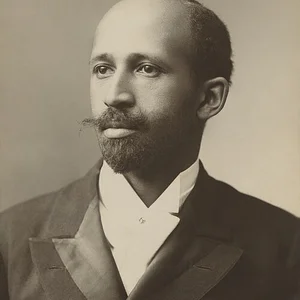
W.E.B. Du Bois
1868 — 1963
William Edward Burghardt Du Bois (1868-1963) was an African American sociologist, historian, and civil rights activist. The first African American to earn a doctorate from Harvard, he was a leading theorist in the fight against racial segregation and a co-founder of the NAACP in 1909.
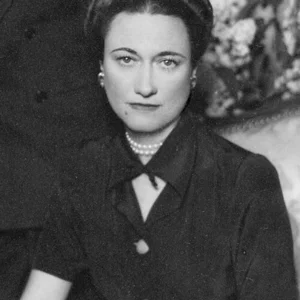
Wallis Simpson
1896 — 1986
American socialite who became Duchess of Windsor. Her union with King Edward VIII triggered a major constitutional crisis in 1936, with the monarch abdicating in order to marry her.
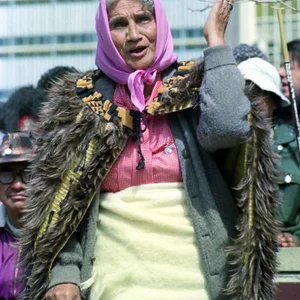
Whina Cooper
1895 — 1994
A New Zealand Māori activist, Whina Cooper dedicated her life to defending her people's land rights. In 1975, at the age of 80, she led the great Māori Land March from Te Hapua to Wellington. Regarded as the 'Mother of the Nation' of the Māori people, she remains a symbol of peaceful resistance.
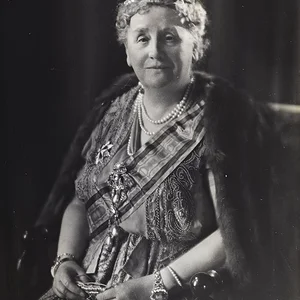
Wilhelmine
1880 — 1962
Queen of the Netherlands from 1890 to 1948, Wilhelmine embodied the national resistance during the Nazi occupation. Taking refuge in London, she led the government in exile and kept the morale of the Dutch people alive through her radio broadcasts.
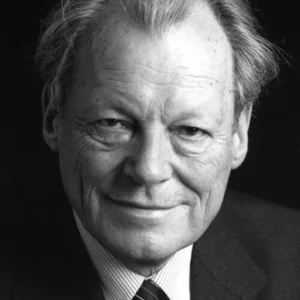
Willy Brandt
1913 — 1992
German statesman, Chancellor of the Federal Republic of Germany (FRG) from 1969 to 1974. A leading figure of social democracy, he is famous for his policy of rapprochement with the Eastern Bloc (Ostpolitik) and received the Nobel Peace Prize in 1971.
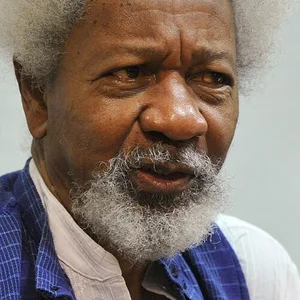
Wole Soyinka
1934 — ?
Wole Soyinka is a Nigerian writer, playwright, and poet born in 1934. The first African author to receive the Nobel Prize in Literature in 1986, he is a major figure in the defense of human rights and freedom in Africa.
Woodrow Wilson
1856 — 1924
Woodrow Wilson (1856-1924) was the 28th President of the United States, in office from 1913 to 1921. An academic turned statesman, he led his country into the First World War and championed a vision of international order founded on cooperation between nations.
Youssou N'Dour
1959 — ?
Youssou N'Dour is a Senegalese singer and composer born in 1959, a major figure in African music and a popularizer of mbalax. Having become a global star, he also entered politics, holding several ministerial positions in Senegal.
Yvette Roudy
1929 — ?
French politician, feminist activist, and France's first Minister for Women's Rights (1981–1986) under François Mitterrand. She passed legislation against sexism and strengthened the Veil law on abortion.
Zhou Enlai
1898 — 1976
Zhou Enlai was the first Premier of the People's Republic of China, from its founding in 1949 until his death in 1976. A skilled diplomat and loyal companion of Mao Zedong, he played a central role in Chinese foreign policy and tempered some of the excesses of the Cultural Revolution.
Zhukov
1896 — 1974
Marshal of the Soviet Union and the leading military commander of the Red Army during the Second World War. Victorious in decisive battles against Nazi Germany, he led the final assault on Berlin in 1945.
21st Century(29)
Ai Weiwei
1957 — ?
Ai Weiwei is a Chinese visual artist and activist, a leading figure in contemporary art. Known for his monumental installations and politically engaged works, he denounces human rights abuses and censorship by the Chinese regime, which earned him surveillance, imprisonment, and exile.
Angela Merkel
1954 — ?
A physicist turned German politician, Angela Merkel led Germany as Chancellor from 2005 to 2021. The first woman to hold this position, she is one of the most influential political figures in contemporary European history.
Barack Obama
1961 — ?
American statesman, 44th President of the United States from 2009 to 2017. The first African American elected to the presidency, he left a lasting mark on the political history of the United States and received the Nobel Peace Prize in 2009.
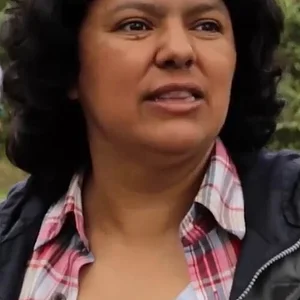
Berta Cáceres
1971 — 2016
Honduran environmental activist of Lenca origin, co-founder of COPINH (Civic Council of Popular and Indigenous Organizations of Honduras). Winner of the Goldman Environmental Prize in 2015, she was assassinated in 2016 for her fight against the Agua Zarca dam.
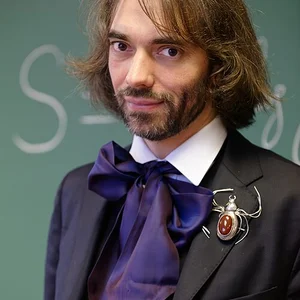
Cédric Villani
1973 — ?
French mathematician born in 1973, awarded the Fields Medal in 2010 for his work on the Boltzmann equation and optimal transport. Director of the Institut Henri-Poincaré, then a member of the National Assembly.
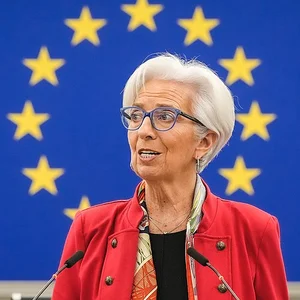
Christine Lagarde
1956 — ?
French business lawyer and politician, the first woman to head the International Monetary Fund (2011) and later the European Central Bank (2019). She had previously served as France's Minister of the Economy and Finance.
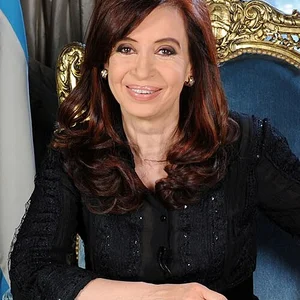
Cristina Kirchner
1953 — ?
Argentine lawyer and politician, she was the first woman elected president of Argentina (2007–2015). Wife of President Néstor Kirchner, she embodied Kirchnerism, a left-wing Peronist movement, before becoming vice-president (2019–2023).
Dilma Rousseff
1947 — ?
Brazilian economist and politician, she became in 2011 the first woman president of Brazil. A member of the Workers' Party (PT), she was removed from office by impeachment in 2016 amid an economic and political crisis.
Greta Thunberg
2003 — ?
Swedish climate activist, born in 2003. In 2018 she launched a school strike in front of the Swedish Parliament, inspiring the global Fridays for Future movement. A symbol of youth commitment in the fight against climate change.
Jacinda Ardern
1980 — ?
Jacinda Ardern is a New Zealand stateswoman who served as Prime Minister of New Zealand from 2017 to 2023. Elected at age 37, she was the world's youngest head of government at the time and the second leader in history to give birth while in office.
Jafar Panahi
1960 — ?
Jafar Panahi is an Iranian filmmaker born in 1960, a major figure in contemporary auteur cinema. A multiple award winner at the great film festivals, he was banned by the regime from making films and from leaving Iran, becoming a symbol of creative freedom.
Janet Yellen
1946 — ?
Janet Yellen is an American economist specializing in the labor market and monetary policy. She chaired the Federal Reserve of the United States from 2014 to 2018, becoming the first woman to hold this position, and later served as Secretary of the Treasury from 2021 to 2025 — again the first woman appointed to this office.
Kamala Harris
1964 — ?
Kamala Harris is an American politician, the first woman, first Black person, and first American of South Asian descent to become Vice President of the United States in 2021. A former Attorney General of California and U.S. Senator, she represents a historic turning point in American political representation.

Leymah Gbowee
Liberian pacifist activist, she led the women's peace movement in Liberia, helping to end the second civil war in 2003. Nobel Peace Prize in 2011.
Loujain al-Hathloul
1989 — ?
Saudi women's rights activist, imprisoned from 2018 to 2021 for demanding the right to drive and gender equality. Her struggle contributed to lifting the driving ban for women in Saudi Arabia.
Manal al-Sharif
1979 — ?
Saudi women's rights activist who rose to international prominence in 2011 after posting a video of herself driving in Saudi Arabia, defying the ban imposed on women. Her arrest sparked a global movement for women's right to drive.
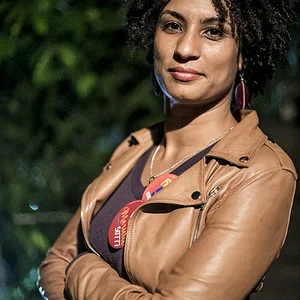
Marielle Franco
1979 — 2018
Brazilian politician, city councillor of Rio de Janeiro, and activist for the rights of Black women and LGBTQ+ people. Assassinated on March 14, 2018, she became a global symbol of the fight against violence against women and racial inequality.
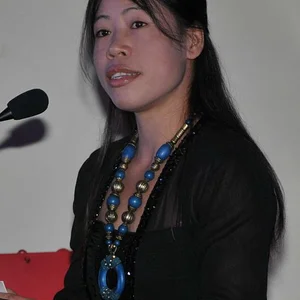
Mary Kom
1982 — ?
Mary Kom is an Indian boxer born in 1983 in the state of Manipur. A six-time amateur world champion and Olympic bronze medalist in 2012, she became an icon of women's sport in India. Nicknamed "Magnificent Mary," she also serves as a member of parliament in the Rajya Sabha.
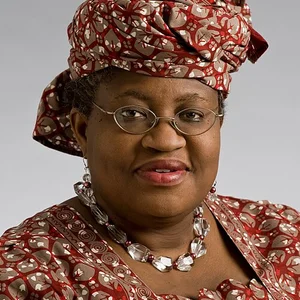
Ngozi Okonjo-Iweala
1954 — ?
Nigerian economist and politician, twice Minister of Finance of Nigeria and Director-General of the World Trade Organization since 2021. She is the first woman and the first African to lead the WTO.
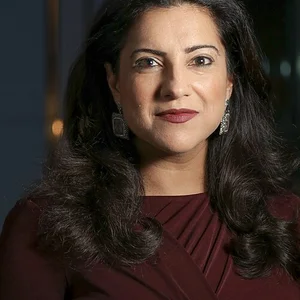
Reshma Saujani
1975 — ?
American lawyer and activist, founder of Girls Who Code in 2012, an organization aimed at closing the gender gap in technology careers. She also ran for the U.S. Congress and advocates for women's inclusion in tech.
Sanna Marin
1985 — ?
Prime Minister of Finland from 2019 to 2023, Sanna Marin became, at the age of 34, one of the youngest heads of government in the world. A member of the Social Democratic Party, she led a gender-equal coalition and steered Finland toward NATO membership in 2022.
Shirin Ebadi
1947 — ?
Iranian lawyer and human rights activist, she is the first Muslim woman to receive the Nobel Peace Prize in 2003. She defends the rights of women, children, and political prisoners in Iran, at the risk of her own freedom.
Slavoj Žižek
1949 — ?
Slovenian philosopher and essayist born in 1949, a major figure of contemporary critical thought. He blends Lacanian psychoanalysis, German idealism (Hegel) and Marxism to analyze ideology, popular culture and globalized capitalism.
Tarja Halonen
1943 — ?
Tarja Halonen is a Finnish stateswoman who served as President of Finland from 2000 to 2012. The first woman to hold this office in her country, she also served as Minister for Foreign Affairs and has been a lifelong advocate for human rights.
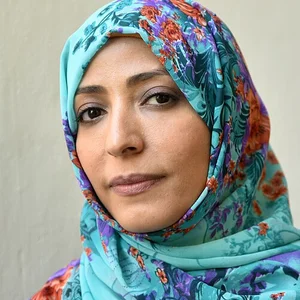
Tawakkol Karman
1979 — ?
Yemeni journalist, human rights activist, and politician, a leading figure of the 2011 uprising against Saleh's regime. In 2011, she became the first Arab woman and the youngest laureate at the time to receive the Nobel Peace Prize.
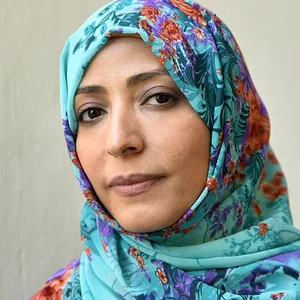
Tawakkul Karman
Yemeni activist for human rights and press freedom, 2011 Nobel Peace Prize laureate. Nicknamed “the mother of the Yemeni revolution”, she played a central role in the Arab Spring in Yemen.

Tsai Ing-wen
1956 — ?
First female president of Taiwan, elected in 2016 and re-elected in 2020. A lawyer by training, she leads the Democratic Progressive Party and defends Taiwanese sovereignty against Chinese pressure.
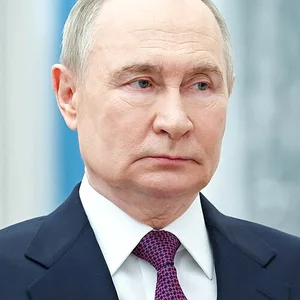
Vladimir Putin
1952 — ?
Russian statesman, President of the Russian Federation since 2000 (with an interlude as Prime Minister from 2008 to 2012). A former KGB officer, he concentrated power, pursued authoritarian policies, and launched the invasion of Ukraine in 2022.
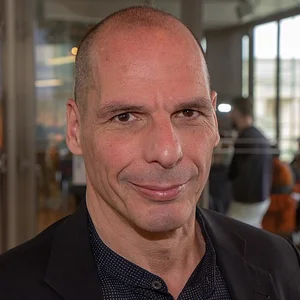
Yanis Varoufakis
1961 — ?
Yánis Varoufákis is a Greek economist and politician, a professor of economics renowned for his work on game theory. He served as Greece's Minister of Finance in 2015, at the heart of the debt negotiations during the eurozone crisis.