 flip
flipSawiq — Rider's Barley and Date Porridge
Sawiq — Rider's Barley and Date Porridge
Why this dish? Before being governor, Amr was a man of long marches: caravans from Mecca, crossing the Sinai at the head of the army toward Egypt. Sawiq — roasted barley flour that is instantly mixed with water or milk — was the fighter's and caravaner's ration, light, imperishable, ready without fire.
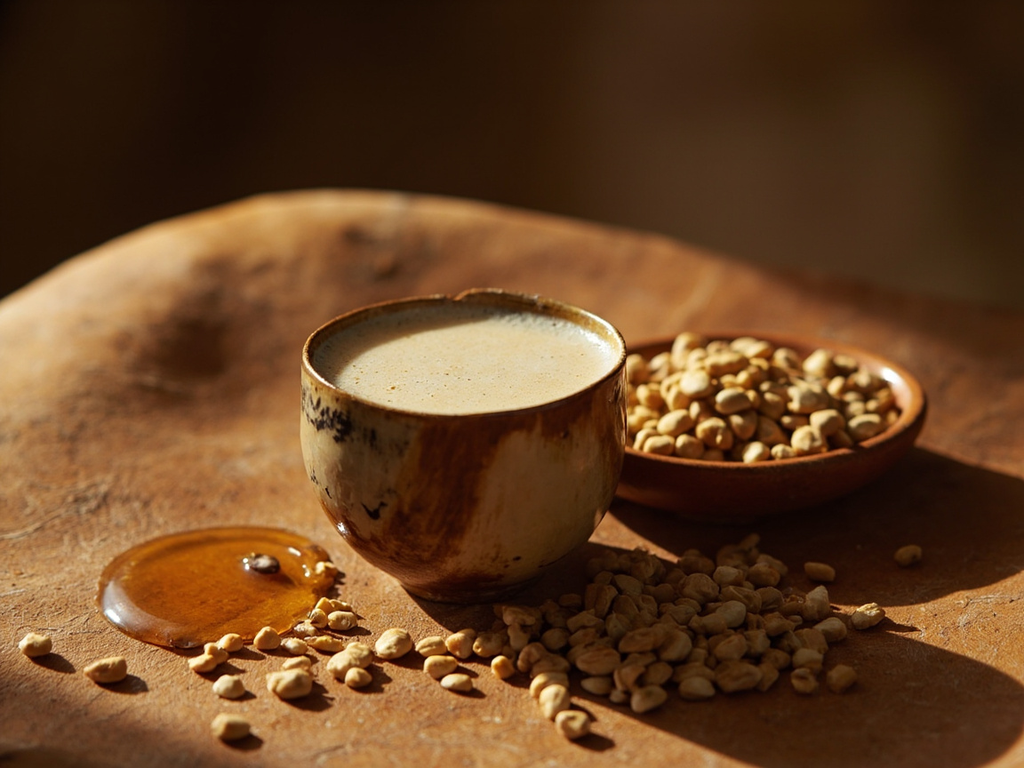
Roasted then ground barley, carried in a leather bag. A handful mixed with water, milk, or crushed with dates and a little butter makes a complete meal without lighting a fire — the ancestor of the energy bar.
The desert does not forgive the traveler with an empty belly nor him who lingers to make a fire where the enemy lurks. I carried sawiq in a leather waterskin: a handful of this roasted barley flour, a little water from the skin, a few dates crushed with the fingertips, and behold the man satisfied in the saddle. On the road from Sinai to Egypt, this is what kept us standing — not the feast, but the poor man's handful of barley.
- •Barley grains — a measure (base)
- •Dates — a handful (sugar and energy)
- •Samn (clarified butter) — a little (richness)
- •Water or milk — to mix (liquid)
- •Salt — a pinch (seasoning)
Sawiq — Rider's Barley and Date Porridge
Roasted then ground barley, carried in a leather bag. A handful mixed with water, milk, or crushed with dates and a little butter makes a complete meal without lighting a fire — the ancestor of the energy bar.
Why this dish? Before being governor, Amr was a man of long marches: caravans from Mecca, crossing the Sinai at the head of the army toward Egypt. Sawiq — roasted barley flour that is instantly mixed with water or milk — was the fighter's and caravaner's ration, light, imperishable, ready without fire.
The desert does not forgive the traveler with an empty belly nor him who lingers to make a fire where the enemy lurks. I carried sawiq in a leather waterskin: a handful of this roasted barley flour, a little water from the skin, a few dates crushed with the fingertips, and behold the man satisfied in the saddle. On the road from Sinai to Egypt, this is what kept us standing — not the feast, but the poor man's handful of barley.
Ingredients (period version)
- Barley grains — a measure (base)
- Dates — a handful (sugar and energy)
- Samn (clarified butter) — a little (richness)
- Water or milk — to mix (liquid)
- Salt — a pinch (seasoning)
Ingredients
- Barley flour (or hulled barley to roast and grind) — 100 g (base)
- Pitted dates — 6 (sugar and energy)
- Clarified butter (ghee) — 1 tbsp (richness)
- Milk or water — 150 ml (liquid)
- Salt — 1 pinch (seasoning)
Method
- Toast the barley flour (or hulled barley) dry in a pan, stirring, until golden and nutty-smelling. Let cool (and grind if starting from grains).
- For a meal: put 3 to 4 tablespoons of toasted flour in a bowl.
- Mash the dates into a paste with a little clarified butter and mix in.
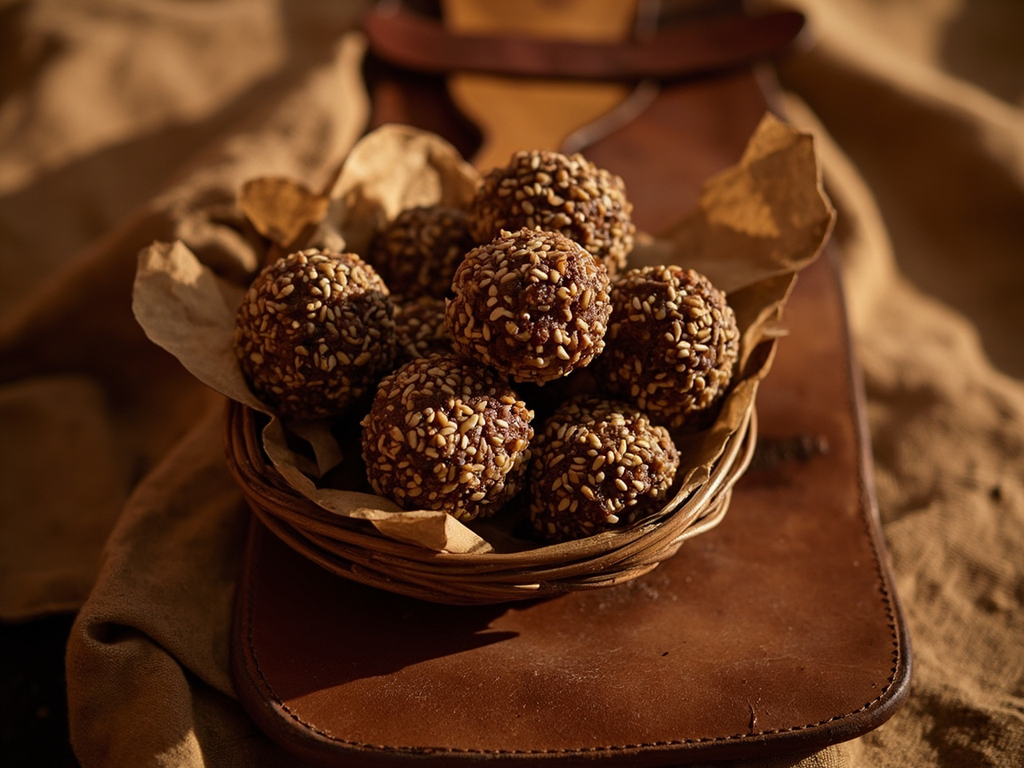
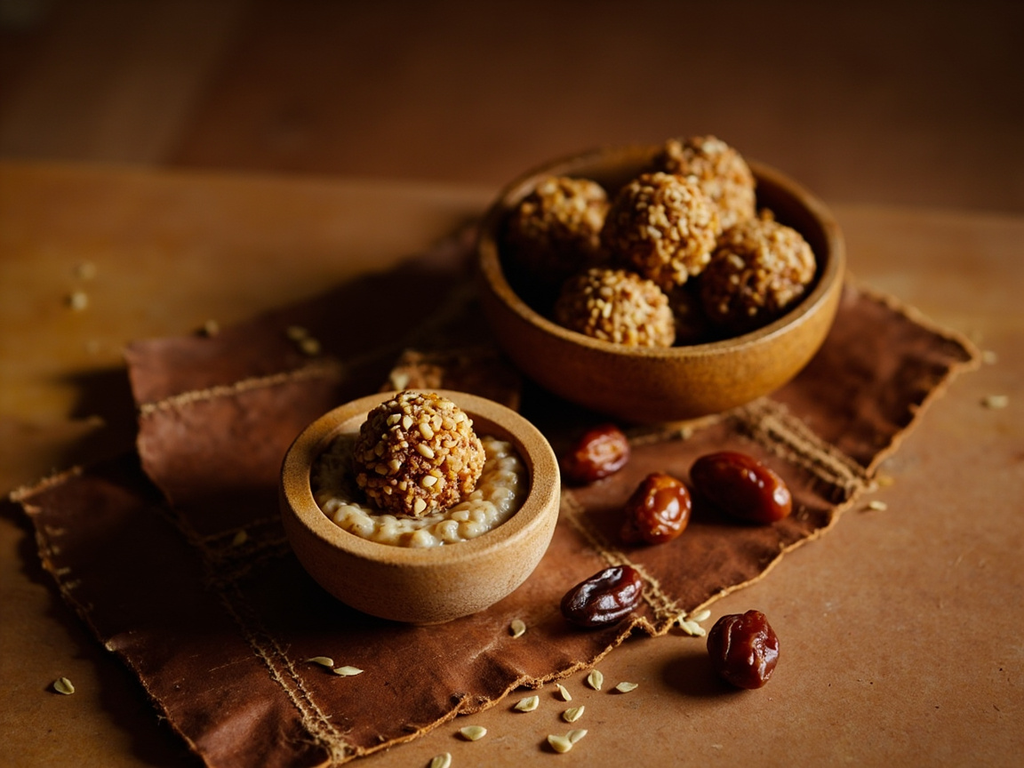
- Gradually stir in the milk or water and a pinch of salt, until you get a thick porridge or a dough that can be shaped into balls.
- Eat as is, cold — no cooking needed at the time of consumption.
How it was made : Sawiq is abundantly mentioned in 7th-century Arabian sources as travel and military campaign provisions: roasted wheat or barley flour, transported dry, mixed on demand. The roasting made it digestible and preserved it for a long time — a decisive advantage for the long expeditions of the conquests.
The contemporary twist : Rolled into small balls with dates and crushed almonds, sawiq becomes a 1400-year-old 'energy ball' — to slip into today's hiker's pocket.
Amr ibn al-As · Charactorium