The Conqueror's Sufra — the Shared Carpet
Among the Arabs of the 7th century, meals were not served one after another like separate courses: a leather cloth or carpet (sufra) was spread on the ground, and bread, dates, milk, and the hot dish were placed together. Everyone ate with the right hand from the common dish, using barley bread as a spoon. Hospitality (diyafa) was sacred: feeding the guest and the traveler was a duty of honor. In Fustat, the capital founded by Amr, this Bedouin sufra was enriched with beans, vegetables, and fish from the Nile.
Signature : The Date (tamr) and Clarified Butter (samn)
The date, the sugar of the desert, binds the whole meal: it is eaten alone, melted in drinks, or crushed into the traveler's porridge. Samn (clarified butter from sheep or buffalo milk) flavors meat and bread. These two gifts of the desert and the oasis followed Amr from Mecca to the banks of the Nile.
Amr ibn al-As at the table
570 — 664
5 period recipes
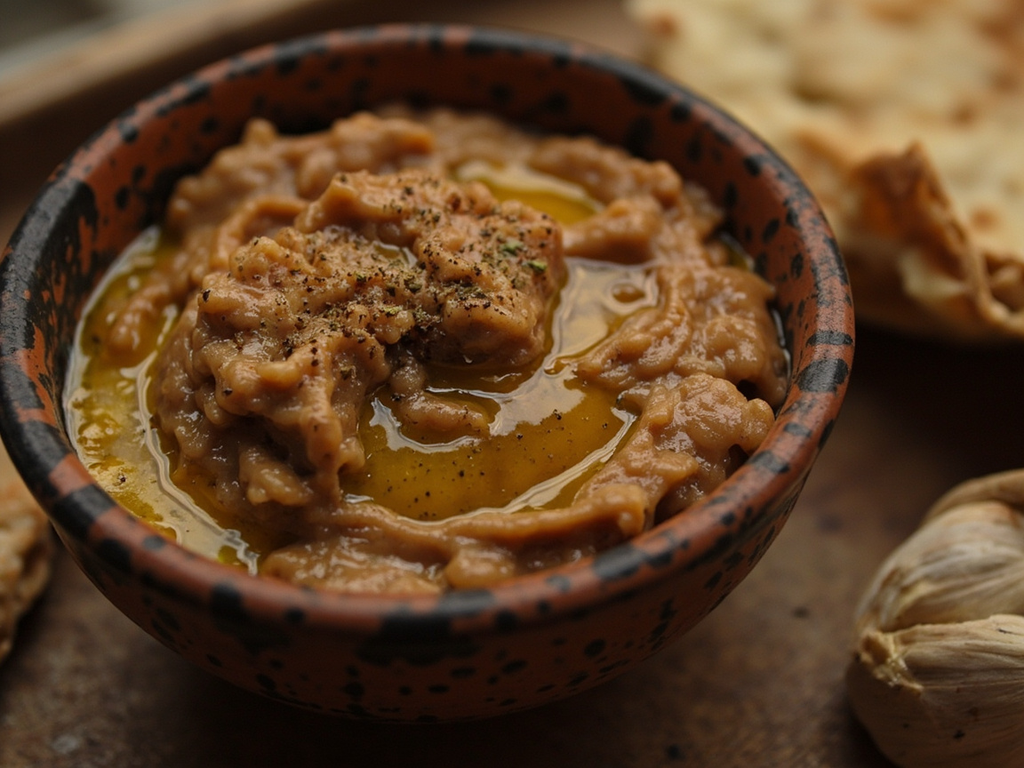 Everyday
Ful — Nile Fava Beans Simmered All Night
Base dish of the sufra (the daily qût, the food that satisfies)
🧂 🍄· 45 min (plus soaking and slow cooking)
View the recipe
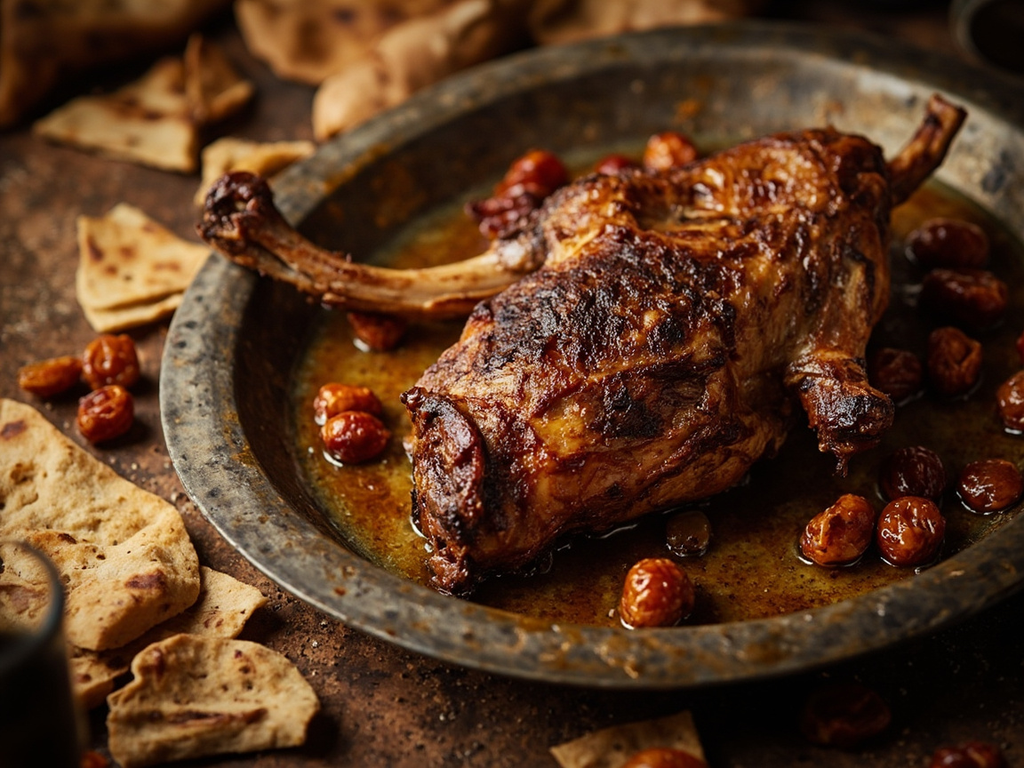 Festive
Victory Roast Mutton (shiwâ')
Dish of honor of the ʿazîma (the great hospitality feast)
🧂 🍄· 3 h 30
View the recipe
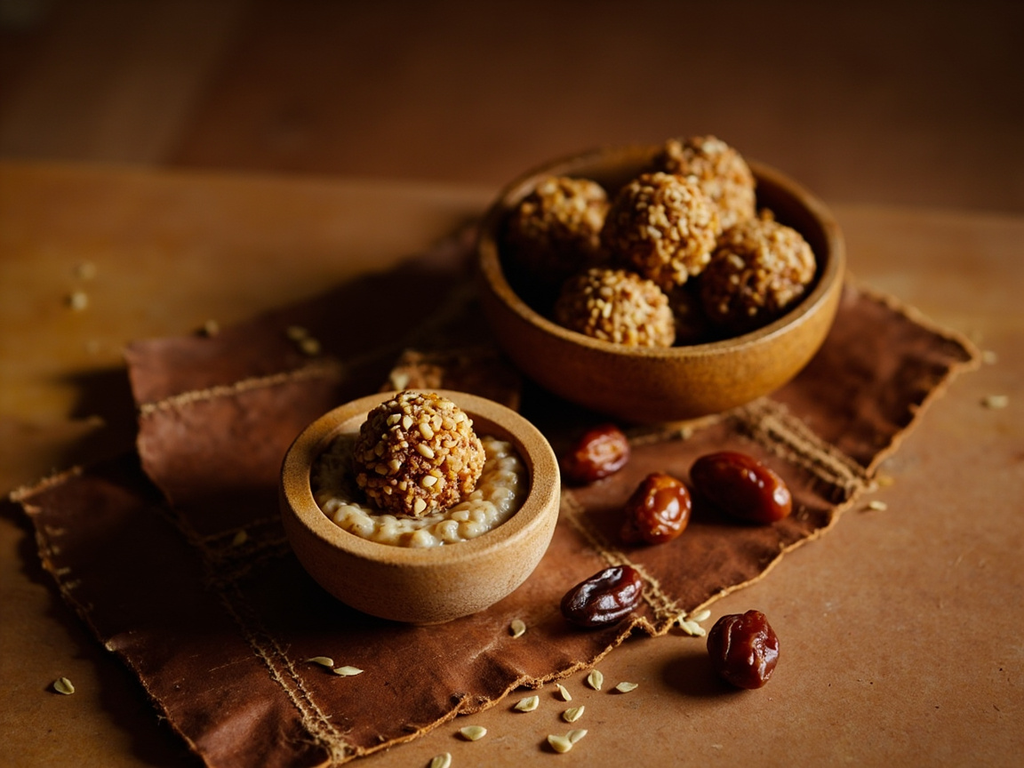 Travel
Sawiq — Rider's Barley and Date Porridge
Saddle provision (zâd as-safar, the food of travel and raid)
🍯 🧂· 15 min
View the recipe
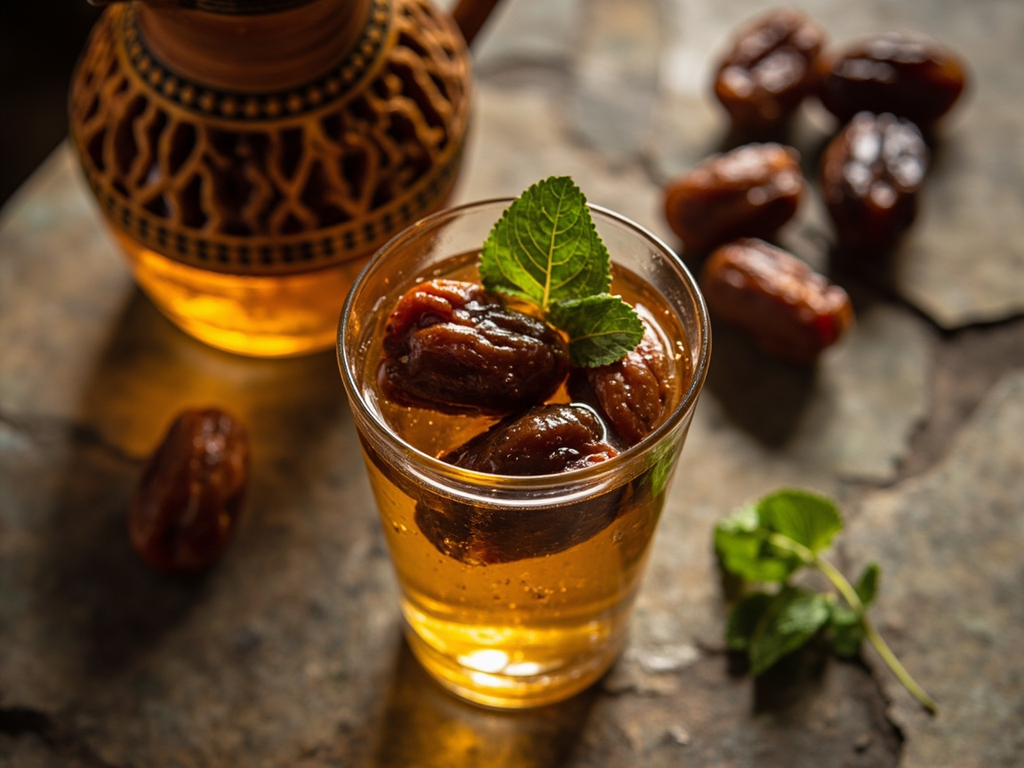 Drink
DrinkDate Nabîdh — the Sweet Water of Dates
Drink of the sufra (sharâb, the licit beverage that replaces wine)
🍯 🍋· 10 min (plus 6-12 h infusion)
View the recipe
 Preserving
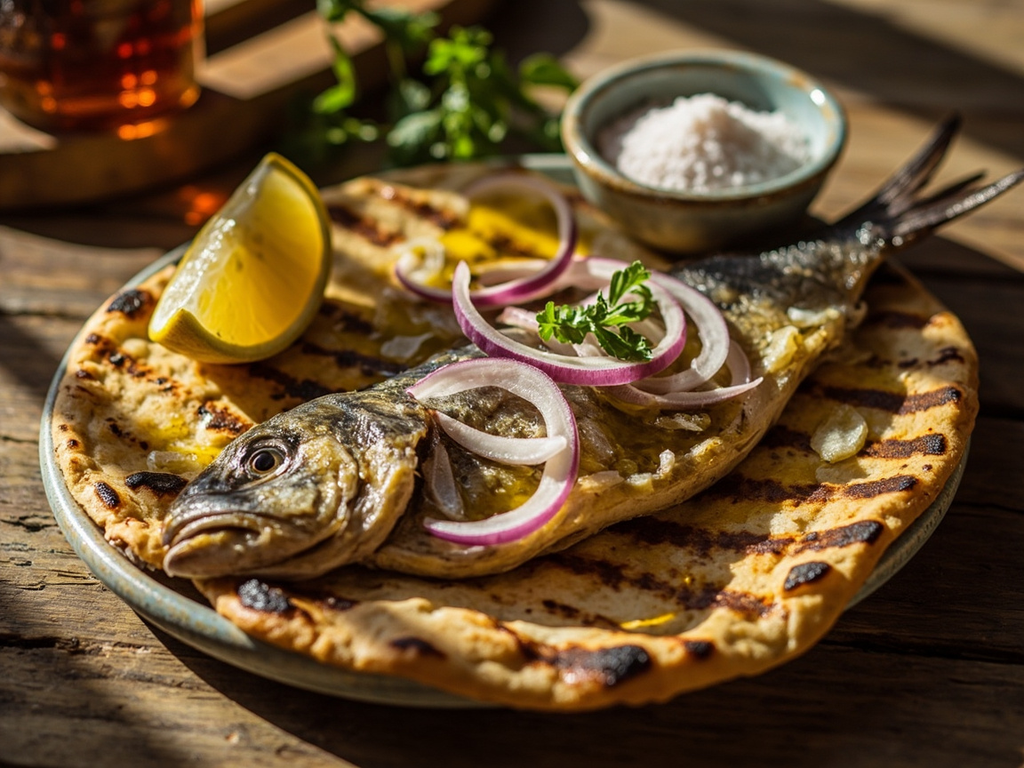
Salt-Dried Nile Fish (samak mumallah)
Pantry reserve (mâ yuddakhar, what is set aside for days without fishing)
🧂 🫙· 30 min (plus 24-48 h salting)
View the recipe