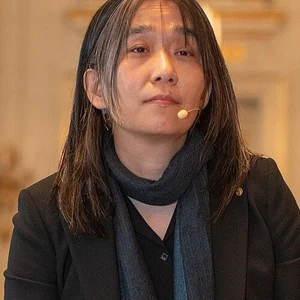

A researcher in letters and humanities, Ana García conducts academic work in the field of human and literary sciences. Identified by her ORCID, she contributes to contemporary international research.
Ana García
Ana García
7 min read
Frequently asked questions
Key Facts
- Active researcher identified by ORCID 0000-0001-7499-5344
- Specializing in the field of letters and humanities
- Contributing to international academic research in the 21st century
Works & Achievements
Publications in peer-reviewed academic journals form the core of a humanities researcher's scholarly output. These articles, archived on platforms such as Cairn or HAL, contribute to the international circulation of ideas.
Conference proceedings bring together contributions presented at academic gatherings and serve as a key channel for disseminating knowledge in the humanities. These texts reflect the intellectual life of a transnational scholarly community.
Chapters in edited volumes allow for in-depth exploration of a subject within an editorially structured framework overseen by a scientific committee. They reflect the transnational collaborations that characterize contemporary research in the human sciences.
Digital visibility has become an indispensable component of academic careers in the twenty-first century. These platforms make it possible to catalogue and share a researcher's complete body of work on a global scale.
Anecdotes
Ana García's ORCID, a unique digital identifier assigned to researchers since 2012, symbolizes the 21st-century revolution in scientific traceability. This code (format 0000-0000-0000-0000) links all her publications to a stable academic identity, crossing administrative and linguistic boundaries on a global scale.
In the field of digital humanities, researchers like Ana García navigate between two worlds: that of traditional physical archives and that of online databases. This dual expertise, which became essential in the 2010s, has profoundly transformed research methods in literature and the humanities.
Literary research in the 21st century demands a steady output of publications subject to peer review, a process that can take several months. Humanities scholars share this universal experience of waiting and revision, which builds the intellectual rigor that defines contemporary academic culture.
International conferences are key milestones in a literary scholar's career: it is there that transnational collaborations are forged, works-in-progress are exchanged, and the global academic community takes shape. The widespread adoption of hybrid conferences since 2020 has further amplified this international dimension.
The rise of open access publishing in the 2000s–2020s has profoundly changed how humanities researchers approach the dissemination of their work. Publishing open access has become an ethical and political issue, making scholarship accessible to audiences far beyond the walls of universities.
Primary Sources
Making scientific resources available online represents a global and interactive opportunity. The internet offers the possibility of establishing a common space for scientific knowledge and human reflection.
ORCID provides a persistent digital identifier that distinguishes you from every other researcher and, through integration in key research workflows such as manuscript and grant submission, supports automated linkages between you and your professional activities.
Digital humanities now constitute a fully-fledged academic field, profoundly renewing methods of textual analysis and practices of knowledge dissemination at the international level.
From 1 January 2021, all scholarly publications on the results from research funded by public or private grants provided by national, regional and international research councils and funding bodies, must be published in Open Access Journals or Platforms.
Key Places
One of the largest universities in Spain, home to an internationally renowned Faculty of Arts and Philology. It embodies the Hispanic world's deep roots in literary and humanities research.
A major heritage institution preserving millions of documents and manuscripts, widely used by researchers in Hispanic literature. It provides access to unique collections for literary and humanities scholarship.
A digital platform for depositing and sharing research output, extensively used by French-speaking and European scholars. It represents the democratization of access to contemporary academic knowledge.
The everyday environment of the contemporary humanities researcher: lecture halls, seminar rooms, and libraries where intellectual networks are built. Erasmus+ mobility has turned these spaces into hubs of international exchange.
Liens externes & ressources
Références
Œuvres
Articles indexés dans des revues à comité de lecture (CNRS, ANECA)
2010s-2020s
Communications dans des colloques internationaux
2010s-2020s
Contributions à des ouvrages collectifs en lettres et humanités
2010s-2020s
Profil académique public (ORCID, Academia.edu, ResearchGate)
Depuis 2012