 flip
flipNorman Sole in Cuverville Cream
Norman Sole in Cuverville Cream
Why this dish? At Cuverville, in the Norman manor of his wife Madeleine, Gide led a regulated and frugal life, appreciating fresh local products. Channel fish and Norman cream were the daily fare of a Protestant bourgeois table that ate simply, without excess.
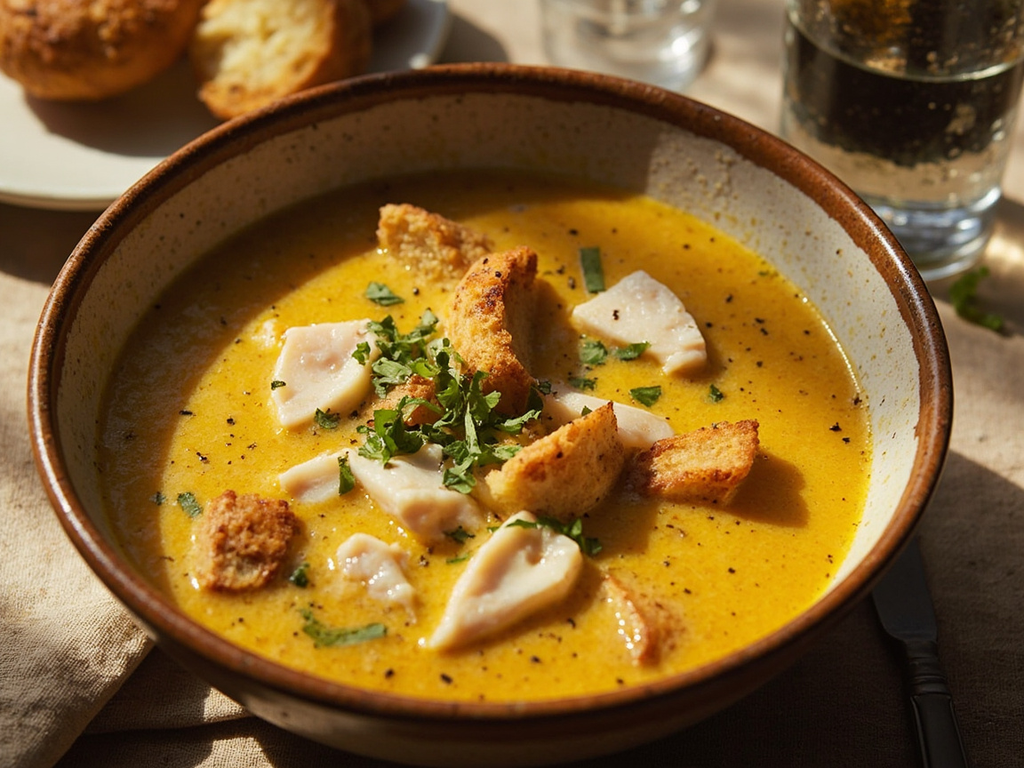
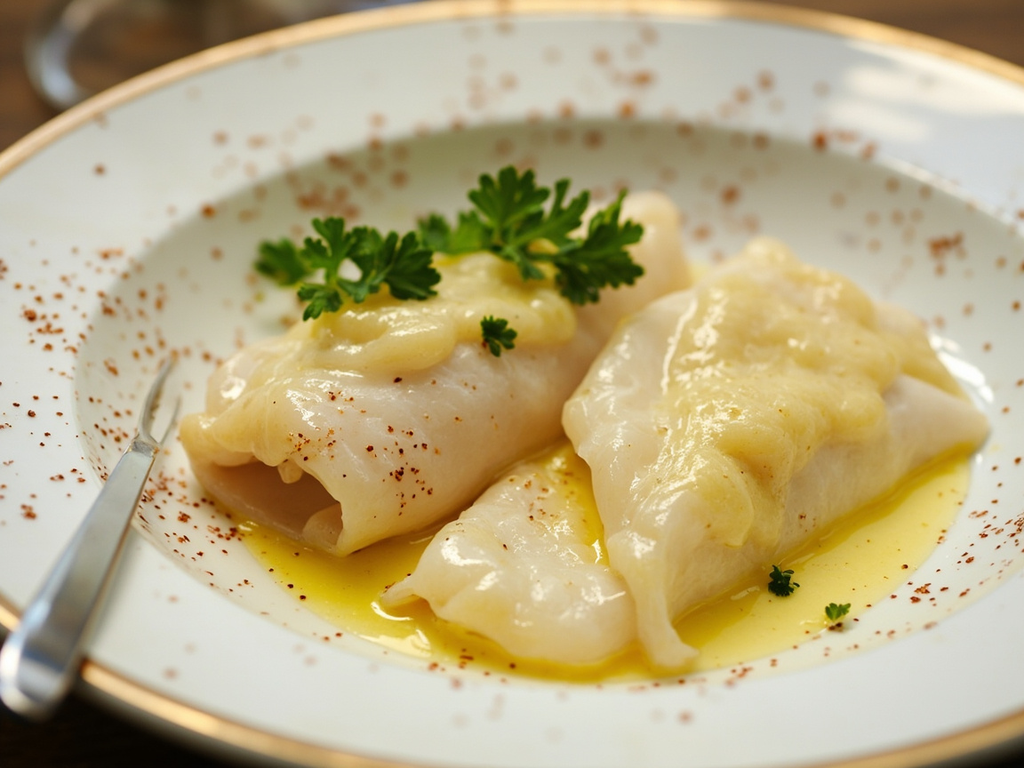
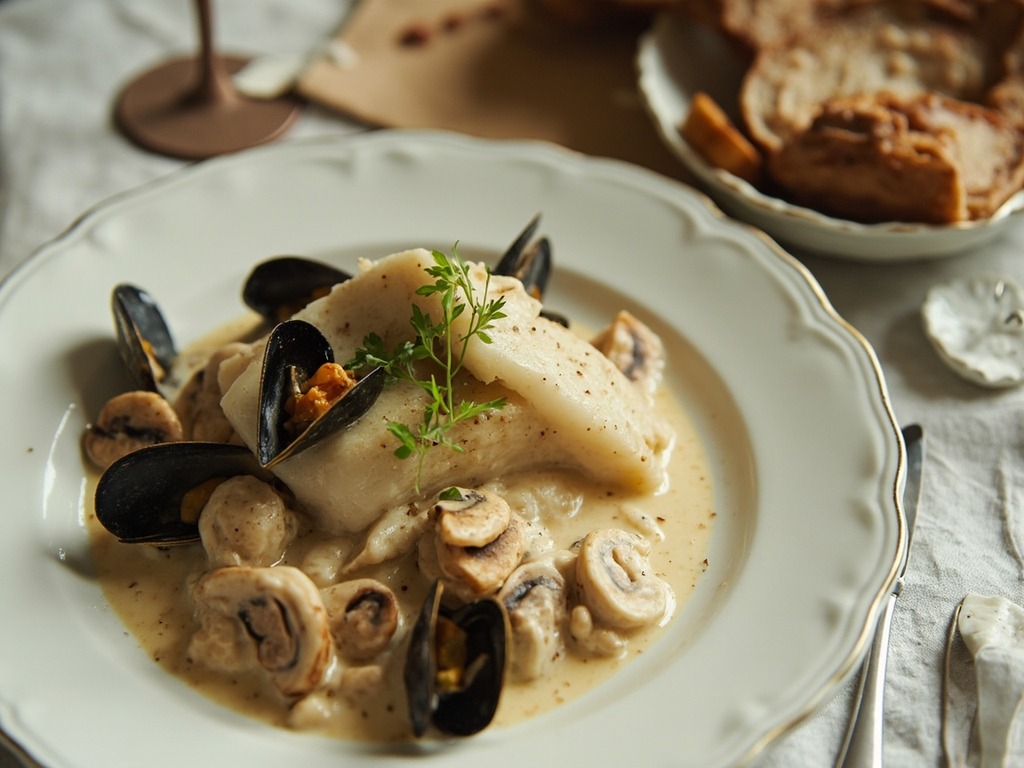
A poached sole coated in a blond butter and cream sauce, dotted with mussels and mushrooms. The quintessential Norman dish: milky, maritime, unpretentious — in the image of Cuverville's frugality.
You see, at Cuverville the table was never lavish; we ate what the Channel and the farm were willing to give us. The cook would poach the sole in a fumet without rushing it, then cover it with that thick cream that Normandy holds as a cardinal virtue. I never liked excess, but before this blond butter I consented to forget my Protestant scruples for a moment. Eat it hot, and you will understand the somewhat austere calm of my Norman summers.
- •Whole sole, filleted — 1 fine piece (fish)
- •Mussels (bouchot) — a good handful (seafood garnish)
- •Button mushrooms — a few (garnish)
- •Fine Normandy butter — to taste (sauce base)
- •Raw cream — one bowl (binding)
- •Dry cider or white wine — one glass (fumet)
Norman Sole in Cuverville Cream
A poached sole coated in a blond butter and cream sauce, dotted with mussels and mushrooms. The quintessential Norman dish: milky, maritime, unpretentious — in the image of Cuverville's frugality.
Why this dish? At Cuverville, in the Norman manor of his wife Madeleine, Gide led a regulated and frugal life, appreciating fresh local products. Channel fish and Norman cream were the daily fare of a Protestant bourgeois table that ate simply, without excess.
You see, at Cuverville the table was never lavish; we ate what the Channel and the farm were willing to give us. The cook would poach the sole in a fumet without rushing it, then cover it with that thick cream that Normandy holds as a cardinal virtue. I never liked excess, but before this blond butter I consented to forget my Protestant scruples for a moment. Eat it hot, and you will understand the somewhat austere calm of my Norman summers.
Ingredients (period version)
- Whole sole, filleted — 1 fine piece (fish)
- Mussels (bouchot) — a good handful (seafood garnish)
- Button mushrooms — a few (garnish)
- Fine Normandy butter — to taste (sauce base)
- Raw cream — one bowl (binding)
- Dry cider or white wine — one glass (fumet)
Ingredients
- Sole fillets (or lemon sole) — 4 fillets (fish)
- Mussels — 300 g (seafood garnish)
- Button mushrooms — 150 g (garnish)
- Butter — 60 g (sauce)
- Thick crème fraîche — 20 cl (binding)
- Dry white wine or cider — 15 cl (fumet)
- Egg yolk — 1 (final binding)
Method
- Open the mussels over high heat with a little white wine; remove from shells, strain and reserve the juice.
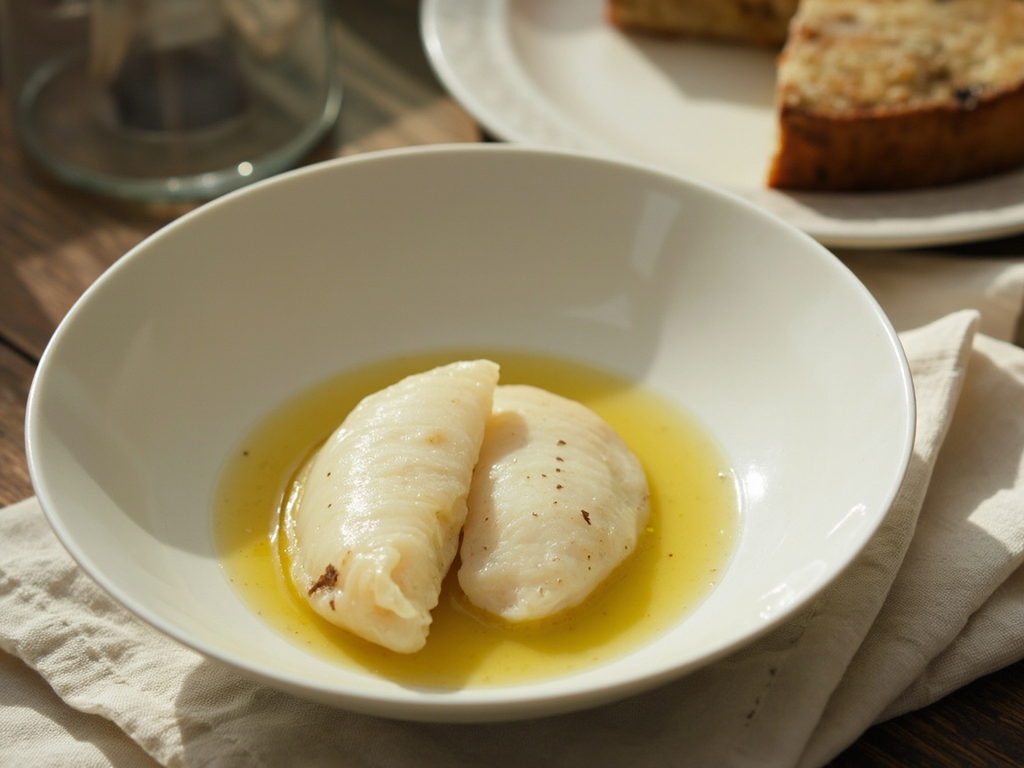
- Gently poach the rolled sole fillets in this juice diluted with water, 4-5 min, without boiling. Keep warm.
- Sauté the sliced mushrooms in butter.
- Reduce the poaching liquid, mount with butter, add cream then bind off the heat with the egg yolk.
- Arrange the fillets, mussels and mushrooms, coat with sauce and serve immediately.
How it was made : The 'sole normande' codified in the 19th century was a lavish bourgeois restaurant dish (oysters, shrimp, truffles). At Cuverville's family table, a simpler version was made, depending on the catch and the farm.
The contemporary twist : Serve in a shallow bowl with a mussel juice emulsion from a siphon, and a few sorrel shoots for acidity.
André Gide · Charactorium