 flip
flipHypocras (Scholar's Spiced Mulled Wine)
Hypocras (Scholar's Spiced Mulled Wine)
Why this dish? Vesalius drank wine daily, as did every man of his station, and he knew medicine well: hypocras, this sweetened and spiced wine filtered through a "Hippocrates sleeve," was served at the end of the meal as much for pleasure as to "aid digestion." The very name honors the father of medicine, whose critical heir Vesalius was.
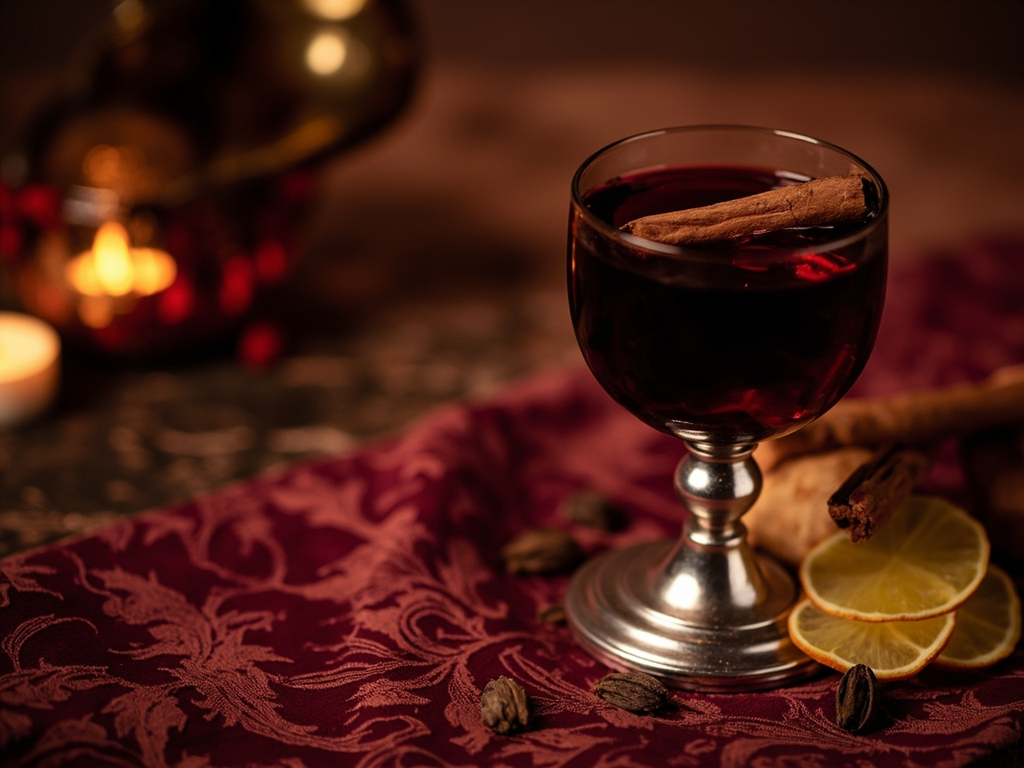
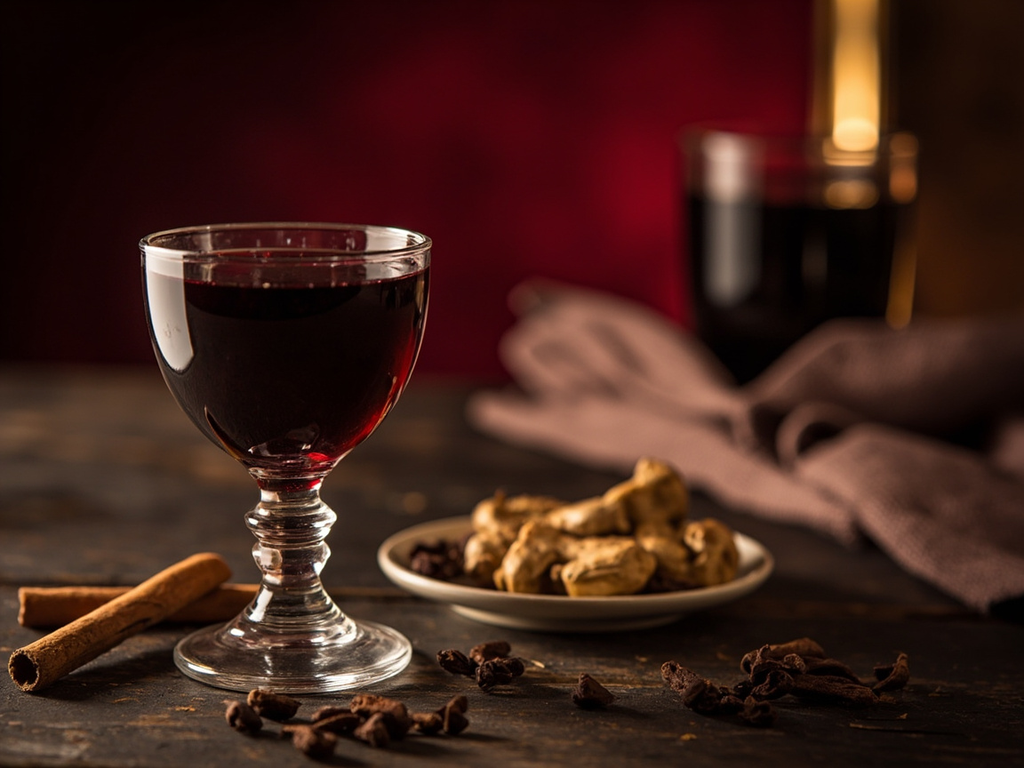
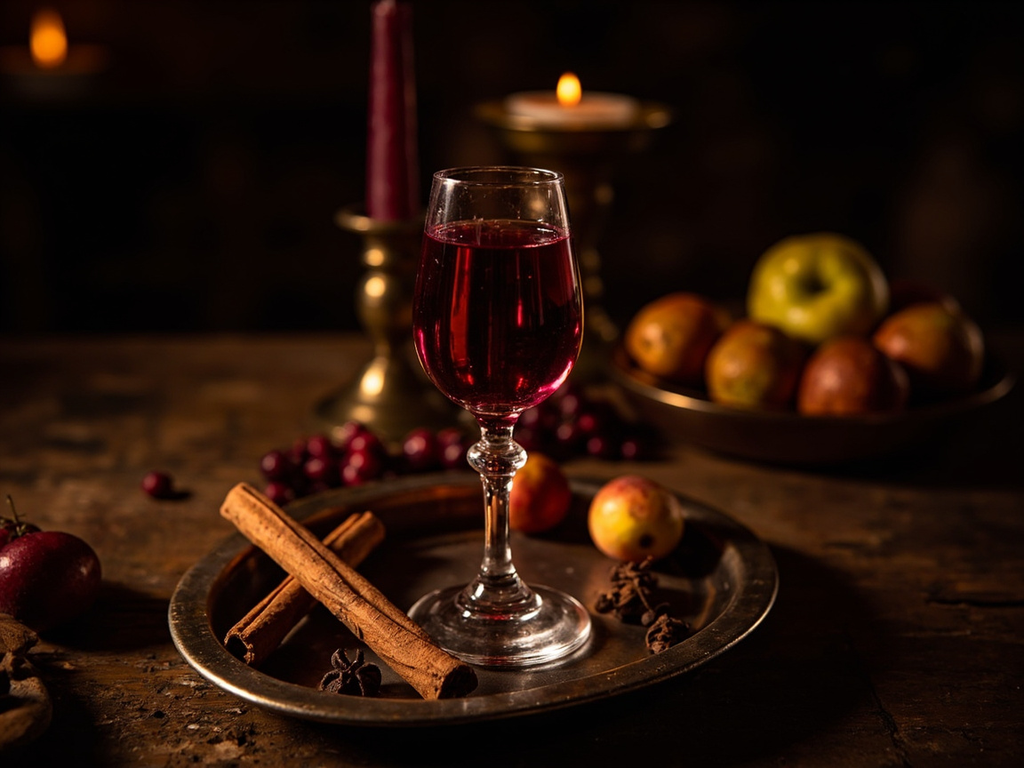
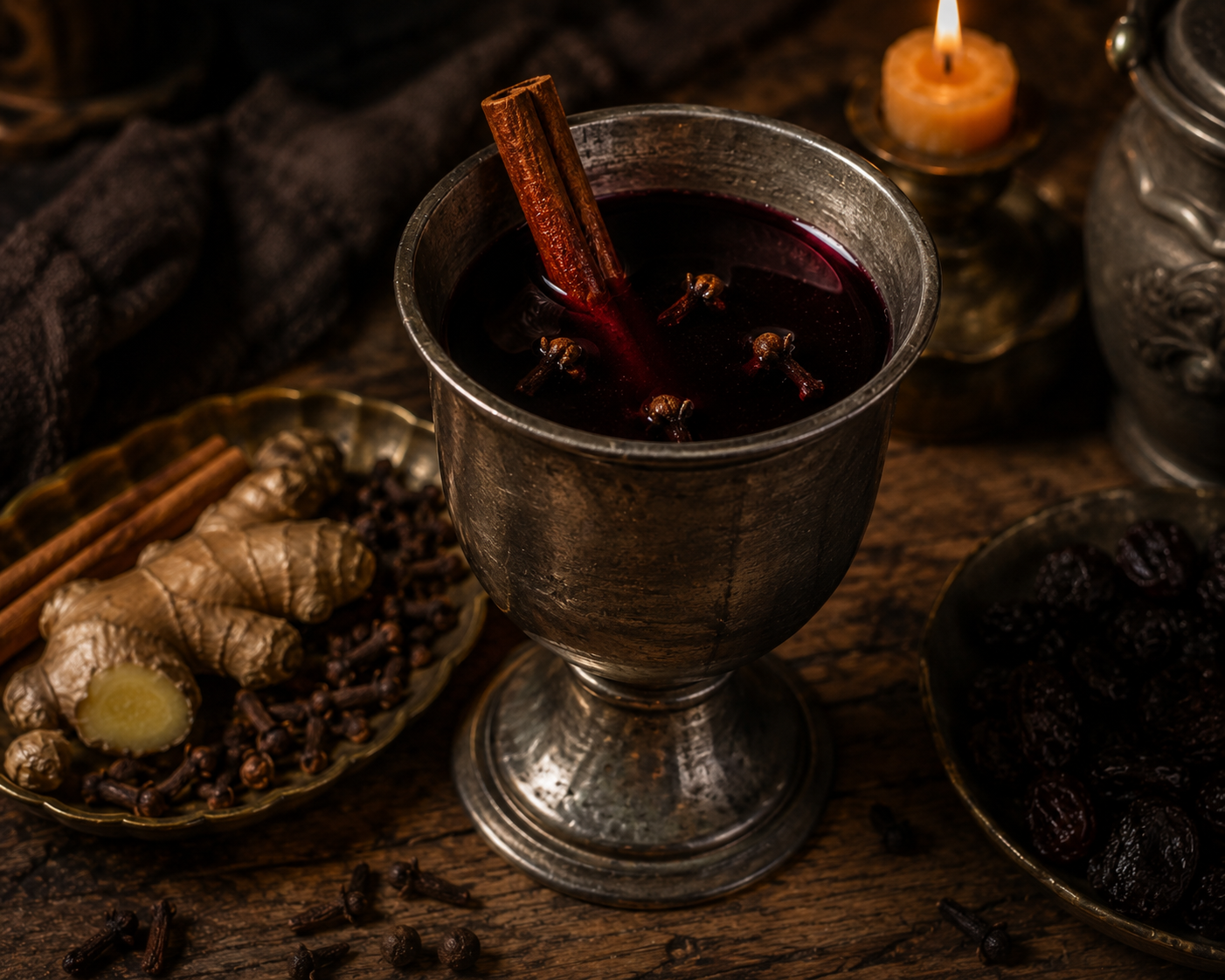
A warmed wine, sweetened with honey or sugar and long-infused with cinnamon, ginger, cloves, and grains of paradise, then filtered until clear. The quintessential scholarly drink, halfway between pleasure and remedy.
Let them bring me the pot and the sleeve, and I will show you hypocras as it is prepared. Choose a good wine, dissolve the sugar in it, and throw in the cinnamon, ginger, and cloves, not forgetting the grains of paradise. Patience: you must let the spices yield their virtue, then run it all through the sleeve until it is clear as amber. I recommend it after heavy meats, for it warms the stomach and dispels winds — and this beverage is named after Hippocrates himself, whose memory we physicians preserve.
- •Red or white wine — a pitcher (base)
- •Sugar or honey — to taste (sweetness)
- •Cinnamon — one stick (master spice)
- •Ginger — a piece (warmth)
- •Cloves — a few (aroma)
- •Grains of paradise — a pinch (noble pungency)
Hypocras (Scholar's Spiced Mulled Wine)
A warmed wine, sweetened with honey or sugar and long-infused with cinnamon, ginger, cloves, and grains of paradise, then filtered until clear. The quintessential scholarly drink, halfway between pleasure and remedy.
Why this dish? Vesalius drank wine daily, as did every man of his station, and he knew medicine well: hypocras, this sweetened and spiced wine filtered through a "Hippocrates sleeve," was served at the end of the meal as much for pleasure as to "aid digestion." The very name honors the father of medicine, whose critical heir Vesalius was.
Let them bring me the pot and the sleeve, and I will show you hypocras as it is prepared. Choose a good wine, dissolve the sugar in it, and throw in the cinnamon, ginger, and cloves, not forgetting the grains of paradise. Patience: you must let the spices yield their virtue, then run it all through the sleeve until it is clear as amber. I recommend it after heavy meats, for it warms the stomach and dispels winds — and this beverage is named after Hippocrates himself, whose memory we physicians preserve.
Ingredients (period version)
- Red or white wine — a pitcher (base)
- Sugar or honey — to taste (sweetness)
- Cinnamon — one stick (master spice)
- Ginger — a piece (warmth)
- Cloves — a few (aroma)
- Grains of paradise — a pinch (noble pungency)
Ingredients
- Full-bodied red wine — 1 bottle (75 cl) (base)
- Sugar (or honey) — 120 g (sweetness)
- Cinnamon stick — 1 (master spice)
- Fresh ginger — 3 slices (warmth)
- Cloves — 4 (aroma)
- Grains of paradise (or long pepper) — 1 pinch (pungency)
- Nutmeg — a light grating (roundness)
Method
- Gently heat the wine without boiling, dissolve the sugar.
- Add all spices and let infuse off the heat, covered, for 30 minutes to 1 hour.
- Filter carefully through a fine cloth (the old "Hippocrates sleeve") until the liquid is clear.
- Reheat just before serving in small cups.
- Best served warm at the end of the meal; keeps for a few days in the fridge.
How it was made : Hypocras is one of the best-documented drinks of the Middle Ages and Renaissance: its name comes from the "sleeve of Hippocrates," the conical cloth filter through which it was clarified. It was often served at the time of spices and "issues of the table." Recipes vary, but cinnamon, ginger, and sugar almost always form the core.
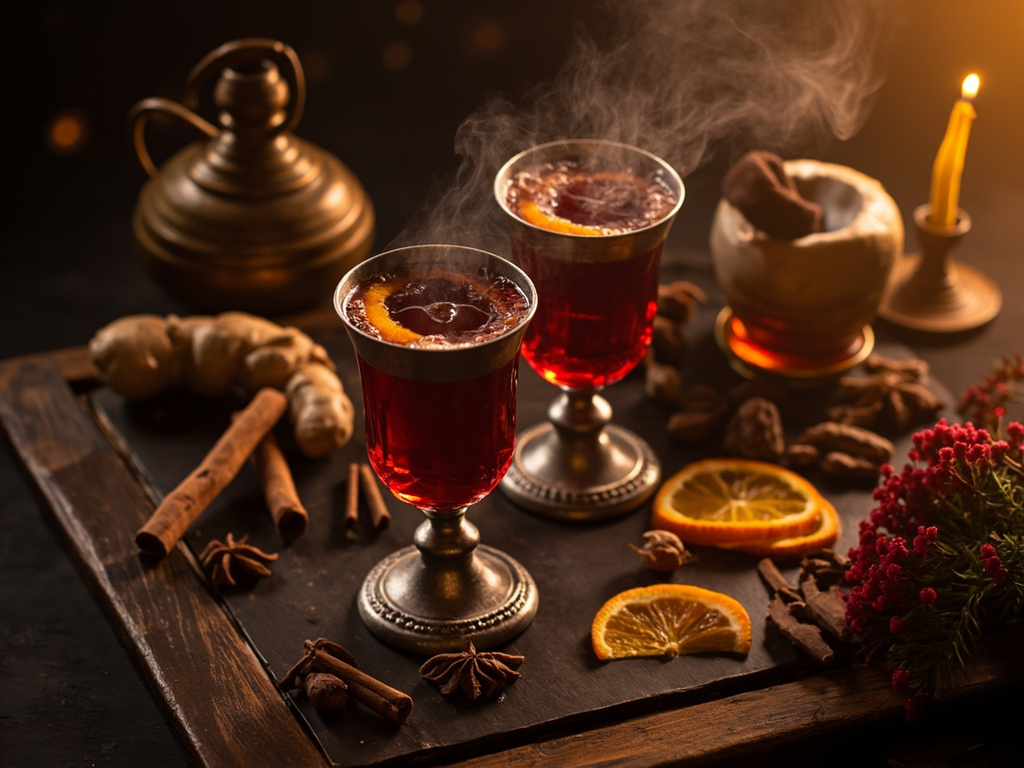
The contemporary twist : Serve in small liqueur glasses with a curl of orange zest; for a non-alcoholic version, replace wine with red grape juice infused with the same spices.
Andreas Vesalius · Charactorium