 Flip the card
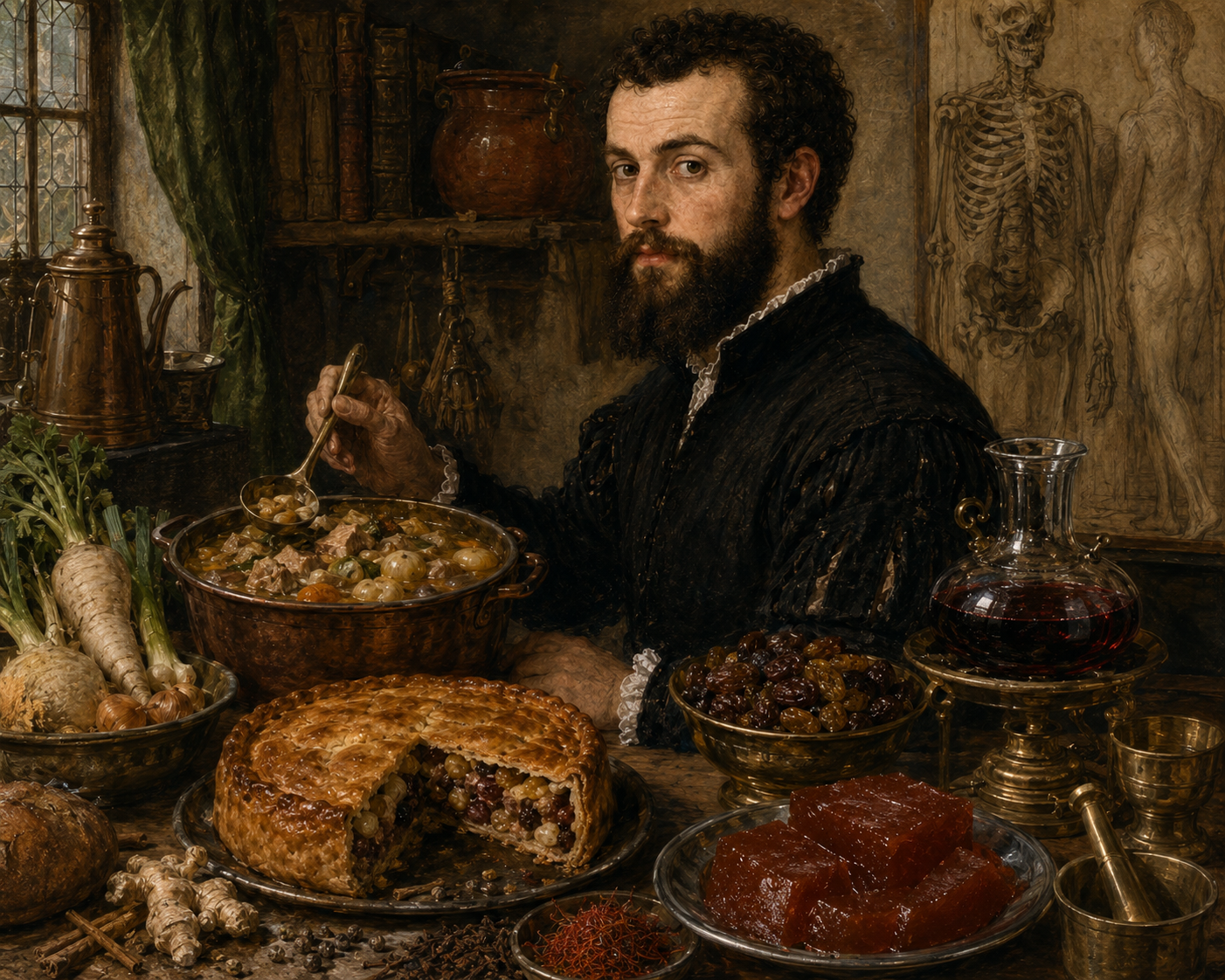
Andreas Vesalius at the table
1515 — 1564
On the menu
The Renaissance Brabant Table
In the Habsburg Netherlands, the table of a wealthy scholar does not follow the starter-main-dessert grid. The meal opens with a simmered pottage or stew (hutsepot), the nourishing heart of the meal; then come roasts and pies for feast days, spiced with dried fruits; it closes with sweets of sugar and honey — quince preserves, waffles — accompanied by a spiced wine served hot. Sugar and sweet-and-sour mingle with savory without being separated as they are today, a legacy of the Middle Ages still vigorous in the 16th century.
Signature : The Spices of Antwerp
In Vesalius's time, Antwerp was Europe's largest spice warehouse: cinnamon, ginger, saffron, cloves, and grains of paradise landed there by the shipload before spreading across the entire Brabant table. For a physician trained in medicine, these spices were also remedies: they "warmed" the stomach according to humoral theory. They appear, mild or pungent, in almost every dish of this meal.
click to flip back
Andreas Vesalius at the table
1515 — 1564
4 period recipes
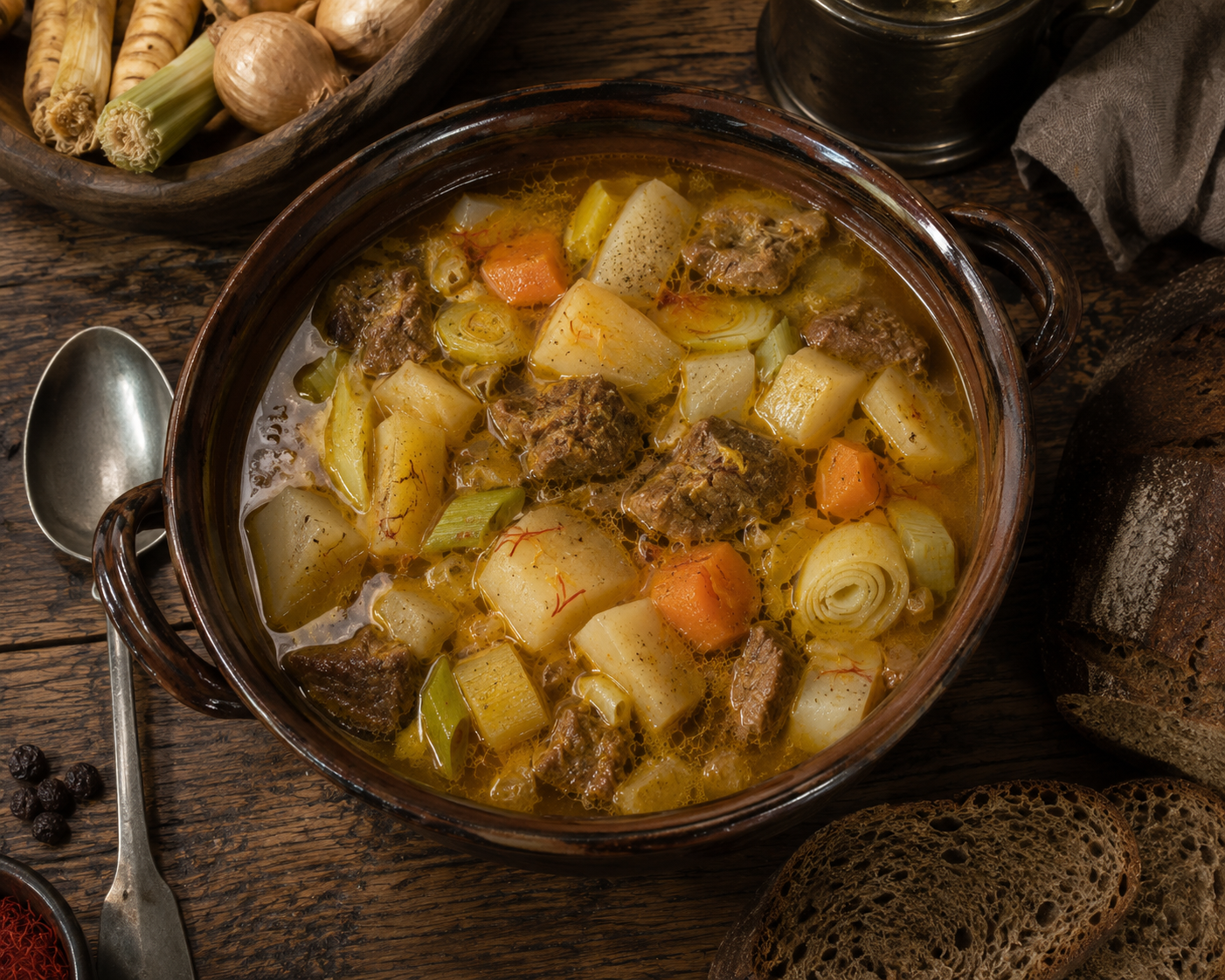 Everyday
Brabant Hutsepot (Mutton and Root Vegetable Stew)
The Simmered Base Dish (de schotel)
🧂 🍄· 2 h 45
View the recipe
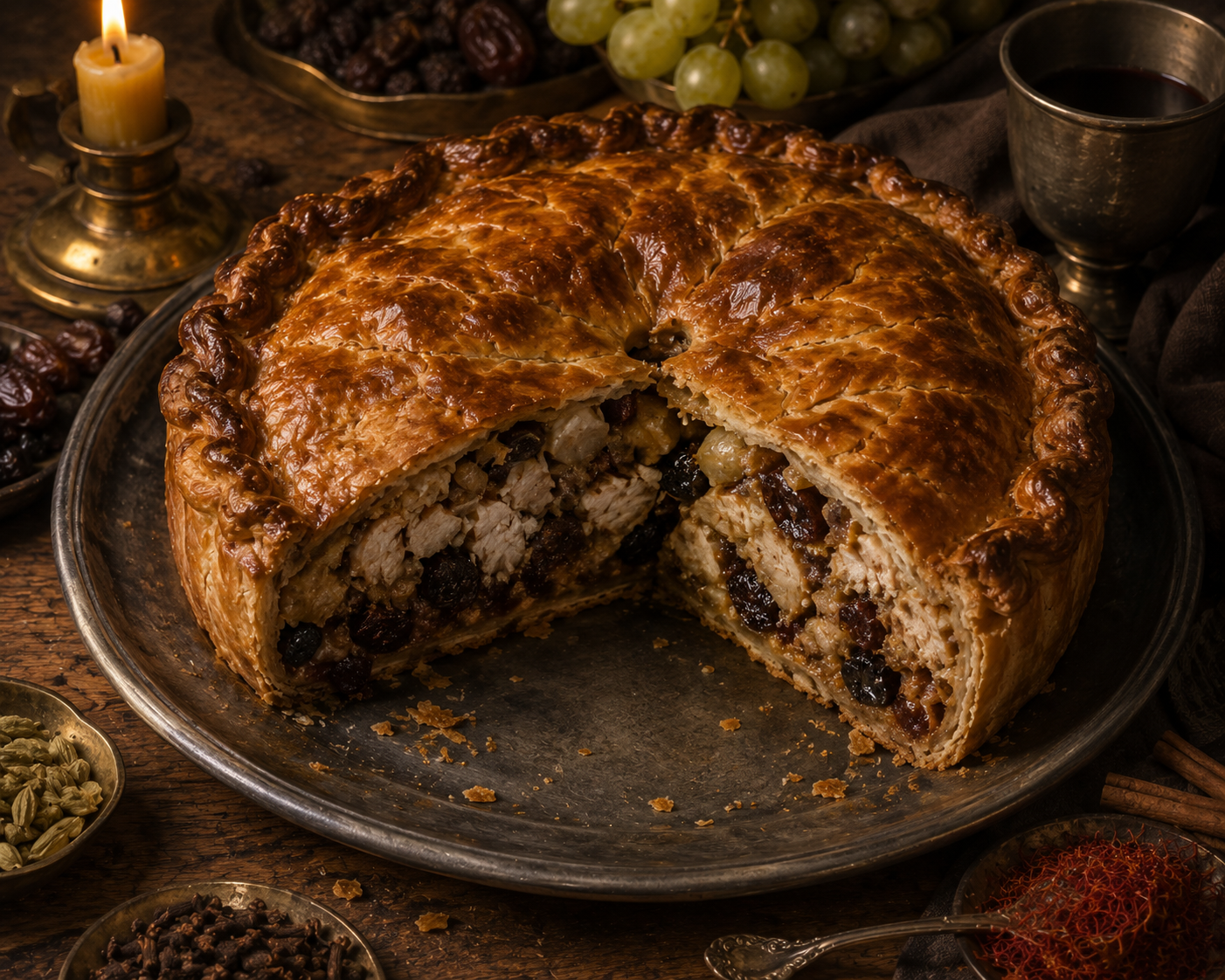 Festive
Spiced Capon Pie with Fruits
The Feast Day Roast (gebraad)
🍯 🧂 🌶️· 1 h 30
View the recipe
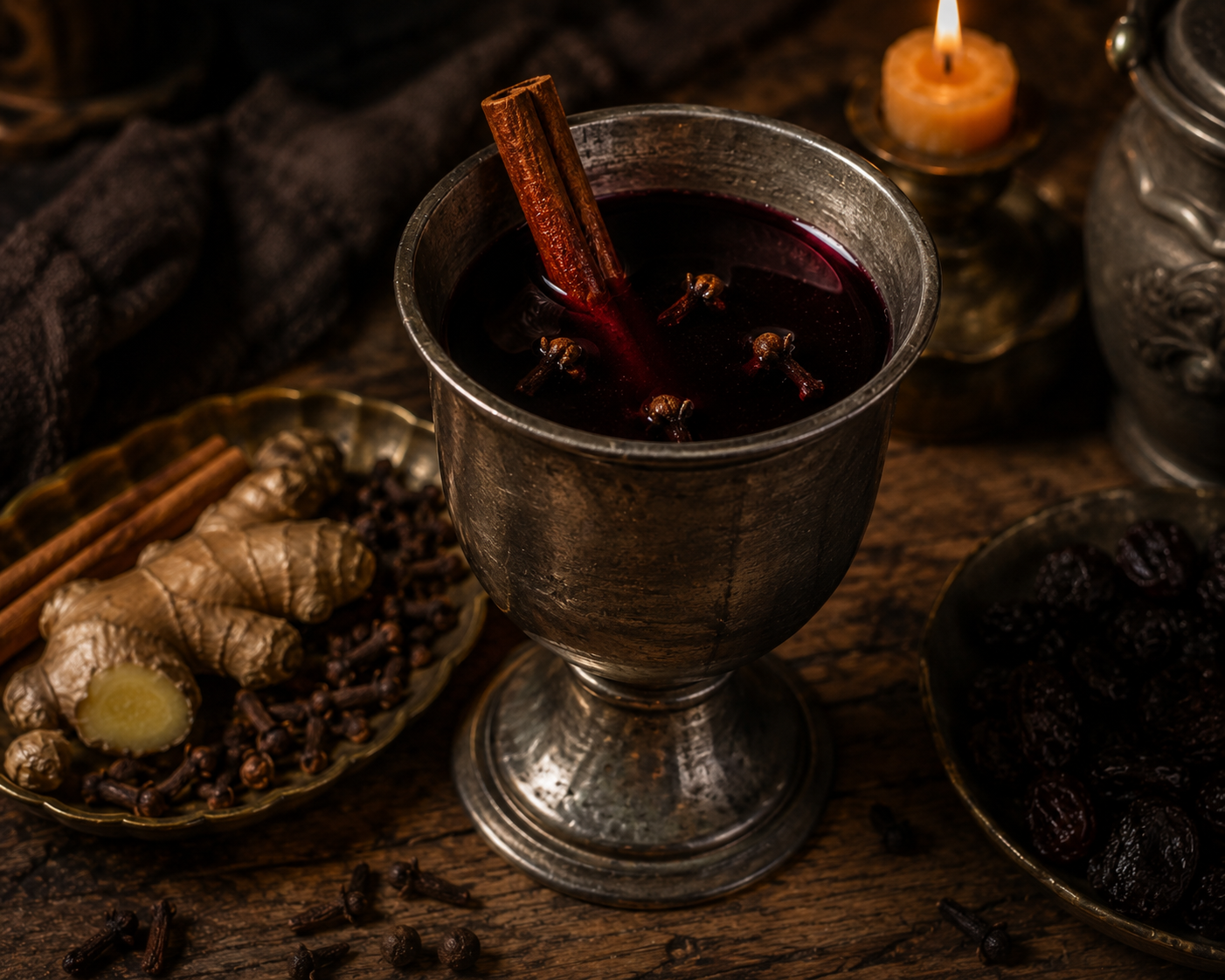 Drink
DrinkHypocras (Scholar's Spiced Mulled Wine)
The End-of-Meal Spiced Wine (kruidenwijn)
🍯 🌶️· 1 h (including infusion)
View the recipe
 Remedy
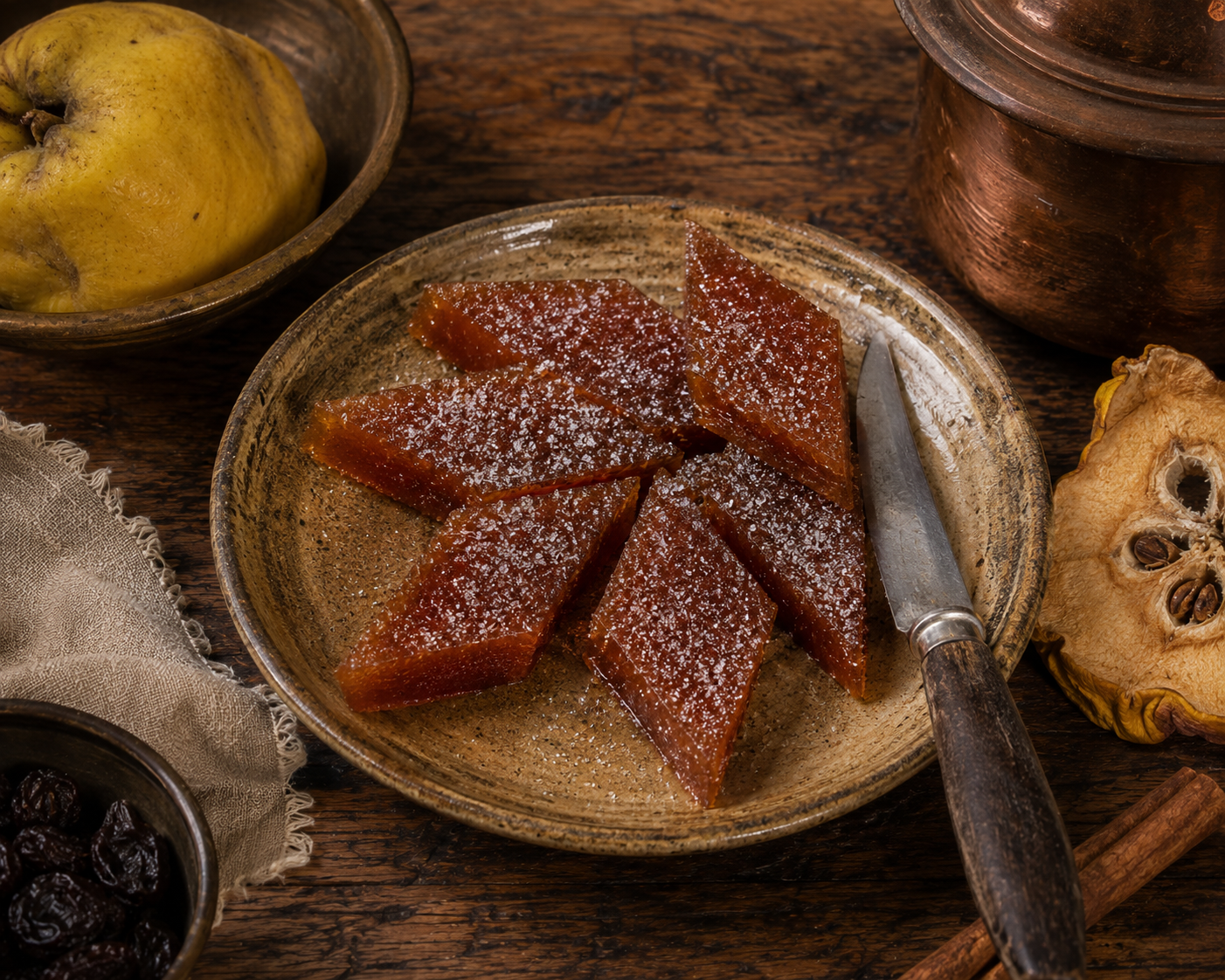
Quince Paste (Physician's Cotignac)
The Preserved Sweet and Remedy (confituur)
🍯 🍋· 2 h (+ drying)
View the recipe